- When we travel using only our eyes, we miss out on the chance to have a fully immersive experience that engages all the senses.
- Here at Czech Tourism, we invite you on a journey where you can enjoy not only visual beauty, but also flavours, scents, touch and, of course, sound.
The gardens and parks dazzle with their floral displays, the streams flow once more and the towns stretch in the warmth of a sun that is still shy. Such is spring in the Czech Republic, a season that stretches well into summer, months in which everything seems to unfold in slow motion, allowing us to focus, more than ever, on what our senses perceive. Today’s true travellers are not content merely to admire landscapes from afar; they also wish to participate in everyday scenes and experience every moment more fully. This invitation to explore the Czech Republic with all five senses is intended especially for them.
History can also be felt
With over 200 castles and palaces open to the public, the Czech Republic invites you to become part of history through touch. This sense, sometimes somewhat neglected, tells us a great deal about the places we visit: the coolness of the marble in a grand ballroom speaks of exclusivity, the velvet and silk of the upholstery whisper elegance, and the angular forms of a wooden bureau speak of the skill of the cabinetmakers who shared their art from court to court.
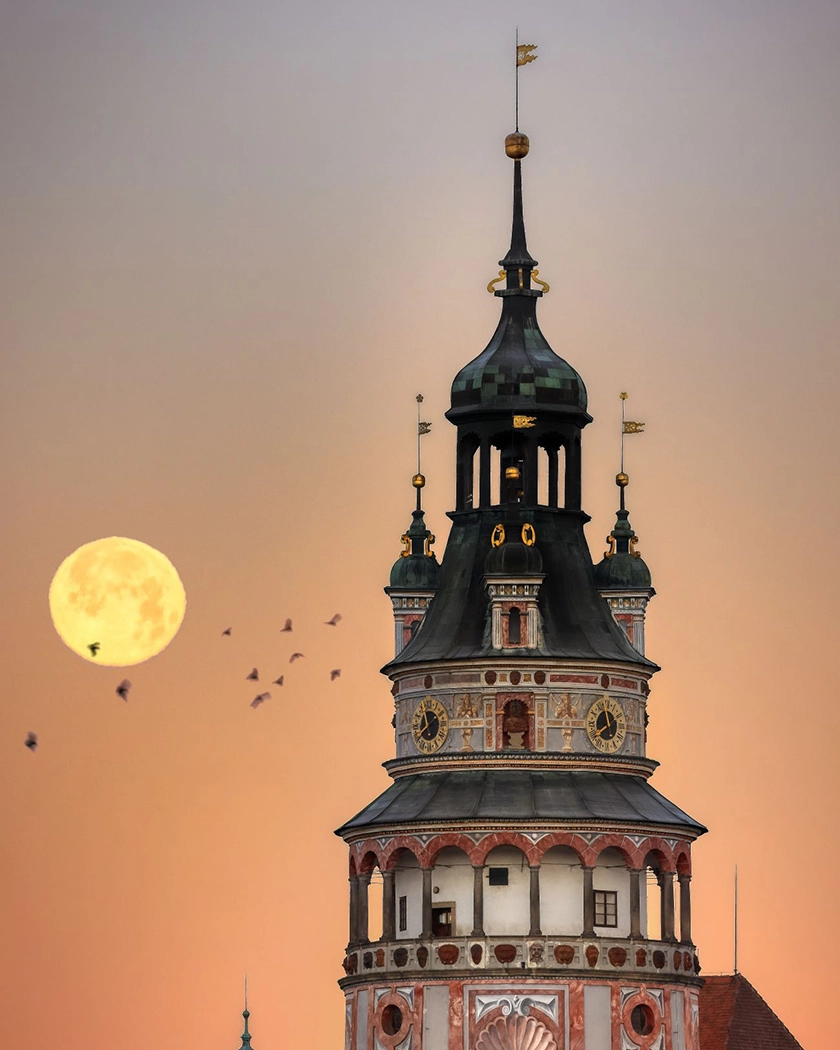
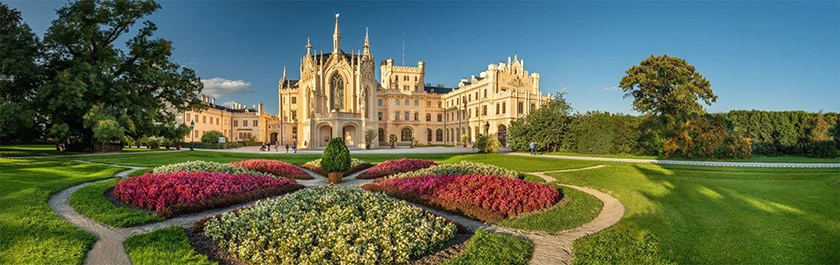
Some of the palaces where this sense takes on particular importance are the Castle and Palace of Český Krumlov, whose façade frescoes foreshadow the luxury of its interiors; the romantic Lednice Palace with its iron greenhouse; Kynžvart Palace, with its library of leather-bound volumes; the pastel-hued salons of Manětín Palace; and the architectural fantasy of Žleby Castle. All of them invite you to sharpen your senses and linger over the details: a bronze door handle, the roughness of the stone or the marble banister of an imperial staircase are nuances that no photograph can convey. The spaces also become sensory experiences in Brno’s underground water reservoirs, a (little-known) architectural marvel where one not only feels the cold, but the sound reverberates, creating an immersive atmosphere.
The sense of touch has a curious connection with the Czech Republic, as it was the scientist Jan Evangelista Purkyně who, in the 19th century, demonstrated that fingerprints are unique to each person, a discovery that transformed criminology and forensic science.
Postcards from Czech cities
As we travel through the Czech Republic, our eyes are filled with sunrises and sunsets, architecture, panoramic views from a thousand towers, and shades of green. Of all the senses, sight is perhaps the most insatiable when travelling. It always wants more.
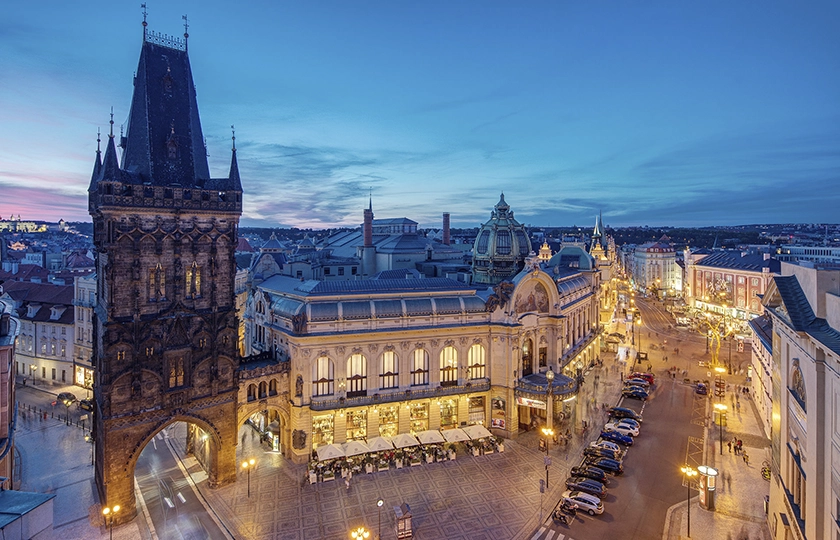
In Czech cities, every corner seems designed to make you stop and gaze. Prague captivates from the very first moment with its ever-present Castle and Charles Bridge, perfect backdrops for bidding farewell to the day and etching those final golden moments into your memory.
Further west, Plzeň invites you to wander through its picturesque Republic Square, where the architecture envelops you with elegance. In České Budějovice, all eyes turn to the imposing Přemysl Otakar II Square, one of the largest in Central Europe. Brno offers contrasts between two of its landmarks: Villa Tugendhat, a masterpiece of functionalism, and the unsettling composition of the Ossuary at St James’s Church. For its part, Olomouc charms with its tranquillity as it takes us past its Baroque fountains, its Trinity Column (a UNESCO World Heritage Site) and its main squares.
An interesting fact about the sense of sight is that the Czech chemist Otto Wichterle designed the first prototype of contact lenses in 1957 and, in just four years, managed to have them mass-produced, freeing millions of travellers from the discomfort of glasses.
Scents that will always remind you of the Czech Republic
Neuroscientists claim that smell is the sense most directly linked to memory. Perhaps that is why a scent can transport us back to a specific place with a clarity that defies the passage of time. This happens in certain corners of the Czech Republic where the scents are so distinctive that it is impossible to separate them from those places.
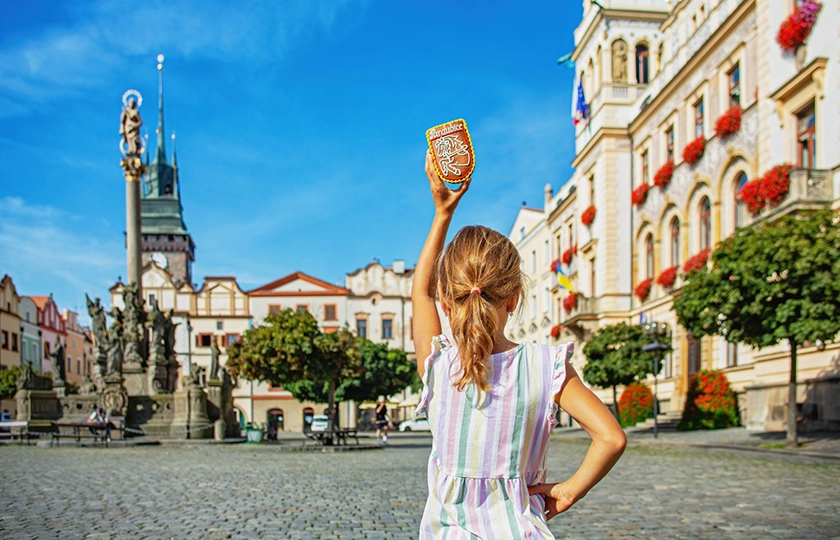
The scent of honey and spices such as ginger defines the atmosphere in Pardubice. This sweet, slightly spicy spice has been the soul of the city’s confectionery for centuries. Strolling through the streets enveloped in this fragrance wafting from the bakeries etches the memory into your mind forever.
Less sweet and more herbaceous are the distinctive notes of Žatec, the Bohemian town where the finest Czech hops are grown. In fact, its Hop Landscape was recognised by UNESCO in 2023. This plant, which is one of the finest ingredients in beer, permeates the fields and the old drying houses at harvest time. It is neither a neutral nor a subtle scent, but rather slightly bitter and earthy, and one that is not easily forgotten.
More recognisable is the scent of the lavender fields of Olomouc and South Moravia, which evokes childhood and freshly made, clean sheets. This floral fragrance is always associated with moments of calm and also with this region. And we must not forget nature, that great perfumer which effortlessly fills the Šumava National Park with the fresh, resinous scent of coniferous forests, and renews the senses with the mineral scent of water cascading over the rocks in the Krkonoše National Park.
From savoury to sweet: flavours you wouldn’t expect
Discovering Czech cuisine is one of the main reasons for visiting the country, as its flavours are impossible to capture in a photograph. The starting point for those with a sweet tooth is chocolate, which, although not as famous as Swiss or Belgian chocolate, has a long-standing tradition. Before the Second World War, this chocolate already enjoyed international prestige, and now that legacy is being revived in cities such as Litomyšl and Brno, whose chocolate often ranks among the top entries at the International Chocolate Awards. In the 2025 edition, Prague Chocolate Steiner & Kovarik won a gold medal for a unique blend of white chocolate and asparagus (yes, you read that right).
You mustn’t miss the koláče, small, round buns made of soft dough filled with quark, poppy seeds or plum, which have been sweetening family celebrations for centuries, and the Moravian frgály, flat cakes topped with fruit, quark and poppy seeds.
But the Czech Republic isn’t just a country for those with a sweet tooth; lovers of intense flavours will also find treasures in the national pantry such as Olomouc cheese and beer, which captivates with its thick head and balanced bitterness. Plzeň is its spiritual capital, the birthplace of the Pilsner style that conquered the world. Those who prefer wine will find vineyards in South Moravia that invite you to visit their cellars and take part in their festivals.
We also have a curious fact regarding flavours: sugar cubes were first produced in 1841 in Dačice, a modest village in southern Bohemia where the locals decided to cut the large blocks into small portions to make them easier to carry home.

From classical music to festivals
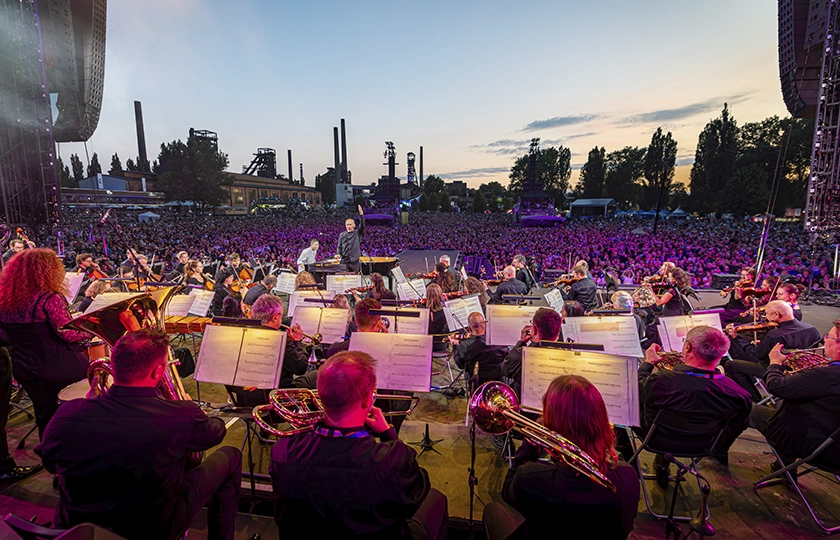
Closing your eyes, pressing play and letting yourself be carried away by a melody is a simple way to transport yourself from your armchair to another part of the world, but it’s always better to enjoy the experience in a theatre or by sharing the energy of the moment at a festival.
In a country with such a rich musical tradition as the Czech Republic, every traveller can choose their own soundtrack. A good place to start might be Bedřich Smetana, whose cycle of six symphonic poems ‘My Homeland’ is a musical portrait of Bohemia, a journey through its rivers, forests and legends. Listening to his music from the imposing Dvořák Hall at the Rudolfinum, one of Prague’s temples of music, is an unforgettable experience. But the Czech classical tradition does not end with Smetana. Antonín Dvořák, after whom that very hall is named, is another of its masters: his New World Symphony is now part of the universal symphonic repertoire.
And for those who prefer to turn up the volume and dance in the open air, the Czech Republic offers festivals of all genres, such as the Metronome Festival in Prague (19–21 June), the Bohemia Jazz Fest in various cities, Rock for People in Hradec Králové, or the famous Colours of Ostrava and Beats for Love in the capital of Moravia-Silesia.
As an audio curiosity, the Czech forests are also full of recognisable sounds, from the song of pheasants (which some studies associate with positive effects on mental health) to the constant murmur of rivers and forests.
Source: CZECH REPUBLIC Tourist Board