


- Experience key structural changes as consumers continue to prioritise experiences over the purchase of personal goods.
- Círculo Fortuny publishes in Spain the report by Altagamma, the Italian association of the same name, prepared by Bain & Company, which forecasts annual growth of between 4% and 6% over the next decade.
The global luxury market has shown strong resilience in 2025, with total spending stabilising at levels similar to last year, reaching €1.44 trillion, despite the context of economic and geopolitical uncertainty and changes in consumer preferences, according to a study conducted by Bain & Company for Altagamma.
As Círculo Fortuny confirmed in 2023, the report highlights significant structural changes as consumers increasingly choose experiences over the purchase of personal luxury goods, prioritising ‘experiential indulgence’ over ‘ostentation’ as new status symbols and focusing on well-being, connection and self-reward. In short, a ‘tectonic shift’, as the report calls it, towards luxury experiences at the expense of more traditional goods, which is reinforcing the growth of the global high-end market and restructuring the industry across all segments.
In fact, the report predicts that the global market for personal luxury goods will remain stable this year compared to the previous year, with an estimated value of €358 billion, compared to €364 billion in 2024, representing a decline of close to 2% although at constant exchange rates, it would remain essentially flat.

These figures indicate ‘maturity’ rather than a new impetus following the post-pandemic rebound in this market.
While ultra-high-net-worth buyers continue to sustain demand for high-end items, aspirational consumers have reduced their spending, adding pressure to traditional luxury, according to the report.
By luxury segment, in the automotive industry only high-end sports cars are showing resilience, while yachts and jets continue to experience robust growth. Art stagnates while designer furniture stabilises.
Wines and spirits, meanwhile, are showing disappointing results, while haute cuisine is booming in Asia, the Middle East and tourist centres, driven by young travellers eager for new experiences.
Bain’s analysis reveals that luxury spending based on price is polarised: on the one hand, the high end (representing around 40% of the market) has contracted slightly between 2023 and 2025, with a slight decline of between 1% and 3%.
On the other hand, the most accessible luxury segment, which corresponds to the upper-middle classes and whose spending is occasional, decreased slightly in the same period, with a variation of between 0% and -2%. Generation Z plays a leading role in this second segment, leading the consumption of personal luxury goods.
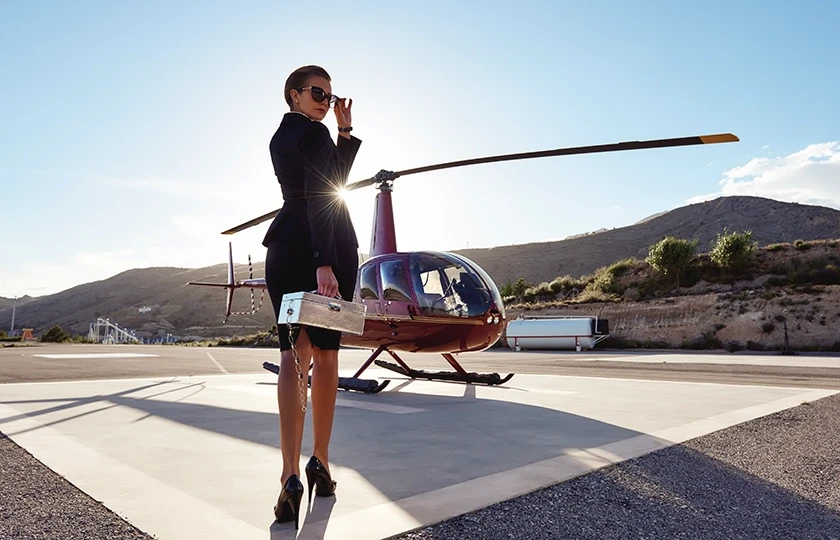
Challenges and uncertainties in personal luxury godos
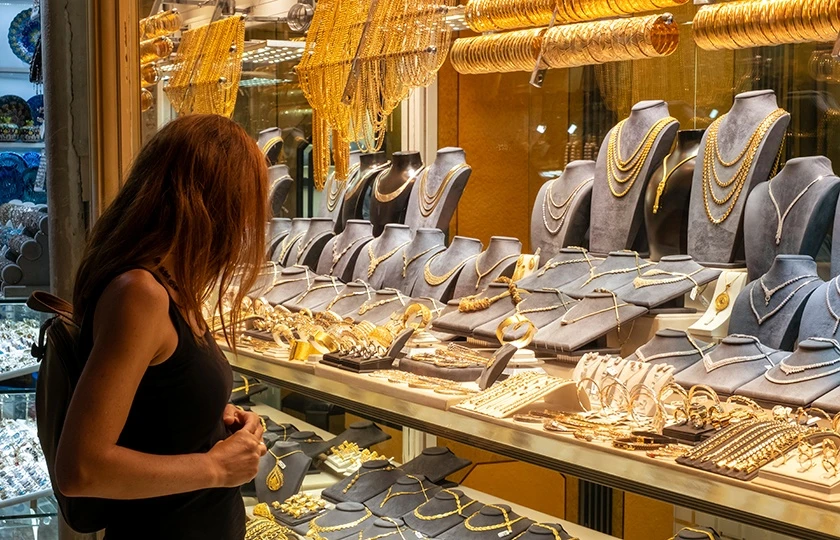
Jewellery is currently leading growth, at between 4% and 6%, driven by resilient demand, emotional appeal and an increase in customisable designs. Fashion eyewear also continues to perform strongly, with an estimated increase of between 2% and 4%, driven by innovation in design, versatility and digital integration. Cosmetics, meanwhile, remain stable, but fragrances continue to be the most dynamic subcategory, with AI-driven personalisation gaining ground.
The watch segment is characterised by greater polarisation, according to the study, with good results for high-end watches, although tariffs and price pressures are driving the resale market. Fashion remains stable, while leather goods lose ground due to the decline in so-called “hero bags” (personalised branded backpacks). Footwear lags behind, affected by price sensitivity and competition from sportswear, although more eye-catching styles suggest a recovery.
Discounts put pressure on all sales channels
Overall, luxury fashion at more accessible prices is recovering, driven by the success of brands on three levels: attracting consumers who are changing their style; reactivating traditional customers; and capturing Generation Z customers.
Pressure for discounts is increasing across all channels, favouring more selective points of sale. In physical luxury retail, outlets are outperforming other shops as consumers seek value and accessible luxury. Online channels remain stable. Single-brand stores are experiencing a slight decline, with a total reduction in retail space of 25,000 square metres in the last six months, a trend that is also affecting department stores: in the US, these have cut around 10% of their space since 2024. The study advocates reimagining physical retail by brands: fewer flagship stores, but larger ones that seek to evoke emotion, immersion and personalised connection.
New markets emerge in a fragmented regional landscape
The global luxury market is entering a crucial phase at the territorial level, marked by uneven regional trajectories. Spending in mainland China is expected to contract by between 3% and 5% this year (at constant exchange rates), shifting towards more affordable local brands and experience-driven categories, while the Japanese market is slowing down after a strong 2024 due to a slowdown in tourism.
For its part, Europe is facing a downward trend, with its luxury market expected to decline by between 1% and 3% by 2025, amid a slowdown in tourist flows impacted by a strong euro and geopolitical tensions. The Americas are expected to remain relatively stable (with growth of between 0% and 2%), driven by renewed domestic demand in the US and the expansion of luxury goods in Mexico and Brazil.
In contrast, the Middle East stands out as the ‘brightest star’ in luxury, with projected growth of between 4% and 6%, driven by robust long-haul tourism in Dubai and Abu Dhabi and sustained demand in Saudi Arabia.
Beyond traditional hubs, a new wave of markets is redefining the luxury landscape. The Middle East, Latin America, Southeast Asia, India and Africa combined represent a market value of around €45 billion in 2025, matching mainland China. From Generation Z’s embrace of accessible luxury in Southeast Asia to India’s growing middle class and emerging local players in Africa, these regions point to growing potential for luxury.

The consumer base is shrinking and spending is stabilising
The study highlights that the luxury consumer base continues to shrink and fragment, with numbers falling from 400 million in 2022 to around 340 million in 2025. Between 2024 and 2025, the acquisition of new customers by luxury brands has fallen by 5%. The study also reveals a lower level of interest, as active luxury buyers have gone from representing approximately 60% of total potential customers in 2022 to around 40-45% this year.
Spending patterns within the market show how shoppers are making fewer purchases in favour of small treats and discount channels. Luxury spending is also shifting towards experiences, affordable alternatives and resale, indicating a structural readjustment in the way consumers interact with luxury.
Margins, at 2009 levels
Meanwhile, spending by the wealthy is stabilising. After its market share skyrocketed from 30% (€88 billion) in 2019 to 45% (€165 billion) in 2024, it is slowing down in 2025, standing at around 46-47% (€165 billion).
The luxury industry is experiencing pressure on margins, mainly due to higher operating costs and challenges in sustaining revenue growth. EBITDA margins for personal luxury goods brands, which peaked at 23 per cent in 2012, are expected to be between 15 per cent and 16 per cent in 2025, a level similar to that of 2009. This contraction in margins has caused an estimated loss of €100 billion in the total enterprise value of the industry over the last twelve months.

The high-end scenario in 2035
Looking ahead, the report concludes that annual growth of between 4% and 6% for personal luxury goods remains realistic due to the increase in consumers and sustained demand. By 2035, the personal luxury goods market is expected to reach between €525 billion and €625 billion, while global luxury spending could range from €2.2 trillion to €2.7 trillion.
About CÍRCULO FORTUNY
Círculo Fortuny is the Spanish association of cultural and creative industries of excellence. Our objective is to promote recognition of the Spanish high-end sector, enhancing the image of the Spain brand and our members. The association comprises 83 members from 13 different sectors of activity. Since 2011, it has been part of ECCIA (European Cultural and Creative Industries Alliance), the leading body promoting and defending high-end products in the EU, which includes the seven main European luxury associations (Círculo Fortuny, Comité Colbert, Fondazione Altagamma, Meisterkreis, Walpole British Luxury, Laurel and Gustaff III Komittee), which together represent more than 750 companies and brands.
More information at www.circulofortuny.com
Source: ION, Image and Communication