
- According to the UNWTO and IMF, cultural tourism will grow by 8.1% annually, and luxury travellers are already travelling for clear cultural purposes.
- Mundo Amigo confirms that demand for curated experiences—private tours, experts, and exclusive events—has doubled in the last two years.
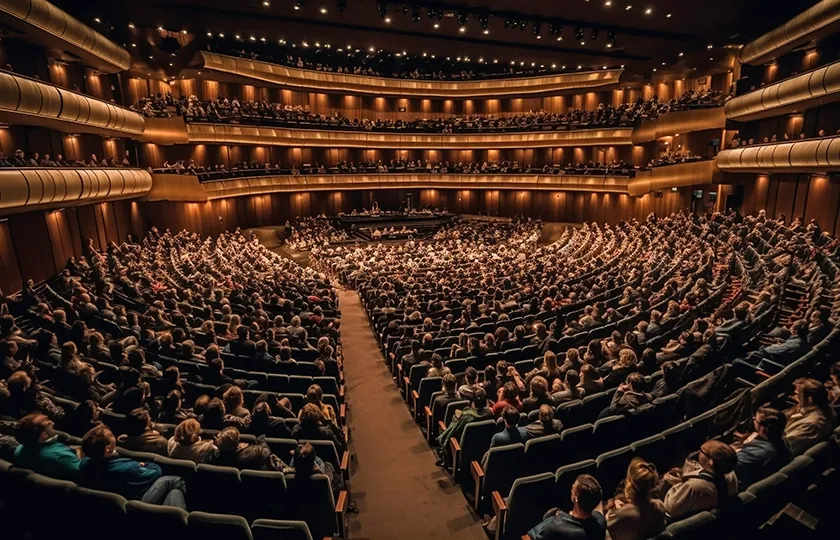
Attending an opera, reserving a seat for a classical music series, or travelling to enjoy a major temporary exhibition has become one of the main reasons for travel among high-end travellers. Premium cultural tourism will grow by 8.1% annually until 2035, according to an analysis by Future Market Insights (FMI), driven by travellers seeking to experience culture ‘from within’.
In this context, Mundo Amigo, a Spanish agency specialising in high-end cultural travel, presents the conclusions of its annual report on how culture has established itself as the new focus of luxury tourism.
Culture becomes the main reason for travelling
Premium travellers no longer choose their destination first, but rather the cultural event they want to experience: an opera premiere, a classical music festival, a major exhibition or a private visit to a museum.
We are witnessing a profound transformation: today’s high-end travellers are travelling for a clear cultural purpose. Culture has become their compass,‘ says Mikel González, product director at Mundo Amigo. ’A performance at the Musikverein, a festival such as Salzburg or a major exhibition are now as powerful a magnet as any iconic destination.”
Data confirming the trend
- According to the World Tourism Organisation (UNWTO), international tourism reached nearly 1.4 billion arrivals in 2024, 11% more than in 2023.
- The global cultural tourism market will reach $2.6 trillion in 2035, according to Future Market Insights (FMI).
- Studies by the European Travel Commission (ETC) confirm that premium cultural travellers spend between three and six times more than general tourists in Europe.
Market insight
According to Mundo Amigo’s analysis, demand for travel whose main purpose is to attend a cultural event (opera, classical music, major exhibitions) has doubled in the last two years, especially among travellers aged between 40 and 65, with a high level of education and cultural awareness.
The new premium cultural traveller
Profiles are evolving:
- More youthful than a decade ago (strong growth among 40–55 year olds)
- Demanding, informed and regular consumers of culture
- Seeking depth, reflection and context
- Preferring small groups, exclusive access and experiences guided by specialists
‘The new luxury is interpretation, not ostentation. The premium traveller wants to understand a work, talk to an expert, go where others don’t go,’ adds González.
Signature trips: the star product of luxury cultural tourism
Signature trips have become the most sought-after format in the segment. Among the most popular experiences are:
- Opera and classical music in Vienna, Berlin, Prague or Paris, with preferential access and expert commentary.
- Major temporary exhibitions in European museums, accompanied by art historians.
- International festivals such as Salzburg, Bayreuth and Glyndebourne.
- Themed tours (Caravaggio, Goya, modernist architecture, baroque music) guided by accredited specialists.
- Private or after-hours visits to museums, collections and heritage sites.
These programmes are based not on visible luxury, but on cultural curation: content, depth, access and rigour.
Economic impact: a strategic opportunity for the sector
The boom in premium cultural tourism has direct implications:
- It deseasonalises destinations
Opera seasons, festivals and exhibitions attract travellers during the less touristy months.
- It increases average spending
Premium cultural travellers are among those most likely to spend money in Europe.
- It diversifies the offering
This segment seeks out cities with artistic and cultural life, beyond the most popular destinations.
- It improves the reputation of the destination
Cultural travellers tend to be more loyal, sustainable and respectful of the environment.
‘Culture not only moves people: it moves the economy, prestige and positioning. It is a strategic vector for the tourism of the future,’ says González.
Key trends for 2025
- Cultural events as the focus of travel: opera, classical music, performing arts and major exhibitions
- Growth of curated travel: itineraries designed by experts
- Exclusive access as a premium standard
- Culture + gastronomy as an inseparable pairing
- Technology that amplifies cultural immersion before, during and after the trip
Conclusion
‘High-end cultural tourism will be one of the most dynamic segments of the next decade. Premium travellers seek depth, beauty and knowledge. And they want to experience it with rigour and excitement,’ concludes Mikel González.
About MUNDO AMIGO
Mundo Amigo is an agency specialising in high-end cultural travel, with a proven track record in creating unique experiences centred on art, music, history and heritage. In collaboration with leading institutions such as the Thyssen-Bornemisza National Museum and the Reina Sofía School of Music, it designs itineraries that provide access to culture ‘from the inside’: private visits, meetings with experts, attendance at exclusive events, and tours that reveal the soul of each destination. With a curated and rigorous approach, Mundo Amigo has positioned itself as a benchmark in premium cultural tourism for travellers seeking depth, knowledge and excellence.
Source: MD Communication