
Cultural tourism is no longer an emerging trend and is establishing itself as a distinct form of travel, characterised by depth, knowledge and a new relationship with time and destinations, according to Mundo Amigo’s annual analysis.
2025 has been a year of solid growth for tourism in Spain. With more than 85 million international visitors and tourist spending exceeding €118 billion through October, the sector has confirmed its strength. But behind these figures lies a less visible yet more significant transformation: the way in which culture-loving travellers travel has changed.
The annual report from Mundo Amigo, an agency specialising in high-end cultural travel, suggests that travellers interested in art, music and heritage are no longer responding to a one-off or aspirational behaviour. By 2025, these travellers will act judiciously, repeat patterns and make conscious decisions. For many, cultural travel has become a habit.
The end of the cumulative journey
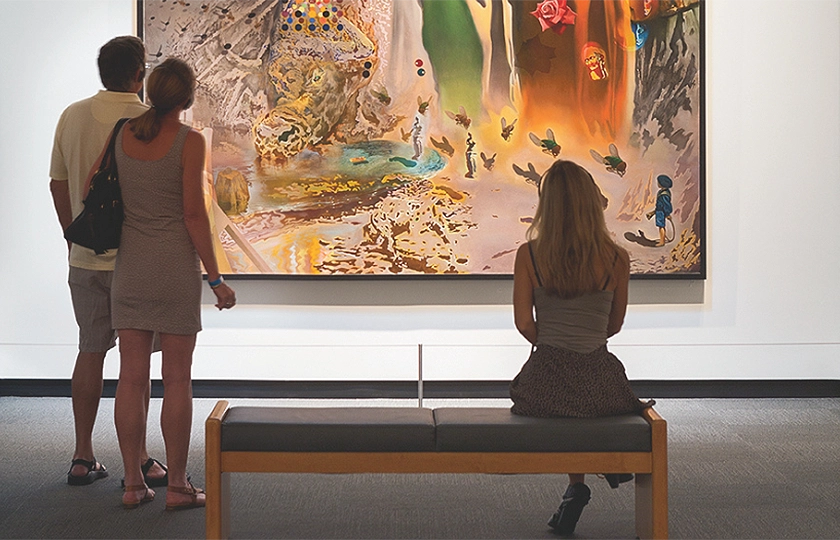
One of the most notable features of the year has been the break with the fast-paced travel model. The cultural traveller of 2025 no longer seeks to chain together destinations or accumulate references. They prefer to stay longer in one place and explore it at a leisurely pace, understanding its historical, artistic and social context.
This way of travelling involves a profound change: fewer kilometres, more content. The experience is built on time, on the repetition of spaces, on the possibility of returning to a work or a neighbourhood with a different perspective. It is not a journey of constant stimuli, but one of narrative continuity. And that completely changes the way a cultural itinerary is designed and experienced.
When knowledge structures experience
Another major conclusion from 2025 is the central role that expert knowledge has acquired. Cultural travellers are no longer satisfied with general information or standard tours. They want interpretation, context and critical analysis.
Art historians, curators, architects, musicologists and local specialists have become key figures. Not as a complement, but as a cornerstone. The expert does not accompany the journey: they organise it, giving it meaning and depth.
Within this framework, attending temporary exhibitions, music festivals or cultural celebrations remains important, but its function has changed. It is no longer the sole reason for travelling, but rather part of a broader narrative, integrated into the destination and its history.
This approach has also encouraged interest in less obvious destinations, especially medium-sized cities with a rich heritage and active cultural life. Places such as Parma, Mantua and Ferrara in Italy, León in Spain and Trieste on the Adriatic coast offer a more direct relationship with the environment and a pace more in keeping with this new way of travelling. It is not a question of avoiding the big icons, but of balancing them.
A more defined profile, a more conscious way of travelling
Mundo Amigo’s analysis identifies a cultural traveller with increasingly clear characteristics: an interest in trips with a recognisable common thread, a preference for small groups, an appreciation of gastronomy as a cultural expression, and a constant search for consistency between content, pace and expert guidance.
Forecasts for 2026 suggest that tourism will continue to be a spending priority for Spaniards. In this context, cultural travel is in a strong position. It is no longer an exception, but has become a recognisable and mature form of travel.
‘What we have seen in 2025 is not a trend, but a natural evolution of the cultural traveller,’ explains Mikel González, product director at Mundo Amigo. ‘They travel with more discernment, greater awareness of time and a clear expectation of depth.’
About MUNDO AMIGO
Mundo Amigo is an agency specialising in high-end cultural travel, with a proven track record in creating unique experiences centred on art, music, history and heritage. In collaboration with leading institutions such as the Thyssen-Bornemisza National Museum and the Reina Sofía School of Music, it designs itineraries that provide access to culture ‘from the inside’: private visits, meetings with experts, attendance at exclusive events, and tours that reveal the soul of each destination. With a curated and rigorous approach, Mundo Amigo has positioned itself as a benchmark in premium cultural tourism for travellers seeking depth, knowledge and excellence.
Source: MDG Comunicación