

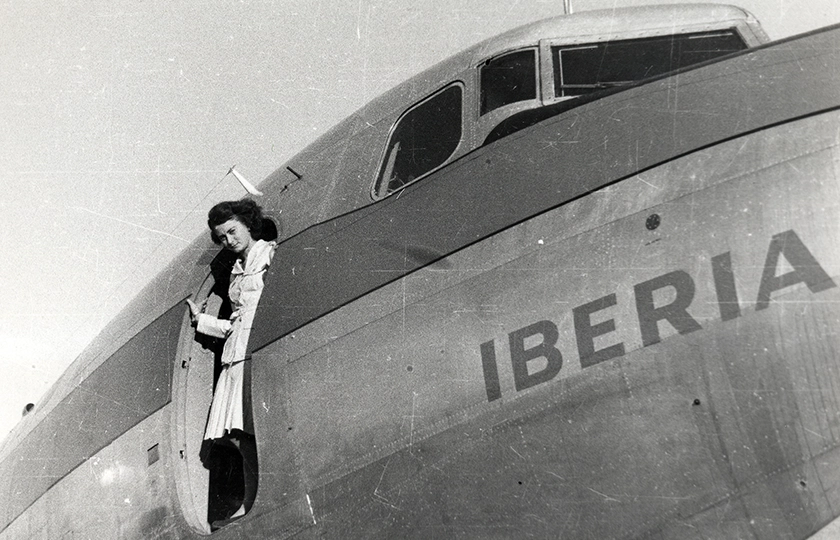
- On 15 October 1946, the airline operated its first transatlantic commercial flight between Madrid and Buenos Aires, and for the first time, four flight attendants looked after the passengers.
- This milestone in aviation marked the birth of the role of cabin crew member (TCP) in Spain.
- A year later, in 1947, Fernando Castillo joined the company as its first male cabin crew member.
- Today, the route between Buenos Aires and Madrid operates three daily flights, most of which are operated by the A350, the largest aircraft in Iberia’s fleet.
On 15 October, Iberia celebrated the 80th anniversary of the introduction of the cabin crew role in Spain. The airline chose to highlight the service provided by these professionals during its first transatlantic commercial flight, which took place between Madrid and Buenos Aires on 15 October 1946. This milestone in Spanish aviation took place aboard a Douglas DC-4, which connected the two cities in approximately 36 hours, after stopovers in Villa Cisneros (in Western Sahara), Natal and Rio de Janeiro. There were 28 passengers on that flight, who paid 11,435 pesetas for a one-way ticket and 20,583 pesetas for a return ticket.
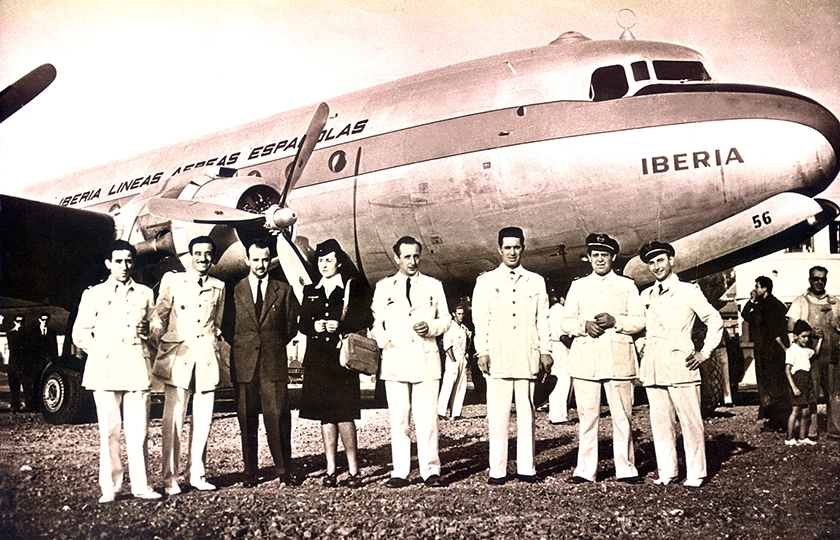
In the early days, several names were considered for the new profession: ‘aeromozas’, ‘aeroviarias’, ‘mayordomas’ or ‘provisorias’, although the term ‘azafata’ was ultimately chosen. Four women were selected for that first flight: Pilar Mascías, Marichín Ruiz, María José Ugarte and Ana Marsans. The main requirement for recruitment was knowledge of foreign languages, primarily English. In 1947, a year after the first flight with flight attendants, Iberia’s first male cabin crew member joined the company. He was Fernando Castillo, who had previously worked as a waiter in a luxury restaurant in Madrid.
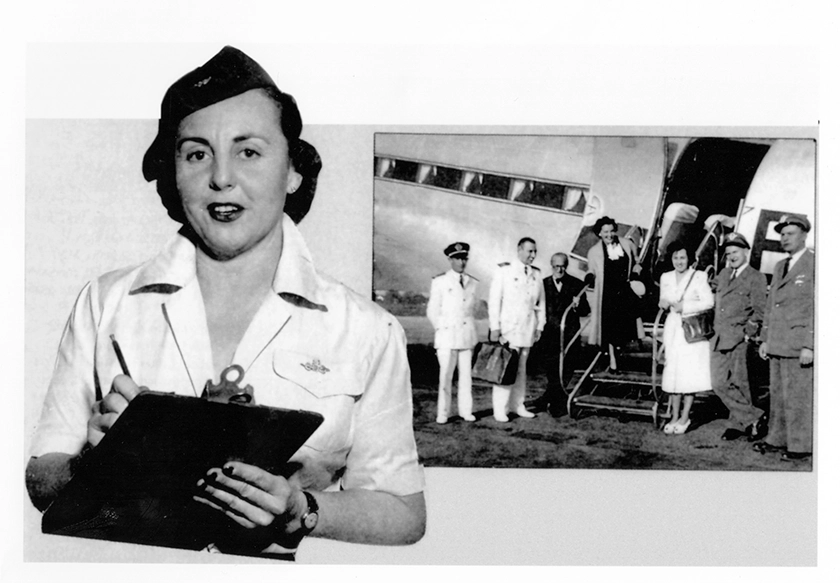
The duties of the first flight attendants were essentially to provide assistance, such as reassuring passengers and instilling confidence in them, and serving the in-flight catering. The menu on the first flight between Madrid and Buenos Aires consisted of fried chicken, Spanish omelette, hard-boiled eggs and chocolates, and was served in small cardboard boxes.
The history of cabin crew, as told through their uniforms
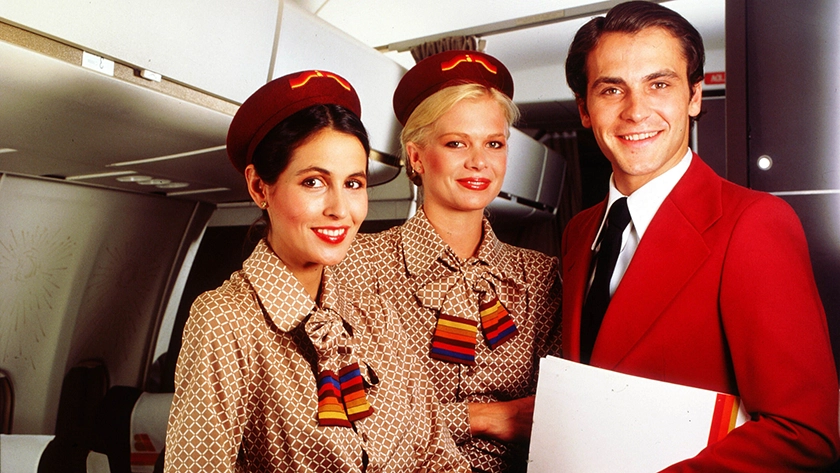
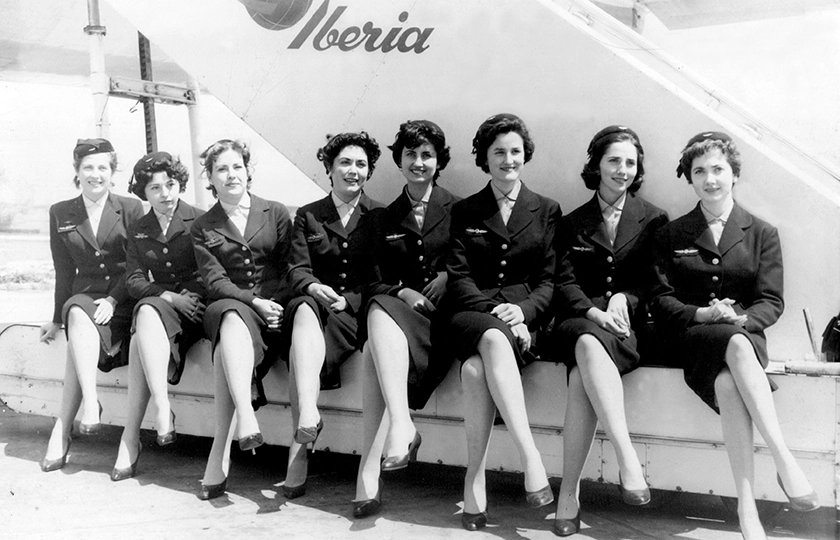
The first flight attendants did not wear uniforms. However, it wasn’t long before Iberia introduced them for its cabin crews. Initially, these consisted of a white outfit made from parachute fabric for the summer, and a navy blue outfit for the rest of the year. Inspired by military style, these uniforms were gradually modified, with the cap being removed and the white colour—which stained easily—phased out.
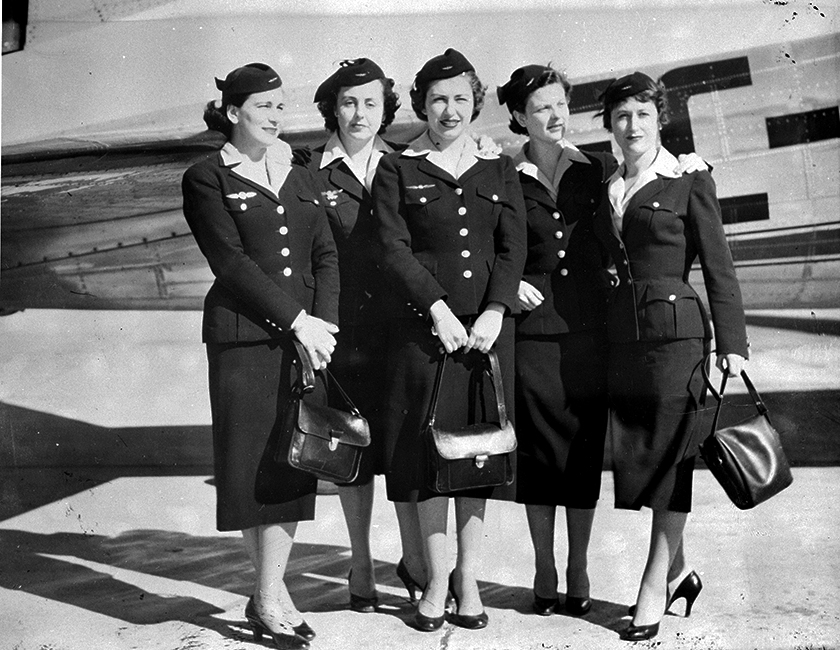
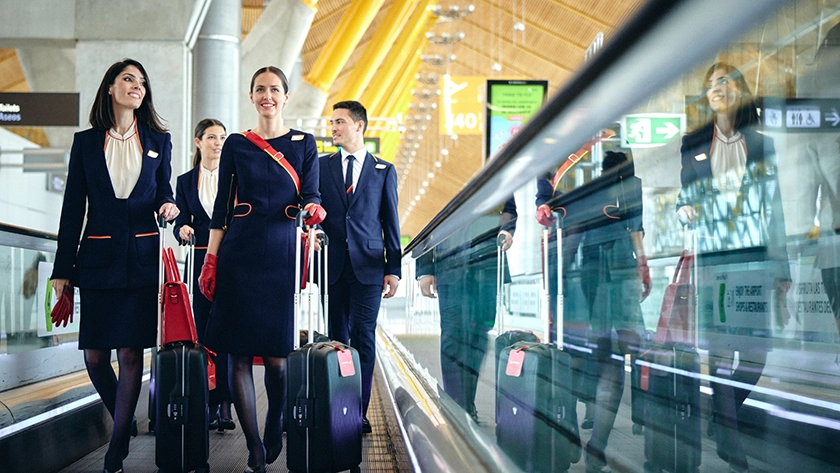
From the 1960s onwards, Iberia began commissioning renowned fashion designers to create its uniforms. Manuel Pertegaz marked the start of the company’s collaboration with Spanish haute couture. In the 1970s, Elio Berhanyer took over. He was followed by other Spanish designers such as Adolfo Domínguez and Alfredo Caral. Since 2020, the Catalan designer Teresa Helbig has been the first woman in the company’s history to take on this role. Her designs, in navy blue, red and yellow, combine elegance with comfort and functionality.
Ensuring passenger safety
Iberia currently employs 4,062 cabin crew, of whom 2,735 are women (67 per cent) and 1,327 are men (33 per cent). Over the years, their role has evolved and become more professional. Whereas they used to focus mainly on passenger care, today cabin crew hold significant responsibilities in the area of safety.
“A cabin crew member does not just carry out safety demonstrations. Among other duties, they are responsible for checking emergency equipment, managing evacuations, identifying behaviour that could affect safety, and responding to unforeseen incidents or medical emergencies. All of this is done in coordination with the pilots and ground staff,” emphasises Paco Rueda, Director of Cabin Crew at Iberia.
Three daily flights to Argentina
In 1946, the Madrid–Buenos Aires route operated once every ten days. Eighty years on, Argentina remains one of Iberia’s largest markets in Latin America, with three daily flights, most of which are operated by the A350, the largest aircraft in the fleet.
It is also worth noting that Argentina is one of the countries prioritised within Iberia’s Flight Plan 2030, the strategic plan the company recently launched to underpin the development of its business over the coming years.
About IBERIA
Iberia has been flying from Spain for 99 years with the aim of fostering prosperity by connecting people with the world. It is the leading airline for flights between Europe and Latin America, offering direct flights to 21 destinations in 16 countries across the region. Together with Iberia Express and Iberia Regional Air Nostrum, it operates a fleet of 165 aircraft and offers flights to more than 140 destinations in around 50 countries worldwide from Madrid Airport, where it has established its hub. It forms part of the IAG airline group, the first in the world to commit to achieving net-zero emissions by 2050. In 2025, it was the fourth most punctual airline in Europe and the sixth in the world.
Source: IBERIA Press Office