
- The capital achieved its record for international tourist spending between January and September with €13.243 billion, 9.52% more than in 2024.
- The Local Tourism Council has presented the progress made on the RESIDE Plan, tourist mobility, cleanliness in areas with high tourist traffic, sports tourism, air connectivity and tourism intelligence.
- Madrid strengthens its air connectivity with Asia with two new routes to China and a new frequency to Tokyo.
- The “Te faltan calles” (You’re missing streets) campaign, which won two AMPE Silver Awards, continues to expand in 2026 to new areas to reinforce the decentralisation of the destination.
- International markets drive tourism in October with increases in overnight stays from the US (+11%), Argentina (+14%), China (+22%), Brazil (+32%) and Japan (+23%).
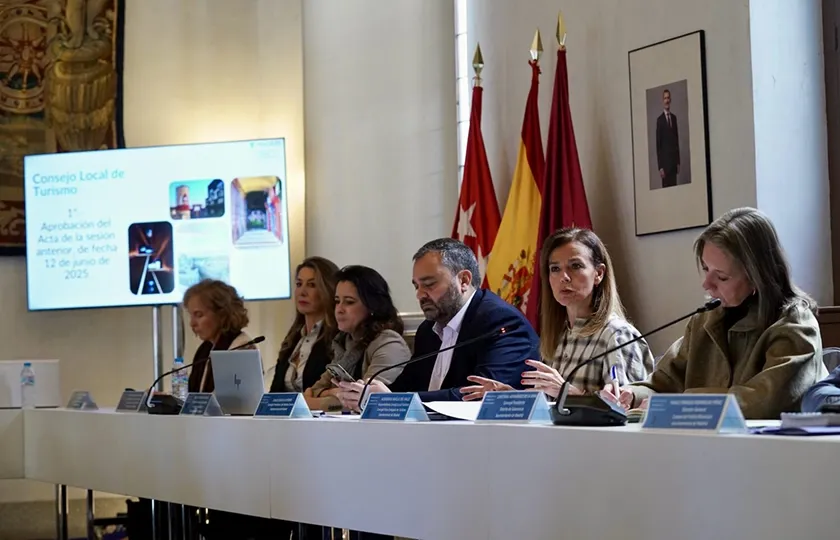
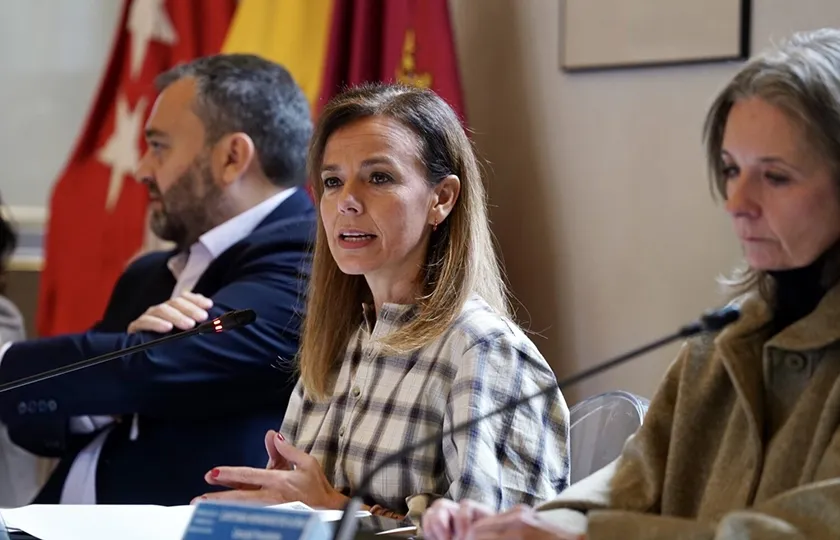
The Tourism Department held the second session of the year of the Local Tourism Council, the municipal body for participation and coordination with the city’s tourism sector. The meeting, chaired by the Councillor for Tourism and Vice-President of this municipal body, Almudena Maíllo, analysed progress in areas such as mobility, cleanliness in high-traffic areas, the regulation of tourist flats and air connectivity, and reviewed the main data for the sector. According to the Tourist Expenditure Survey (EGATUR), Madrid recorded €13.243 billion in international tourist expenditure between January and September this year, 9.52% more than in the same period in 2024, thus consolidating the positive impact of the sector on Madrid’s economy.
Added to this figure is the strong performance of tourism in the city of Madrid in October, when the city welcomed 958,059 visitors, 64.7% of whom were international, and recorded 2,014,523 overnight stays, 3% more than in the same period last year, according to data from the National Statistics Institute (INE). International tourism once again stood out with year-on-year increases of 7.9% in travellers and 8.5% in overnight stays, thanks to the positive performance in the latter in strategic markets such as the United States (+11%), Argentina (+14.41%), China (+22.73%), Brazil (+32%) and Japan (+23.76%).
The Local Tourism Council also included the participation of the Councillor for Cleaning and Green Areas, José Antonio Martínez Páramo; the Councillor for the City Centre, Carlos Segura, and the Councillor for Salamanca, Cayetana Hernández de la Riva, as well as representatives from the Municipal Police and the city’s tourism sector.
Likewise, the working groups dedicated to tourist mobility, safety, sports tourism and quality of life in Usera have presented their progress and objectives for the coming months. ‘This advice reinforces a way of working in tourism that focuses on the visitor experience and the quality of life of residents,’ said Maíllo, emphasising that ‘Madrid is experiencing a period of consolidation in tourism that encourages us to continue planning rigorously, supported by data and public-private collaboration.’
Tourism decentralisation, digitalisation and new air routes
The council has been informed of the roll-out of the “Te faltan calles” (You’re missing streets) campaign by the Tourism Department, which has been recognised with two AMPE Silver Awards and will continue to expand during the first half of 2026 to new areas such as Salesas, Moratalaz, Lavapiés, Ventas, El Capricho and Villaverde. This campaign is part of the tourism decentralisation strategy and aims to diversify visitor flows, boost local trade and promote other areas of Madrid among visitors and locals alike.
Air connectivity remains one of Madrid’s strengths. In the coming months, new routes and frequencies will be added to Recife (Brazil), Toronto (Canada), London (United Kingdom), Orlando (United States), Guangzhou and Haikou (China) and Tokyo (Japan), expanding the destination’s reach and its capacity to attract high-quality international tourism. With these two new routes in China, Madrid will be connected to ten cities in the country by the end of 2025, compared to the six connections that existed in 2019, reinforcing its role as a hub between Europe and Asia. Likewise, the positive impact of business tourism in Madrid has been highlighted, which has been named Europe’s Leading Conference and Meeting Destination for the eighth consecutive year, according to the World Travel Awards.
The session also presented the main lines of the new destination intelligence strategy, with the new digital ecosystem, the consolidation of artificial intelligence, the transformation of the Madrid City Tourism Observatory, and agreements with universities and payment companies to strengthen real-time data collection, as well as the implementation of a new digital ecosystem. This digitisation will improve planning and strategic decision-making for the destination, anticipating trends and changes in demand and enhancing the visitor experience.
Advances in cleaning, accommodation management and tourist mobility
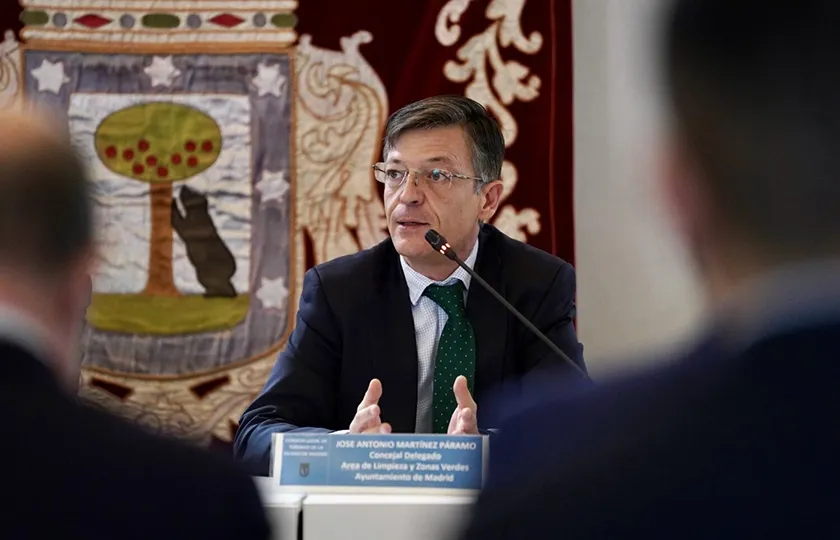
The Councillor for Cleaning and Green Areas, José Antonio Martínez Páramo, has outlined the evolution of the tourist cleaning service, pointing out that “the cleanliness of the city of Madrid has improved considerably since the cleaning contracts came into force. For example, suggestions and complaints have fallen by 51% since 2018”. For Martínez Páramo, “although the streets are cleaner, new measures need to be taken due to population growth and the increase in the number of people visiting Madrid, as well as the emergence of new anti-social behaviour, with litter being left next to empty bins and an increase in the number of “black spots”.
The measures that will soon be implemented include increasing the number of operators performing cleaning and combing tasks by 300 for three months, creating neighbourhood brigades in the districts, launching new awareness and information campaigns for citizens and businesses, and strengthening cooperation with the Municipal Police to intensify surveillance and punish anti-social behaviour.
With regard to tourist accommodation, the results of the RESIDE Plan have been presented, which continues to make progress in regulating tourist accommodation and protecting local businesses. Since its entry into force, together with a series of other measures, the number of properties listed for sale has fallen by around 15%, representing more than 2,600 fewer homes than last summer and almost 20% fewer than in 2024. These advances contribute to protecting residential use in the most stressed areas and strengthening neighbourhood coexistence.
In terms of tourist mobility, the area has updated the work underway to improve accessibility and traffic flow on the main tourist routes. These include managing coach access, regulating special vehicles and improving pedestrian mobility in high-density areas. These actions seek to balance the visitor experience with coexistence and safety in public spaces, while also reinforcing the sustainability of the destination.
The positive impact of sports tourism in Madrid
The council also highlighted the contribution of sports tourism to the growth of the sector and to Madrid’s international profile. The recent NFL match, held at the Santiago Bernabéu stadium, attracted 78,610 spectators, 42,000 of whom were international tourists, generating an estimated economic impact of €70 million. Added to this is an average daily expenditure of between €50 and €100, hotel occupancy of close to 90% in the areas closest to the stadium, and an impact of €21.2 million in the restaurant sector alone. These figures confirm the role of sport as one of the driving forces behind the city’s economic and reputational growth.
Likewise, details have been provided on the Comprehensive Strategy for Strengthening Commercial and Hospitality Activity 2025-2027, which, with a budget of €95.4 million, has been designed to modernise the commercial fabric of the city of Madrid, reinforce the digitisation of the sector, improve the visitor experience and boost economic activity in tourist areas.
Source: MADRID CITY TOURISM