

- The Delegated Area of Tourism sponsors this publication edited by the Madrid Academy of Gastronomy, which highlights the great legacy of these historic establishments.
- The work reviews the origins and anecdotes of 16 taverns, cafés and restaurants in the capital that are over a century old and their fundamental role in Madrid’s gastronomic and cultural heritage
.
- The publication combines historical documentation and photographs with a first-person narrative that turns each establishment into a character with its own voice.
- The book pays tribute to the people and families who have sustained these restaurants and taverns generation after generation, with a special mention for Félix Colomo.
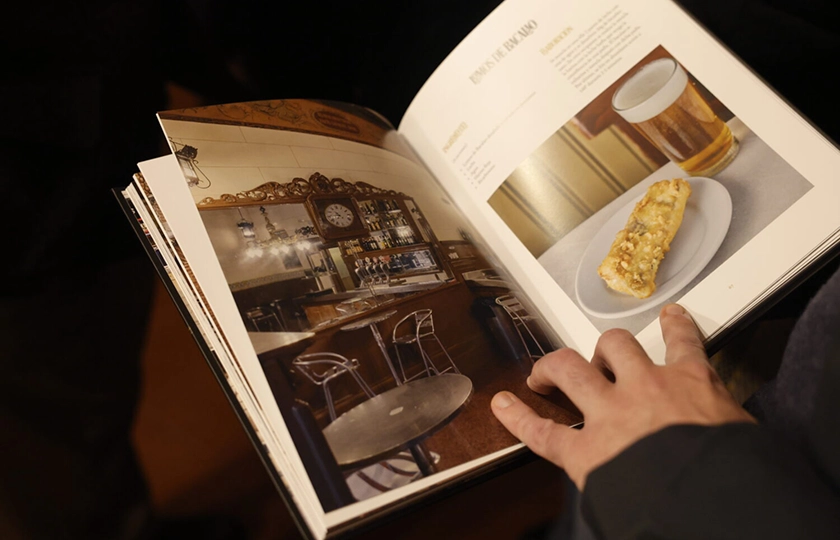
- The book also presents step-by-step recipes for each establishment’s most representative dishes, from La Ardosa’s juicy tortilla and Botín’s suckling pig to Casa Labra’s battered cod and La Mallorquina’s bartolillos.
- The Delegated Area of Tourism has collaborated with the Madrid Academy of Gastronomy on other publishing projects to promote the capital’s gastronomic appeal, such as Madrid Gastro. La nueva movida (Madrid Gastro. The new scene) and Madrid Cocktail. Memoria líquida de la capital (Madrid Cocktail. Liquid memory of the capital).
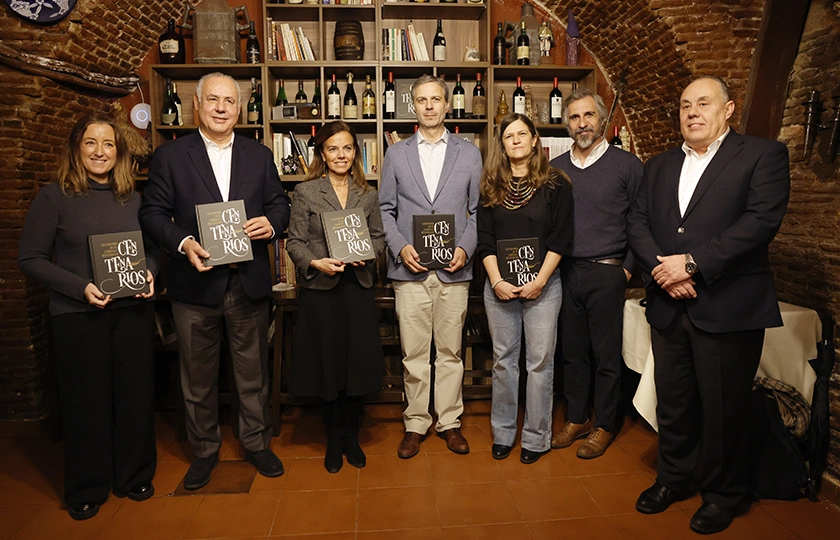
The Councillor for Tourism, Almudena Maíllo, today presented the book Gastronomy of Madrid‘s Centenary Taverns and Restaurants at Casa Ciriaco, a publication that covers almost three centuries of gastronomic history through 16 of the city’s most emblematic establishments. The work is published by the Madrid Academy of Gastronomy and sponsored by the Department of Tourism and the Association of Centenary Restaurants and Taverns of Madrid (RCM).
The publication brings together the history, anecdotes and most representative dishes of 16 taverns, cafés and restaurants that are over a century old. The book combines historical documentation and photographs with a first-person narrative that offers a close and human look at these spaces, which are essential to the construction of Madrid’s gastronomic imagination.
For Maíllo, ‘anyone who picks up this book will find a highly original way of recounting Madrid’s centuries-old gastronomy, with first-person narratives that turn restaurants into protagonists.’ The councillor pointed out that ‘this perspective allows readers to enter each establishment, listen to their memories, learn about the most traditional recipes and the people who have passed through their doors, taking a very intimate journey through almost three centuries of Madrid’s gastronomic history.’ In this regard, Maíllo stressed that ‘Madrid cannot be conceived without these century-old restaurants and taverns’ and that ‘defending century-old gastronomy is defending the history and identity of the city.’
Maíllo highlighted that the book is also ‘a tribute to the people and families who have sustained these restaurants for generations’ and had a special memory for Félix Colomo, a key figure in Madrid’s hospitality industry, who recently passed away: ‘This book is a tribute to Félix Colomo, a deeply generous person who saved La Posada de la Villa and ran Las Cuevas de Luis Candelas, among other establishments. Félix understood the hospitality industry as a commitment to the city and the gastronomy of Madrid.’
Unique dining venues and iconic recipes
Bodega de la Ardosa, Botín, Café Gijón, Casa Alberto, Casa Ciriaco, Casa Labra, Casa Pedro, Cervecería Alemana, La Casa del Abuelo, Las Cuevas de Luis Candelas, La Mallorquina, La Tasca Suprema, Lhardy, Malacatín, Posada de la Villa and Taberna Antonio Sánchez are the century-old establishments featured in this volume. These unique spaces have defined and continue to set the gastronomic and cultural tone in Madrid.
Each chapter is dedicated to one of these establishments, allowing readers to discover their origins, transformations, curiosities, and the families and professionals who have kept them alive generation after generation. The tour is completed with the most iconic recipe from each establishment, explained step by step, from La Ardosa’s juicy tortilla or Botín’s suckling pig to Casa Labra’s battered cod, La Mallorquina’s bartolillos or Malacatín’s cocido.
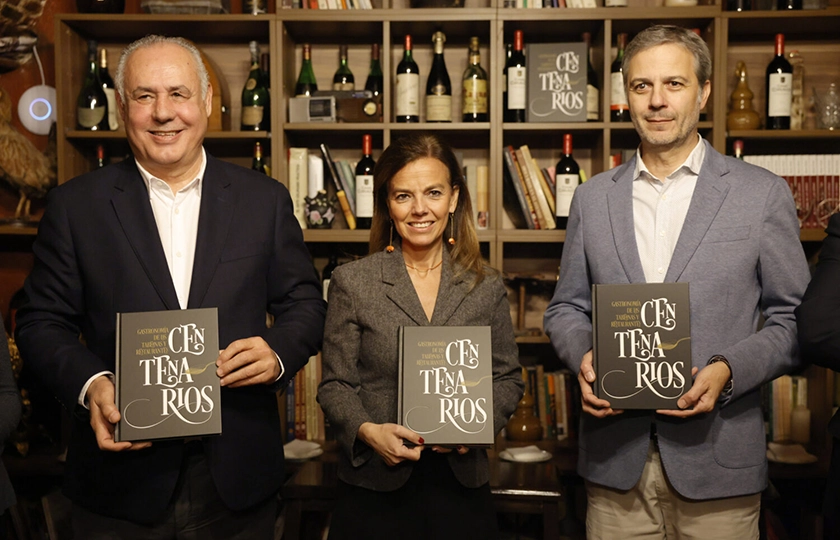
Gastronomía de las tabernas y restaurantes centenarios de Madrid (Gastronomy of Madrid’s Centenary Taverns and Restaurants) is authored by Rogelio Enríquez, president of the Madrid Academy of Gastronomy, Beatriz Garaizábal, Almudena Escorial and Íñigo Navarro, and features a foreword by Alfonso Delgado, president of the Association of Centenary Restaurants and Taverns of Madrid (RCM).
Maíllo highlighted the joint work with the Madrid Academy of Gastronomy, ‘which provides the rigour and knowledge required by a gastronomic and cultural heritage of this level’ and pointed out that ‘protecting these restaurants is ensuring that their memory continues to be part of Madrid’s present and future’.
Publishing projects to promote Madrid's gastronomy
This publication joins other publishing projects promoted by the Madrid Academy of Gastronomy with the sponsorship of the Delegated Area of Tourism, within the framework of the collaboration agreement between both institutions for the promotion of gastronomic tourism in the capital.
These are the English editions of Madrid Gastro. La nueva movida (Madrid Gastro. The New Scene) (Alberto Fernández and Luis de las Alas, Abalon Books), about the capital’s vibrant gastronomic scene, and Madrid Cocktail. Memoria líquida de la capital (Madrid Cocktail. Liquid Memories of the Capital) (François Monti, Abraham Rivera and Estanis Núñez, Abalon Books), focusing on the history of cocktail making in Madrid. In addition, the first illustrated map of Madrid’s vermouth bars has been published, with fifteen addresses in different neighbourhoods where you can enjoy a good vermouth. New titles will soon be added to continue promoting the diversity and authenticity of Madrid’s gastronomy.
Source: MADRID CITY Press