
- The new 2026–2027 Biennial Plan will prioritise key measures to advance the sustainability and competitiveness of the tourism sector.
- Virtually the entire Government is involved in implementing a cross-cutting strategy, comprising 50 measures and 148 specific instruments.
- The Biennial Plan sets out a timetable for measures targeting destinations, businesses, workers, residents and tourists.
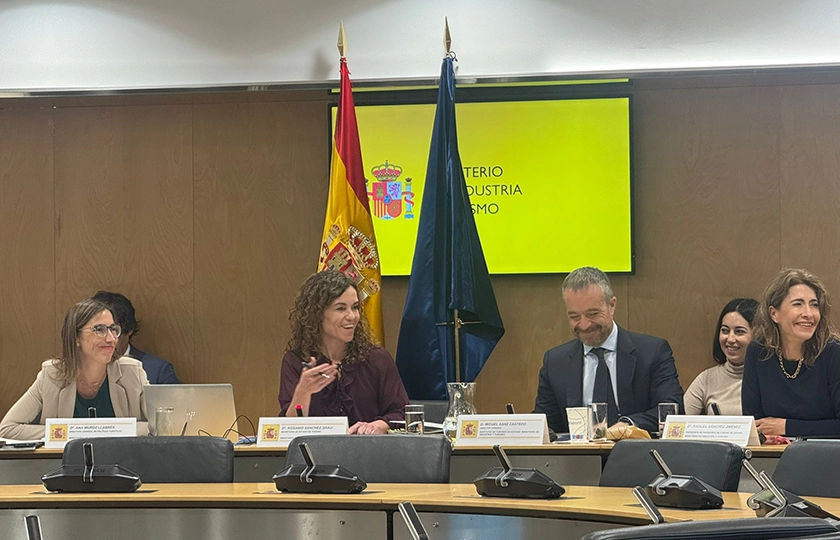
The Secretary of State for Tourism, Rosario Sánchez, today chaired a new meeting of the working group of the Interministerial Commission on Tourism, tasked with drawing up the 2026-2027 Biennial Plan provided for in the Spain Tourism 2030 Strategy, which prioritises the measures and instruments to be developed over the next two years.
Sánchez emphasised that “we are continuing to make progress in the roll-out and implementation of the Spanish tourism strategy, driven by the conviction that it will be the key instrument for leading sustainable tourism worldwide from an environmental, social and economic perspective”.
One of the main features of the Strategy is its cross-cutting nature, as it contains 50 measures and 148 specific instruments to be developed by 18 of the Government’s 22 ministries. Consequently, today’s meeting served to analyse the extent to which the plan has been implemented and to schedule the actions to be carried out over the next two years.
To ensure triple sustainability, the Strategy sets out objectives for destinations, businesses, workers in the sector, residents and tourists.
In line with the established priorities, the Biennial Plan will specify measures such as the creation of an early-response crisis committee for tourism crises, which is already operational to analyse the impact of the war in the Middle East on the tourism industry, but also initiatives in the field of energy efficiency and support for the production of SAF (Sustainable Aviation Fuel) to reduce emissions and advance the decarbonisation of the aviation sector, as a key strategic pillar for the future of tourism mobility in Spain.
With the aim of fostering social cohesion in tourist destinations and promoting balanced coexistence, work is underway to develop a Tourism Intensity Atlas, which will provide data to improve decision-making regarding tourist flows.
Furthermore, other measures are being considered to improve the competitiveness of the tourism sector, to implement digitalisation within the tourism ecosystem, to mitigate climate change and, ultimately, to enhance the industry’s sustainability.
In addition to setting a timetable for the measures, the inter-ministerial working group is also responsible for monitoring the implementation of the Strategy. To date, implementation has already begun on 45% of the measures it contains.
Source: MINISTRY OF INDUSTRY AND TOURISM