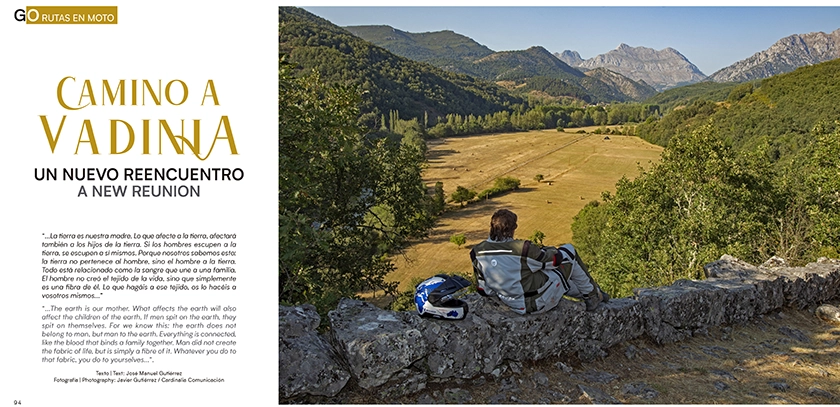
“…The earth is our mother. What affects the earth will also affect the children of the earth. If men spit on the earth, they spit on themselves. For we know this: the earth does not belong to man, but man to the earth. Everything is connected, like the blood that binds a family together. Man did not create the fabric of life, but is simply a fibre of it. Whatever you do to that fabric, you do to yourselves…”.
This is a paragraph from the message that Chief Seattle sent to then US President Franklin Pierce in 1854, when they sought to purchase the territories inhabited by the indigenous peoples.
This letter, often distributed by the UN as it is considered one of the most beautiful and profound statements ever made on the defence of territory, may seem strange for me to use to begin a report with a biker theme.
Perhaps that is where the difference lies, because my irredeemable biker side always seeks the essence that gives meaning to each route, beyond the simple act of riding along winding roads, and that is what has brought me to this corner of León. In it, nature has allowed man to integrate himself in order to write part of history, to develop ways of life and to leave us an amazing cultural legacy.
It was a sunny day last summer when I remembered a part of my homeland in León that I have visited many times, but always with the pressure and rush of work, leaving my desire to listen to its silences and slowly observe the dreamlike quality of a light that changes throughout the day on the back burner. As I roll northwards, the book of history shows me the traces of those who walked this artery of crystalline life.
Without further ado, I set out to travel in the opposite direction along the Esla River valley, the mythical Astura already mentioned by Roman historians such as Floro in the 3rd century. A journey through more than two thousand years of heritage across a changing landscape that would take me to the heart of the enigmatic Vadiniense territory.
Following the echoes of an ancient kingdom
The banks of the River Esla are the common thread of a journey against the current that links a beautiful trail of medieval monasteries with the devout silence of their stones, archaeological sites, riverside forests and quiet villages along a route full of surprises.
The main tributary of the River Duero generously irrigates a land that is fertile like few others. As you travel along the road to its confluence with the Porma, surrounded by splendid farmland, you will understand why the kings of León set their sights on these borderlands, which were repopulated in the early Middle Ages for the founding of monasteries as centres of territorial, spiritual and cultural control.
Thus, this middle course of the Esla became a melting pot where Visigothic tradition, Mozarabic art of repopulation and later Romanesque art mixed with the arrival of Cluniac monks in the 11th century.
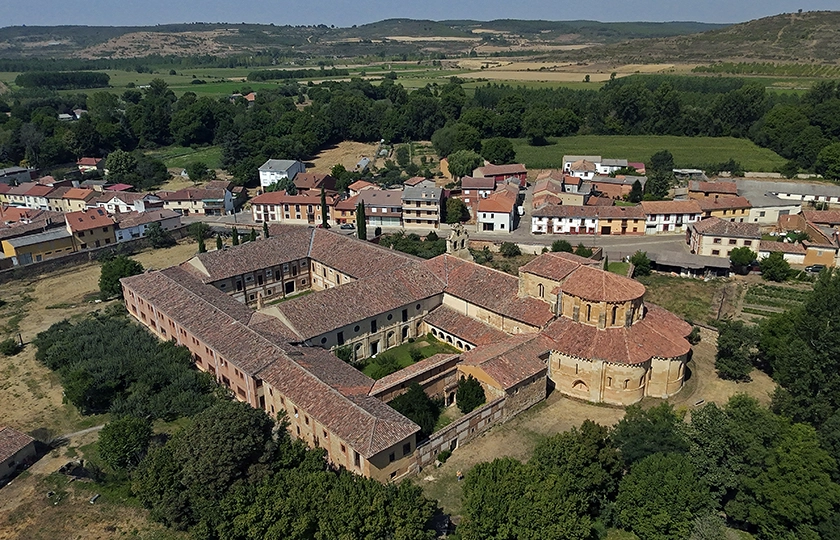
Amidst the peace that can only be felt in places that emit good vibes, the remains of the monastery of Santa María de Sandoval resist oblivion. A 12th-century Cistercian monastery, it became an important centre of power thanks to its wealth, which grew through successive donations from the Leonese nobility, including the emblematic Queen Urraca, whose memory and importance are being celebrated this year in the city of León with a full programme of activities to mark the ninth centenary of her death.
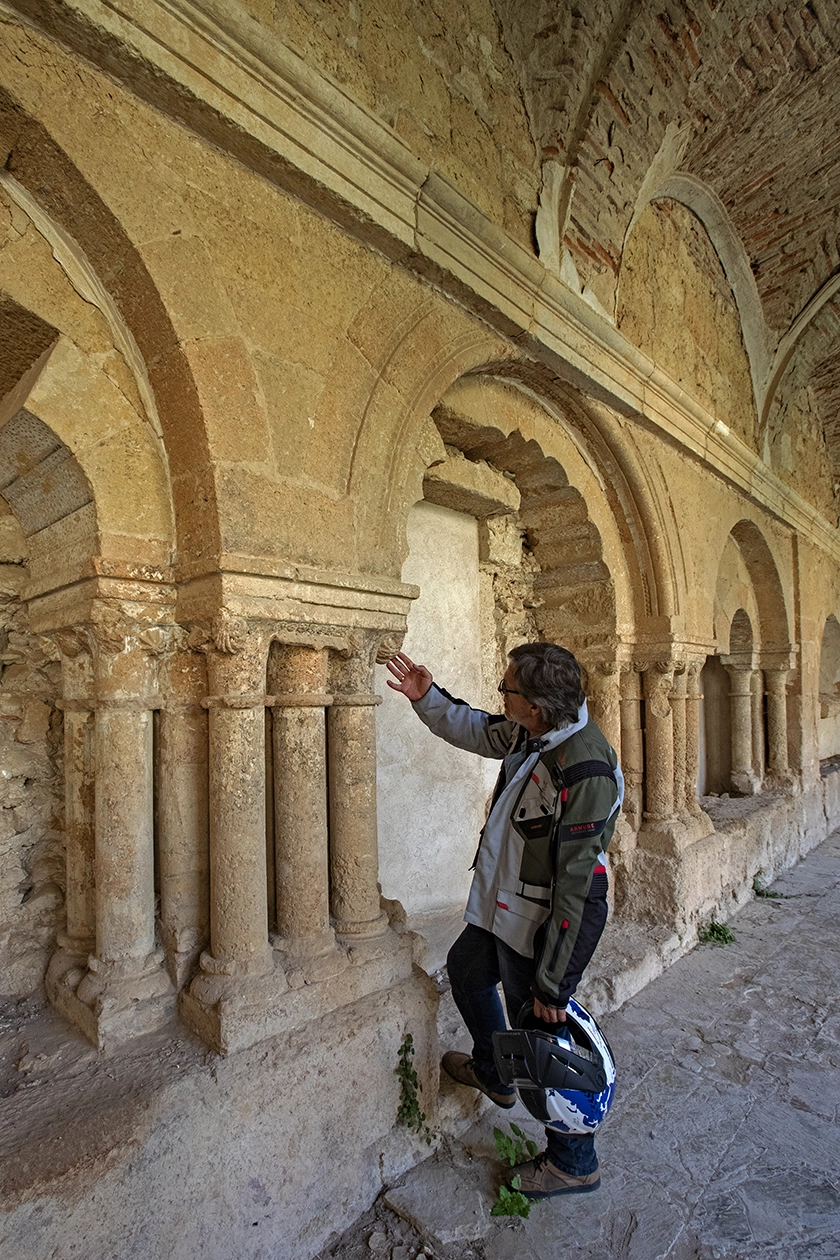
Despite the state of ruin that various measures are attempting to contain, walking among its walls and some of the rooms that remain standing is a sensory experience that helps us imagine what life was like centuries ago. In addition to the exterior walls, which feature several Romanesque doors, the best-preserved parts are the church, where liturgical ceremonies are still held, and the 17th-century neoclassical cloister.
The monastery was inhabited until 1835, when it was abandoned as a result of Mendizábal’s confiscation of church property. With it came ruin, plunder and extreme deterioration that almost led to its disappearance.
Fortunately, it was stopped, and today it remains a landmark in the history of León and the Way of St James.
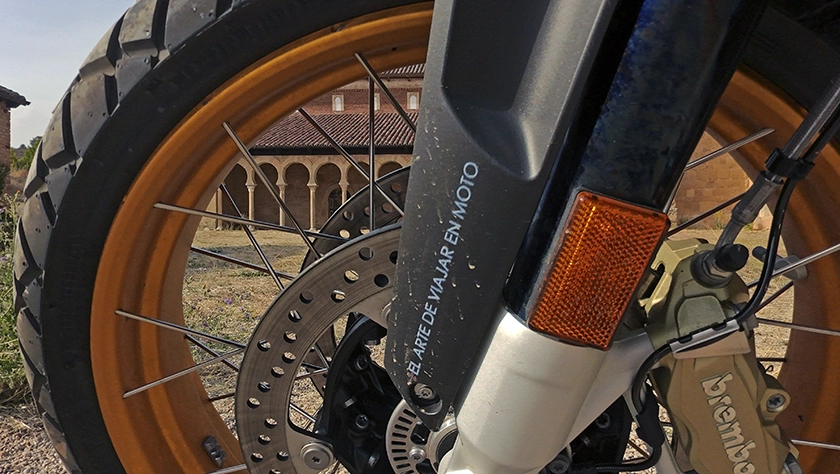
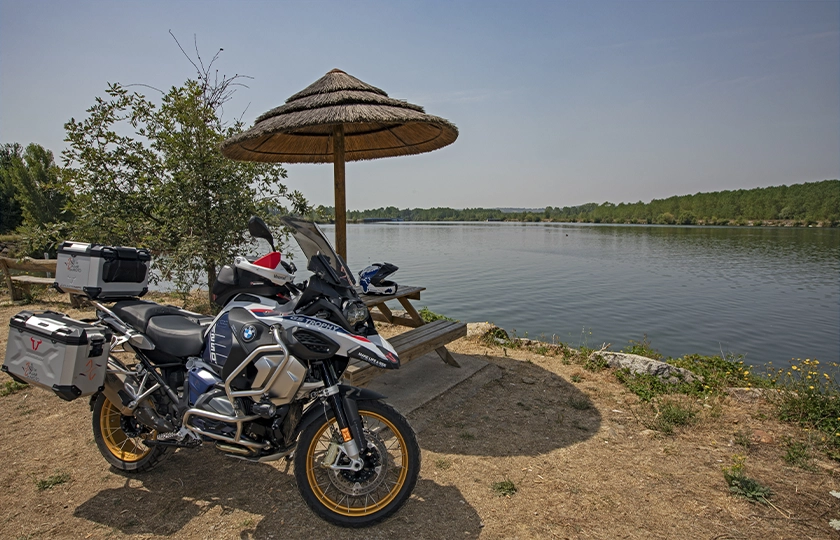
Under the serene light of a summer morning, with the coolness of well-watered earth inviting you to take off your helmet, the purr of the GS breaks the silence of the countryside as you gaze at the hill that breaks the nearby horizon.
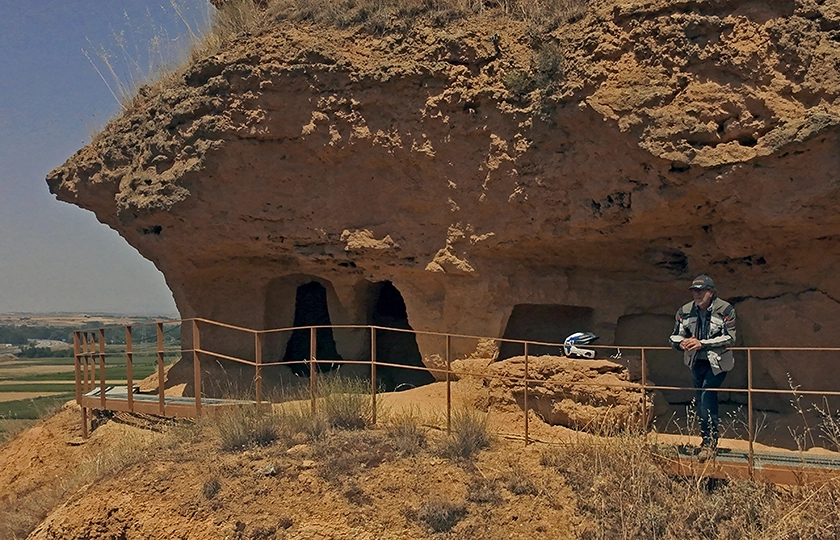
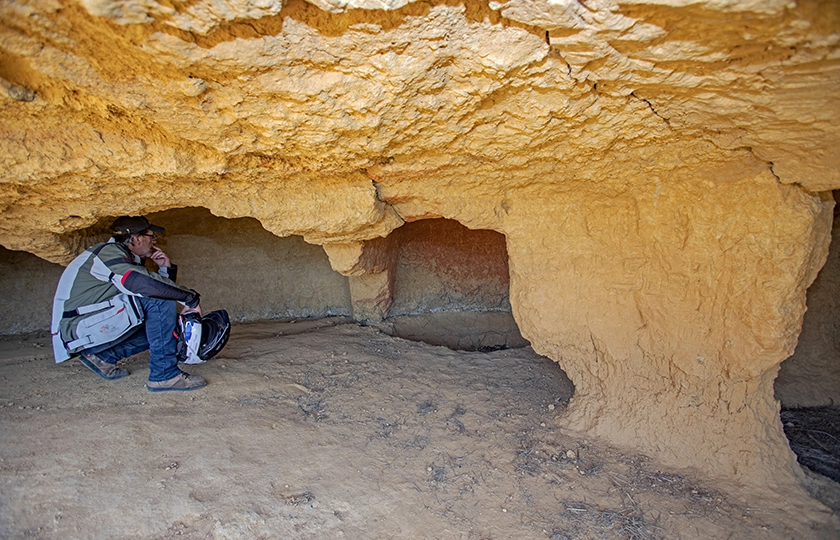
As I approach it, I feel as though I am being watched by what appear to be the eyes of the mound, but no, they are actually the Cuevas Menudas de Villasabariego.
It was previously believed that they were Neolithic, but more recent studies have determined that they are ancient early medieval hermitages dating from between the 9th and 10th centuries AD. A convenient footbridge allows visitors to enjoy splendid views of the countryside formed by the Esla and Porma rivers, as well as access to the various cavities carved into the sandstone rock. Most of them would have been small rooms used as monks’ quarters, and many of them feature engravings of Latin crosses, except for one with a cross “patada” with widened ends, which is interpreted as being characteristic of a liturgical space.
Just over a kilometre along a dirt track that delights trail runners, the archaeological site of the Astur-Roman city of Lancia opens up a very important chapter in the history of the province of León. Considered by classical sources such as Pliny the Elder and Ptolemy, among others, as ‘the most important city of the Astures,’ it put up fierce resistance to the Romans until it fell, as a result of betrayal, in the midst of the Cantabrian Wars, to General Publius Carisius in 25 BC. Of the thirty hectares occupied by the city, only a small part has been excavated in campaigns promoted by the León Provincial Council, and most of the findings are on display in the León Museum, meaning that this emblematic city will continue to be an inexhaustible source of knowledge.
Back on the road, I pass through small villages with a clear agricultural focus, where life is still evident, until I reach Santa Olaja de Eslonza.
I am torn between stopping or not stopping, but a mid-morning coffee sometimes helps to clarify things.
In this small town, some remains of what was once the second largest monastery in the province have miraculously been preserved. Founded in 912, the Benedictine monastery of San Pedro de Eslonza remained active until 1835. It was destroyed by Almanzor in 988 and restored by Doña Urraca in 1099, returning it to its former glory. Although today only a few walls remain and its works are scattered, such as the façade that can now be seen in its entirety in the church of San Pedro de Renueva in León, I decide to pay it a visit, if only out of respect for what it once was.
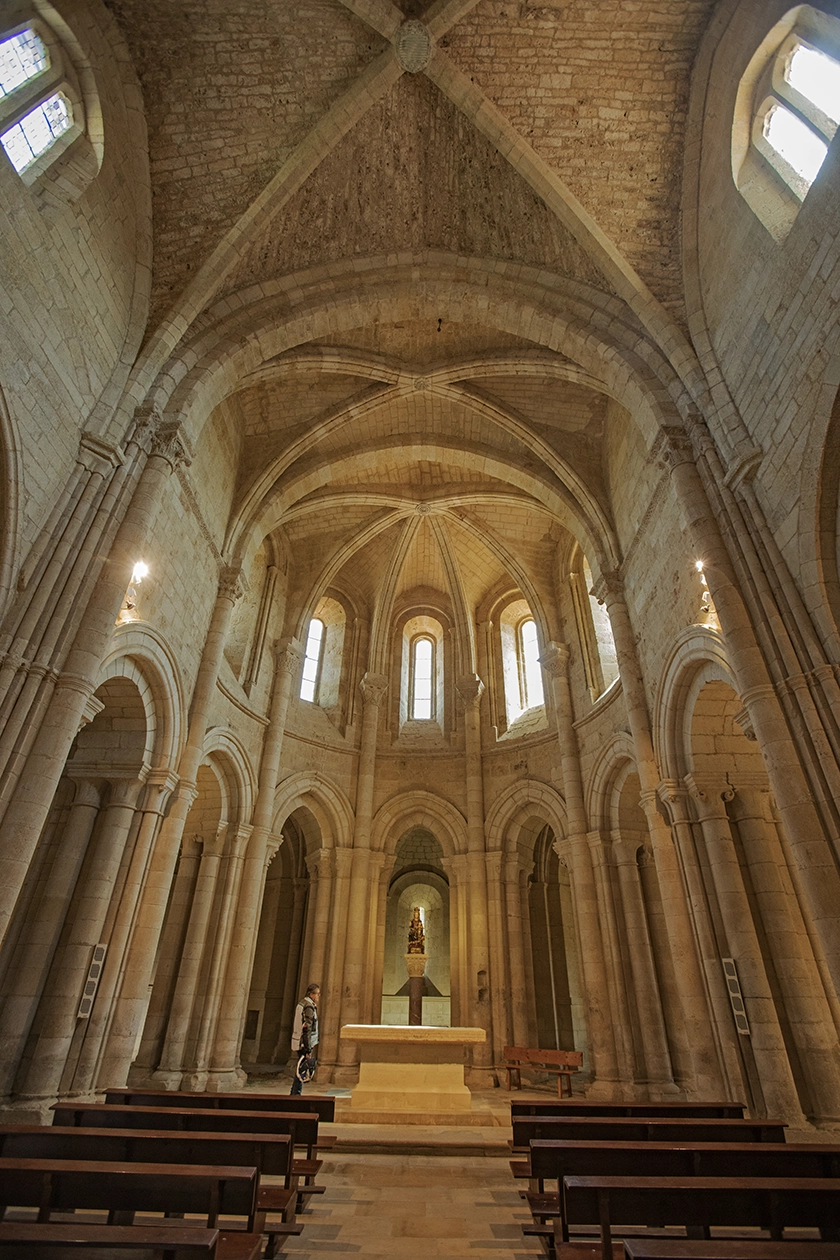
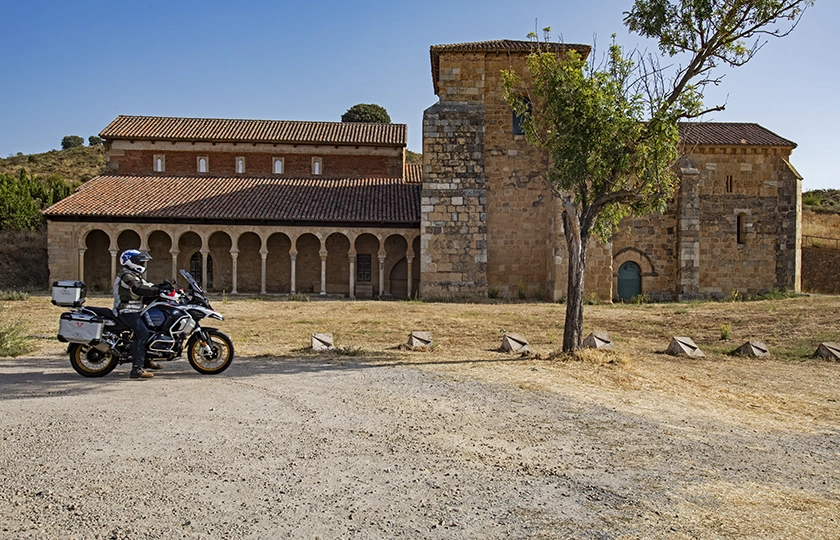
I return to the road via a quiet and enjoyable route that connects the riverside villages. Suddenly, after a downhill bend where you have to pay close attention to the unevenness of the road surface, standing alone and looking out over the Esla valley, stands one of the province’s monumental gems. The church of San Miguel de Escalada is what remains of the monastery of the same name built in the 10th century.
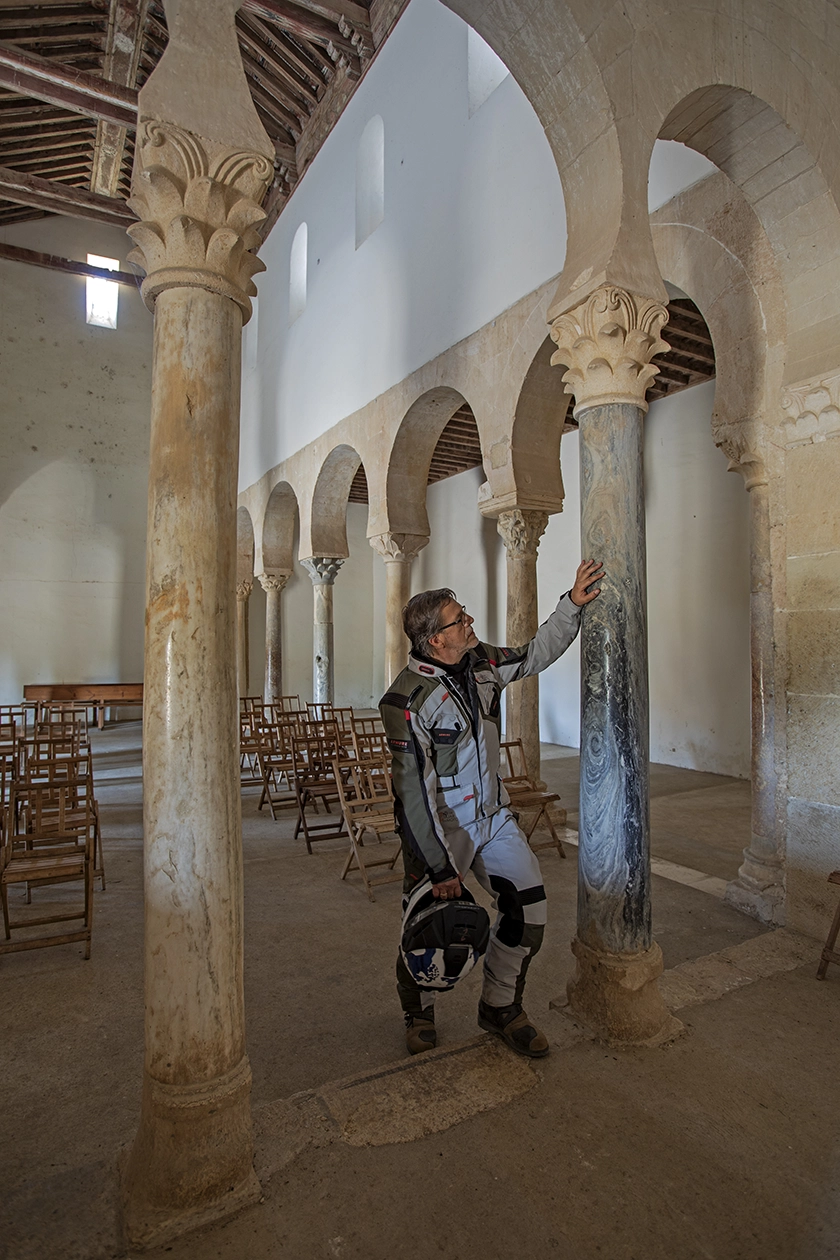
Beyond how surprising it is to find an architectural style more typical of southern Spain in these latitudes, the reason is that it was built by a group of monks from Cordoba who accompanied Abbot Alfonso in 913 as he fled the anti-Christian revolts. Historical curiosities aside, wandering around the temple invites you to pause in front of the columns, which condense a thousand years of history written in stone from bottom to top, as the marble columns are Roman, brought from the nearby Astur-Roman city of Lancia, the capitals are Visigothic, and the horseshoe arches are clearly influenced by Muslim architecture.
This is where the edition of Beato de San Miguel de Escalada was conceived, in which the Commentary on the Book of Revelation by Beato de Liébana was copied. The original is currently housed in the Morgan Library in New York, but a masterfully crafted facsimile edition is preserved in the nearby monastery of Santa María de Gradefes.
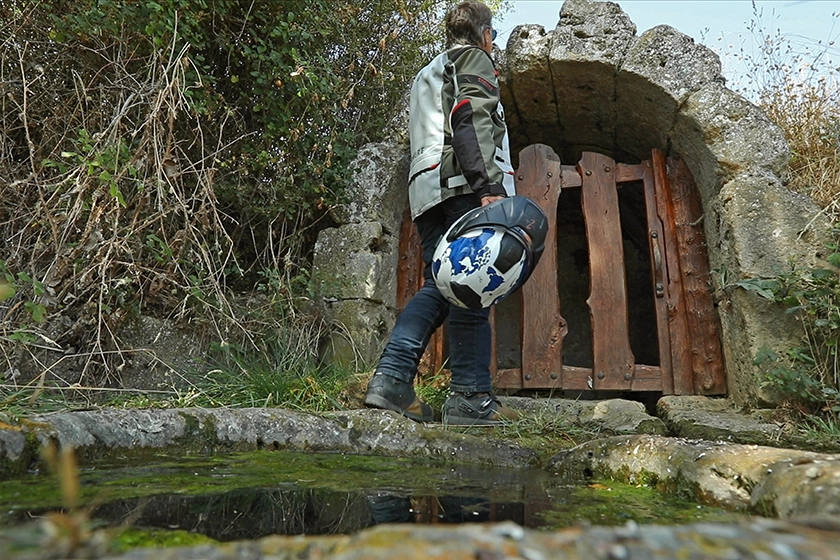
It is precisely to the latter that I am heading along a delightful winding road with little traffic and acceptable asphalt, but before I arrive, I want to satisfy my curiosity with a modest landmark that I did not know about. The small village of Rueda de Almirante, whose name evokes a more splendid past, holds a surprise in the form of a Roman fountain from which water still flows, the only one preserved in this part of the province.
As if I were a procession of friars, since I have been hopping from monastery to monastery, I take a road flanked by a string of enormous trees that cool the air, recreating a play of light and shadow that invites me to rev up the GS engine a little.
Given how small the villages are around here, Gradefes is one of the liveliest throughout the year, which does not prevent you from stopping and observing the leisurely pace of daily life. Perhaps it has something to do with the influence of the monastery of Santa María la Real located within the town centre.
Built in the 12th century in Romanesque style, in keeping with Cistercian tastes, it has been a convent since its origins and is the only one currently inhabited in this part of León. Despite its cloistered status, it can be partially visited, and once inside, the serenity of the atmosphere enters through the pores of the skin, which become dilated within the suit of sanity.
It is in magnificent condition and well worth admiring the ambulatory that runs around the apse and its small altars, something unique in Spain in a female monastery. Through the choir’s ironwork, you can admire a magnificent carving by master Gregorio Fernández and, above the high altar, a very good replica of the 13th-century Gothic Virgin, the original of which is located in the cloistered area. By ringing a bell, you can visit the chapter house, another beautiful example of Romanesque architecture.
I leave behind the thread of the monasteries of the Esla Valley, silent witnesses to the important past of the Kingdom of León, and as the heat intensifies, I decide to cross to the other side of the river to cool off at the inviting river beach of Sahechores de Rueda, a haven that invites you to listen to the flow of the river or enjoy the many activities it has to offer.
The Vadiniense territory
I reach the end of what has come to be known as the monastery route, as these are the landmarks that have brought me here, following an ancient path that is believed to be Roman. An itinerary that has recently also been given the name Camino Vadiniense as a pilgrimage route.
Well, according to some highly reliable academic sources that I have consulted, there is no documentary evidence to suggest that this route was a secondary Roman road, nor that it was a pilgrimage route linking the Coastal Way in Cantabria with the French Way in the town of Mansilla de las Mulas in León, as this would have meant crossing the Cantabrian Mountains along a very difficult route.
It is likely that some pilgrim travelled this route. It is also likely that the Roman legions used it in their siege of the Cantabrian tribes, but what is indisputable is that this route already existed long before, as it was the natural route of communication between the Vadiniense people and the plateau.
Who were the Vadinians? They were a Cantabrian tribe of Celtic origin who inhabited the Liébana Valley in Cantabria, the Asturian region of Cangas de Onís, and the north-east of the province of León, which is where most remains have been found, especially Vadinian tombstones, and that is where I headed.
I let myself be guided by the new Jacobean signs along a provincial road that the provincial government seems to have forgotten, as at times I thought my BMW was going to fall apart. Even so, it has been worth it, as the landscape is truly beautiful, forming a transitional setting between a more arid sub-plateau to my left and the humid, fertile orchard through which I am travelling.
I cross the medieval bridge at Modino and continue north until I pass through the town of Cistierna, the true nerve centre of the eastern mountains of León.
A little further on, I take a detour of a few kilometres to visit the Sabero Museum of Metallurgy and Mining. My interest in it, beyond preserving a beautiful Vadiniense legacy, is that it constitutes a reference point for the mining culture that determined the way of life in this mountainous corner for several centuries.
If the content is interesting, the container is no less so. This old 19th-century ironworks, designed by French engineer Philipe Paret, is a huge neo-Gothic brick building that offers a broad overview of the mining history of the Sabero Valley.
Now I am heading straight to the heart of Vadiniense territory, with the imposing silhouette of the Picos de Europa cutting across every possible horizon.
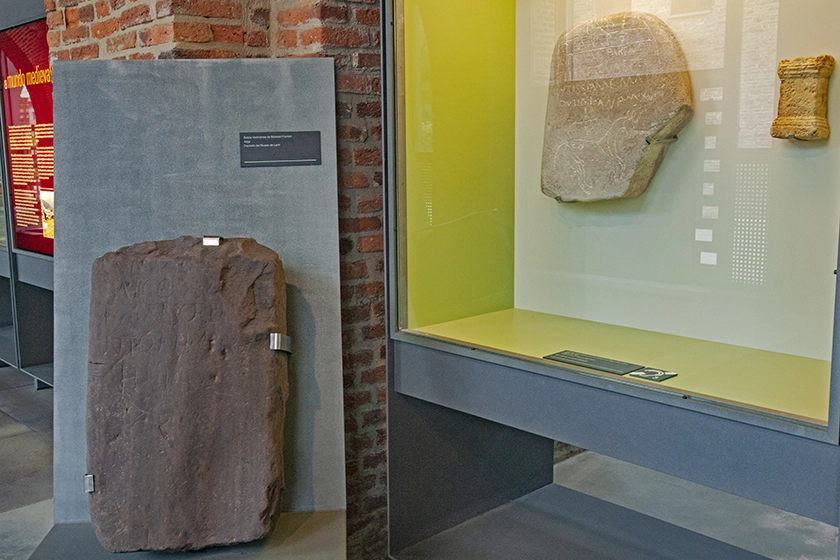
It is there, driving slowly and letting the low-revving purr of the twin-cylinder engine sound like a melody, that I feel there are times when nature gifts man with places where the landscape and history seem destined for his personal enjoyment, enclaves where everything seems to refer to another time and where sensations blend with the earth to give it its true identity. They are special, unique, different places that invite you to observe them in detail.
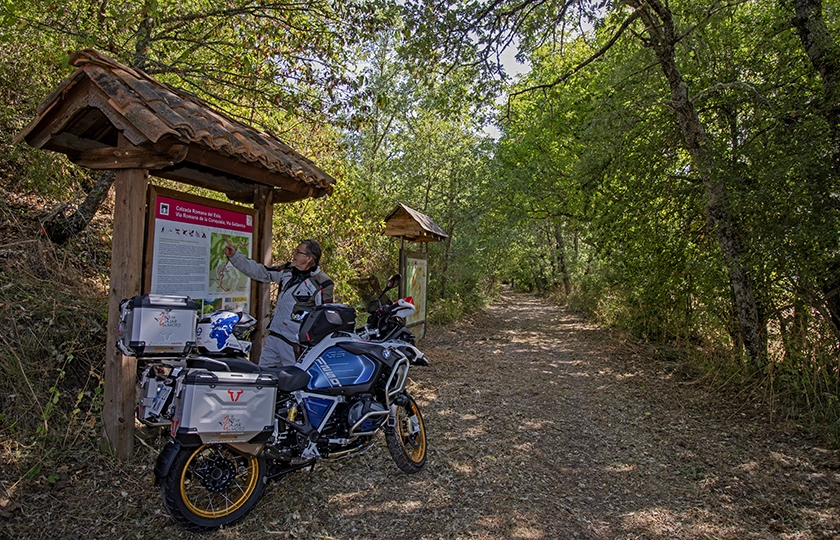
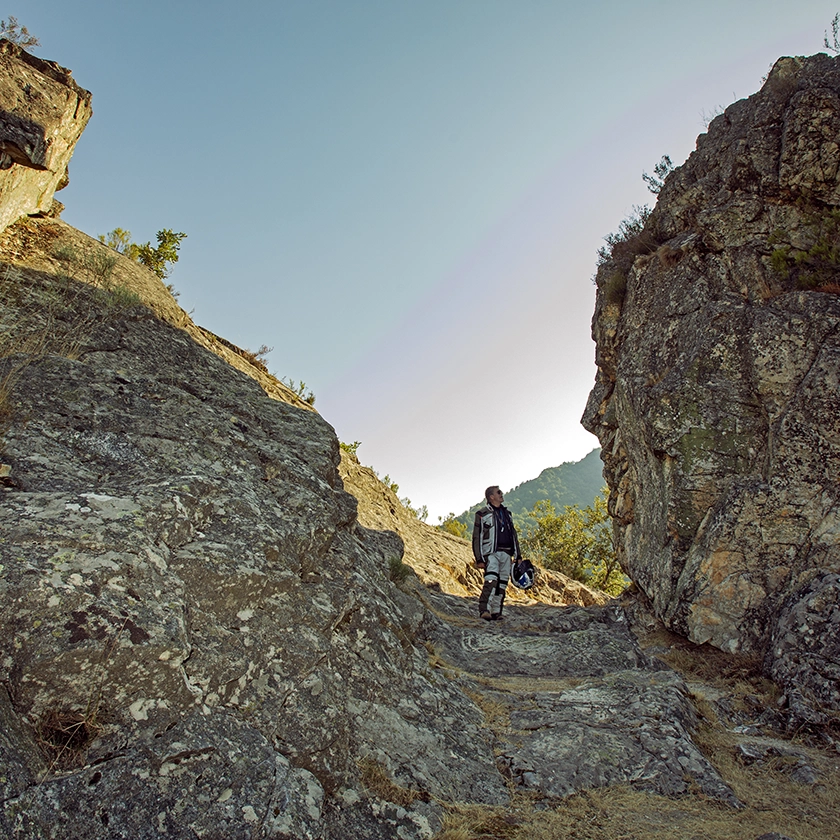
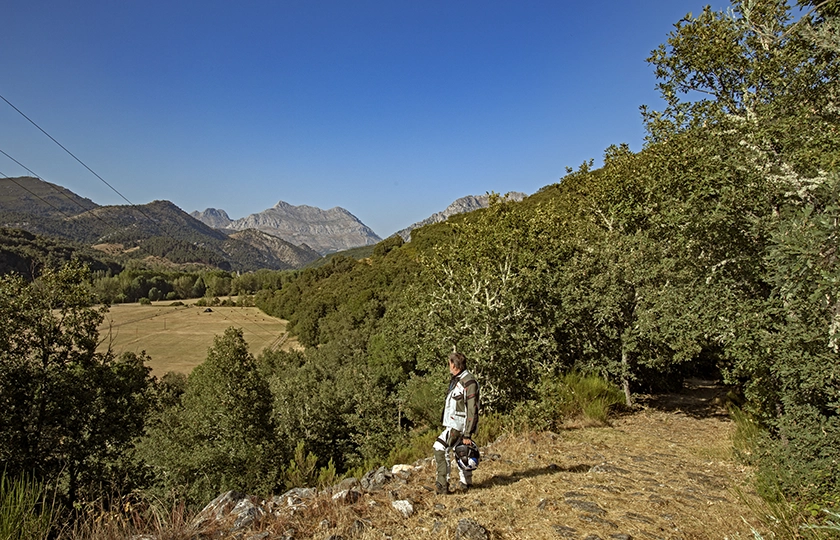
The mountain cut away on one side to make room for a winding road with an increasingly fierce Esla River on the right as a travelling companion, and in the village of Crémenes, suddenly, a signpost: Roman road.
I had already heard about it, and although experts claim that it is not Roman but medieval, as imperial engineers never designed roads with a gradient of more than 3%, this one does. Roman or not, it is worth stopping the motorbike and walking along it in the afternoon light illuminating the valley, being watched by one of the birds of prey in an infinite blue sky and imagining the hardships, desires and reasons of so many who have travelled along it over the centuries.
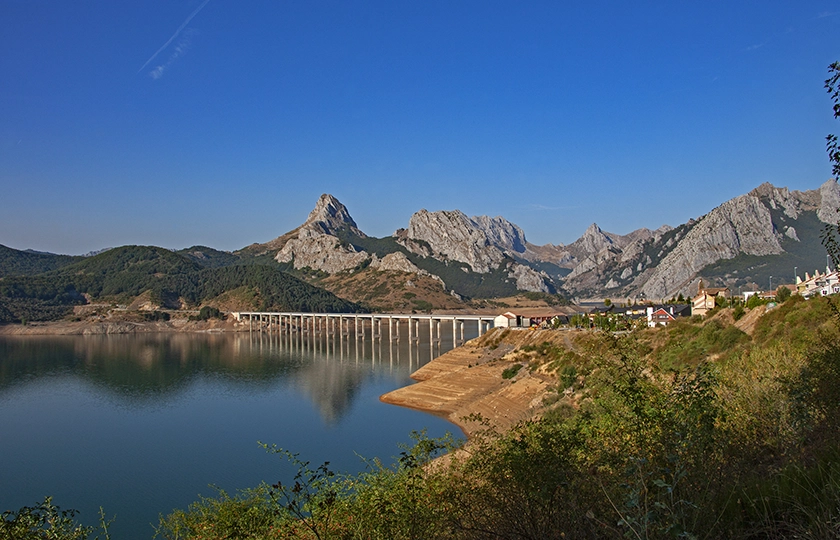
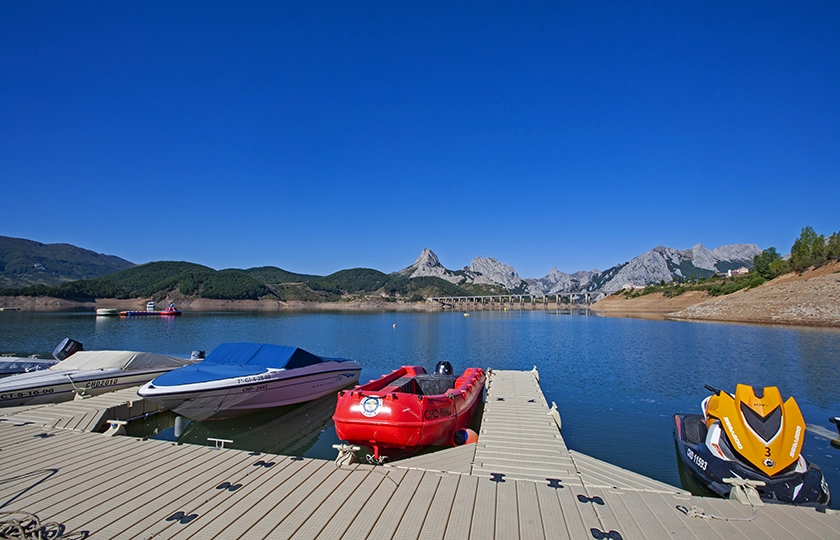
Meter by meter, along a road that seems to become more and more enjoyable, suddenly a sea opens up between the mountains. The immensity of the Riaño Reservoir, where some bends deserve to be called ‘León fjords’, seems like an almost unreal setting dominated by the new village of Riaño with its Romanesque church, moved stone by stone from the bottom of the valley to save it from the waters. I am still in Vadiniense territory, but from here the door opens to the Tierras de la Reina, a historic region that has borne this name since Queen Berenguela of Castile received these lands in the 13th century.
Among beautiful villages built of stone and wood that have adapted to the harsh climatic conditions of the high mountains, a way of life closely linked to livestock farming survives in the midst of an exceptional ecosystem. White oak forests grow on sandstone and quartzite, and are often accompanied by rowan, holly, broom and wild apple trees. The holm oak forests, highly resistant to harsh soil conditions, together with the white juniper forests, contribute to the richness of the environment, forming extraordinary landscapes in which the pine forests take centre stage.
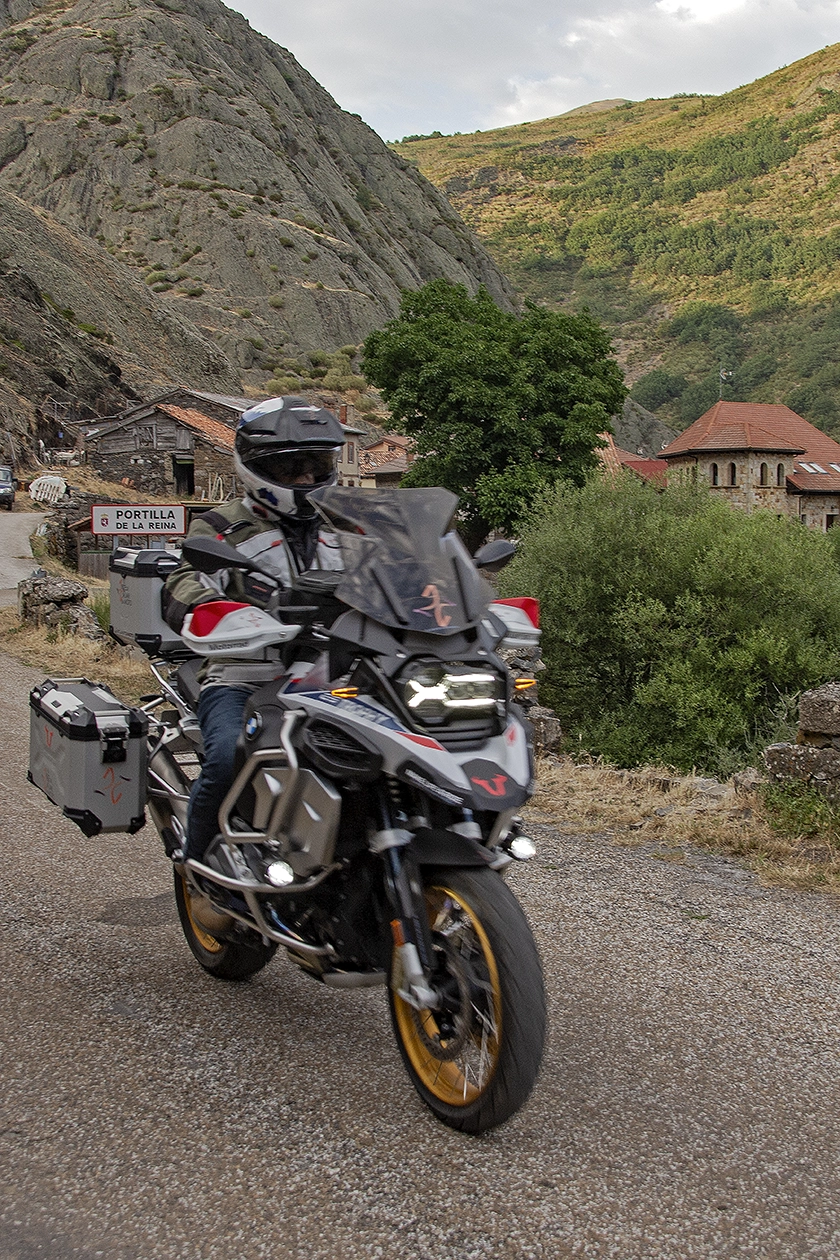
In Portilla de la Reina, I have two options, so I choose both, given the difficult choice. I turn left towards Santa Marina de Valdeón onto a narrow road where the longest straight stretch is no more than three hundred metres long, with a very patchy surface, but surrounded by great beauty despite the deforestation of some sections to turn the land into pasture. The route ends at Pass of Pandetrave, as from there onwards the old road is only used for livestock farming and is therefore closed to traffic. It should not be forgotten that I am now in the heart of the Picos de Europa National Park. The dirt track connects the Cantabrian town of Fuente Dé through the central massif of the park
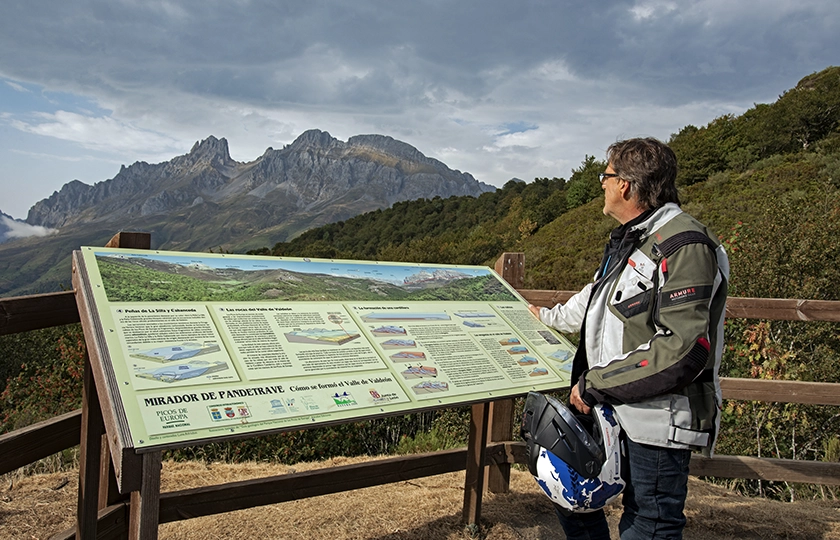
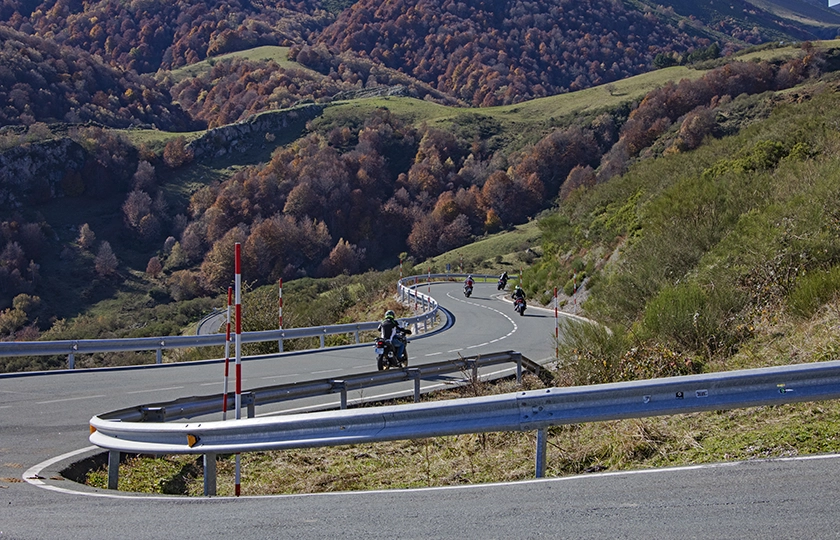
I retrace my steps and, once back in Portilla de la Reina, I turn left. The road becomes increasingly narrow, but more and more beautiful until it reaches the summit of the San Glorio Pass at an altitude of over 1,600 metres.
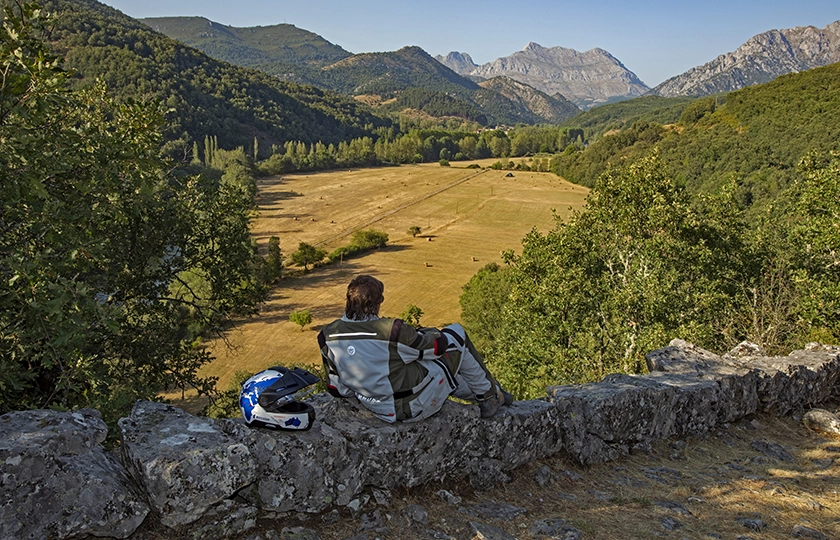
When I cross the provincial border, it feels like I have changed countries. The road is wide and the asphalt is in perfect condition, so I’m not surprised by the number of motorcycles I come across. On the descent, there are several places to stop and enjoy breathtaking views of the Liébana Valley, which helps me better understand the fierce resistance that the Cantabrian tribes, including the Vadinienses, put up against the Roman invasion, to the point that Emperor Caesar Augustus himself was forced to come and finish the campaign.
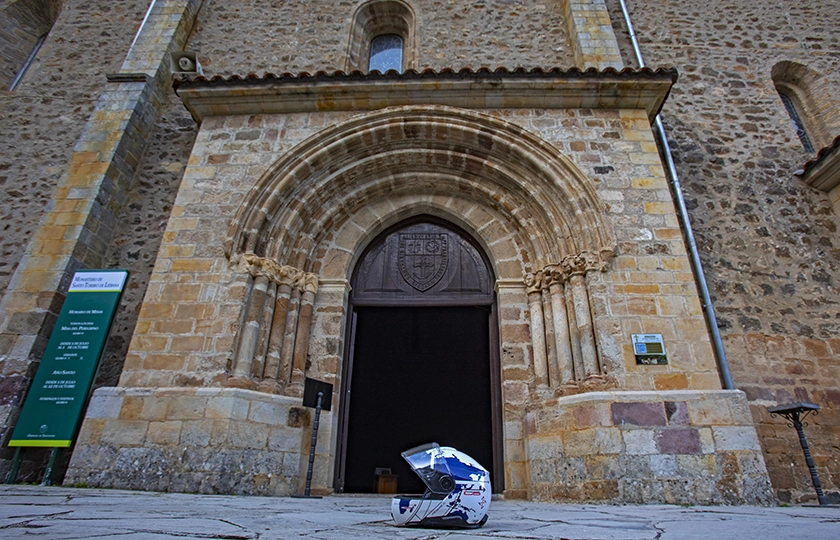
My route ends in Potes, but before that, it is essential to stop at the monastery of Santo Toribio de Liébana, not for religious reasons, but because of the cultural importance of the monastery itself. Founded in the 6th century, it is the second most important pilgrimage centre in Spain after Santiago de Compostela, as it houses the ‘Lignum Crucis’, the largest known fragment of the Cross of Christ according to tradition.
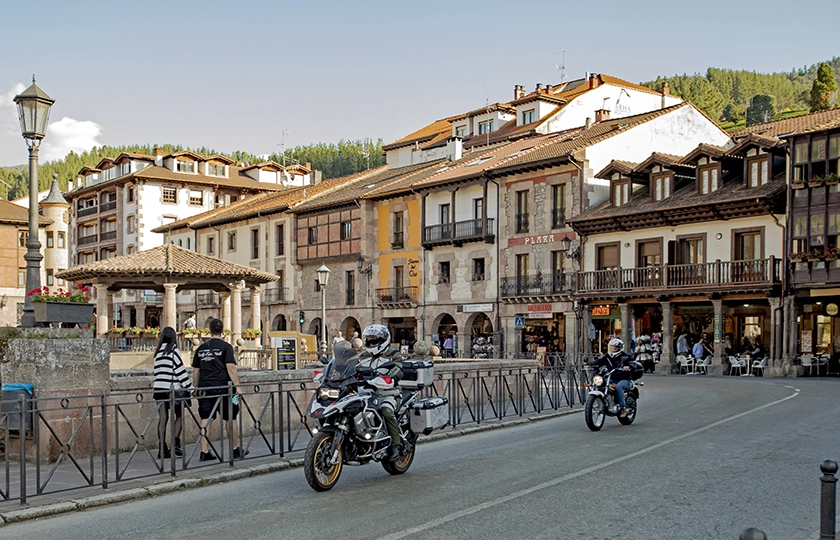
From one surprise to another, I have arrived in Potes, the end of this personal journey. The capital of the Liébana region, located on the banks of the Deva and Quiviesa rivers and at the foot of the northern face of the Picos de Europa, also known as the town of bridges and towers, dates back to the mid-9th century. Its old town is a network of narrow streets dotted with large houses that give it a special charm, with the Infantado and Orejón de Lama towers, both from the 15th century, standing out above the rest.
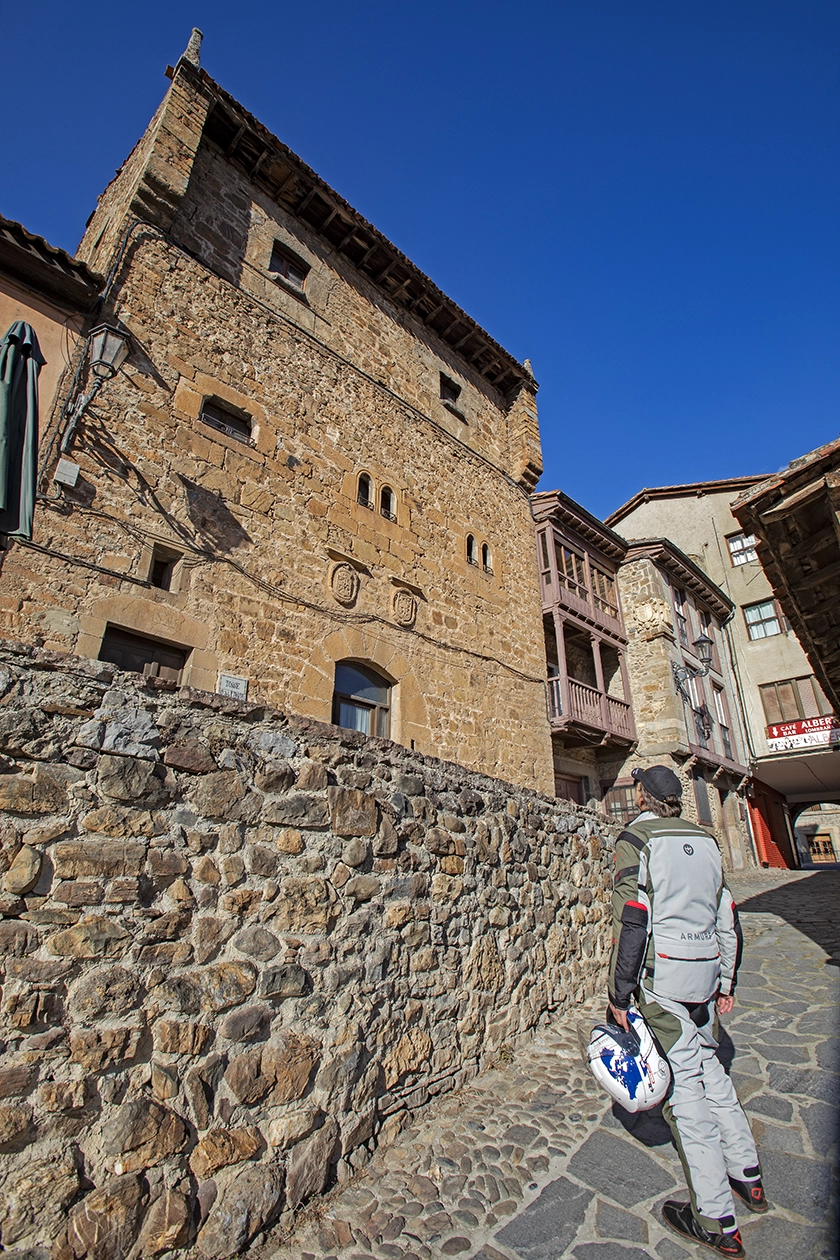
I turn off the engine of my GS, thinking about the road travelled, and although the location of the city of Vadinia, capital of the Vadiniense people according to classical writings, remains a mystery, what leaves me in absolutely no doubt is that this land has a special magic, a magnetism closer to magical realism than to the tangible, but which always leaves you wanting to return.