

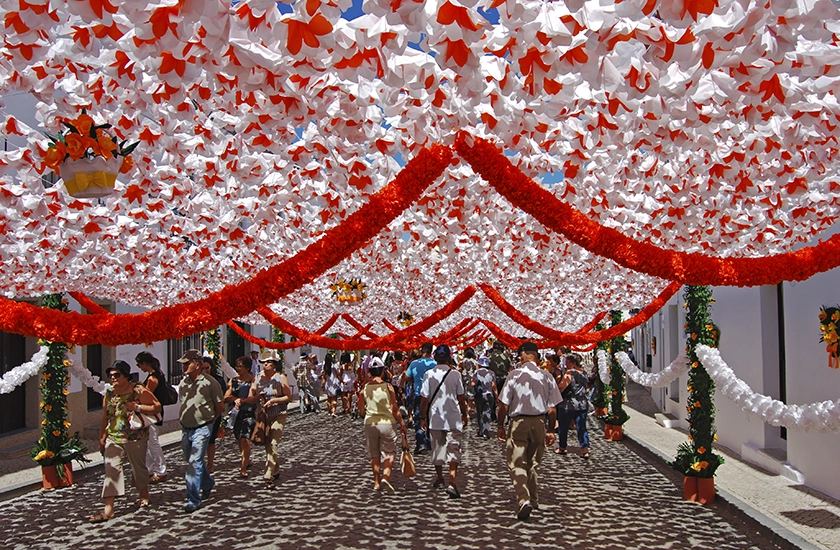
From 8 to 16 August, this historic Alentejo town is once again filled with colour and tradition during its Flower Festival, designated as Intangible Cultural Heritage of Humanity by UNESCO.
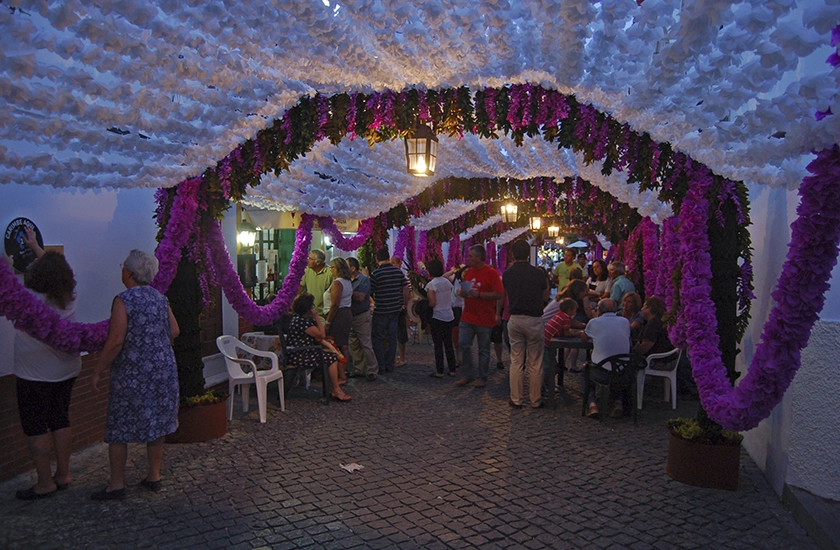
Just half an hour’s drive separates Badajoz from one of the most extraordinary spectacles in Portugal’s Alentejo region. The small town of Campo Maior, situated a few kilometres from the Spanish border, will once again be blanketed in colour by millions of paper flowers that will transform its streets into a vast, ephemeral garden. After more than a decade of waiting, the Flower Festival returns from 8 to 16 August 2026, reviving one of Portugal’s most unique and beautiful folk traditions.
For months, the town’s residents work voluntarily and almost in secret to shape and assemble by hand millions of flowers, garlands and other colourful decorations that will turn the town into an open-air museum. Organised into committees for each street in the town, it is the residents themselves who decide when to hold this event, which does not take place at fixed intervals. This time, anticipation is sky-high: the last edition took place in 2015.
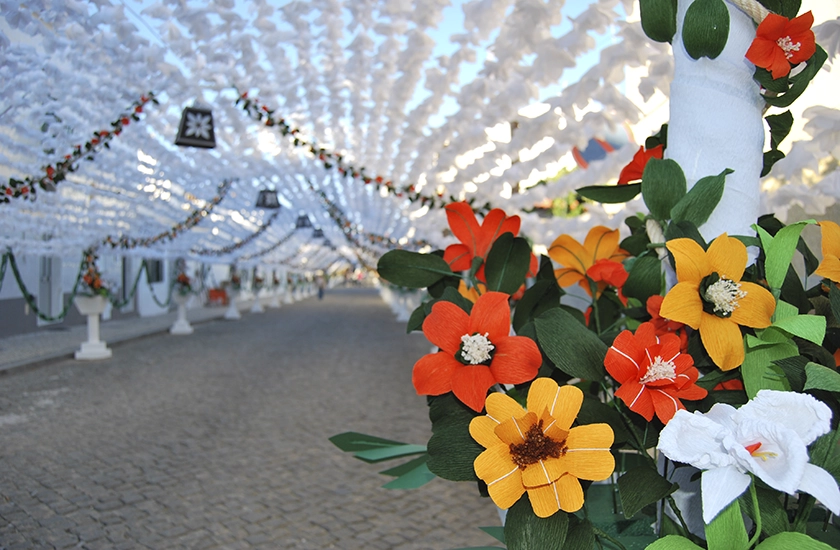
All the roses, carnations, tulips and poppies are crafted with great care, dedication and skill; the quality of these handcrafted creations is such that they are sometimes mistaken for real flowers. People of all ages take part in long afternoons and evenings of manual labour, using techniques that have been passed down through the generations and keeping this unique tradition alive.
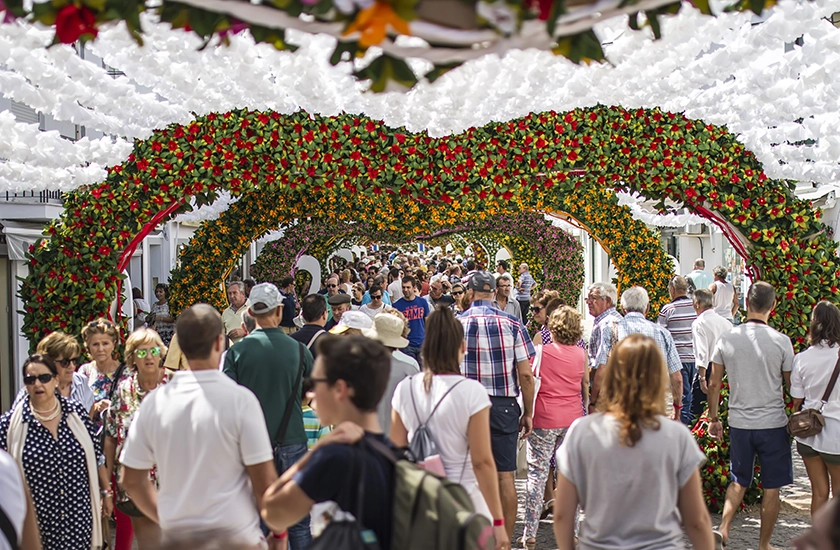
On the evening before the festivities begin, this great collective work takes its final form. The people of Campo Maior decorate the streets to the sound of music and singing, as a prelude to the grand celebrations of the days that follow.
With over 130 years of history, these festivities originated in connection with St John the Baptist, the town’s patron saint, and today they stand as one of the country’s finest examples of living heritage. Their significance was recognised internationally in 2021, when they were inscribed on UNESCO’s Representative List of the Intangible Cultural Heritage of Humanity.
A town with much more to offer than just flowers
As well as enjoying the event, the Flower Festival is also the perfect excuse to discover the essence of the region. During the festival, visitors and locals alike can savour a cuisine characterised by ‘farm-to-table’ produce and the region’s traditional recipes, as well as award-winning Alentejo wines, produced on the surrounding land by wineries such as Adega Mayor.
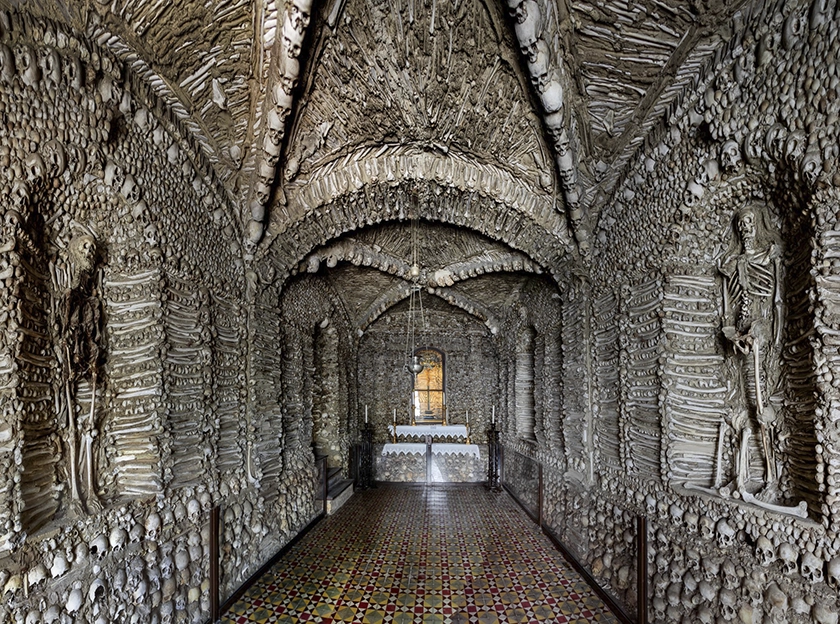
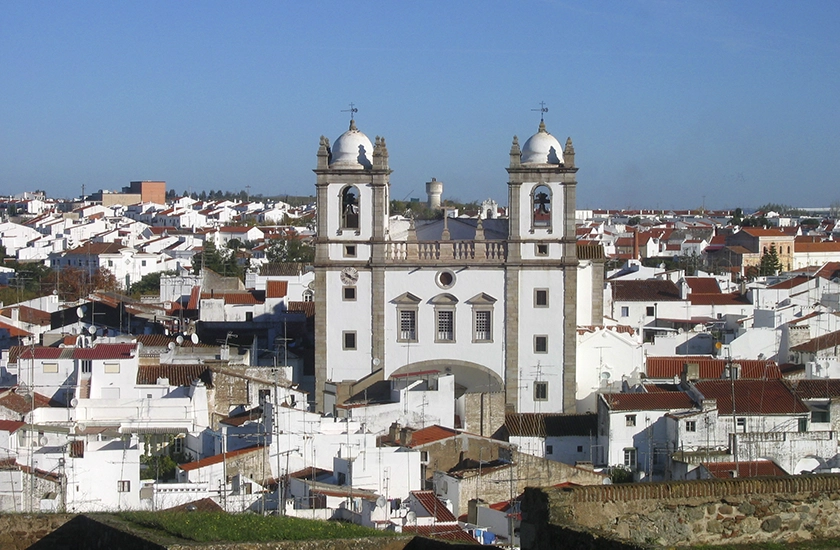
Those wishing to delve deeper into the origins of this tradition can visit the Casa das Flores interpretation centre, though a tour of the local historical heritage is also a must: a castle that played an important defensive role for centuries; the Sarco Art Museum; and the church that houses a spine-chilling Chapel of Bones, one of only three in the Alentejo.
Further information at: https://www.visitalentejo.pt/en/
About the ALENTEJO
The Alentejo is situated in southern Portugal, between the River Tagus and the Algarve. It is a vast and predominantly rural region. The beauty of its landscape and the quality of its archaeological, monumental and architectural heritage, together with its excellent cuisine and wines, undoubtedly invite visitors to discover the region. Tourism promotion in the Alentejo, carried out by the Alentejo Regional Tourism Promotion Agency, benefits from EU funding through Alentejo 2030, Portugal 2030 and the European Union.
Source: NEWLINK Group