
Between June and September, the Asian archipelago hosts some of its most iconic festivals, with indigenous culture, popular devotion and contemporary creativity shaping the calendar.
In the Philippines, the summer season brings together some of the most intense cultural expressions of the year. Between June and September, the archipelago hosts festivals with deep historical roots, massive religious celebrations and community events that form an essential part of social life across its more than 7,600 islands.
Far from being a tourist calendar, these celebrations spring from the communities themselves and uphold traditions that, in many cases, date back centuries. Live music, ritual dances, processions, street parades and local cuisine turn every event into an immersive experience that defines the Filipino identity.
Summer kicks off with one of the country’s most significant dates: Independence Day (12 June). Beyond the official ceremonies in Manila, the celebrations extend to squares, neighbourhoods and communities with historical re-enactments, civic events and cultural activities that reinforce the national memory.
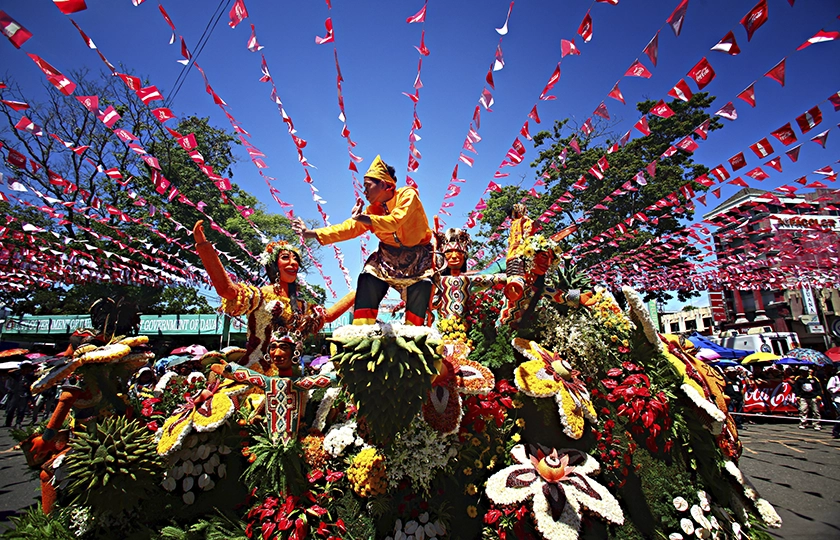
One of the summer’s major highlights is the Kadayawan Festival, held in August in Davao. This festival has a strong indigenous component: it brings together 11 ethnolinguistic groups from the Mindanao region in parades showcasing traditional costumes, tribal dances and harvest-thanksgiving rituals. Furthermore, it is one of the main showcases for the Lumad and Muslim cultures of the country’s south.
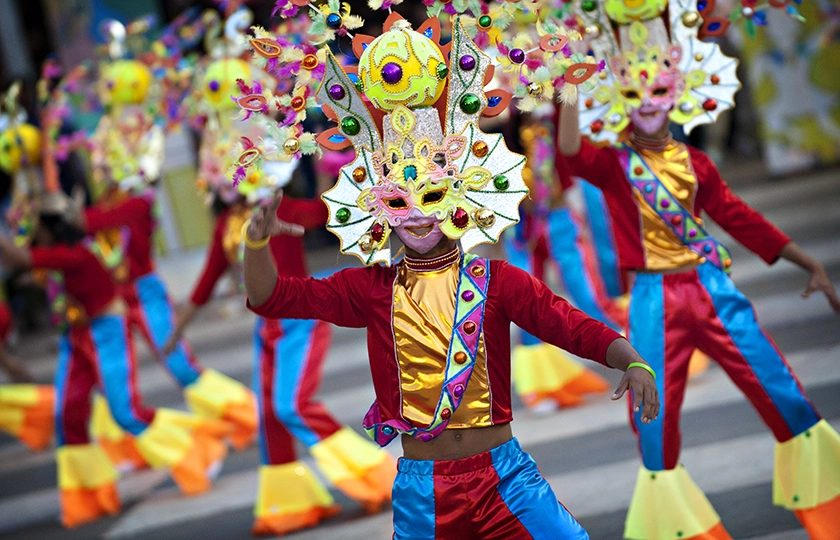
Also in August, Buwan ng Wika (National Language Month) transforms schools, universities and cultural institutions across the country into venues for theatre performances, poetry, music and dance in a multitude of Philippine languages. The country has over 170 languages and dialects, making this celebration one of the clearest expressions of its cultural diversity.
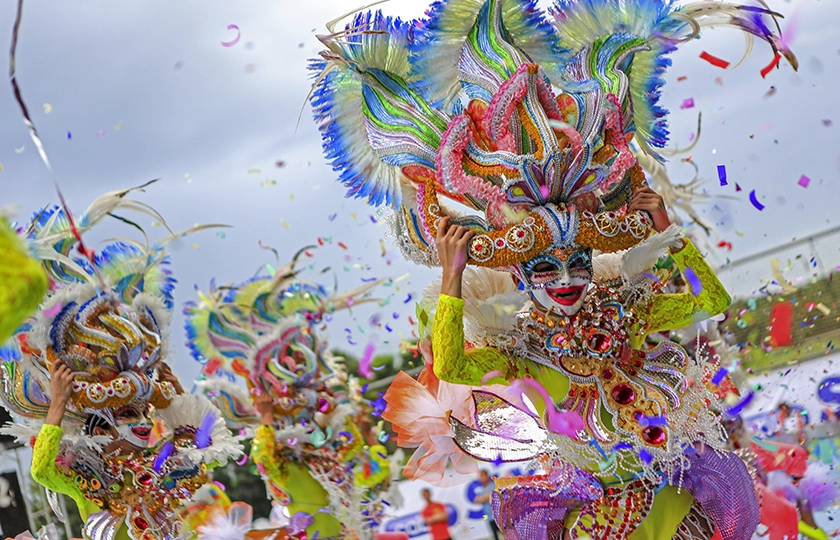
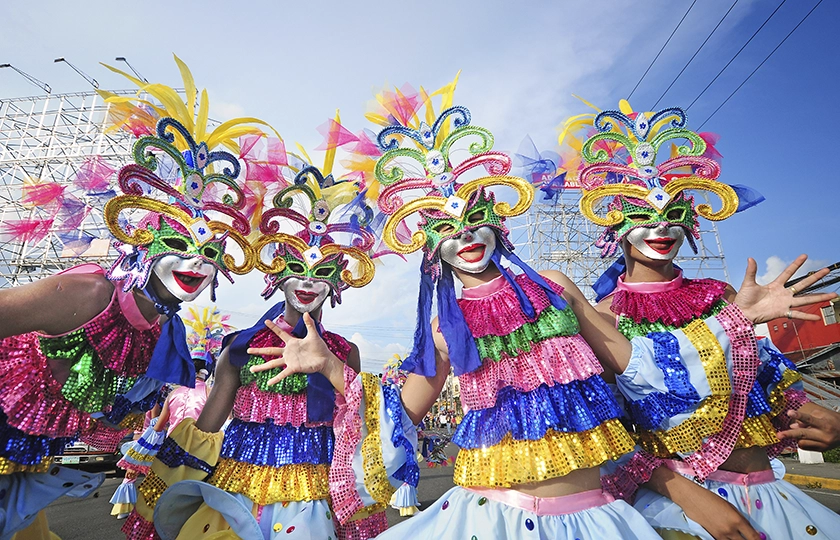
At the same time, summer is also the season for urban festivals with huge popular appeal. In Bacolod, the MassKara Festival was born in the 1980s in response to an economic crisis and a disaster in the sugar industry. Today it is one of the country’s most recognisable events: thousands of smiling masks, street dance competitions and open-air concerts transform the city into a huge festive stage.
Although the summer season is drawing to a close, September marks a cultural phenomenon unique in the world: the start of the longest Christmas season on the planet. In the Philippines, the celebrations begin in the early ‘-ber’ months, heralding months of carols, lights and family gatherings that stretch into January.
This cultural context is complemented by a vibrant scene in urban centres such as Manila, where contemporary museums, independent art spaces, film festivals such as QCinema and Cinemalaya, and a burgeoning food scene that revives traditional recipes using modern techniques all coexist.
The combination of community festivals, religious celebrations, indigenous expressions and a growing contemporary cultural scene makes summer in the Philippines one of the most representative times to understand the country’s identity.3
About the PHILIPPINES
Comprising 7,641 islands, of which more than 5,000 are unnamed on international maps, the Philippines presents itself as a destination of infinite possibilities, where exploration and discovery are part of the experience. This unique geography, with its spectacular natural beauty featuring volcanic landscapes, tropical rainforests and exceptional biodiversity, is enhanced by the world’s fourth-longest coastline. A natural privilege that translates into miles of idyllic beaches, crystal-clear waters and some of the richest marine ecosystems on the planet.
Source: COMUNICACIÓN IBEROAMERICANA