

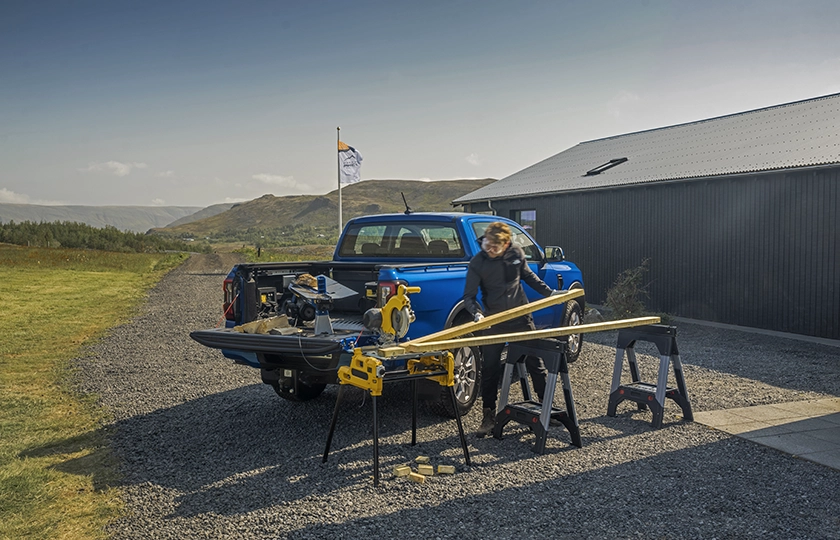
- Pro Power Onboard is a feature of the new Ranger Plug-in Hybrid that allows you to use the vehicle as a portable power source without needing to be connected to the mains.
- It utilises the Ranger Plug-in Hybrid’s 11.8 kWh battery to supply electrical power. It is available in two power levels: 2.3 kW and 6.9 kW.
- The new Ranger Plug-in Hybrid is now in full production and deliveries to customers in Europe have begun.
Whether you’re working in a remote location and need to power your tools, or want to charge your e-bike before a day of adventure, the new Ranger Plug-in Hybrid is ready to help.
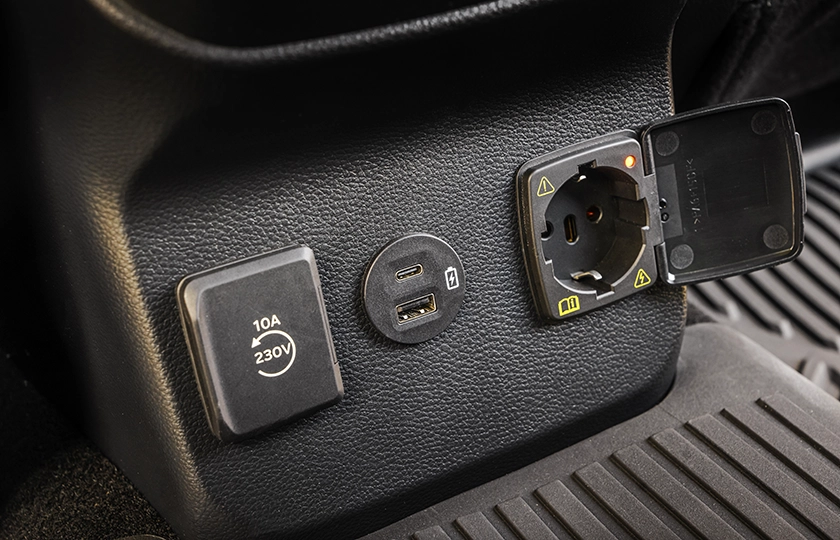
The Pro Power Onboard system allows the Ranger Plug-in Hybrid to be used as a mobile power source, without relying on an additional portable generator. Thanks to its 11.8 kWh usable battery, the system offers two power options: 2.3 kW or 6.9 kW, distributed across three 230 V sockets.
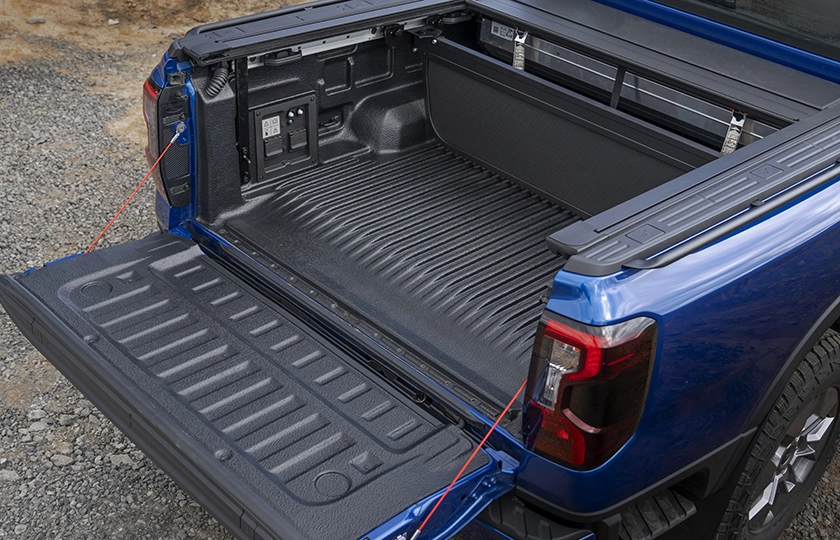
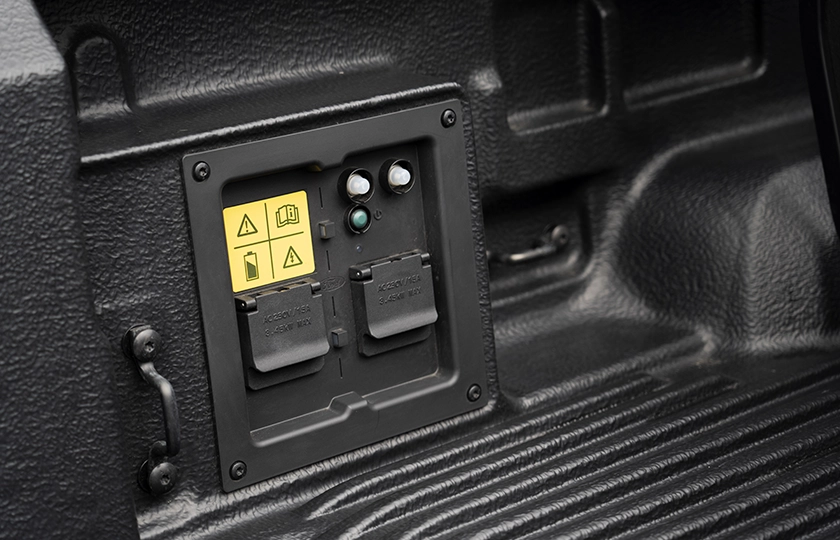
In the more powerful 6.9 kW version, there is one socket in the cabin (10 A and 2.3 kW) and two in the load area (15 A and 3.45 kW per-socket), designed to meet the needs of equipment with higher energy demands.
The new Ranger Plug-in Hybrid1 has now entered production and the first units are reaching customers across Europe, who can finally put the Pro Power Onboard system to the test.
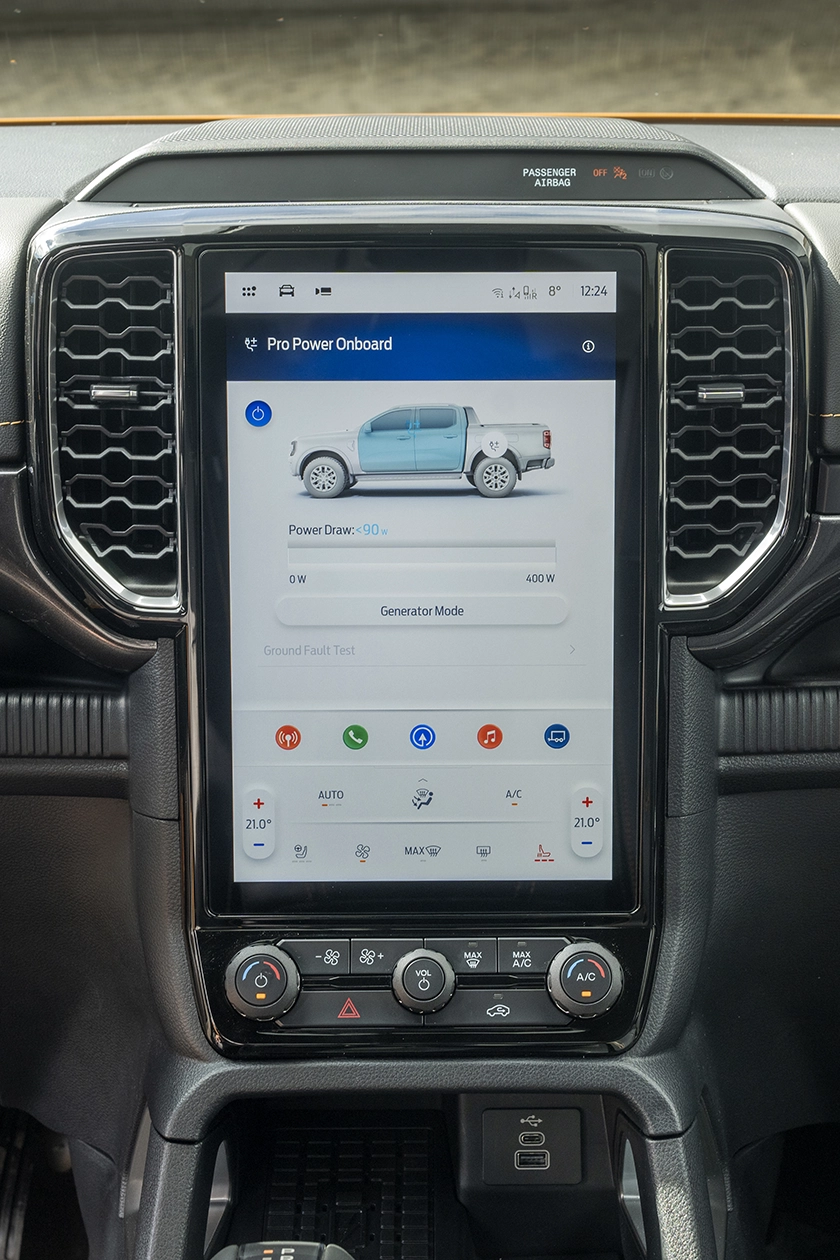
Power when you need it
Imagine the freedom of having your pick-up as your own power station. The Ranger Plug-in Hybrid’s Pro Power Onboard system opens up a world of possibilities.
You’re miles from the nearest power socket and need to repair a metal fence or install a post. With the 3.45 kW socket located in the load area of the Ranger Plug-in Hybrid, you can use a welder, a grinder, a drill or a compact concrete mixer and get the job done quickly and efficiently.
If rain has interrupted your wild camping trip and the solar panels haven’t generated enough energy to keep the caravan’s batteries charged, instead of calling it a day, simply plug into one of the Ranger’s sockets and let Pro Power Onboard keep everything running.
Are your kids not in the mood for a quiet weekend? Take them on an electric bike trail through the mountains. And when the batteries run out, it’s no problem: with Pro Power Onboard you can recharge them right there and carry on enjoying yourself.
Turn any spot into a unique experience. With Pro Power Onboard you can set up an open-air cinema with a projector, screen and sound system, or prepare an unforgettable dinner with an electric pizza oven or a portable barbecue. You choose how to enjoy yourself wherever you go.
How does it work?
The Pro Power Onboard system in the Ranger Plug-in Hybrid is controlled via the SYNC 42 infotainment system, which displays the power consumption of connected devices on the touchscreen. By default, Pro Power Onboard is switched off, although the rear socket in the cabin provides a 400 W power output. To activate Pro Power Onboard from SYNC 4, simply press a button. Once active, the driver can switch on one or both sockets in the load bed using virtual switches on the touchscreen.
When the vehicle is stationary, the system draws power from the Ranger Plug-in Hybrid’s battery, but if this runs out, the petrol engine will start to generate a continuous power supply. If the combined petrol and battery range falls below 80 km, the system switches to Low Power mode to help you complete your journey.
1.- The Ford Ranger Plug-in Hybrid has official CO₂ emissions of between 70 and 72 g/km (WLTP), official fuel consumption of 3.1 to 3.2 l/100 km (WLTP) and a range of up to 43 km in all-electric mode (WLTP). The stated fuel consumption, CO2 emissions and electric range are determined in accordance with the technical requirements and specifications of European Regulations (EC) 715/2007 and (EU) 2017/1151, in their latest version. The standard test procedures applied allow for comparison between different types of vehicles and manufacturers. The range of up to 43 km is achieved with a fully charged battery, although this depends on the model range and available battery configuration. Actual range may vary due to multiple factors, such as weather conditions, driving style, route profile, vehicle condition, and the age and condition of the lithium-ion battery.
2.- Do not drive whilst distracted. Use voice-activated systems wherever possible and avoid using handheld devices whilst driving. Some functions may be disabled whilst the vehicle is in motion. Not all SYNC functions are compatible with all phones. The appearance and functionality of the SYNC screen may vary with software updates.
Source: FORD Press Room