
- Following the public and critical success of last year’s exhibition Reflections: Picasso x Koons in Granada, the Picasso Museum in Málaga now presents Reflections: Picasso x Barceló.
- A new project that will open at the Museum of Almería (16 December 2025 – 15 March 2026) and will subsequently be exhibited at the Museum of Cádiz (25 March – 28 June 2026).
- More than a hundred works by Pablo Picasso and Miquel Barceló, along with pieces from the archaeological collections of these two Andalusian museums, will bring styles and eras into dialogue, weaving a timeless encounter that links tradition and innovation, memory and modernity.
- Reflections. Picasso x Barceló is a project conceived and carried out in collaboration with Miquel Barceló, the Picasso Museum Málaga and the Almine and Bernard Ruiz-Picasso Foundation, with the sponsorship of the Unicaja Foundation and the collaboration of the Department of Culture and Sport.
The unique feature of this new exhibition project is that it brings Pablo Picasso and Miquel Barceló into dialogue through one of the oldest and most universal artistic media: ceramics. His works are displayed alongside the archaeological collections of both museums, establishing a transhistorical crossover in which prehistoric, ancient, medieval and contemporary clay modelling practices find a common space. The exhibition will also invite visitors to recognise in Barceló that constant echo of Picasso: an experimental attitude, continuous reinvention based on tradition, and a shared desire for dialogue with ancient and modern art.
Reflections. Picasso x Barceló proposes understanding ceramics as a universal language that connects the useful and the transcendent, the everyday and the symbolic. The exhibition highlights the persistence of clay as a material for memory and experimentation, and places both artists within a Mediterranean genealogy of creators who, over millennia, have transformed earth, water and fire into enduring art. The exhibition is curated by Miguel López-Remiro, artistic director of the Picasso Museum Málaga; Tania Fábrega, director of the Museum of Almería; and Laura Esparragosa, director of the Museum of Cádiz.
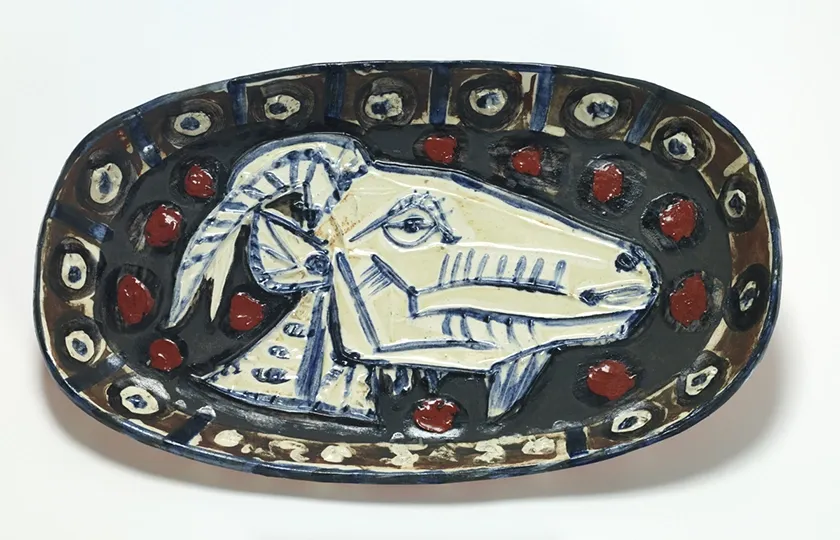
For Picasso, ceramics became an essential laboratory of ideas after the Second World War. En Vallauris, descubrió en el barro un medio dúctil que le permitía unir pintura, escultura y objeto, transformando platos, jarras y vasijas en cuerpos humanos, seres mitológicos o escenas cotidianas, y enlazando con las tradiciones alfareras de Andalucía y el Mediterráneo.
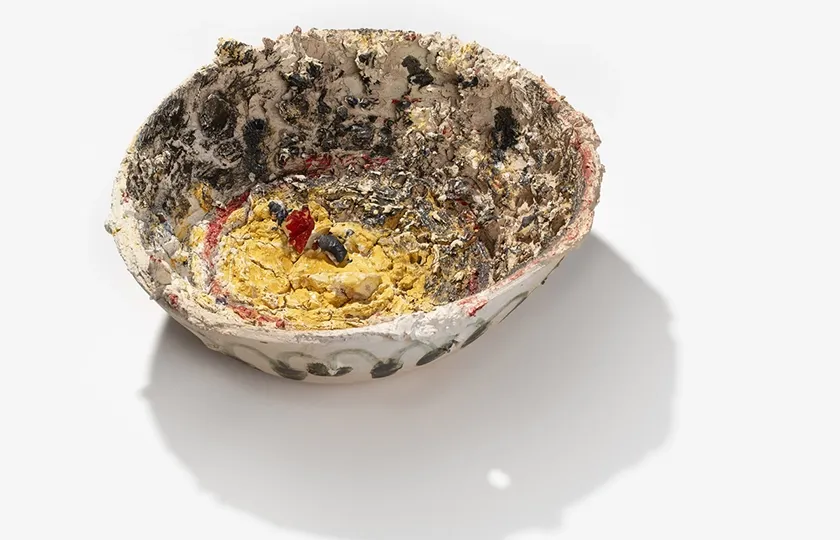
Barceló, for his part, came to ceramics in the 1990s, during his stay in Mali. There he learned ancestral techniques from the Dogon community and turned an accident into a revelation: ceramics became a territory of exploration where ritual, the physical and the experimental converge. His pieces bear the marks of the physical process, becoming living surfaces that preserve the energy of the moment.
Located in the archaeological contexts of Almería and Cádiz, the works of Picasso and Barceló will dialogue with Neolithic vessels, Phoenician and Roman amphorae, Islamic pottery and fragments of millennia of history. The Museum of Almería houses one of the most significant ceramic collections, with pieces spanning more than five thousand years, from the Neolithic period to the present day. At the Museum of Cádiz, the collection offers a journey that reflects the cultural identity of Cádiz from ancient times to the present day.
Reflections. Picasso x Barceló is a project conceived and carried out in collaboration with Miquel Barceló, the Picasso Museum Málaga and the Almine and Bernard Ruiz-Picasso Foundation, with the sponsorship of the Unicaja Foundation and the collaboration of the Department of Culture and Sport.
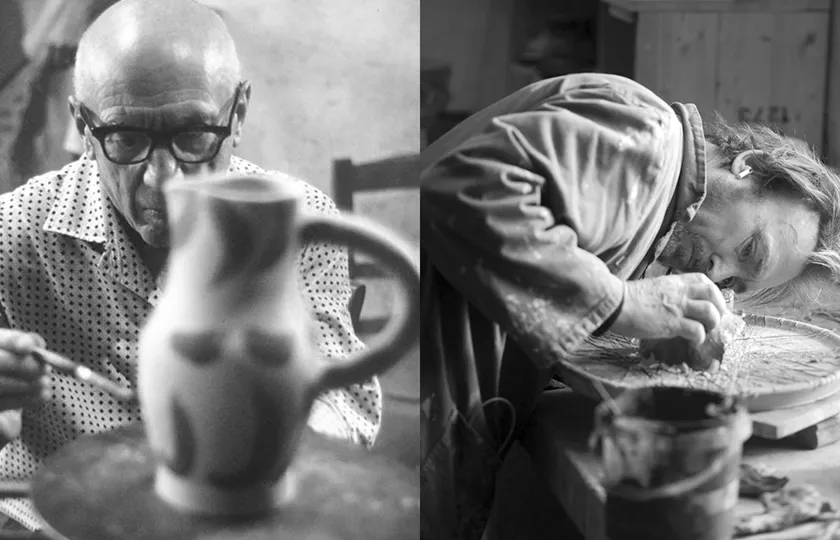
Opening image: Picasso in front of a ceramic. Vallauris, 11 August 1966. © Roberto Otero Collection. Museo Picasso Málaga, 2025. And Miquel Barceló, studio in Vilafranca, Majorca, February 2023. © Jean Marie del Moral.
Source: Communication from the PICASSO MUSEUM MALAGA