Peru’s largest region invites you to discover the heart of the Amazon through nature walks, kayaking routes and tours of the Amazonian canopy, on a journey where biodiversity, local communities and conservation are all part of the experience.
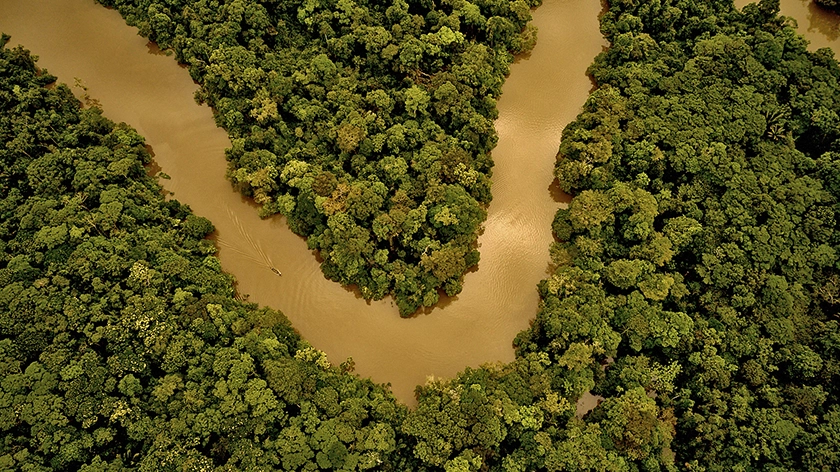
In the far north-east of Peru, where the Amazon River sets the pace of life, lies Loreto. Covering almost a third of the country’s territory, it is Peru’s largest region and one of the planet’s foremost biodiversity hotspots. Located less than two hours’ flight from Lima, nature, culture and adventure coexist here on the same stage to offer an authentic travel experience, in which every excursion allows you to discover a new way of connecting with the Amazon.
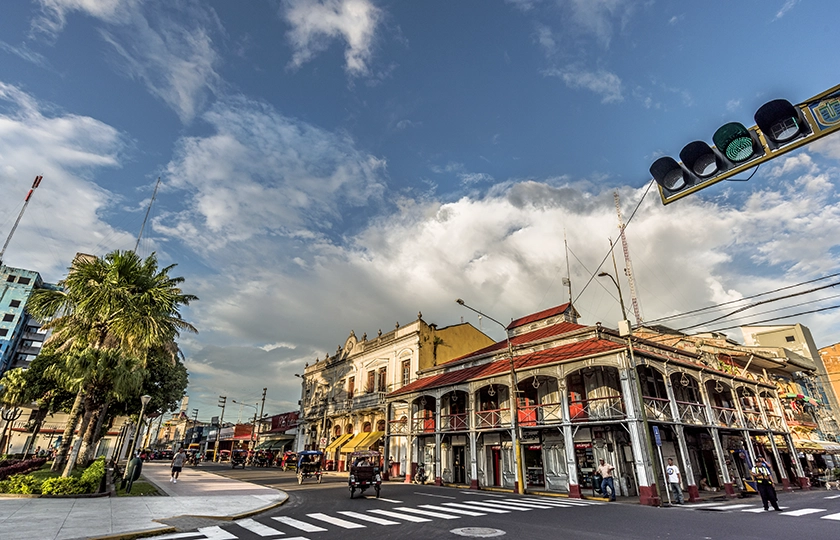
Iquitos, its capital, is the largest city in the world without a road link to the rest of the country, accessible only by air or river. Surrounded by an immense tropical forest, it serves as the gateway to a region where rivers replace roads and nature sets the pace of the journey.
Walking through the heart of the Amazon
In Loreto, an extensive network of trails winds its way deep into a tropical forest where biodiversity is gradually revealed amidst the sounds of insects, birdsong and the rustling of the vegetation. Far from the beaten track, these walks allow you to venture into an ecosystem where biodiversity is gradually revealed and every corner holds a new surprise.
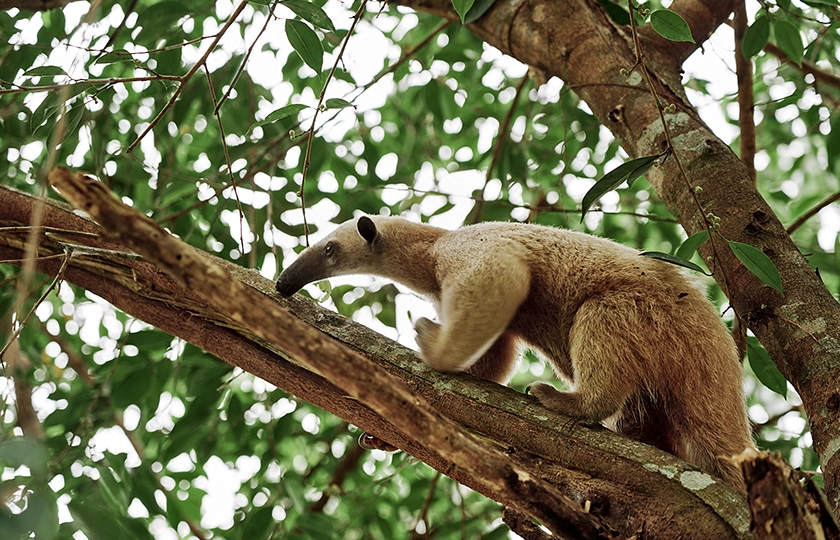
Always accompanied by specialist guides (many of whom belong to local communities), travellers learn to interpret a forest that, at first glance, may seem impenetrable. Along the way, they discover ancient medicinal plants, identify animal tracks, encounter monumental trees towering over 40 metres in height, and have the opportunity to observe some of the Amazon’s most iconic wildlife species, such as howler monkeys, capuchin monkeys, macaws, toucans and sloths, perfectly integrated into their natural habitat.
When night falls, the Amazon reveals a completely different side. Equipped with torches, night-time walks allow you to spot species that are difficult to observe during the day, such as caimans, tarantulas, frogs and insects, whilst the sounds of the forest intensify and reveal the bustling activity that comes to life at dusk.
Exploring the Pacaya Samiria National Reserve from the river
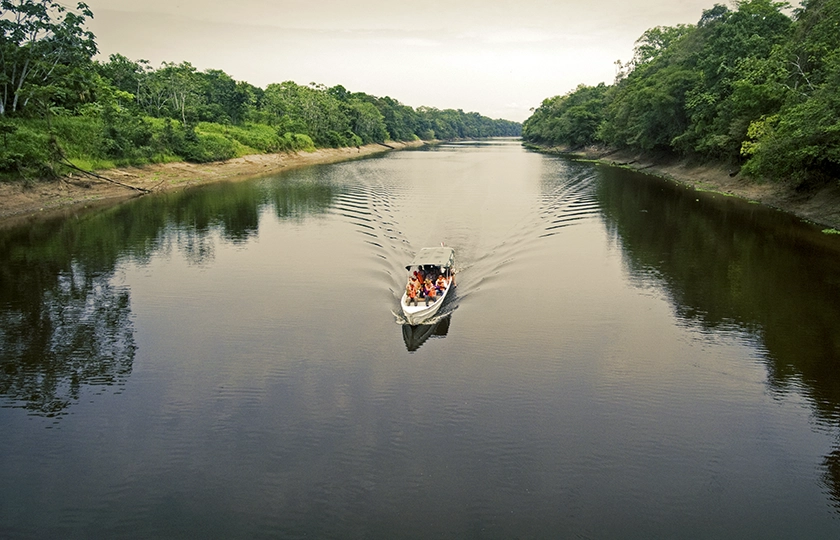
If there is one place you simply must visit to grasp the immensity of the Peruvian Amazon, it is the Pacaya Samiria National Reserve. Covering more than two million hectares, it is Peru’s second-largest protected natural area and one of the most biodiverse places in South America. Known as the ‘forest of mirrors’ due to the almost perfect reflection of the forests on its calm waters, the reserve consists of a labyrinth of lagoons, floodplain forests and narrow natural channels that invite you to explore it from the water.
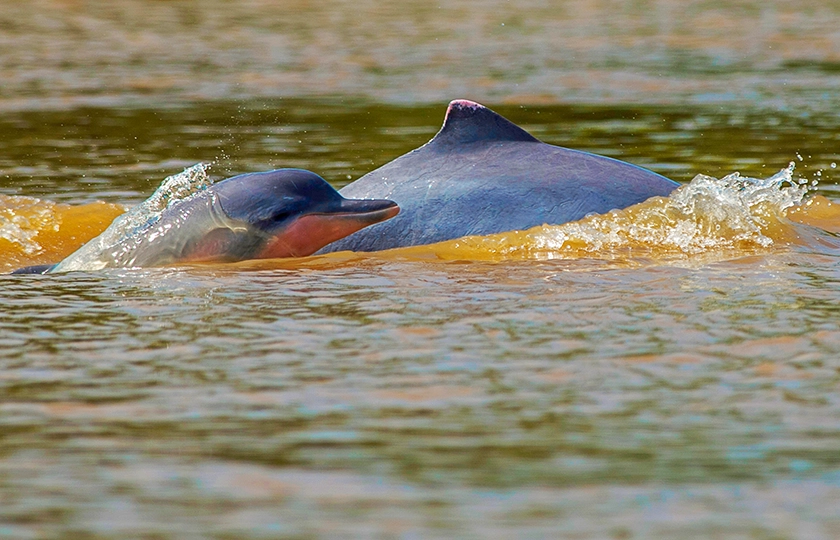
One of the most special ways to do this is by kayak. Paddling through the Amazonian lakes and waterways allows you to move silently, reach spots inaccessible to larger boats and observe nature without disturbing the environment. During the journey, it is not uncommon to spot the iconic pink river dolphin (also known as the boto or bufeo) or to see herons, kingfishers and other birds constantly flying over the reserve. The enormous leaves of the Amazon water lily float on the surface, whilst gigantic ceiba trees dominate the landscape from the riverbanks.
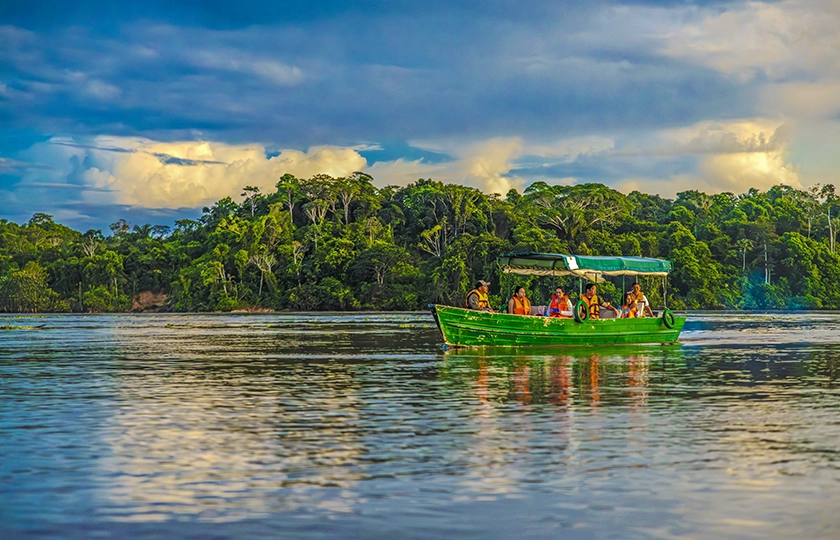
For those who prefer a more leisurely and comfortable experience, river cruises offer another way to discover the Amazon. Sailing for several days along the Amazon River and its tributaries allows you to venture into the Pacaya Samiria National Reserve, combine excursions in dinghies or kayaks with wildlife spotting, and visit riverside communities, whilst enjoying the landscape from a different perspective.
The Amazon from the treetops
The adventure continues several metres above the ground. In Loreto, canopy tours allow you to discover the Amazon from the forest canopy – the level where much of the tropical forest’s biodiversity is concentrated and where numerous species spend much of their lives. Via a system of suspension bridges over 500 metres long, visitors move along suspended amongst the treetops, at a height of around ten metres. From this privileged vantage point, it is possible to take in the vastness of the forest, watch exotic birds in flight, hear the monkeys moving through the branches and identify plant species that, when viewed from the ground, go virtually unnoticed.
An adventure that is also experienced through culture and cuisine
The Loreto Amazon is not only discovered amongst the trees, rivers and wildlife; it is also explored through the stories of those who have made this land their home for generations. Indigenous communities such as the Bora, the Yaguas and the Kukama open their doors to travellers to share their traditions, crafts, dances and the ancestral knowledge through which they interpret and protect the forest. Through contact with these communities, travellers discover that the conservation of the Amazon and the preservation of its cultural identity form part of the same legacy.
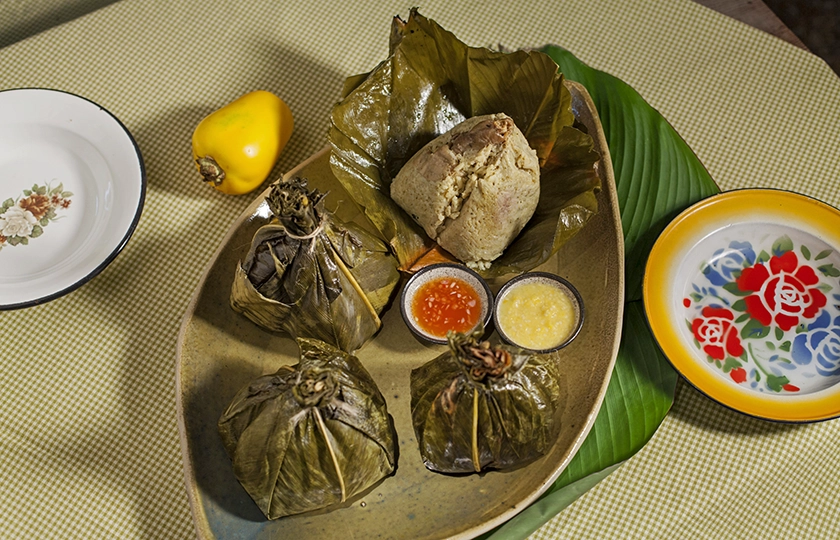
The connection with Loreto is also forged around the table. Its cuisine draws on the vast larder provided by the river and the Amazon, with an extraordinary variety of freshwater fish, exotic fruits and other local produce, which bring to life dishes such as juane, tacacho con cecina and patarashca, bringing together flavours, techniques and traditions passed down through generations. Each recipe is a way of understanding the relationship between its inhabitants and a territory characterised by water, forest and biodiversity.
This close relationship between nature and culture is also reflected in Loreto’s commitment to the conservation of its natural heritage. In the Pacaya Samiria National Reserve, initiatives are being carried out aimed at the recovery of species such as the paiche and the taricaya, the reforestation with aguaje palms, and the sustainable use of natural resources in collaboration with local communities. A model that demonstrates how tourism can help protect biodiversity, create opportunities for local people and preserve the Amazon’s riches for future generations.
About PROMPERÚ
The Commission for the Promotion of Peru for Exports and Tourism (PROMPERÚ) is an agency under the Peruvian Ministry of Foreign Trade and Tourism and is responsible for formulating, approving, implementing and evaluating strategies and plans to promote Peru’s image in the areas of tourism, exports and foreign direct investment in the country.
Source: NEWLINK SPAIN