Halfway between imperial history and alpine life, Innsbruck is a city that holds surprising stories in its streets, churches and mountains. From 15th-century rumours to legends “petrified” in the middle of the mountain range, here are six curiosities that reveal the most unexpected side of the capital of Tyrol.
Fake news in the Middle Ages
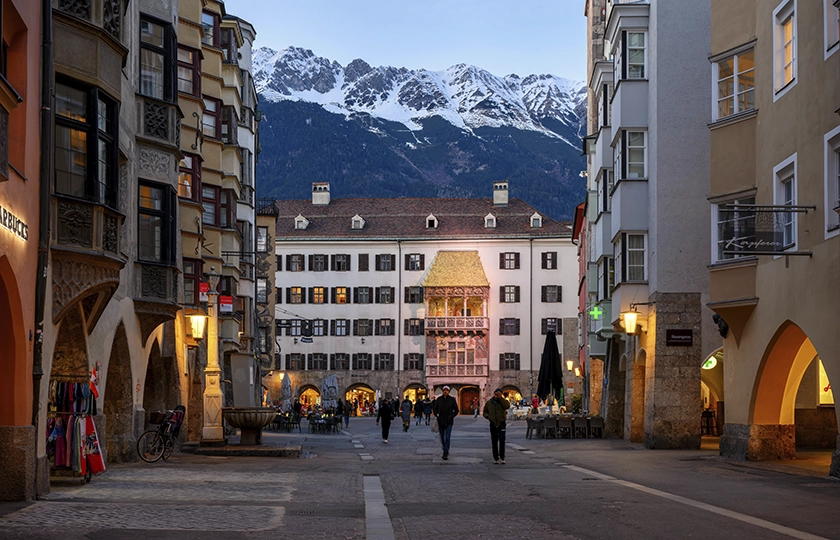
Long before social media existed, Emperor Maximilian I already knew how important public perception and image were. When rumours began to circulate about his alleged bankruptcy, he decided to counter them with a brilliant public relations stunt: he had the roof of the most visible building in the old town covered with real gold. Thus was born the Goldenes Dachl, the famous Golden Roof, a symbol of power and stability rather than actual wealth. A ‘golden filter’ for the 15th century.
The arch that whispers secrets in the heart of the old town
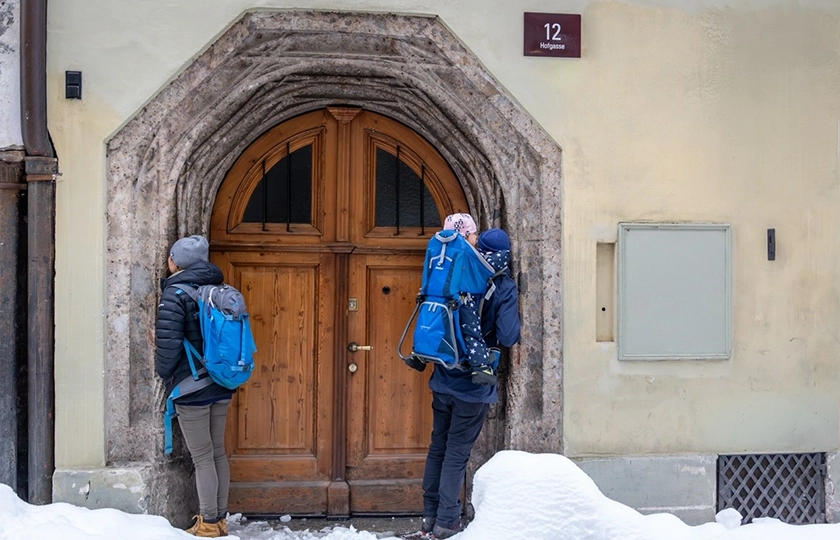
In the heart of the old town, on Hofgasse street, specifically at number 12, hides the ‘whispering arch’, a Gothic doorway with surprising acoustics. If two people stand at opposite ends of the arch and whisper, they can hear each other clearly, even with the hustle and bustle of the street in between. It’s not magic, but physics.
Frau Hitt, the giantess turned to stone
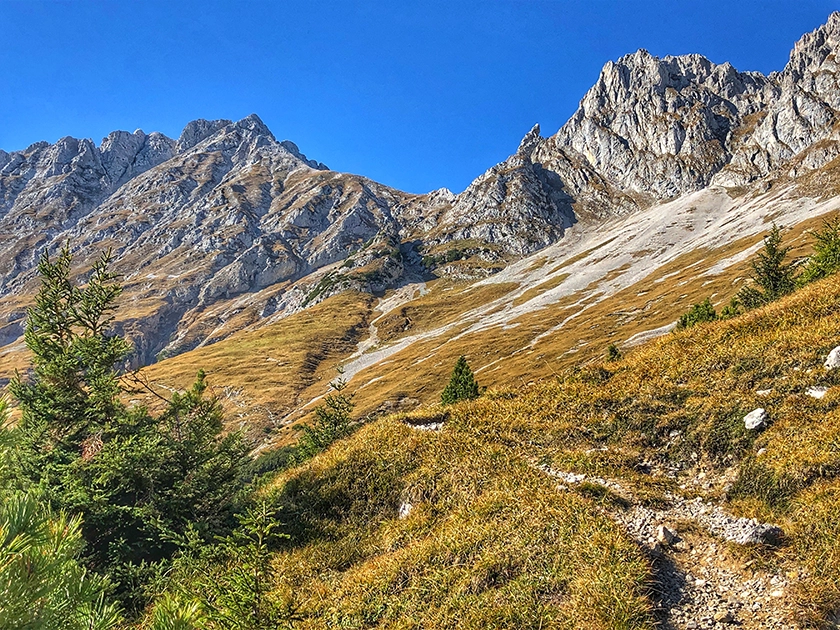
When you look up at the Nordkette mountain range, one silhouette catches your eye: a rock formation that resembles a woman on horseback. According to legend, this is Frau Hitt, a giant queen punished for her greed by offering a beggar a stone instead of bread. Turned to stone alongside her horse, she now gives her name to the Frau Hitt Viewpoint and fuels popular imagination and local humour.
The “Black Men” who are not just men
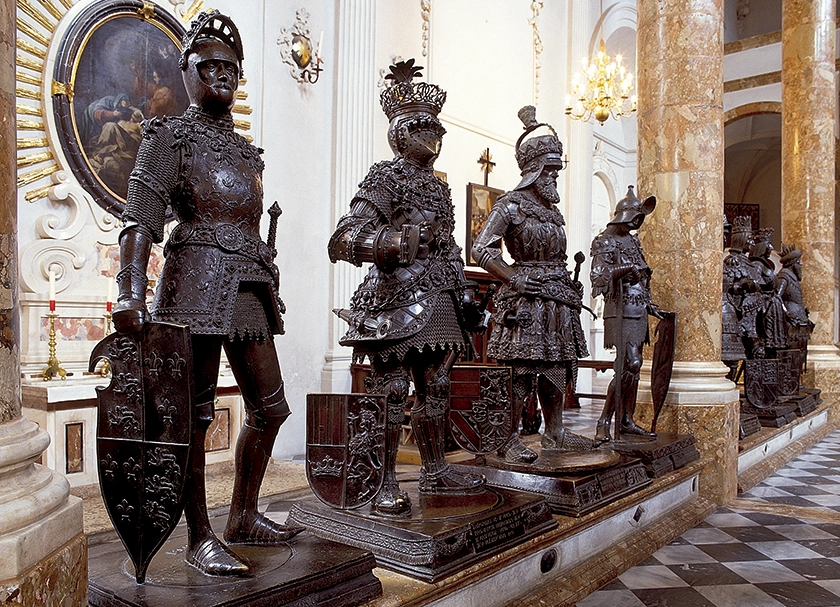
The Imperial Court Church in Innsbruck, or Hofkirche, houses one of the most impressive imperial tombs in Europe. The paradox is that it is empty: Maximilian I does not rest there, but in the Austrian city of Wiener Neustadt. Around it, 28 life-size bronze statues, known as the ‘Black Men’, represent his ancestors. Another lesser-known detail is that among them there are also eight women, something unusual for the time.
The Triumphal Arch that laughs and cries at the same time
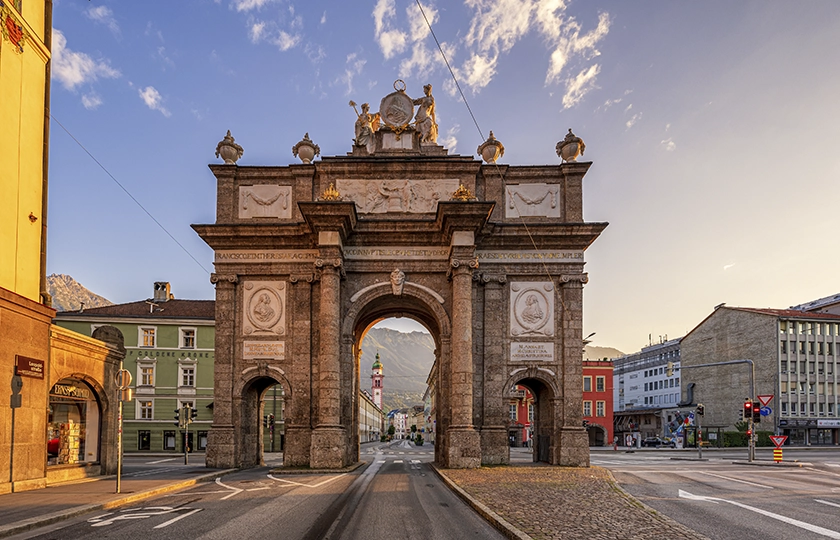
At the end of Maria-Theresien Street stands an arch that tells two contrasting stories in a single structure. On its south side, the reliefs celebrate the wedding of Archduke Leopold to the Spanish princess Maria Ludovica. On the north side, however, the symbols are of mourning: during the celebrations, Emperor Francis I Stephen died unexpectedly. Joy and mourning, united in stone in the same monument.
A city where the mountains begin in the centre
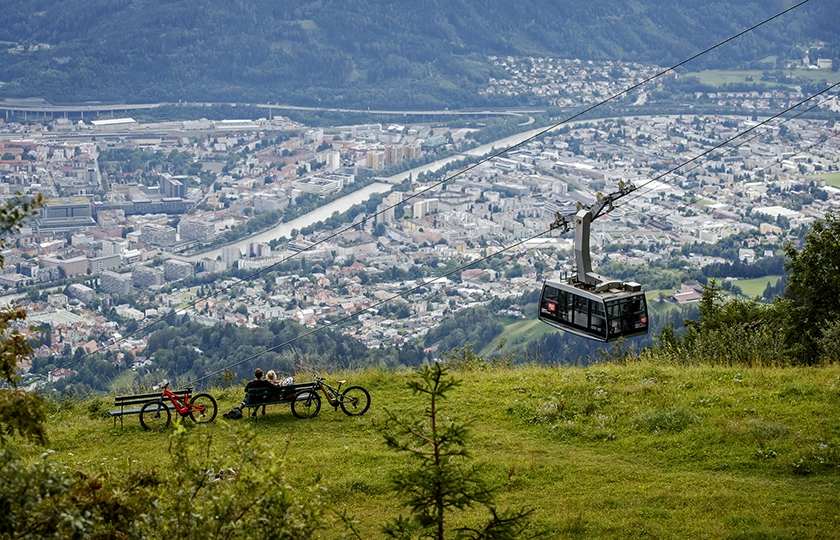
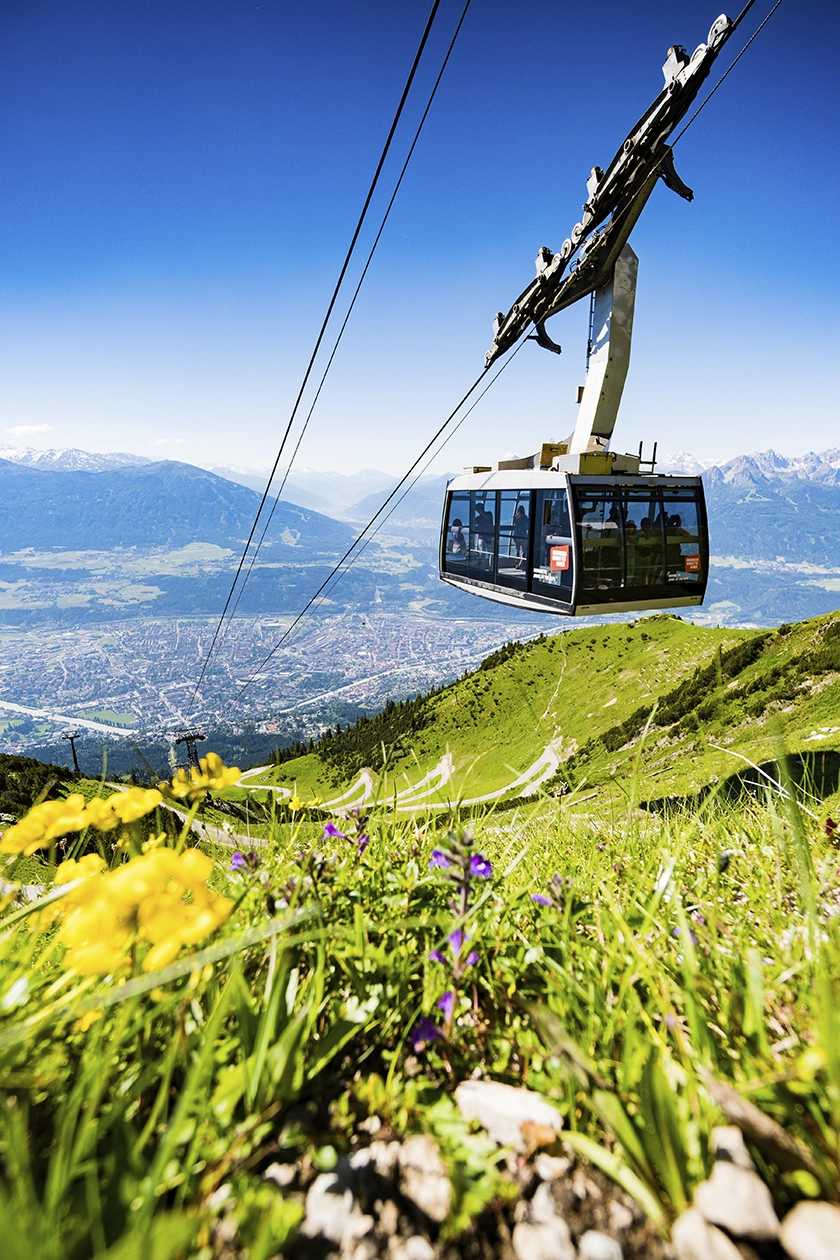
Few European cities can boast what Innsbruck has to offer: from the heart of the city, a funicular railway connects directly to the high mountains. In a matter of minutes, you can go from the historic centre to the alpine viewpoints of the Nordkette. This natural coexistence between city and landscape is not only a visual attraction, but also a way of life that defines the character of Innsbruck and the daily relationship of its inhabitants with the Alps, which even describes them by the way they dress, as it is completely normal to walk through the city centre wearing hiking boots or ski jackets.
Innsbruck is not just visited, it is deciphered. And every corner, whether it be a street, a church or a mountain peak, hides a story that breaks with expectations and turns the city into a destination full of legends and unexpected surprises for the curious traveller.
About the INNSBRUCK REGION
The Innsbruck region is a unique symbiosis of a vibrant urban space and fascinating Alpine mountains. It extends from the Tyrolean capital to 40 surrounding towns and villages and comprises a total of six regions: the city of Innsbruck, the Inn Valley, the Kühtai-Sellraintal Valley, the Mieming Plateau, the South and West regions. The city’s wide range of activities and sightseeing opportunities are just a stone’s throw away from numerous sporting adventures and Alpine summit ascents. The free Welcome Card is your key to the region’s unlimited diversity: with free use of public transport, you can enjoy numerous attractions in a sustainable and comfortable way, travelling up and down the mountains. For the nearly 100 employees and eleven tourist information offices of Innsbruck Tourismus, the well-being of their visitors is paramount. With their enthusiasm and passion for the alpine-urban area, they convey their love for the region and create unforgettable holiday experiences in harmony with people and nature. The Innsbruck region is easily accessible from Spain, whether by road, rail or air.
Several airlines offer routes to this destination throughout the year, with stopovers in Vienna or Munich, whose airport is only two hours by road or train from Innsbruck. In addition, during the 2026 winter season, Iberia is once again operating a direct route from Madrid to Innsbruck with two weekly flights, on Wednesdays and Sundays.
Source: ALFABÉTIKO Communication, PR & Marketing