

- The Secretary of State for Tourism, Rosario Sánchez, highlights the pioneering agreement with ABTA to assess improvements in sustainability and the impact of tourism, as well as to promote more balanced tourism across various pilot destinations.
- Turespaña is presenting the international campaign ‘Spain, a Country for All’ at the World Travel Market, with Spain as the fair’s first official accessibility partner.
- The United Kingdom remains Spain’s main source market, with 13.9 million tourists and expenditure totalling 17,251 million euros between January and August 2026.
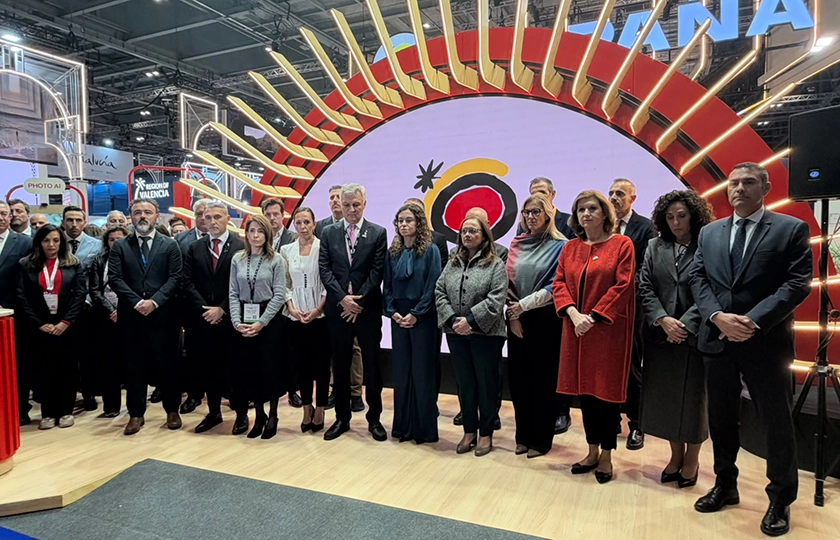
- The Spanish delegation observed a minute’s silence in memory of the victims of the train accident in Urda, Toledo.
The Secretary of State for Tourism, Rosario Sánchez, today highlighted two initiatives at the World Travel Market (WTM) in London aimed at moving towards a more sustainable and inclusive model of tourism: the agreement with the Association of British Travel Agents (ABTA) to improve tourism management, starting with four pilot Spanish destinations; and Turespaña’s new international campaign for accessible tourism, ‘Spain, a Country for All’.
The agreement with ABTA, signed last June and already underway, involves the association’s commitment to the Spain Tourism 2030 Strategy. It involves the participation of Benidorm, Calvià, Lloret de Mar and Seville. This is a pioneering cooperation initiative between one of the main source markets and the destination markets to tackle challenges such as visitor concentration, the environmental impact of tourism and the distribution of its economic and social benefits.
Over the next two years, these four destinations will serve as pilot projects in which information will be shared on tourist flows, visitor spending, length of stay, residents’ perceptions of tourism and the impact on natural resources.
This data will enable better decisions to be made to reduce environmental impacts and improve the distribution of the benefits of tourism, thanks also to the involvement of SEGITTUR. The aim is for the solutions and best practices developed to be rolled out to other Spanish destinations at a later stage.
In this context, Rosario Sánchez has emphasised the need to strengthen tourism planning and regulation in order to protect destinations’ resources and ensure harmonious coexistence between residents and visitors. “Managing tourism means ensuring its sustainability and its future”, she stated.
‘Spain, a Country for All’, a boost for accessible tourism
The second major initiative highlighted by the Secretary of State in London is the launch of ‘Spain, a Country for All’, Turespaña’s new international campaign to present Spain as an accessible and inclusive tourist destination.
This year, our country is participating as the World Travel Market’s first official accessibility partner, an opportunity to place accessibility at the heart of the international tourism debate and reinforce its commitment to tourism that is open to everyone.
The campaign, developed in collaboration with the ONCE Foundation and accessibility experts, aims to demonstrate that all travellers should be able to enjoy Spanish destinations independently, safely and with dignity. It also builds on the work of ‘Spain for All’, an initiative driven by the Spanish Tourist Office in London in partnership with industry professionals and people with direct experience of disability.
The United Kingdom consolidates its position as Spain’s main tourism market
During her participation at the WTM, the Secretary of State also highlighted the strategic importance of the British market, which continues to be the main source market for Spain in terms of both tourism expenditure and visitor numbers.
Between January and August 2026, Spain welcomed 13.9 million British tourists, 5.4 per cent more than in the same period the previous year. Spending by these visitors totalled 17,251 million euros, representing a year-on-year increase of 4.4 per cent.
Furthermore, British tourists show a high level of loyalty to Spain: 85 per cent return for further visits and almost 70 per cent are very satisfied with their most recent stay in our country. For this reason, British tourism is an essential partner in improving the tourism model.
Meetings with countries and the Mallorca Hotel Federation
Spain’s participation at the World Travel Market was also marked by a tribute to the victims of the Urda rail accident in Toledo, in whose memory the Spanish delegation observed a minute’s silence.
During her programme at the World Travel Market, Rosario Sánchez held meetings with key players in the British tourism sector, with whom she discussed the Spanish Government’s priorities for moving towards a more sustainable and balanced form of tourism. She also held bilateral meetings with representatives from Portugal and Romania, as well as with representatives of the Mallorca Hotel Federation.
She also visited the stands of the autonomous communities present at the fair, both those integrated into the Turespaña stand and those with their own stands.
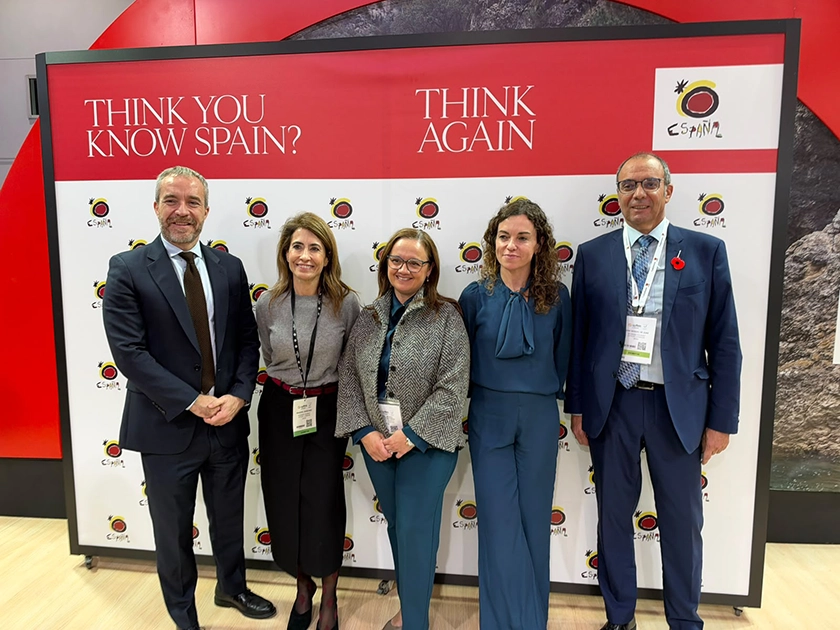
The Secretary of State was accompanied at the fair by the Director-General of Turespaña, Miguel Sanz; the President of Paradores, Raquel Sánchez; the Spanish Ambassador to the United Kingdom, Emma Aparici Vázquez de Parga; and the Director of the Spanish Tourist Office in London, José Manuel de Juan.
The Spain Tourism Strategy: a roadmap for transforming the sector
The Secretary of State has set out the initiatives promoted in collaboration with the British market within the Spain Tourism Strategy 2030, which places economic, social and environmental sustainability at the heart of the transformation of the Spanish tourism model.
This strategy gives rise to the Turespaña Operational Framework Plan 2026–2028, which translates its objectives into the agency’s sphere of action to contribute to a tourism model that generates greater economic and social benefits, promotes a more balanced distribution of these benefits across regions and reduces its environmental impact. To this end, it is committed to responsible marketing, artificial intelligence, showcasing heritage, repositioning established destinations, promoting new destinations and strengthening Spain’s leadership in segments such as premium tourism, gastronomic tourism and meetings, incentives, conferences and exhibitions (MICE).
“Spain and the United Kingdom have a long history of collaboration in the tourism sector. We now also have the opportunity to work together to transform the tourism model and tackle the challenges of the future”, he concluded.
Source: MINTUR