

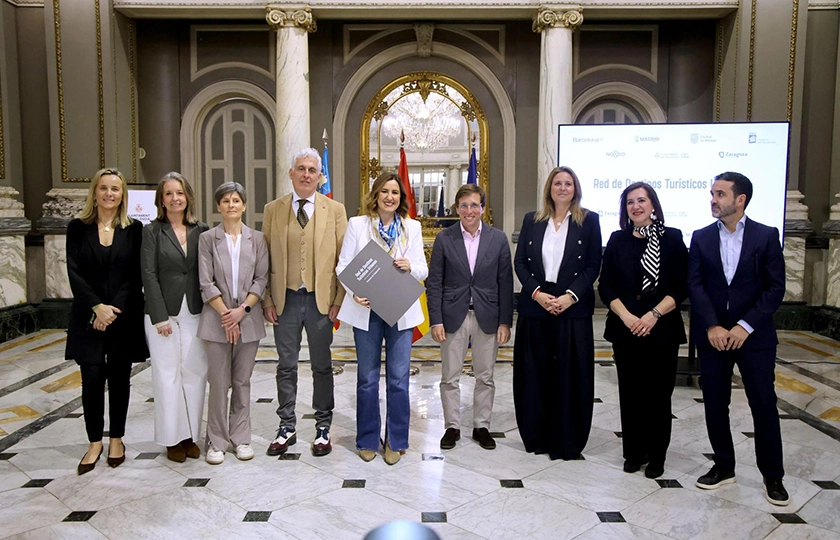
On 16 March, the memorandum of understanding for the creation of this network was formally signed. This pioneering initiative aims to strengthen strategic cooperation between Spanish tourist cities and to jointly address the challenges and opportunities of urban tourism.
Seven major cities have today taken a decisive step forward in urban tourism cooperation with the signing of the protocol for the creation of the Network of Urban Tourist Destinations, a pioneering initiative designed to strengthen the role of cities as economic, cultural and social drivers of tourism in Spain. The event was attended by institutional representatives from the seven founding cities – Barcelona, Madrid, Málaga, San Sebastián, Seville, Valencia and Zaragoza – who agreed on the need to move towards a more sustainable, innovative and competitive model of urban tourism, aligned with the needs of both residents and visitors.
The signing of the agreement took place in the Crystal Hall of Valencia City Hall. On behalf of Barcelona City Council, the agreement was signed by the Commissioner for Sustainable Tourism Management, José Antonio Donaire Benito; on behalf of Madrid City Council, by the Mayor, José Luis Martínez-Almeida; on behalf of Málaga City Council, by the Deputy Mayor and Head of Tourism and Promotion, Jacobo Florido Gómez; on behalf of San Sebastián City Council, by the Director General of San Sebastián Tourism, Isabel Aguirrezabala; on behalf of Seville City Council, the Deputy Mayor and Head of Tourism and Culture, Angie Moreno Ramón; on behalf of Valencia City Council, the Mayor, María José Catalá Verdet; and on behalf of Zaragoza City Council, the Councillor for Culture, Education and Tourism, Sara Fernández Escuer.
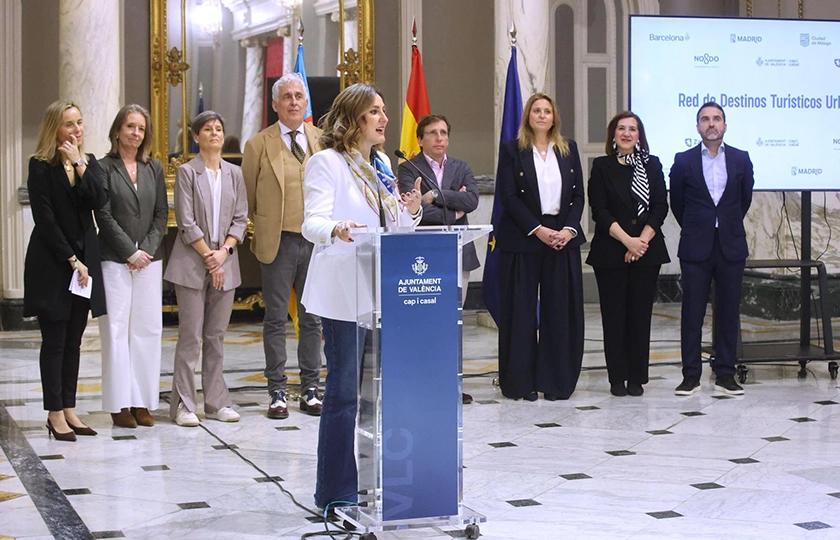
Over the last decade, urban tourism has established itself as one of the most dynamic and strategic segments of the Spanish tourism sector, presenting challenges to cities that require coordinated responses. Until now, there has been no national framework to facilitate the exchange of knowledge, cooperation between urban destinations or the articulation of a common position vis-à-vis competent administrations and bodies, nor to establish effective frameworks for collaboration.
Aware of the key role of urban tourism in the economic, social and cultural development of cities, the founding destinations of the network seek to establish mechanisms for institutional cooperation based on sustainability, innovation, quality and shared governance. The Network will address, amongst other challenges, the balance between visitors and residents, heritage preservation, the management of tourist flows, digital transformation, and economic, environmental and social sustainability.
All signatories have affirmed that the creation of this association represents a decisive step towards “consolidating a stable framework for collaboration between urban destinations, in a context marked by the evolution of communications, changes in travel habits and the growing involvement of local governments in sustainable tourism planning, promotion and management”.
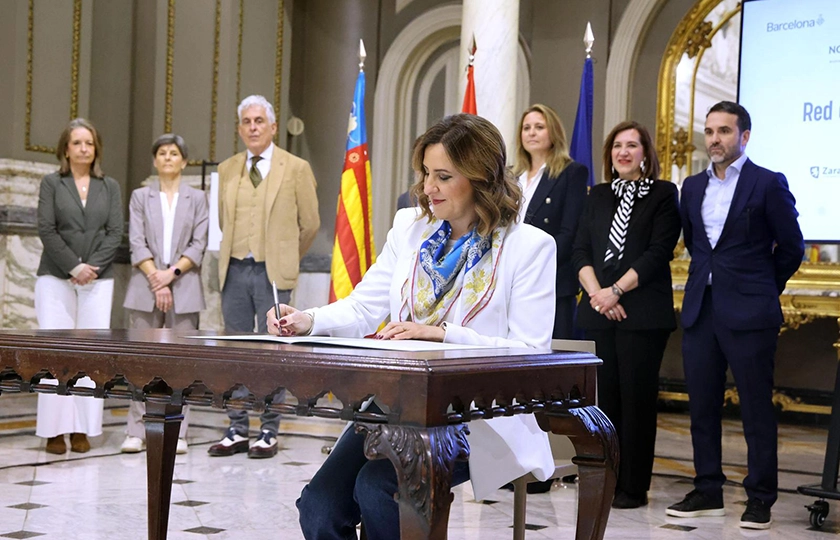
Working Group for Cooperation and Coordination
During this initial phase, a provisional framework for cooperation will be established to make coordinated progress in defining the Network, including governance, participatory bodies, criteria for the inclusion of new destinations, and potential funding channels. The protocol also promotes the exchange of information and best practices, as well as the development of a common position in response to the challenges facing urban tourism.
To this end, the cities will collaborate through working sessions, regular meetings and the sharing of relevant experiences. In this context, Valencia City Council, through the Visit Valencia Foundation, will take on the coordination of the working group, handling the organisation, convening of meetings, coordination between destinations and internal communication until the formal establishment of the Network.
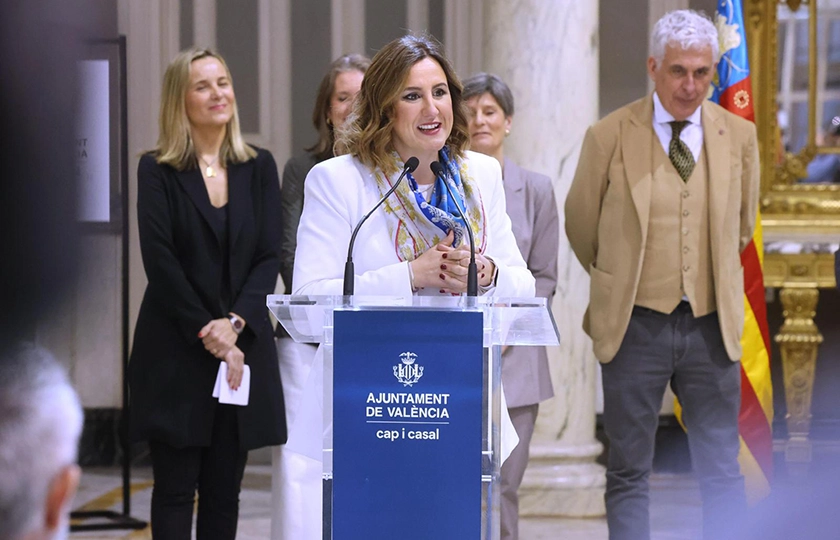
The Mayor of Valencia has taken the opportunity of the Fallas festival, “a celebration that is a World Heritage Site and fills the city with visitors who come to enjoy our culture, our cuisine and our traditions”, to emphasise that “this should lead us to an important realisation: that tourism, when managed well, is an extraordinary opportunity for our cities”.
For María José Catalá, the seven signatory cities “face the challenge of managing the arrival of millions of visitors, who use our transport systems, public services and shared spaces”. “To avoid being overwhelmed by our own success and to meet this demand requires planning, strategic vision and cooperation”, she emphasised. “That is why, from Valencia and together with you, we have wanted to take a step forward by promoting this network, to move towards a more sustainable, more innovative and more balanced model of urban tourism,” added the Mayor of Valencia.
Catalá highlighted “the common challenges facing major cities: We share a very clear vision of tourism as part of the wealth of our cities, but also of the need to promote a strategy to ensure that this tourism is balanced and sustainable and fosters a healthy and appropriate coexistence. “We must ensure that residents do not see a reduction in municipal services and focus on quality rather than quantity when it comes to tourists, understanding that we need to generate more revenue, but not at the city’s expense,” she argued.
Source: HOPSCOTCH Network Spain