
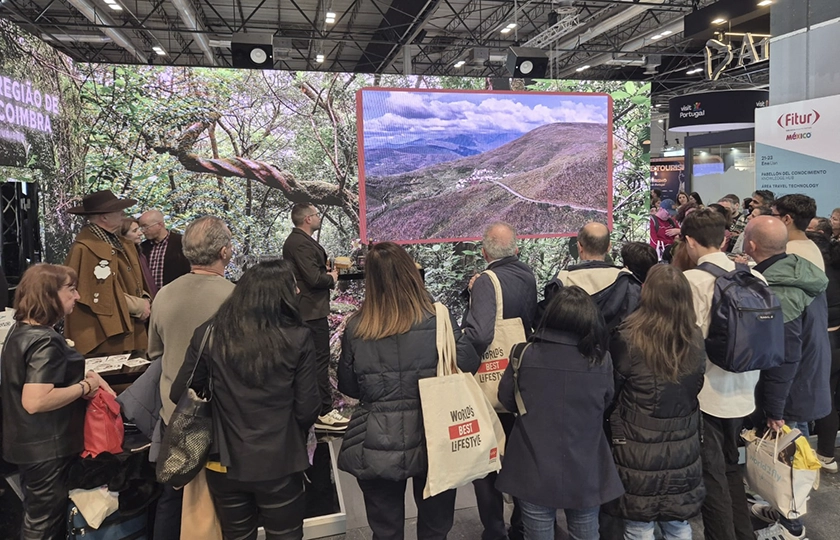
During the first days of the fair, the Metropolitan Region of Coimbra showcased its unique tourist offerings at a stand full of experiences for professionals in the sector.
The Metropolitan Region of Coimbra shone at FITUR 2026, standing out for its combination of nature, gastronomy and cultural heritage. During the first few days dedicated to professionals, its stand became a key meeting point for agencies, operators and tour operators interested in discovering authentic experiences in the heart of Portugal.
The three fundamental pillars that position this destination as one of the best choices for travel from Spain and which were presented at the fair are:
- Nature and active tourism: promotion of routes and activities in preserved natural environments, ideal for tourists seeking well-being and sustainability.
- Wine tourism and gastronomy: tastings and presentation of local products that reflect the identity of the region through its wines and traditional flavours.
- Heritage and culture: highlighting the University of Coimbra (a UNESCO World Heritage Site) and a vibrant cultural agenda, consisting of festivals and historical events of global significance.
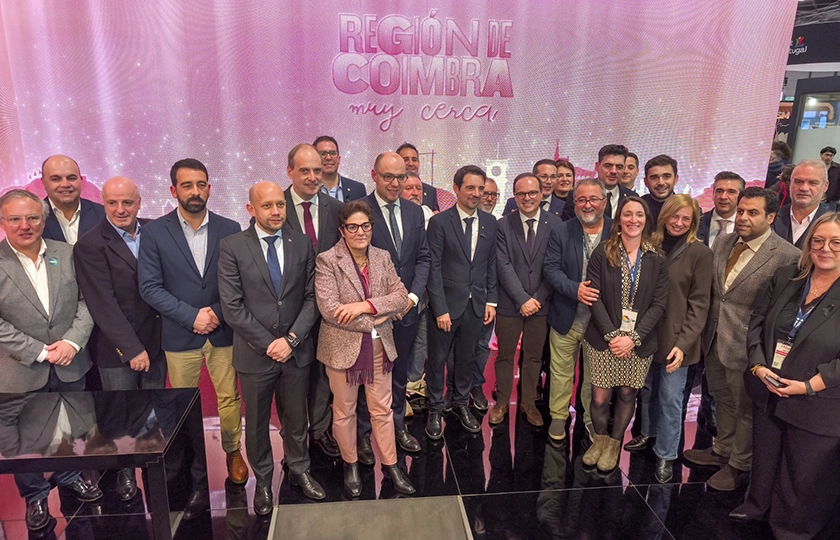
‘We wanted the Metropolitan Region of Coimbra to be recognised not only for its landscapes and heritage, but also for the overall quality of its tourist offer, which combined nature, gastronomy and culture in a sustainable way,’ said Jorge Brito, executive secretary of the Metropolitan Region of Coimbra.
The stand highlighted three main areas: routes and activities in natural environments, wine tourism experiences and gastronomic tastings, and the richness of its cultural heritage, including the University of Coimbra, a UNESCO World Heritage Site, and a calendar of festivals and historical events that attract visitors from all over the world.
Brito added that the region worked to generate added value and business opportunities: ‘Participating in FITUR allowed us to directly show agents and operators our unique offering and strengthen alliances that will boost tourism throughout the year.’
Twinning with Castelldefels
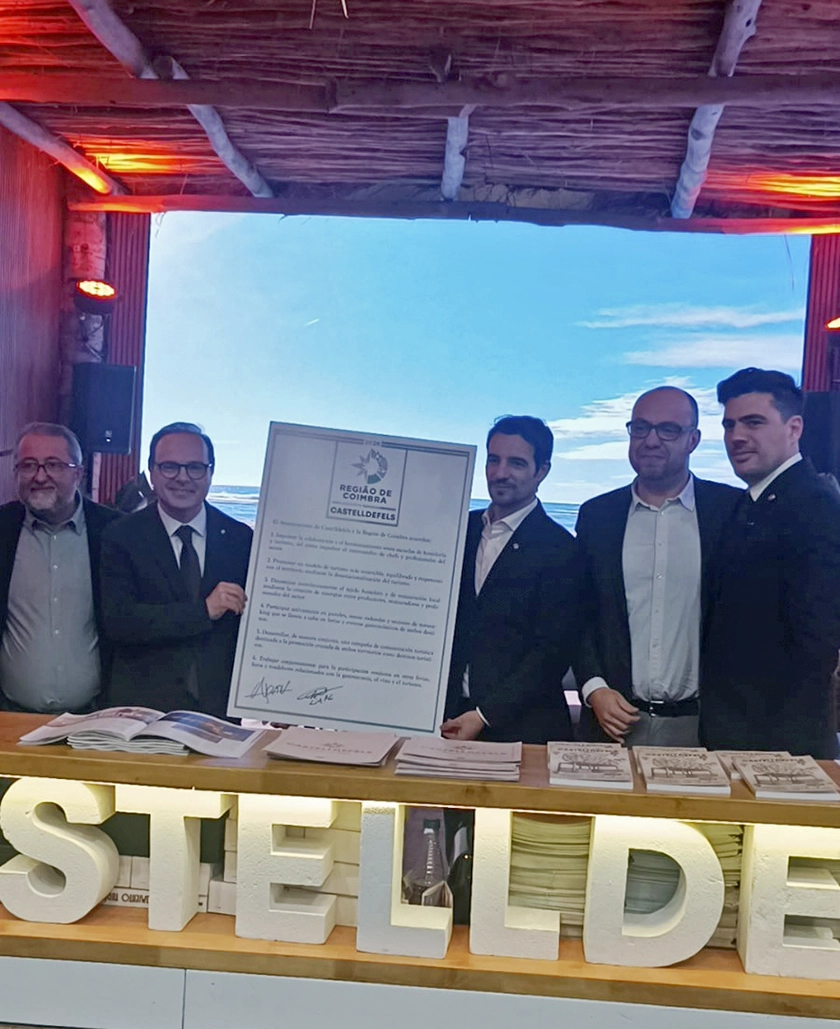
During the fair, an institutional twinning agreement was announced with the Castelldefels Town Council, thereby expanding its global reach. This agreement between destinations opens up new opportunities for cooperation in tourism, gastronomy and culture, under a joint action plan that includes the creation of a cocktail symbolising the meeting of two territories, two seas and two ways of celebrating life.
‘Castimbra’ blends typical drinks from both places in a fresh, bright and meaningful way. In the glass, the warm strength of tequila meets the aromatic and herbal character of Licor Beirão, from Coimbra. The citrus touch of freshly squeezed lime adds freshness, while the cava elevates the cocktail with elegance and celebration. Everything is rounded off with a pink grapefruit mixer, which adds smoothness, colour and a delicate bitterness reminiscent of both the Mediterranean sun and the Atlantic breeze.
Participation in FITUR 2026 highlighted the Coimbra Metropolitan Region’s strategy to position itself as a competitive destination in the international market, promote differentiated tourism products and attract visitors with varied interests: from active and sustainable tourism to gastronomic and cultural experiences.
About the METROPOLITAN REGION OF COIMBRA
Located in the heart of Portugal, the Metropolitan Region of Coimbra uniquely combines historical heritage, nature and cultural authenticity. Centred around the city of Coimbra, home to one of the oldest universities in Europe, the region offers visitors a cultural heritage of international importance, recognised by UNESCO, alongside landscapes ranging from mountains and river valleys to extensive rural areas of great environmental value.
With a diverse and sustainable tourism offering, the Coimbra Metropolitan Region invites visitors to discover experiences linked to culture, gastronomy, wellbeing and nature. Its network of municipalities is committed to a balanced development model that values local traditions, endogenous products and genuine hospitality, positioning the region as a competitive year-round destination for travellers seeking quality, identity and meaningful experiences.
Source: TRAVEL MEDIA HUB