
The Balearic capital invites visitors to discover its rich heritage through three venues that combine history, architecture, art and new ways of experiencing spirituality.
In a city where history coexists with everyday life, religious temples are establishing themselves as spaces that go beyond the spiritual to become genuine cultural and artistic attractions. This year, three venues invite you to rediscover Palma from a different perspective, where architecture, light and innovation engage in dialogue with tradition and heritage.
These are the Church of the Sacred Hearts (Sant Gaietà), which features ‘Elements’, an immersive experience of light, music and emotion; the Porciúncula, the city’s brightest glass church; and the impressive Cathedral of Mallorca, which is celebrating the ‘Year of Gaudí’ in 2026.
In doing so, the Balearic capital reaffirms its ability to reinterpret its heritage and offer experiences that connect the past and the present. From technological innovation to the purity of light or the reinterpretation of the great masters of architecture.
Church of the Sacred Hearts: a unique sensory experience
Popularly known as Sant Gaietà, the Church of the Sacred Hearts offers an innovative way to engage with heritage through ‘Elements, the heartbeat of life’, an immersive experience combining light, music and emotional storytelling; a Mediterranean journey through the classical elements—water, earth, fire and air—and the fifth element that unites them all: Ramon Llull, light and the word.
Through a carefully crafted audiovisual design, visitors embark on a sensory journey that transforms the architectural space into a living stage, where each element engages with the spirituality of the place. It is an immersive video-mapping experience, featuring unique projections and visual effects, immersive music and digital art.
Far from a conventional visit, this initiative transforms the church into a contemporary space, capable of moving both those seeking a different cultural experience and those interested in enjoying the city’s heritage.
La Porciúncula: the glass church that redefines light
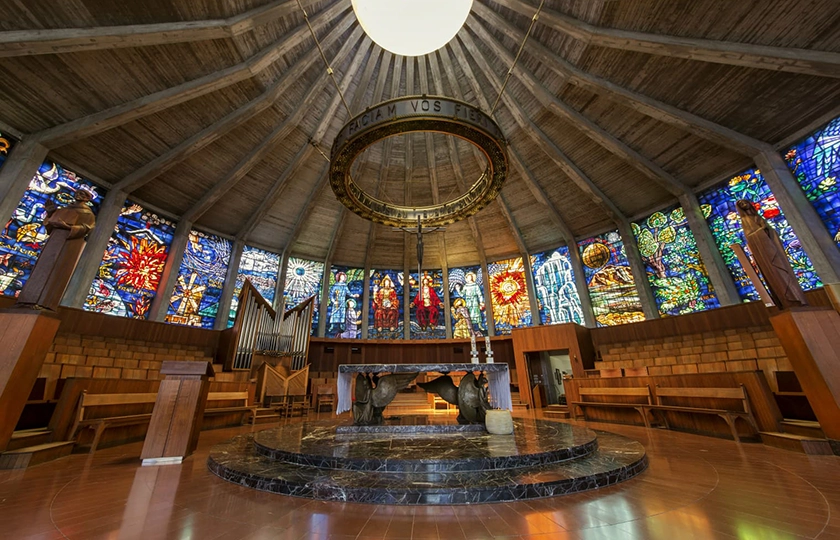
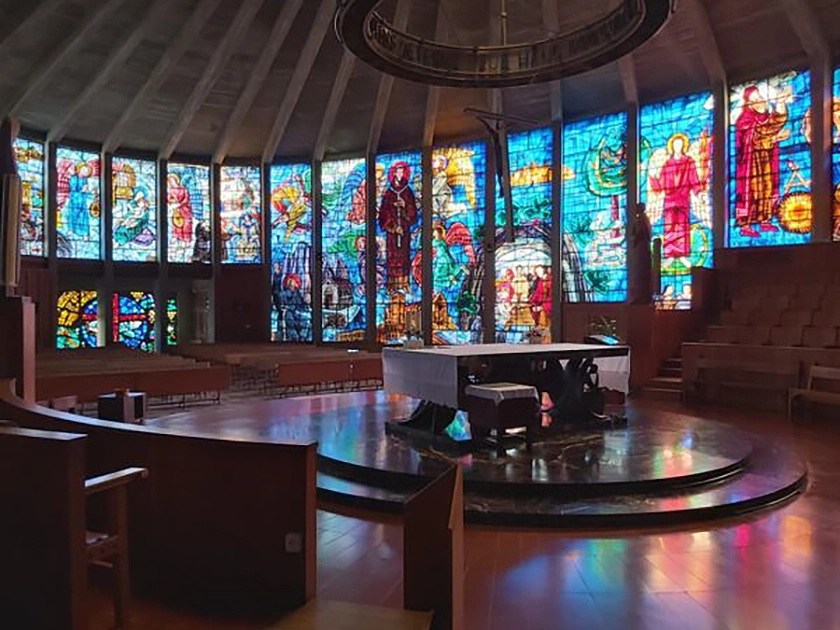
Located in Playa de Palma, the Church of La Porciúncula is one of the most unique examples of contemporary religious architecture in Mallorca; a gem designed by José Ferragut Pou in the 1960s. Known as the glass church, its structure features over 600 square metres of giant stained-glass windows that create a spectacle of light and colour within its oval-shaped interior.
The result is an almost ethereal space, where the colours change throughout the day, making every visit a unique experience. Its modern aesthetic, a departure from traditional norms, has made it a landmark of both architectural and artistic significance within Palma’s urban landscape.
Mallorca Cathedral: Gaudí’s legacy takes centre stage in 2026
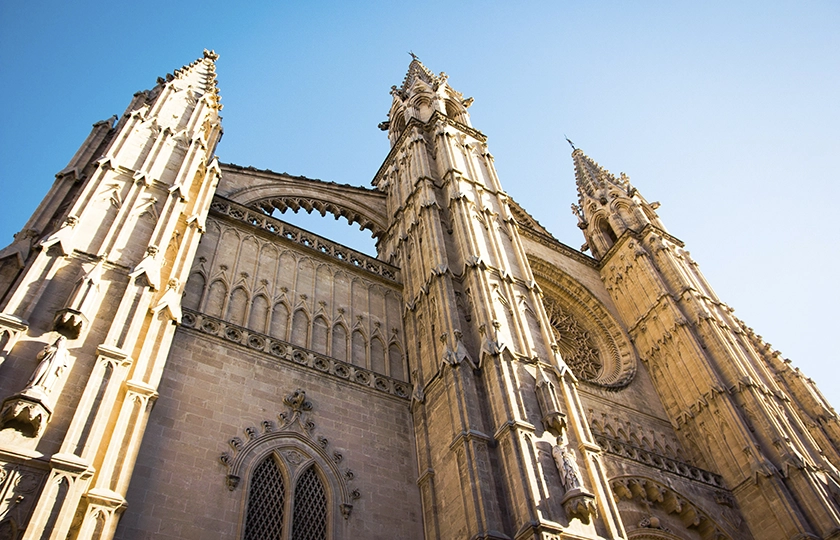
La Seu is set to be one of the city’s major cultural highlights this year with the celebration of the “Year of Gaudí”, marking the centenary of the architect’s death. In the city, the main event marking this anniversary will take place on the Feast of the Immaculate Conception (8 December) and will highlight the work carried out by Antoni Gaudí in the early 20th century, which left a decisive mark on the interior of the cathedral.
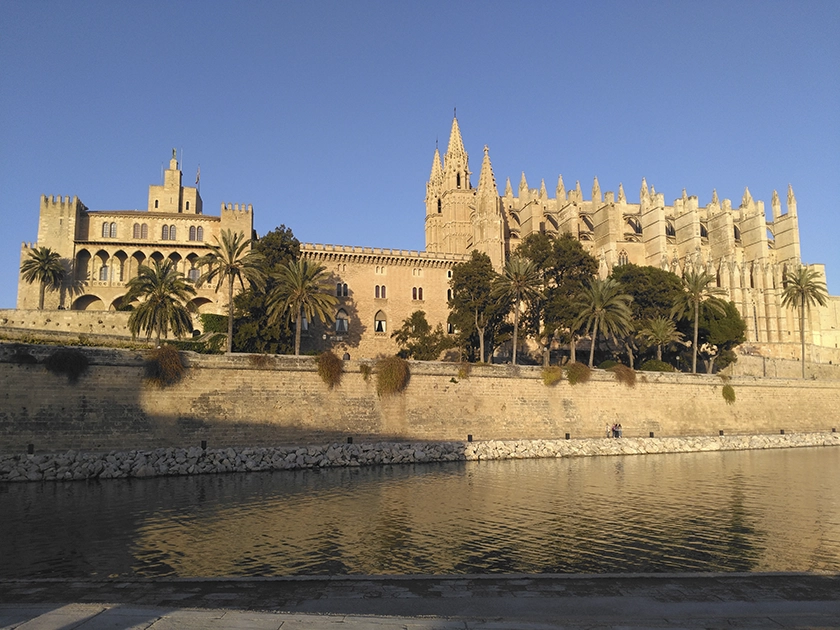
To mark the occasion, a programme of outreach and engagement activities has been designed for a diverse audience, with the aim of creating spaces for dialogue and discovery regarding the figure of Antoni Gaudí in the Cathedral. From a podcast and dramatised tours to an international symposium, a range of events will take place throughout the year.
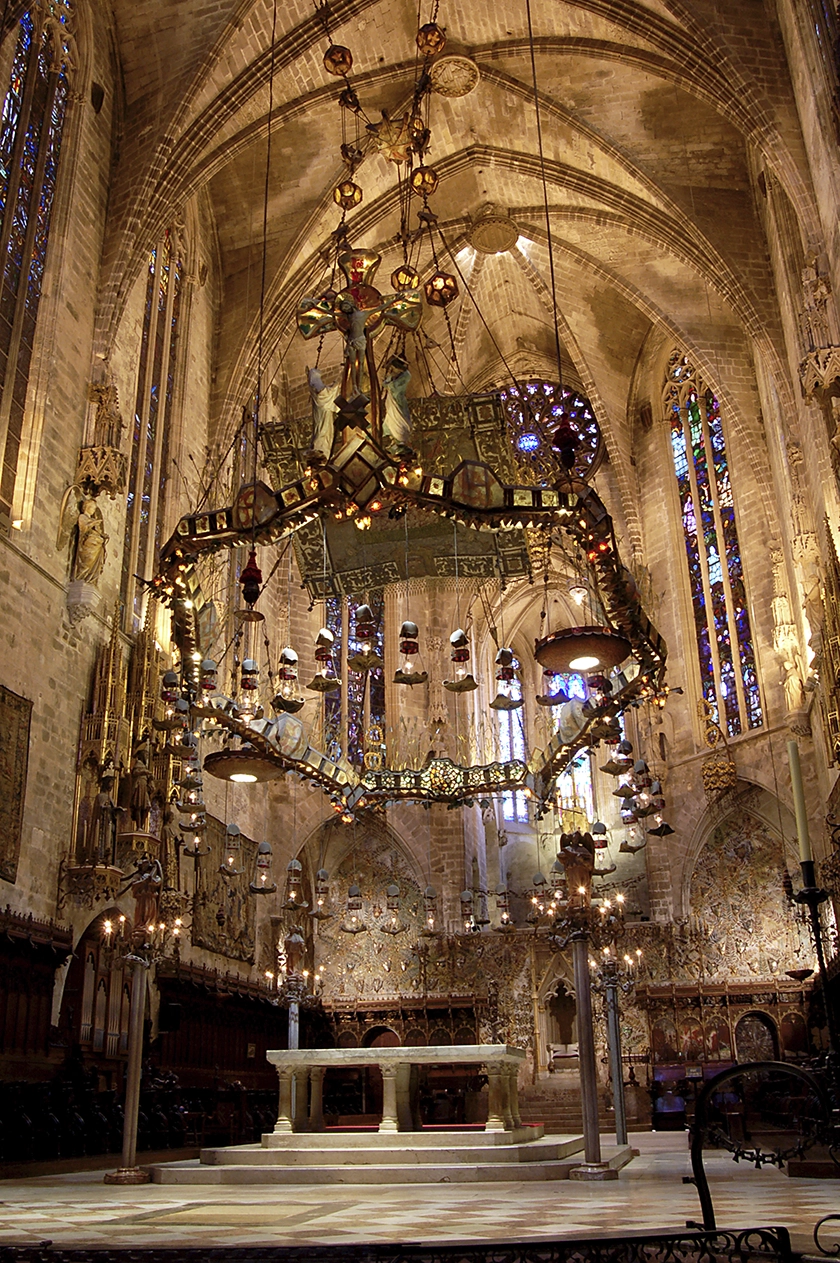
Among his contributions, the baldachin over the high altar and the reorganisation of the liturgical space stand out, introducing a new conception of light and verticality. This year, the cathedral invites visitors to rediscover these elements with a fresh perspective, reinforcing its role as one of the most important architectural icons in the Mediterranean. In addition to Mallorca Cathedral, the sixteen buildings where the Catalan architect worked are also taking part in the commemoration.
Opening image: Church of the Porciúncula