

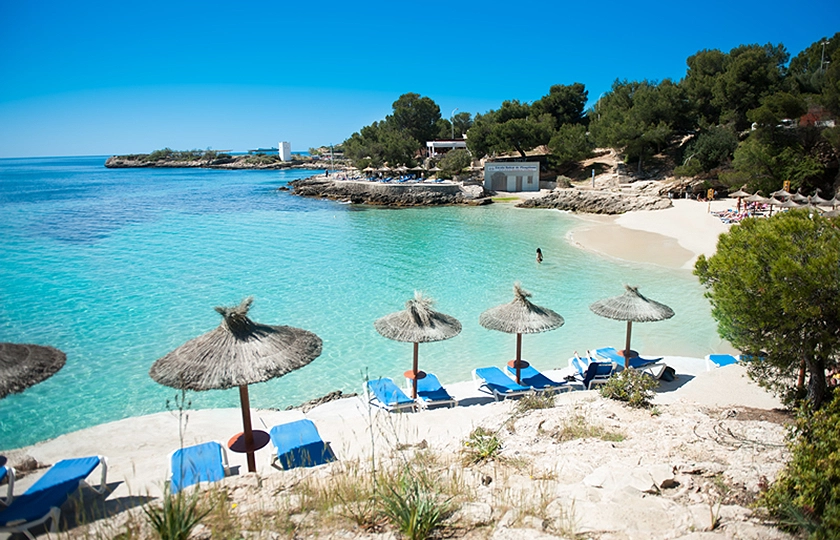
Across the eight destinations in the Alliance of Sun and Beach Tourist Municipalities (AMT), more than 85% of jobs in the service sector are linked to activities related to the blue economy.
The destinations that make up the Alliance of Sun and Beach Tourist Municipalities (AMT) are approaching the upcoming Easter week with a renewed, diversified tourism offering that is strongly aligned with the principles of so-called Blue Tourism, a model that promotes marine and coastal resources from a sustainable, innovative and inclusive perspective.
In a context where coastal and maritime tourism accounts for nearly 70% of international tourists visiting Spain, the AMT municipalities are reinforcing their role as a strategic driving force behind the national tourism sector. The alliance, comprising Adeje, Arona, Benidorm, Calvià, Lloret de Mar, Salou, San Bartolomé de Tirajana and Torremolinos, welcomed over 12.1 million tourists and recorded more than 67.4 million overnight stays in 2025, representing 18.6% of the national total.
Furthermore, these destinations account for nearly 300,000 hotel beds, with an average annual occupancy rate of over 81% and an average stay of 5.46 days – two days above the Spanish average. These figures demonstrate the strength of a tourism model that generates not only volume but also quality and customer loyalty.
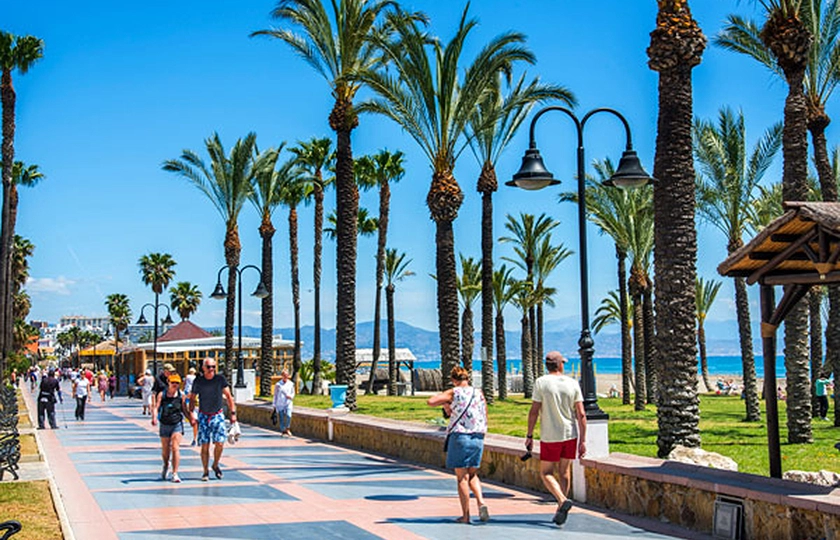
The president of the AMT and mayor of Arona, Fátima Lemes, emphasised that “Holy Week is a key opportunity to showcase the evolution of our destinations towards a more sustainable, innovative and diversified model. Blue Tourism not only strengthens our competitiveness, but also allows us to protect our greatest asset: the natural environment”.
She also stressed that “at the AMT, we are working to ensure that tourism growth goes hand in hand with the well-being of our local communities, championing a model that generates quality employment, respects the environment and offers unique experiences throughout the year”.
Ahead of Easter, the AMT’s municipalities are committed to broadening the traditional concept of sun and beach tourism, incorporating experiences ranging from water sports and activities to cultural, gastronomic and wellness offerings linked to the marine environment.
The aim is to attract a diverse range of visitors whilst, at the same time, helping to spread out tourist numbers by redirecting flows to less crowded areas and promoting a more balanced development of the region.
The Blue Tourism strategy of the municipalities within the AMT is aligned with UN guidelines and the European Union’s objectives regarding the protection of marine life. Within this framework, the municipalities are working on initiatives ranging from the regeneration of marine ecosystems to the protection of key species such as Posidonia oceanica. They are also promoting measures to reduce the environmental footprint, encourage responsible practices among visitors and ensure the conservation of the natural environment as a fundamental asset of the destination.
Future challenges: driving an economic and employment engine linked to the sea
Blue Tourism is establishing itself as a fundamental pillar of the economy in coastal destinations. In these regions, over 85% of employment in the service sector is directly linked to activities related to the blue economy, such as the hospitality industry, coastal catering, water sports (sailing, surfing or diving) and services associated with beaches and marinas. At national level, this ecosystem relies on nearly 3,000 beaches and 292 marinas, a key infrastructure that enables the development of a diverse and competitive tourism offering. In this regard, the AMT highlights the need to analyse the specific weight of its municipalities within this network to strengthen their strategic positioning.
The development of Blue Tourism presents significant challenges, notably the need to strengthen innovation and governance, broaden the concept of water-related tourism beyond strictly nautical activities, and ensure a model that is sustainable from an economic, social and cultural perspective. Added to this is a commitment to accessibility, with initiatives aimed at improving the experience of people with reduced mobility through adapted infrastructure such as amphibious wheelchairs, shaded areas and inclusive facilities.
The Alliance of Sun and Beach Tourist Municipalities was founded in 2017 on the initiative of eight pioneering tourist destinations in Spain: Adeje, Arona, Benidorm, Calvià, Lloret de Mar, Salou, San Bartolomé de Tirajana and Torremolinos. The key objectives are to address the issues affecting the funding of tourist municipalities and to commit to the digitalisation of the sector, sustainability, accessibility and cooperation between destinations.
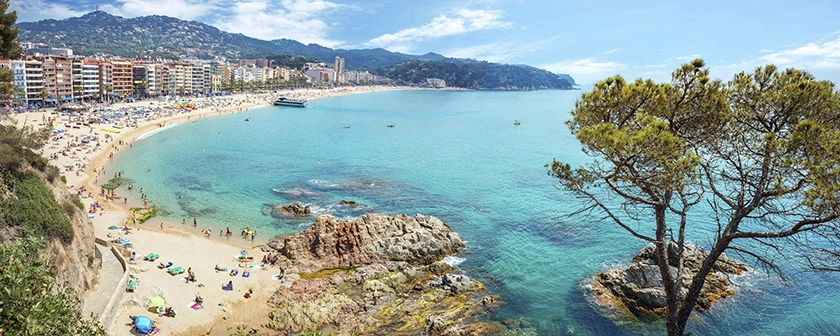
About AMT SOL Y PLAYA
The Alliance of Sun and Beach Tourist Municipalities was established in 2017 on the initiative of eight pioneering tourist destinations in Spain: Adeje, Arona, Benidorm, Calvià, Lloret de Mar, Salou, San Bartolomé de Tirajana and Torremolinos. The key objectives are to address the issues affecting the funding of tourist municipalities and to promote a commitment to the digitalisation of the sector, sustainability, accessibility and cooperation between destinations.
Source: AMT Sol y Playa