

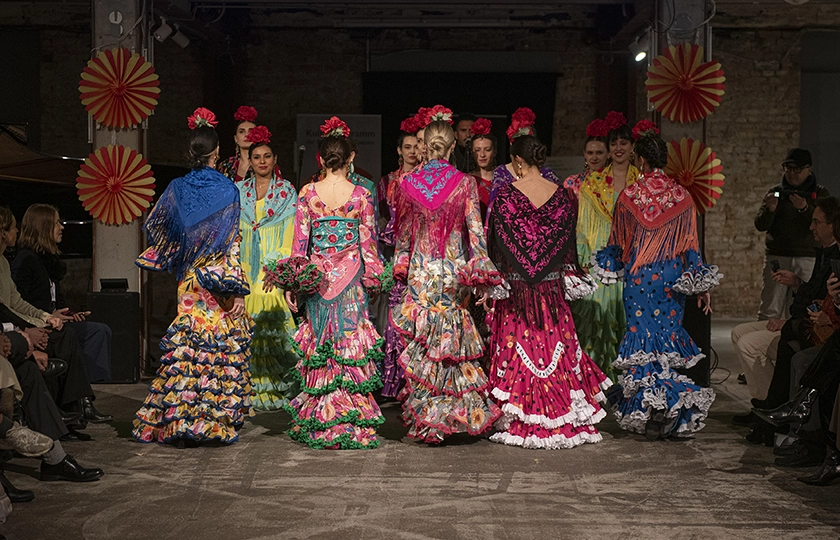
- More than 200 professionals from the fields of fashion, culture and tourism attended the show.
- A fashion show by Andalusian designer Rocío Peralta, featuring her ‘Al-Andalus’ collection, was the main event, paying tribute to the rich history and tradition of Andalusia.
- The event was organised by the Turespaña office in Berlin, sponsored by the Cajasol Foundation and in collaboration with the Cultural and Scientific Office of the Spanish Embassy in Berlin and the Public Company for the Management of Tourism and Sport in Andalusia.
- Andalusia is the fourth most important Spanish destination for the German market, having received 1.2 million tourists from this country in 2025.
As part of Berlin Fashion Week, the Spanish Tourism Institute (Turespaña), an autonomous body attached to the Ministry of Industry and Tourism, organised an event dedicated to Andalusian flamenco fashion as an expression linked to the identity of Andalusia and its international projection as a cultural and shopping destination.
The initiative took place in Berlin and was organised by Turespaña, through the Spanish Tourist Office in Berlin, with the sponsorship of the Cajasol Foundation and the collaboration of the Cultural and Scientific Office of the Spanish Embassy in Berlin and the Public Company for the Management of Tourism and Sport in Andalusia.
The main event was a fashion show by Andalusian designer Rocío Peralta, who presented forty pieces from her ‘Al-Andalus’ collection, creations inspired by historical and aesthetic references from southern Spain, paying tribute to the rich history and tradition of Andalusia. The show combined fashion, music and dance, accompanied by guitar and a performance by pianist and dancer Claudia Pérez Iñesta, in a format that highlighted the link between contemporary creation and Andalusian cultural traditions.
The event brought together more than two hundred people, including representatives of the media, design and fashion professionals, agents from the tourism sector and members of the public interested in Spanish culture. The evening was rounded off with a gastronomic display of Andalusian products, such as sherry wines and Iberian products, integrated as part of the cultural context of the event.
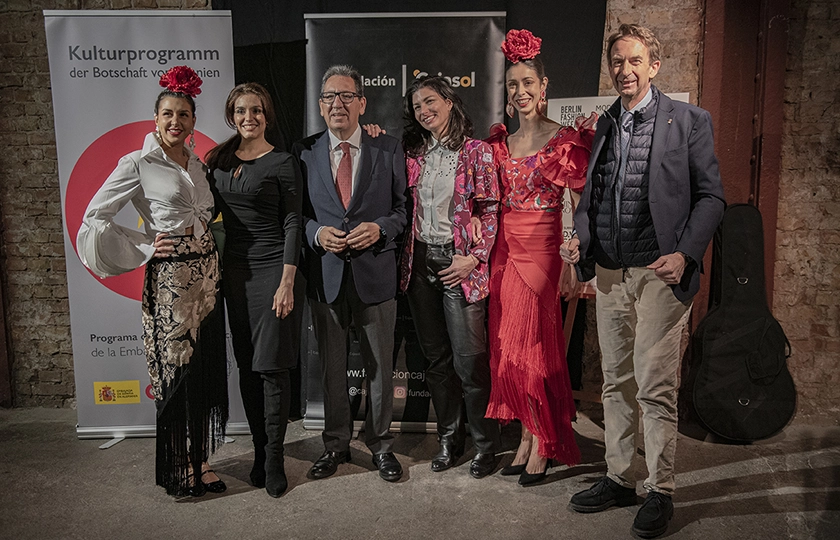
During the closing ceremony, Álvaro Blanco Volmer, Turespaña’s Tourism Councillor in Berlin, highlighted the role of flamenco fashion within the cultural and economic ecosystem linked to flamenco, which includes design, craftsmanship, the textile industry and cultural events with an impact on tourism. He also pointed out the relevance of celebrations such as the April Fair in Seville, the Jerez Horse Fair, the Malaga Fair and the International Flamenco Fashion Week (SIMOF) as spaces where this cultural expression maintains a lively and contemporary presence, ‘they are an expression not only of flamenco fashion, but also of the heart and character of the people who live in Andalusia and make it a unique tourist destination’.
Andalusia and Spain for German tourists
Germany is one of the main source markets for tourism in Andalusia. In 2025, the region welcomed 1.2 million tourists from this country, making it the fourth most important Spanish destination for the German market. Andalusia also has direct flights from Germany to the airports of Seville, Malaga and Jerez de la Frontera.
In 2025, Spain continues to be the top foreign destination for Germans, with 12 million German tourists visiting our country (+0.6%), spending €15.8 billion (+12%) on their trip to Spain, an average of €1,363 (+1.8%) per person, and staying for an average of 8.5 days.
About the SPANISH TOURISM INSTITUTE (TURESPAÑA)
TURESPAÑA is an autonomous body under the Ministry of Industry and Tourism, through the Secretary of State for Tourism, whose objectives are to maintain and strengthen Spain’s leading position as a global tourist destination; contribute to improving the competitiveness and resilience of the Spanish tourism sector, and consolidate a tourism model based on economic, social and environmental sustainability through the efficient management of international tourist demand.
Source: TOURSPAIN Press