

We invite you to discover a “little village” nestled within a bustling industrial city, with a historic centre carved out of stone, where you can enjoy the finest fish and seafood in traditional establishments.
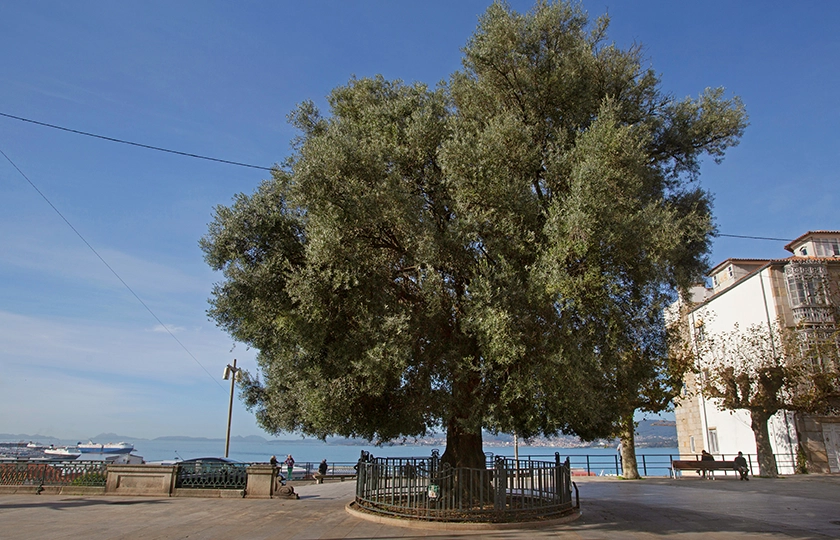
Formerly known as ‘Olive City’, it owes this nickname to a large olive tree that was planted by the Knights Templar. Furthermore, the Catholic Monarchs ordered the olive groves surrounding the city to be razed to the ground as punishment for the nobles’ support of ‘La Beltraneja’, a Castilian princess who laid claim to the crown. Today, the olive tree is the symbol of the city, for, like it, the city grows strong and unceasingly.
Over the centuries, its coastline has been the scene of intense commercial and port activity, as well as historic events such as the Battle of Rande in 1702. Sought after by English and Turkish privateers, Francis Drake laid waste to the town for four days in 1589, it was subsequently the Turks who attempted to storm the city in 1617, but they were repelled. And in 1719 it was captured during the War of the Quadruple Alliance.
This city in north-western Spain is industrial and bustling, yet it also harbours a “little village” within it, where simply strolling around is a real treat.
A historic quarter carved out of stone, featuring humble fishermen’s cottages, stately homes, palaces and religious temples.
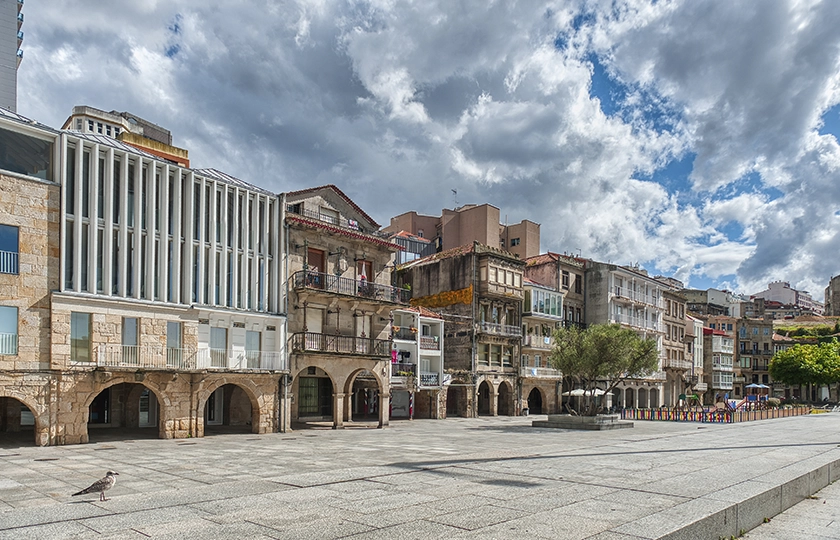
O Berbés is Vigo’s historic seaside neighbourhood, with its narrow, steep streets that wind their way down the hillside towards the ocean.
Narrow streets that lead us down to the lower part of town, to a square with arcades that was once the beach where fishermen moored their boats, and where you can see old seafaring buildings.
The Berbés riverbank is one of the city’s most important culinary districts. Whether you’re out for a night of wine and tapas or sitting down at some of the finest restaurants to sample what may well be the most delicious fish and seafood in Spain, it’s a culinary experience you’ll remember and recommend. This is where you’ll find Rua da Pescadería, a must-visit for any oyster lover, because as well as sampling these coveted molluscs, you can watch them being shucked right there on the street.
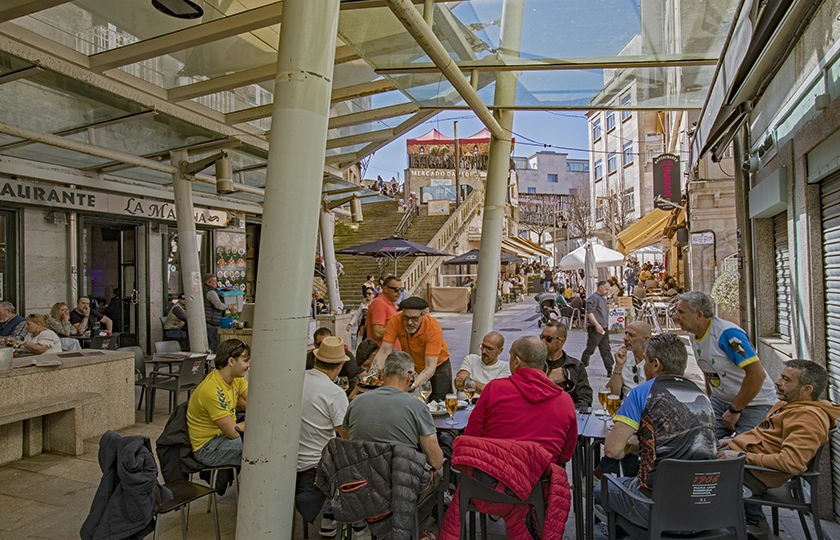
A visit to Vigo’s “casco Vello” should be taken at a leisurely pace, taking the time to admire and enjoy the myriad hidden corners it has in store for the visitor. La da Pedra or A Igrexa was the meeting place for guilds and councillors in the 16th and 17th centuries, where they made decisions and settled disputes. Here we find one of the city’s historic establishments, the Mosquito restaurant, which has been open since 1930 as a seafood tavern and remains a top spot for dining. Over the years, this place has been visited by established writers, famous actors and renowned filmmakers.
Nearby is the Co-Cathedral of Santa María, built in 1811 as a collegiate church. This simple, well-proportioned building was constructed on the site of two religious temples that no longer exist, and was designed by the architect Melchor de Prado y Mariño. It houses one of the most venerated images in Galicia, the Santo Cristo de la Victoria, the city’s patron saint, who is said to have interceded in the defeat and subsequent expulsion of the French troops in 1809.
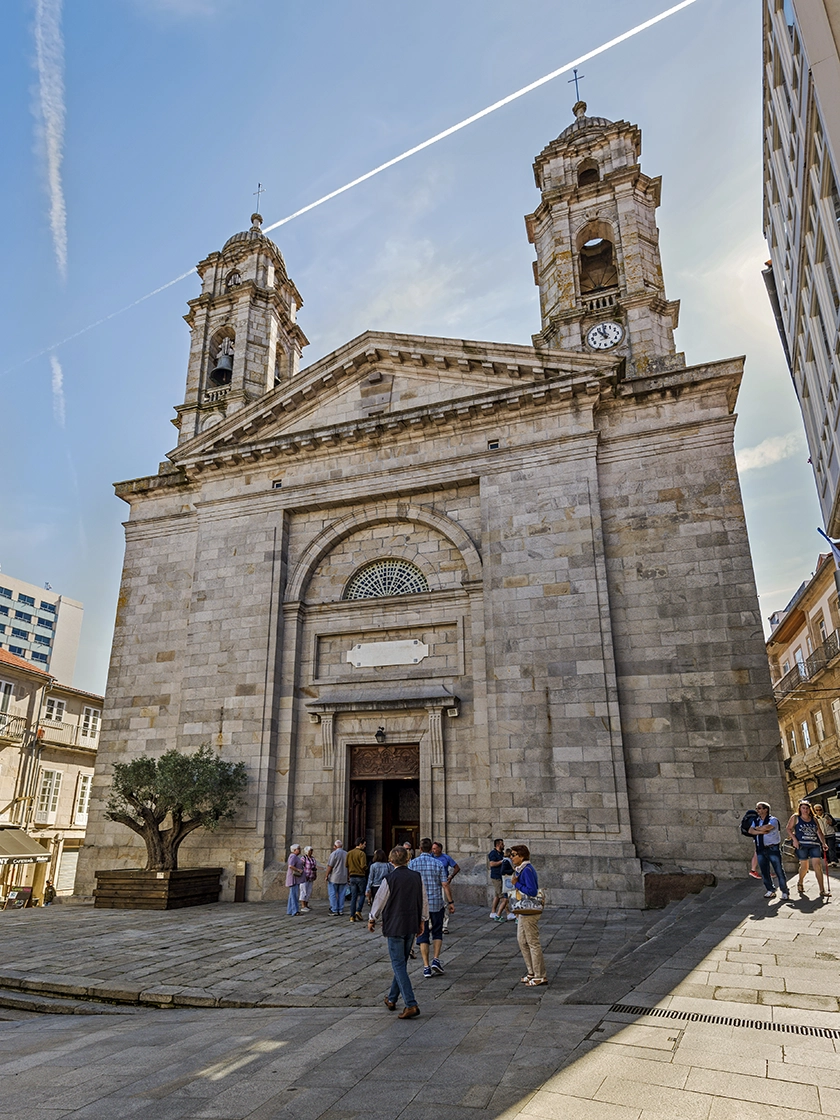
On one side of the co-cathedral lies Rúa Palma, and there, in the historic Cambón building, is the Interpretation Centre for the Atlantic Islands of Galicia National Park.
Another of the main squares in Vigo’s Old Town is Praza de Almedia, formerly known as A Praza Vella or Praza das Cebollas because a weekly farmers’ market used to be held there. It was given its current name in 1849 in honour of Joaquín Almedia de Sousa y Saa, who, commanding 40,000 soldiers, took part in the reconquest of Vigo. Two buildings stand out here, considered to be the oldest examples of civil architecture in the city and designated as historic-artistic monuments: the Casa Torre de Pazos Figueroa and the Casa de Ceta or Arines.
Our next stop is Praza da Constitución, with its 19th-century buildings, where artisans used to sell their wares. In what is one of the liveliest parts of the city, a number of historical events took place that are worth remembering. This is where the great Admiral Casto Méndez Núñez was born; french troops passed through here in 1808; the Constitution of Cádiz of 1812 was read out and it was here that the first electric street lamp in Vigo was installed in 1896. Its lively terraces invite you to linger for a while, making a stop at La Central a must, a gastrobar housed in the Pereira de Castro mansion, an 18th-century Baroque mansion.
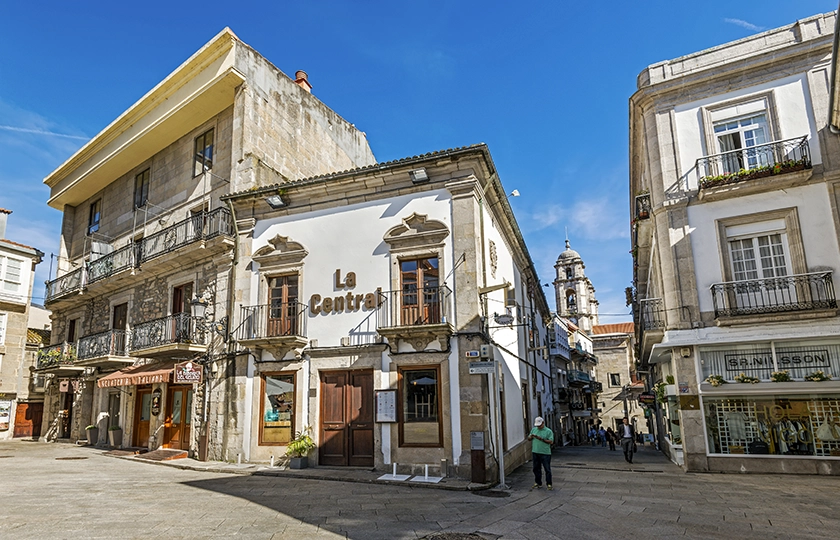
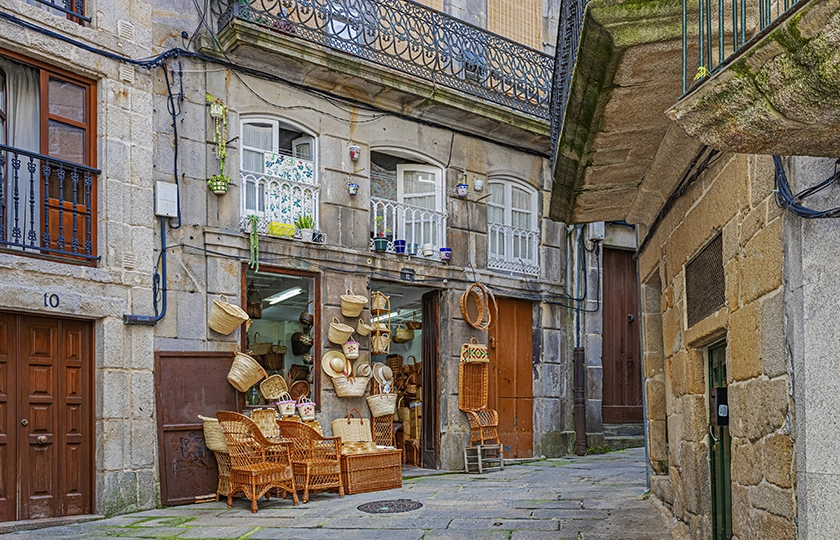
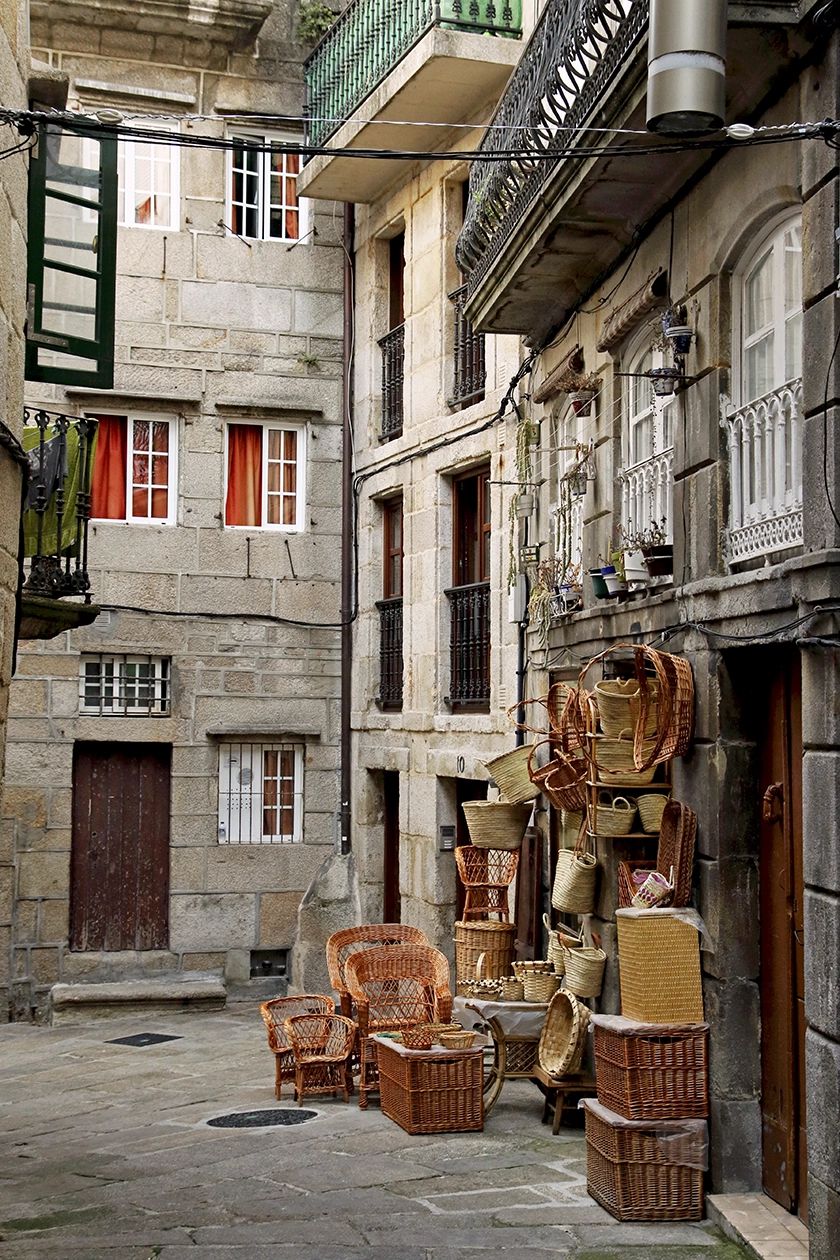
From one square to the next, there are lovely streets, many of which are steeped in tradition and home to places you simply must visit. Rúa dos Cesteiros takes its name from the craftsmen who arrived from the Serra da Estrela in Portugal at the beginning of the 20th century. Renowned basket weavers who made Vigo one of the most important centres of basketry production in Galicia. Even today, it is still possible to find all sorts of wicker items, although there are few craftsmen left who are keeping this tradition alive. Still retaining all the old-world maritime charm of yesteryear, the A Pedra tavern and El Chavolas bar are two of the most traditional taverns in O Berbés.
On Cuesta de San Vicente, the A Mina tavern has been delighting its customers since 1953 with vermouths and spritzes, served alongside its traditional tapas of tripe or mussels from the estuary with a special house sauce.
We are located next to Elduayen Street, the boundary between O Berbés and Vigo’s other historic district, A Ferreria. We continue first along Rúa Elduayen and then along Paseo de Alfonso XII until we reach the Mirador del Olivo, which, naturally, takes its name from the magnificent olive tree, nearly two centuries old, that stands there. This is the olive tree planted by the Knights Templar, which was later destroyed by fire along with one of the churches that once stood where the cathedral stands today. A fire started during the attack by the privateer Drake in the late 16th century. Legend has it that the local residents saved some branches, which were replanted, symbolising the city’s revival. This is where locals and visitors gather every evening to watch the sunset.
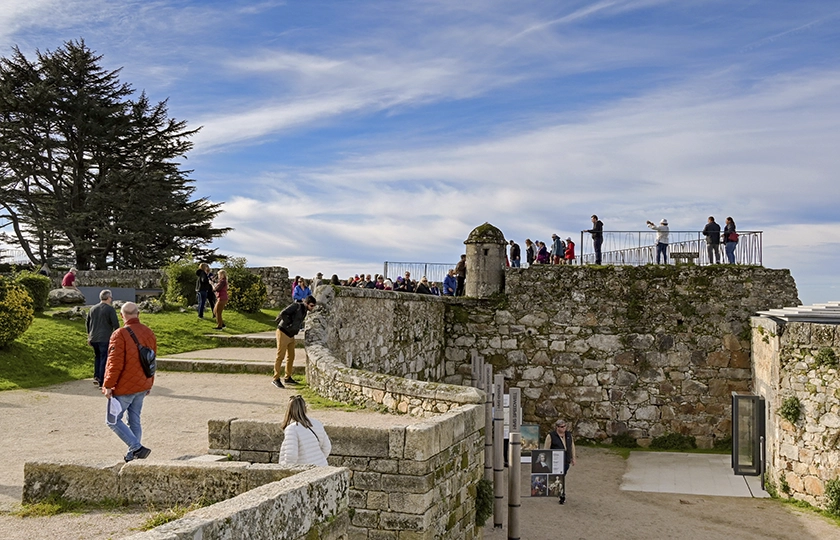
We enter the A Ferrería neighbourhood via the street of the same name. We are in one of the liveliest areas of the city following the recovery process. We continue up the subida ao Castelo to visit the Vigo Traditional Crafts Centre, where the work of seven craft trades is on display: potters, stonemasons, carpenters, basket weavers, saddlers, blacksmiths and weavers. From here, to Rua de San Sebastián, one of the oldest streets in the city and home to the Banco Dos Contos, where livestock farmers and traders used to settle their accounts for the market transactions that took place here. And finally, we visited the fortress of San Sebastián, built in 1656 alongside the city walls to defend the town from constant pirate attacks. Part of the bastions and the walled enclosure still stand, and it offers some unforgettable and wonderful views of the Vigo estuary.
After a busy day exploring a city that I believe has been unfairly overlooked, we headed to Café UF, a cultural hotspot in the old town located on Rua do Pracer. With over thirty years of history, here you can listen to singer-songwriters or alternative musicians, attend a poetry reading, view an art exhibition, or read books and magazines that lie outside the usual commercial mainstream.
You might be interested in: Vigo, a glimmer by the sea