

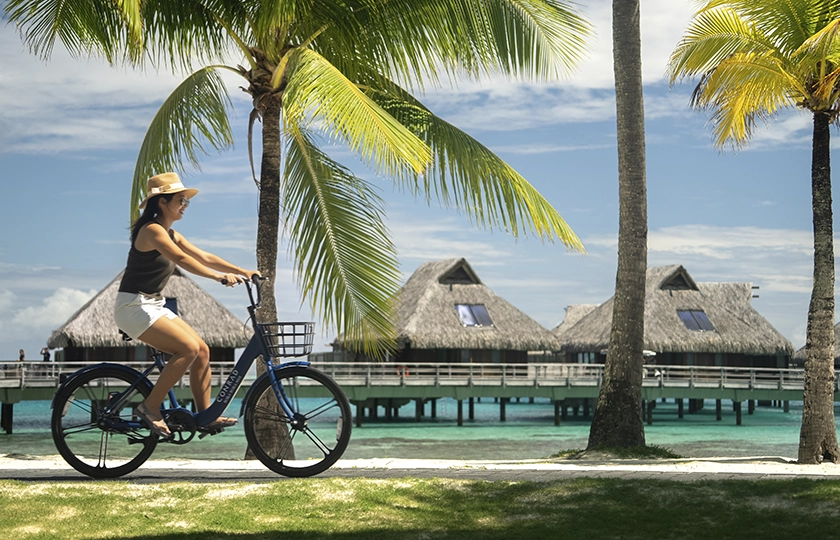
- Far from the usual Easter holiday routes, the Islands of Tahiti offer a different kind of getaway: exploring remote atolls, traffic-free roads and landscapes that remain off the tourist radar.
- Thinking of Tahiti as an Easter destination means accepting one thing: here, you won’t find any of the things people usually look for at this time of year. No bustling cities, no packed schedules. And that is precisely why it works.
In Tahiti, the main island, you only need to leave Papeete behind to understand this. The road that circles the island empties out as you head towards the Tahiti Iti peninsula, a much less travelled area where the tarmac ends at black sand beaches such as Teahupo’o, known for one of the most powerful waves on the planet. At Easter, when everywhere else is packed, here you’ll usually find yourself practically alone facing the ocean.
Very few travellers venture further inland, but doing so completely changes your perception of the destination. The Papenoo Valley, accessible by 4×4, is not just a spectacular landscape: it is a succession of tracks, rivers and viewpoints where there is no mobile coverage, no tourist signage and hardly any human presence. For hours, the only sound is that of the water and the wind.
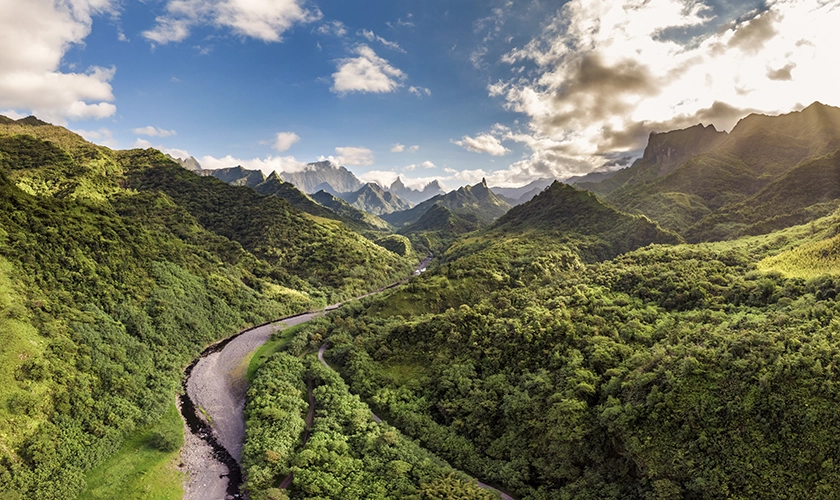
The contrast becomes apparent as you hop from island to island
In Moorea, just a 30-minute ferry ride away, most people stick to the coast. However, at dawn, the Belvedere viewpoint offers a different scene: the mist slowly lifts over Cook’s Bay whilst the first rays of sun illuminate the inland plantations. There are no queues or timetables. You just need to arrive early.
But it is in the atolls that the Islands of Tahiti truly break away from the idea of a conventional destination.
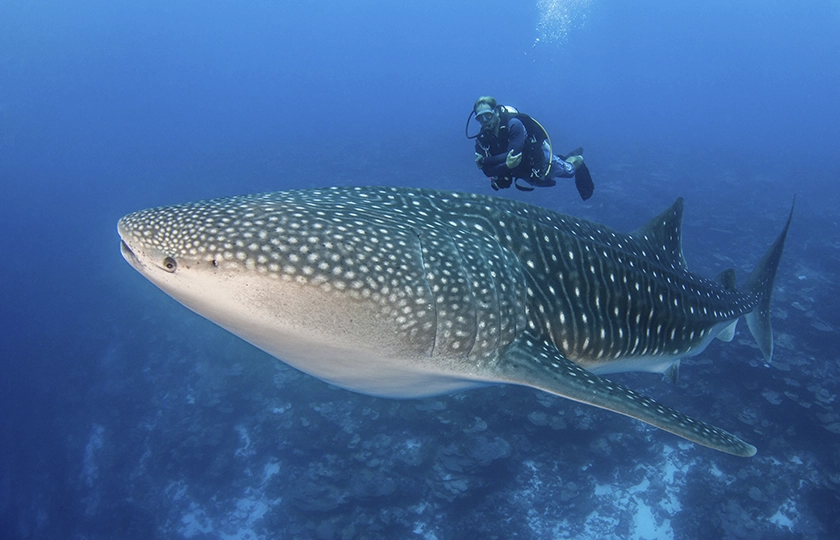
In Fakarava, in the Tuamotu Islands, time is measured differently. The main road is nothing more than a coral strip running through the atoll, and cycling along it during Easter — with no traffic, no rush — allows you to grasp the true scale of the place. At the northernmost tip, the Garuae Pass, one of the largest in Polynesia, boasts one of the highest concentrations of marine life in the Pacific. Here, diving is not just another activity, but an almost hypnotic experience.
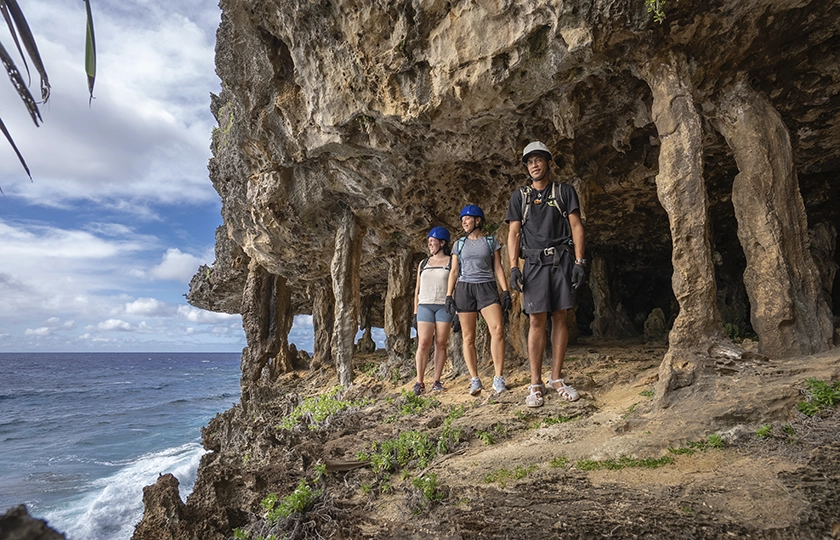
Further south, in the Austral Islands, Rurutu offers something even rarer: the feeling of being completely off the tourist map. There are no large hotels, nor organised excursions. Instead, there are roads hugging cliffs, sea caves accessible on foot, and a local life that follows its own rhythm. During Holy Week, the island maintains its routine, oblivious to any global calendar.
And then there are the Gambier Islands
Getting to Mangareva takes time and planning, but the reward is immediate. The island, surrounded by an enclosed lagoon, combines rugged mountains with small villages where there is hardly any activity. Here, what stands out is not what happens, but what doesn’t: there is no noise, no traffic, no rush. Visiting a pearl farm or cycling along the paths that link ancient stone churches is, more than an activity, a way of observing.
Travelling to the Islands of Tahiti at Easter is not about finding alternatives to what is happening in Europe, but about forgetting it completely.
There’s no set itinerary to follow. Just places to discover at a different pace
Because, on these islands, the extraordinary isn’t found in the spectacular, but in the unexpected: an empty road, a beach with no footprints, a sunrise with no witnesses.
And that—more and more—is what makes a trip memorable.
About THE ISLANDS OF TAHITI
Surrounded by the crystal-clear waters of the South Pacific, the Islands of Tahiti dazzle with their natural beauty, their carefully preserved ancestral culture and a truly unique way of life. This iconic destination is known worldwide for its white sandy beaches, turquoise lagoons and dreamlike landscapes, ranging from coral atolls to imposing volcanic peaks covered in lush vegetation.
The range of accommodation is as diverse as the archipelago itself: from exclusive resorts with overwater bungalows to private villas, small family-run hotels, holiday rentals and experiences aboard catamarans, yachts or cruises.
But what truly unites the 118 islands and atolls of French Polynesia is Mana. Mana is the heart of the Polynesian universe. It is the life force and spirit that flows through everything, arising from life, love, sharing, beauty, kindness and the things that blend harmoniously in our universe. It is the reason why you will feel cherished in the Islands of Tahiti.
Source: COMUNICACIÓN IBEROAMERICANA