

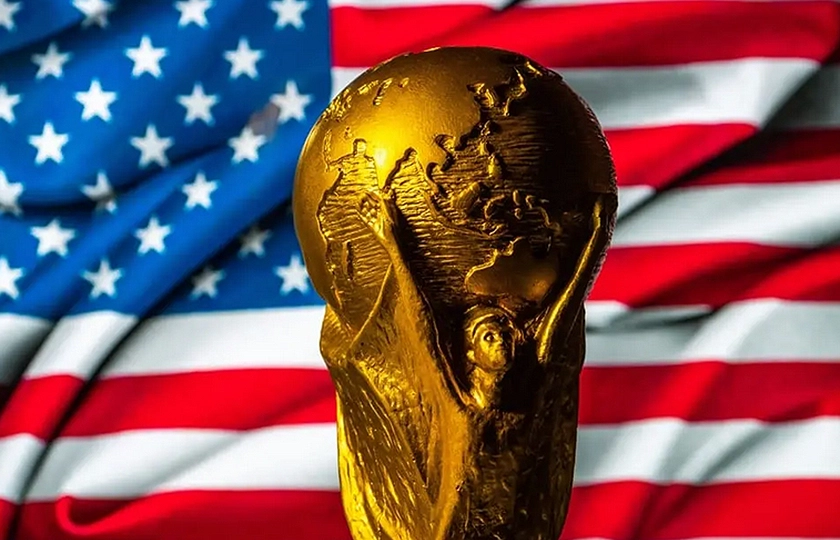
The countdown to the 2026 FIFA World Cup has begun to trigger a seismic wave of economic expectations that transcends mere sports, positioning the United States as the epicenter of an unprecedented financial phenomenon.
According to the most recent industry projections, direct spending by both international and domestic visitors is estimated to far exceed $556 million. This figure reflects not only the sheer scale of the event but also the absorption capacity and responsiveness of the North American service sector. This capital injection will be distributed organically across host cities, transforming tourism infrastructure and consolidating a total recovery following the global challenges of previous years. The relevance of this data lies not just in the total amount, but in the multiplier effect it will have on local economies—from retail to high-end hospitality—marking a milestone in the history of major international events.
The projected foreign exchange inflow is the result of meticulous planning aimed at capitalizing on the passion for football in key markets across Europe, Latin America, and Asia. The U.S. cities selected to host the matches are not only readying their stadiums but have also embarked on a profound renovation of their gastronomic and entertainment offerings to retain long-distance tourists for as long as possible.
The visitor profile for this World Cup is characterized by a longer average stay compared to previous tournaments, translating into sustained consumption that benefits the entire tourism value chain. Authorities and analysts agree that per capita spending will be significantly higher due to the cost structure and the array of exclusive experiences that characterize the American market. This scenario projects a level of profitability that will not only cover the organization’s operational costs but also leave a surplus capable of financing long-term urban development projects.
Beyond accommodation and transportation—sectors that traditionally absorb the bulk of a traveler’s budget—there is a growing trend toward spending on complementary experiences. The 2026 World Cup tourist will not be limited to attending ninety minutes of play; they will seek to immerse themselves in local culture, visit national parks, enjoy museum offerings, and participate in side events organized within “fan zones.” This diversification of consumption is what allows the projected figure to rise above $556 million, as spending is atomized across the small and medium-sized enterprises that form the social fabric of the host cities. The digitalization of payments and the ease of access to services through technological platforms will also play a crucial role, allowing the flow of money to be more dynamic and efficient, thereby reducing barriers to spontaneous spending by fans from around the world.
The hospitality industry, in particular, is undergoing a transformation to adapt to the demands of a global audience seeking both luxury and functionality. Average daily rates have been adjusted in anticipation of demand that, in many cases, already exceeds available supply on critical dates. Nevertheless, the economic impact is not limited to match days. The visibility the United States will gain as a premier tourism destination during the month of competition will generate a “halo effect” extending into the following years, attracting new travelers who will have discovered the country through global media coverage. This indirect advertising value is incalculable, though initial estimates suggest it could double the direct economic benefit in the decade following the event. Current investments in security, public transport, and signage will serve as a tangible legacy for citizens and future visitors alike, optimizing the nation’s tourism competitiveness against other global giants.
It is essential to consider the integrative nature of this event, which is being held jointly with Mexico and Canada, even though the United States carries the largest share of matches and, consequently, the bulk of the projected economic benefit. This North American synergy allows for a fluid mobility of capital and people, creating a tourism corridor of continental dimensions never before seen in a World Cup. The commitment of the American private sector, coupled with institutional support, ensures an optimal user experience, which in turn incentivizes higher levels of spending on quality products and services. In conclusion, the 2026 World Cup is not just a football competition, but the largest commercial and tourism operation of the decade—one that reaffirms the hegemony of the United States as the most lucrative and dynamic destination for major spectacles in the 21st century.
Source: TOURISM AND SOCIETY THINK TANK