

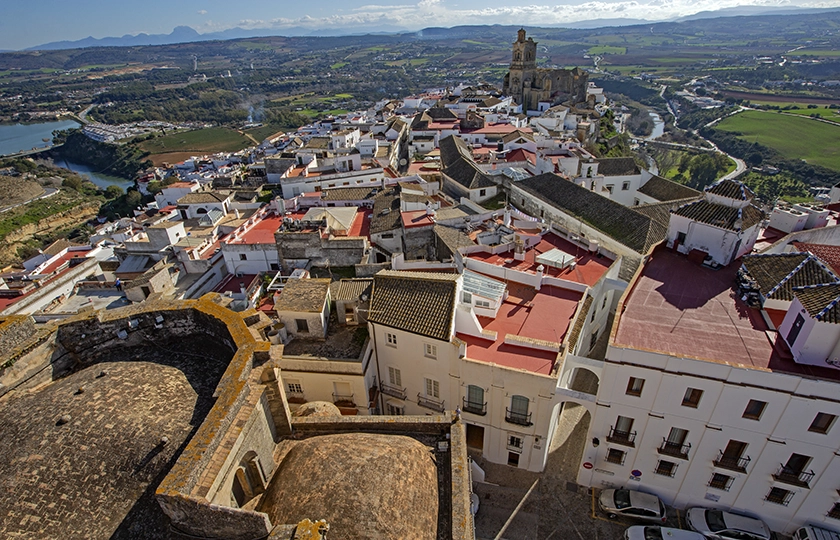
Designated a Historic Site, where the traditions of ancient Al-Andalus are kept alive, its civil architecture and, above all, its religious heritage justify its designation as a Historic Site. Its delicious cuisine is the result of the various peoples and cultures that have passed through the region.
A land of legendary bandits, the Sierra de Cádiz is home to beautiful villages that preserve the most authentic essence of Andalusia, where the history and daily life of Al-Andalus still live on. An Arab heritage that is reflected in the layout of the streets, in the economy linked to olive oil production, in the traditional craftsmanship of leather goods, and in the sweet recipes of Al-Andalus. This is also evident in the names of the villages: Benamahoma – ‘sons of Mahoma’ –, Alcalá – ‘the castle’ –, Algar – ‘the cave’ – or Zahara – ‘the fortress’ –.
An example of this can be found in the place we are visiting today, the gateway to the White Villages Route in the west of the province, one of the most beautiful in Spain and designated a Historic Site.
This city stands proudly atop a 96-metre-high rock; the Romans called it Arx-Arcis (high fortress) and, following the Muslim invasion, it became known as Medina-Arkos, a period which left an indelible mark on the city and can still be seen today.
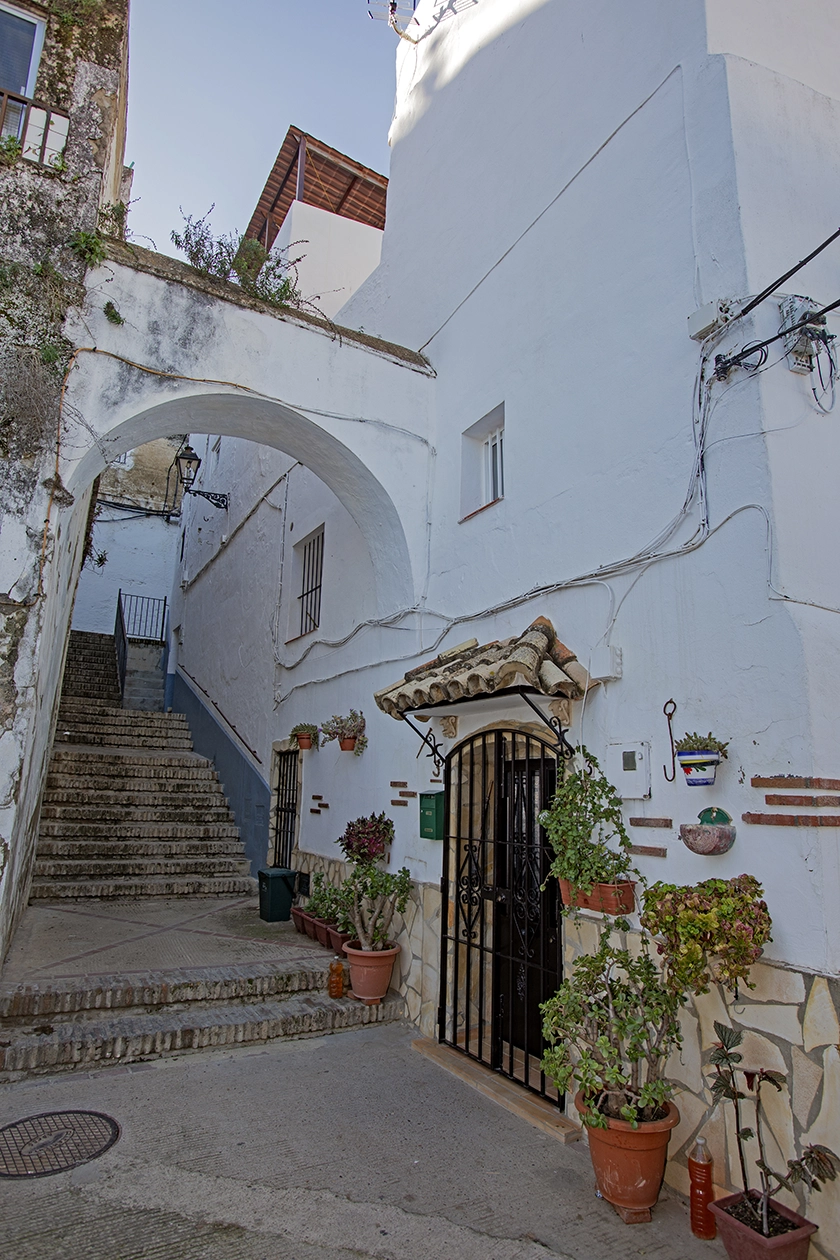
Known as the ‘city of poets’ due to the large number of artists who were born here or have chosen to make it their home, the historic centre of Arcos de la Frontera welcomes us with narrow, steep streets that lead us to beautiful spots and splendid examples of its architectural heritage.
Towering above the town, the Ducal Castle was originally, dating back to the Muslim occupation, a military fortress, although what we can admire today is the result of renovations carried out in the 14th and 15th centuries. On the other hand, the Matrera Gate is the only remaining part of the old walled enclosure.
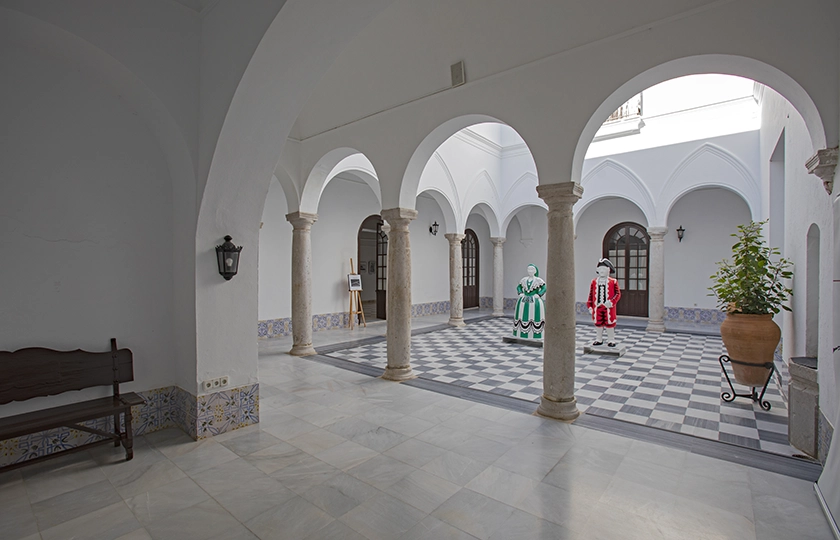
As we stroll leisurely through these beautiful streets, we come across interesting palaces and stately homes such as the Palacio del Maestrazgo, built in the Herrerian style and boasting a sumptuous façade; it features a square-shaped balcony with traditional Mudejar elements, two colonnaded courtyards and coffered ceilings in its spacious halls. In addition, there are numerous stately homes which, together with the Pósito and the Town Hall, enhance the architectural heritage of Arcos de la Frontera.
However, it is the religious buildings that have earned the town of Cádiz its designation as a Historic Site.
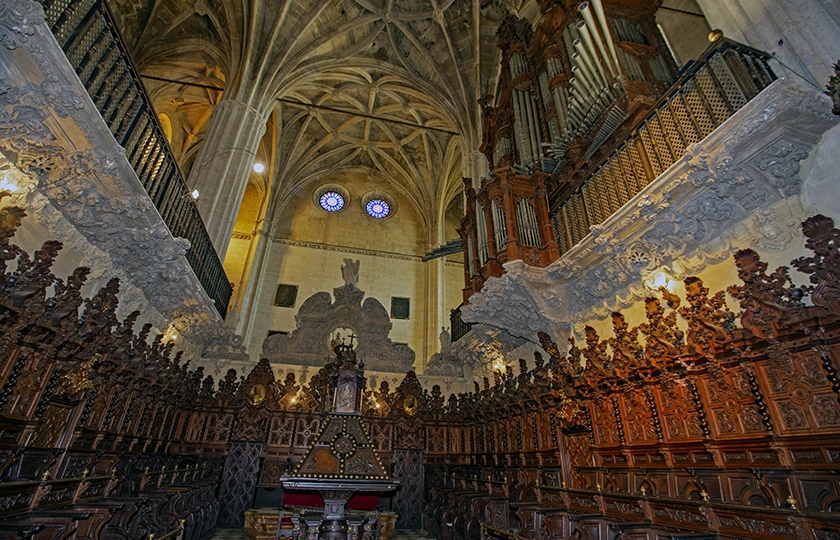
A National Monument since 1931, the Minor Basilica of Santa María was granted the titles of “Oldest, Most Distinguished and Principal of Arcos” in 1764 by the Sacred Tribunal of the Roman Rota. Built on the site of an Arab mosque, its construction spanned several centuries, which is why it features a variety of architectural styles, such as late Gothic and early Plateresque on the main façade. Everything inside is a sight to behold, but what has remained etched in our memories is the High Altarpiece, a Renaissance gem; the Gothic mural; the incorrupt mummy of Saint Felix; the Chapel of Las Nieves, housing the image of the patron saint of Arcos; the magnificent organ; and the choir, considered one of the finest in Andalusia.
With our emotions running high, we continued our tour of Arcos’s old town. With every small step we take, we come across a new spot brimming with beauty: a stately home with centuries of history within its walls, or a place of worship where, as soon as you step through the doors, you catch a glimpse of the passion with which the people of Arcos live out their faith.
Churches such as San Pedro, which stands on the ruins of a Hispano-Muslim fortress, possibly dating from the Almohad period; the church of San Francisco, with a magnificent plinth of 17th-century Sevillian tiles; that of San Miguel, a Muslim fortress until the 15th century and subsequently a hospice for orphaned girls; that of Mary Help of Christians, where art and theology were taught or the San Agustín, which, at the beginning of the 18th century, had twenty religious preachers who taught grammar, art and philosophy.
We must not forget the chapels of San Antonio Abad, which lay in ruins for over a decade in the last century before being restored a few years ago, or that of Romeral, the setting every September for the pilgrimage in honour of the Santísimo Cristo del Romeral, as well as the Chapel of La Misericordia, founded in 1490 to take in abandoned children and serve as a home and hospital for women. It is currently used for cultural activities such as exhibitions, book launches, lectures…
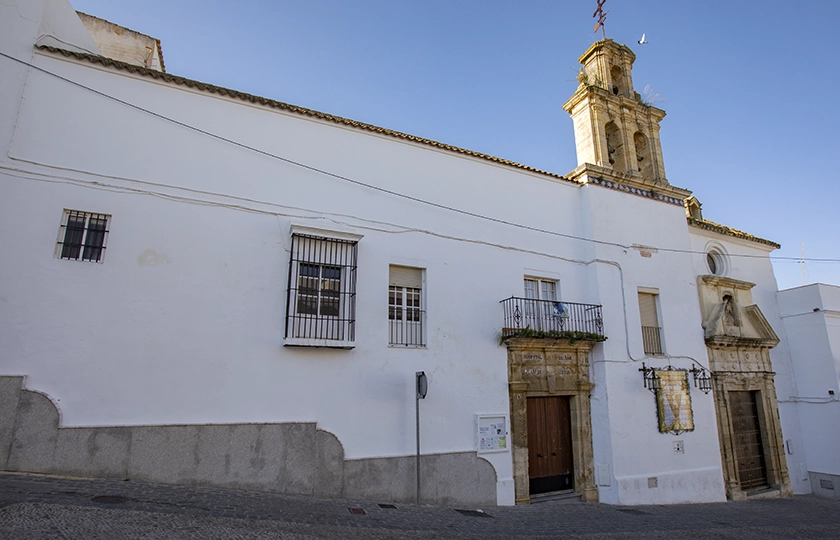
The convents also play a prominent role. The one of the Incarnation, founded in the first half of the 16th century, although it had previously served as a chapel, hospital and religious brotherhood in the 15th century. It currently houses the Domus Dei Exhibition of Sacred Art. The Mercedarias, the last cloistered convent in Arcos, was founded in 1642; de la Caridad, a colonial-style building that comes as quite a surprise when you discover it; the Convent-Hospital of San Juan de Dios, founded in the 16th century as the Hospital of San Sebastián, which is well worth a visit to admire its harmonious colonnaded courtyard with an interesting Baroque staircase or the Jesuit Convent. Our Lady of the Snows School, with its austere appearance and simple, classical façade.
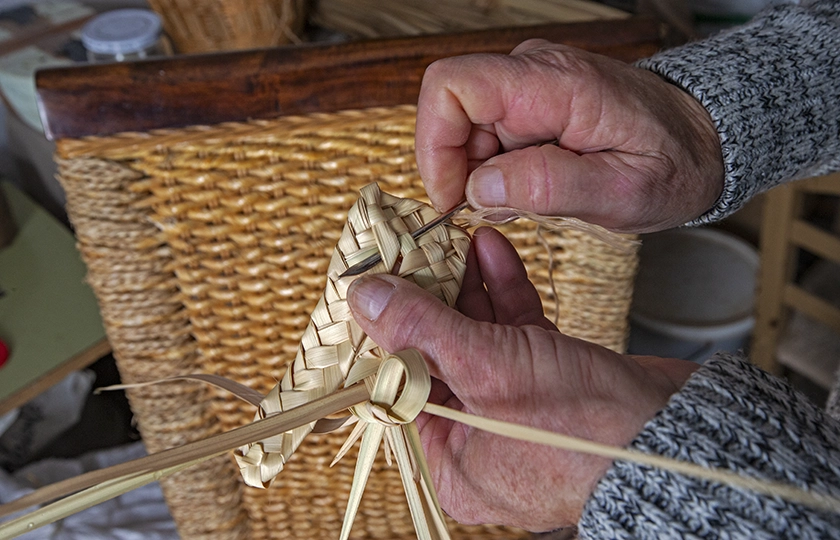
The day passes slowly in Arcos de la Frontera, and you find yourself reluctant to leave, as if you were afraid that the magic that envelops the place would not accompany you on your journey home. Once again, we wander through the streets, squares and alleyways we have already explored, and once again we come across something that takes us by surprise; yet another viewpoint offering us wonderful views; courtyards that capture all the charm of the white villages; and gardens where the scent of oranges and the refreshing air make us feel as though we are a step closer to paradise. Meanwhile, pottery, metalwork, esparto grass products, basketry, paintings, engravings and miniature farming tools fill the shop shelves.
Its Holy Week celebrations deserve a special mention. Declared a Festival of National Tourist Interest due to the quality of its religious images and traditions, its intimate atmosphere is further enhanced by the historic surroundings through which the processions pass.
The various peoples and cultures that have settled in Arcos over the course of history have had a profound influence on the town’s cuisine, a factor to which the favourable climate and the richness of the soil also contribute. In the bountiful vegetable gardens grow the pumpkins, tomatoes, onions, peppers and chickpeas used to make alboronía; the alcauciles stuffed; the miller’s garlic, made with bread, garlic and tomato; celery salad and vegetable stews, particularly chard stew, are other delicacies that are a must on our table.
What’s more, the quality of the produce from the vegetable garden, combined with meat or fish and spices such as saffron or paprika, forms the basis of other tasty stews: rice dishes with a rich broth.
We mustn’t forget pork in all its forms. From traditional cured meats to cabbage stew: pork, bacon, black pudding, pulses and, of course, cabbage.
The Arcense recipe book features seasonal dishes such as wild asparagus, the prized tagarninas, snails in broth, and cabrillas in sauce – a type of land snail that is larger and has firmer flesh than the common snail.
And to accompany the meal, their wines—both reds and whites—which are highly regarded both nationally and internationally. The red wines from Arcos are particularly recommended; they were the first to be bottled in Andalusia and were pioneers in the province of Cádiz.
To round off this authentic culinary experience, there are the pastries – a sweet legacy of the Muslim era – including the traditional Easter bun, pestiños and the pastries of the Mercedarian nuns.
Arcos de la Frontera invites you to take your time exploring it, discover it bit by bit, fall in love with every corner and soak up its traditions. Only in this way can you say that you haven’t just visited it, but that you’ve made it your own and that it has captivated you. Only then will you want to come back again.
You might be interested in: White Villages of the Cádiz Mountains