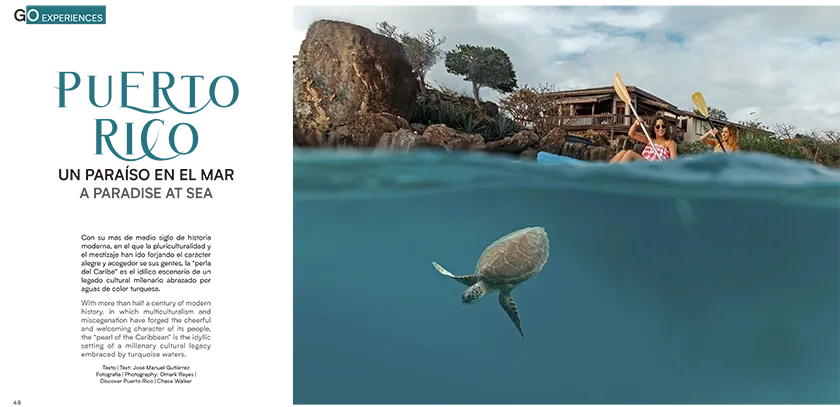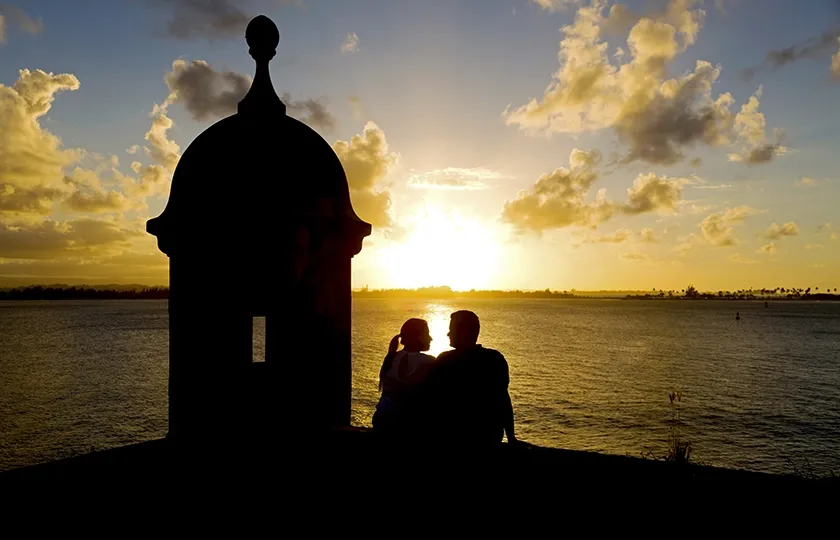
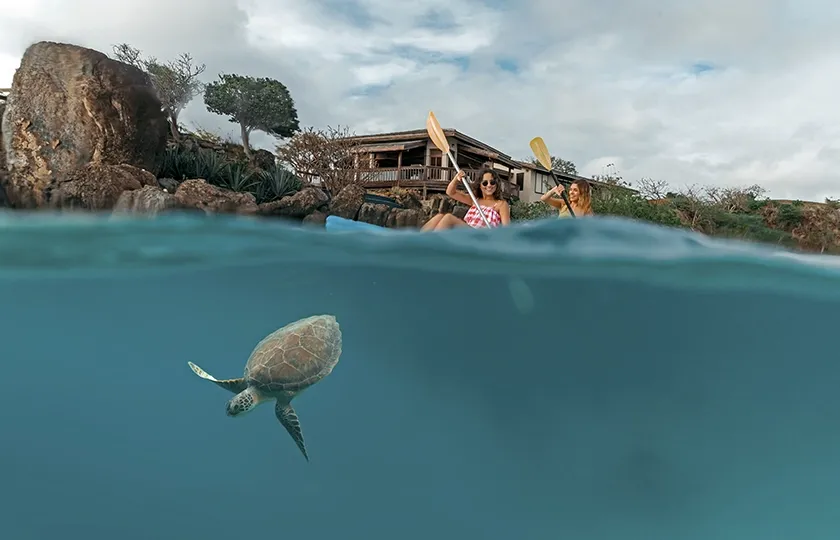
With more than half a century of modern history, in which multiculturalism and miscegenation have forged the cheerful and welcoming character of its people, the “pearl of the Caribbean” is the idyllic setting of a millenary cultural legacy embraced by turquoise waters.
It is enough to set foot in Puerto Rico to feel the Puerto Rican soul, that state of mind, the flavour, the essence and the genuine way of life that only here is given and that invites everyone who arrives to immerse themselves in this paradise through dance, music, gastronomy and culture.
The flirtatious Caribbean island is a mosaic of possibilities to enjoy it in a multitude of ways. Colonial and Creole architecture, astonishing biodiversity, white sandy beaches, dreamy tropical landscapes, luminescent bays and excellent gastronomy are just a small sample of the wonders of this 100-kilometre-long paradise.
San Juan de Puerto Rico
Considered the most fortified city in Puerto Rico, the same one that resisted the unsuccessful siege of the famous English corsair Francis Drake, it is a fascinating collection of colonial streets, Caribbean rhythms and rum aromas.
The historic centre of the Puerto Rican capital is known as Old San Juan and is listed as a World Heritage Site. Its cobbled streets, lined with 16th and 17th century buildings painted in bright pastel colours, are lined with charming hotels, historic restaurants over a hundred years old, artisans, luxury shops, designer studios, art galleries and plenty of entertainment. Walking through them is like abandoning oneself to delight, to romantic reverie mixed with vibrant life. and welcoming life that only Puerto Ricans know how to offer, mainly in the Plaza de Armas or in the streets of San Sebastián and del Cristo.
In this historical context with its own essence is the National Historic Site of San Juan, formed by the castles of San Felipe del Morro and San Cristóbal, the Fortress, the walls of Old San Juan and the fort of San Juan de la Cruz, popularly known as El Cañuelo, on the nearby island of Cabras. The strategic situation of the island justifies the existence of this impressive defensive conglomerate, as we must not forget that the port of San Juan was one of the most important, both commercially and militarily, during the four hundred years that Puerto Rico was part of the Spanish Crown.
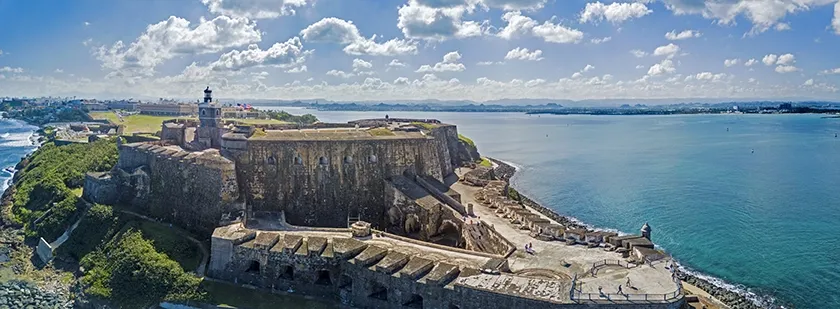
The castle of San Felipe del Morro, better known simply as “del Morro”, is today a friendly place where Puerto Ricans spend their holidays with their families. A close look at its walls, which are more than forty metres high and five metres wide in many sections, is enough to understand how impregnable the Spaniards made the city in the 16th century. Strolling along the ramparts is like looking out onto a wonderful balcony overlooking the Caribbean Sea, enjoying splendid views of the surroundings.
Following the walled enclosure in an easterly direction, you reach the castle of San Cristóbal, considered the largest castle built by the Spanish in America. Completed in 1783, it reinforced the protection of the city and withstood countless sieges, but the labyrinth of moats, bridges, sentry boxes and the six interconnected forts that completed the defensive structure made it impossible to conquer.
The fortress or palace of Santa Catalina was the first defensive building in the city and from 1540 it fulfilled the function for which it had been conceived, as well as the official residence of the governor. Built under a medieval concept with a square floor plan, inner courtyard and circular tower, it underwent a thorough remodelling in the 19th century, from which it inherited its current appearance.
Opposite the castle of San Felipe del Morro is the island of Cabras, where the first wooden fort was built in 1610. As a result of a Dutch attack, it was burnt to the ground and in 1670 was rebuilt by the Spaniards to the appearance it has today. From this vantage point you can enjoy some of the best views of the bay.
Returning to Old San Juan, a visit to the Museum of the Americas is highly recommended, as its four permanent exhibition halls synthesise the history and culture of Puerto Rico and the American continent, the African heritage, the indigenous culture with special attention to the Taino people, the history and culture of Puerto Rico and the American continent, the African heritage, and the indigenous culture with special attention to the Taino people. or what the conquest and colonisation meant as the seed of the birth of Puerto Rico.
Very close by, in the heart of the historic centre, stands the Metropolitan Cathedral Basilica of San Juan Bautista de Puerto Rico. Today’s neoclassical style is the result of the reconstruction carried out in 1529, after the destruction of the previous building by a storm. With a Latin cross floor plan, the remains of the explorer and conqueror Juan Ponce de León are preserved inside, as well as other curiosities such as the clothes worn by Pope John Paul II on his visit to the island in 1984.
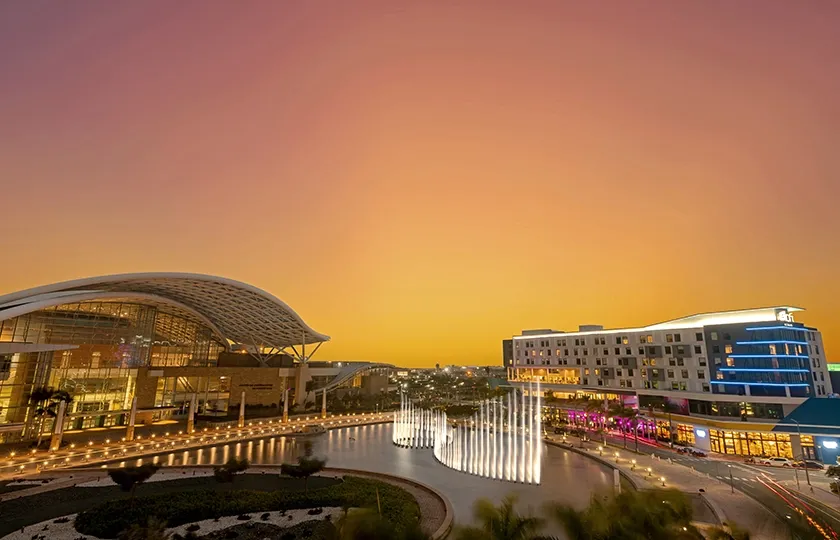
A modern bridge connects the islet on which Old San Juan sits to the modern, state-of-the-art T-Mobile District, very close to the Pedro Roselló González Convention Centre, a technologically advanced complex with a dozen restaurants offering authentic Puerto Rican cuisine, dance, music, rum culture and local art.
Nearby, the Museum of History, Anthropology and Art presents the development and evolution of pre-Columbian cultures from different disciplines.
On the west side of San Juan Bay, in a tropical art deco space next to the popular neighbourhood of Cataño, Casa Bacardi is also known as the cathedral of rum and a paradise for the most demanding cocktail tasters. A guided tour of the premises and museum of the world’s largest distillery is a unique experience that showcases the splendour of the legendary brand, ending with a tasting of the legendary Don Facundo rum.
The island of a thousand sensations
Once you know and enjoy the capital, it is very easy to get carried away by the infinite nuances that Puerto Rico treasures.
On the north coast, Arecibo, also known as the “Emerald City”, is a unique blend of history and nature. Its main monumental landmark is the cathedral of San Felipe Apóstol, which was completed in the mid-19th century after being damaged by earthquakes on several occasions.
Within the colourful colonial architecture, the Ulanga house stands out, a unique building from 1854 full of stories. Originally the residence of a high-ranking Spanish military officer, it later became a bank, shop, town hall, hospital, court and prison, until today it is the Arecibo Cultural Centre, a permanent space for festivals and cultural activities.
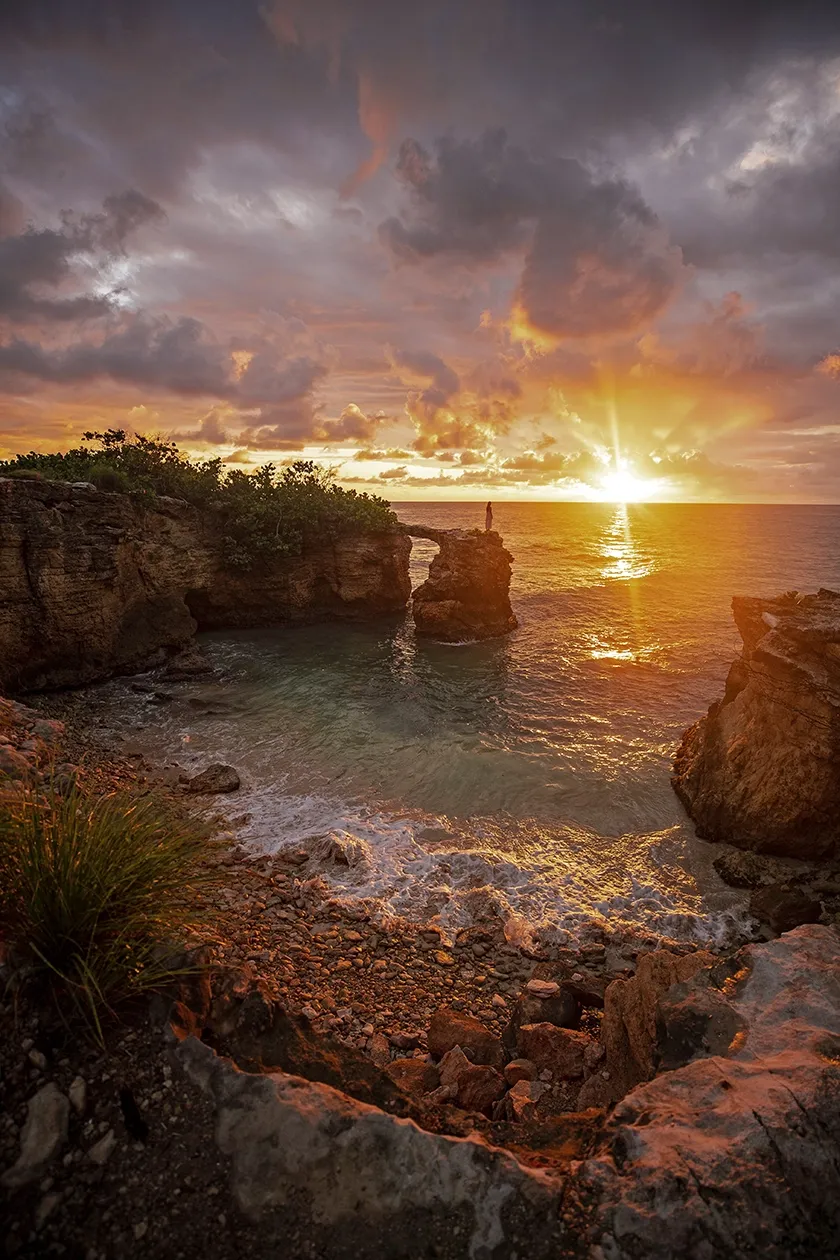
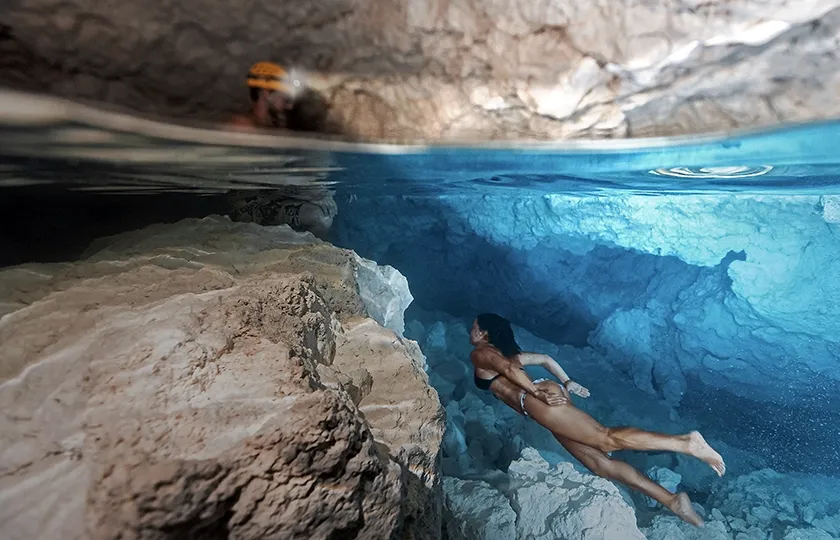
The surrounding area is dotted with dazzling landscapes ranging from fantastic beaches of fine sand, cliffs and whimsical natural shapes furrowed by pirates in the past, to valleys rich in biodiversity such as the Cambalache Forest National Park or the Obispo Waterfall, whose slopes offer natural balconies with breathtaking views such as the Ventana Cave. The subsoil also opens up a fascinating universe in the form of karst complexes of caves and underground rivers.
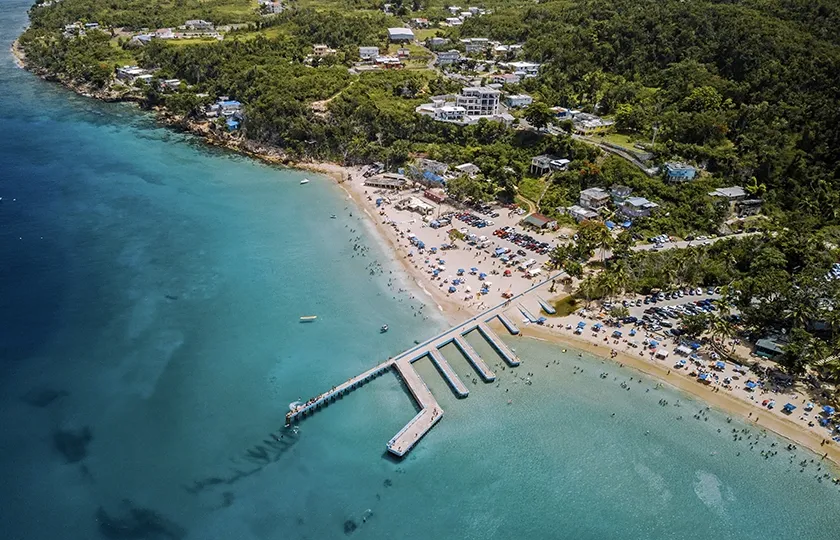
In the south of the island there are two towns that are a must for their rich cultural heritage. Ponce, also known as “The Pearl of the South”, is a vibrant and colourful city. Its neoclassical architecture is striking, but the Cathedral of Our Lady of Guadalupe, built in 1670, stands out among all its attractions, without forgetting the La Perla theatre or the old sugar refineries, today converted into theme centres and exclusive accommodation.
Another interesting landmark is the Museo de Arte de Ponce, considered one of the best in Puerto Rico for its extensive collection of Puerto Rican pieces, American, African and an important collection of 19th century European art of all disciplines.
Next to the castle stands the slender Cruceta del Vigía, built in the 19th century to control the arrival of pirates and merchant ships, offering a spectacular panoramic view of Ponce and the Japanese Garden, a unique natural space filled with exotic trees, bonsais and ponds.
The urban space revolves around the Plaza Las Delicias with its symbolic fountain of the Lions and flanked by colonial buildings, although one of the most striking is the Parque de Bombas, an old fire station converted into a museum without losing any of its original charm.
Nearby, to the west, the town of Yauco keeps alive Puerto Rico’s coffee culture, earning it the nickname of “The Coffee Town”, although it also enjoys another nickname rooted deep in the Puerto Rican essence, that of “Taino Capital” for being the epicentre of the Taino people who inhabited the island before the arrival of the Spaniards.
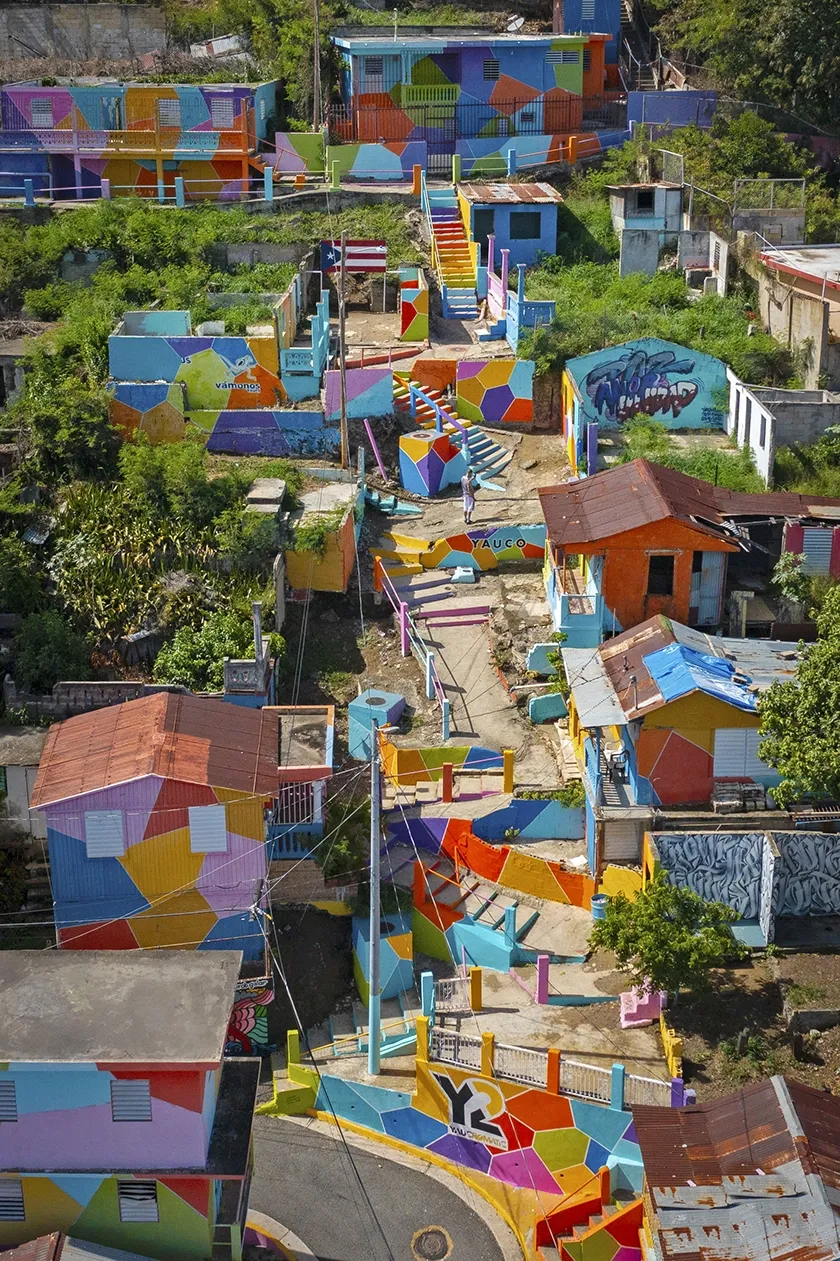
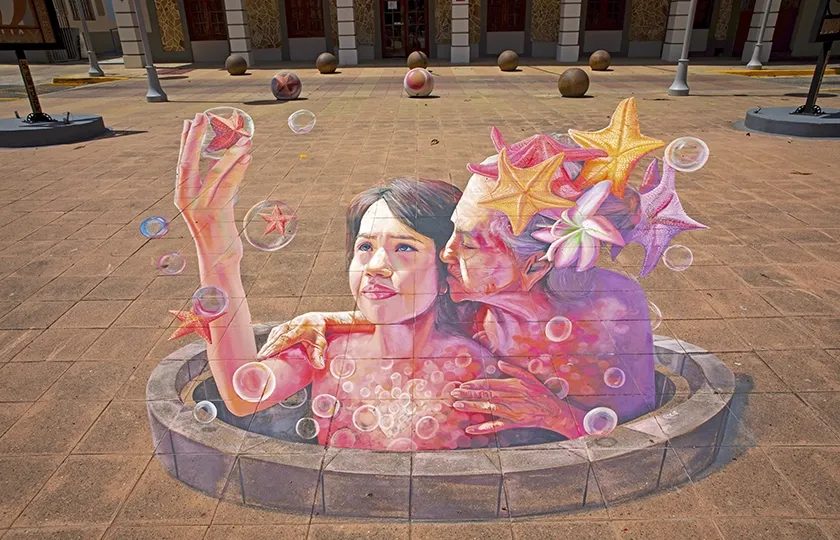
In addition to its historical semblance, Yauco has become a reference point for urban art thanks to a group of Puerto Rican artists who have launched two interesting projects: Yaucromatic and Y2. With this initiative they have turned the white walls of the buildings into impressive murals, each one more elaborately painted with bright colours in an exercise of virtuous creativity. Among them all, a huge work called Tropical Breeze visually links nineteen houses and staircases in the La Cantera neighbourhood. This mosaic of colour and talent has become an iconic image of Puerto Rico.
The Boricua heritage
Puerto Rico’s intangible heritage is the rich and vibrant fruit of the mix of cul tures, from indigenous to African to Spanish, that have left their mark over the centuries. It is also what gives meaning to the Puerto Rican essence, that kind and generous way in which the people share and live their daily lives, something that can be perceived in the artistic manifestations, in the way of celebrating festivities and in the preservation of rites and customs.
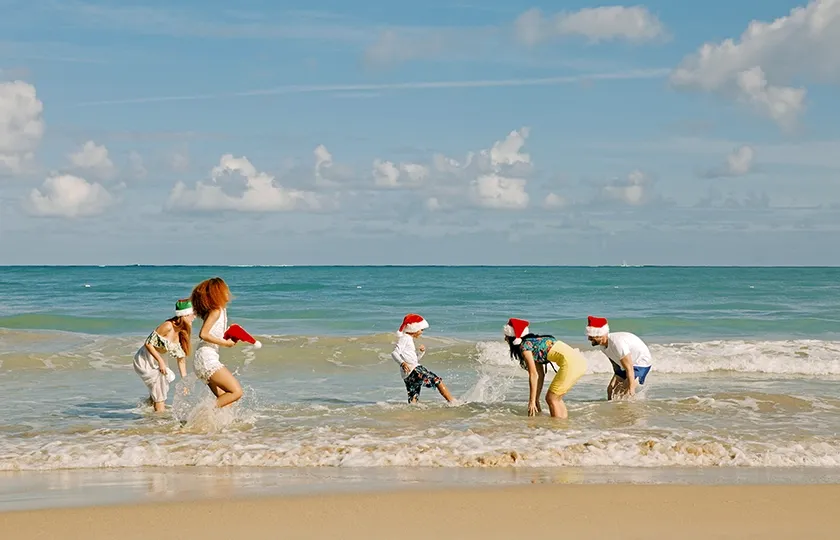
Puerto Rico is said to have the longest Christmas in the world, as every day is a cause for celebration with ideal weather guaranteed. Whether it’s the New Year’s Eve dinner at a beachfront restaurant or the Mask Festival in the village of Hatillo on 28 December, a colourful manifestation that contrasts with the tragic story of the Holy Innocents that inspired it.
The Maccabee Festival is also held in December, which pays homage to the main delicacy of Puerto Rican cuisine: the macabeo, a delicious and artisanal fried food. The “trova”, a musical genre typical of the Puerto Rican jíbaro and his art of improvisation, enlivens the festival, along with troubadour competitions.
On the third weekend of January and as the culmination of Christmas, the festivities of San Sebastian Street in Old San Juan will take place. are filled with artists and artisans, live music, dance and circus activities.
The African dance heritage also has its own Bomba and Plena festival, one of the oldest choreographic manifestations on the island.
The Carnaval Ponceño floods the streets of the city of Ponce with colour, activities, masked dances and burlesque performances for a week.

Biodiversity fused at the roots
From pristine beaches to tropical rainforests, Puerto Rico is a box of surprises where you can enjoy idyllic natural surroundings dotted with the indigenous symbols of times gone by.
The Taino people inhabited the island long before the arrival of the Spanish. They were organised in hierarchically structured clans, with an animist religiosity and were skilled in hunting, agriculture and the manufacture of utensils and clothing.
Although the arrival of the conquistadors meant its near disappearance, its legacy has survived time and outside influences in the land of Boriquen, which translates as “land of the brave Lord”, a hallmark of identity that Puerto Ricans are proud of, while honouring their ancestors and traditional culture.
The Taino Route brings together the values of identity on a route from north to south, passing through the mountain ranges of the centre, in which the Taino ethnic group and the overflowing nature take centre stage.
On the north coast, in a natural area of the municipality of Arecibo with marvellous views of the sea, the Cueva del Indio is a place full of magic, a meeting place for the ancient Tainos to worship their deities, which justifies the enormous concentration of petroglyphs engraved on the rocks.
The Cordillera Central is the backbone of the island of Puerto Rico. It is a changing landscape of mountains and caves, of canyons and rivers, and of its own singularities that make the region a coffee-growing area par excellence, with working haciendas offering delicious coffee tastings, an ideal destination for adventure activities and exquisite local gastronomy.
In the middle of this orchard, in the municipality of Utuado, is the Indigenous Ceremonial Centre of Caguana, undoubtedly the most important archaeological site on the island, made up of “bateyes” or sugar houses, ten squares, twenty-one petroglyphs and a multitude of utensils from everyday indigenous life.
Without leaving the municipality, it is very interesting to visit the indigenous cemetery Joya de Santana and its inscriptions on the stones of the river Jauca and the petroglyphs of the Río Grande de Arecibo, an open-air history lesson.
On the southern face of the Cordillera Central, on the outskirts of the city of Ponce, the Centro Ceremonial Indígena de Tibes explains in detail the singularities of the Ignari culture of the pre-taíno period and the process of transition to the global settlement of the Taino people. Two ceremonial plazas, seven ball courts, burial sites, petroglyphs, figurative art of Taino deities, personal ornaments and everyday objects give meaning to this impressive archaeological site.
Not far away, the municipality of Jayuya holds an interesting surprise. On the banks of a tributary of the Saliente River is one of the most impressive petroglyphs on the island, The Piedra Escrita is a large rock carved with a variety of shapes such as faces and spirals.
The Jayuya Sun is another impressive petroglyph that is part of the Zamas Carved Mural, but in this case it is monothematic, representing a symbolism dedicated to the Sun God.
The Taino Route can be a good way to get to know the most suggestive places in Puerto Rico, such as the coast of Ponce with its Caja de Muertos island, an uninhabited nature reserve surrounded by crystalline waters.
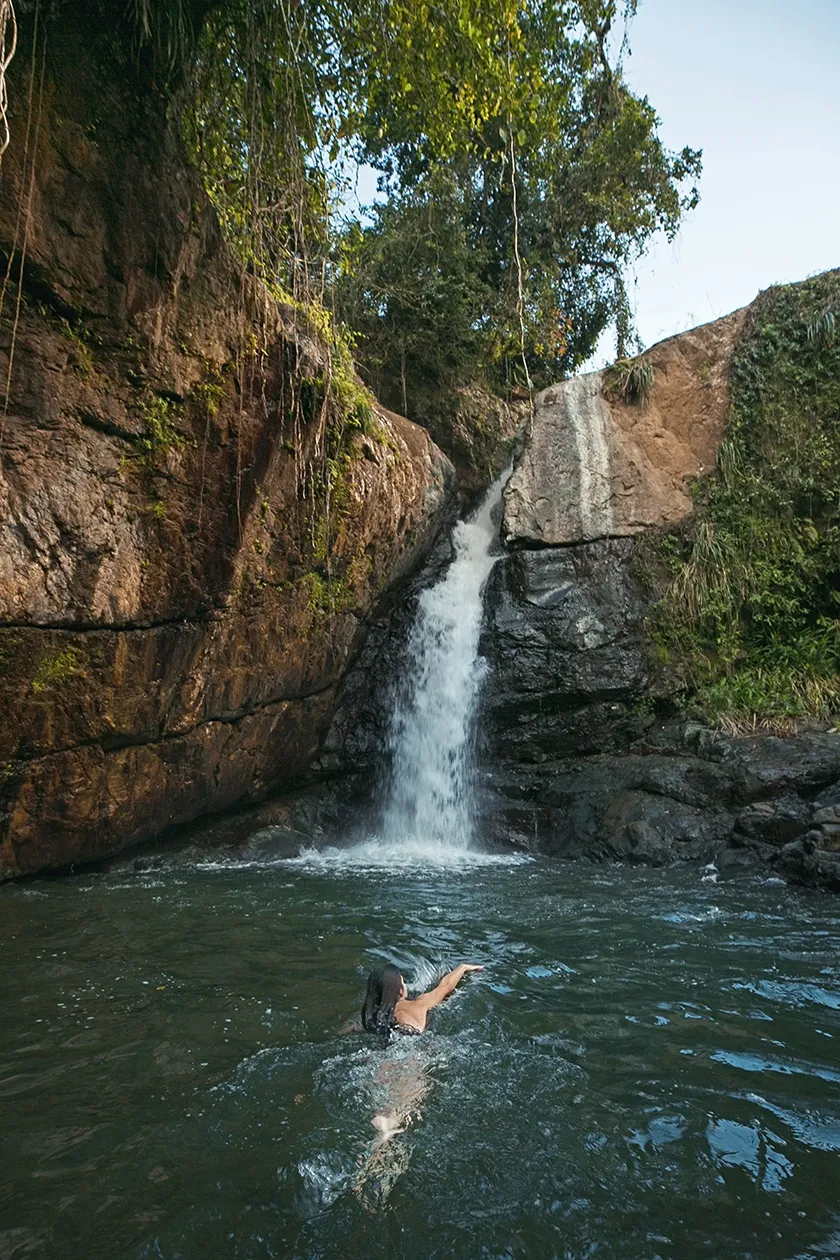
Chorros La Planta, in the surroundings of Arecibo, is a unique spot with natural pools, waterfalls and streams of high ecological value, as is the case with Dos Bocas Lake and the Cambalache Forest National Park.
On the north coast, west of San Juan de Puerto Rico and around the municipality of El Dorado, there are beaches of fine golden sand with palm trees, such as Boquerón or Mayagüez but without a doubt the most attractive is Aguadilla with its old fishing village atmosphere and its colourful boats moored on the beach.
Not far away, the beaches of Rincon and Isabela have the best Caribbean waves for surfing.
An hour’s sail from the port of Fajardo in a northeasterly direction, the island of Vieques, “little land” in Taino, is a paradise for nature lovers. Walk its trails where it is easy to find herds of free-roaming horses, go into its National Wildlife Reserves with their subtropical forests, coastal lagoons and mangrove forests or to abandon yourself on any of its pristine beaches is to enter into a state of communion with nature that is impossible to forget.
But this is not all. Viques has the three most beautiful luminescent lagoons in the Caribbean, including Mosquito bay, considered to be the brightest on the planet. This phenomenon is due to the oxidation of a protein in plankton and other organisms, turning the surface of the sea into a starry blanket that may well resemble a reflection of the sky.
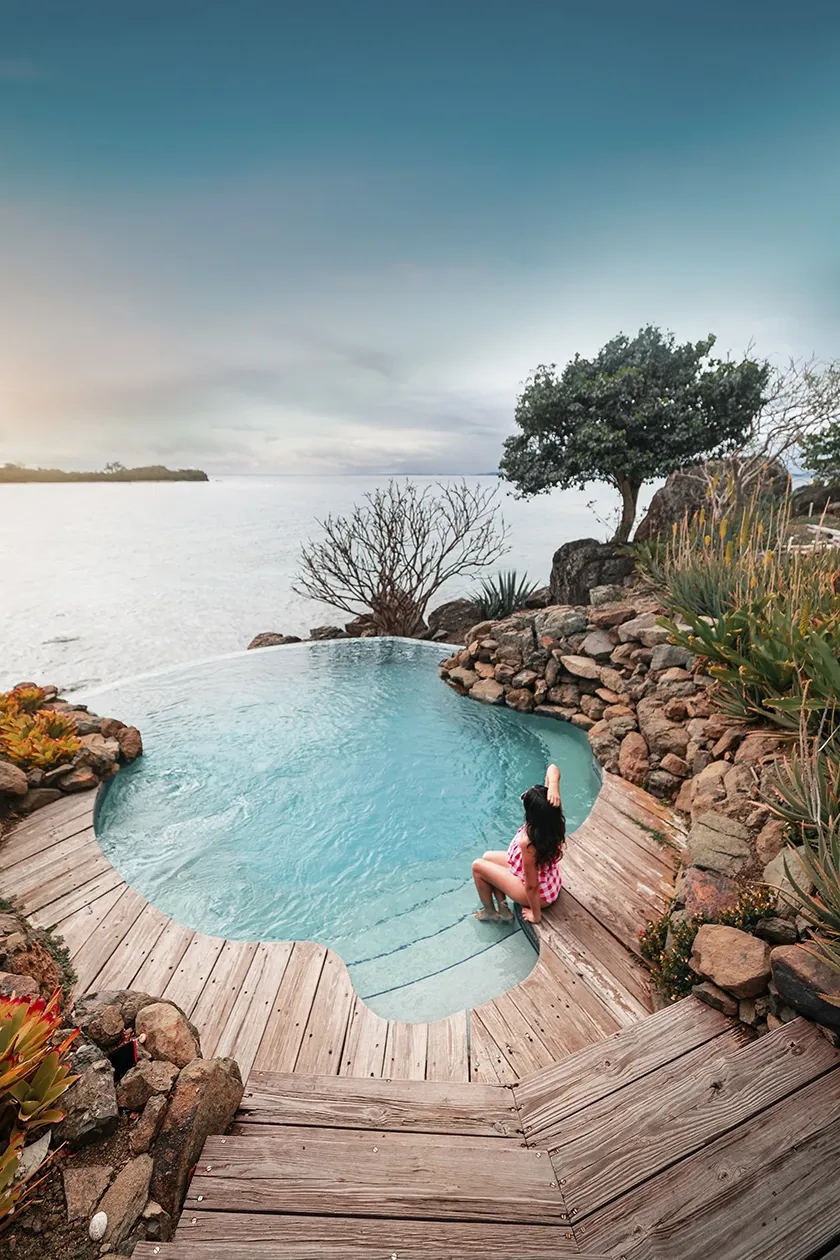
Before returning to the mainland, a visit to the island of Culebra, famous for its white sandy beaches, its waters in all shades of blue and its coral reefs, ideal for scuba diving, is highly recommended. Flamenco beach stretches for more than two kilometres and is considered one of the most beautiful beaches in the world. But it is not only her extreme beauty that has made her famous, but also for the curiosity that some rusty tanks from the Second World War remain on its shore, nowadays converted into an original support for all kinds of graffiti.
Back on the mainland, a visit to El Yunque National Park, the most important on the island and of immense environmental value thanks to its tropical rainforest, is a must. Inside there are magical spots such as the La Coca waterfall with a 26-metre drop, It is also home to more than two hundred and forty species of trees spread over four biotopes.
Puerto Rico is much more than all of the above, It is a paradise in the middle of the sea with infinite nuances, but we will tell you about that on another occasion.