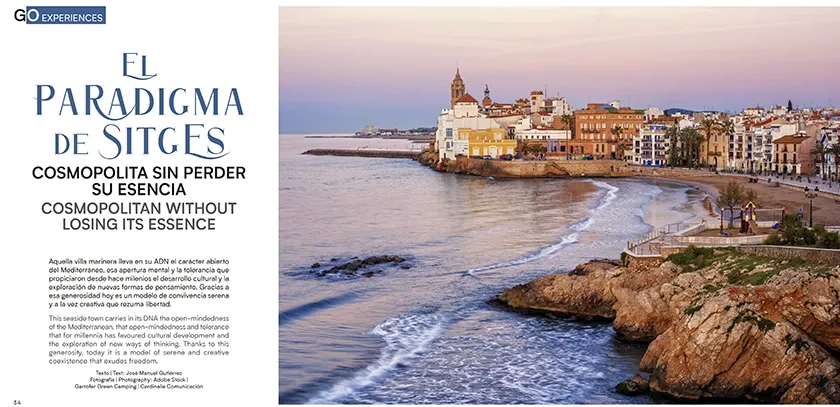
This seaside town carries in its DNA the open-mindedness of the Mediterranean, that open-mindedness and tolerance that for millennia has favoured cultural development and the exploration of new ways of thinking. Thanks to this generosity, today it is a model of serene and creative coexistence that exudes freedom.
Strolling through the lively streets of Sitges is a sensory stimulus, whether you walk along the symbolic seafront promenade or through the narrow streets of the old town flanked by palatial mansions. and magnificent examples of modernist and noucentista architecture.
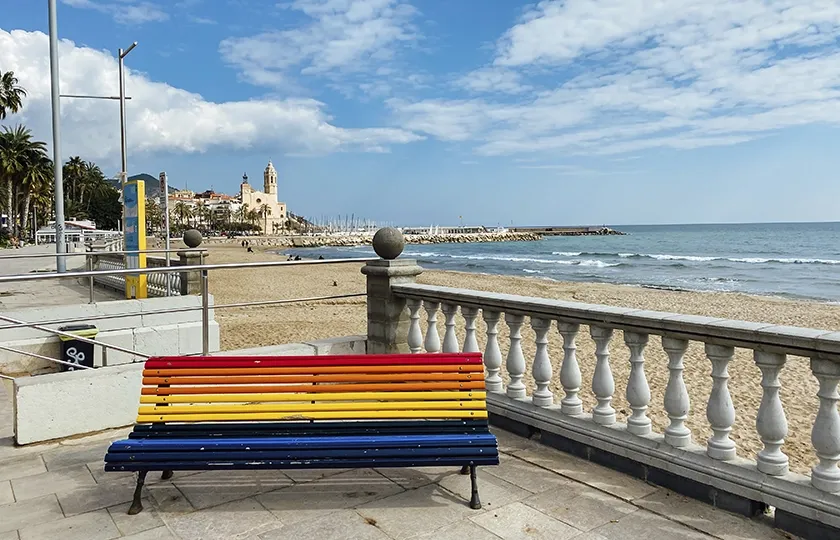
Its rich cultural calendar full of year-round events and laid-back lifestyle make it a perfect choice for a getaway. Moreover, since the 1930s it has been gaining prominence as an LGBTQ+ destination, which has given it the character of a liberal, artistic and open-minded environment.
Behind the closest legacy that our eyes can see lies an origin that dates back to the 6th century BC. Its name derives from the word “sitja” which in Catalan means “silo”, alluding to the grain bins dug out of the ground in the past to store grain, So we find ourselves in a place with a great deal of history that has become a tourist reference point worldwide for many reasons.
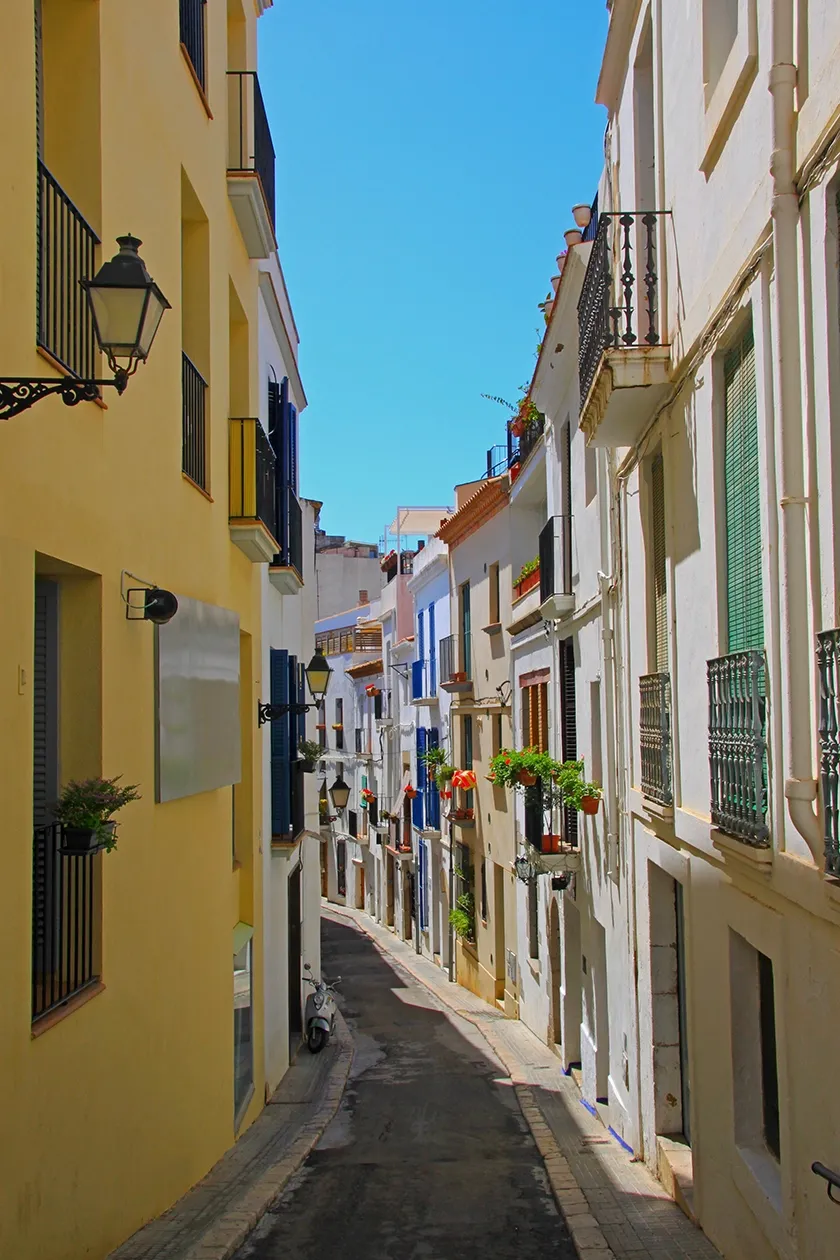
Wander through the old fishermen’s quarter, contemplate the architectural heritage, enjoy one of the twenty-six beaches or the trails of the Parc del Garraf and tasting its sweet Malvasia wine are some of the things to do in Sitges all year round.
Its secluded location between the Garraf mountain range, the vineyards of the Penedès and the Mediterranean has always given it an air of privacy and exaltation of freedom, transforming it from a small fishing village that still conserves one of the few artisan fishing guilds in Catalonia, into a model tourist destination in the Mediterranean basin.
A modernist reference
Sitges captivated the promoters of Catalan modernism at the end of the 19th century, but it was in the sixties of the last century that the tourist boom began to take off, bringing millions of visitors every year, which means that the streets are always lively and that it is a town that never closes. This is where the great expansion of the modernist movement in Catalonia began. The modernist processions held in Sitges to receive paintings by El Greco, which were taken in a secular procession from the station to the Cau Ferrat museum, are famous. Gradually the town acquired a solid reputation as a meeting place for intellectuals, especially since Picasso and other artists of the time began to spend periods of rest and creativity.
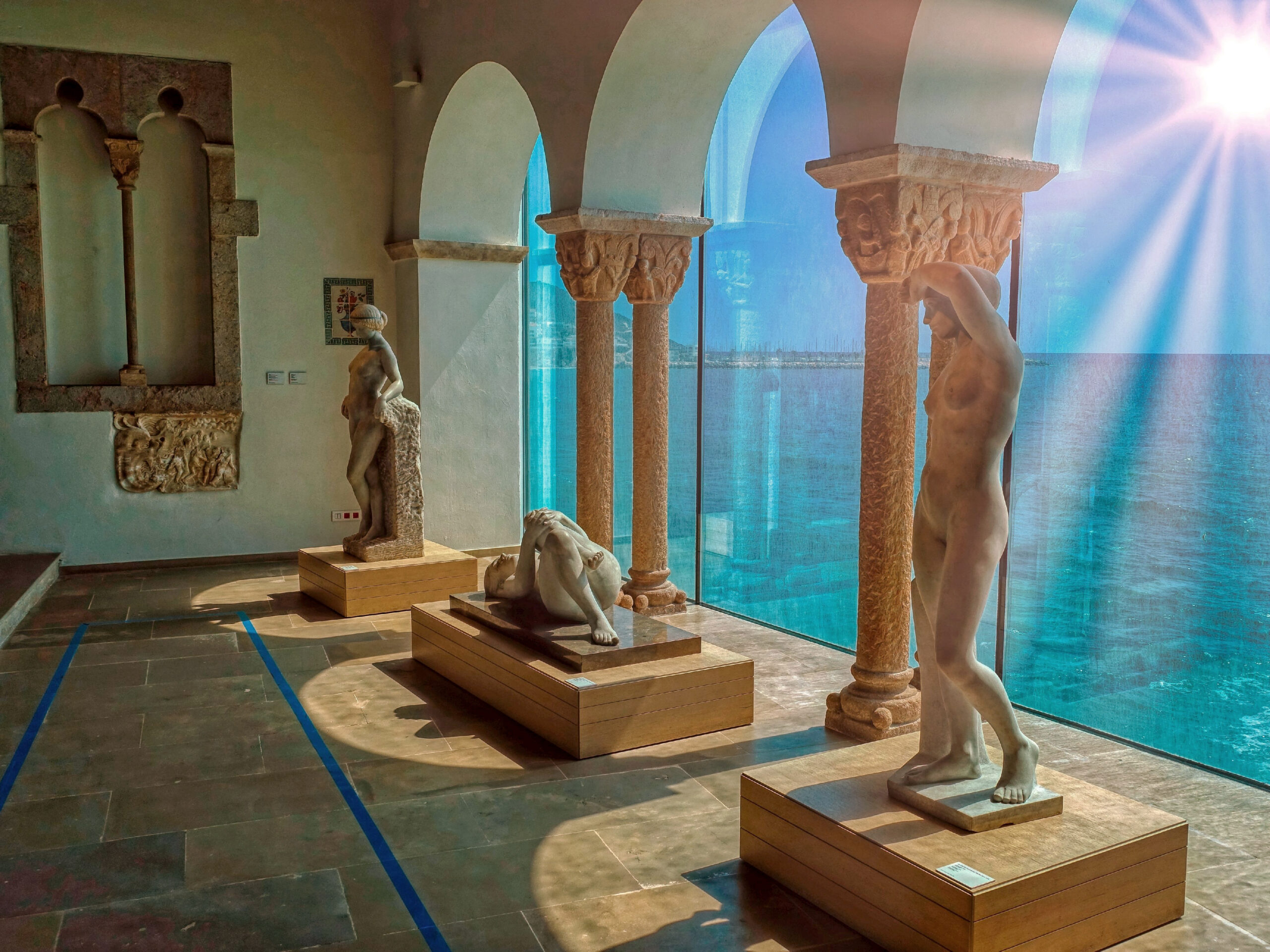
But the most transcendental legacy came from the painter, sculptor and playwright Santiago Rusiñol and his Cau Ferrat museum, housed in what was once his house-workshop, a function it fulfilled since its inauguration in 1893 until it became a public museum in 1933, without losing its original artistic atmosphere.
At the Cau Ferrat, parties were organised with exhibitions, poetry readings and musical concerts in a vibrant, cultural atmosphere, to which Emilia Pardo Bazán, Federico García Lorca, Manuel de Falla, Antonio Machado, Ramón Casas, Pablo Picasso and Carlos Gardel, for example, were invited.
Its collections include pieces of ancient art gathered by the artist (painting, wrought iron, ceramics, glass, archaeology, sculpture and furniture), as well as modern art (painting, drawing, sculpture) with works by Rusiñol, Casas, Picasso, R. Pichot, Mas i Fontdevila, Zuloaga, Regoyos and Degouwe de Nucques, Enric Clarasó, Manolo Hugué and Pau Gargallo, among others. The activities organised by Rusiñol with the participation of other artists, musicians and writers turned the Cau Ferrat into the Temple of Modernisme, giving shape to a unique artistic legacy that, together with the building in which it is housed, exemplify the modernist veneration in all artistic disciplines.
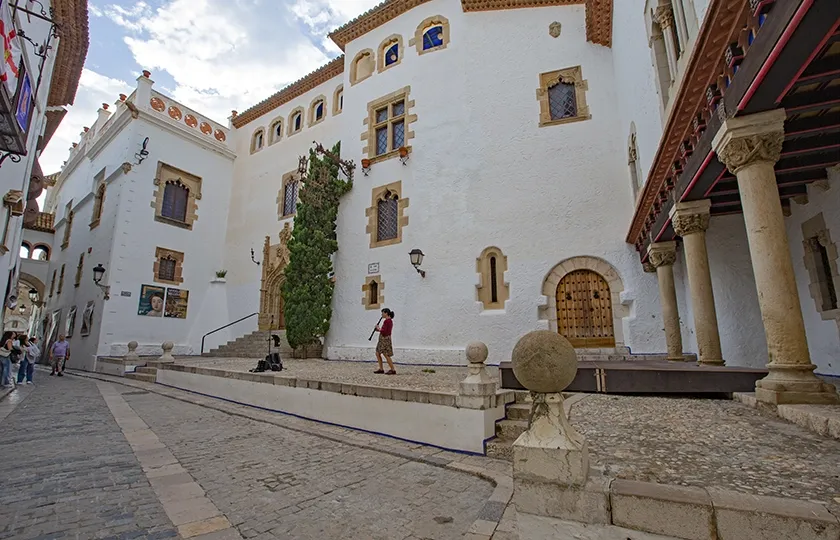
Strolling through the centre of Sitges it is easy to find other examples of modernist façades, but it is in Fonollar Street where a magnificent surprise awaits. The Palau de Maricel displays all the splendour of a beautiful noucentista style. Built between 1913 and 1916, it has the curiosity of being an architectural ensemble of several buildings arranged on both sides of the street connected by a bridge and of having been built with elements brought from different parts of Spain.
Strolling through that fishing village
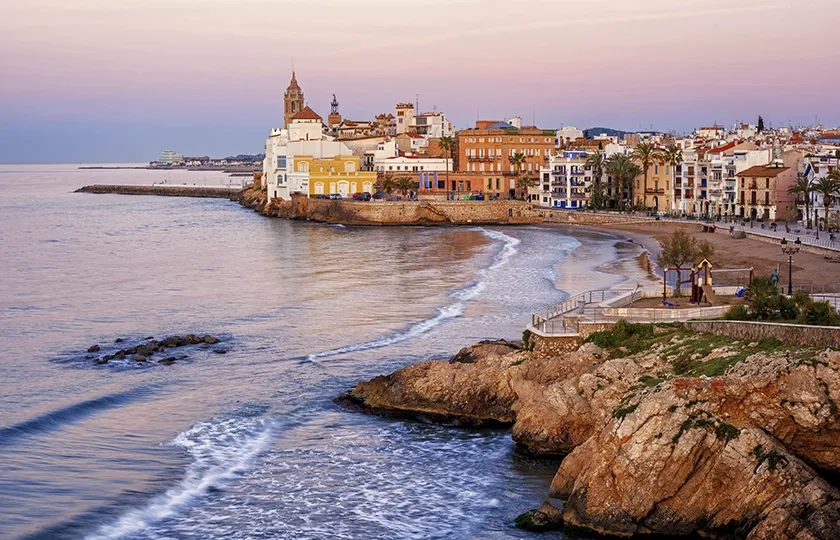
The promenade of Sitges is a symbol of the town, whose three-kilometre-long promenade starts at the 17th-century church of San Bartolomé and Santa Tecla. Along the way, the beautiful buildings on the beachfront, whose architecture dates back to the 19th century when the so-called Americans, in other parts of Spain known as Indianos, made their fortune mainly in Cuba and Puerto Rico and returned to build their colonial mansions, catch the eye. The sixty-nine that survive are marked and protected.
Illustrious Sitges natives such as Facundo Bacardí and Andreu Brugal stayed on the other side of the Atlantic with their fruitful rum empires.
In front of them the golden sandy beaches, the clear, calm and shallow water invite you to let yourself be carried away by the feeling of peace and tranquillity.
Another suggestive way of getting to know Sitges is to stroll around the old fishermen’s quarter, where the roofs, windows and skirting boards are still conserved in blauet, that characteristic navy blue.
A must-visit is the vibrant Primero de Mayo street and its perpendicular “Pecado” streets, known worldwide as the epicentre of LGTBIQ+ nightlife.
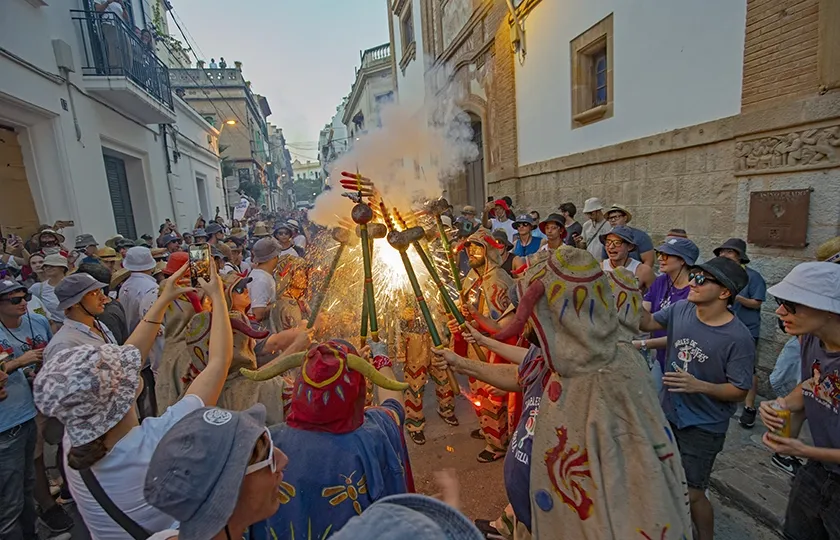
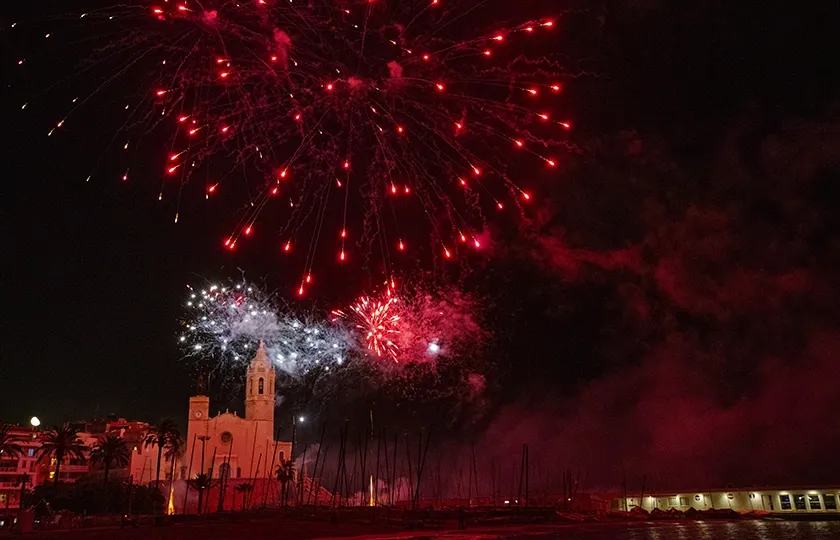
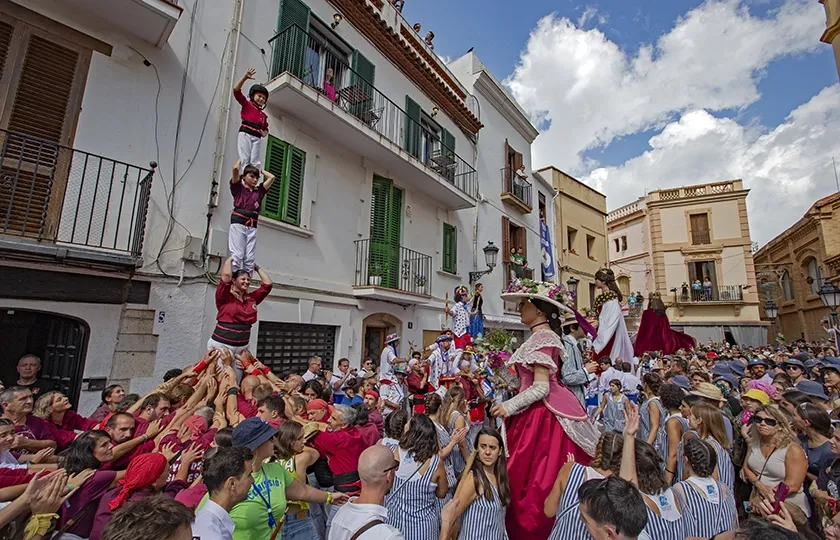
Sitges is also a place of deep-rooted traditions, such as the town’s patron saint, Santa Tecla, which takes place in September. It begins at night with the “Nit del Foc” (Night of Fire) with the frenetic “correfoc” or fire run, a pyrotechnic show featuring the “dimonis” and the “bèsties de foc” (fire spitting) that runs through the streets of the historic centre spitting fire. There is no specific reference to its origin, except for its co-protagonism with Saint Bartholomew as patron saints of the city in the 16th century. The colourful festival is completed with castellets, giants and big-heads and the participation of hundreds of people.
To unwind a little from so much excitement, nothing better than a visit to the Terramar Gardens, a three-hectare green lung facing the sea designed in 1929 in noucentista style by Miquel Utrillo. Under the shade of wild olive trees, cypresses, palmettos and white pines we can take shelter during the hottest days and feel the coolness emanating from the small water lily pond.
Twenty-six beaches to enjoy the sea
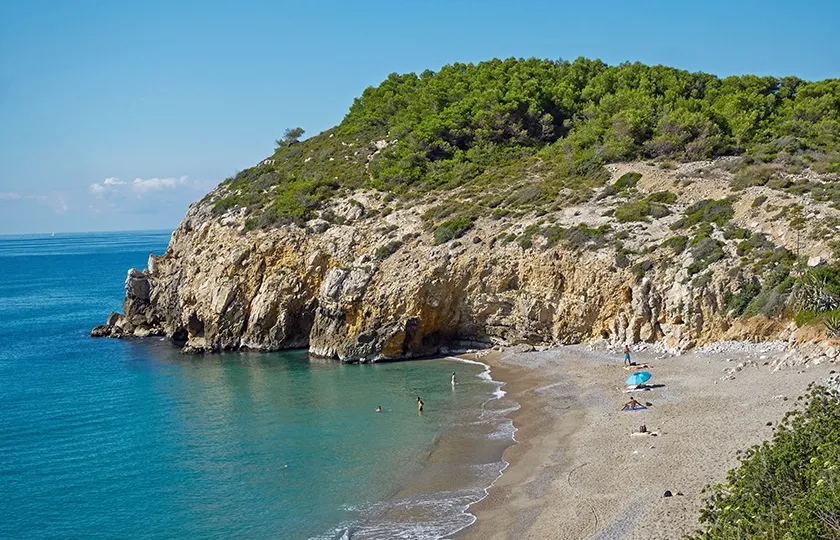
Whether with or without a swimming costume, the beaches of Sitges are a whole tourist ecosystem spread along seventeen kilometres of coastline surrounded by nature. There are quiet, family-friendly beaches that can be reached from the town centre, such as Aiguadolç, Bassa Rodona, Sant Sebastià, Estanyol, Fragata or La Ribera, where you can find the first beach bar in Spain, created in 1913 by Captain Calafell, whose name chiringuito comes from the Cuban localism “chiringo” for ordering a coffee.
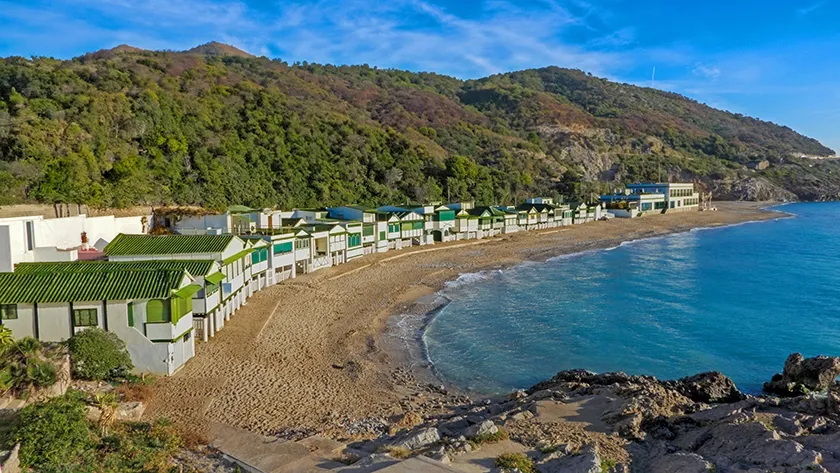
There are also nudist beaches such as Balmins, which is actually made up of three small coves, l’Home Mort, considered to be one of the first LGTBIQ+ beaches in the world in the 1930s, Cala Morisca and Cap de Grills. A little further away from the centre and winding along the road parallel to the cliffs, is the Garraf beach with its thirty-three fishermen’s cottages and former employees of the railway line painted in green and white, which create a peculiar picture.
Whichever you choose, enjoyment is guaranteed whether you are just sunbathing or taking part in one of the many water sports or activities that the destination has to offer.
Sitges is eaten and drunk
With a wide range of gastronomic proposals, the most delicious dishes are based on the excellence of local products and respect for the concepts of Mediterranean cuisine.
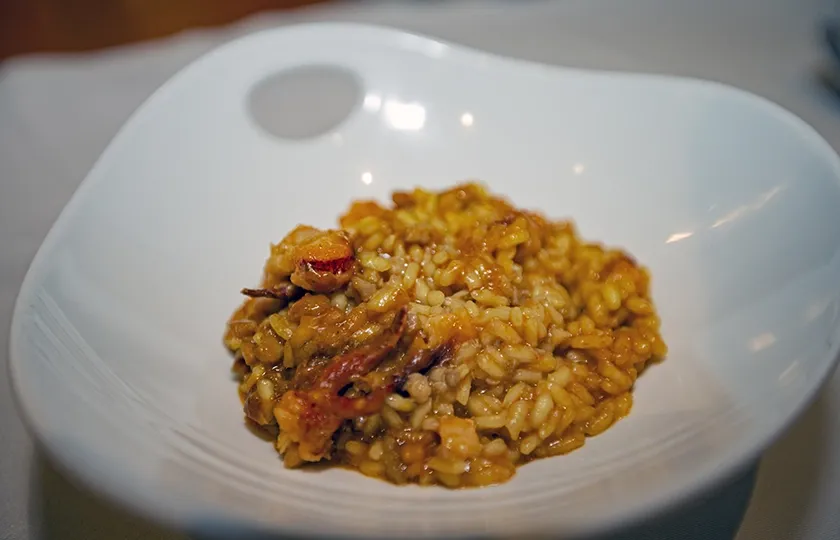
Dishes made with rice and fish, the popular Sitges xató and the avant-garde dishes of different restaurateurs are an important tourist attraction. Special mention should be made of the Casa Hidalgo restaurant where they prepare all kinds of rice dishes that make this simple dish a delicacy or lobster cooked in many different ways, each one tastier than the next.
The wines of the Macizo del Garraf, which belong to the DO Garraf, have their own characteristics thanks to the rocky soil, made up of limestone, a poor soil, Mediterranean vegetation and a characteristic climate.
The vines are of advanced age, withstand high temperatures mitigated by the coolness of the Mediterranean breeze, closer than in other parts of the DO Penedès. The varieties are indigenous: Xarel.lo, Sumoll, Malvasía, Moscatel, Garnacha, Marcelan, gradually gaining well-deserved recognition.
Locally, Sitges has a wine that is very representative of its gastronomy, the Malvasía, with a very fine texture and an aromatic, sweet flavour. It is made with the native grape variety, which distinguishes it from others made with the Canary Island, Rioja, Zamora or Manresa grapes due to the natural conditions in which they ripen.
Such is the roots and uniqueness of this production that there is a Malvasia de Sitges Interpretation Centre, where they work to preserve and enhance this precious material and immaterial legacy.
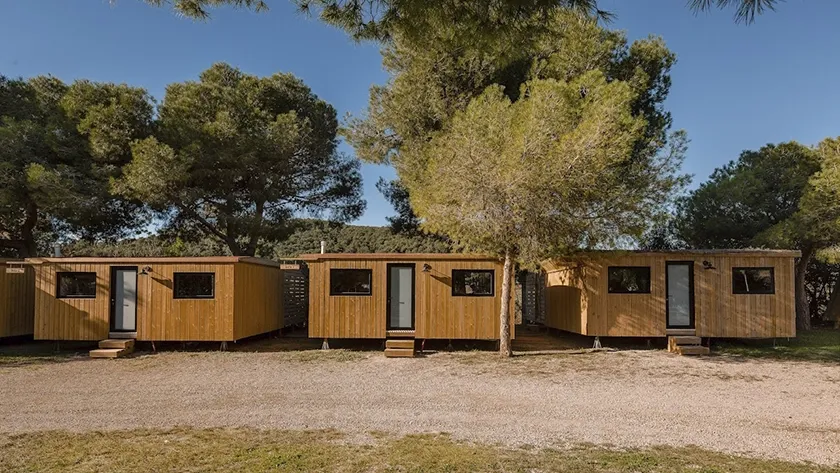
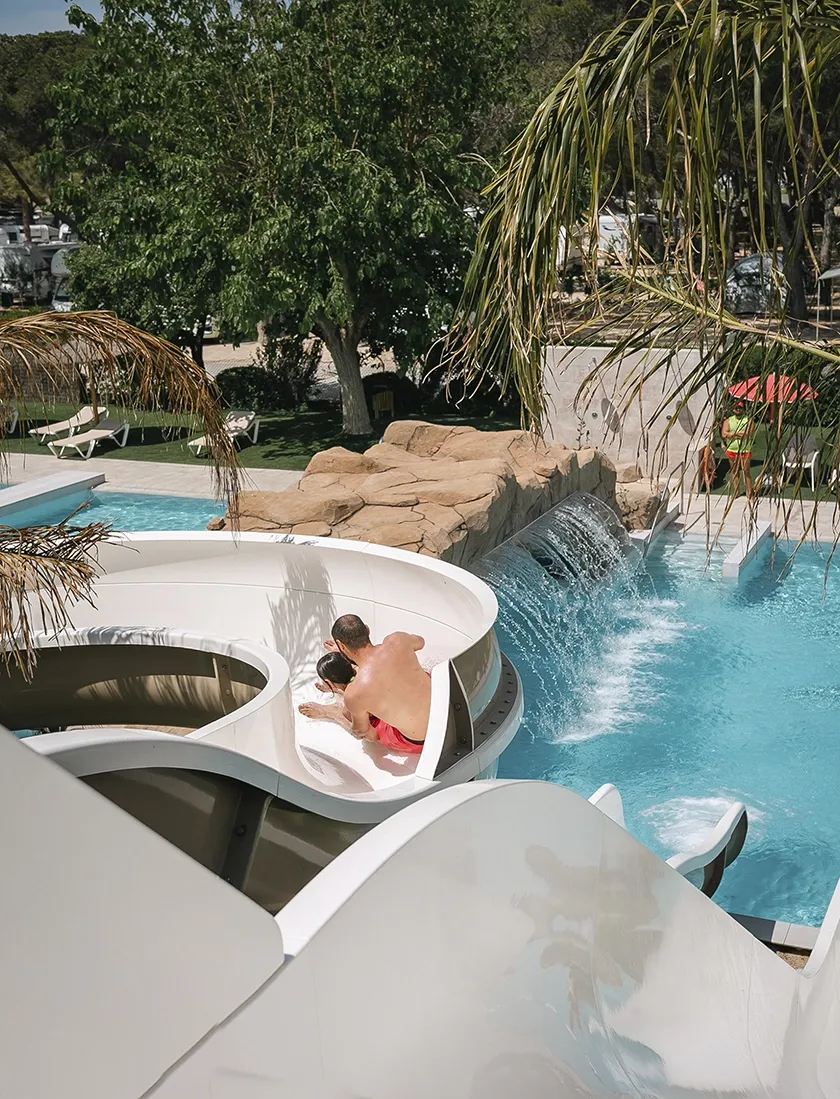
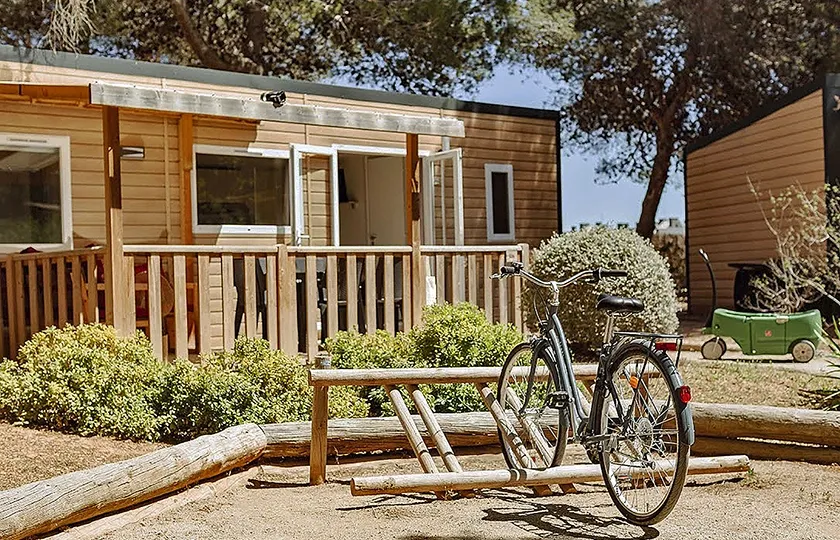
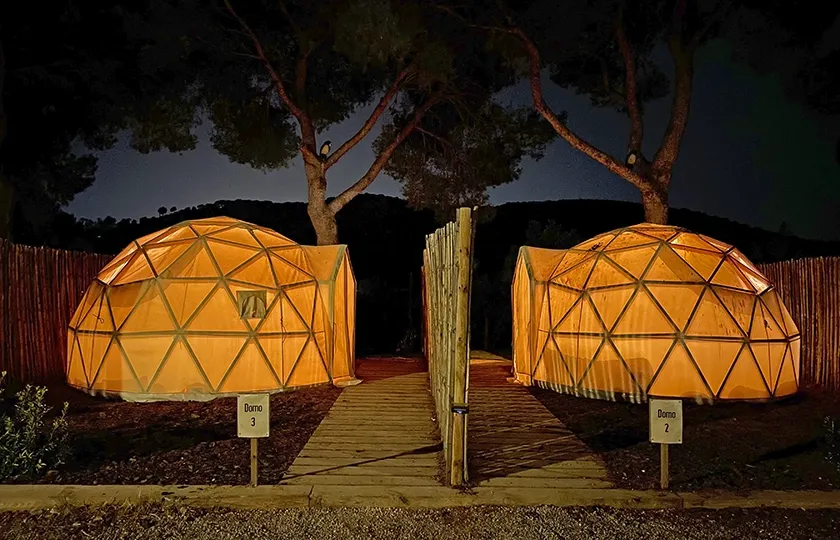
With the cult of the palate satisfied, it’s time to rest. There is a wide range of hotels in Sitges and some of them are located in beautiful modernist buildings, but being in an environment where you can breathe freedom, a very suggestive proposal is to spend the night in contact with nature. Garrofer Green Camping, with a permanent commitment to sustainability, is an interesting alternative that allows camping or enjoying comfortable bungalows, as well as glamping experiences, i.e. sleeping in tipis, domes or safari tents, as well as modern facilities, restaurants and tents.
We are going to festivals
Sitges’ cultural agenda is also an important pole of national and international tourist attraction, thanks to the hard work that has been done for decades to keep culture as an engine of the economy.
The city is the permanent home of the International Film Festival of Catalonia, one of the most important film events in Europe and one of the pioneers of fantastic, science fiction and horror films, first organised in 1968 by Pedro Serramalera.
Sitges LGBT Pride is an event held in June since 2009, including a multitude of shows, concerts, “Pool Party”, parade of floats and drag queens in a colourful example of tolerance.
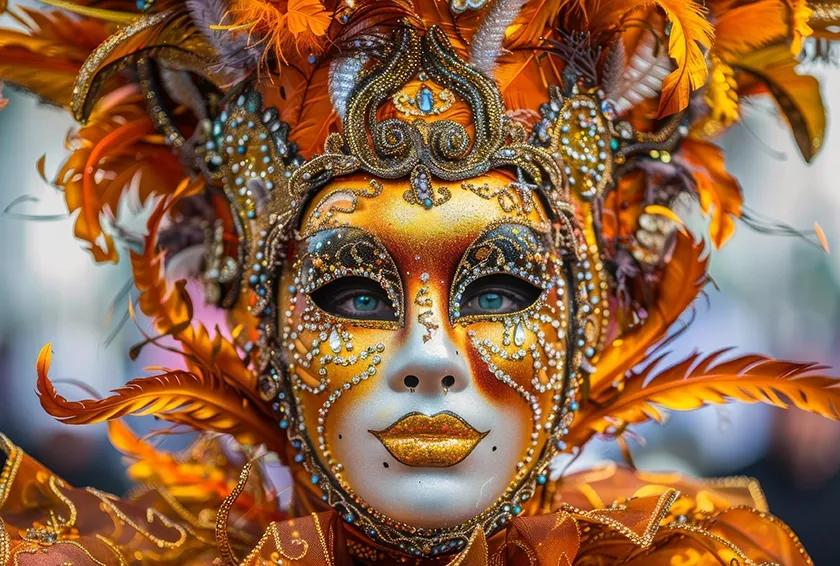
The Sitges Carnival has also become one of the town’s main events.
The Arribo de Sa Majestat Carnestoltes, the presentation of the Carnival Queen, the Rúa de la Disbauxa (Sunday), the Rúa de l’Extermini (Tuesday) and the farewell of Sa Majestat Carnestoltes (Ash Wednesday) are the most lively and representative moments of this celebration.
The Barcelona-Sitges International Vintage Car Rally has been held every March since 1959, maintaining the same original route from the Plaça de Sant Jaume in Barcelona to Sitges following the C-31 road.