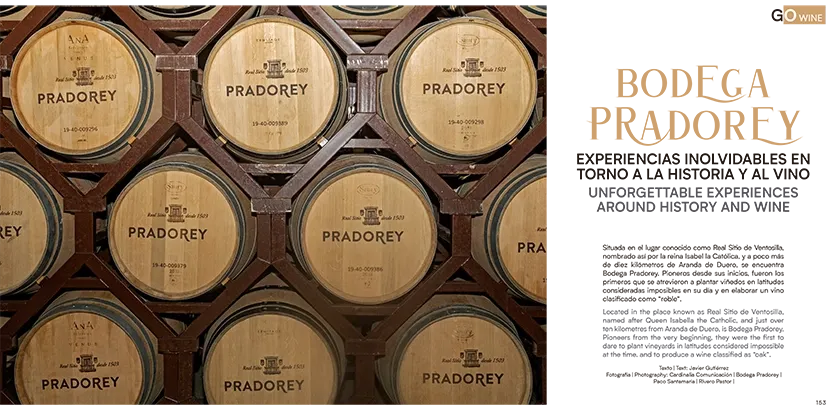
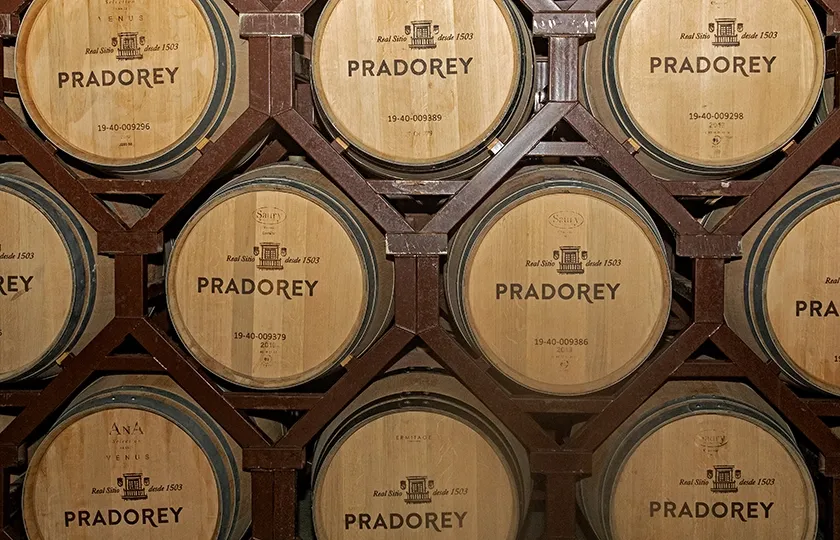
Located in the place known as Real Sitio de Ventosilla, named after Queen Isabella the Catholic, and just over ten kilometres from Aranda de Duero, is Bodega Pradorey. Pioneers from the very beginning, they were the first to dare to plant vineyards in latitudes considered impossible at the time. and to produce a wine classified as “oak”.
This winery, located in the town of Gumiel del Mercado in Burgos and under the Ribera del Duero appellation, has been innovative throughout its history for other reasons in addition to those mentioned above: they renewed the tradition of claret wines in the area with their Pradorey Rosé, they were the first to make a pale wine in Ribera del Duero, Lía Pradorey and they dared with a blanc de noirs, El Cuentista, a transgressive white wine made from Tempranillo grapes.
A bit of history
Throughout the centuries, many are the events that have written the pages of the history of the Royal Site of Ventosilla. In 1503 Queen Isabella the Catholic bought the estate from Count Ribadeo for 2,286,333 maravedies. A few years later, Don Francisco Gómez Sandoval, first Duke of Lerma and first minister of Philip III, built a palace in 1601 to accommodate the monarch when he traveled to the Royal Site of Ventosillo, which was also known as Prado del Rey and had become a favorite place for royal hunting. Two geniuses, one with a pen and the other with a paintbrush, visited the estate in 1603. Lope de Vega performs plays for the king in the gardens of the Ventosilla Palace and the painter Rubens also enjoyed a stay at the Royal Site.
We take a leap in time to the twentieth century and it is in 1921 when the hydroelectric dam was built on the Duero River that supplies water to the farm, the inn and the winery to this day. 1928 was also an important year, as Alfonso XIII declared it a model farm.
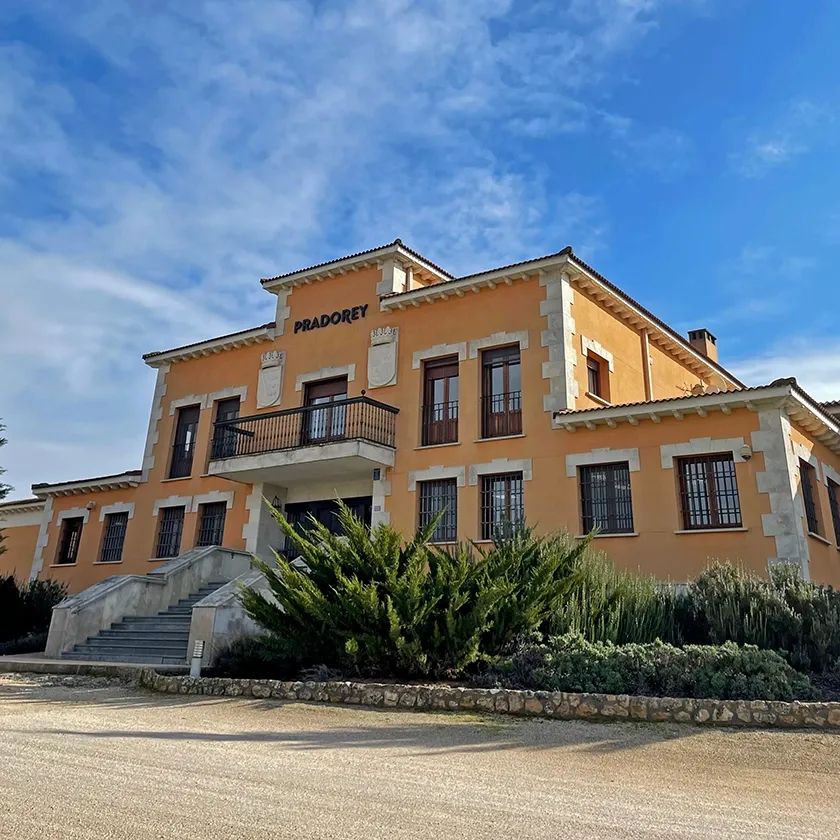
A new leap takes us to 1989 when Mr. Javier Cremades de Adaro, agronomist engineer and lover of the countryside, acquires the estate and starts planting the first two hundred hectares of vineyards. From that moment until now, historic events continue to follow one after the other at Bodega Pradorey with the launch of the first vintage in 1996, the beginning of the second oenological revolution and an intense commitment to innovation in 2014, the use of century-old vats for the production of quality wines in 2016, a clear commitment to clay and the completion of the production of oak category wines in 2019 and the planting of twelve hectares of white varieties to produce Ribera del Duero white wines in 2020.
The Estate. Vineyards that produce unique wines
Located in one of the highest quality areas of the Ribera del Duero Denomination of Origin due to its altitude, orography, climate and soil composition, the five hundred and twenty hectares of vineyards coexist with nine hundred hectares of oak and poplar forest, different crops and facilities dedicated to livestock, clean energy, the Inn and the Winery.
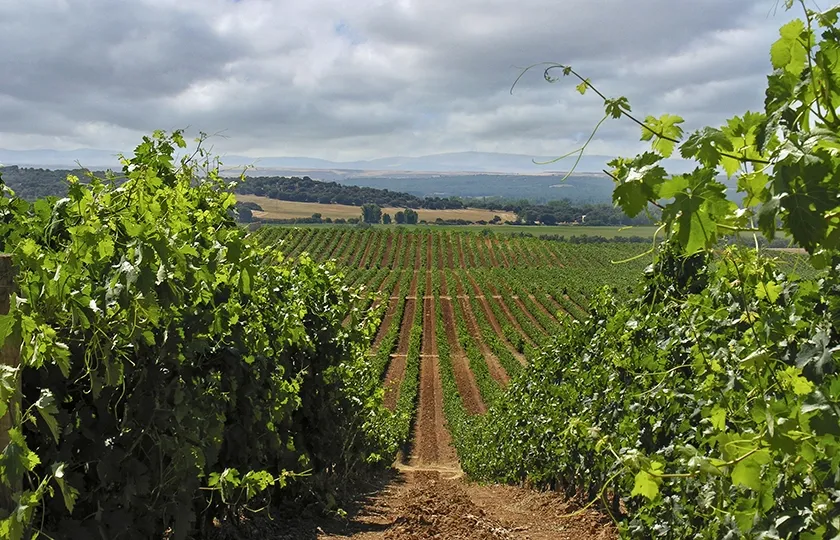
The pioneering spirit of Bodega Pradorey forces them to constantly seek the limits and possibilities of their vineyard, always combining tradition and technological advances with respect for the land and the grape. Formed by ten well-differentiated vineyards according to altitude, orientation and soil, the different grape varieties and clones planted in each of the areas, mainly Tempranillo, Cabernet Sauvignon and Merlot, are carefully cultivated. Plantations for which vines over one hundred years old were selected from different areas of Ribera del Duero, recovering some unique varieties that resisted the phylloxera plague, such as the Élite clone.
Bodega Pradorey’s ten payments are as follows Hoyo Dornajo, La Mina, Prado del Rey, Salgüero, El Pino, Los Robles, Valdelayegua, La Recorba, Los Quemados and Las Tasugueras.
Another important facet is sustainability.
Bodega Pradorey is self-sufficient in electricity thanks to the hydroelectric dam and the solar farm, the cattle provide the natural fertiliser needed for all the crops, they recycle all the waste generated from the raw materials and have reduced propane consumption, collaborating in the reduction of the carbon footprint with more sustainable product policies.
Wines, respect for what is natural, indigenous and distinctive
Ancient winemaking methods inherited from their grandparents, the use of centuries-old earthenware jars and fermentation with indigenous yeasts result in fresh, natural wines, that reflect all the character of the land.
Collector’s wines: El Retablo, which takes its name from the 16th century baroque altarpiece that presides over the chapel on the estate, is made from a blend of vintages from 2009 to 2014 using a unique, artisanal method called criaderas y soleras. El Buen Alfarero, a 100% artisanal wine that has been aged for nine months and seventeen days in centenary earthenware jars. La Triada, a wine made from three vintages of El Buen Alfarero and also aged in earthenware jars.
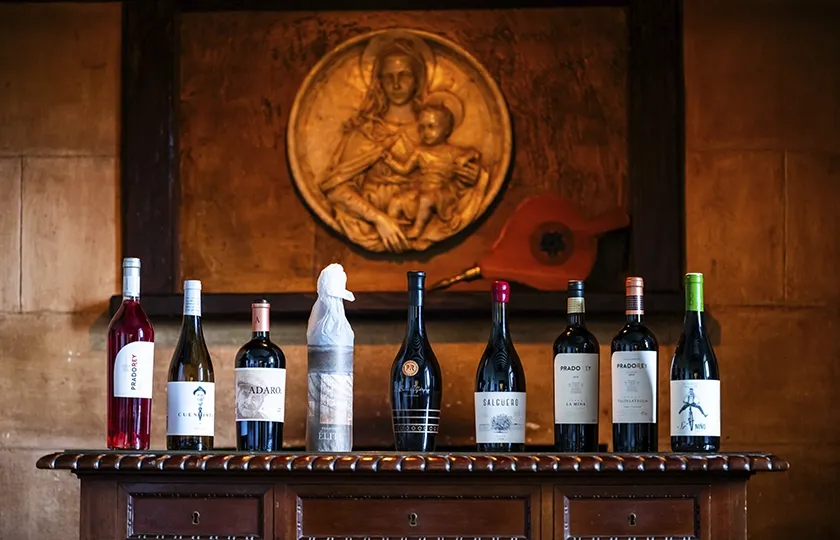
The Estates: Pradorey Finca Valdelayegua, aged for twelve months in barrels, 60% French oak and 40% American oak. Pradorey Finca La Mina, classic reserve red wine made from 100% Tempranillo grapes and aged for fourteen months in French oak barrels. Pradorey Finca Real Sitio de Ventosilla – Gran Reserva, Aged 24 months in French oak barrels and 6 months in Never wood cones.
Wines for Cellaring: Salgüero Tinto “El Intemporal”, made from 100% Tempranillo grapes in centenary earthenware jars and aged for a long time in large French oak barrels. Salgüero Blanco “El Indeleble”, oenological jewel made from its skins with Albillo Mayor grapes from Ribera del Duero and aged in new and used barrels. Salgüero Rosado “El Infinito”, Made with Tempranillo and Merlo and with a touch of Albillo Mayor that adds freshness, with a very long ageing in used red and sugared barrels. This wine has recently been recognised with the Alimentos de España Award for Best Rosé 2024.
The Transgressors: Sr. Niño – Vino Ecológico, 100% Tempranillo young wine made with grapes from organic vineyards, carbonic maceration and ageing for a month in centenary earthenware jars. Lía, another of Pradorey’s innovative wines, is a short maceration wine, the first Blush Rosé from Ribera del Duero. El Cuentista, a white wine made from Tempranillo grapes and the first blanc de noirs produced in Ribera del Duero with six months in European oak barrels and ageing on lees of white varieties.
Signature Wines: Pradorey Élite – 100% Tinta Fina, made from 100% Tempranillo CLON ELITE and aged for fourteen months in French oak barrels. Adaro – El Vino de la Familia, a tribute to Javier Cremades de Adaro who wrote the first pages of the history of Bodega Pradorey. Made from 100% Tempranillo and aged for fifteen months in European oak barrels.
The Must-Haves: Pradorey Origen, the replacement for Pradorey Roble, a blend of Tempranillo, Cabernet Sauvignon and Merlot aged in centuries-old earthenware jars and aged in European and American oak barrels for at least three months. Pradorey Blanco, a fine, elegant and fresh wine aged for five months in concrete tanks and five months in French and American oak barrels. Pradorey Rosado, 50% Tempranillo and 50% Merlot, for being innovative, constant, elegant and surprising it is considered one of the best rosés in Spain. Aged for two months in French oak barrels.
Wine tourism at Pradorey Winery
Surrounded by nature and vineyards, at Bodega Pradorey you can discover the soul of the wines they make, the smells and tactile sensations and learn about unique, handcrafted products. And what’s more, they make it easy with their morning and afternoon opening hours, the different types of visits and a close and qualified wine tourism team. You can choose between Tasting Courses, tasting of five wines to discover the secrets of wine tasting and the unique characteristics of the Ribera del Duero Designation of Origin and Gastronomic Visit, which includes a visit to the winery and a five-course gourmet tasting menu at the Posada.
Another of the experiences on offer is Live the Grape Harvest in Pradorey, where you can learn about grapes, wine making and ageing, play the fun game Pasalauva de Pradorey, taste wines, pick and tread grapes, eat at the Inn… it depends on the experience you choose.
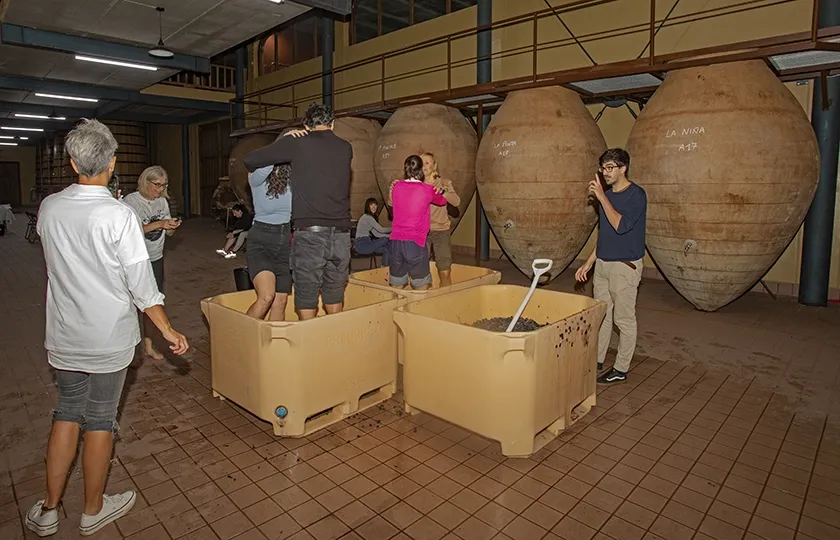
Visita Premium, que consta de visita completa a la bodega, cata de tres vinos y Pasalauva, el juego de Pradorey. If the fermentation area is closed for safety reasons during the harvest, this visit will be replaced by grape picking in the vineyard.
Pradorey VIP harvest including grape picking, destemming, grape crushing and grape and must tasting, visit to the winery, tasting of two wines and a five course lunch menu at the Posada.
VIP Harvest with Accommodation including harvest, destemming, crushing of the grapes and tasting of grapes and musts, aperitif and wine tasting mid-morning, visit to the winery, tasting of two wines, five-course lunch menu at the Posada, one night’s accommodation in a double room, dinner and breakfast.
The Posada and a 16th century hermitage that closes the circle
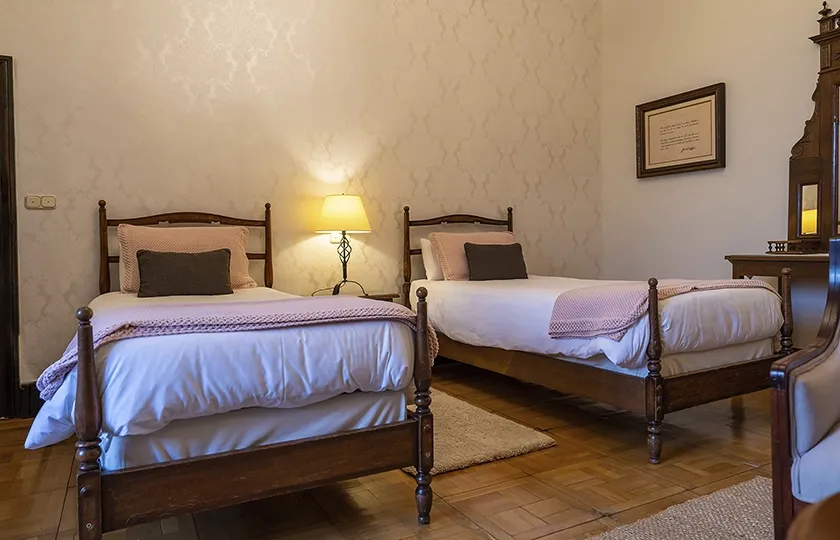
The Posada de Pradorey occupies the outbuildings of the Herrerian palace built by the Duke of Lerma. Nowadays it is a unique accommodation with eighteen rooms, where you can rest like a king and disconnect in a unique environment with a close and familiar atmosphere.
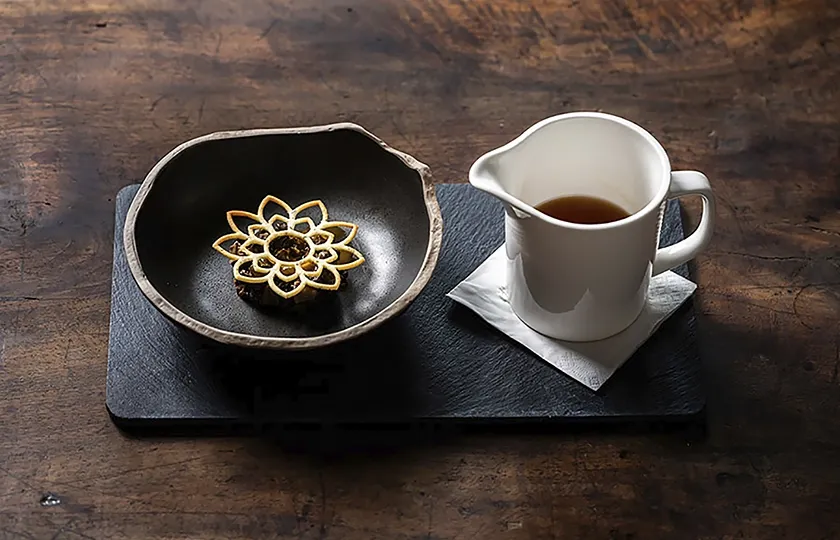
The Posada restaurant, with chef Ricardo Martín at the helm of the cookers, offers seasonal cuisine, prepared with a simple and carefully selected recipe book, with identifiable flavours, attractive presentations and nods to local produce.
The tasting menu consists of Boletus cappuccino with butter and truffle pastry, Carrot and paprika sponge cake, hummus, and spiced crisp, Rainbow trout with thyme and rosemary velouté, mini glazed vegetables and carrot cream, Spice-crusted venison loin, creamed corn, beetroot petals and red wine reduction and for dessert, an inverted Tatin.
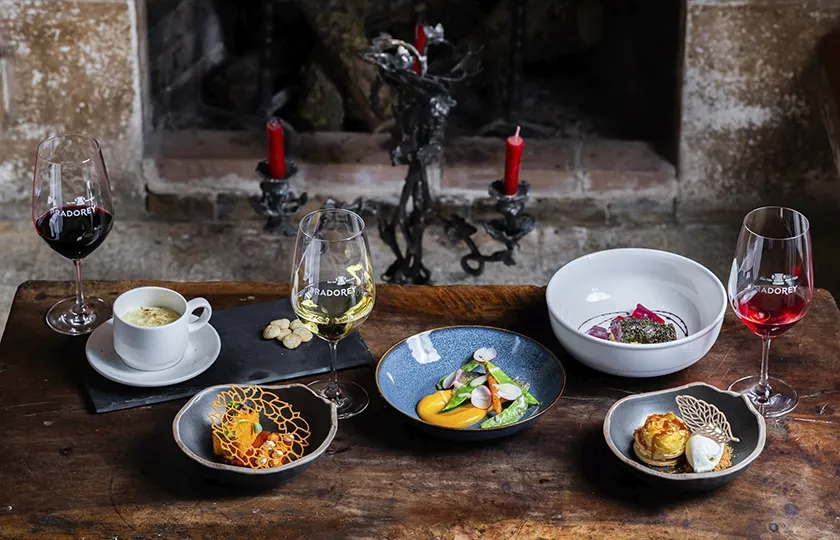
On the menu, in addition to these dishes and the famous omelette with which he won fourth place in the national championship and which he makes with black pudding and peppers, Low temperature bacon ingot, crispy wheat and ham, egg yolk and spiced sponge cake, Suckling lamb burger with brioche bun, lettuce, bacon and smoked cheese, Cod confit, cauliflower cream, paprika oil and crispy chives, Consommé, mushroom duxelle, egg yolk and crispy spices, Pani-Purin, black pudding mousse, truffled egg yolk and pepper jam, Autumn risotto -wheat semolina, trumpet of death, onion confit and boletus-, Tataki venison loin, sautéed beans with jerky and pistachio vinaigrette o False grapes -lamb mousse, wine jelly, Aranda cake earth and parsley sponge- and for those with a sweet tooth, the Pannacota with white chocolate, red fruit coulis and dried mango o Apricot in textures.
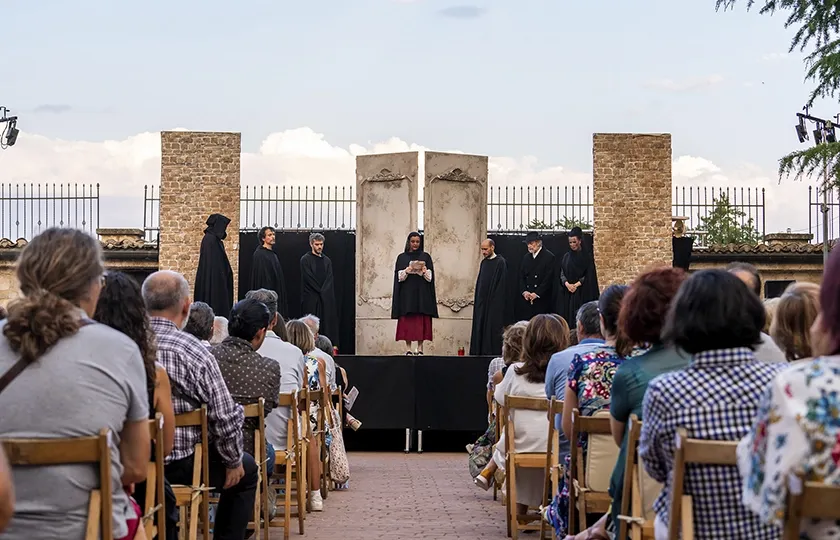
Every summer, the Posada organises the Baroque Theatre Days, a tribute to its history, to the Posada and to the Finca, through which important royalty, writers and painters have passed in the past. In memory of the theatrical performances of Lope de Vega’s plays that took place in the palace gardens to entertain the nobility, they are holding this event to pay homage to the Spanish Golden Age and the mark it left on the Ribera del Duero.
A few metres from the Posada is the simple chapel of San Andrés. Built in the 16th century, it houses a 14th century baptismal font and a magnificent altarpiece from the end of the 15th century in the Hispano-Flemish style.
All this is what Bodega Pradorey offers, an experience in which nature, wine, traditions, gastronomy and culture are all combined in a unique way. come together to experience one of the most unforgettable moments in Ribera del Duero.