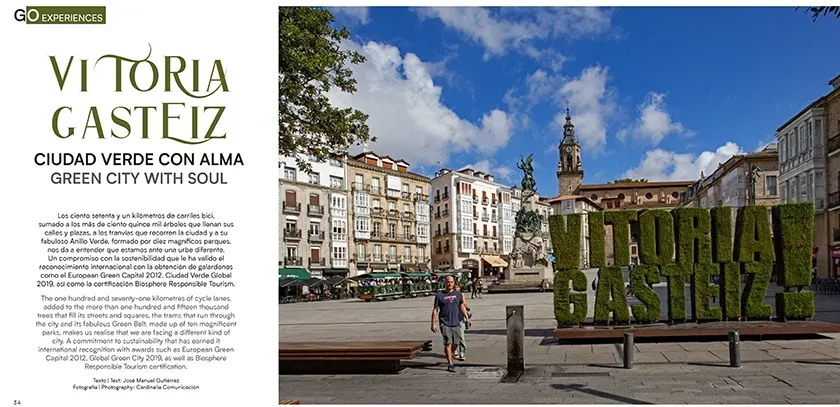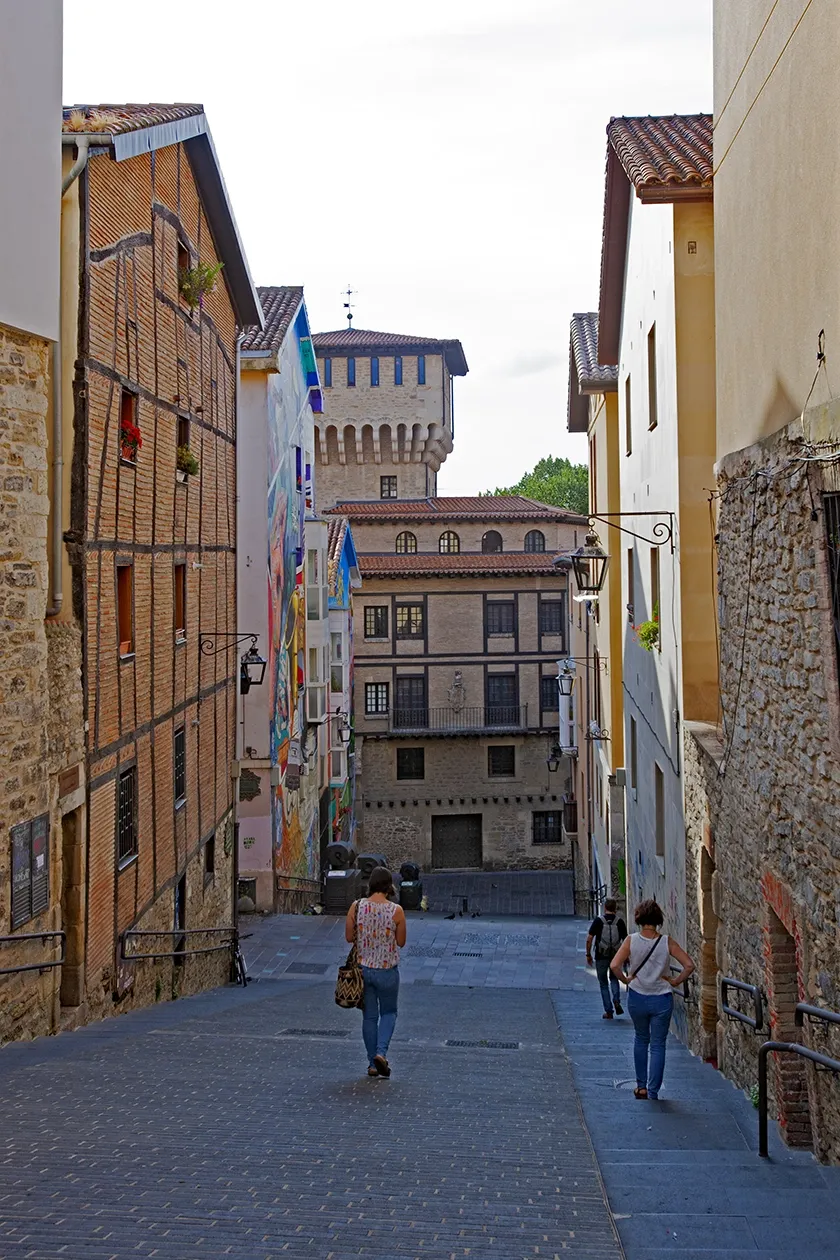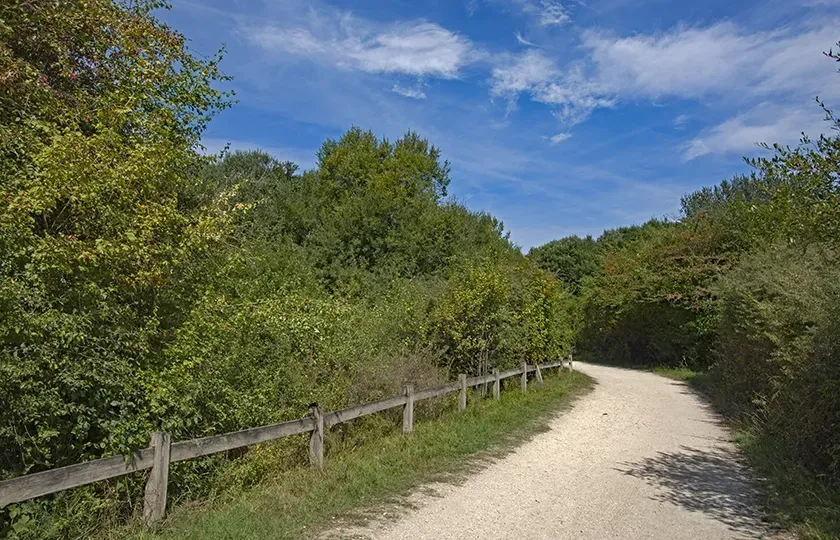

The one hundred and seventy-one kilometres of cycle lanes, added to the more than one hundred and fifteen thousand trees that fill its streets and squares, the trams that run through the city and its fabulous Green Belt, made up of ten magnificent parks, makes us realise that we are facing a different kind of city. A commitment to sustainability that has earned it international recognition with awards such as European Green Capital 2012, Global Green City 2019, as well as Biosphere Responsible Tourism certification.
Located at a strategic crossroads connecting the centre of the peninsula with Europe and where the Roman road linking Astorga with Bordeaux passed, the capital of Alava is a vibrant and bright city where history, tradition and modernity coexist.
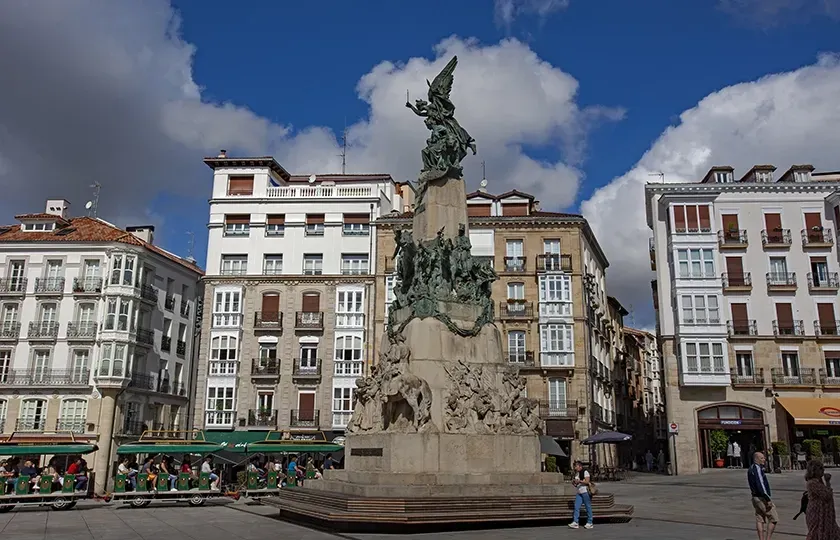
The Plaza de la Virgen Blanca, the historic heart of the city
The Plaza de la Virgen Blanca or Plaza Vieja is the city’s nerve centre. Built in the 17th century, it formed part of the suburbs and was where markets were held outside the city walls in the past. Presiding over it, the monument to the Battle of Vitoria recalls the history experienced by the residents of La Llanada during the War of Independence. And at the highest point of the monument, and as a symbol of the gratitude of the people of Vitoria, the figure of General Álava, who saved the city from being dismantled and plundered.
At the top of the square is the church of San Miguel, the oldest religious temple in the city, as it is already mentioned in the year 1181 on the occasion of the granting of the town charter to the town of Vitoria.
It is precisely in the square that every 4th of August the txupinazo is launched to mark the start of the Vitoria patron saint festivities and from the church tower slides Celedón, a symbolic character wearing a beret and a typical blouse and always accompanied by an umbrella, he is the symbol of the Alava villager. This tradition, whose origins date back to the 1950s, was conceived by a group of people from Vitoria who wanted to give the festival a special character. With the descent of Celedón, they sought an analogy between the character and the peasants from the provinces who came to the city to celebrate the festivities.
Next to it is the Plaza de España or Plaza Nueva. Built in the 18th century, it is part of the city’s neoclassical expansion and one of the places chosen by locals and visitors alike to enjoy the pintxos that fill the bars and taverns.
The medieval almond
The old town of Vitoria, known as the almond because it is shaped like the nut, preserves the medieval layout from the founding of the town by Sancho VI The Wise in the 12th century.
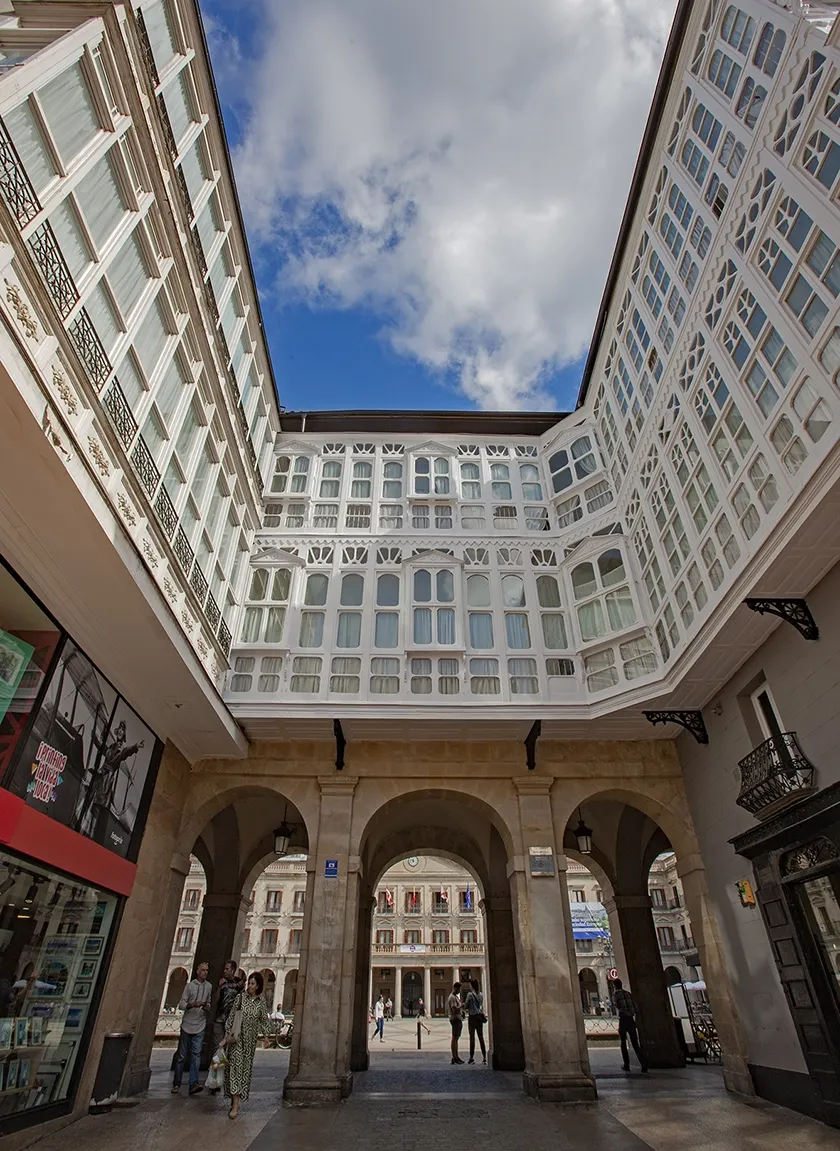
The most emblematic buildings are found in its squares and streets, which retain the names of ancient trades. The palaces of Villa Suso, built in 1539 by Martín de Salinas, ambassador to Emperor Charles V; of Montehermoso, 16th-century Renaissance; by Escoriza-Esquivel, also a Renaissance man who had the palace built by Fernán López de Escoriza, physician to King Henry VIII of England and his wife, by Escoriza-Esquivel, also a Renaissance who had the palace built by Fernán López de Escoriza, physician to King Henry VIII of England, and his wife, Victoria de Anda y Esquivel; Bendaña, 16th century, with its outstanding main façade, cylindrical tower and three-storey interior arcaded courtyard; the Casa del Cordón, built in the 15th century by a Jewish convert, Juan Sánchez de Bilbao, which housed the Catholic Monarchs and Philip the Handsome and where it is said that Adriano of Utrecht received the news of his election as Pope Hadrian VI; the Maturana Verastegui palace, built during the 13th-15th centuries or the Álava-Esquivel, which preserves neo-Gothic elements. And noble houses such as the Baroque-style Marqués de Alameda, with its large Urbina coat of arms and pictorial decoration imitating architectural motifs, or the Torre de Doña Ochanda, originally a 15th-century fortified house defending the western wall.
Other outstanding buildings are the Portalón, a 15th-century merchants’ inn, and the neighbouring Torre de los Anda, which rivals the former as the oldest building in the city, and the Palacio de la Diputación with its façade that is a reference to late Vitorian neoclassicism. From the first decades of the 20th century, the Zulueta palace, built between 1902 and 1903, and the Agustín Zulueta palace, built a few years later, between 1912 and 1916, are still standing.
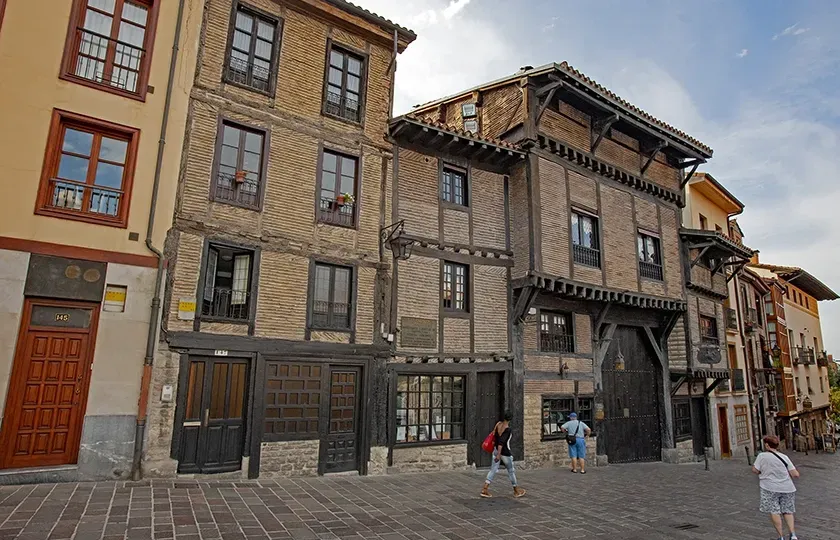
But without doubt the most important monument in the city centre is the Cathedral of Santa María, built between the 13th and 14th centuries as a church-fortress. A source of inspiration for writers such as Ken Follet (The Pillars of the Earth) and Paulo Coelho (The Zahir), in addition well as for the jewels it houses inside, we should not miss the multimedia show “The Portico of Light”, which shows the transformation of the portico of Santa María over the centuries; “ Open for Works”, guided visits to the restoration works on the temple and “Observing Vitoria-Gasteiz” from the highest tower in the city, whose belltower dates from the 16th-17th centuries.
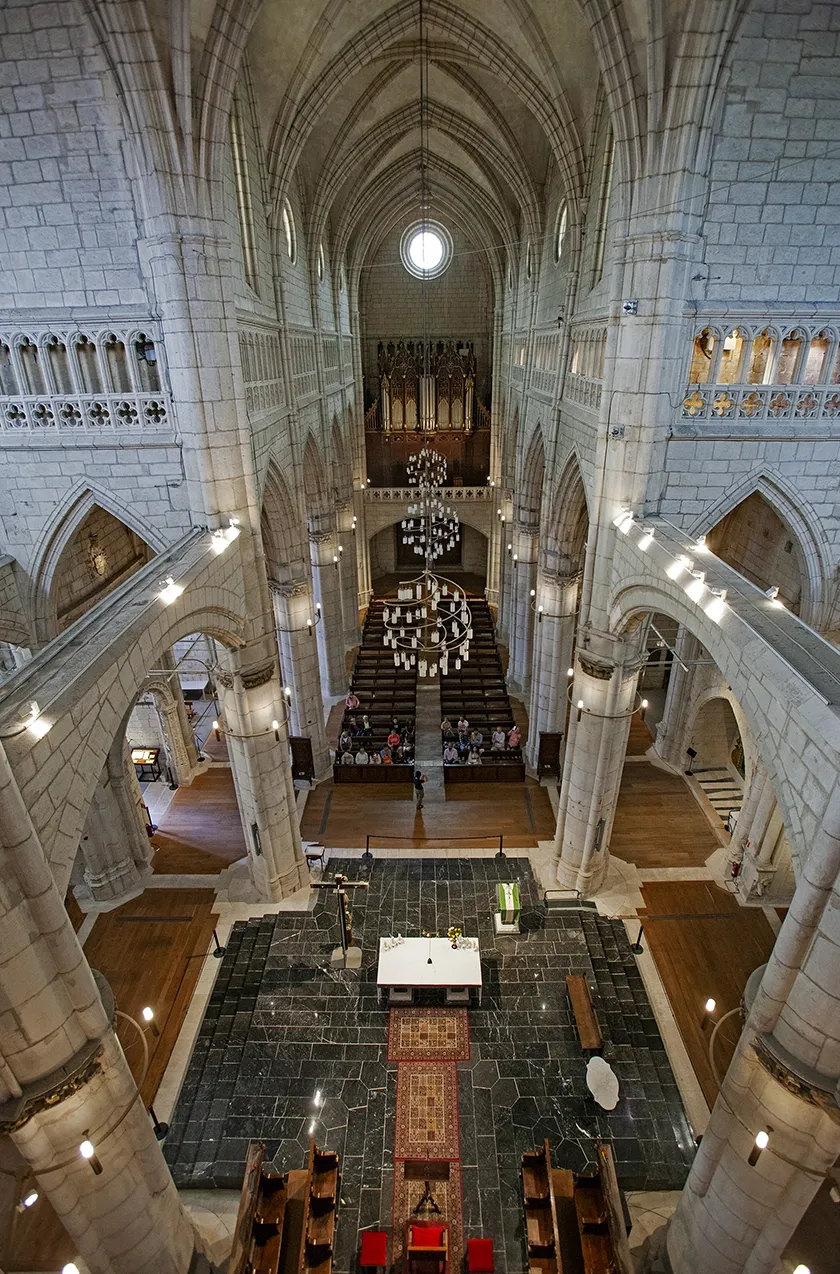
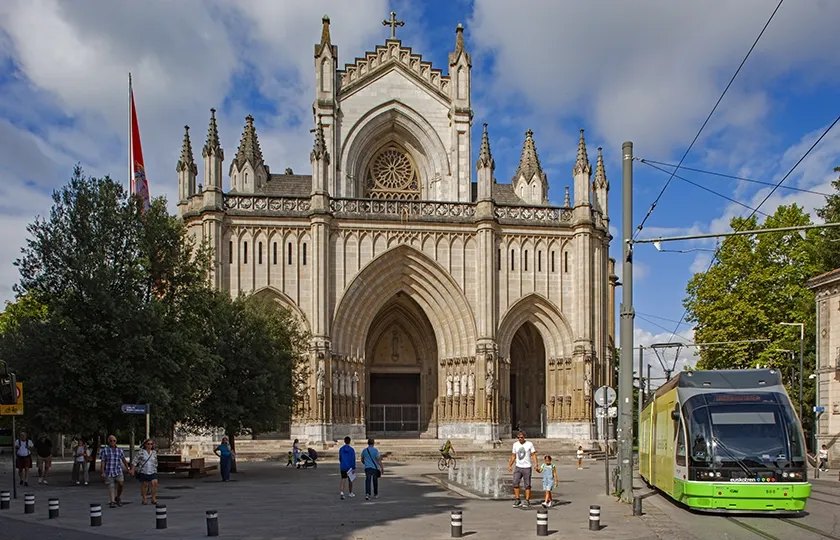
Vitoria-Gasteiz can boast of being one of the few cities in Spain with two cathedrals. The Cathedral of Santa María is joined by that of María Inmaculada, also known as the New Cathedral. In the neo-Gothic style, its construction began in 1907, but it was not consecrated until 1969.
Other important temples are the churches of San Vicente Mártir, the last temple to be built in the medieval quarter, San Miguel Arcángel, in which the chapel of the Virgen Blanca, patron saint of the city, stands out, presided over by a 19th-century polychrome carving, the main altarpiece by Gregorio Fernández and the views it offers of the Plaza de la Virgen Blanca from the balcony and the church of San Pedro Apóstol with its 14th-century Gothic doorway, the Plateresque altarpiece of the Kings and the tombs and coats of arms of the nobility located at the head of the church. It is precisely the steeples of these churches, together with that of the cathedral of Santa María, that shape the city’s most famous skyline.
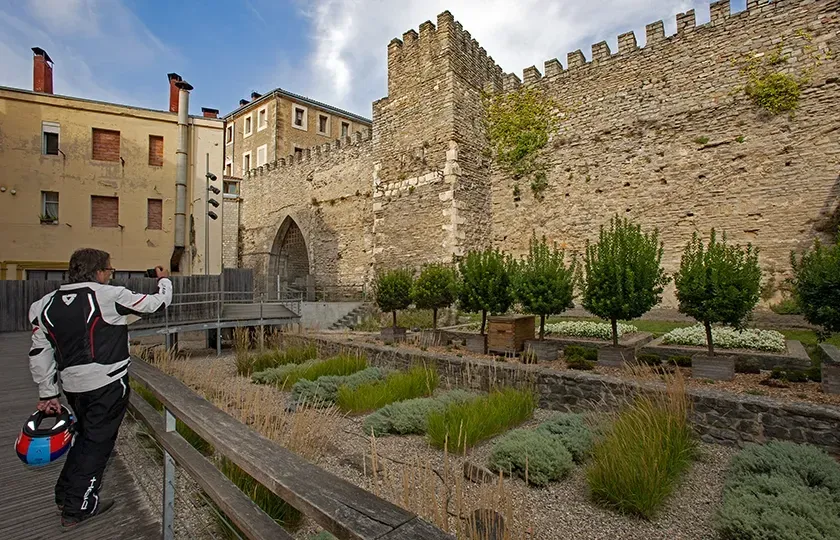
No visit to the city walls would be complete without a visit to the Rincón de la Memoria (Memory Corner) located between the wall viewpoint and the Villa Suso palace, which has posts with phrases by Mario Benedetti on oblivion and memory; the Olave refrigerator that supplied ice to the city in the 19th century; the mural “La noche más corta” (The Shortest Night) which can be found in the Jardín de la Muralla and which can be accessed from the Cantón de las Carnicerías and the remains of the second 13th-century city wall in the church of San Pedro. And of course its squares, such as the Machete, which owes its name to the machete on which the former representatives of the city swore their offices, or the Burullería, so called because it was the place where the burulleros, weavers of fabrics and cloth, used to trade.
Museums of Vitoria-Gasteiz
Another interesting option in the capital of Alava are its museums, all of them located in buildings that are worth a visit in themselves.
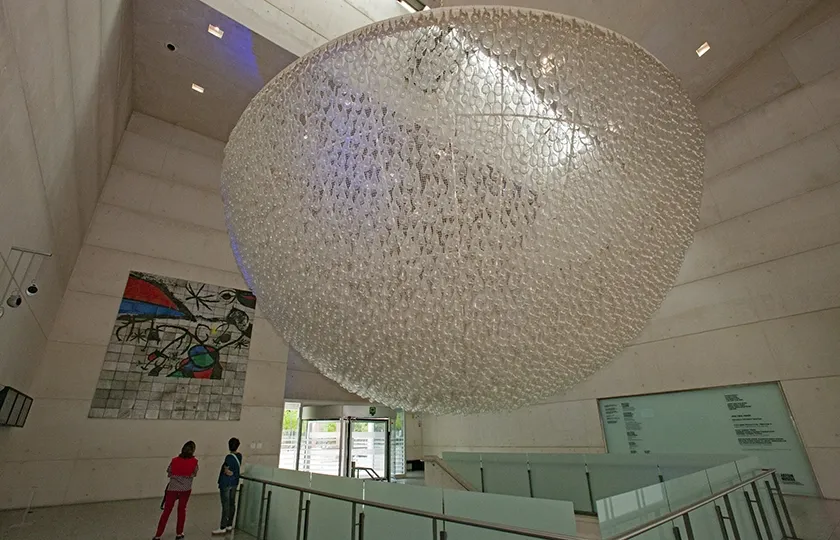
In the 13,000 square metres of its building, the ARTIUM, Museum of Contemporary Art of the Basque Country is a benchmark in the field of contemporary art museums due to the significant number of its own collections (nearly 3,000 works), especially by Basque and Spanish artists, including outstanding works by Picasso, Miró, Barceló, Elena del Rivero, Chillida, Oteiza, Cristina Iglesias, Txomin Badiola, Richard Serra and Bill Viola.
And it is also so because of its ambitious programme of national and international exhibitions, because of its intense agenda of activities linked to contemporary culture, because of its dynamic and active Documentation Centre and because of its commitment to educational and social tasks.
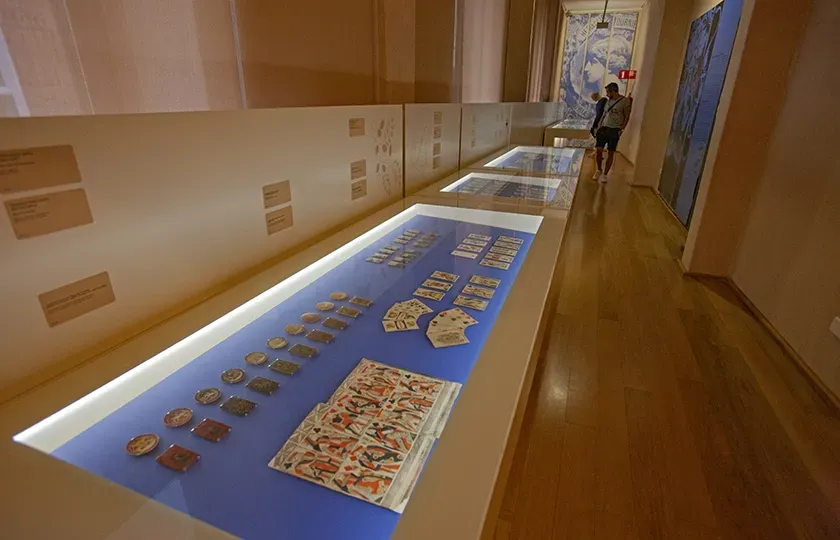
The Bendaña Palace houses the BIBAT Museum, which in Basque means two in one, because here we find the Fournier Playing Card Museum and the Archaeological Museum of Álava. The first exhibits what could be the best collection of playing cards in the world, consisting of 250 decks/1,500 cards that were treasured by Félix Alfaro Fournier, grandson of Heraclio Fournier, founder of this famous playing card factory. The archaeological museum houses an important collection of approximately 1,500 pieces dating from the Palaeolithic period to the founding of the medieval towns.
In the María Inmaculada cathedral we find the Museum of Sacred Art where we can admire traces of the first Christians, as well as pieces from Romanesque temples, Gothic images carved in wood, the original sculpture of the White Virgin, Flemish triptychs, Renaissance altarpieces, paintings by El Greco, Ribera, Carreño de Miranda and Alonso Cano, among others, and an interesting collection of silverware.
Other museums in the city include the Armoury Museum in the old palace of Ajuria Enea, which displays the history and evolution of weapons from the origins of humanity to the beginning of the 20th century. The Museum of Fine Arts in the Agustín-Zulueta palace, dedicated to Spanish art from the 18th and 19th centuries and, more specifically, Basque art from the period 1850-1950. The Natural Science Museum in the Torre de Doña Ochanda has a permanent exhibition on the Lower Cretaceous amber deposits in Alava, one of the most important palaeontological sites in the world, as well as an important collection on 20th-century Spanish mineralogy and the elements that make up the natural spaces in our region, from both a botanical and zoological point of view. The Memorial Centre for the Victims of Terrorism, which promotes democratic and ethical values, builds the collective memory of the victims and raises public awareness in the defence of freedom, human rights and against terrorism. The Lantern Museum, made up of two hundred and seventy-one pieces of polychrome glass that have been carried in a procession through the city centre every 4th of August for over a hundred years, on the occasion of the Virgen Blanca festivities. Open-air museums, sculptures and statues in the middle of the street by artists such as Oteiza, Ibarrola, Chillida, Casto Solano and Néstor Basterrechea, among others. We ended up at the Montehermoso Cultural Centre, a space for the production, exhibition and dissemination of contemporary art and thought.
Cultural, mysterious, musical and gastronomic proposals
The cultural offering of the capital of Alava is so appealing that it is impossible to ignore the more experiential and original options such as the Romantic Route, a tour of the city’s social centre and a large shopping centre with establishments such as century-old shops, restaurants, cinemas and theatres. Literary routes through places that inspired writers such as Eva García Sáenz de Urturi with her Trilogía de la Ciudad Blanca (White City Trilogy), Kent Follent and the Cathedral of Santa María, or places mentioned by Pío Baroja or Benito Pérez Galdós. Mystery City Tour through legends and events that give a special atmosphere to some corners of the city. The Vitoria-Gasteiz Jazz Festival, with almost half a century of history or the Ardoaraba Food and Wine Fair in December, an event in which the culture of wine, gastronomy and gourmet products take centre stage.
Enjoying good food
Quality and local produce, tradition and a lot of talent are the ingredients of the gastronomy of Vitoria-Gasteiz. From its famous pintxos, delicious miniature cuisine that can be tasted and enjoyed both in the medieval quarter and in the city centre, to its famous and renowned restaurants that offer original creations always with the memory of the most traditional cuisine.
Vitoria-Gasteiz, the green city
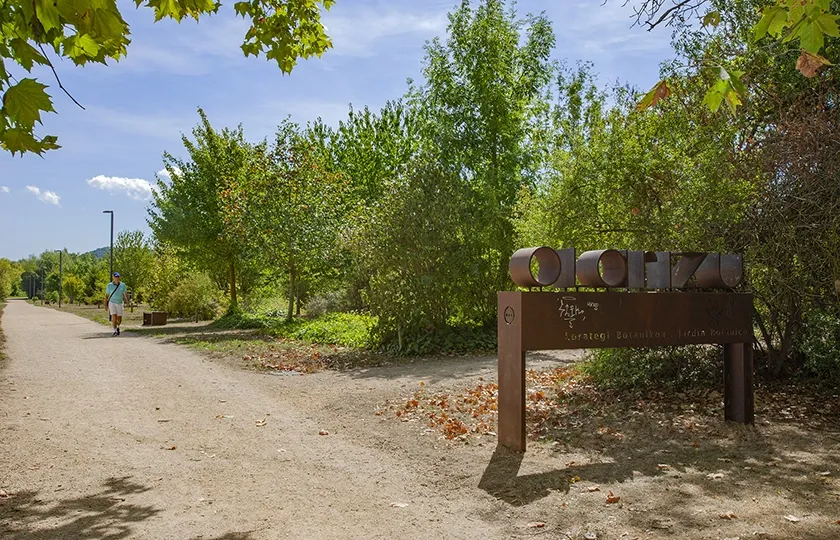
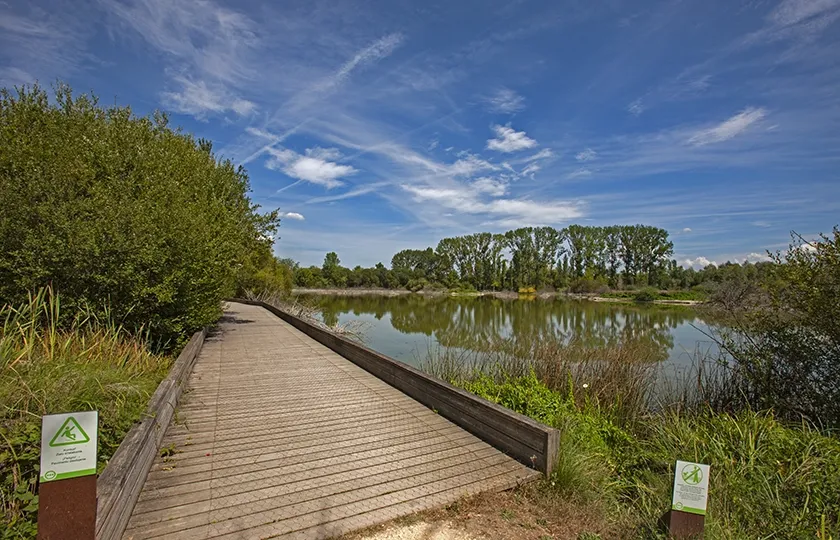
We begin this tour of the city by mentioning its commitment to sustainability through countless actions carried out by the Town Council with the invaluable collaboration of the residents. But perhaps the most important reference point of this pact signed by the city with nature is its Green Belt. A series of peri-urban parks of high ecological and scenic value surround the city and are strategically linked by eco-recreational corridors. Formed by the parks Armentia, Larragorri, Olarizu, Las Neveras, Salburua, Alegría, Zadorra Gamarra, Zadorra Abetxuko, Zadorra Atxa and Zabalgana, they treasure together a remarkable naturalistic wealth in the form of forests, rivers, wetlands, meadows, hedgerows, riverbanks and a botanical garden with diverse plant collections. Its easy access from any point in the city offers excellent possibilities for leisure, walking and all kinds of outdoor activities.
For those visiting for the first time, Vitoria-Gasteiz is a pleasant surprise. A city where history, tradition, modernity, gastronomy and well-being come together to create one of the most attractive destinations in the north of the peninsula. Those of us who have had the privilege of visiting it on several occasions have a permanent romance with it that makes us long for it even before we have left.