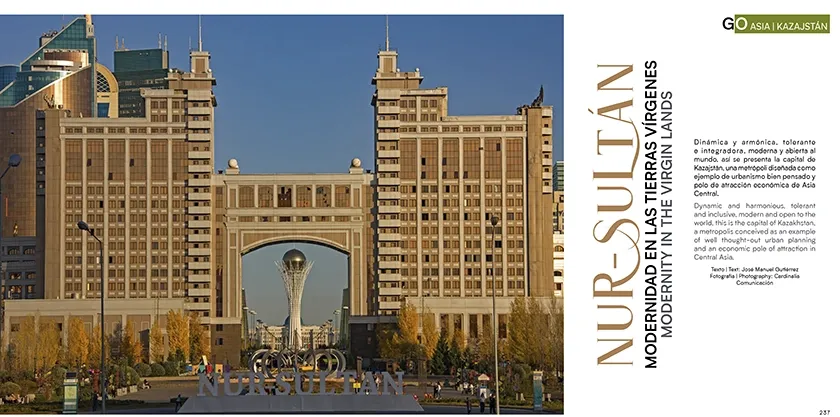
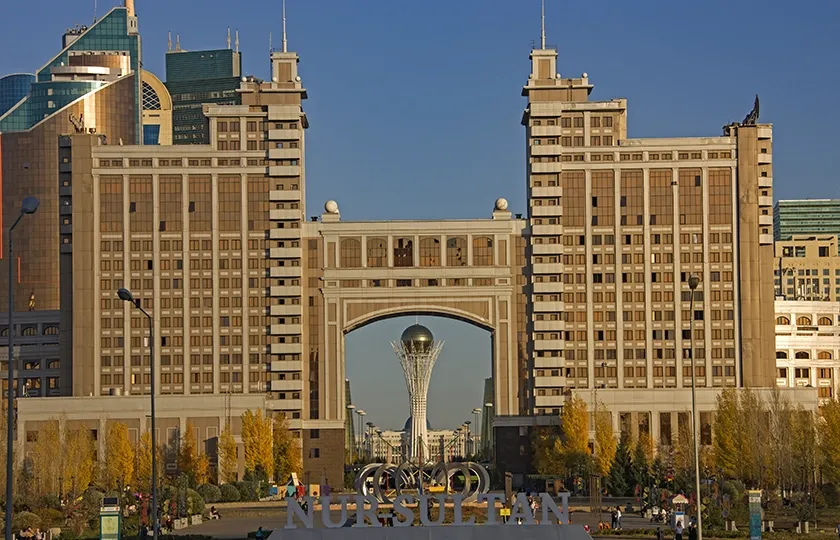
Dynamic and harmonious, tolerant and inclusive, modern and open to the world, this is the capital of Kazakhstan, a metropolis conceived as an example of well thought-out urban planning and an economic pole of attraction in Central Asia.
The city that holds the title of being the youngest city on the planet with only two decades of existence is not the fruit of improvisation, but of the roadmap developed by Japanese architect Kisho Kurokawa, who sought and achieved a frame of modernity with touches of Eurasian tradition; a symbiosis between East and West.
Situated on the banks of the Ichim River, Nur-Sultan went from being a Russian military settlement in the first third of the 19th century to becoming, after independence from the Soviet Union in 1991, a fascinating city with futuristic buildings, a jewel for lovers of architecture and urban planning and an exercise in permanent creativity in which some of the most renowned architects on the international scene have left their mark.
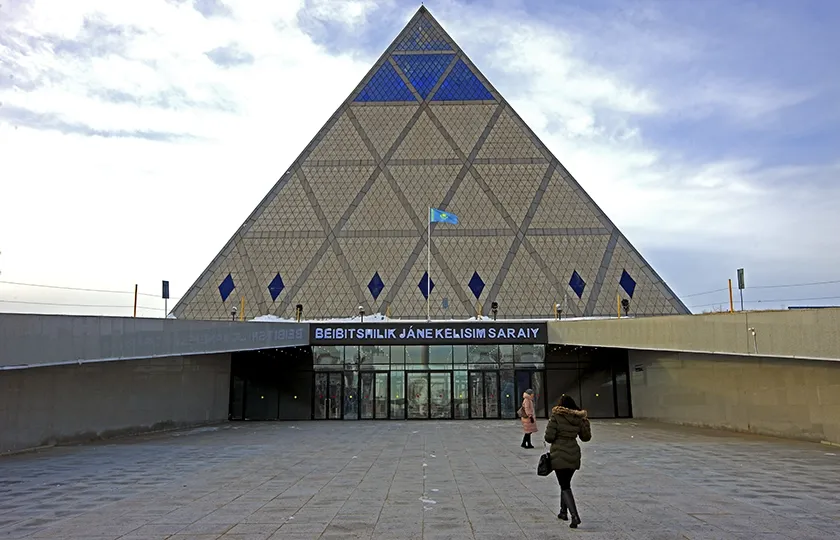
Among them is the British architect Norman Foster, who has designed some of the masterpieces of the Central Asian capital, buildings that harmonise modern design and energy efficiency. Particularly symbolic is the Palace of Peace and Reconciliation, a spectacular high-tech glass and steel pyramid built in 2006 for the 2nd Congress of Leaders of Traditional World Religions. Today it represents the harmony and unity of religions, ethnic groups and cultures, as well as being the home of the Opera House. At the top corner, the conference room opens up to the sky with windows decorated with doves by the British artist Brian Clarke.
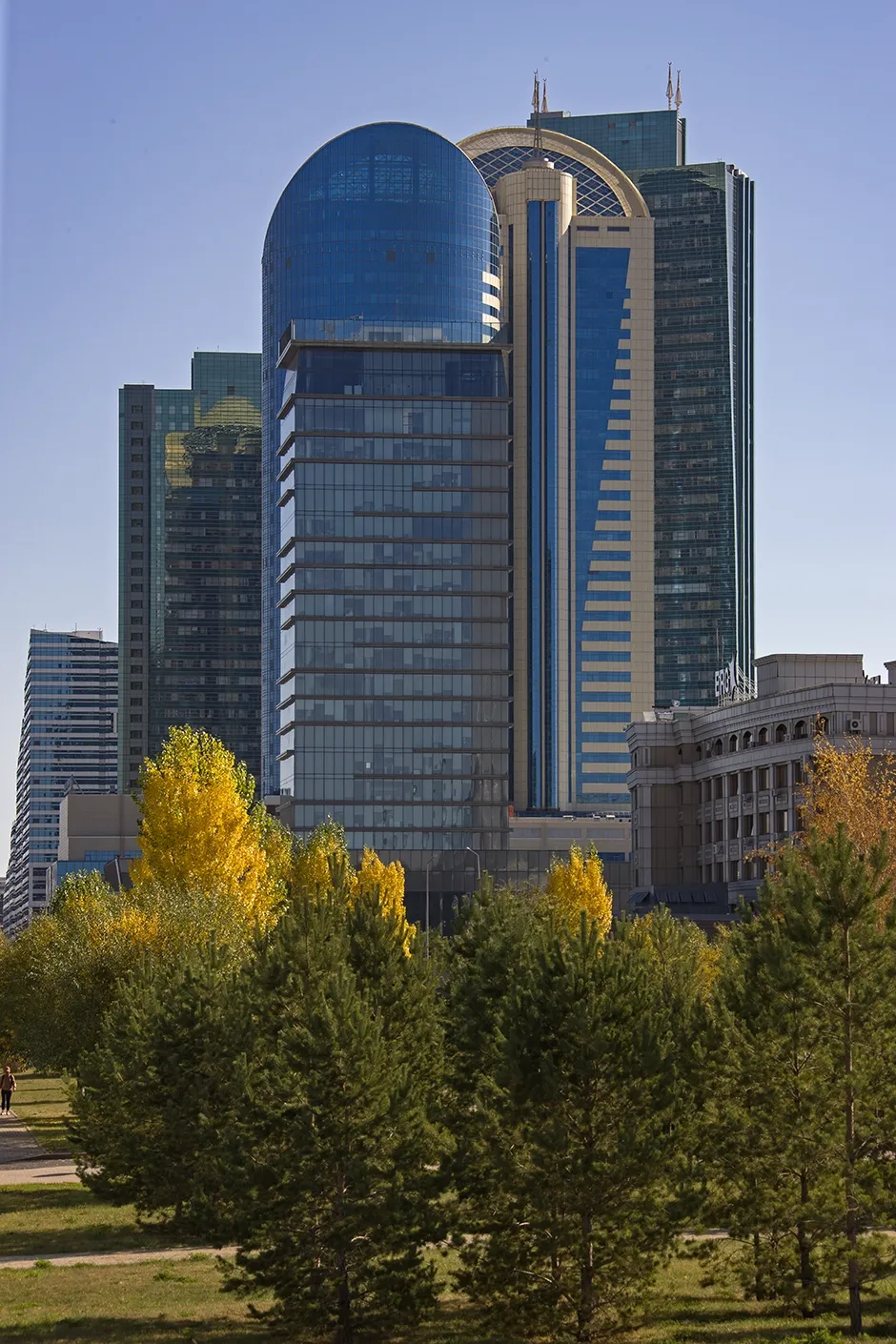
Sustainable modernity
Without leaving Foster’s path in the city and under its 150-metre high peak, the Khan Shatyr is one of the city’s most original landmarks. Built in the form of a gigantic tent using tetrafluoroethylene to absorb light and heat, while at night it turns purplish in colour. Inside is a large shopping and entertainment complex which, in addition to luxury shops and restaurants, has a beach with waves and sand brought from the Maldives.
Whichever way you look at it, Nur-Sultan is all about design and imagination. Along Nurjol Boulevard, the main artery of the government and business district, the showcase of ultra-modern buildings is imposing all the way to the White House-inspired Presidential Palace, designed by Nazarbayev himself.
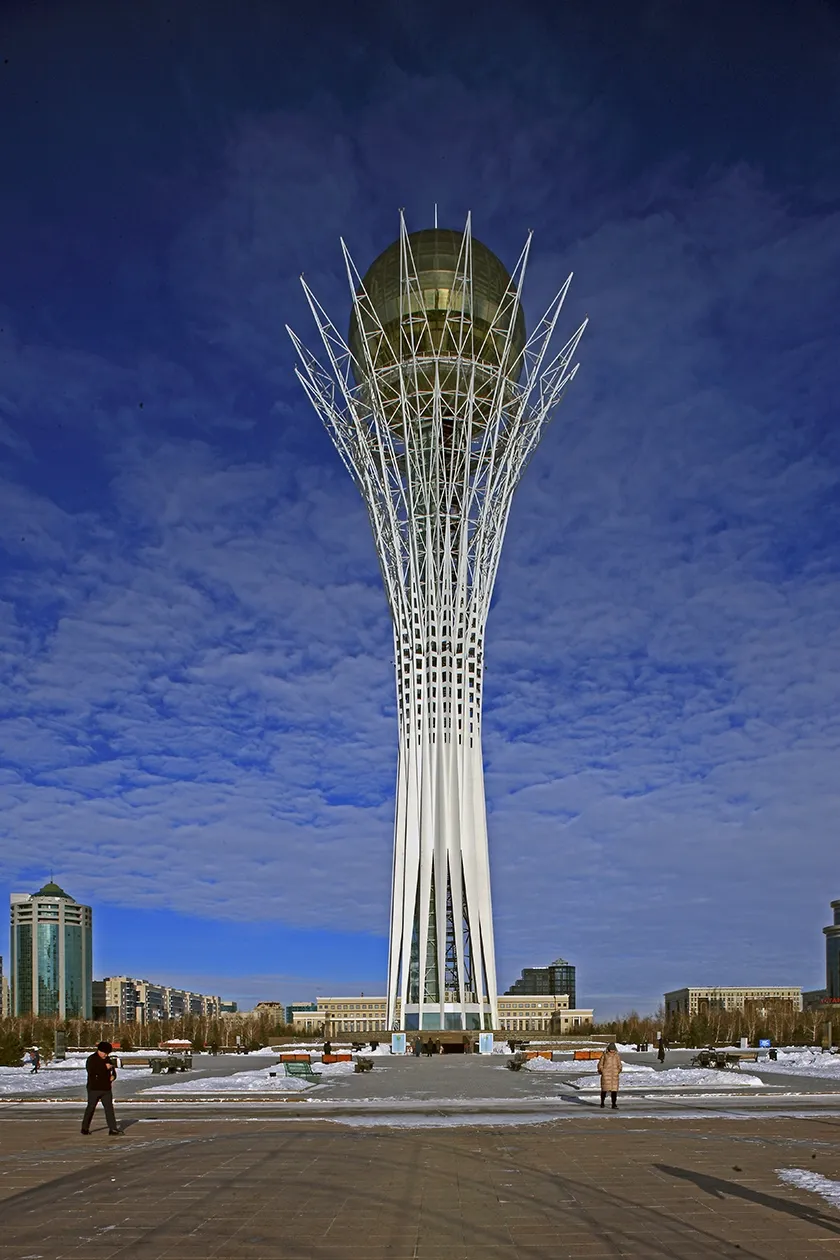
But first you must stop at the Bayterek monument, a 97-metre high white braided tower topped by a large crystal sphere symbolising the Kazakh legend of Samruk, a mythical bird that laid a golden egg containing the secrets of desire and happiness… From the upper dome the 360-degree view of Nur-Sultan is unparalleled and the sunsets are filled with the magic of the special colour of the steppe sunsets.
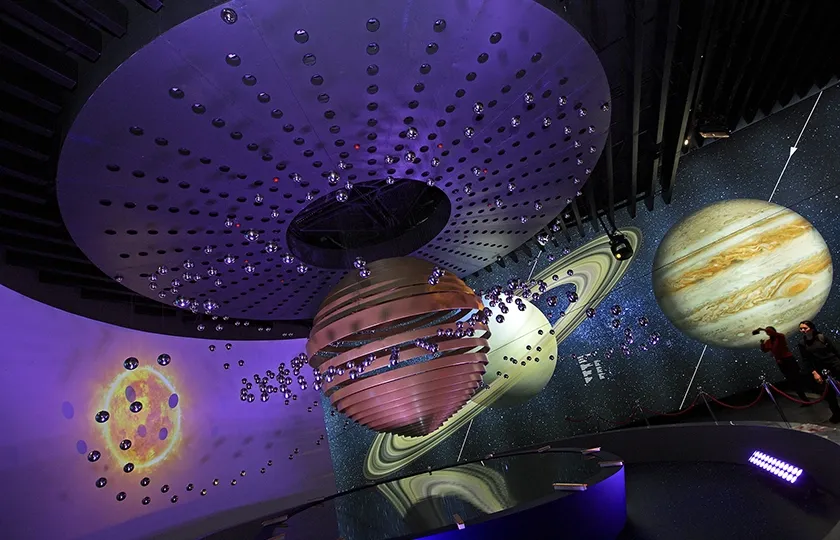
In Nur-Sultan everything has a dimension that transcends beyond the first imposing contemplative sensations. This is the case with the Nur Alem, the largest spherical building in the world, which, if its external appearance is already impressive, its interior leaves us speechless. Built for Expo Astana 2017, walking around it remains a constantly surprising experience, as at the top of its different levels there are master classes on sustainability, clean energy, physics and mathematics, technological advances and everything that has to do with environmentally friendly progress, science and knowledge.
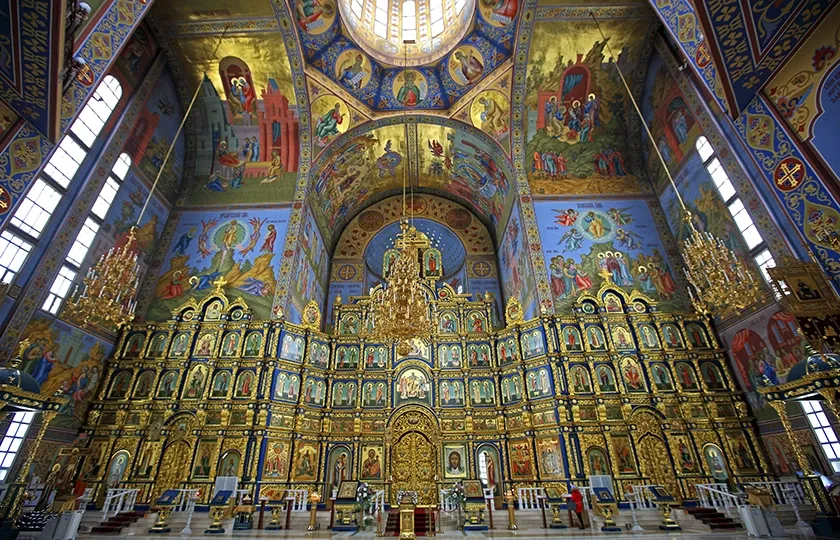
Kazakhstan is a country proud of its traditions and culture, and without forgetting its roots, modern buildings coexist in harmony with more traditional religious buildings such as the Orthodox Cathedral of the Assumption, facing the future with determination. As a symbol of this forcefulness, in the heart of the most modern district, stands the National Museum of the History of Kazakhstan, a robust and noble building with clean lines that harmonises stone and glass to create a complex with a strong personality, the same as the vestiges of Kazakh culture that it houses and to which it pays homage.
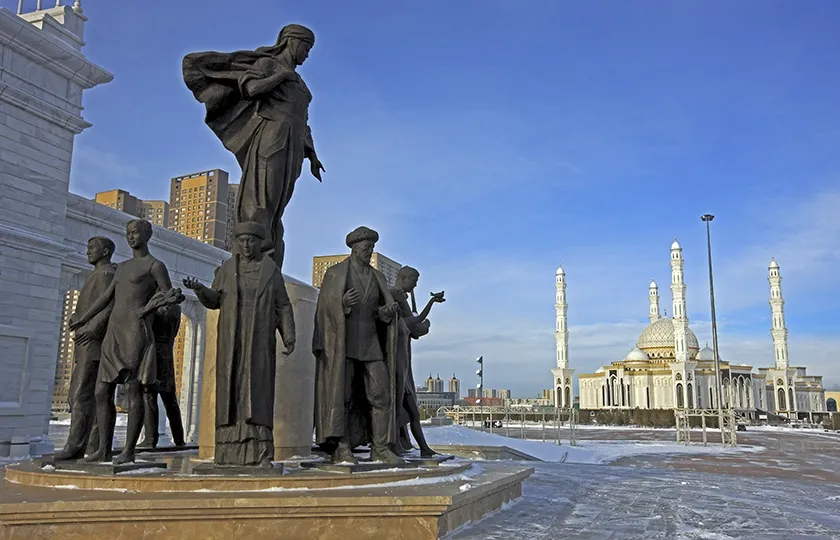
Nur-Sultan is a welcoming city, easy to navigate and enjoy, and invites direct contact with its very friendly inhabitants, as Kazakh character is one of its main assets. Its wide avenues are rivers of imagination and knowledge; exponents of a sustainable and technologically advanced modernity that alternates international business centres with public buildings such as the modern Independence Palace, which shares the stage with the Ely Monument to the Kazakh People and the Grand Mosque, the second largest in Central Asia. Nearby are two green conical towers, business centres, gardens, the Parliament towers, the Senate and the Majilis, the turquoise-coloured National Auditorium evoking the petals of a flower.
This model of modern and friendly urban development, combined with good transport links to the rest of the world, has made the Kazakh capital an excellent destination for urban tourism, which is reinforced by a wide range of cultural offerings throughout the year.
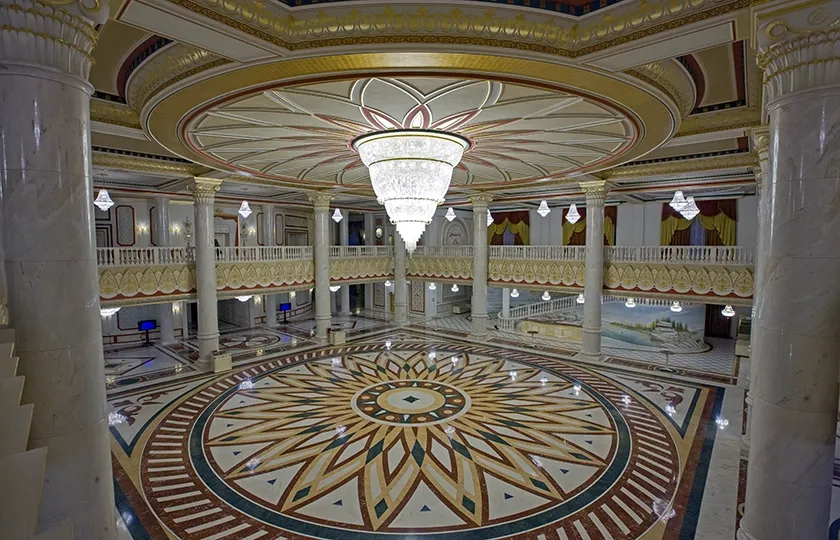
In contrast to so much avant-garde architecture, but with an exquisite elegance inspired by 19th century Italian theatres, the Astana Opera State Opera and Ballet Theatre, opened in 2013, is the largest in Central Asia and the third largest in the world. Its classical styling, dominated by the use of marble, is perfectly integrated with national cultural elements such as frescoes by Charyn or Burabay, as well as impressive chandeliers thirteen metres high and weighing more than one and a half tons. It seats 1,500 spectators and is one of the most technically advanced in the world. Absolutely everything works for the acoustics, including the parquet flooring of beech and birch woods, slow-growing Canadian pine and cherry panels together with brass. This ensures that even the most remote corners of the room can enjoy exceptional sound to the full.

The pearl of Kazakhstan
The ninth largest country in the world is as unknown as it is exciting, a gigantic natural space full of lakes like seas, mountain ranges over five thousand metres high and a universe of unknown traditions. Kazakhstan is immense in every sense. All of the above that makes it great is also a key feature when visiting, so good planning is necessary.
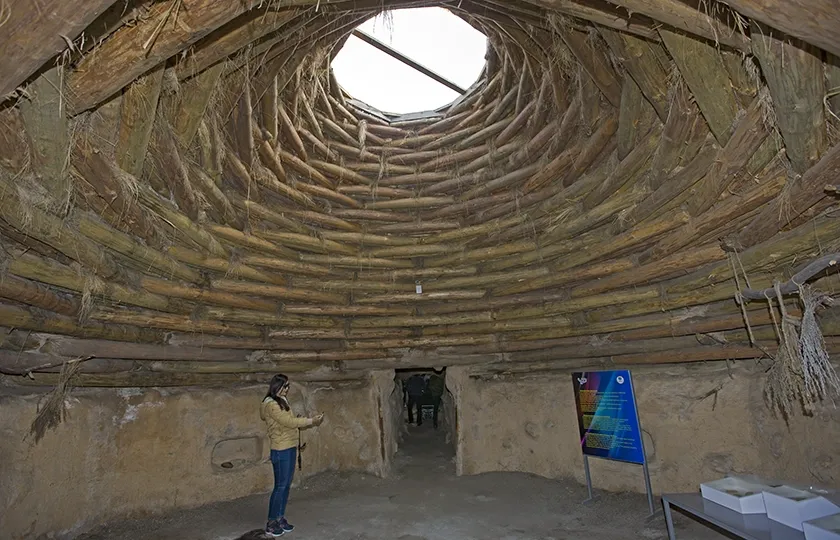
An interesting option a little more than two hours from the capital is the Burabay National Park, and on the way, stop at the Botay-Burabay underground settlement, which shows the prehistoric way of life in these lands.
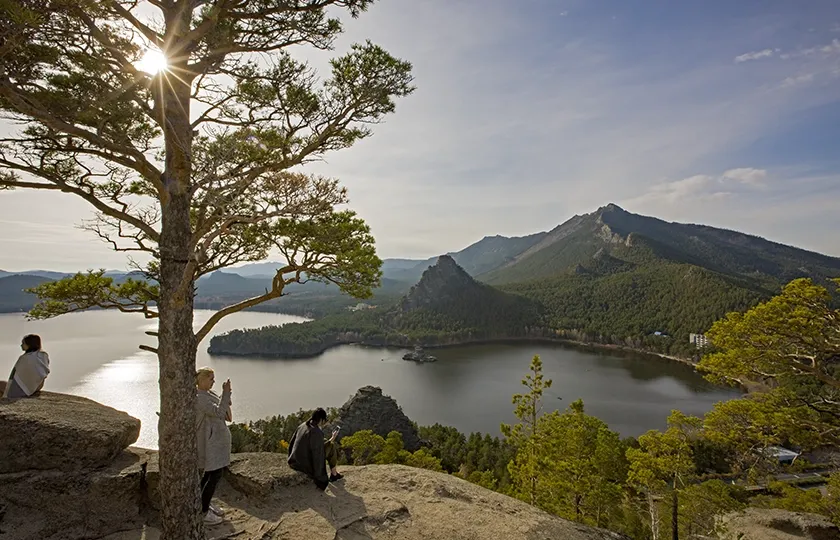
The low population density minimises human pressure and its good geographical location, despite its intense continental climate of very cold winters and hot summers, favours a rich and varied flora with seven hundred and fifty-seven different varieties, partly also benefited by the abundance of water. Its endless forests are home to 35 animal species, 36% of the country’s wildlife.
Legend has it that when God was creating the world, one of the peoples received lands rich in forests, another received fertile fields with great rivers and the third received beautiful mountains and blue lakes. But the Kazakh received only stepa… Offended he asked God to endow him with some natural beauty. He took the mountains, the rocks, the beautiful pine and deciduous forests, the blue lakes with pure water and the emerald fields covered with grass and flowers and spread them with a generous hand on the endless steppes. Thus was born Burabay, one of the most picturesque places in Kazakhstan, which for its genuine beauty and rare harmonious combination of mountains, forests, lakes and flora and fauna was poetically named “The Pearl of Kazakhstan”.