

A superfood, a sustainable alternative to plastic, a beauty ally: there’s little that seaweed can’t do.
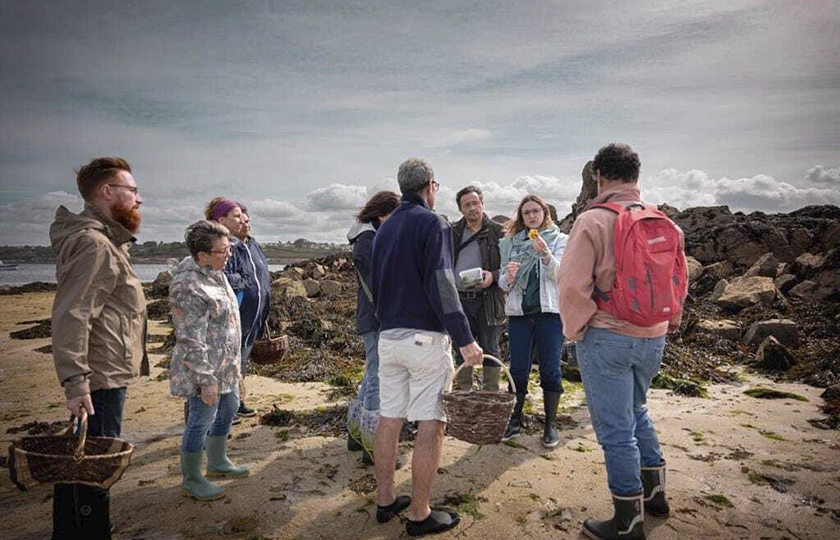
In Brittany, where it has been harvested from the sea for centuries, this is no secret. In recent years, the benefits of this green, brown or red sea vegetable have spread beyond the region’s borders. However, it is the Bretons who have dedicated a new museum to it, the only one of its kind in France: in Plouguerneau, in north-western Brittany, the interactive Algae centre opened its doors on 18 July. The exhibition, featuring both indoor and outdoor spaces, immerses visitors in the world of seaweed. Those who wish to can also enjoy a walk in search of seaweed, during which they can gather it to cook later.
A bridge between heritage, science and innovation
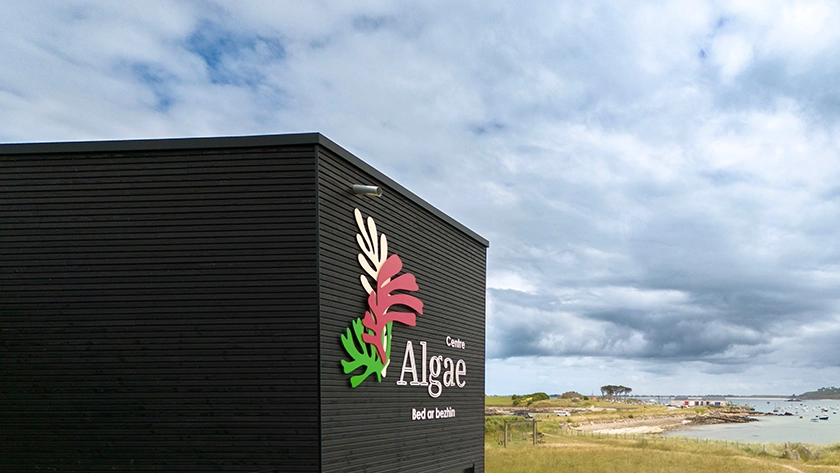
Located in the port of Koréjou, the historic capital of the goémoniers (seaweed gatherers), Algae is run by the Karreg Hir association, which has been preserving the memory of this trade since 1985. The centre, with its immersive and eco-friendly design (70 per cent of the materials are recycled), houses a collection of 400 objects spread over 250 square metres across two floors. In 2025 alone, its activities attracted more than 10,000 visitors.
Europe’s largest seaweed bed
The coasts of Brittany form Europe’s largest seaweed bed: waters with strong tides that generate extraordinary biodiversity. Between 300 and 800 different species grow off the western French peninsula, ranging from delicate sea spaghetti to the popular nori seaweed, including kelp.
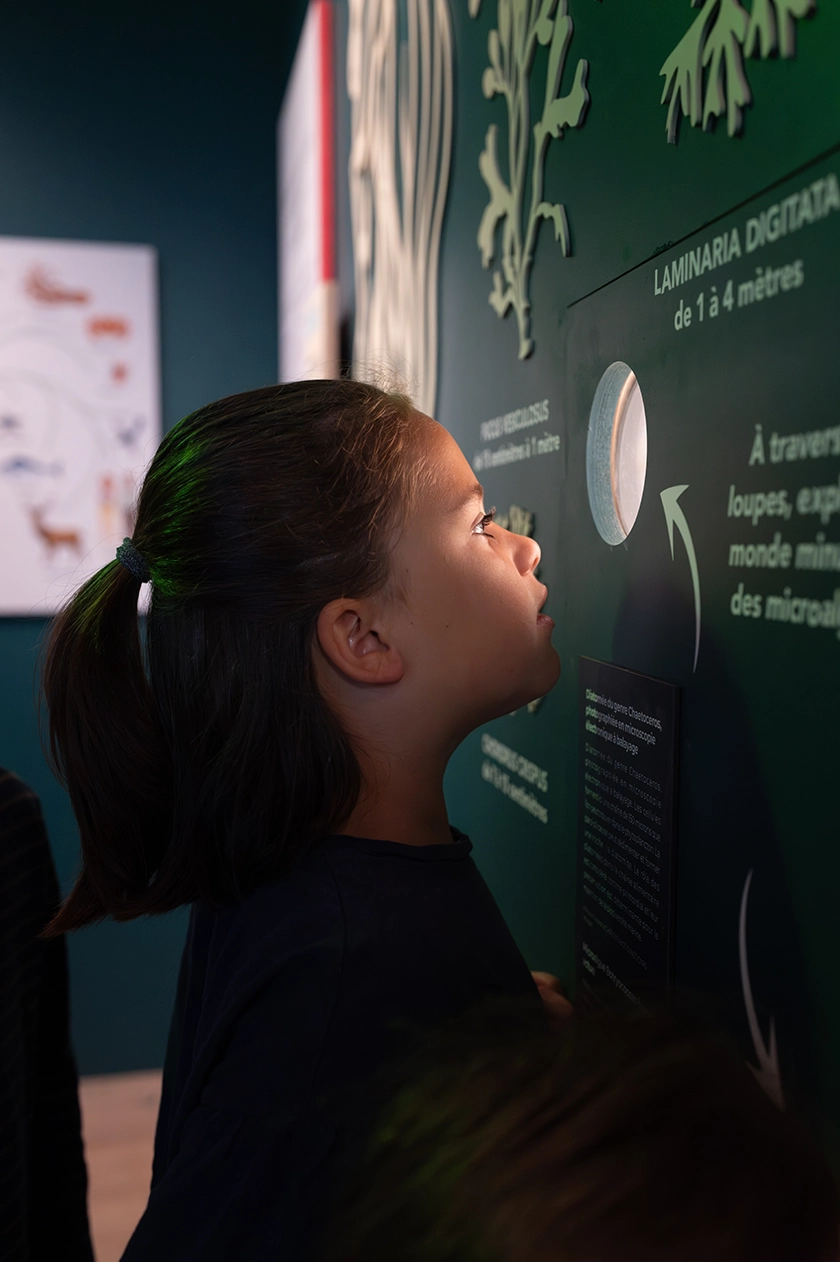
In the new museum’s permanent exhibition, spread over 250 square metres, visitors first discover the different varieties of seaweed that grow off the coast of Plouguerneau, with their colours, shapes and textures. Next, a journey through time takes them back 300 years to reveal the daily lives of seaweed gatherers, whose trade – apart from modern tools and motorised boats – has scarcely changed over the centuries.
The uses of seaweed are now more versatile than ever: once merely a source of medicinal iodine and natural fertiliser, it has come to play a leading role in innovative projects across agriculture, cosmetics, textiles, food and IT. The museum explains how it is used and why it is considered a sustainable alternative to plastic.
The sea and the coast: open-air classrooms
‘Algae’ is not confined to the indoor space. Opposite the building, on the coast, visitors will find the traditional boats used by seaweed gatherers—still in use today—and the old kilns in the dunes where seaweed was once burnt to extract iodine from the ashes. At low tide, walks are also organised along the exposed beach, which becomes an open-air learning space.
The museum is open from Tuesday to Sunday, from 10.00 to 18.30. Admission costs 8 euros and the information panels feature translations that can be accessed via a QR code on your mobile phone. Workshops are held twice a week.
About Algae
For over 40 years, the Karreg Hir association has been keeping alive the memory of the region’s seaweed gatherers. Founded in 1985 in conjunction with the Plouguerneau Maritime Museum and transformed in 1998 into the Seaweed Gatherers’ Ecomuseum, the association is dedicated to collecting, preserving, researching and promoting this heritage. Algae marks the start of a new chapter: the former ecomuseum has given way to a modern, interactive centre. Algae is a member of the Algues Bretagne collective and the Merci les Algues association, and benefits from the scientific support of the Roscoff Institute for Marine Biology Research, affiliated with the French National Centre for Scientific Research (CNRS).
Discover the seashore with a seaweed gatherer
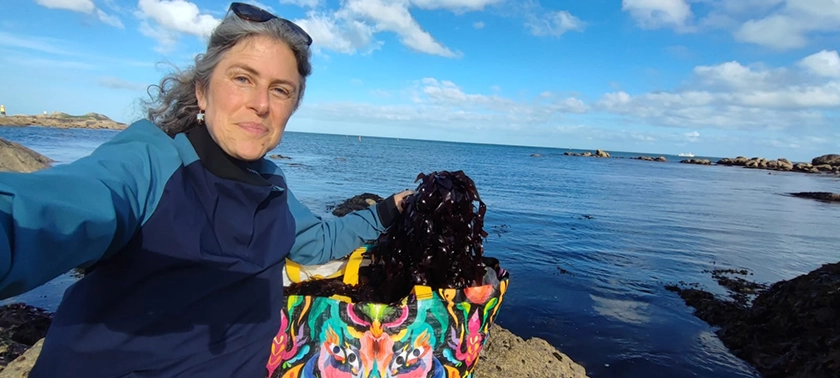
On the Coast of Legends, Nadia Chichiarelli, a professional seaweed gatherer and nature guide, invites you to explore the intertidal zone through ESTRAN’ØRDINAIRE. With a background in teaching and a passion for botany, gastronomy and maritime heritage, she offers informative walks in Spanish along the seashore, where seaweed, coastal plants, molluscs and stories of the coastline come together in an intimate and participatory experience, helping you to see the coast in a new light.
The Abers: the Breton estuaries linked to seaweed culture
The Customs Officers’ Trail (GR 34) runs the length of the Pays des Abers, linking coves, harbours and sandy stretches such as the beaches of Lilia and Saint-Michel in Plouguerneau. Outside the summer season, the Atlantic light and wind lend a unique vigour to this coastline dotted with islets, visible in all its splendour from vantage points such as the Landéda lighthouse, at the mouth of the Aber Wrac’h. On this coast, one can sense the close bond between its inhabitants and the sea and seaweed. The traditional use of this resource shaped ports such as Lanildut, Europe’s first seaweed-harvesting port, and left its mark on the old stone kilns by the water’s edge. A wild landscape steeped in seafaring history that naturally complements a visit to Algae.
Further information on Algae: https://www.algae.bzh
Further information on Estran’Ørdinaire: https://www.estranordinaire.fr
Source: Brittany Tourism