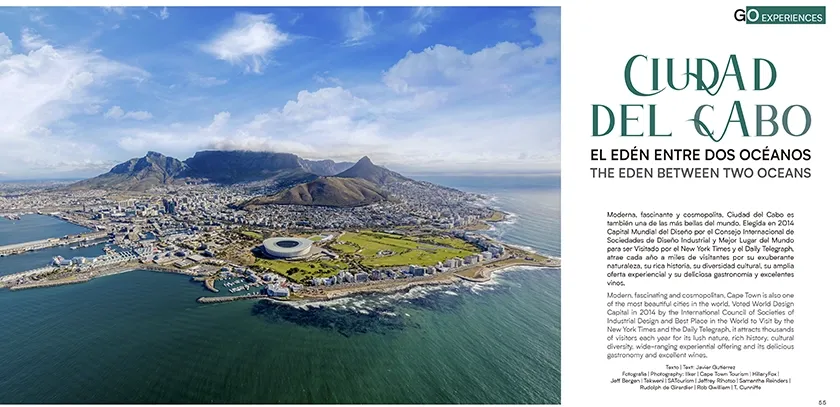
Modern, fascinating and cosmopolitan, Cape Town is also one of the most beautiful cities in the world. Voted World Design Capital in 2014 by the International Council of Societies of Industrial Design and Best Place in the World to Visit by the New York Times and the Daily Telegraph, it attracts thousands of visitors each year for its lush nature, rich history, cultural diversity, wide-ranging experiential offering and its delicious gastronomy and excellent wines.
Cape Town, which shares the capital with Pretoria and Bloemfontein, is an enigma as to the region’s earliest inhabitants, although the oldest human remains found date back 12,000 years, found at Peers Cave in Fish Hoeh.
The area where Cape Town now stands was first mentioned by the Portuguese navigator Bartholomew Diaz “El Fuerte”, who rounded the Cape of Good Hope in 1488, although it was not until 1652 that the first European settlement in sub-Saharan Africa took place. with the arrival of the Dutch navigator Jan van Riebeeck.
Due to its strategic location on Table Bay and as a staging post for ships bound for East Africa, India and Asia, it was the first outpost with the Castle of Good Hope, and became the economic and cultural centre of the Cape Colony.
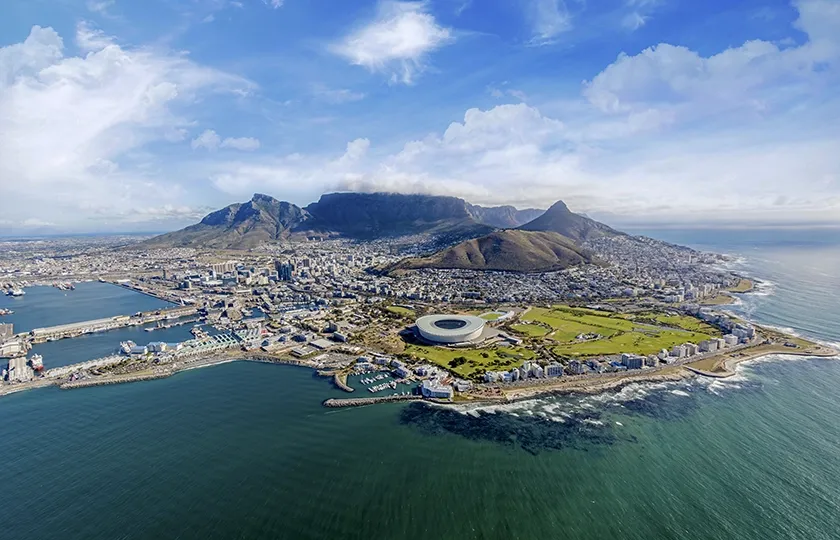
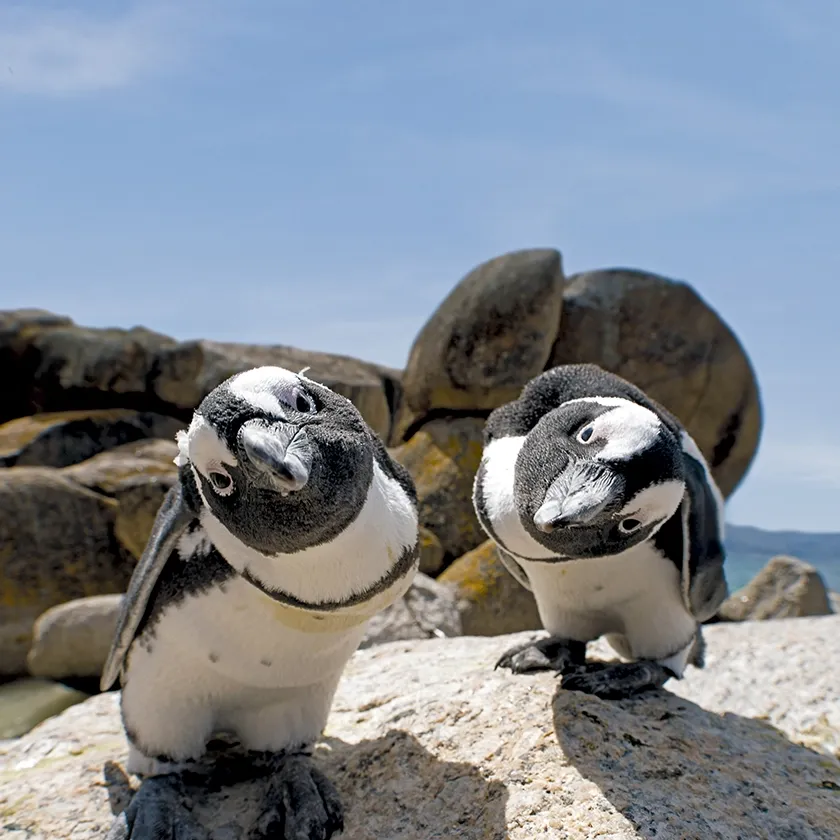
In the Mother City, the ancient and the modern come together to form one of the most attractive destinations for visitors. Surrounded by nature and dominated by Table Mountain overlooking the City Bowl, Cape Town is known for its beautiful beaches, which in the warmer months invite you to enjoy the refreshing waters and in the winter for all kinds of surfing activities, including the extreme waves of Dungeos off Hout Bay. To which we must add Robben Island, where Nelson Mandela was imprisoned, the vineyards where the grapes from which the famous South African wines are made are grown, Chapman’s Peak Drive, a tourist road built a hundred years ago on the edge of the sea and known for its one hundred and fourteen bends, the V&A Waterfront, the ideal promenade for shopping and gastronomy, Boulders Beach in Simon’s Town, where a colony of African penguins live or the World Heritage-listed Kirstenbosch National Botanical Gardens.
Being situated at the heart of one of the most important shipping and trade routes in history has meant that Cape Town has been influenced by the different cultures that have passed through it. This influence can be seen in its architecture, which includes mosques, kramats, churches, synagogues, Dutch art deco or Malay engineering.
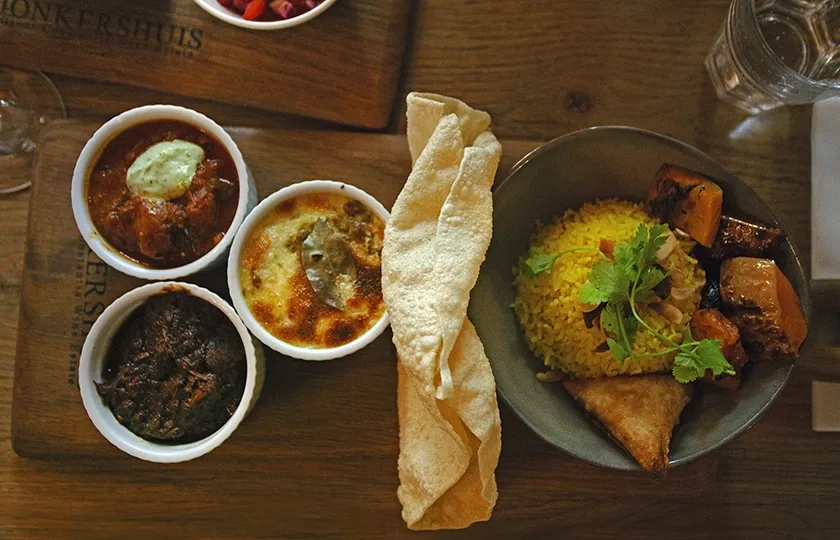
And of course, in the gastronomy, where Malay, Dutch, French, Portuguese and African flavours are represented in the menus of the different restaurants that populate the city; gastronomic delights that can be enjoyed with a good wine or a refreshing locally brewed craft beer. Not forgetting that Cape Town is one of the top twenty gay destinations in the world, with countless gay-friendly clubs, pubs, restaurants and theatres.
Six of the South African capital’s most iconic attractions reflect its varied and bountiful nature, history, cultural diversity, incredible food and wine.

Table Mountain National Park
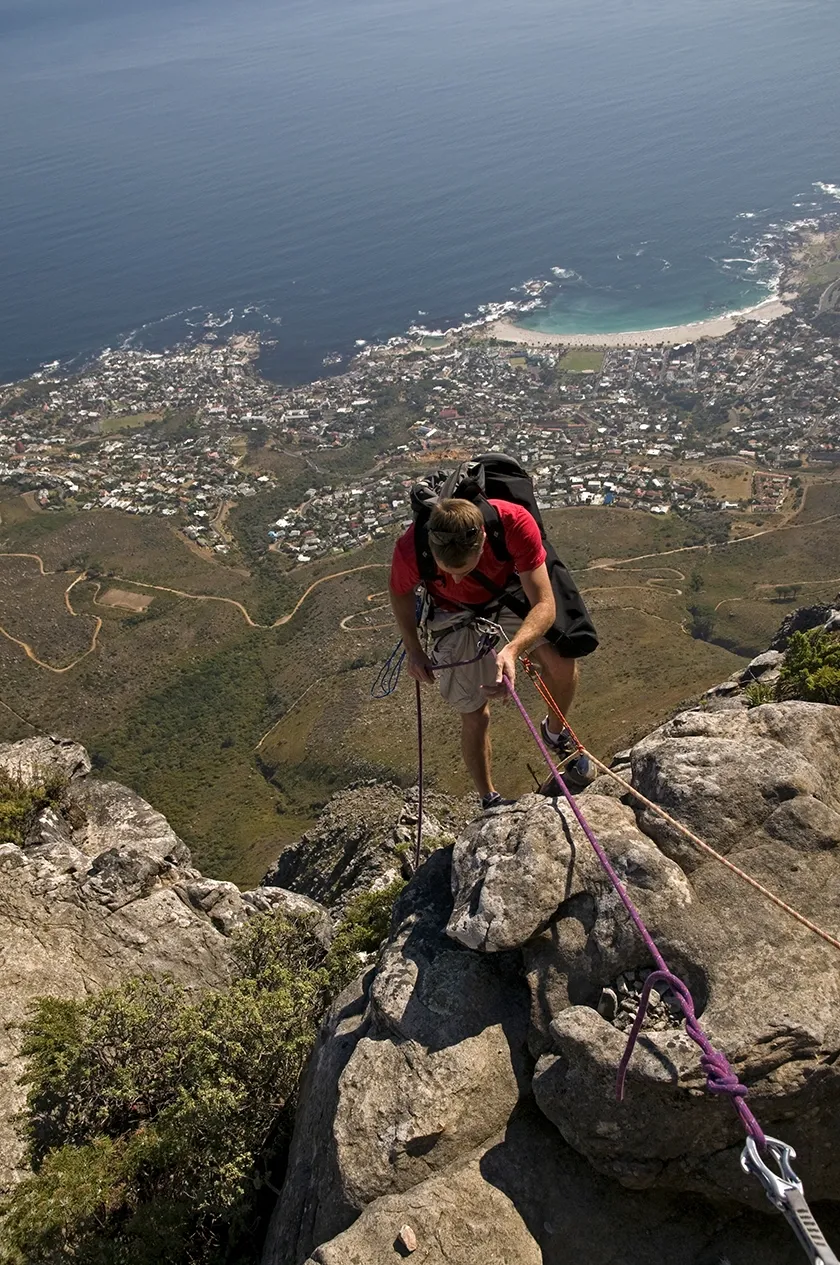
One of the country’s most iconic natural landmarks and among Cape Town’s most visited tourist destinations is Table Mountain. A cable car takes you to one of the most biodiverse national parks on the planet, located entirely within the metropolitan area, offering wonderful views of Robben Island’s Table Bay and, of course, the city. Vitas which, on the other hand, can also be enjoyed from the restaurant we will find there. But if we decide to walk to this paradise, numerous hikes lead to the top, some of them starting from Kirstenbosch.
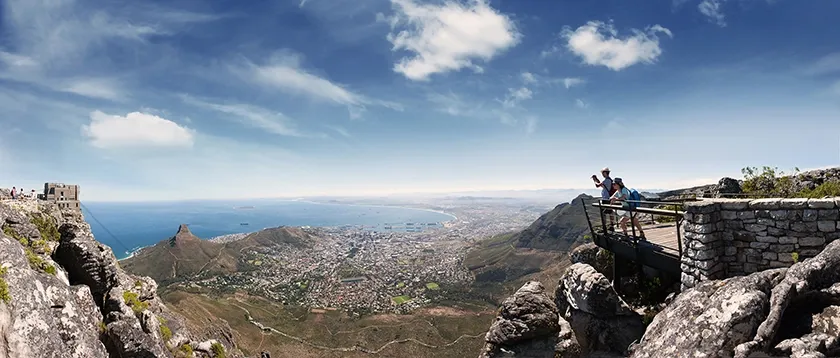
Access to Table Mountain is free of charge for the most part, with only four places requiring a ticket. One of them is at Boulders Beach, a sheltered cove between Cape Point and Simon’s Town, home to the aforementioned African penguins, which you can swim with in the warm waters of False Bay. The other spots that are not free of charge are Silvermine, ideal for pleasant and relaxing walks, Cape Point, one of the most unspoilt places on the planet. and the Kirstenbosch National Botanical Gardens.
In addition to numerous activities such as hiking and mountain biking, Table Mountain offers the possibility to admire the local wildlife such as Cape mountain zebras, bontebok, steenbok and eland – all three of the antelope family – and baboons, but also otters, lizards, snakes, turtles and various insects. And between June and September, southern right whales fleeing the icy waters of the Antarctic.
The Cape Point Nature Reserve and the Kirstenbosch Botanical Gardens are also located within this haven of biodiversity.
Cape Point Nature Reserve
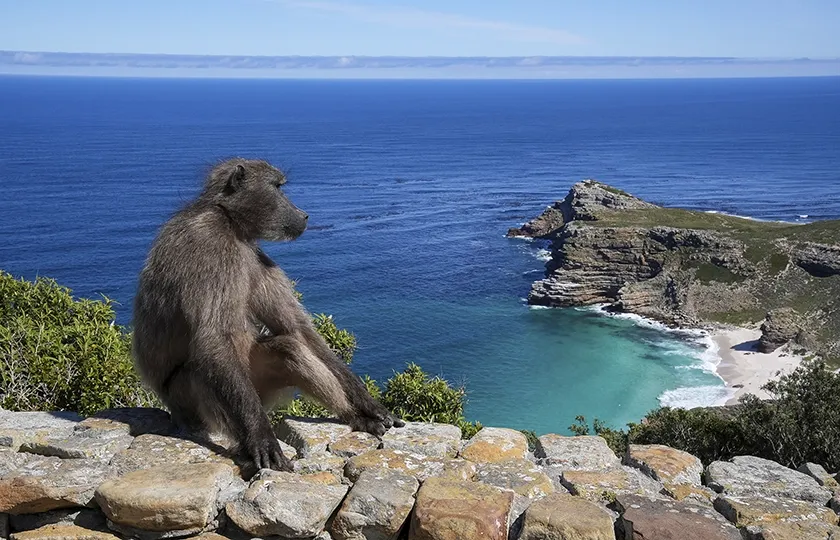
Cape Point Nature Reserve covers 7750 hectares from Schuster’s Bay in the west to Smitswinkel Bay in the east. As well as being part of the Table Mountain National Park, Cape Point has been part of the Cape Floral Kingdom, a UNESCO World Heritage Site since 2004. Famous for its incredible ocean views, the lighthouse that has been in operation since 1857 and its fauna and flora, the nature reserve is one of the few unspoilt places to be found on the planet. Made up of three promontories, the Cape of Good Hope, Cape Maclear and Cape Point itself, its cliffs, located more than two hundred metres above sea level, are ideal for whale and dolphin watching. It is the natural habitat of antelope, the rare Cape mountain zebra and Chacma baboons, endemic to the peninsula, as well as the Cape clawless otter and predators such as caracal and spotted genet. Here you can also see the very rare Table Mountain ghost frog or the Cape chirping frog, not forgetting the beautiful orange-breasted sunbird and some two hundred and fifty species of seabirds such as eagles, sugarbirds and Cape sunbirds.
If nature has been generous with the fauna, it has been no less so with the flora, as the diversity, density and endemism is one of the highest on the planet, with some 1,100 species of native plants, some of which are found nowhere else in the world.
The nature reserve can be reached by tram or on foot, and once there, you can explore it via the numerous hiking trails or discover it by hiring the services of a helicopter flight. This is undoubtedly one of the most beautiful areas on the African continent, where you can relax and enjoy nature and the cleanest air we have ever breathed.
National Botanical Garden Kirstenbosch
Situated on the south-eastern slope of Table Mountain, the botanical garden is one of the most beautiful in the world and a favourite place for locals and visitors alike, as the activities available here are numerous and all of them attractive. Picnics sitting on the cool grass, hiking through Skeleton Gorge, enjoying a glass of chilled Chardonnay before a sunset concert, exploring the many shady paths, taking in the panoramic views from the footbridge and so on and so forth.
The land on which the botanical garden sits was bequeathed to the government by Cecil John Rhodes, a British mining magnate and politician who served as premier of the Cape Colony from 1890 to 1896 and was known as “The Napoleon of the Cape”. In 1913, the pig farm that occupied the grounds became a botanical garden dedicated to the native flora thanks to the work of the naturalist Harold Pearson.
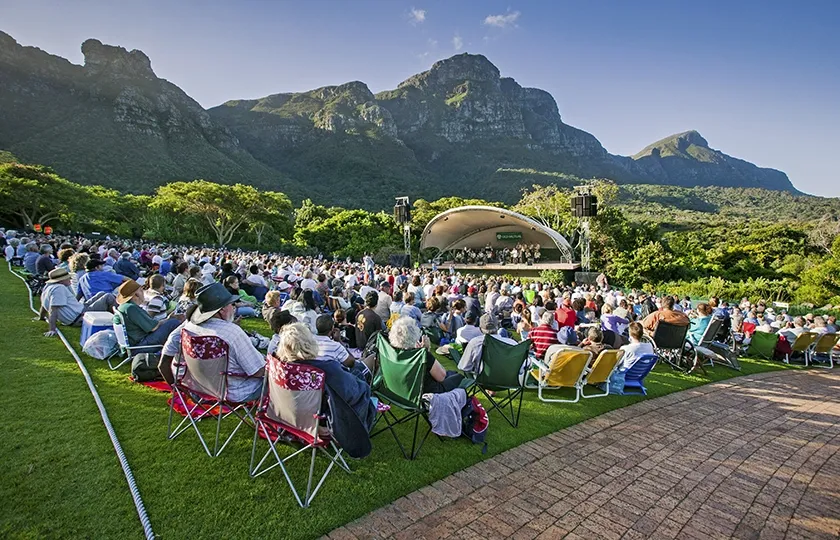
It currently has more than seven thousand species of plants from southern Africa, of which two thousand five hundred are found on the Cape Peninsula, as well as fragrance gardens, medicinal gardens and a Protea (flowering plants) garden, as well as a Braille trail, a cycad amphitheatre, ideal for visiting with children and where they can enjoy the anatomical sculptures of dinosaurs and a life-size pterosaur and the Botanical Society Conservatory which houses plants from the most arid regions of the continent. The garden also offers the possibility of observing more than one hundred and twenty-five different species of birds.
If you experience this with the little ones you can’t miss the Centenary Tree Canopy Walkway, known as the Boomslang, a one hundred and thirty metre steel and wood bridge that winds through the trees of the Arboretum, offering breathtaking views of the Garden and Cape Flats.
Art is also present in the botanical garden with an exhibition of African stone sculptures and bronze animal sculptures by Dylan Lewis.
So much excitement is sure to work up an appetite and to satisfy it you can visit the African-themed Moyo Restaurant, the Kirstenbosch Tea Room for scones, cakes and cucumber sandwiches or pick up a picnic hamper at any of these restaurants. And if you just want to enjoy a quick coffee, Vida e Caffe is the place to go.
Isla Robben
Once a whaling station, leper colony and political prison, Seal Island – Robben in Dutch means seals – is known for the large numbers of these mammals that once inhabited its shores. Robben Island is both an important part of Cape Town’s history and the place where some of the country’s saddest pages were written, as it was here that Nelson Mandela spent eighteen of the twenty-seven years he was imprisoned, as well as other South African activists. With the fall of Apartheid, the prison closed its doors and became a must-visit place for locals and tourists alike.
With magnificent views of Table Mountain and a World Heritage Site, it has the Nelson Mandela Gateway Museum on Robben Island. Created in 1997 by the Department of Arts and Culture, runs educational programmes aimed at conserving the nation’s natural and cultural heritage.
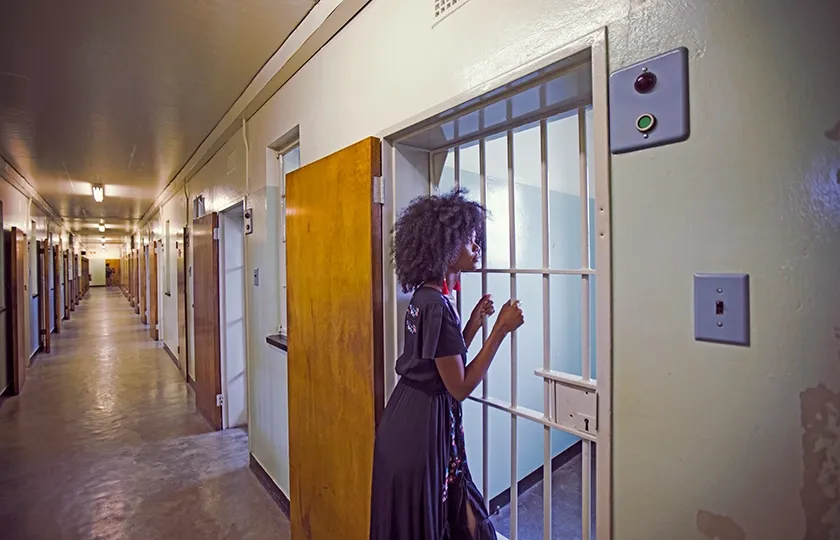
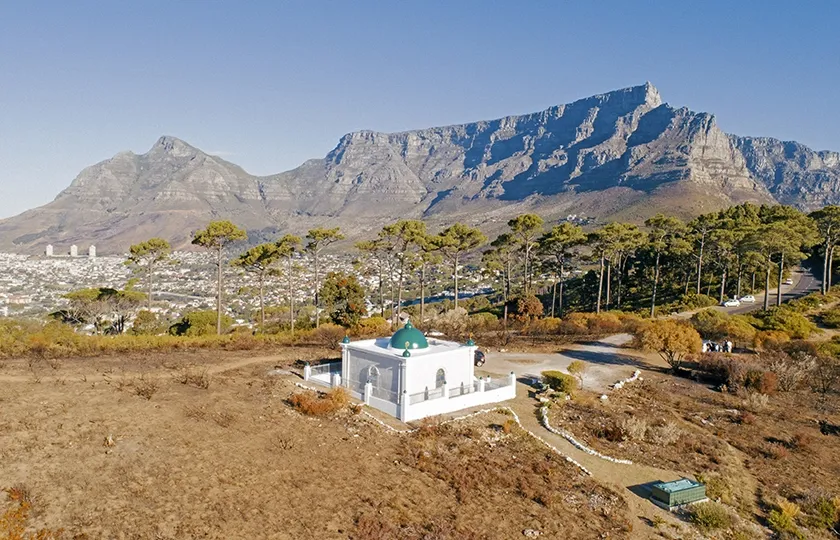
The tours, conducted by former prisoners, will take us to Mandela’s cell, one of the island’s most popular attractions, to the Moturu Kramat Islamic shrine where the tomb of Sheikh Abdurahman Moturu, a revered Muslim leader exiled here in the late 18th century, to the house of Robert Sobukwe, a prominent South African anti-apartheid activist and leader of the Pan-Africanist Congress (PAC), to the Garrison Church, a small chapel on the island built by the British in the 19th century and used as a place of worship by British soldiers and political prisoners, and the Robben Island Lighthouse built in 1864, from where you can admire wonderful views of the island and the entire ocean.
Access to the island is via the ferry which leaves four times a day, Monday to Sunday, from the Nelson Mandela Gate at the V&A waterfront. Prices to visit Robben Island are 400 rand adults (just over €20). and 210 rads for children (just over €11).
Wine estate Groot Constantia
A trip to South Africa would not be complete without discovering its centuries-old relationship with wine. The ideal destination for this experience is a visit to Groot Constantia, the oldest winery in the country.
Its history begins in 1685 when Simon van der Stel, the first governor of the Cape, was granted the right to choose a tract of land for his own purposes. He chose the heathlands, bogs, wheat fields and forests of a valley he called Constantia, where slaves began planting vineyards, orchards, oak trees and building the Cape’s first homestead, Groot Constantia, now one of the region’s main tourist attractions. With the death of Van der Stel in 1712 the estate was divided into three vineyards: Groot Constantia, Klein Constantia and Buitenverwachting, all of them on the Constantia Wine Route.
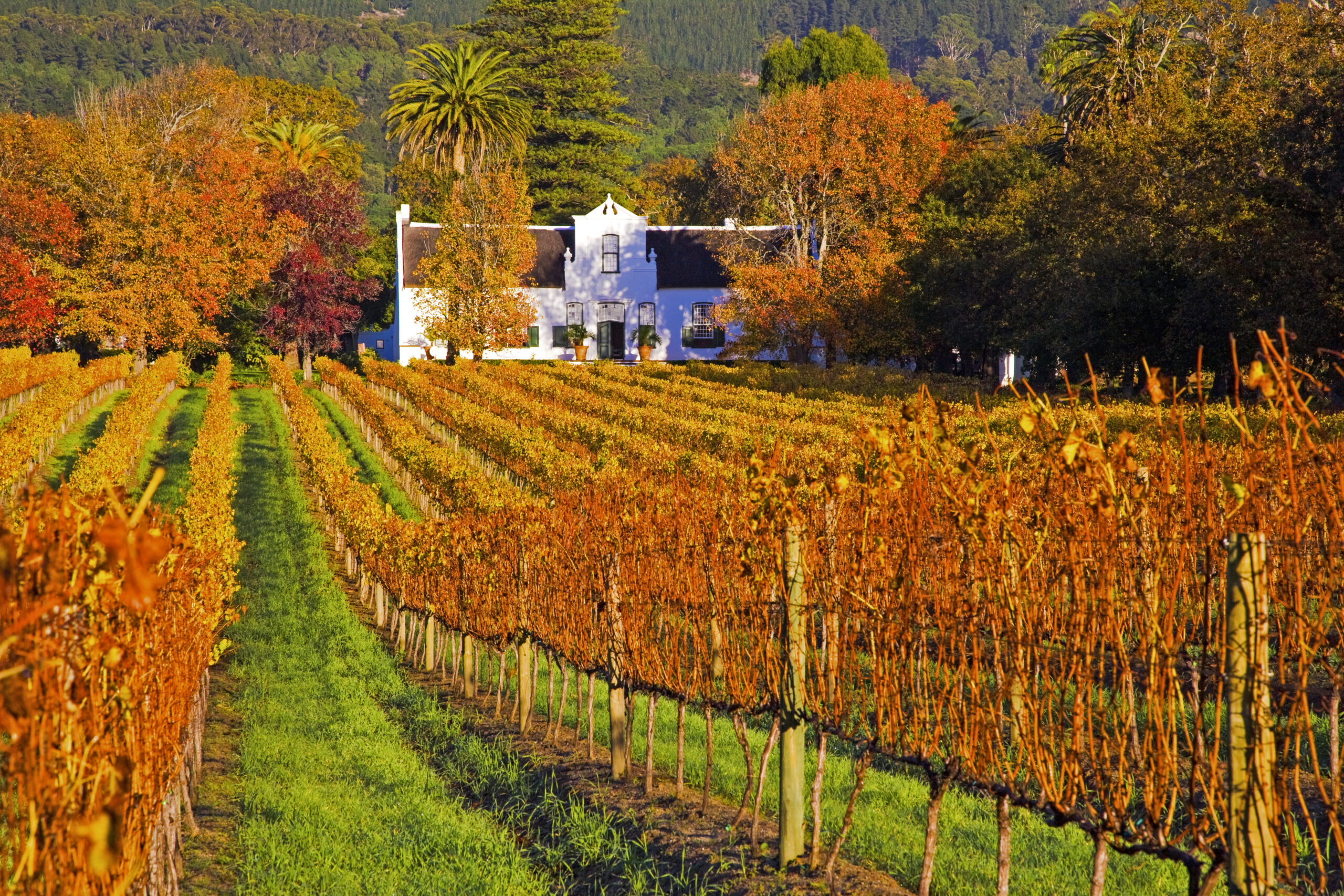
Touring the facilities, learning about the history of the estate and tasting the wines are some of the experiences on offer, complemented by the Cape Dutch Straw House which preserves gables, dungeons and a stone bath where the slaves washed their feet during grape pressing and three museums belonging to the African Museum in Cape Town: the beautifully restored manor house, the Orientation Centre with tools used in the early days of the estate. and the Cloete Winery which houses historic drinking vessels and winemaking equipment.
Groot Constantia also has conference rooms and an excellent restaurant, Jonkershuis, which specialises in Malay cuisine.
More than three hundred years producing quality wines and just to be able to enjoy a picnic on the terrace overlooking the city, justifies a visit to Groot Constantia.
V&A waterfront
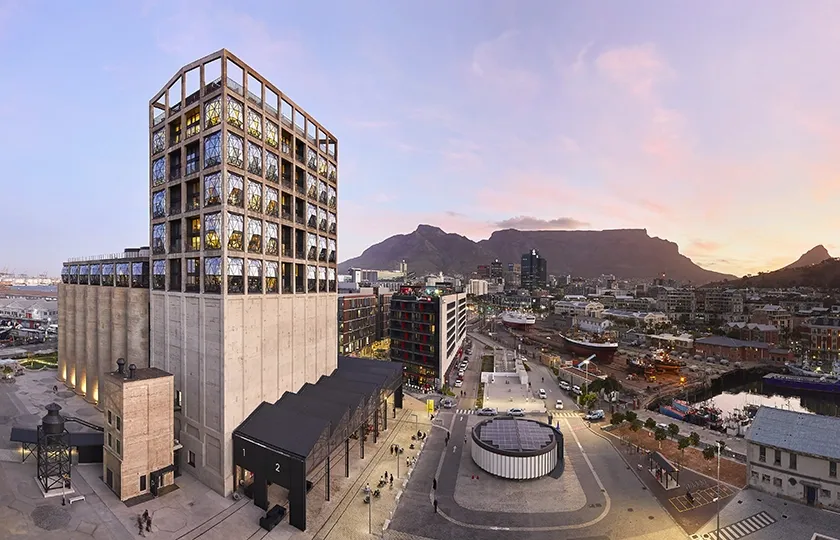
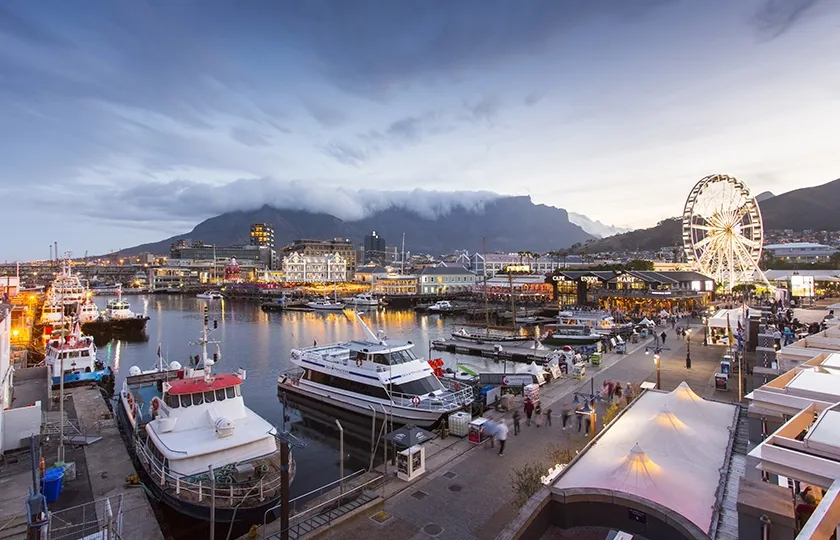
Twenty-four million visitors a year make the V&A Promenade one of the most visited destinations in Africa. And what does it offer that justifies this success among national and international visitors? Located in South Africa’s oldest working harbour and at the foot of Table Mountain, it offers a wide range of leisure and entertainment options, from over eighty restaurants serving international and local, traditional and avant-garde cuisine to the award-winning Two Oceans Aquarium, twelve hotels, over five hundred shops and five museums, including the Zeitz Museum of Contemporary African Art (MOCAA) and the historic Grain Silo, which houses the world’s largest collection of contemporary art from Africa and its diaspora. Not forgetting live shows 365 days a year with the best local music, sunset cruises or helicopter flights.
We do not leave the capital
We cannot leave Cape Town without visiting some places that are worth a visit because of their importance or peculiarity. The suburb of Woodstock went from being a semi-industrial area in the late 19th and early 20th century to a bustling centre of creativity in the early 1990s. Factories have given way to artists’ studios, furniture showrooms, creative agencies, cafés and trendy restaurants.
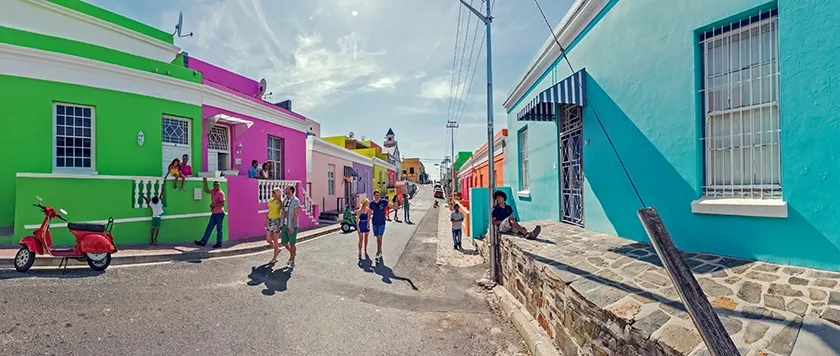
Situated at the foot of Signal Hill, Bo-Kaap is one of Cape Town’s most historically rich neighbourhoods. Formerly known as the Malay quarter, its origins date back to 1760 when numerous tenement houses were built for slaves brought from Malaysia, Indonesia and the rest of Africa. The characteristic feature of the buildings in this neighbourhood, a mixture of Cape Dutch and Georgian architecture, is the striking colours in which they are painted. It seems that this is because when they were leased to slaves all the houses had to be white, but when they were allowed to own them they painted them in bright colours as an expression of freedom. For generations and up to the present day, the Muslim community has been the majority in the neighbourhood. The must-see attractions here, apart from a leisurely stroll through the streets, are the Bo-Kaap Museum, which shows the way of life and traditions of the different communities that have inhabited it; the kramats -Islamic shrines-, the food and craft markets and the mosques, led by Auwal Mosque, the first and oldest mosque in South Africa, built in the 18th century. Other interesting proposals are the cooking tours where it is possible to learn how to prepare the most typical dishes with classes given by the locals themselves. or discover this part of the city on a big-wheeled scooter.
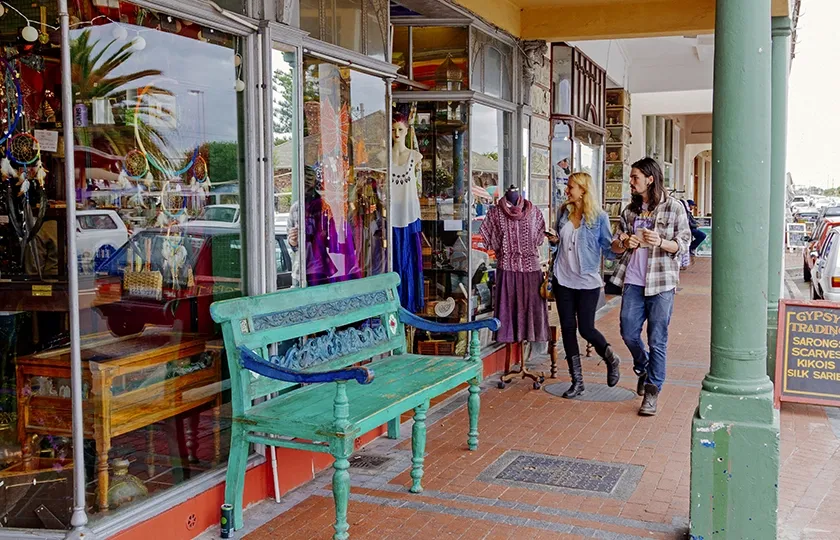
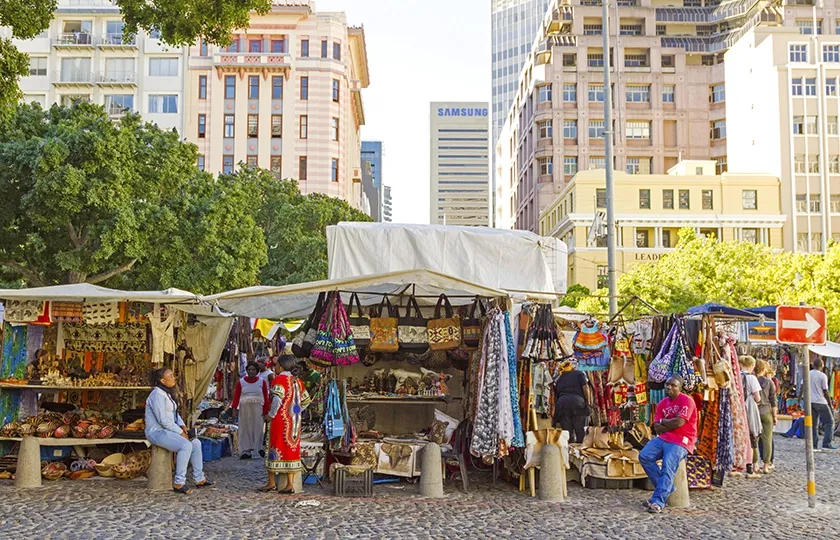
We continue this brief tour of the city in Company’s Gardens where we find the most emblematic buildings of the city such as the Parliament, the Town Hall, the National Library, the National Gallery of Art or the South African Museum; the Anglican Cathedral of St. Georges begun to be built in 1901; Slave Lodge, one of the most terrifying slave prisons in history and today converted into a Museum of Cultural History; the different pedestrian streets where craft, diamond and takeaway food shops display their products; Long Street, with its Victorian buildings that today house bars, discotheques, hostels, pubs and gift shops. or Camps Bay beach, which is undoubtedly the most beautiful beach in the city.