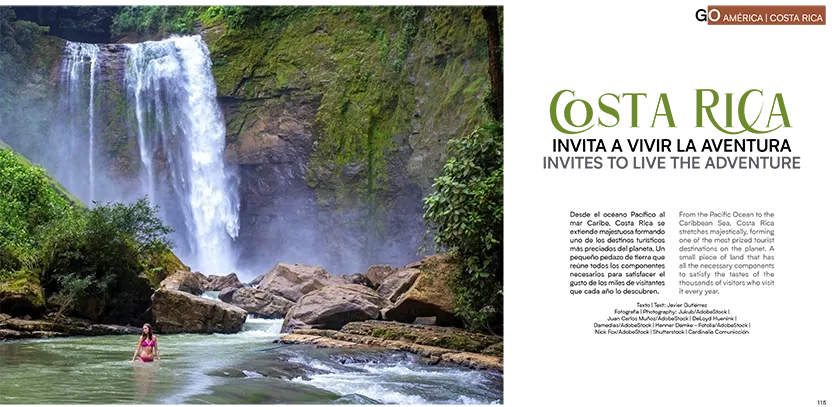
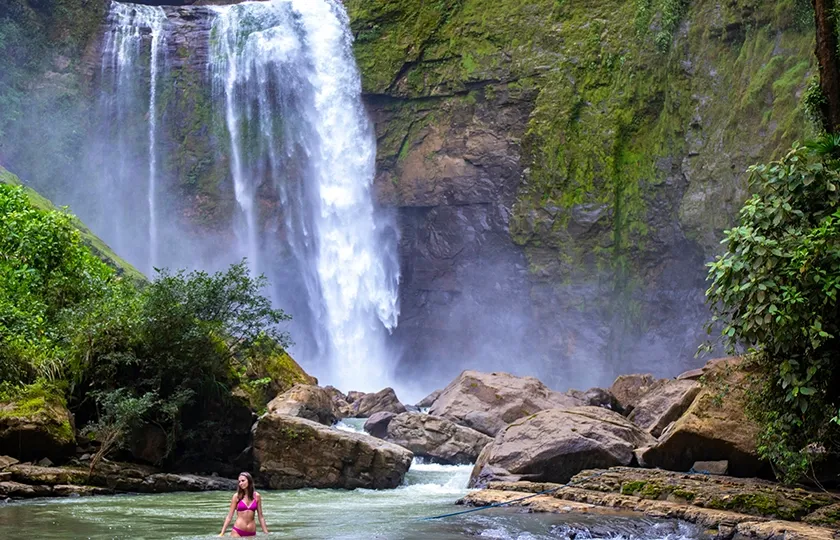
From the Pacific Ocean to the Caribbean Sea, Costa Rica stretches majestically, forming one of the most prized tourist destinations on the planet. A small piece of land that has all the necessary components to satisfy the tastes of the thousands of visitors who visit it every year.
An exuberant country where nature manifests itself in all its splendour thanks to its extraordinary biodiversity, 5% of the world’s biodiversity is found here, with twenty-nine natural parks, nineteen wildlife refuges, eight biological reserves and a series of protected areas that captivate lovers of ecotourism, an activity of which Costa Rica is a forerunner, making it one of Central America’s favourite adventure destinations. Mountains, valleys, volcanoes, lakes, caves, forests, national parks, springs or hot springs are the ideal refuge for a varied and attractive fauna, as well as numerous endemic species.
Around 600 beaches are spread along the 1,228 kilometres of coastline, of which 1,016 kilometres are on the Pacific coast and 212 on the Caribbean Sea. The variety of aquatic ecosystems and the black and white sand beaches, ideal for activities such as surfing, diving or simply enjoying the sun and strolling along the sea, are the hallmark of the Caribbean coast. The Pacific zone is where the major tourist centres are concentrated and its waters attract the attention of surf lovers who look for the beaches of Esterillos, Jacó, Hermosa, Boca Barranca and near the Ballena Marine National Park and in the Pavones sector, where the famous “long left wave” is formed, the ideal place to give free rein to their passion.
Discovering Costa Rica
Located in the north of the country, Guanacaste has rich aquatic, terrestrial, mountainous and coastal ecosystems that offer landscapes of incomparable beauty. Its beaches are ideal for enjoying the radiant sunshine almost all year round and for a wide variety of activities. But if you are looking for a more secluded setting, you can choose between small boutique hotels near the peninsula of Santa Elena or larger accommodations near the Gulf of Papagayo. Other major attractions of this tourist area are the spectacular arrival of olive ridley turtles in the Ostional National Wildlife Refuge or the nesting of leatherback turtles in Las Baulas National Marine Park and the estuaries and mangroves in the south, ideal for bird watching and for sports such as kayaking. It also has the national parks Volcán Tenorio, Santa Rosa, Volcán Rincón de La Vieja, Marino Las Baulas, Guanacaste, Diriá, Barra Honda and Palo Verde.
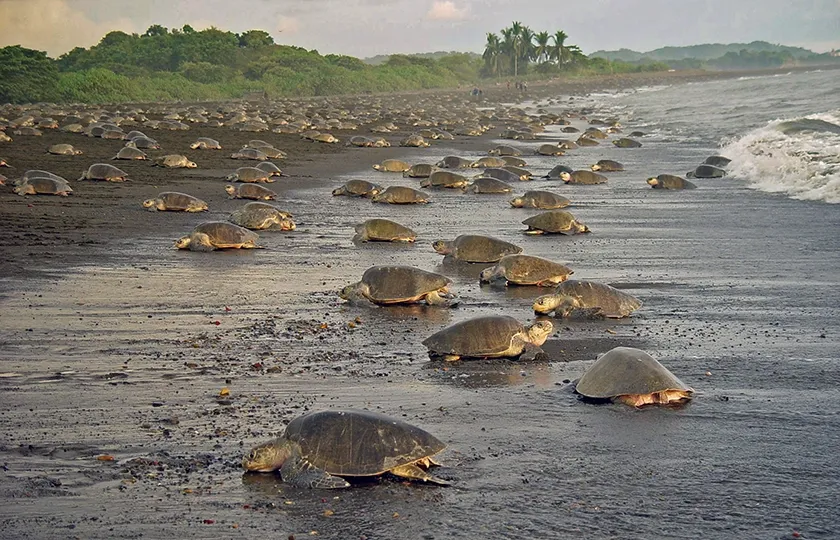
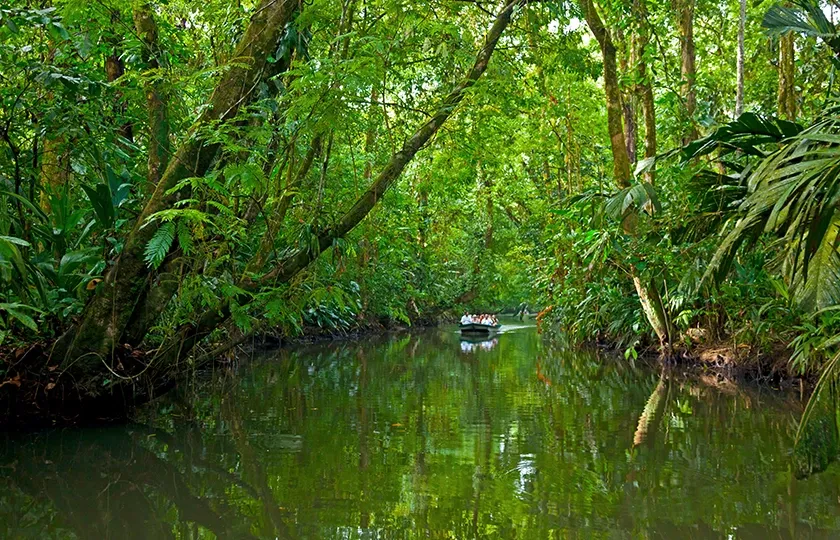
A rich Afro-Caribbean influence welcomes visitors to the Caribbean region, where in addition to discovering its culture, unique architecture and the vibrant spirit of its people, it is home to lush beaches for adventure, relaxation and interesting lessons in natural history. The coral reefs, multicoloured beaches – black, yellow and grey -, coastal vegetation and mid-elevation forests are enchanting. And there are surprising spectacles such as turtle nesting on the beaches of Tortuguero National Park and in the Barra del Colorado National Wildlife Refuge. Cahuita National Park and the Gandoca-Manzanillo Wildlife Refuge are world renowned for their beauty and exemplary conservation status in the Wider Caribbean, and Barbilla National Park has an important tropical rainforest. The Barra del Colorado Sector is a privileged enclave for the practice of sport fishing, bird watching or touring the system of fluvial canals that links the Port of Moín with Tortuguero and Barra del Colorado.
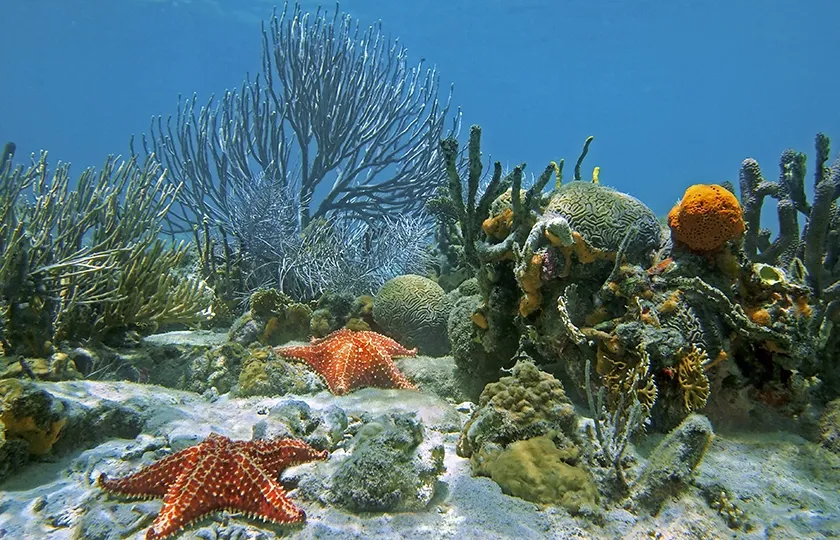
Puntarenas, known as “the pearl of the Caribbean”, is adorned every day with its best jewels: beautiful islands, paradisiacal beaches and incredible natural treasures. In addition to the attractions of beach and sun, the Cabo Blanco Nature Reserve, the islands of San Lucas, Chira, Tolinga and Coco and the Monteverde Biological Reserve of Santa Elena, which has brought worldwide recognition to this area for its conservation efforts and for leading a lifestyle centred on respect for nature. The protected areas that make Puntarenas famous are the national parks Volcán Irazú, Braulio Carrillo, Volcán Poás, Tapantí – Macizo de la Muerte, Los Quetzales and La Cangreja.
Protected areas, lakes, lagoons, volcanoes, rivers and waterfalls are the main features of the Northern Plains tourist area. Rainforests and fertile plains are sanctuaries for waterfowl, reptiles, mammals and the prehistoric Gaspar fish. For all these reasons, there is no shortage of places of interest for wildlife watching, such as the Caño Negro Wildlife Refuge, among others. The Juan Castro Blanco National Park is home to some of the largest waterfalls in Costa Rica and the Arenal Volcano Natural Park is one of the most visited destinations in the north. Peñas Blancas, San Carlos, Toro, Puerto Viejo and Sarapiquí are ideal rivers for the practice of different adventure activities and for nature observation, and the Canton of Sarapiquí is recognised as an important site for scientific research and the last stronghold of endangered species such as the green macaw.
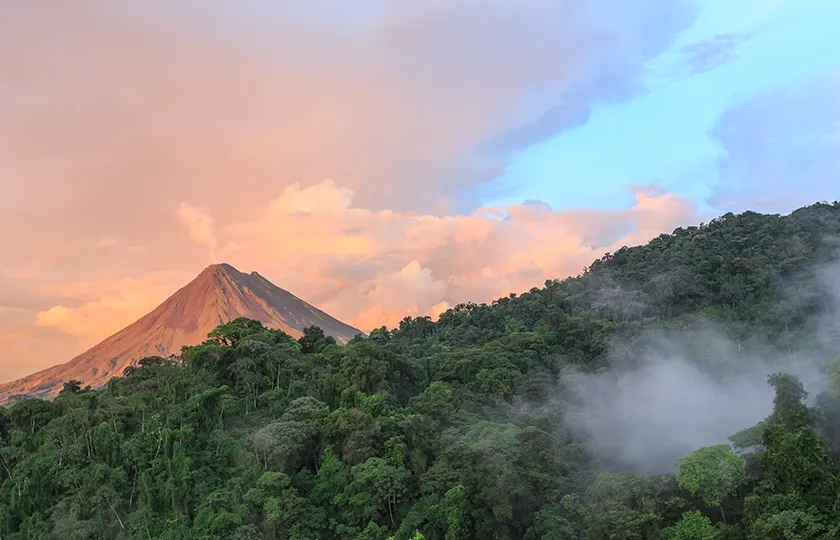
In the Central Pacific the forests and the sea come together to create some of Costa Rica’s most beautiful landscapes. Tropical forests in transition from tropical dry forest to tropical rainforest are the perfect habitat for numerous plant and animal species that find protection in Manuel Antonio National Park, where white-faced monkeys, sloths, coatis, raccoons, iguanas and the squirrel monkey, a species endemic to this increasingly endangered park, await us. Espadilla Sur, Manuel Antonio and Puerto Escondido are excellent beaches and Punta Catedral, which joins the beaches of Manuel Antonio and Espadilla Sur, is a place of incomparable natural beauty. Carara National Park, which in the indigenous Huetar language means “river of lizards”, is an ornithological destination known worldwide for the variety of its bird life, especially the Red Macaw, currently in danger of extinction.
The South Pacific offers a choice of recreational activities on the beaches of Golfo Dulce and the Osa Peninsula; discover beautiful coral reefs; watch dolphins, humpback whales, manta rays, hammerhead sharks or parrotfish in the Marino Ballena National Park; take pleasant walks through mangroves; go sport fishing, surfing, diving or hiking; and enjoy botanical gardens or dizzying waterfalls. Other protected areas in this tourist area are the Chirripó, Piedras Blancas and Corcovado natural parks, as well as the Biosphere Reserve and La Amistad International Park, declared a World Heritage Site by UNESCO. We end up in the Osa Peninsula, the second largest in the country, whose main activity is ecotourism, which can be done in the Térraba-Sierpe Wetland, in the Golfo Dulce Forest Reserve, in the Ballena Marine National Park, in the Caño Island Biological Reserve and in the Corcovado National Park.
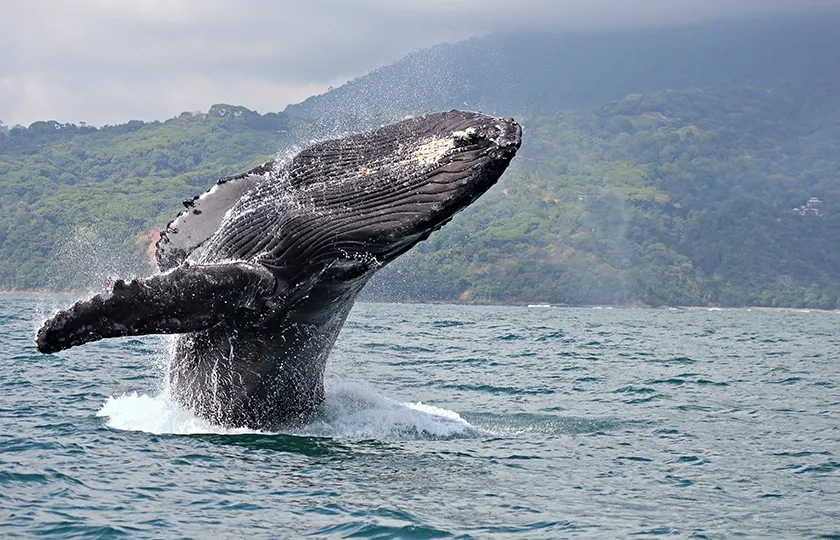
Touring the islands and enjoying the snorkelling
Costa Rica has more than a hundred islands, many of them little frequented by tourists because they are protected by the System of Conservation Areas. Caño Island has one of the largest and best preserved coral formations in the Costa Rican Pacific and can be reached from Dominical, Drake Bay, Uvita and Sierpe. The best time to visit is from July to October when humpback whales migrate from the southern hemisphere. Another interesting option is Tortuga Island, located off the southeast coast of the Nicoya Peninsula and accessible only by boat. Visits are only for one day as there are no hotel services, which has helped to preserve its attractiveness. Even so, it is well worth spending a day of your holiday to discover its exuberant nature or to take part in some of the many water activities that this natural enclave invites you to do.
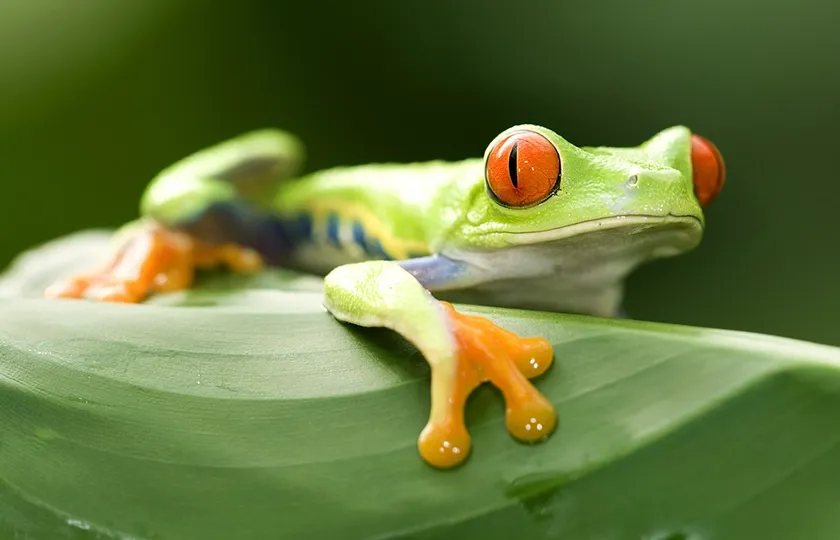
One of the most popular tourist activities is snorkelling, a different and attractive way to discover the beaches and islands of Costa Rica. There are many places that invite you to practice it, such as Cahuita, Cocles, Punta Uva and Manzanillo in the Caribbean; Isla Tortuga, Isla del Caño, Drake Bay, Uvita, Quepos, Manuel Antonio National Park or Montezuma Beach in Puntarenas and Playa Hermosa, Playas del Coco, San Juanillo, Isla Chora, Ocotal, Conchal, Nacascolo or Potrero in the Guanacaste area.