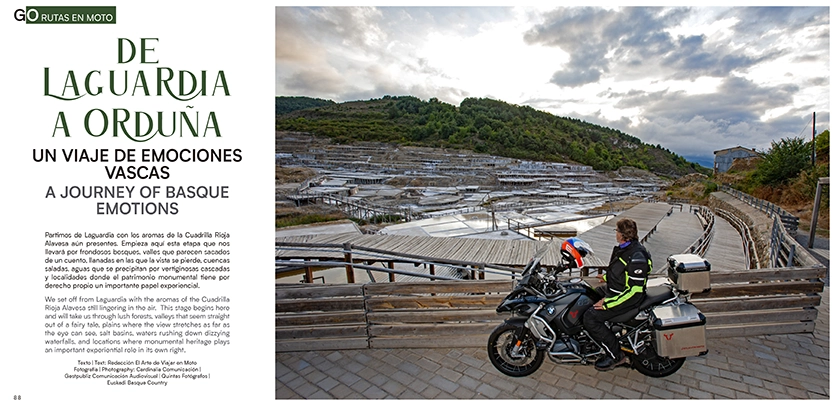
We set off from Laguardia with the aromas of the Cuadrilla Rioja Alavesa still lingering in the air. This stage begins here and will take us through lush forests, valleys that seem straight out of a fairy tale, plains where the view stretches as far as the eye can see, salt basins, waters rushing down dizzying waterfalls, and locations where monumental heritage plays an important experiential role in its own right.
After touring the beautiful village of Laguardia, sampling its cuisine and, of course, enjoying its wines, we set off towards the north of the Basque Country. Ahead of us lie 225 kilometres of inviting bends that form the backbone of unique landscapes. Along the N-232a road, between extensive vineyards and modern buildings that house some of the best wineries in Rioja Alavesa, we head towards the Balcón de La Rioja. Before continuing on our way, we can stop in Leza to admire its Renaissance-style emblazoned buildings, the church of San Martín, its wine cellars, or the dolmens of El Sotillo and Lazaya.
Continuing along the A-2124, both the landscape and the road begin to change. The vineyards give way to large forests rich in biodiversity. One example is the Sierra de Cantabria Site of Community Interest. Before reaching the top of Puerto de Herrera, we find Balcón de La Rioja on our left, the most emblematic viewpoint in this Cuadrilla, from where on clear days it is possible to see practically the whole of Rioja Alavesa with the Ebro river valley and much of La Rioja Alta, as well as Logroño and the Sierra de la Demanda.
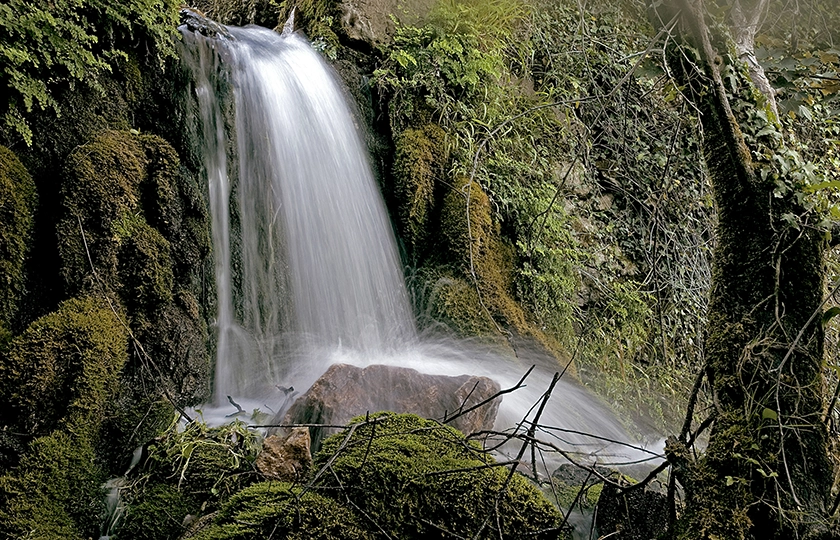
Cuadrilla de Añana
In Peñacerrada, we join the A-3126, which takes us to Zambrana, where we take the N-124 in search of the A-1, a motorway that we will follow for a few minutes to reach Rivabellosa. We return to the secondary roads to head towards Puentelarra and the Salt Valley of Añana. Sobrón, with vestiges of different historical periods, the Water Museum and the fascinating landscapes created by the River Ebro or the Valderejo Natural Park in Valdegovía/Gaubea with hermit caves, necropolises, churches – some of them important examples of Romanesque architecture in Álava – or medieval remains come into view before we reach Añana.
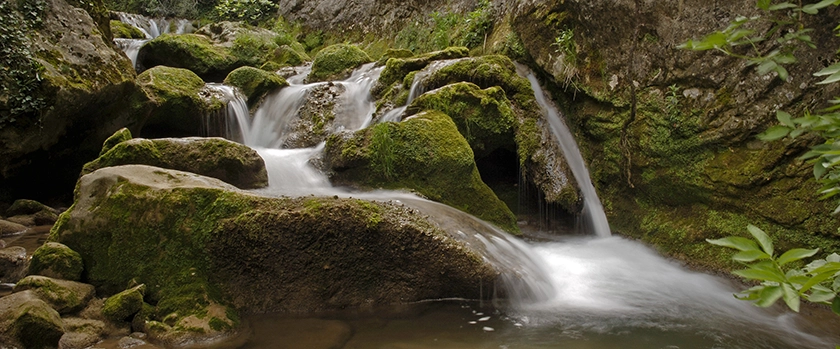
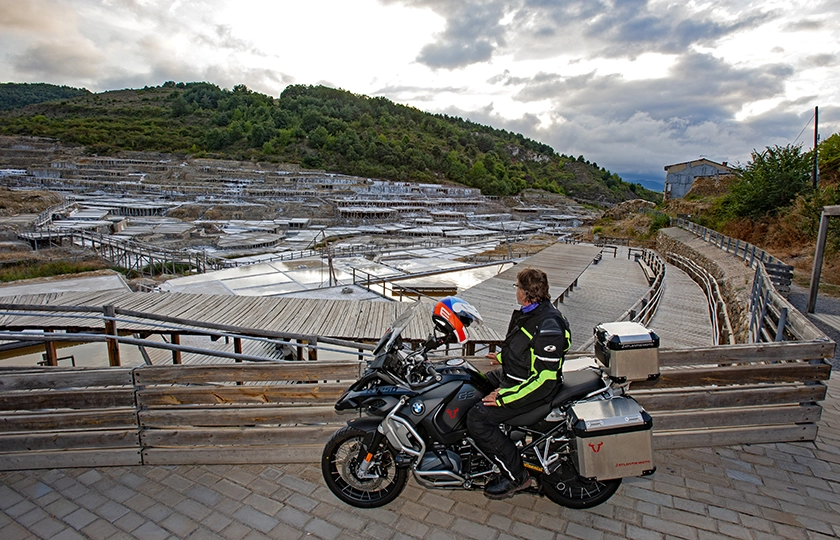
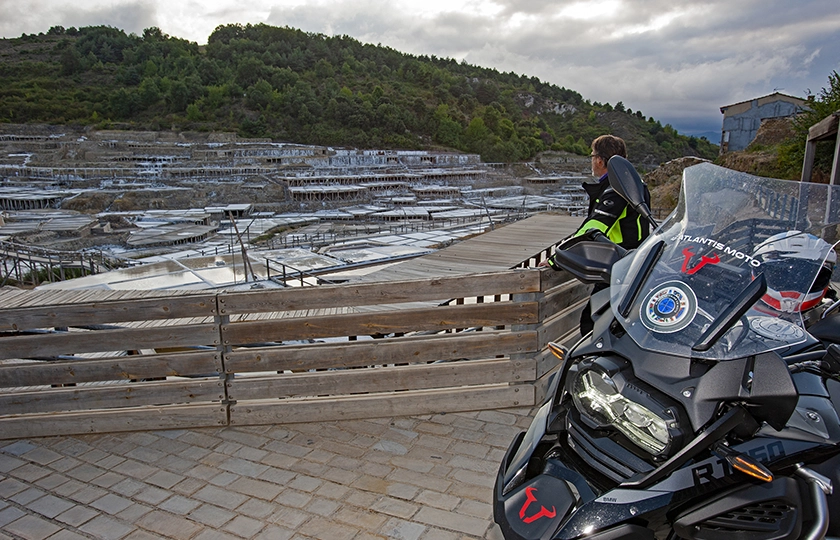
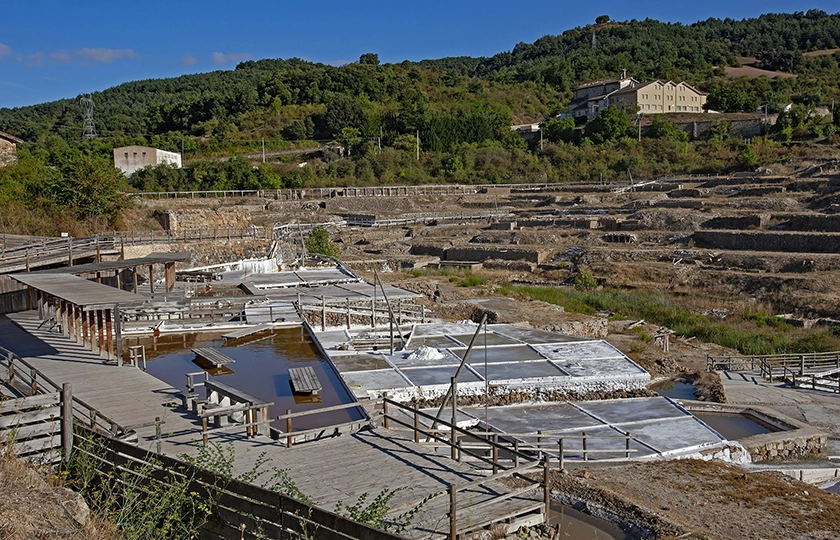
To reach Añana, take the A-2622 and discover the surprising scenery of the salt flats. Salt, also known as ‘white gold’ and of great importance to societies throughout the centuries, began to be mined here more than seven thousand years ago, but as in so many other places, it was with the arrival of the Roman Empire that the mining system changed, leading to a considerable increase in production. Although seventeen centuries have passed since the Romans stopped exploiting them, it is still possible to see the threshing floors, wells, canals, paths and warehouses today. Considered one of the best in the world, Añana salt is still produced today, with some of the finest chefs on the international culinary scene and the Basque Culinary Centre acting as ambassadors, promoting the exceptional qualities of the Salt Valley to the world.
Before leaving the village, it is well worth visiting its monumental heritage, including the Convent of Comendadoras de San Juan de Acre, the Church of Santa María de Villacones, the Ozpinas Palace and the Baroque Herrán Palace.
We continue our route towards the Cuadrilla of Gorbeialdea in the direction of Pobes. Travelling for miles, we leave behind numerous towns such as Iruña de Oca, a strategic enclave for the Roman Empire, which chose it as the site for the Roman city of Veleia. It has an interesting monumental heritage, including the neoclassical church of San Juan Evangelista in Montevite/Mandaita and the late Gothic church of San Esteban Proto Mártir in Ollávarre/Olabarri.
Also in this municipality, Nanclares de Oca/Langraiz has the Bolen Spa, built in 1890 as a Grand Hotel with more than one hundred rooms, the Calero, a lime kiln built around 1850, the Mill and the adjacent water reservoir, an industrial archaeological site declared an Industrial Monument by the Basque Government, the magnificent Romanesque church of the Assumption of Our Lady, and the towers of El Encinal, Vayagüen and Almoreta.
In Villodas/Billoda, we find the curious parish church of San Cristóbal, a 16th-century Gothic building, and the bridge, probably dating back to Roman times and linked to the ancient Roman Road XXXIV of Antoninus’ Itinerary.
Between this town and Trespuentes/Tresponde lies the aforementioned archaeological site of Iruña Veleia, which has been occupied for over 1,500 years of history.
Finally, Trespuentes/Tresponde awaits us with a pleasant surprise, the Santa Catalina Botanical Garden, which owes its name to the chapel built between the 13th and 14th centuries by Andrés Martínez de Iruña and Mari Sánchez. Today, it is a space that is home to a multitude of botanical species from different climatic zones, where ancient trees share space with fascinating plants and curious flowers that change appearance depending on the season and even the time of day. The visit to this town is completed with the church of Santiago Apóstol, with its portico supported by two Tuscan columns designed as a viewpoint, and the bridge over which the Duke of Wellington crossed the River Zadorra with his army in search of José Bonaparte’s troops, which has been declared a Site of Cultural Interest.
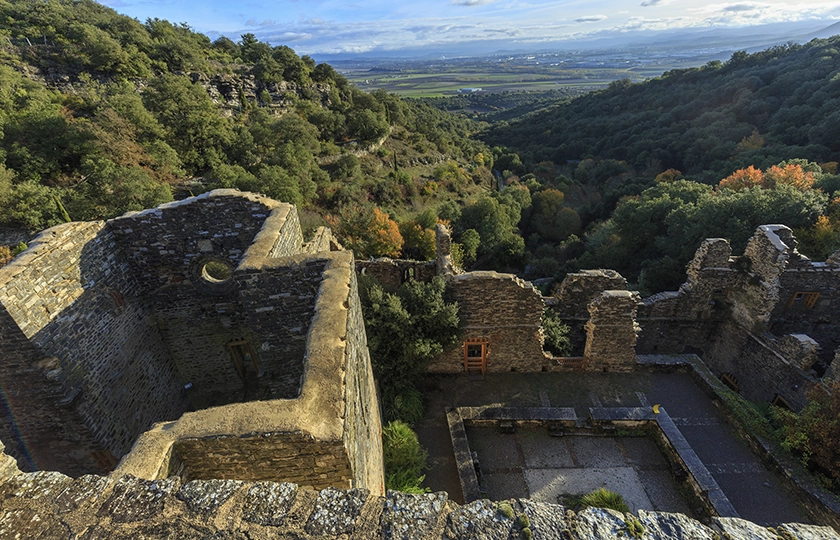
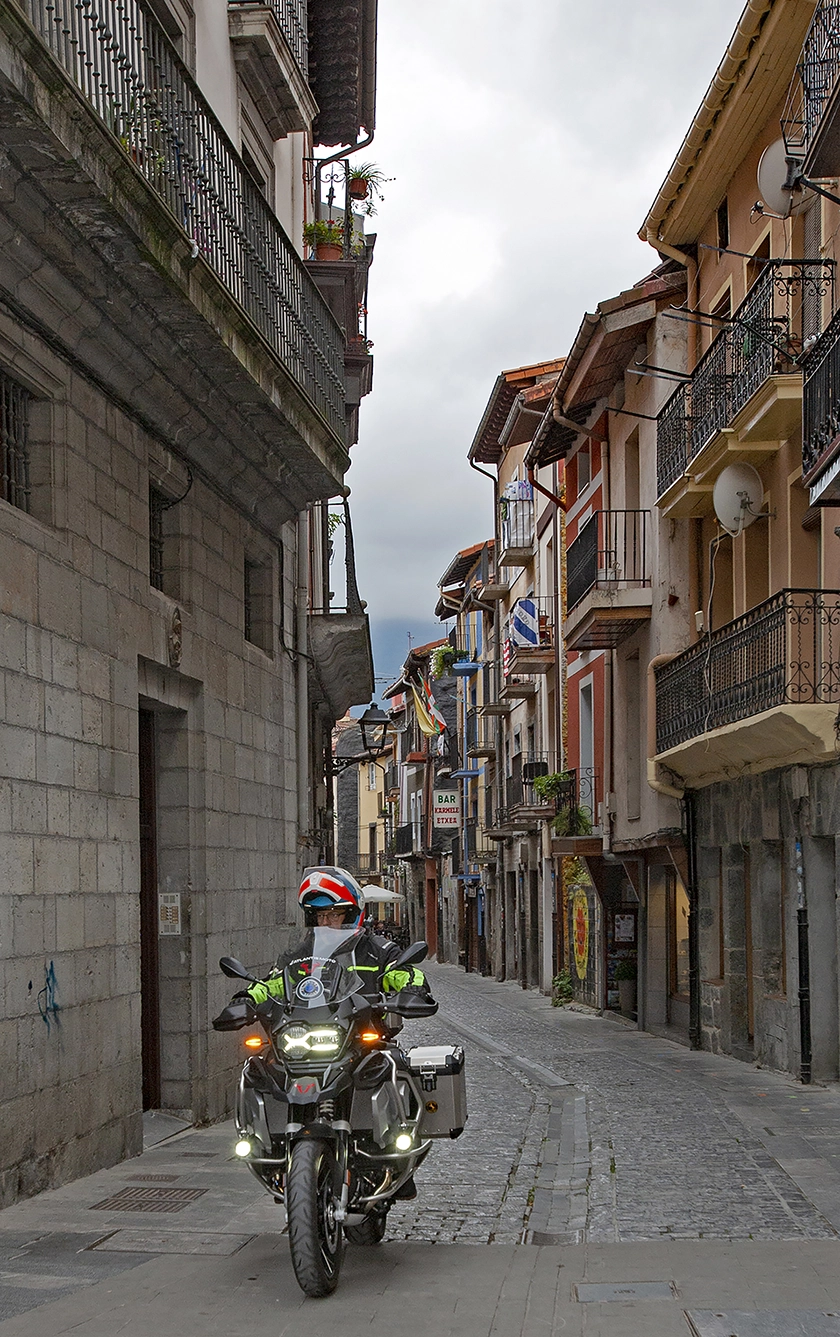
For those of us who love culture as much as we love riding motorbikes, this route is truly fascinating, thanks to the pleasure of winding our way along the roads of Álava through exuberant landscapes, feeling the clean air entering our helmets, knowing that each stop will be another box of surprises, making the kilometres fly by effortlessly and increasing our desire for the hours to stand still.
Cuadrilla of Gorbeialdea
The Gorbeialdea region is divided into two landscape areas: the natural area of the Gorbea-Aramaio Valley foothills and the Llanada Alavesa with its oak and beech forests and green meadows that offer views traditionally associated with the Basque Country. The region has a special appeal thanks to its natural resources, which have been enhanced by the declaration of the Gorbeia Natural Park and the Urkiola Natural Park, as well as its villages and its rich heritage and architectureOf interest are the 16th-century parish church of San Bartolomé in Domaika; the Jugatxi Hermitage in the village of Jugo, an example of typical rural construction; the Sanctuary of Nuestra Señora de Oro; and the typical Basque farmhouses, among which Las Casas de La Encontrada in Aparregui, the Sagasti Farmhouse in Markina, and the Aguirre Tower in Bitoriano stand out.
Natural heritage also plays an important role in this municipality, as 60% of the total area of Gorbeia Natural Park is located in the municipality of Zuia. With the convenience of having a car park where we can leave our motorbikes near the Sanctuary of Nuestra Señora de Oro, we head to Peñas de Oro to admire one of the most beautiful panoramic views of the Zuia Valley, the Gorbeia massif and the Badaia and Arrato mountain ranges.
Little by little, we approach the province of Bizkaia, but first we allow ourselves to be seduced by some incredible places.
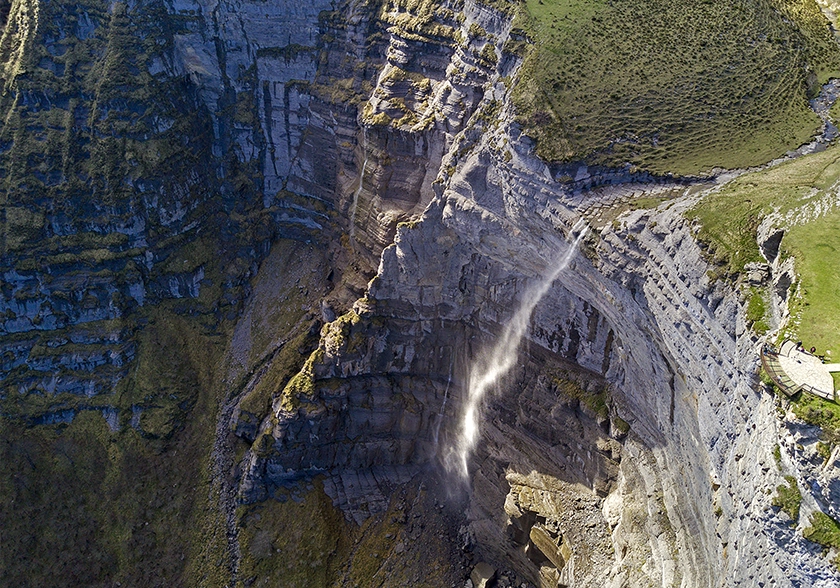
Two natural enclaves stand out in their own right: the Goiuri-Ondona waterfall, a spectacular cascade over 100 metres high located in the lush valley of the Jaundia/Altube River, and the Gorbeia massif and the Nervión waterfall, an impressive cascade over 300 metres high in the Gijibo mountain range. The ideal spot from which to admire this natural wonder is the Monte Santiago viewpoint, a protected natural area in neighbouring Castile and León. We access Salto del Nervión via the A-2625 road, which runs from Orduña to Puerto de Orduña, to the Salto del Nervión car park. The rest of the short walk to the Salto del Nervión viewpoint is on foot.
Villages such as Goiuri-Ondona, Uzkiano, Oiardo with the Goikoama chapel and its 16th-century paintings, and Untza, from where we can access the Lobera de Gibillo, a construction formed by two large stone walls that converge in a moat, used in the past to kill wolves, are interesting suggestions before heading to the town of Orduña.
We cannot overlook the flavours of the products produced in this region: rich cheeses and traditional sweets, refreshing craft beers and tasty meats. With a cuisine linked to the exploitation of the numerous resources offered by the territory, the cheeses of Goiuri-Ondona, Inoso and Sarria stand out, as well as, of course, the award-winning Idiazabal cheese; legumes, potatoes and all kinds of vegetables, not to mention hazelnuts, walnuts, cherries, apples and mushrooms, enrich our pantries to the point of falling in love or honey, which is very common in towns such as Zigoitia and Zuia, which has a museum dedicated to the world of beehives.
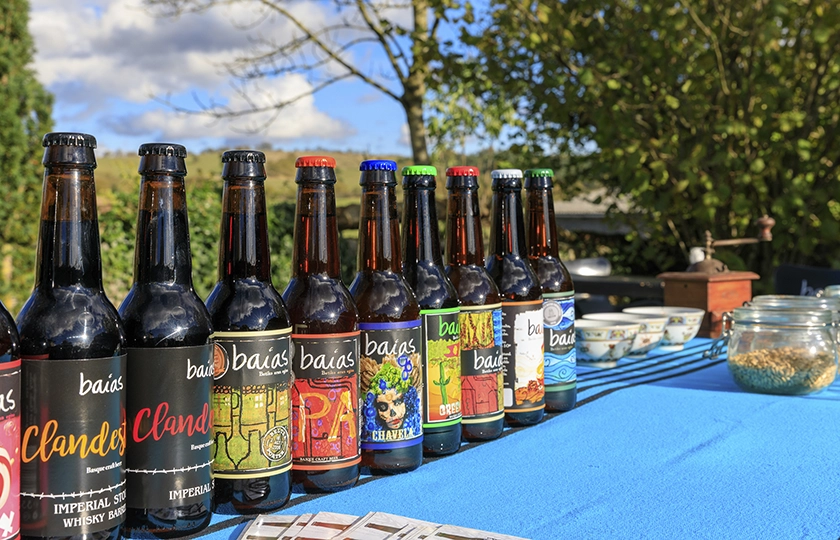
All these ingredients, together with culinary wisdom, make it possible to prepare delicious dishes such as lamb stew, perretxikos scrambled eggs or snails stuffed with perretxikos, which we enjoy in the txokos scattered throughout the region.
The "Aduanera" Town of Orduña
The end of this fascinating route is approaching, but before finishing, we head to Orduña in Vizcaya, an important strategic enclave for border defence and trade since its foundation in 1229. Declared a Historic Site, its old town, culture and traditions, history, the beauty of the Sierra Sálvada landscapes and its cuisine make Orduña an essential tourist destination.
Plaza de los Fueros, the largest medieval fairground in the Basque Country, is home to some of the city’s most representative buildings, such as the Customs House, built between the reigns of Charles III and Charles IV, the Church of the Holy Family, the original 16th-century Town Hall Tower-Palace attached to a 13th-century palace tower, and the Díaz Pimienta and Zaldibar y Mimenza palaces, the former Baroque and the latter Renaissance.
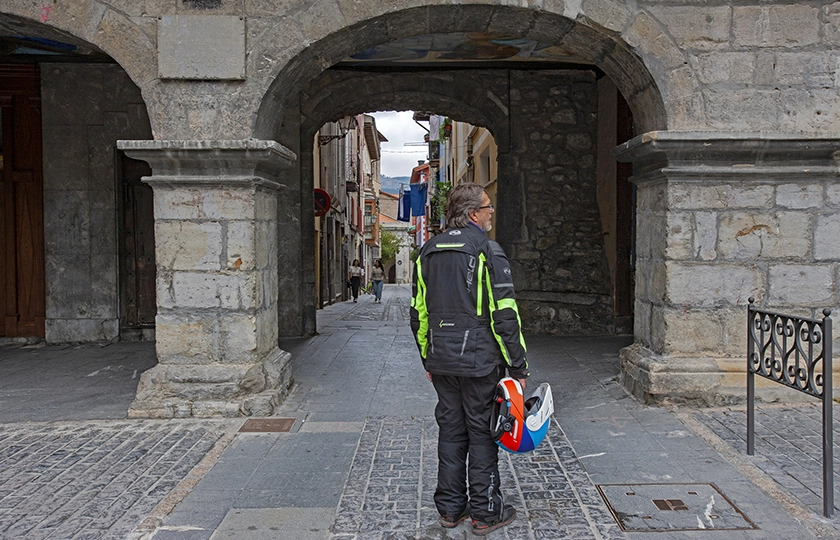
Its cobbled streets, steeped in history, lead us to beautiful spots adorned by the neoclassical Olaso Palace, the Renaissance buildings of Velasco, Ortés de Velasco and Arbieto, and the Gothic church of Santa María de la Asunción. Outside the city lies the Sanctuary of Nuestra Señora de la Antigua, an 18th-century Baroque building.
In Orduña, we find a whole world revolving around gastronomy and local products. Visit the pintxo bars in the numerous taverns scattered throughout the historic quarter as part of the vibrant local life with Orduña’s ‘poteo’ (bar crawl) and sit down at the table where you can’t miss out on a revuelto de perretxiko (scrambled eggs with mushrooms) made with Calocybe gambosa, the most prized mushroom in the culinary art of this land and known as the ‘mushroom of Orduña’, is a delicious experience that we will find hard to forget.
After so many emotions, it’s a good idea to relax a little, and there’s nothing better than a spa. The Hotel Orduña Plaza is located in the old customs house and, with its mineral-medicinal waters, promises restorative moments.
The journey is coming to an end and it is time to say goodbye for now to this land that has so much, offers so much and gives so much. We return home with a fresh desire and determination to return very soon.