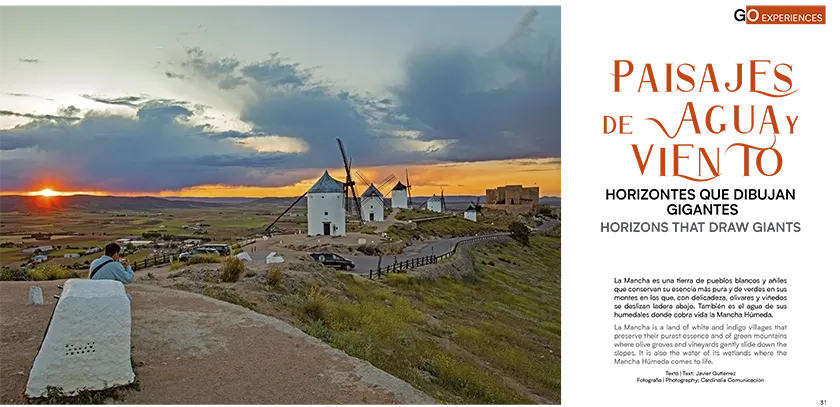
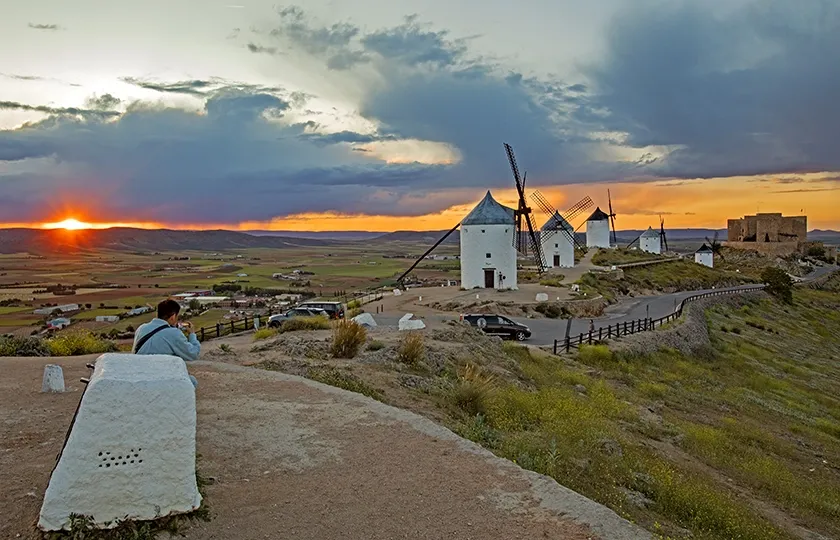
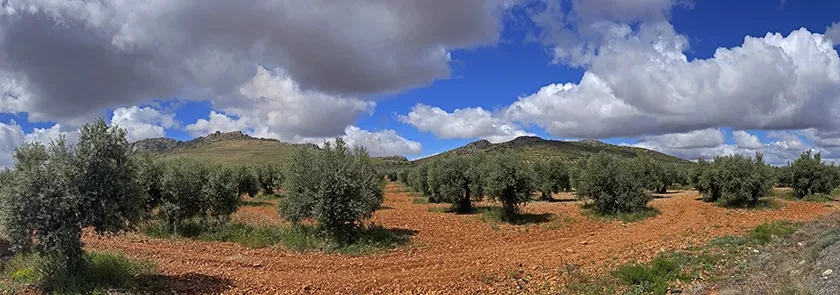
La Mancha is a land of white and indigo villages that preserve their purest essence and of green mountains where olive groves and vineyards gently slide down the slopes. It is also the water of its wetlands where the Mancha Húmeda comes to life.
We let ourselves be carried away by Cervantes’ overflowing imagination to discover some of the settings that he so masterfully captured in his work and, on the way, we make a well-deserved stop at other places that, although they do not appear in Don Quixote, are a must-see for their beauty. On our route we will visit inns, main squares, museums, prisons, castles and hills where the mills are the only true protagonists. We will enjoy festivities that celebrate the figure of Dulcinea, Don Quixote and Sancho Panza and we will taste the gastronomy of La Mancha, both traditional and avant-garde.
At this point, let us do as the protagonist of the play, clean our weapons and armour and saddle up our Rocinante to travel the beautiful landscapes of La Mancha in search of adventure, but let us beware of facing giants, who are not giants.
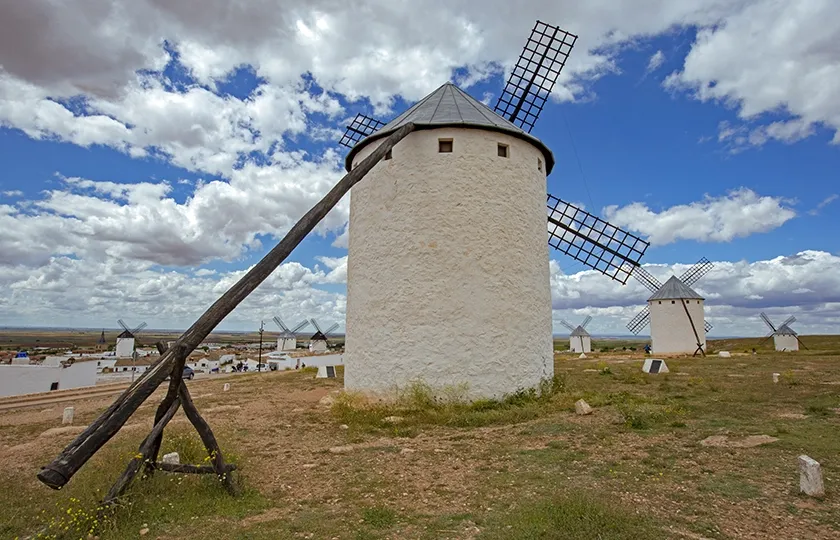
Campo de Criptana, "land of giants"
“Having arrived at this point, they saw thirty and forty windmills standing on the plain, and, as Don Quixote saw them, he said to his squire: -Fortune disposes us better than we ourselves would have wished, for look yonder, friend Sancho Panza, where there stand thirty or more monstrous giants, all of whom I intend to give battle and death, and with whose spoils we shall begin to make our fortune; for this is a just war, and it is God’s good service to sweep such an evil race from the face of the earth.’ ‘What giants?’ said Sancho Panza…-“
(Part I, Chapter VIII)
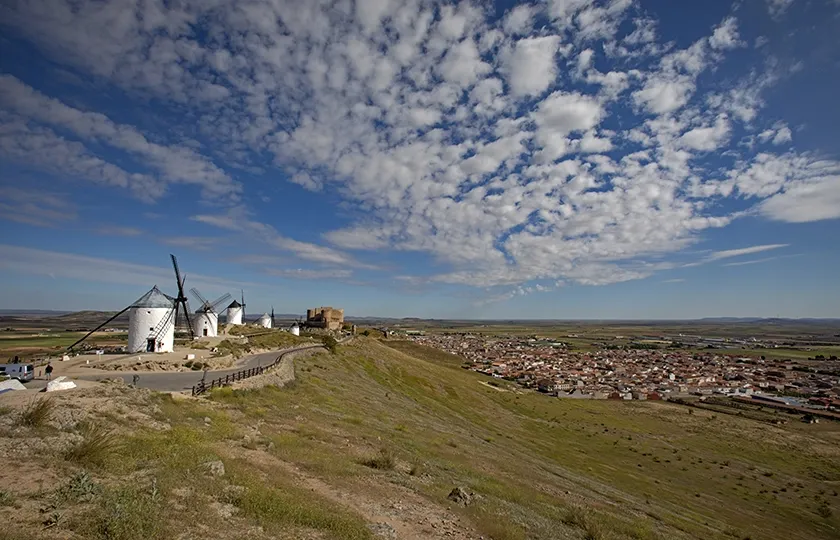
We arrive at Campo de Criptana and, as happened to Don Quixote, we come across the windmills. In the Sierra de los Molinos there are thirteen of these characteristic La Mancha buildings of the thirty-four that existed in 1752. And of those dozen, three of them – Burleta, Infanto and Sardinero – still have the original structure and machinery from five hundred years ago.
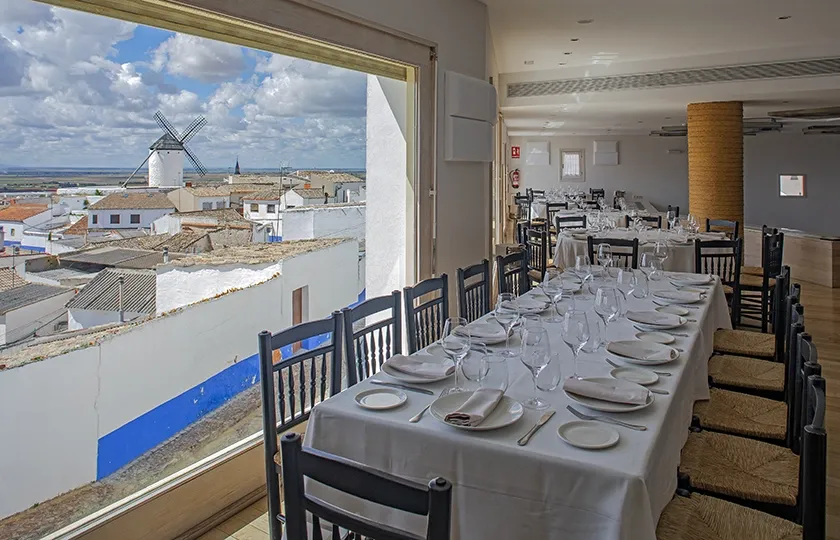
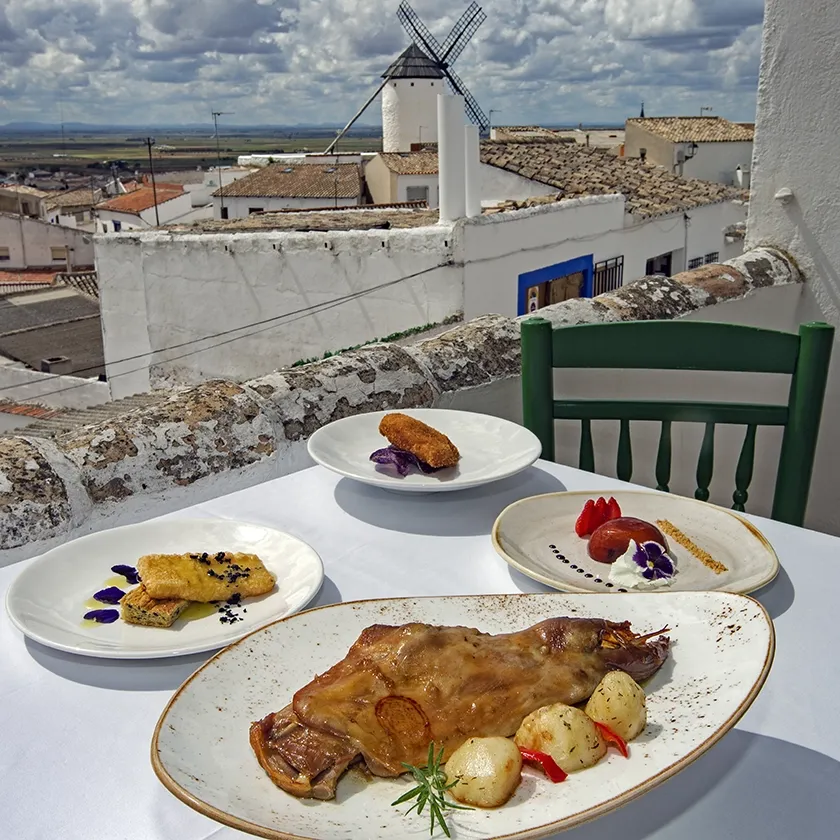
In the Sierra de los Molinos and with wonderful views of the village and the Albaicín Criptanense, we find a place that our palate is grateful to visit, Las Musas, a restaurant where they have rightly managed to respect the environment and provide it with unique and singular spaces. Ideal for discovering La Mancha gastronomy with a perfect balance between tradition and modernity, a cuisine that respects and takes care of the raw materials and is committed to new creations. An excellent culinary experience that is completed on the terrace while enjoying the music, as Las Musas is heir to a great musical tradition, or in the Cuevas de La Marcela, typical old houses of the area converted into a dance floor. A visit to Campo de Criptana would not be complete without a stroll through the Albaicín Criptana neighbourhood, a pleasant walk through narrow streets with steep slopes, low houses with white façades and indigo plinths, reddish tiles and wrought iron grilles.
Alcázar de San Juan and Consuegra
Very close to Campo de Criptana is Alcázar de San Juan which, although it is not mentioned in Don Quixote, has an important link with the author. In fierce competition with Alcalá de Henares, the town “alcacereña” defends the claim that Cervantes was baptised here. And it is in the church of Santa María la Mayor where the baptismal certificate is kept, which supposedly certifies that on 9 November 1558, Blas de Cervantes Saavedra and Catalina López baptised one of their sons with the name of Miguel.
The Calderico hill in Consuegra could well have been the scene of Don Quixote’s battle against the giants. Of the thirteen windmills that were there in the past, twelve have been recovered, some with a Manchegan theme and others dedicated to chapters of Don Quixote. Vital for centuries to the development of the region, their operation seems simple, but neither the machinery nor the structure is. In the mill known as Rucio it is possible to admire the catalina wheel, the holm oak lantern and the beam loom which, together with the poplar blades and the pine roof topped with a metal ceiling, form the heart of these great mills. The castle, a former Muslim fortress dating from the Caliphate period, completes the marvellous scenery of the hill.
Puerto Lápice, where he was knighted
“…they followed the road to Puerto Lapice, for there, said Don Quixote, they could not fail tofind adventures in abundance and variety, as it was a great thor-oughfare…”
(Part I, Chapter VIII)
It is more than four hundred years since Cervantes gave birth to the most important work of Castilian literature and even today it has not been possible to determine where Don Quixote started from. Some theories claim that his wanderings began in Esquivias, Urga or Quintanar de la Orden, all of them in the province of Toledo, and others that it was in the towns of Alcázar de San Juan or Argamasilla de Alba in the province of Ciudad Real. If it was in the latter, Puerto Lápice would be the place where he was knighted.
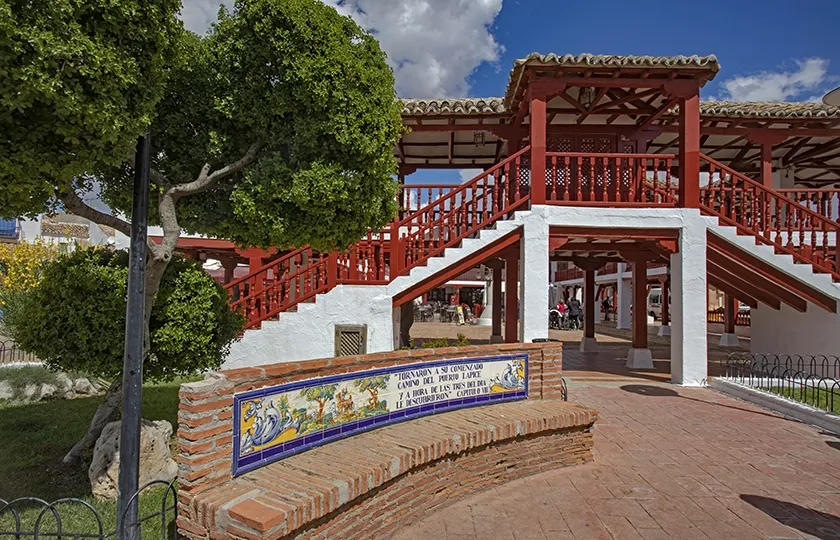
The town welcomes us with its splendid Plaza Mayor, known as the Plaza de la Constitución. A beautiful example of a typical La Mancha square with two storeys of wooden arcades painted in an ochre colour, it is a meeting place for locals and a must-see for outsiders.
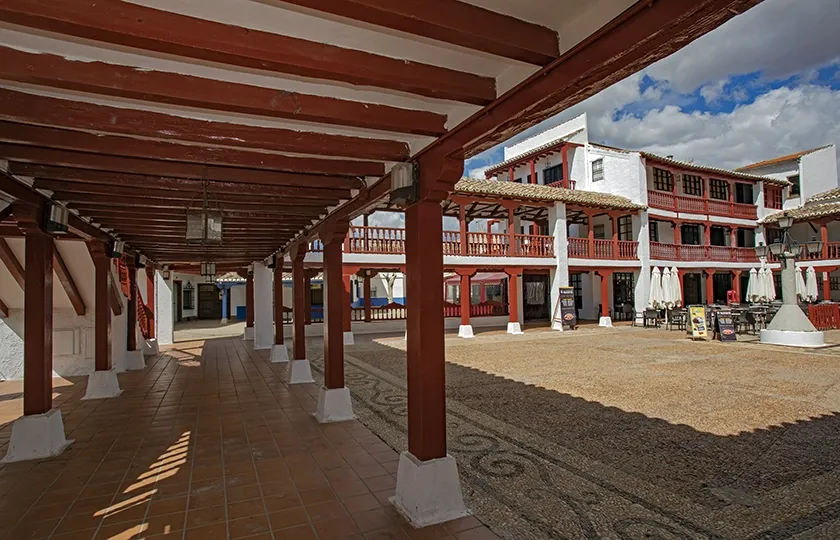
In the 16th century, Puerto Lápice did not exist as a town, but even then it was known as Ventas de Puerto Lápice because of the ventas that existed in this place of passage. Cervantes does not give the name of the inn where Don Quixote was knighted, but it could well have been the one known today as Venta del Quixote.
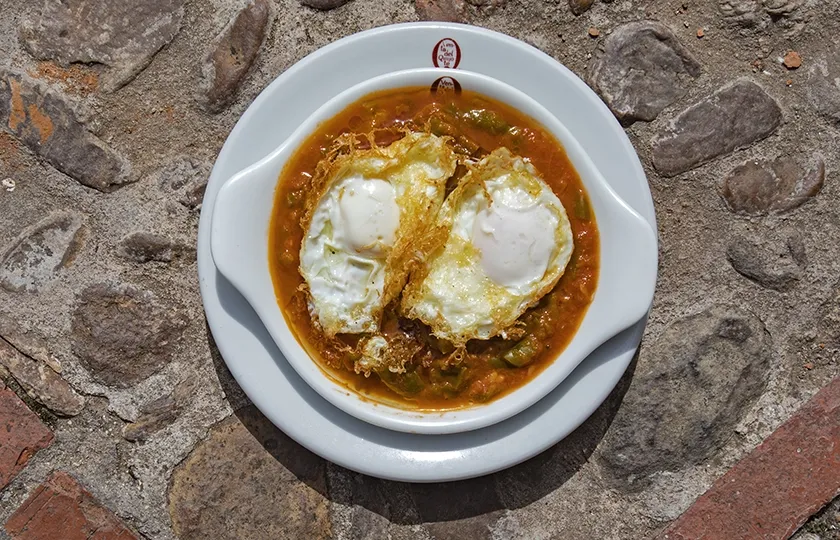
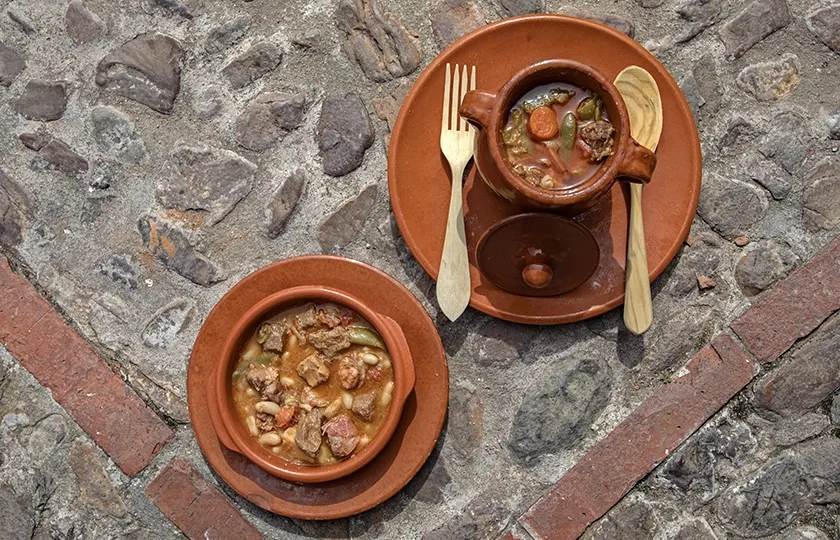
This inn, which has been providing food and accommodation for walkers since the 17th century, is one of the essential places in La Mancha to taste the best Manchegan cuisine. Since 1966, José Luís Legorburu, winner of the Silver Medal for Merit in Tourism, has been offering an excellent Cervantine gastronomic recipe book and his menu, which has remained unchanged since the 1970s, includes dishes such as gachas de matanza, migas de pastor, olla de la venta and caldereta de cordero, among others. It also has an interesting exhibition revolving around Cervantes’ character with oriental illustrations set in the work, a small pottery museum and a souvenir shop.
Tablas de Daimiel National Park
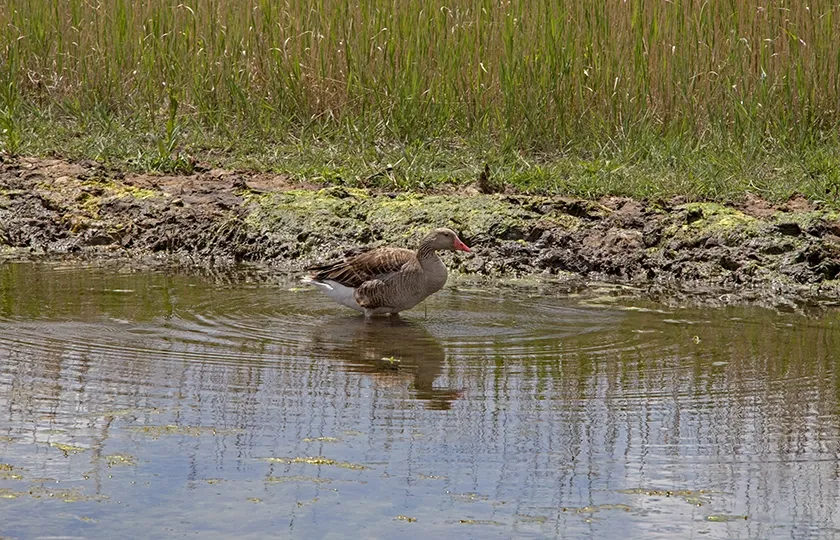
We leave for a moment the scenery travelled by the Knight of the Sad Figure to visit the Tablas de Daimiel, an endless number of unforgettable places and spaces that captivate the senses. This wetland, practically unique in Europe and the last representative of the ecosystem called fluvial tables, so abundant in the past in the central plains of the Iberian Peninsula, is formed by channels with small islands between them, making it the ideal place to observe species such as the shoveler duck or the red-crested pochard, the kingfisher, the purple heron or the marsh harrier. Above all, it is perfect for a family getaway. It has three pedestrian routes that start from the visitor reception centre: the Isla del Pan, the Laguna Permanente and the Torre de Prado Ancho trails.
Argamasilla de Alba, "in a place in La Mancha..."
Various studies grant Argamasilla the honour of being the birthplace of Don Quixote and support this claim with a study produced around 1765 that the Royal Spanish Academy of Language took into account in the corrected edition of 1780. This study is based on the fact that Cervantes supposedly began writing the work here and that Fernández de Avellaneda dedicated his apocryphal Quixote to the residents of Argamasilla as the homeland of the knight-errant. In addition, there are others such as the fact that Cervantes was inspired to create the character of Don Quixote by the figure of Rodríguez Pacheco, a resident of Argamasilla, of whom we can admire in the parish church an ex-voto painting donated by himself. As well as the verses that Cervantes dedicates to “the academics of Argamasilla, place of la Mancha, in life and death of the valiant don Quixote of la Mancha”. Finally, the writer José Azorín wrote: “What is there in the atmosphere of this town,” he asked, “that has made possible the birth and development, precisely here, of this strange, beloved and painful figure?”
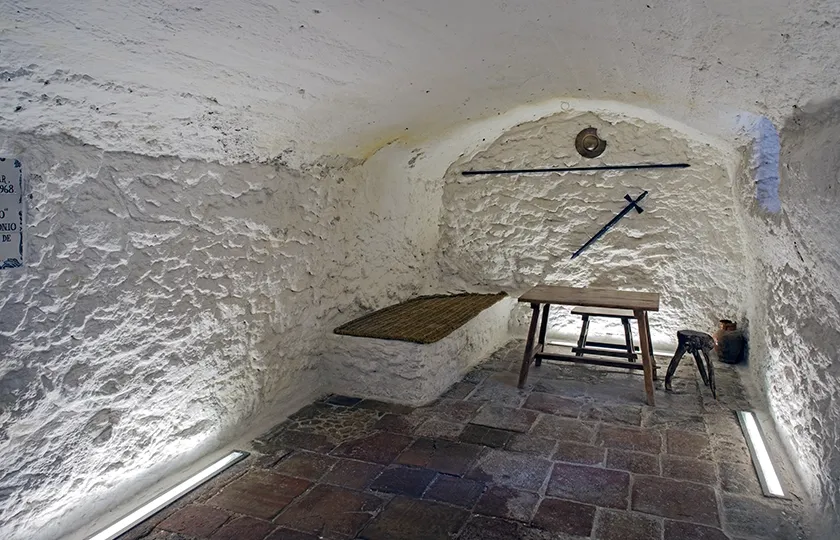
A lesser-known facet of Cervantes was that of tax collector. It is known that this work led him to prison on several occasions, Argamasilla being one of the places where he is said to have been imprisoned for a short period of time. Supposedly, the place chosen for his imprisonment was the Cueva de Medrano, the former cellar of the Medrano family home and where tradition tells us that the first pages of Don Quixote were printed.
But the spirit of Quixote can be felt throughout the town thanks to the statues of different characters from the work, and the replicas of the drawings made by the Ramagosa team for the cartoon series “Don Quixote de la Mancha” are particularly interesting.
El Toboso, where the memory of Dulcinea lives on
“But at length the next day, at daybreak, they descried the great city of El Toboso, at the sight of which Don Quixote’s spirits rose andSancho’s fell, for he did not know Dulcinea’s house, nor in all hislife had he ever seen her, any more than his master; so that theywere both uneasy, the one to see her, the other at not having seenher, and Sancho was at a loss to know what he was to do when hismaster sent him to El Toboso”
(Part II. Chapter VIII)
El Toboso is another of the towns mentioned in Don Quixote and the place where the great love of our protagonist, “the peerless Dulcinea del Toboso“, lived. Undoubtedly, the most important monument in El Toboso is the church of San Antonio Abad, “the cathedral of La Mancha”, which, when seen by Don Quixote, gave rise to that famous phrase in the work that said “with the church we have hit, Sancho“.
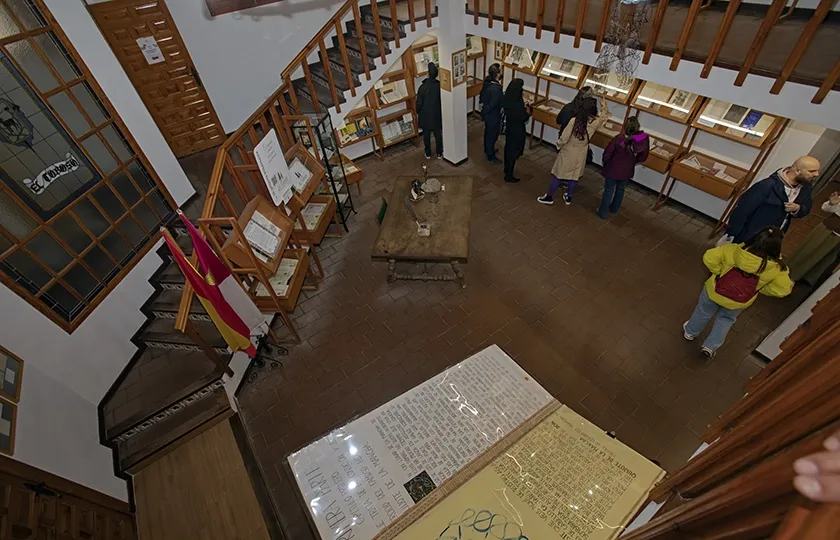
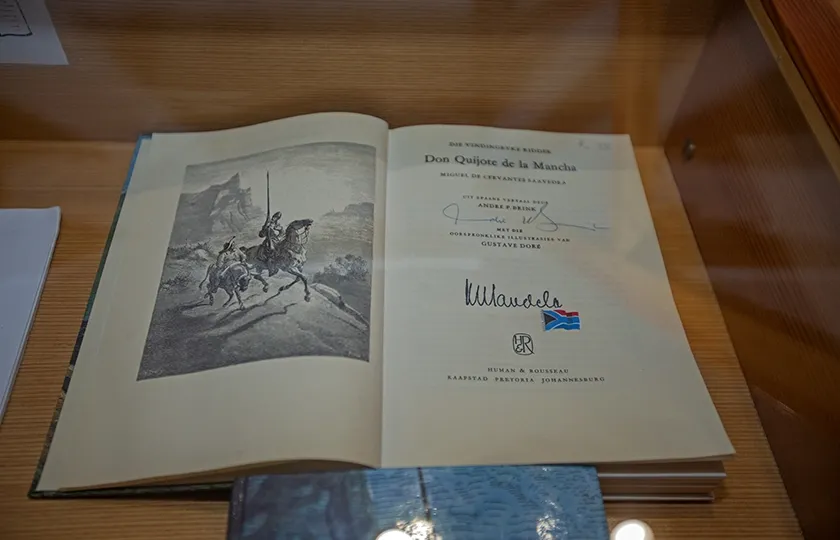
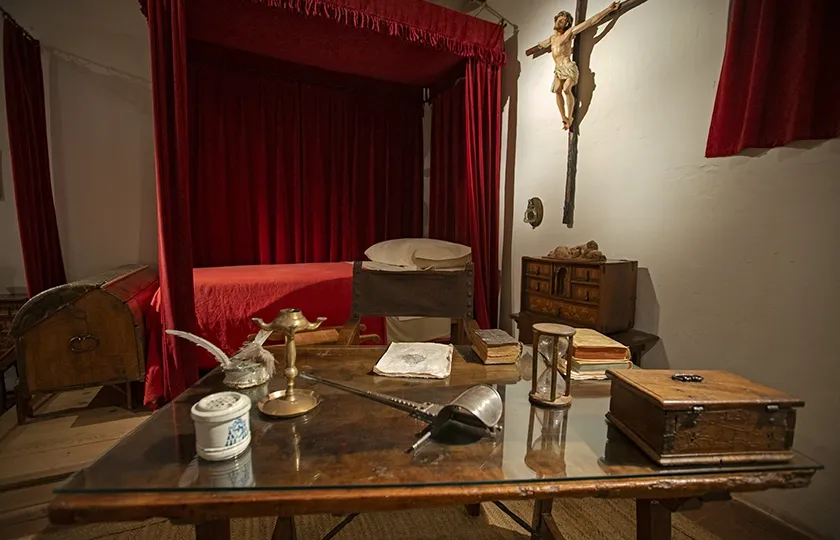
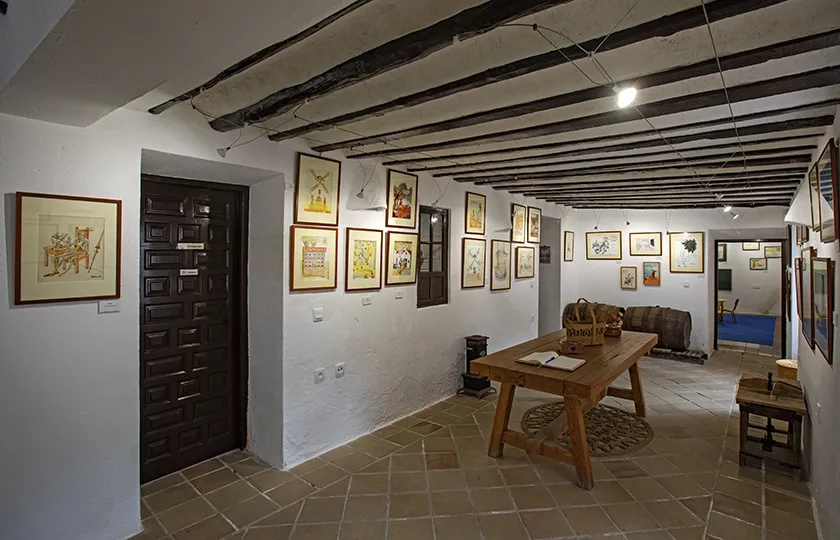
This is one of the towns that pays a profound tribute to the work of Cervantes and his characters, reflected in three museum spaces. The Cervantino Museum, which exhibits editions of Don Quixote in more than seventy languages, many of them signed by political figures such as Mussolini, Fidel Castro, Ronald Reagan and Nelson Mandela, as well as cultural figures. The Museum of Graphic Humour “Dulcinea”, born from a loan from the cartoonist and humorist Mena, which has a collection of drawings, unique in the world, made up of illustrations by Spanish humorists such as Mingote, Mendi, Peridis or Chumy Chumez, as well as foreigners. And the Museo Casa de Dulcinea, where you can visit the kitchen, the pantry, the dovecote, the corrals, an oil mill, a grape press, the office and the bedrooms.
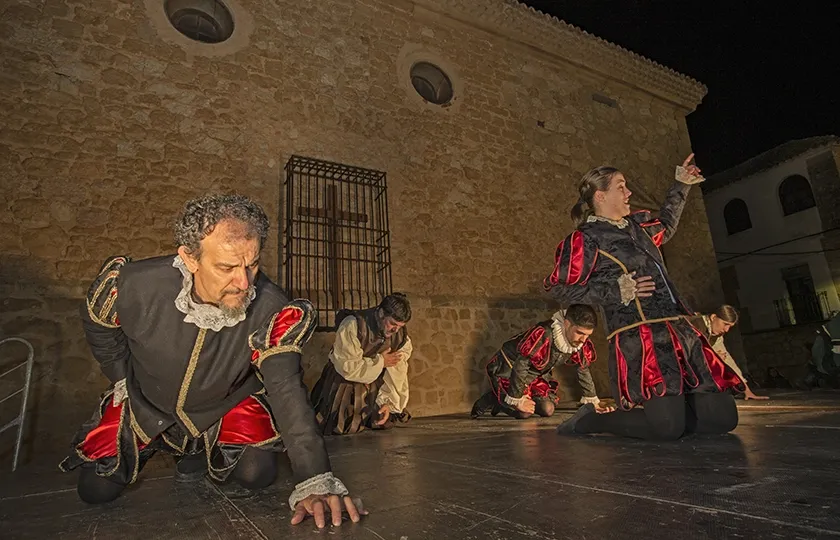
Every year the town turns its attention to the Jornadas Cervantinas in honour of Dulcinea, where the parades, with the protagonists dressed in typical Cervantes costume, the street plays, the Cervantes Market, the exhibitions of typical dishes or the wine tastings make up an interesting programme of activities that each year attracts hundreds of visitors.
Lagunas de Ruidera Natural Park
“…and that, first of all, he meant to enter thecave of Montesinos, of which so many marvellous things were re-ported all through the country, and at the same time to investigateand explore the origin and true source of the seven lakes com-monly called the lakes of Ruidera.”
(Part II. Chapter XVIII)
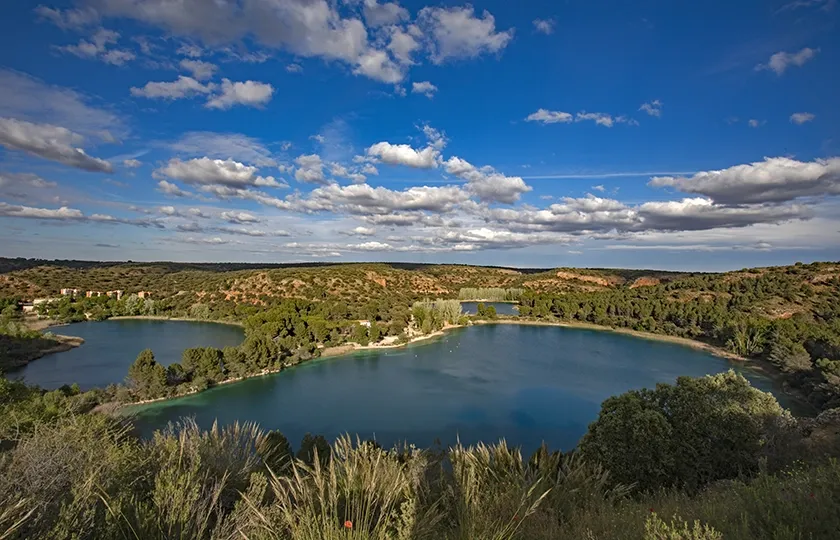
Fifteen lagoons spread over thirty kilometres give life to a place of great beauty, the Lagunas de Ruidera. Declared a Natural Park in 1979, they are located on the borders of the provinces of Ciudad Real and Albacete, in what is known as the Upper Guadiana Valley. A natural oasis in the middle of Campo de Montiel that surprises visitors with its crystal clear waters of an intense turquoise blue, although they change colour depending on the weather, the time of day and the incidence of the sun, or the waterfalls that occur when one lagoon overflows, flooding the next, the latter being one of the most characteristic features of this natural space. Enjoy its refreshing waters, enjoy its refreshing waters, practice water sports or go on the different routes, free or guided, which will provide you with different views of the lagoon complex and will take you to places as interesting as the castles of Peñarroya and Rochafrida, the Cueva de Montesinos, named in one of the chapters of Don Quixote or the El Hundimiento waterfall.
Tembleque, one of the most beautiful squares in Spain
“And so I say this labourer, coming to the house of the gentleman I spoke ofthat invited him, rest his soul, he is now dead; and more by token he died the death of an angel, so they say; for I was not there, forjust at that time I had gone to reap at Tembleque…”
(Part II. Chapter XXXI)
We follow the road that brings us to the last stop on this exciting and suggestive journey, the town of Tembleque, in the province of Toledo, to admire what is considered one of the most beautiful main squares in this country. An emblem of 17th century popular baroque, it follows the outline of the traditional corrales de comedias, being also used as a bullring and giving access through one of its three doors to the callejón de toriles. Porticoed with Tuscan columns, the corridors are supported by wooden pillars and the parapets are decorated with the cross of the military order of the Knights of St. John of Jerusalem. The tower stands out, which serves as a stage for the authorities during celebrations.
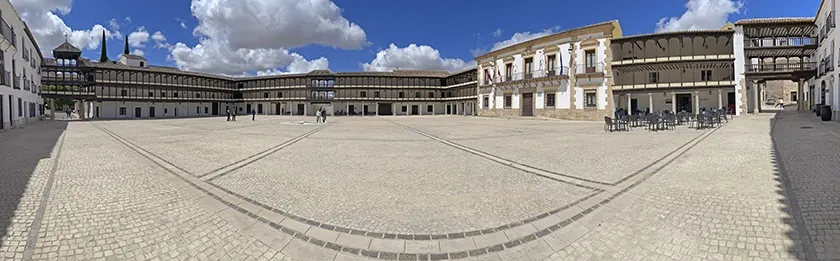
Without a doubt, this is the ideal place to end this journey, sitting quietly on one of the terraces of the square, while admiring this beauty and remembering the marvellous scenery recreated by the great Cervantes.