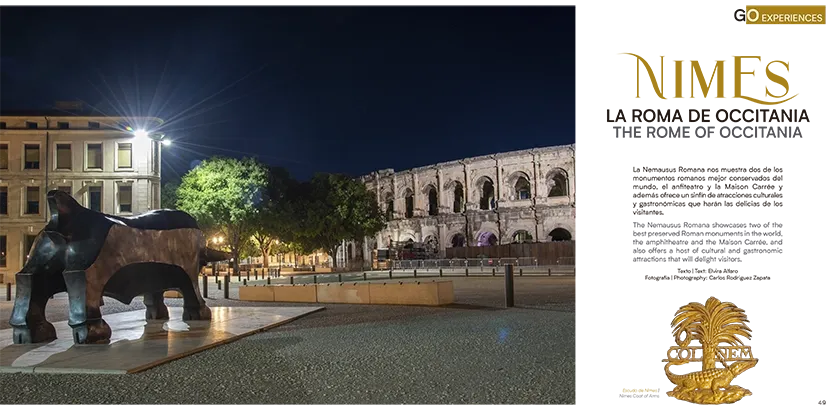
The Nemausus Romana shows us two of the best preserved Roman monuments in the world, the amphitheater and the Maison Carrée. and also offers a host of cultural and gastronomic attractions that will delight visitors.
Nimes is known and recognized as the “City of Water” because, in this place, water flowed from a great fountain that the Romans dedicated to the God Nemausus.
The beautiful Fontana Gardens were created in the 18th century around the fountain and were the first public gardens in Europe. They are adorned with large stone vases and huge statues, as well as hundreds of trees, including pines, cypresses and laurels.
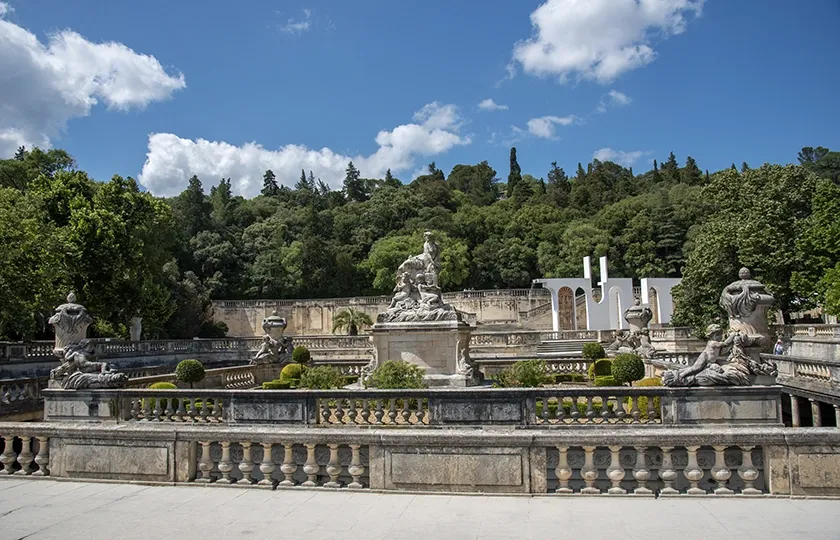
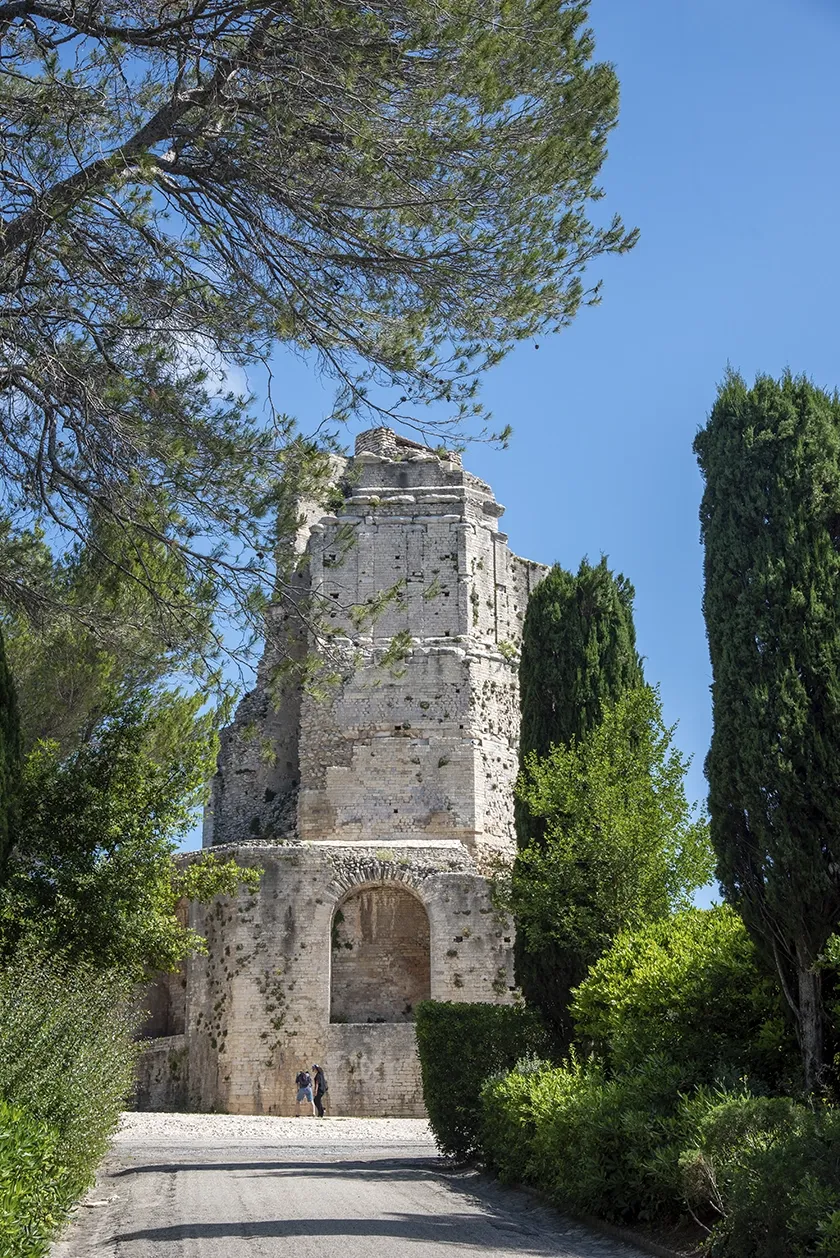
Framing the garden, from the top of a promontory, is the Torre Magna, one of the towers of the ancient Roman city wall, which was destroyed and its stones used for the construction of buildings, of which only the Torre Magna and two gates of the wall remain. From this privileged vantage point we enjoy a beautiful view of the garden and the city.
The arrival of the Visigoths put an end to the Romans and their prosperity, but it is from the year 1000 onwards that Nimes is revived with the silk industry, and later it is the water, once again, that brings wealth to the city. This time with vineyards, olive groves, livestock and textiles exported to Europe and the Spanish Indies.
We arrived in Nimes by train from Madrid, in an entertaining seven-hour trip that took us to the city center. Many may not know that from Madrid you can reach Marseille by Ave, directly without having to change trains. In France it stops in Perpignan, Narbonne, Montpellier and Nimes, which is our destination, although the train will continue to Marseille. A sustainable way to visit these French cities full of charm, which can be reached directly, comfortably and quickly, thanks to the AVE service to France (Ave International between Spain and France).
Very close to the station, less than 300 meters, is our hotel, the Appart`City Confort Nimes Arenes, in the historic center, just a minute walk from the Roman Amphitheater, so we left our bags and wishing to stretch our legs we started touring this city that is now white and bright and also became famous for the so-called “fabric of Nimes” (serge de Nimes), which was worn by the peasants and later became an exclusive way of sewing jeans, which is why today it is known all over the world as “denim”, as our guide tells us.
"The Arena”, the majestic Roman amphitheater of Nimes
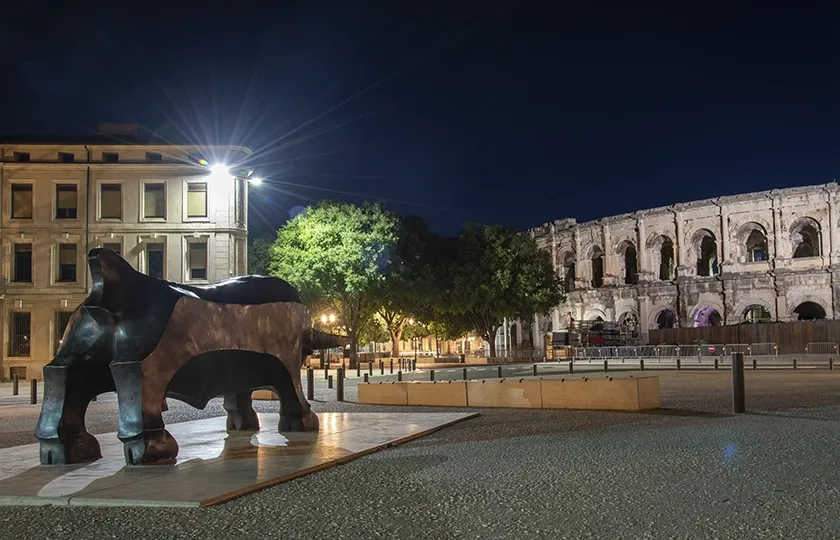
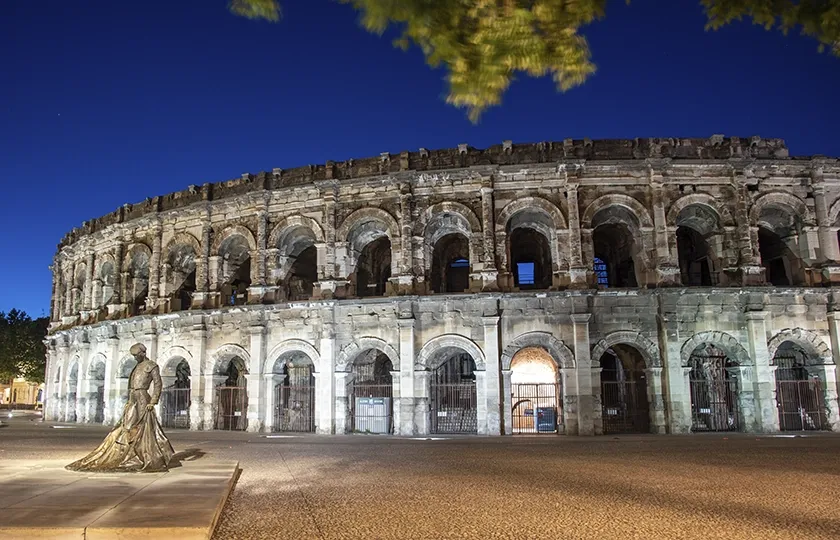
Nimes is known worldwide for having one of the best preserved Roman monuments in all of Roman Gaul, I am referring to the magnificent two-story amphitheater, called by the people of Nimes “the Arena”.
It is built in white limestone and has very little restoration, due, among other things, to the fact that it always fulfilled a habitable mission and therefore never collapsed. At one time it was a fortress-dwelling of the Viscounts of Nimes and later housed a neighborhood of about a hundred houses, which even had a chapel. And so it remained until it was returned to its original state in the 18th century, having preserved its structure intact.
Today, bullfights continue to be held in its arena, as well as different events such as concerts, theater performances, etc. It is not surprising that here came here characters of the stature of Hemingway, Picasso, Ava Gardner, among others.
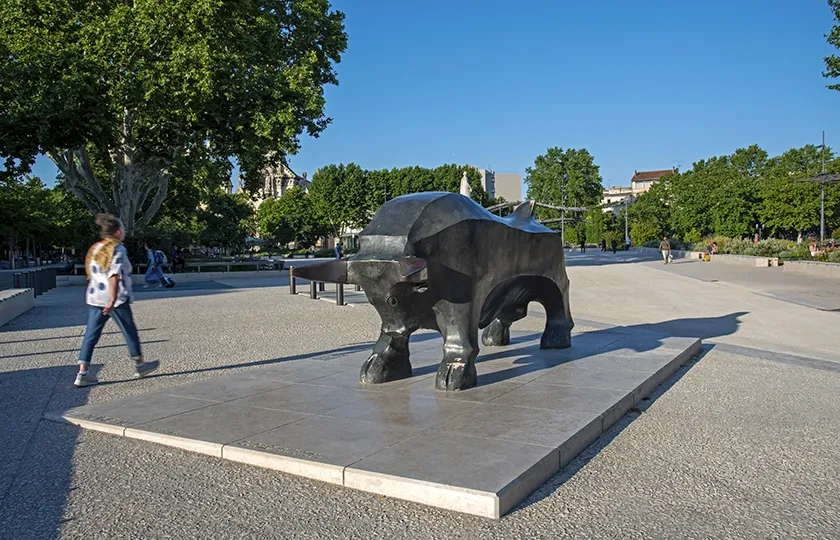
The sculpture of the bullfighter Nimeño II, with his cape open at his feet, welcomes us in front of the fabulous Roman enclosure, considered the best French bullfighter of the 20th century.
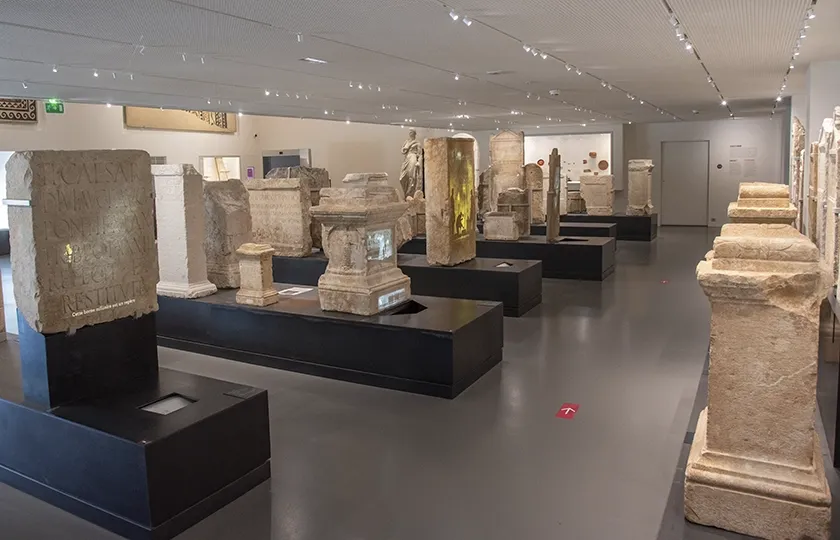
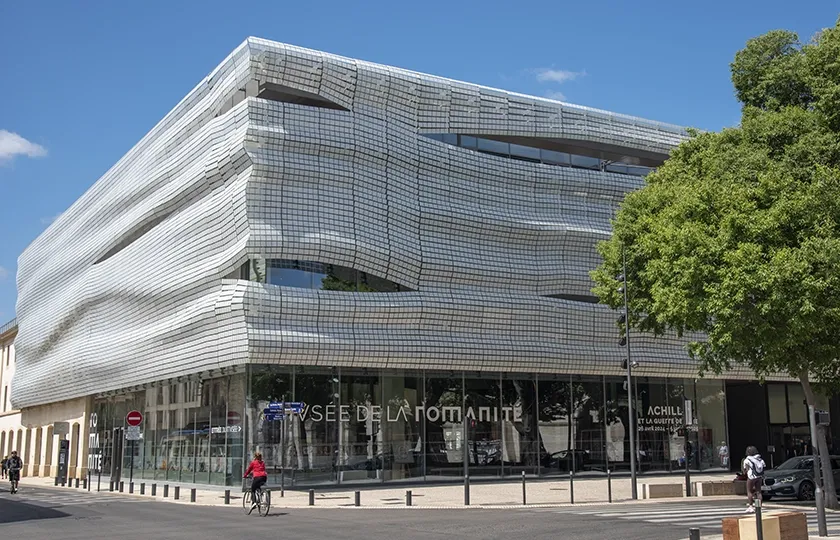
Next to it we find another surprising building, but this time for its modernity, it is the Museum of Romanity (Musée de la Romanité).
This fantastic building is one of the largest contemporary architecture projects in France. Its incredible facade of translucent and undulating glass, as if it were a sea in continuous movement, takes us into the history of the city so that we can discover its rich heritage through time, from the 7th century BC to the Middle Ages.
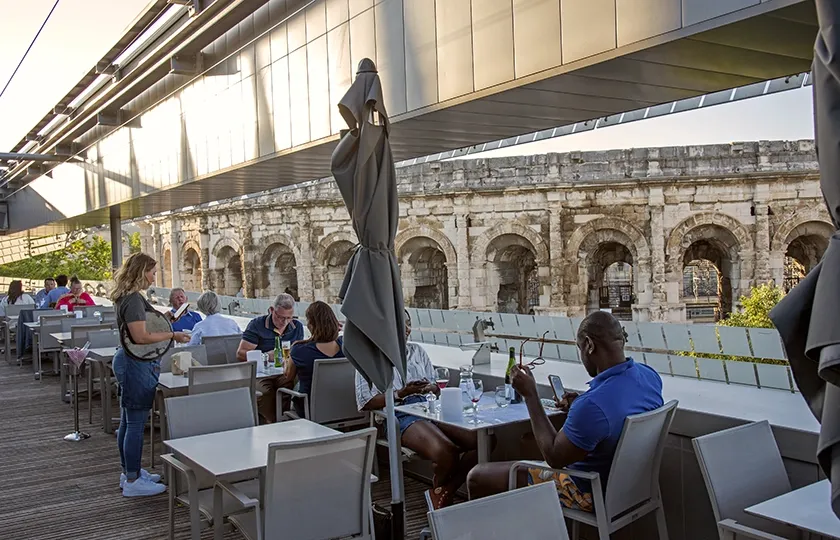
On the terrace of the museum, surrounded by greenery, we find an incredible 360º panoramic view of the city and its Roman monuments.
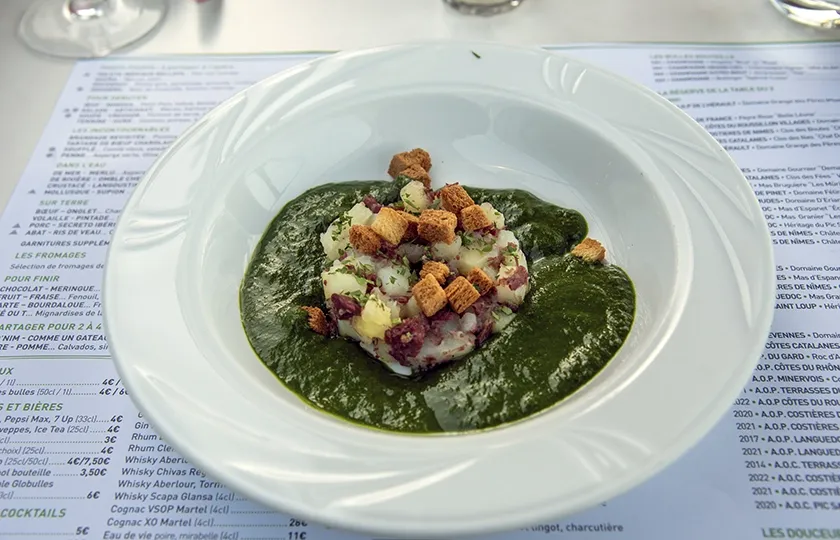
Also on the terrace of this unique building, we enjoyed lunch at the restaurant “La Table du 2”, a brasserie of traditional and inventive cuisine, from which we have the amphitheater at our feet while tasting some of the typical dishes of the city, such as the exquisite cod brandade.
La Maison Carré: one of the best-preserved temples of the Roman world
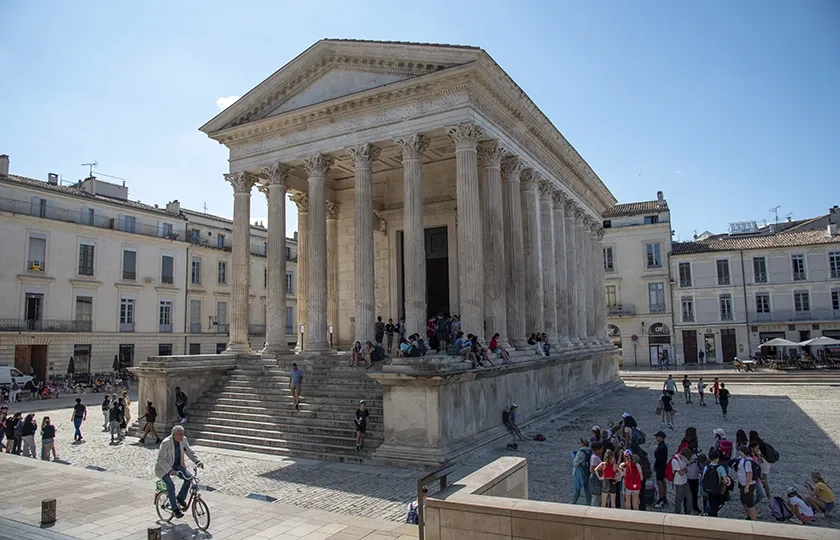
We stroll through the narrow streets of the historic center, called Ecusson, and so we walk from the arches of the Arena to the medieval Cathedral of Notre Dame-Et-Saint-Castor, to later arrive at another of the great Roman monuments of the city, the Maison Carrée, (the Square House, which is not such, but rectangular). Built in the first century AD, it was dedicated to the grandchildren of Emperor Augustus. This magnificent building seduces by the harmony of its proportions, the elegance of its columns with Corinthian capitals and the delicacy of its architectural decoration. It illuminates the city with the white limestone of its construction and is in a perfect state of preservation through the ages. This is also because it was always occupied, sometimes as the city’s Town Hall, and even served as a church at another time in its history.
Just across the street is another of the city’s most important buildings. We are referring to the Carré d’Art, built in steel and glass by architect Norman Foster, which houses the Museum of Contemporary Art and the Municipal Library.
Lunchtime is approaching and a few meters from the Maison Carrée, we find the delicious and cool terrace of “Questel”, a brasserie with tasty cuisine using local and seasonal products for a surprising menu, where we tasted a great magret de canard, to take strength and continue enjoying this wonderful city.
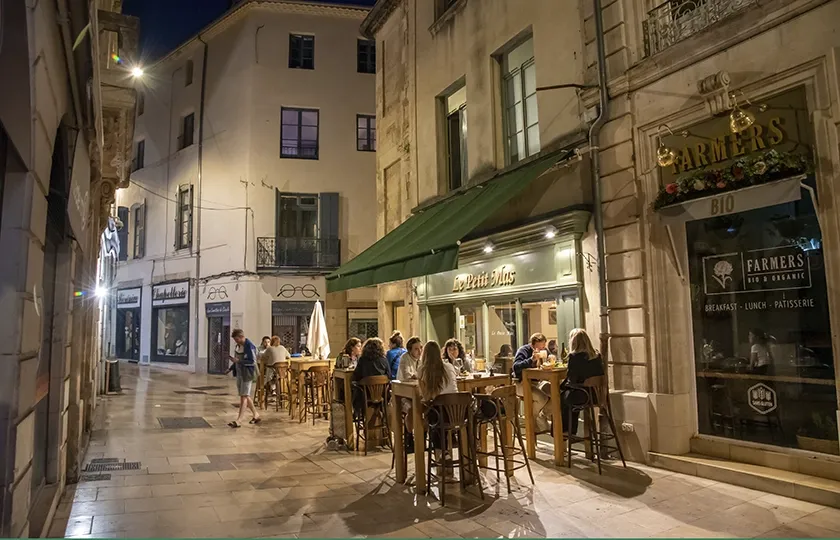
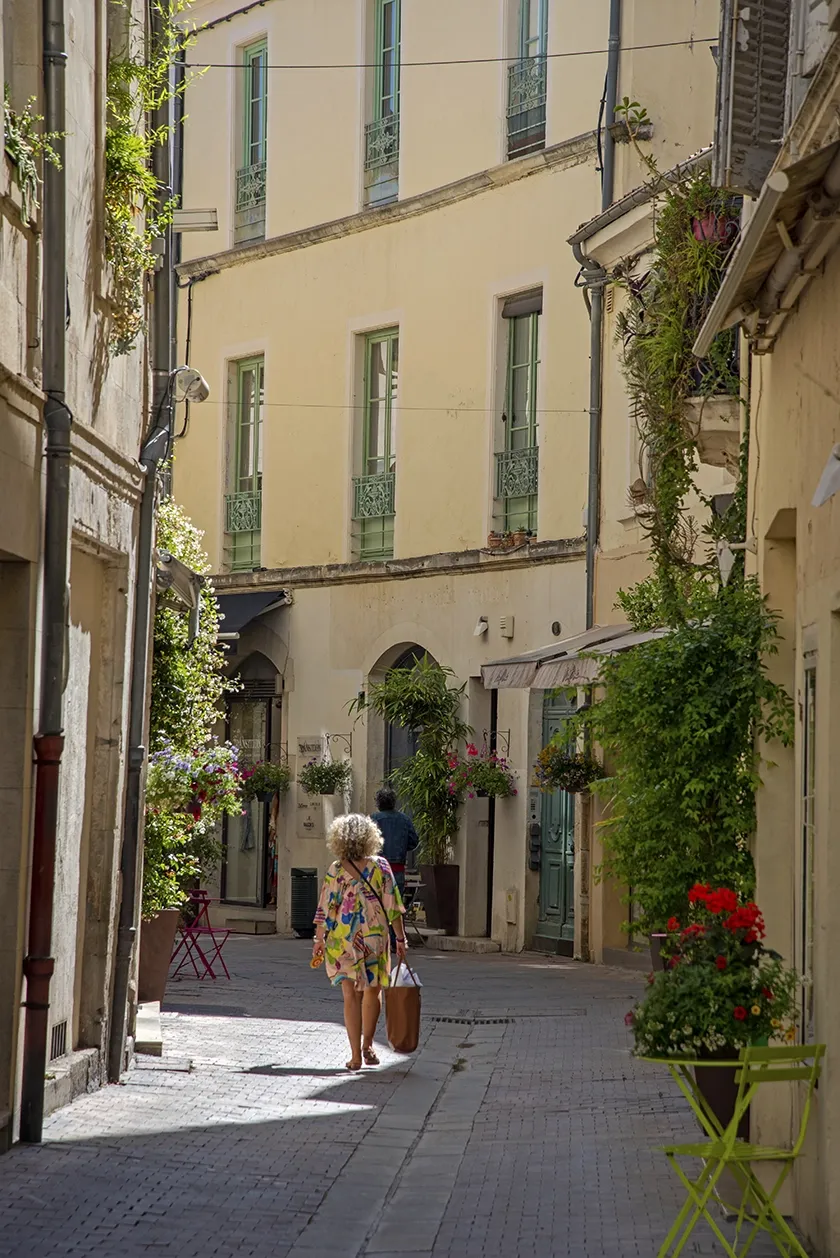
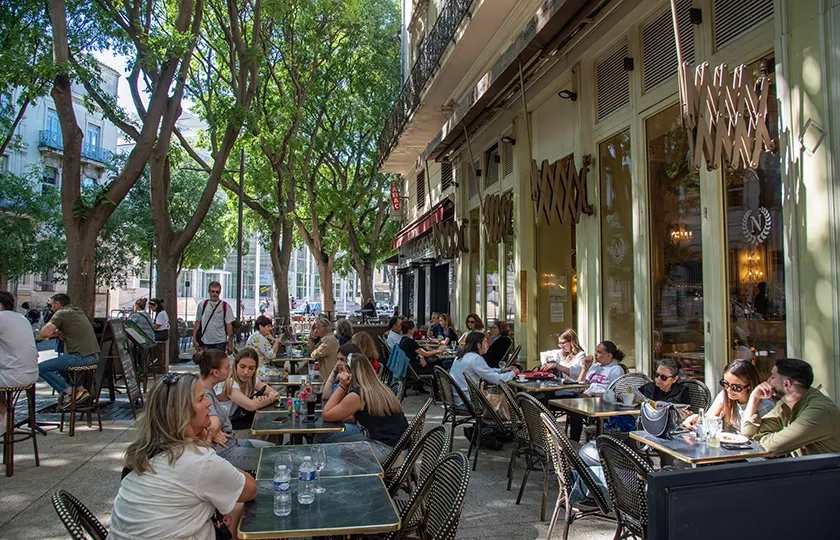
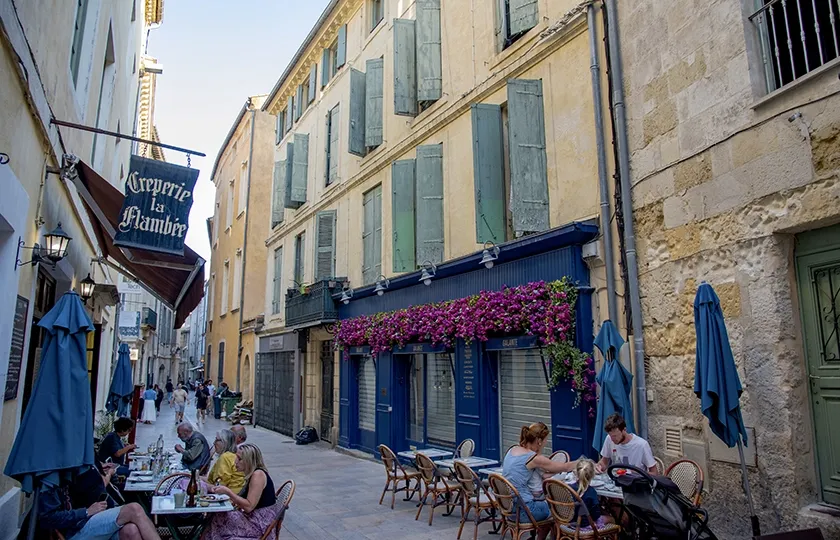
After lunch we walk through its narrow pedestrian streets, in the shade of its interesting buildings, to enjoy the atmosphere of its many terraces and restaurants, where Nimeños and visitors, enjoy a moment of rest. The best thing to do is to get lost in these streets where the stores with their beautiful shop windows will attract you to buy typical products such as cod brandade, chocolates, sweets, and others that you will discover little by little. Some of its squares invite you to take a snack, such as the Place de l’Horloge, which in 1530 saw the birth of Jean Nicot, the importer of tobacco in France who gave birth to the alkaloid known as “nicotine”, or the Place du Marché, presided over by a fountain with a crocodile, which is the coat of arms of the city. A Roman coin found in the sixteenth century where the palm tree and the crocodile were carved is what made it become the emblem of the city.
After the walk through streets decorated many of them with bullfighting motifs, in fact, there is a Museum of Bullfighting Cultures, which opened in 2002 to celebrate the fiftieth anniversary of the fair of Nimes, we stopped for dinner in the courtyard of a hotel that houses the restaurant Gigi, which was recommended to us and where we savored a rich, generous and comforting cuisine, with Mediterranean flavors.
As in so many other places in France, also in Nimes “Les Halles”, the market, is worth a visit. The great variety and colorful fruits and vegetables, together with the fresh fish and meat, are a real treat for the senses.
The Pont du Gard. An aqueduct for eternity
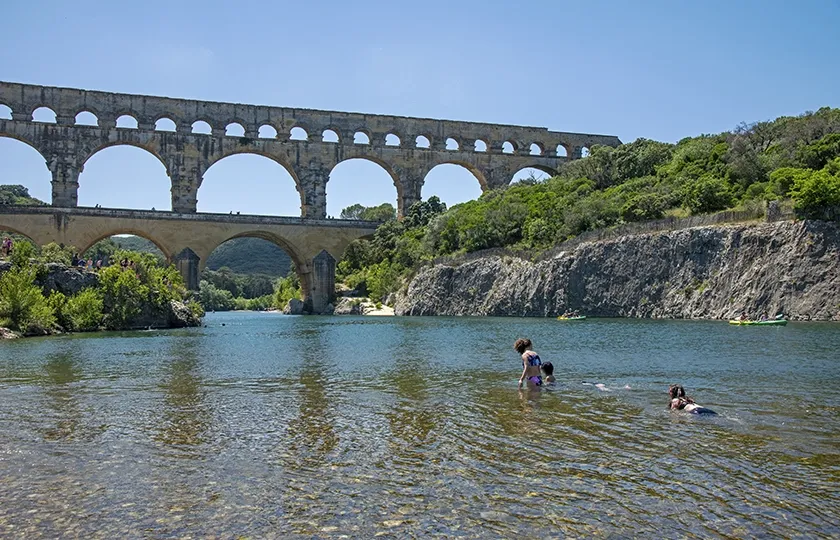
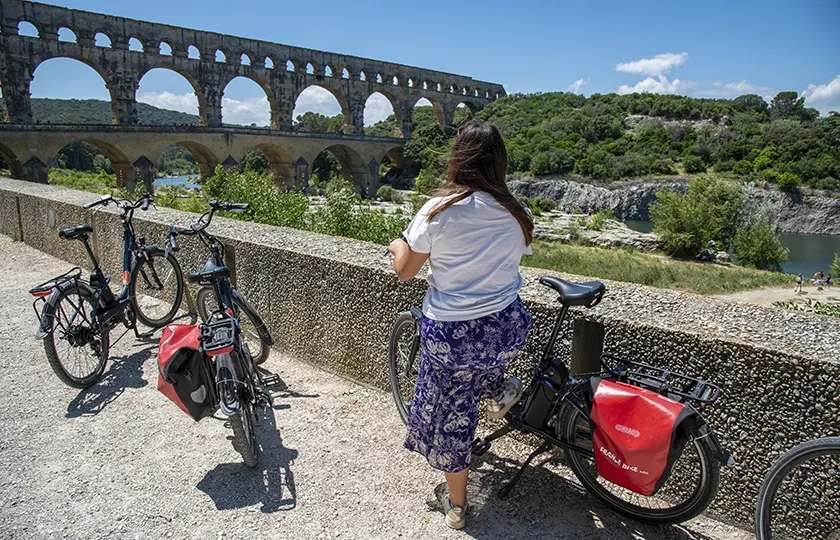
The visit cannot end without a short trip to the Pont du Gard, which is less than half an hour from Nimes. This incredible aqueduct, which was originally 50 kilometers long and had three levels of arcades, was built to carry the waters of the Eure River to Nimes in 50 AD.
It was declared a UNESCO World Heritage Site in 1985 and is a very pleasant place for families, tourists and even school trips to spend the day. Next to the ticket offices, there is an Interpretation Center and immersive museum, with a fantastic scenography that teaches the history of the Pont du Gard and the Roman way of life.
On the banks of the Gardon River, as it is also known, in good weather you can see many people bathing, being also the ideal place to immortalize the view of the aqueduct and the river with photos.
After bathing, it is also possible to enjoy a good meal at the restaurant “Les Terrasses”, which offers a fantastic view of the aqueduct.
Uzés: First Duchy of France
Our tour of this part of Occitania will end with a visit to the city of Uzes, the ancient Ucetia, which is located about half an hour from Nîmes and is a beautiful and very quiet town, with its Mediterranean climate, its history and its monuments.
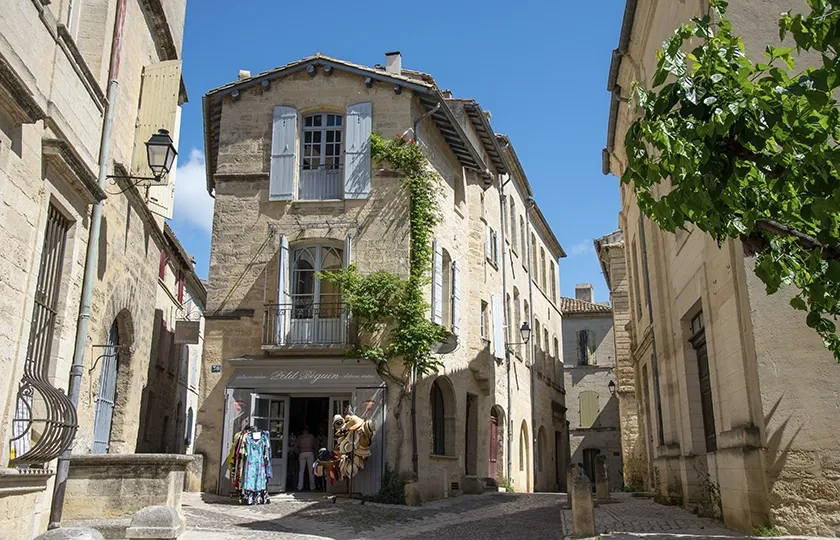
Classified as a “City of Art and History”, its historic center is very well preserved, thanks to the “Malraux” law which in 1962 allowed all the old buildings to be safeguarded, The restoration of the old buildings and the widening and paving of the pedestrian streets make the visit an evocation of the medieval times.
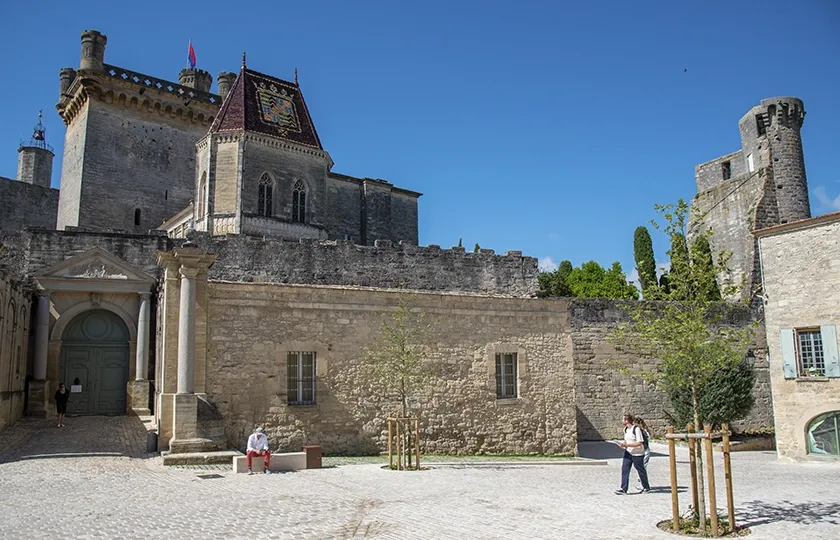
Among all the monuments, the Ducal Palace stands out, which is one of the best preserved medieval complexes in France with its magnificent Bermonde Tower. On the facade you can see the crowned door of the dukes with their motto “Ferro non auro” (for the iron and not for the gold).
Another of the great buildings of Uzés is its cathedral of Saint-Theodorit, which preserves in its interior one of the best organs in France, and on the outside one of the emblems of the city which is the Romanesque bell tower “Fenestrelle”, so called because of the large number of windows it has. It is a curious tower of 42 meters high, the only Romanesque circular bell tower in France.
To get to know life in the city, nothing better than going to the Place aux Herbes, a beautiful arcaded square surrounded by arcades with a fountain in the center, which is the place chosen to put every week the city market.
And as a final curiosity, in Uzés is the first factory of the famous HARIBO jelly beans, so after walking its streets and visiting its monuments, we said goodbye to the city tasting a gummy to continue remembering the good taste that has left us the trip.