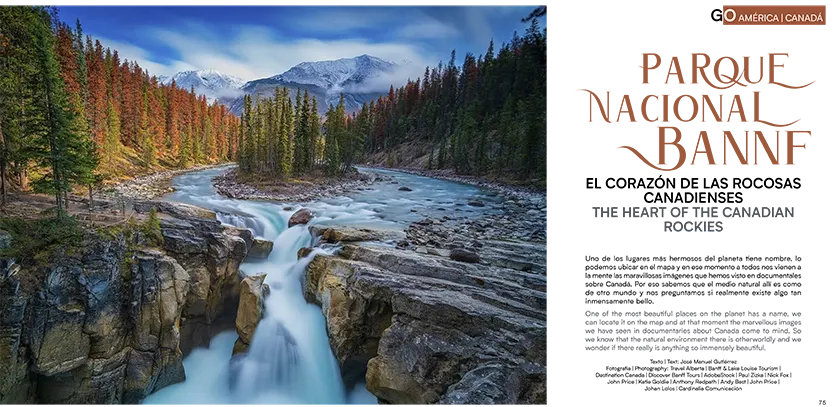
One of the most beautiful places on the planet has a name, we can locate it on the map and at that moment the marvellous images we have seen in documentaries about Canada come to mind. So we know that the natural environment there is otherworldly and we wonder if there really is anything so immensely beautiful.
Absolutely yes, it exists and it is in Alberta. An ecosystem of colossal proportions, like a whim of the gods, capable of leaving you speechless in the face of an extreme beauty that far surpasses any exercise in magical realism.
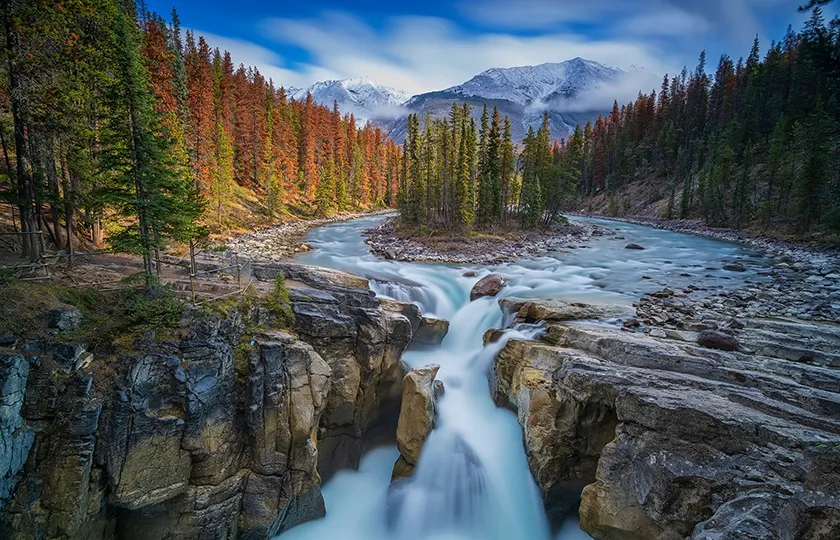
In the land where the aborigines hunted bison more than ten thousand years ago, today, the Pacific Railway, the Trans-Canada Highway and the Icefields Highway, which facilitate the arrival of tourists and nature lovers, open up a world of unique experiences. A genuine catalogue of huge glaciers such as the spectacular Columbia Icefield, turquoise blue lakes, lush forests to get lost in and snow-capped mountains, which together form a melting pot of ecoregions with a great diversity of animal life and which, with scrupulous respect, a little luck and the utmost caution, can bring grizzly bears, cougars, wolves, white foxes, coyotes, Canadian lynx or moose among others, right in front of our eyes. These are undoubtedly good reasons to justify the fact that it has been a UNESCO World Heritage Site since 1984.
Banff National Park, with an area of six thousand six hundred and forty-one square kilometres, is Canada’s oldest nature reserve, founded in 1885. Two years earlier, three Canadian Pacific Railroad workers discovered hot springs where Banff is today. The village grew up around these springs and, throughout the 20th century, became a holiday destination.
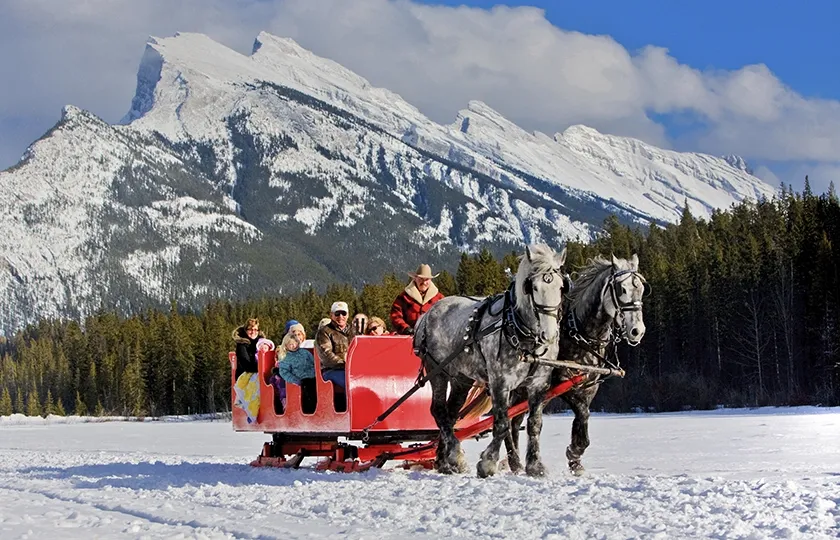
After a relaxing swim in the Upper Hot Springs Pool, a natural, outdoor pool overlooking the mountains, we take the gondola up Mount Sulphur. From its altitude of almost two thousand three hundred metres there is a sensational panoramic view of three hundred and sixty degrees. It can be reached on foot along a 5 km path with a 740-metre climb, but the advantage of the gondola is the views it affords during the eight minutes it takes to reach the top. Banff is also popular in winter for its alpine and Nordic skiing, dog sledding and traditional Canadian sports such as ice hockey and curling.
Huge mountains with snow-capped peaks, singing streams running down the mountain, huge turquoise blue lakes, gigantic ice fields stretching as far as the eye can see are just a small glimpse of the grandeur of Banff National Park, a magnificent example of Canada’s incredible wilderness.
This captivating natural area at the foot of the Rocky Mountains is a dream place located about two hours from the city of Calgary, bordering other natural parks of great importance in Canada, such as Jasper and Yoho.
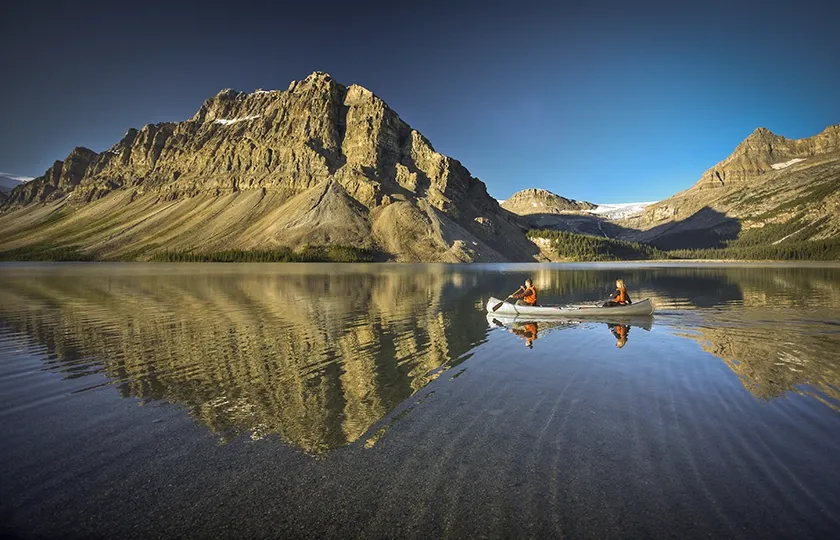
Banff in Canada is known as the park of turquoise blue waters, as the rivers and glacial lakes in this park are an amazing vivid turquoise colour. The cause is due to the sediments from the mountains that are dragged by the glaciers and which, when they melt in the rivers, give the water that peculiar colour that is one of the hallmarks of this protected area due to its high landscape and natural value.
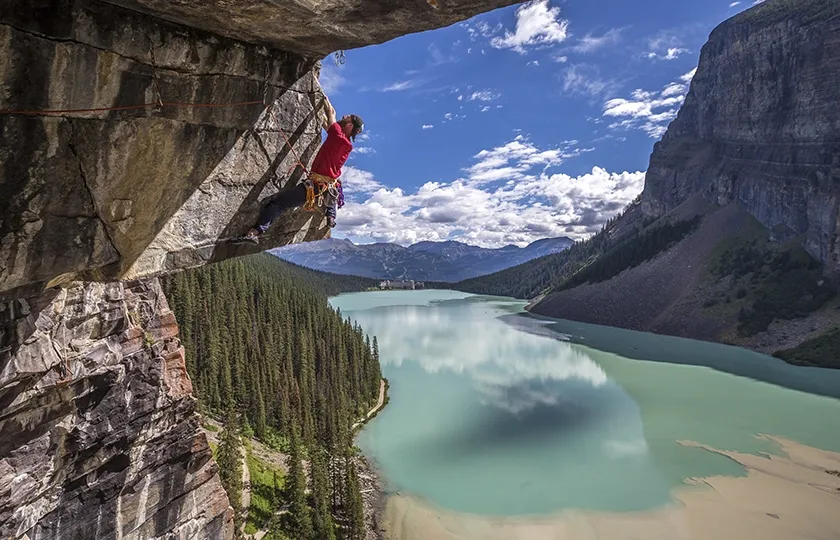
Probably the best place to enjoy this turquoise water is Lake Louise. It is a small lake of less than a square kilometre cradled between the colossal mountains. Highlights include Mount Victoria, crowned by the Victoria Glacier which is, in fact, the lake’s main source of water, and the Château Lake Louise, a luxury hotel built in the 19th century by the Canadian Railway Company.
The charming town of Banff is the commercial heart of this natural park with shops of all kinds, restaurants, guide companies, hotels such as the Banff Springs Hotel built by the railway company and all kinds of services. It is a small town that lives thanks to the tourism of travellers who come to visit this marvellous place. In this city, the Tunnel Mountain, formerly known as Buffalo Mountain because of the resemblance of its silhouette to this animal, stands out. When the railway arrived in Banff, it was intended to tunnel through this hill, although this objective was not achieved in the end.
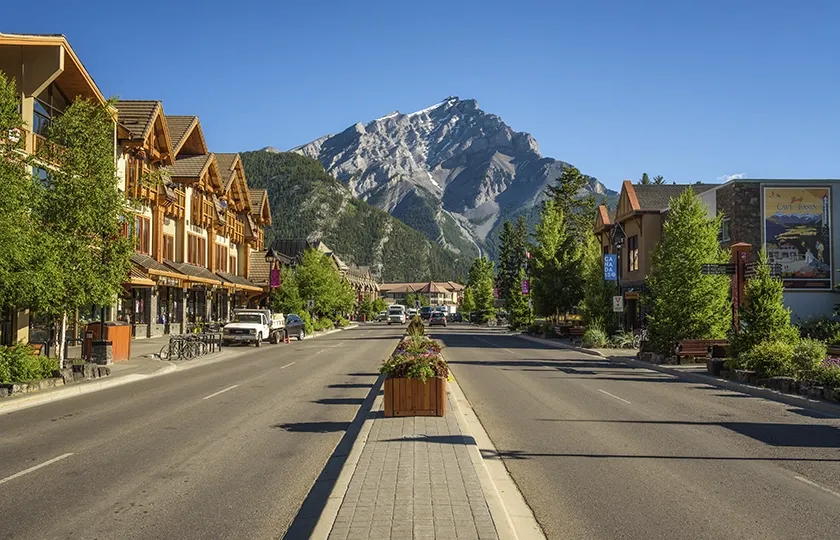
Tunnel Mountain is one of the best places in Banff to hike and immerse yourself in the Canadian wilderness, with lush coniferous forests and trails winding through the mountains. It’s a nature lover’s delight.
The Valley of the Ten Peaks is another sight to see in Banff National Park, a beautiful succession of ten mountains of grey rock and snow-capped peaks cradling a deep turquoise-blue lake known as Lake Moraine and coniferous forests covering the rest of the valley. It is one of the most spectacular panoramas in the region and a must-see.
Lake Minnewanka is another of Banff’s tourist attractions. It is a glacial lake next to which a dam was built, dramatically increasing its size. This dam caused the submergence of the village of Minnewanka, a tourist village built in the 19th century, to which many divers descend for the simple pleasure of enjoying the sight of the abandoned village submerged under water.
Finally, it is almost obligatory when visiting Banff National Park to take the Icefields Highway to the north of the park. It is a road through the glacier ice fields that connects this biodiversity gem with Jasper National Park at the other end of the roads.
The Rocky Mountains stretch from northern Canada through Alberta to southern New Mexico, but it is in Banff National Park that they are at their best in terms of both beauty and environmental values, as well as being an unbeatable setting for all kinds of outdoor activities.