The land of the eternal smile, friendliness, music, colour and tolerance, which according to legend owes its name to the Sunu Gaal River that separates black Africa from Arab Africa, is a cultural kaleidoscope in which ethnic groups, religions, languages and value systems coexist harmoniously in a constant play of mirrors and identities.
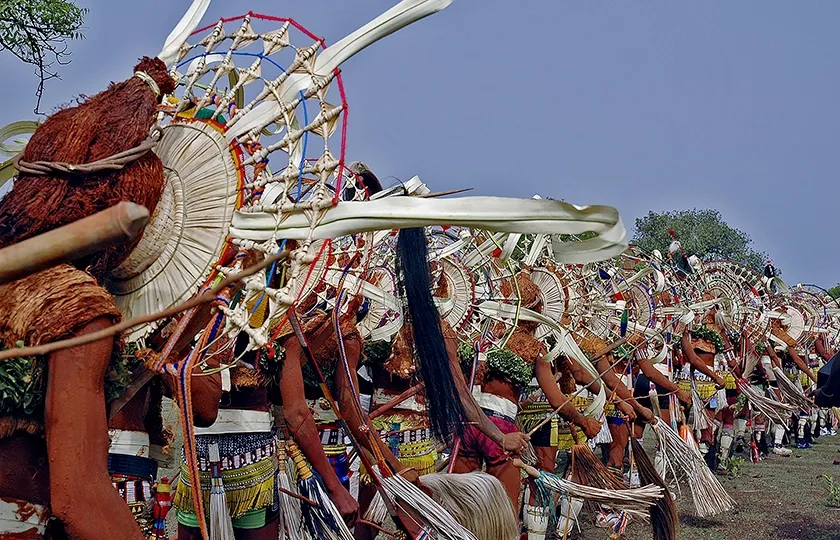
Wólofs, sereres, diolas, tuculores, mandingas, fulanis and bassaris make up the Senegalese people who have a thousand faces, but together they constitute the image of the iconic Africa represented in their folk tales, in their griots or storytellers, in its animist culture, in its changing landscapes where the “tree of life” or baobab grows as fast as the salt water flows through the mangroves in the south, while the dromedaries remind us of the proximity of the Sahara in the north of the country.
But Senegal is also that other Africa, the modern, safe Africa where ancestral traditions are respected without renouncing modernity, where hospitality is an innate value deeper than a kind gesture; it is a country of brave fishermen and colourful boats under an eternal sun in which every destination is reached by a poetic path.
Dakar, the capital with a tamarind name
Situated on the western tip of the African continent and looking out over the Atlantic Ocean as if perpetuating the memory of slaves who once set off for new lands never to return, the country’s capital is a dynamic and vibrant city with an ever-expanding and lively nightlife.
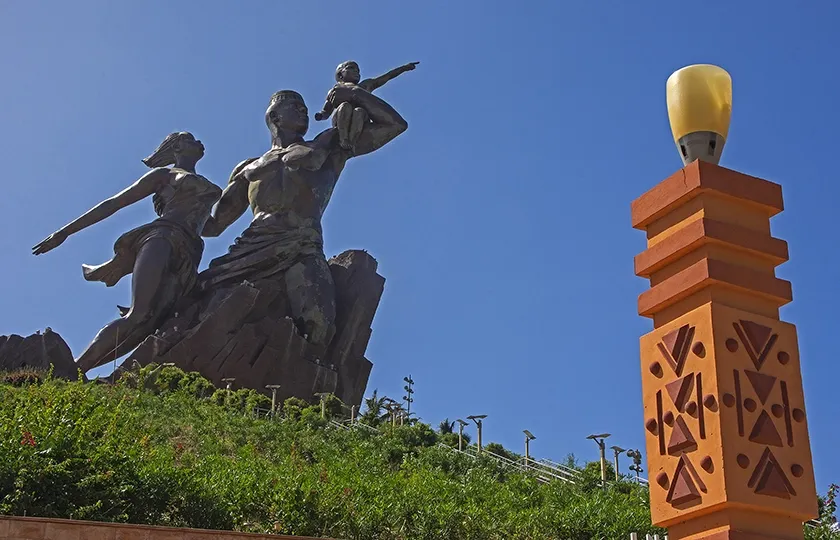
It is the birthplace of great musicians such as Youssou N’Dour, writers such as Boubacar Boris Diop, artists such as the sculptor Ali Traoré and the plastic genius Fodé Camara, as well as renowned wrestlers. From any part of the city, the huge sculpture Monument to the African Renaissance, the largest on the continent and signed by Pierre Goudiaby, symbolising the opening of the continent to the rest of the world, as well as a reminder of African resistance and renaissance, is a powerful eye-catcher.
A visit to the Museum of Black Civilisations (MBC) is a must for a better understanding of the context in which we live, and an instructive tour of the peoples of black Africa, from their origins to the present day, through their beliefs and different cultures. In addition, it aims to become a space of reference for scientific and cultural studies of black civilisation as the seed of humanity, thus promoting the collective awareness of African unity.
No less interesting is the Ousmane Sow House Museum, where the artist’s perspective presents his particular vision of African peoples through gigantic sculptures.
Dakar is first and foremost a cosmopolitan city, heir to its French colonial past when it became the main seaport of this African region. In the midst of this whirlwind of emotions typical of a city so colourful and full of life, we cannot miss a trip to the Plateau district of Dakar, where some of the best buildings of French influence are preserved, Independence Square and the town hall; the medina and the Great Mosque which, without having the stamp of the Arab souks, is a labyrinth of streets vibrant with life and colour, especially highlighting the HLM market where the colourful fabrics of the Senegalese costumes are sold.
In the vicinity of Dakar there are several must-see places that will leave an indelible mark on our memories.
Soumbedioune is a beach in the capital beach where the brightly coloured canoes called gaal unload thousands of kilos of fish every afternoon to be delivered to the women in charge of selling them.
At dusk, in spectacular warm light, many beaches, such as La Route de Corniche, become the training ground for muscular practitioners of Senegalese wrestling, the national sport par excellence. Although it is a contact fight, it is not considered Greco-Roman, but a mixture of tradition and culture preceded by spectacular choreography. The origins can be traced back to the villages after the rainy season, where the winner was awarded a trophy in the form of cattle or grain, but it was also fought for leisure, love or honour. Nowadays it has become professionalised and spectacular fights take place in the Dakar Arena.
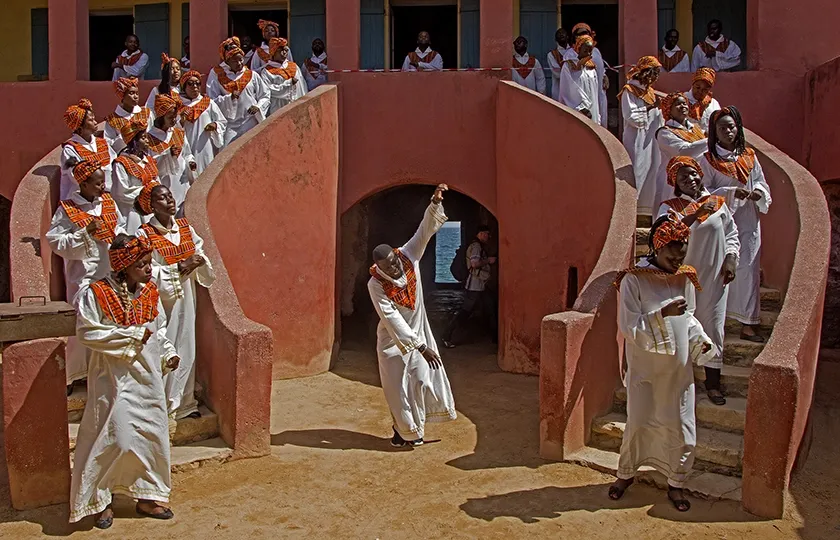
Just fifteen minutes on the ferry from the port of Dakar is enough for an exciting and reflective experience on the island of Goré. It seems incredible that this wonderful place of colourful colonial houses and beautiful bougainvillea adorning the secluded streets was the scene of one of history’s most deplorable episodes. For 300 years it was the most important slave market. Between twelve and fifteen million, according to different sources, women, men and children were brought from all over sub-Saharan Africa, deprived of their names forever and sold to the highest bidder before being shipped to the American colonies, never to return. The first Slave House was built in the 16th century, but the one you visit today, a World Heritage Site, was built among the island’s peaceful hamlet by the Dutch in 1776. Entering this ancient prison of human beings abducted from their villages is already an awe-inspiring step that only the masterful gospel choir is able to humanise. It is now an interpretative centre so as not to forget the atrocity committed against those who were mercilessly crammed into dungeons, separated by sex and age without regard for family ties and exposed like animals on the steps of the central courtyard to the merchants. The price and final destination were decided there. Next to this macabre scene, a dark corridor known as “the door of no return” signalled the end on African soil and the last chance to say goodbye to loved ones before being deported forever.
A multi-coloured country
We leave the capital behind for its predecessor Saint Louis, located to the north along the border with Mauritania, but on the way we must make a stop at one of the most universally known natural landmarks. It is the Lac Rose, famous for being the coveted finish line of the Paris-Dakar rally for the first twenty-eight years of the competition. This is the Pink Lake, famous for being the coveted finish line of the Paris-Dakar rally for the first twenty-eight years of the competition. Its name is due to the pink colour of its waters due to a curious combination of minerals and the reflection of light on the surface, mainly at dawn and dusk during the dry season.
We continue our route, but not before admiring a beautiful baobab forest, towards Saint Louis, the oldest city in Senegal, now a World Heritage Site. Founded in 1659, it was the capital of the state until 1957, being the city with the most colonial flavour thanks to its architecture. Its old town occupies the small island of N’Dar at the mouth of the Senegal River and is linked to the mainland by the Faidherbe Bridge, designed by Gustave Eiffel in the 19th century, in the middle of a landscape of beautiful beaches and valuable natural areas.
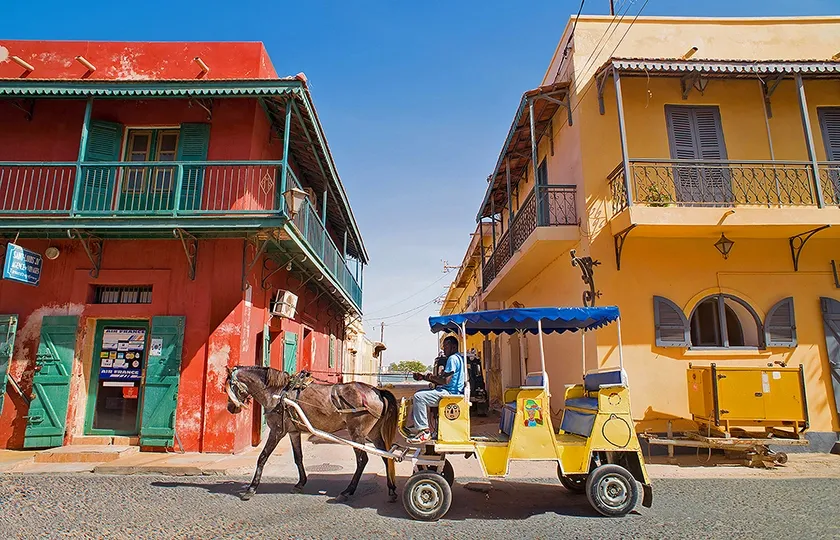
Sixty-five kilometres south of Dakar, the Bandia Reserve is a magnificent example of environmental sustainability. Its three thousand five hundred hectares of African bush where the flora has been regenerated and endangered species have been introduced, the king of which is the baobab, is an ideal natural setting to experience an authentic African safari among antelopes, gazelles, rhinoceroses, ostriches, giraffes, wild boars, zebras, buffaloes, monkeys, crocodiles and more than a hundred species of birds. It has a highly recommended restaurant serving the national dish or thiéboudienne, a small grain rice cooked in a concentrated sauce of tomatoes seasoned with lots of spices, and of course, fish. Next to it, the Accro Baobab is a special leisure area full of mysticism, as it preserves one of the best baobab forests, which can also be climbed or flown from one canopy to another on a zip line.
Close to the Gambian border, the Fathala Reserve preserves the original forest on its six thousand hectares and protects twenty-two animal species such as the Burchell’s zebra, the African crocodile, the West African forest buffalo, the red-footed monkey, the osprey and the pink pelican. Among the most significant curiosities are the Derby Eland, a rare specimen of an endangered antelope that Fathala has managed to rescue by giving it the chance to walk with lions, always accompanied by a guide from the reserve.
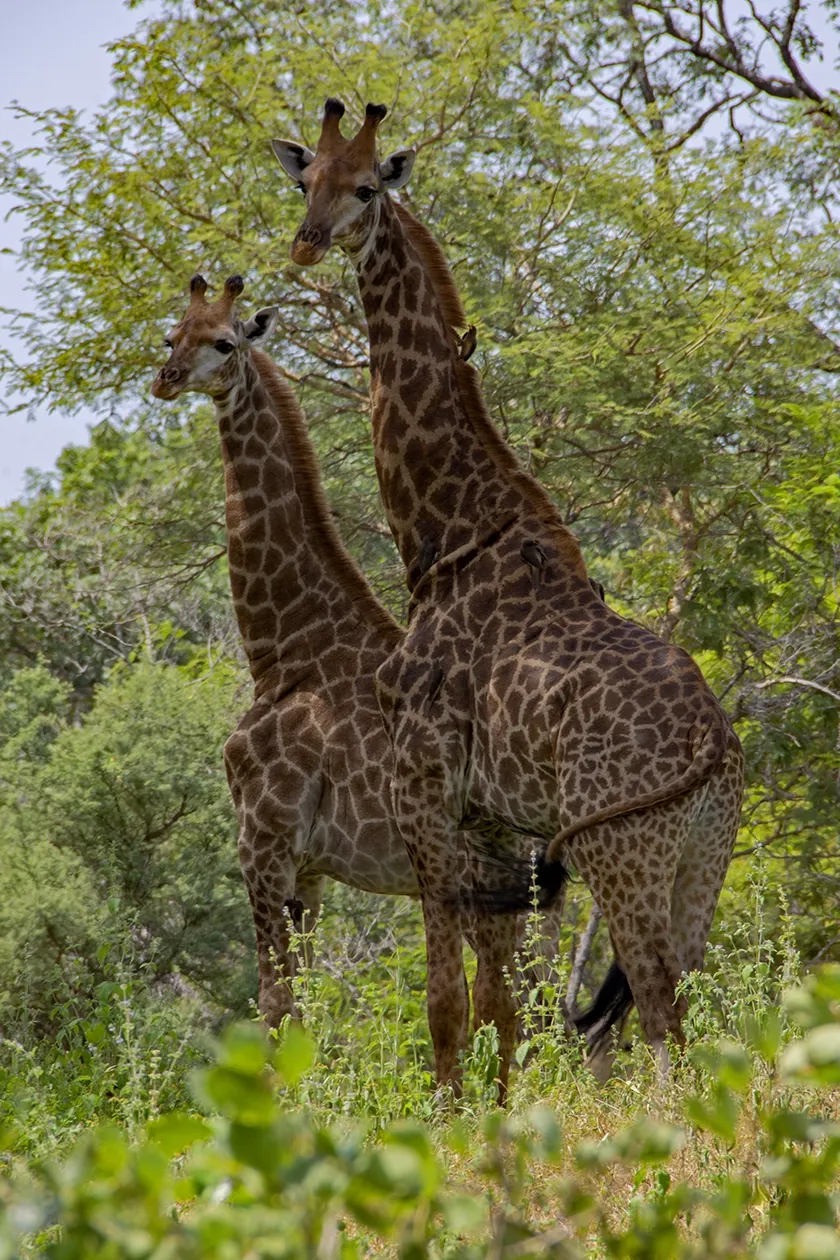
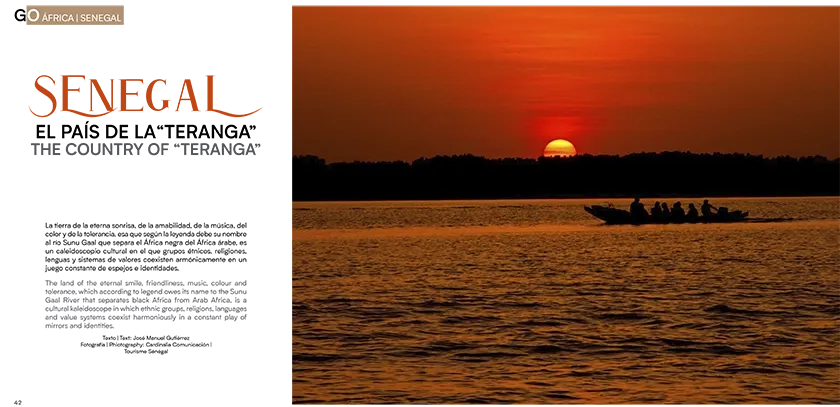
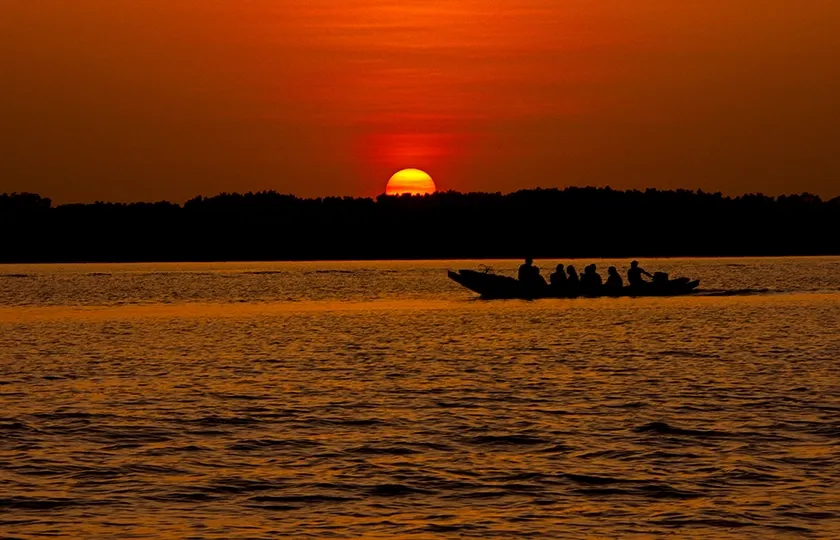
Nearby is the Saloum River delta, a fascinating geographical feature. It was declared a World Heritage Site for “being important for the understanding of the cultures of various periods of the delta’s occupation and witness to the history of human settlement along the coast in West Africa“. Formed by more than two hundred islands of sediment and shells, it is structured by a network of canals between mangroves where sailing at sunset under the pink and lilac sky is captivating, as well as allowing the sighting of all kinds of birds. This valuable ecosystem takes on another dimension with the funerary objects found in indigenous burials on twenty-eight of its islands, providing a wealth of knowledge of traditional forms and customs.
An afternoon visit to the fishing port of Joal is one of the most vibrant experiences a traveller can have. The arrival of the multicoloured boats, with the water threatening to engulf the vessel due to the overload of fish, is the engine that triggers the adrenaline of the crowds that invade the beach, to the point of not seeing the sand as the time comes for the unloading to be done by hand. The frenzy of the shouting of the porters is like a slap in the face of African reality and the shutter of my camera seems to go crazy shooting.
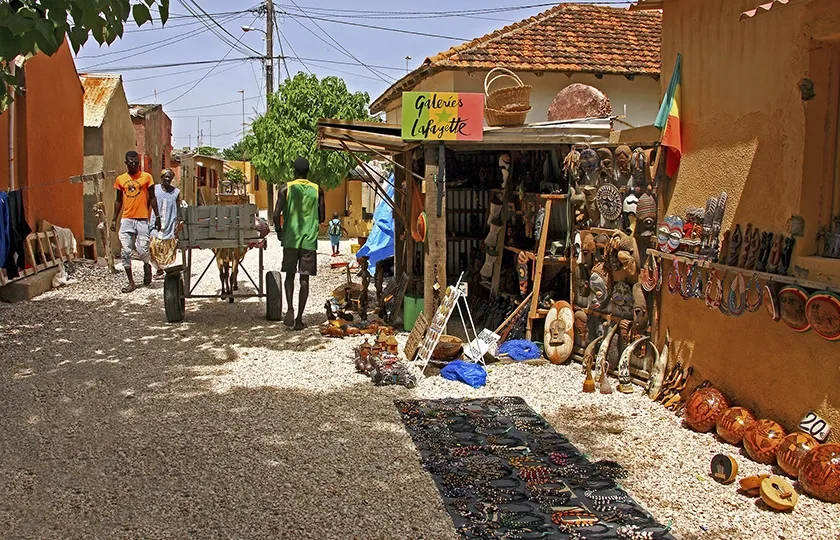
The fishing village of Joal is linked to Fabiouth, also known as the Isle of Shells, by an endless five hundred metre long bridge. It is a surreal artificial formation of millions of cockle shells on which sits a pleasant town centre. Strolling through the streets with the crunch of footsteps, chatting with the friendly people, visiting the handicraft shops and the cemetery completely covered with shells where Catholics, Muslims and animists rest side by side, is an unforgettable experience and an example of tolerance.
Saly Portudal, the former Portuguese colony, is the ideal place to take a break from all the excitement. Its magnificent hotel complexes guarantee tranquillity and security to enjoy its beautiful beaches or the incredible sunsets, while in its restaurants you can enjoy the exquisite local products.