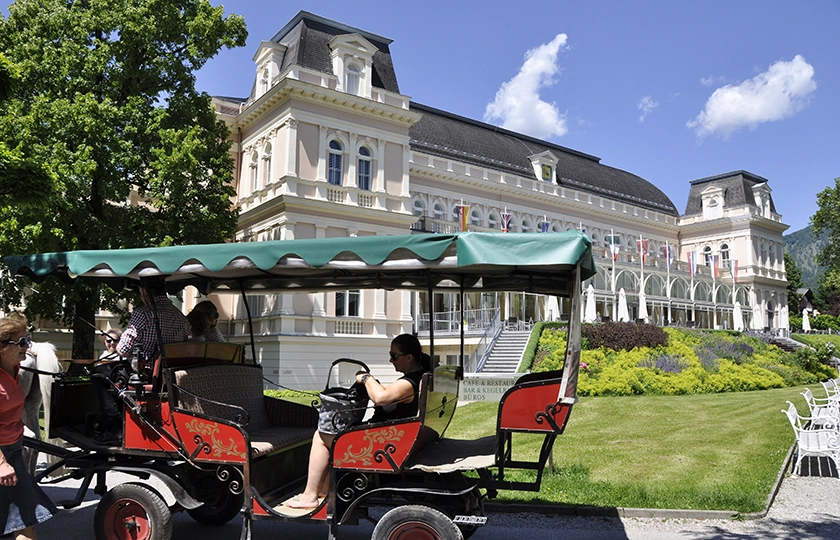
Its architecture is characterised by a blend of historic buildings, traditional Alpine architecture and influences from different periods.
It was in the 19th century that the medicinal benefits of the brine were discovered, which brought fame to this town, turning it into the fashionable spa resort of the Austrian aristocracy. Hotels were built, such as the Hotel Post, which opened its doors in 1828 and was the first in the region, as well as cafés, casinos and promenades where Austrian and European high society would gather, and, of course, fabulous villas that shaped the urban landscape we see today. Artists such as Anton Bruckner, Johannes Brahms and Franz Lehár also succumbed to its charms.
But the person who did the most to transform the little town of Bad Ischl into a spa town was Franz Joseph I of Austria, who chose it as his summer residence from 1849 onwards. Specifically, in a villa that the monarchy rented, which came to be known as the Kaiservilla or ‘Imperial Villa’.
It was also here that Franz Joseph met the woman who would eventually become his wife, Elisabeth of Bavaria, better known as Sisi. It was in 1853 that Isabel, then aged 15, accompanied her mother, Ludovica of Bavaria, and her sister, Elena, to the Imperial Villa. The reason was simply to arrange the marriage between Franz Joseph and Elena, but the Emperor preferred her younger sister.
The wedding took place a year later and, as a wedding present, Archduchess Sofia, the Emperor’s mother, bought the Imperial Villa and gave it to her son. Described by the Emperor himself as “heaven on earth”, Ischl became from that moment on the imperial family’s favourite holiday destination, and was known by some as the “secret capital of the Danube Monarchy”.
When war was declared on Serbia on 28 July 1914 – an event that would ultimately lead to the First World War – Franz Joseph was at the Imperial Villa. One day after the declaration, the Emperor left Bad Ischl, never to return.
Amidst majestic architecture, parks in full bloom and the gentle murmur of the River Traun, the mountainous region of Salzkammergut reveals its most cultured side. As you stroll through the streets and squares of Bad Ischl, you can admire Art Nouveau façades and buildings in the Biedermeier style – an artistic, decorative and cultural movement that developed in Central Europe, mainly in Austria and Germany, between 1815 and 1848. It is characterised by its simplicity, functionality and comfort. There are also magnificent buildings such as the Trinkhalle, the drinking hall built between 1829 and 1831 in the Neoclassical style; the Kongresshaus, a conference centre combining cutting-edge technology with a traditional appearance; the Stadtmuseum, the former home of the salt manufacturer on the Esplanade, where the Emperor’s engagement to Sissi was celebrated; the Villa Lehár, the villa of the operetta composer Franz Lehár; the Villa Seilern, built in the classical style, was constructed in 1881 and is now a hotel specialising in health and wellbeing; the Kolowrat boiling house, a saltworks building constructed between 1826 and 1835, which remained in operation until 1965 and is listed as a historic monument. And, of course, Kaiservilla, which we mentioned earlier, where you can visit various rooms as well as a history museum.
Bad Ischl also has an interesting range of cultural activities on offer. From operettas to spa music, not to mention jazz concerts and cabaret shows, in this spa town you’ll always find something to do where fun is guaranteed. El histórico Kongresshaus acoge en junio y agosto diferentes conciertos de opereta que mantienen viva la herencia musical de la ciudad. This is the Bad Ischl Lehár Festival, named in honour of the great composer of the Silver and Golden Ages of operetta, which has been held every year since 1961. Meanwhile, various contemporary exhibitions are on display in the former imperial stables. Not to mention Emperor’s Day, which is celebrated around 18 August to mark the birthday of Franz Joseph. The highlights of this celebration include the arrival of the imperial train at the station, the Emperor’s Festival in the spa gardens, and the Emperor’s Mass.
Bad Ischl also has the distinction of being at the heart of one of the most spectacular regions in Europe. Bad Ischl is surrounded by more than six large lakes, some with the Alps in the background, casting their shadow over them. The view of these inland lakes set against the mountains has even led to the region known as Hallstatt-Dachstein being designated a UNESCO World Heritage Site.
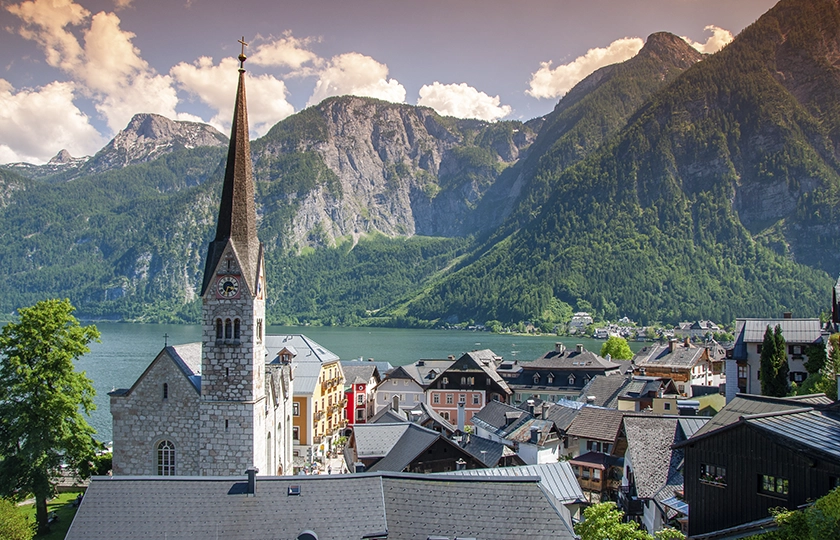
We’re on what’s known as the Austrian Romantic Road and, although it’s hard to get lost, these signs are a welcome reminder that we’re in the midst of one of Europe’s most beautiful romantic landscapes. The fact is, few regions can rival it in terms of beauty. To verify this, we headed to Lake Hallstätter See, home to the small village of Hallstatt, which Alexander von Humboldt described as “the most beautiful lakeside village in the world”. And he was quite right. The spires of the two churches – one Protestant, the other Catholic – together with the slate roofs of the pastel-coloured houses reflected in the lake, set against the backdrop of the towering mountains that surround it, make this little village a gem that will not be forgotten.
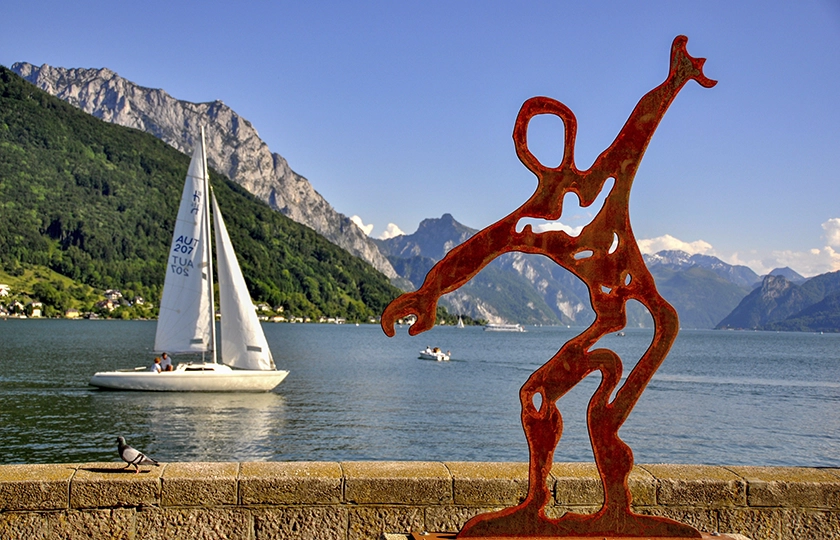
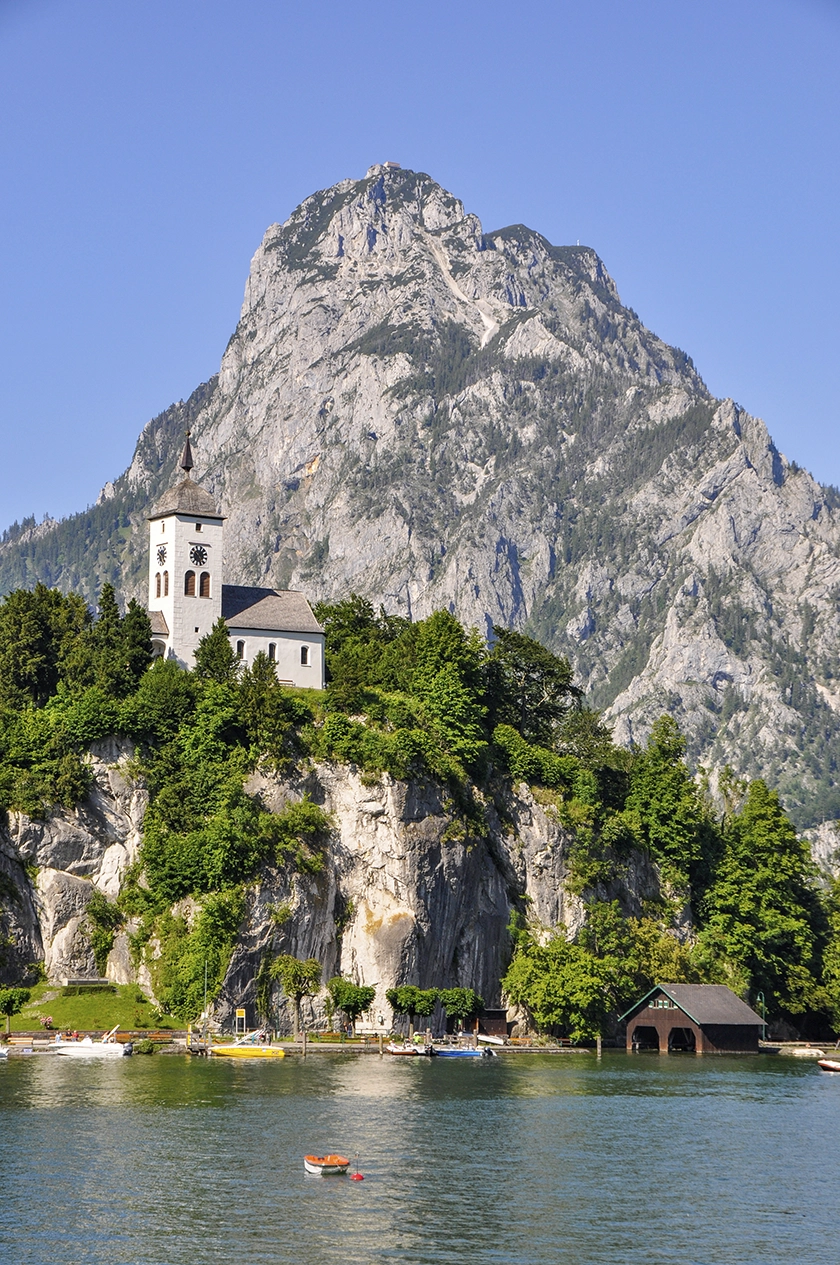
We continued our journey towards Lake Traunsee, the deepest lake in Austria. Another huge lake that we drove around without getting lost, thanks to the brown-backgrounded signs visible along the road, indicating the direction to follow on this Romantic Route.
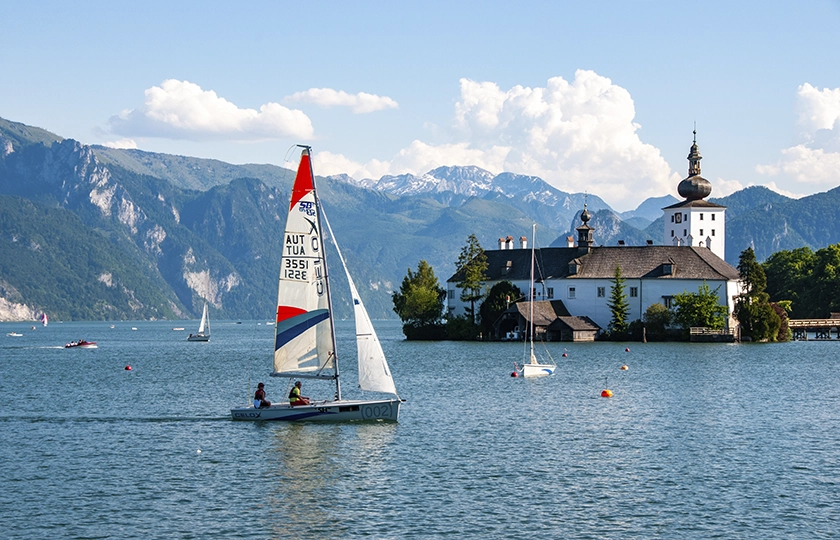
Riverside villages such as Traunkirchen, with its Johannesbergkapelle, a small church jutting out into the lake, and Gmunden, where you’ll want to stroll through the lakeside gardens — with young bathers enjoying the crystal-clear waters — whilst catching a glimpse of Seeschloss Castle, which seems as though it might emerge from the lake.