

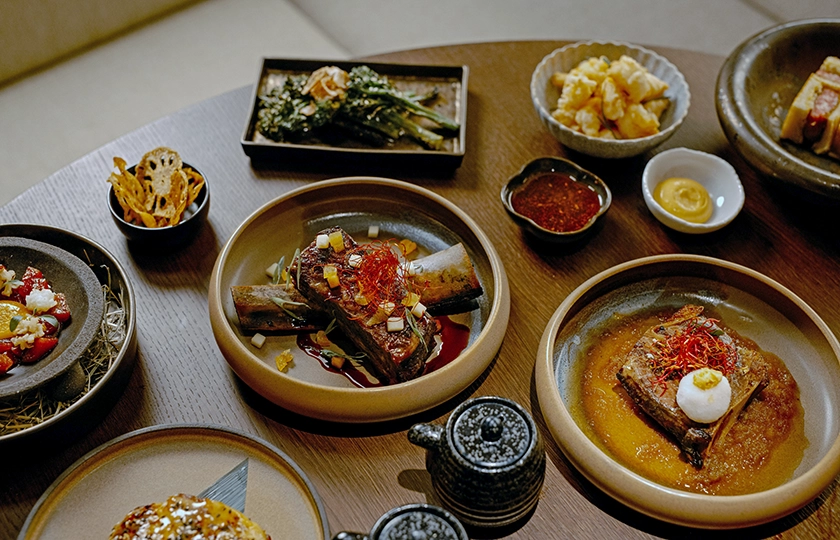
Following its first few months in Madrid, the London-based restaurant is establishing its identity in the city with a culinary offering where the ingredients, Japanese techniques, ageing and cooking methods set the tone for a menu designed to keep diners coming back time and time again.
Having arrived in Madrid this summer, TAKA is embarking on a new chapter in the capital, now fully integrated into its gastronomic scene. The project, founded by Japanese chef Taiji Maruyama, brought a philosophy—developed over many years around ingredients, technique and Japanese hospitality—outside London for the first time. Today, with the restaurant now up and running, that identity has found its own expression in Madrid.
From the outset, the intention was never to replicate the London TAKA exactly. Madrid had to have its own personality. The availability of local produce, the rhythm of the city and the way in which Madrileños approach gastronomy have shaped a concept that keeps its Japanese roots intact, whilst evolving naturally with its new surroundings.
At the helm of the Madrid kitchen is Rafael Rosas, a chef with over 20 years’ experience and extensive expertise in Japanese cuisine, including six years working alongside Ricardo Sanz. Together with Maruyama, Rosas develops a cuisine based on absolute respect for the ingredients, technical precision and a contemporary interpretation of Japanese tradition.
At TAKA, the culinary process begins long before a dish reaches the table. The selection of produce, its preparation and the time required to bring out its best qualities form an essential part of the process.
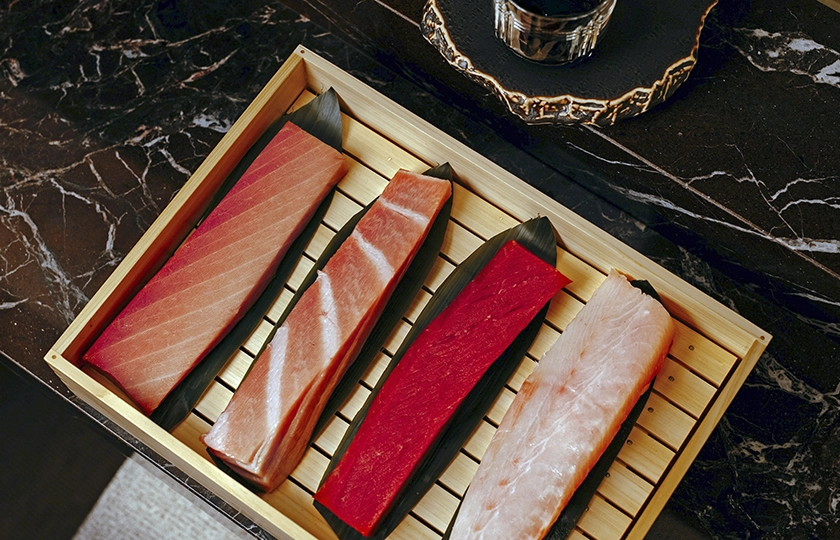
One of the cornerstones of the Madrid-based restaurant’s concept is the maturation of fish and meat, carried out in separate chambers under controlled conditions. When applied to fish, this technique allows the flavour to be concentrated, the umami enhanced and the texture modified before it is used in sushi and sashimi.
It is not a question of transforming the produce, but of understanding when it reaches its peak and working from there. This philosophy is deeply rooted in the Japanese approach to cuisine: intervening only when the technique can enhance what the ingredient has to offer.
The sushi bar takes centre stage within the restaurant, offering a close-up view of one of the most technically demanding aspects of the menu. Sushi and sashimi are prepared to order, with a particular focus on aged fish and a selection of ingredients that varies according to the season and availability.
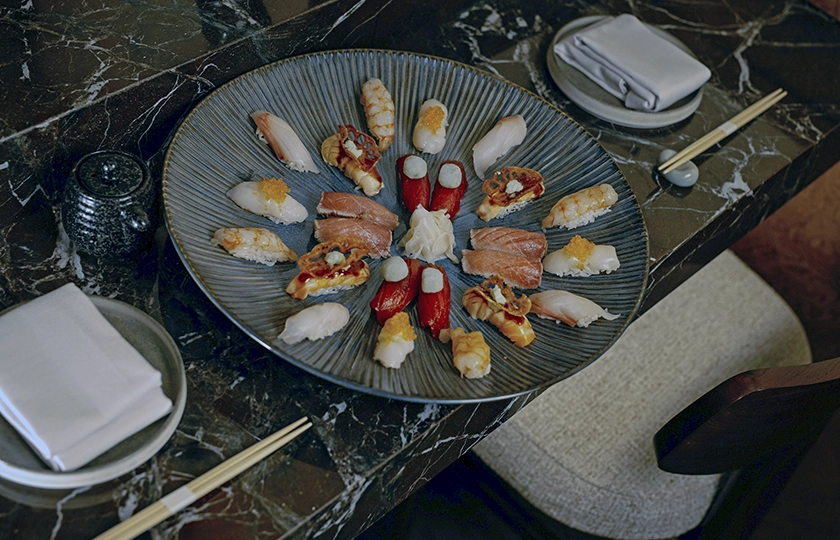
The counter also allows for the revival of a particularly important relationship within Japanese culinary culture: the direct connection between chef, ingredient and diner.
But TAKA is not defined solely by its sushi. The other defining feature of its cuisine centres on the wood-fired grill.
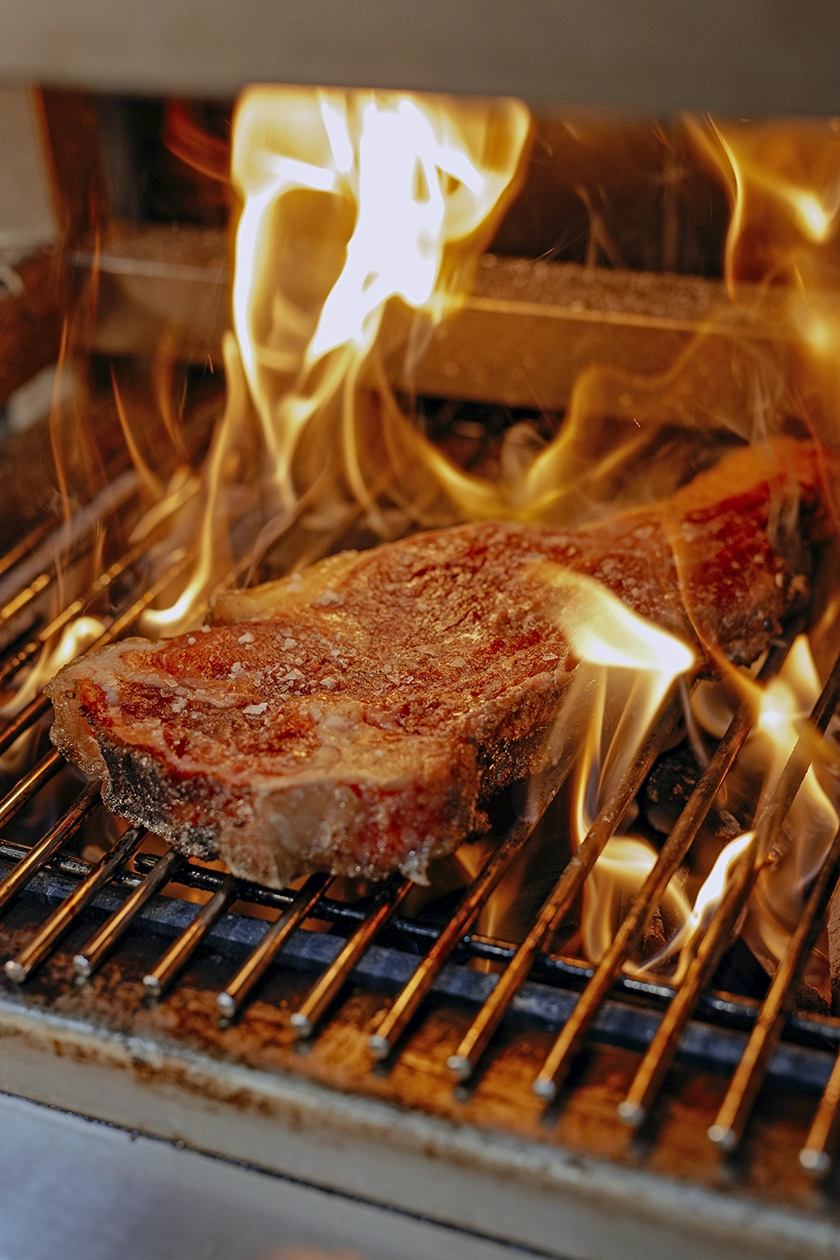
The grill has become another of TAKA Madrid’s key features. The restaurant uses Andalusian orange wood, chosen for the aromatic qualities it imparts during cooking.
Fish, meat and vegetables are cooked over the fire to enhance the flavour of the produce without masking it. The charcoal adds depth, texture and smoky nuances, but always through precise and controlled use.
It is precisely the interplay between these two worlds – the delicacy and precision of the sushi bar and the intensity of the flame-cooked dishes – that defines much of the restaurant’s character.
Dishes that define TAKA in Madrid
This philosophy is reflected in a menu where ageing and cooking over an open flame are not used as isolated techniques, but as tools in the service of the produce.
One of the finest examples is the aged fish sushi. At TAKA, certain fish, including tuna, are aged in specialised chambers for periods of up to eight days. This controlled process naturally enhances the umami and intensity of flavour, whilst achieving a more tender and delicate texture.
Heat finds one of its finest expressions in the wood-fired tuna collar, one of the tastiest and juiciest cuts of the fish. Cooked directly over the wood fire, contact with the flame imparts subtle smoky and toasty notes whilst keeping the flesh tender and juicy. A dish that encapsulates one of the fundamental principles of TAKA Madrid’s cuisine: using fire to enhance the natural character of the ingredient, never to mask it.
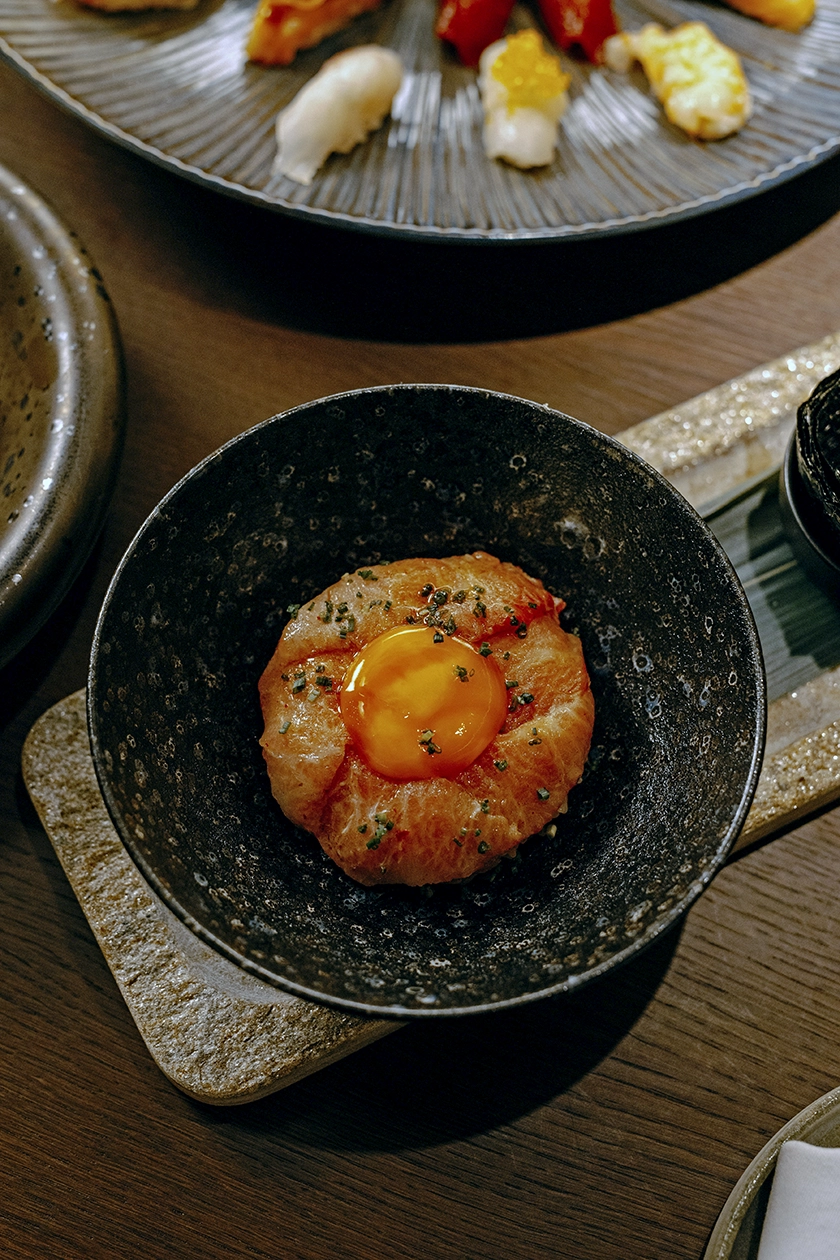
The combination of both techniques features in the bowl of rice with aged chu-toro, TAKA’s interpretation of the classic Japanese tuna rice bowl. Made with aged chu-toro and egg yolk, it also features wood-smoked rice that adds a new layer of aroma and depth. A version in which recognisable flavours of Japanese cuisine take on the unique style that TAKA is developing in Madrid.
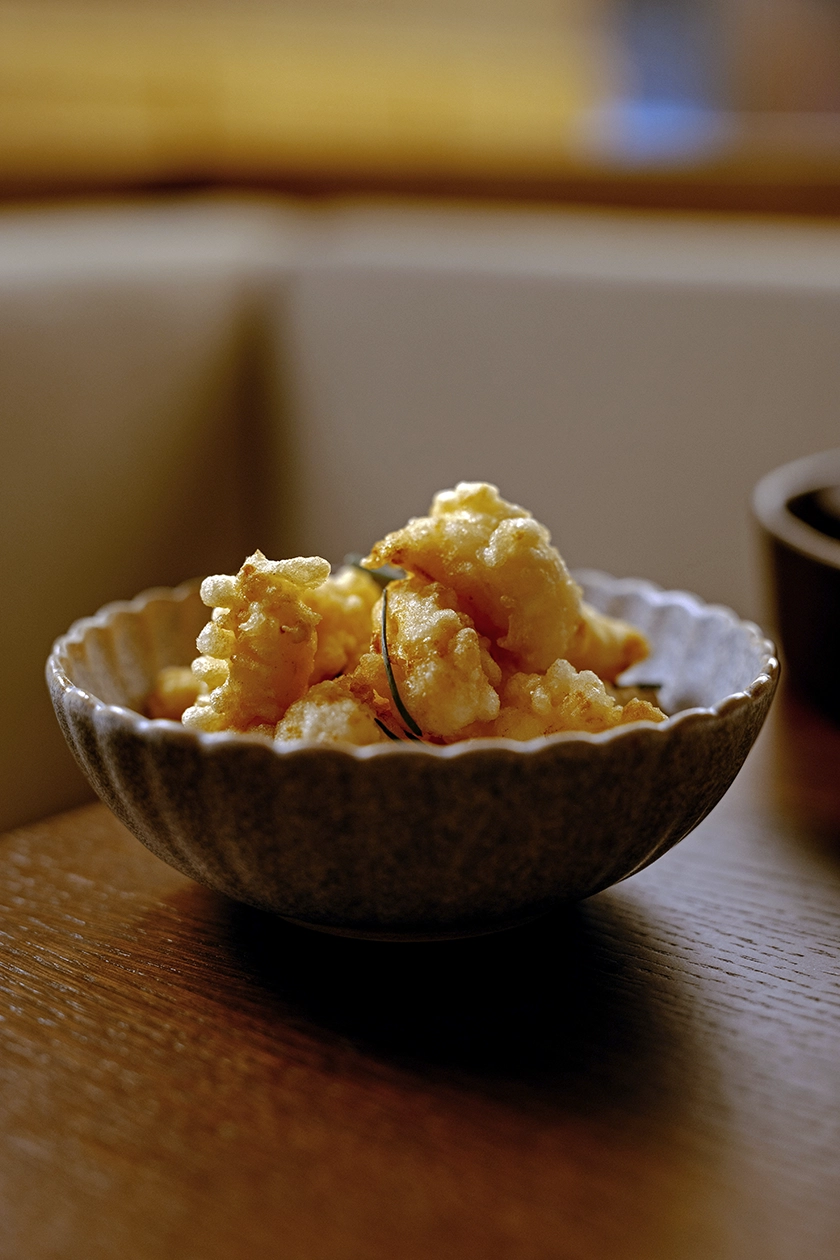
And it is precisely Madrid that inspires another of the most representative dishes of this new era: the black cod croquette. A reinterpretation of the classic Spanish croquette that replaces the traditional béchamel base with Japanese dashi, resulting in a lighter, more delicate interior where the flavour of the fish really shines through. Crispy and golden on the outside and practically melt-in-the-mouth on the inside, the dish embodies that meeting of Spanish and Japanese culinary cultures that is beginning to define the identity of TAKA Madrid.
Alongside these creations developed or reimagined in Madrid, some of the dishes that have been part of TAKA’s menu since its inception in London have also made their way to the capital.
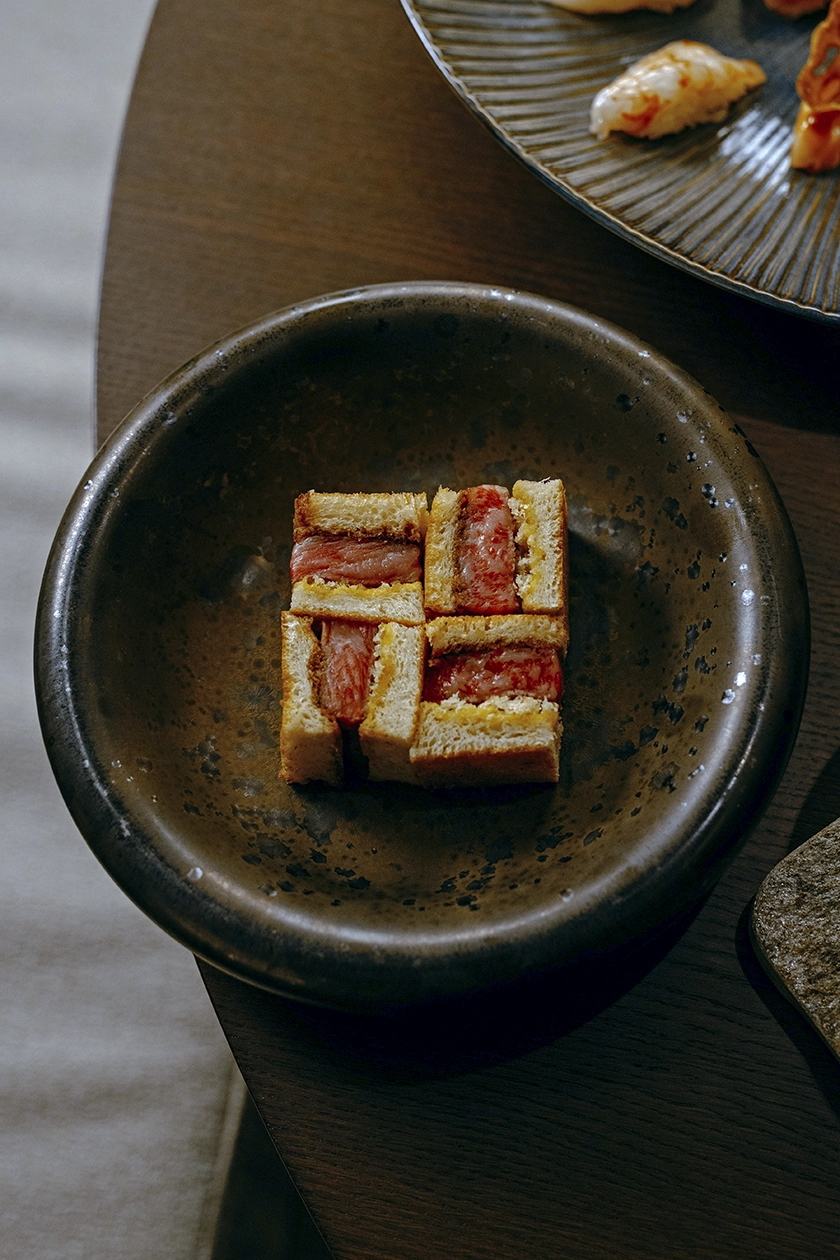
Among them is the Wagyu Sando, one of the restaurant’s most recognisable dishes and now a classic at the London restaurant. The menu thus builds a bridge between the two cities, retaining some of TAKA’s great classics whilst developing its own identity in Madrid.
The concept is not intended to be static. Seasonality and the availability of ingredients allow the menu to evolve, with the produce itself dictating what makes sense to serve at each time of year.
Behind this philosophy lies the career of Taiji Maruyama, a third-generation Japanese chef, founder of TAKA and MARU, former Executive Chef at Nobu London and current Director of the Japanese Culinary Academy in Europe. After more than 27 years working in Japanese cuisine, Maruyama sees Madrid as a natural evolution of the project and not merely as an international expansion.
These first few months have also served to bring to Madrid another of the pillars upon which TAKA has built its community in London: omotenashi.
Japanese hospitality is understood here not as a formal protocol, but as intuitive and personalised attention to the guest. The aim is to anticipate their needs and ensure the experience is special without them necessarily being aware of everything that goes on behind the scenes.
This philosophy ties in directly with the ambition TAKA has had since its arrival in Madrid: not to become merely a restaurant reserved for special occasions.
TAKA aims to be a place you’ll want to return to
A restaurant where you can sit at the sushi bar, share a variety of dishes, discover aged fish, try something fresh off the grill, or come back for that dish that’s already become a favourite.
Following its first few months in the capital, TAKA is thus beginning to write its Madrid chapter, maintaining the essence that made it a benchmark in London, whilst gradually building its own identity centred on Spanish produce, Japanese technique, the use of fire, and an approach to hospitality that seeks to make the guest feel part of the family.
Source: FILIPPA Agency