

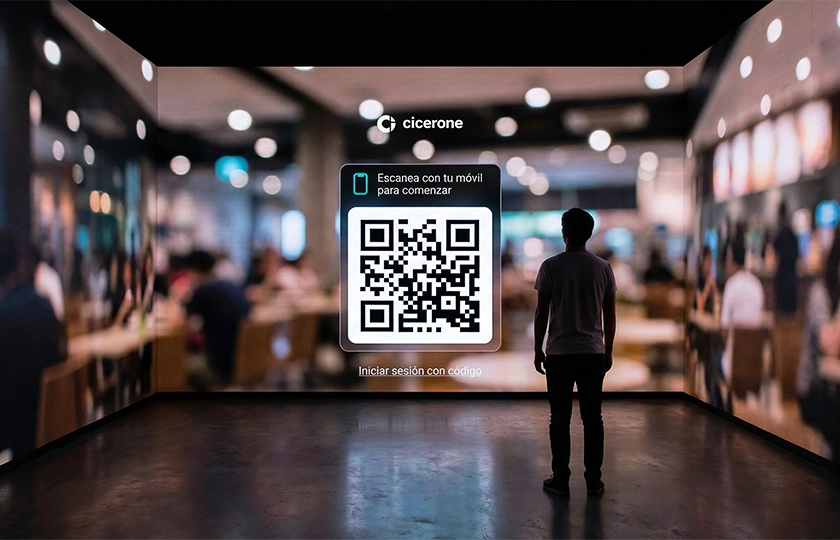
At FITUR, Spanish company iUrban used the real-life example of Madrid to show how destination artificial intelligence can redistribute visitors in real time, alleviate tourist saturation and revitalise neighbourhoods, suburbs and municipalities that are invisible to traditional recommendation services.
Spain is experiencing a historic tourism boom. According to the latest data from the INE, by November 2025 the country had reached 91.5 million international visitors, the best record in the series for the first eleven months of the year. However, the challenge is no longer quantity, but concentration. McKinsey sums it up with an eloquent statistic: 80% of travellers visit only 10% of the world’s destinations. The result is well known: crowded historic centres, saturated beaches, streets turned into photo corridors and an experience that is less and less about ‘travel’ and more about ‘funnel’.
Added to this phenomenon is a new accelerator: planning with artificial intelligence. According to Phocuswright, one in three travellers in the United States and Europe already uses generative AI to organise their trips. The problem is that generalist models tend to recommend the most visible and repeated options on the internet, reinforcing the same top 10. When everyone asks the same AI, destinations lose the ability to guide with their own criteria and distribute the benefits of tourism.
While some places become saturated, others fade away. Empty streets, closed shops and an inland Spain where 78% of municipalities have fewer than 5,000 inhabitants. Nearly 4,000 municipalities are at risk of depopulation. The concentration of tourism not only erodes town centres, it also limits the opportunity to bring life and economy to those who need it most.
FITUR 2026: a paradigm shift from Spain
In this context, the Spanish company iUrban presented a proposal at FITUR 2026 that proposes a strategic shift: to stop asking ‘how to attract more?’ and start answering ‘how to manage better?’. Its solution, Cicerone, is a destination AI designed to help public bodies regain control over tourism recommendations.
This is not just another generic chatbot, but rather a reconversion of official channels (such as websites, tourist offices, etc.) providing information in 95 languages and personalising itineraries based on real data from the territory, without commercial bias and with a dual objective: to avoid saturation, improve coexistence with citizens and redistribute flows to neighbourhoods, suburbs, inland municipalities and ‘save’ the low season.
In addition, it incorporates a strong focus on accessibility: it has been trained in more than 500 criteria, thanks to work with Impulsa Igualdad in 95 languages.
Real-life examples: from global centres to small towns
Cicerone is already being used in different areas:
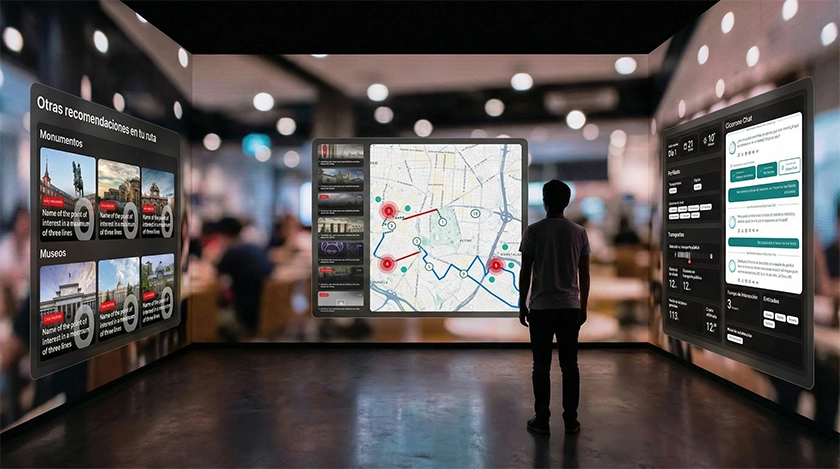
- Madrid (VisitMadridGPT): the City Council launched a pioneering assistant in 95 languages in Europe with generative AI, and now public transport is going to be incorporated to make it easier for visitors to explore beyond the city centre.
- Marbella: the municipality has integrated Cicerone so that its tourist offices can speak in 95 languages – including Chinese – and provide information 24/7, showing immersive Netflix-style experiences from other seasons to encourage visitors to return.
- Castellón Provincial Council (12 municipalities): to cover the lack of staff to move flows from the coast to the interior, converting signage, QR codes in accommodation and a web portal with AI to personalise the trip and capture data, giving visibility to little-known corners and connecting visitors with local businesses.
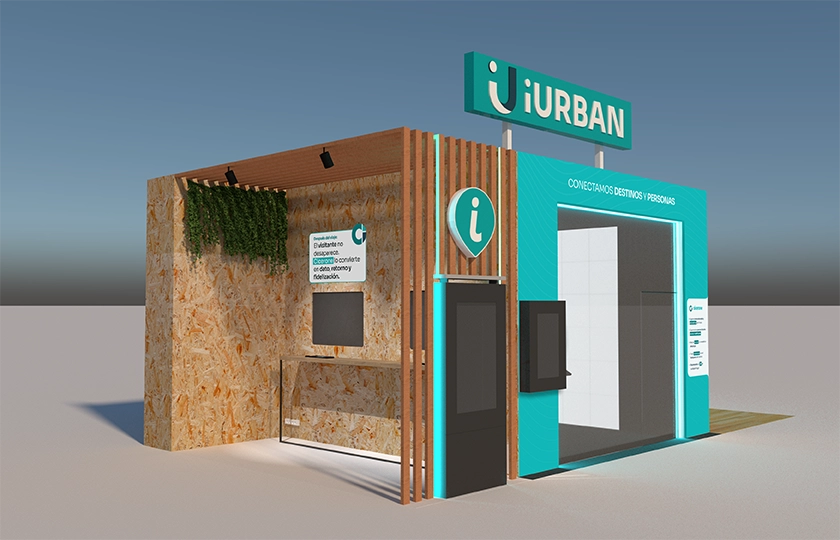
What was seen at FITUR: moving flows in 15 minutes
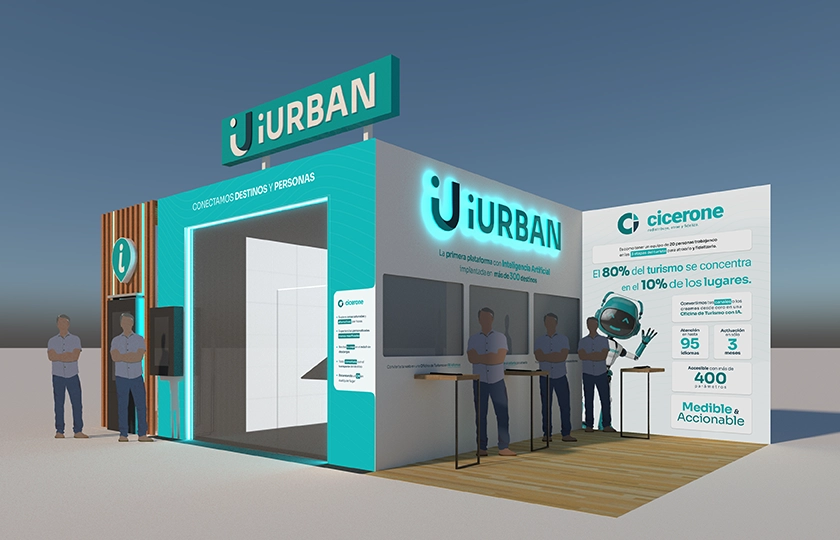
iUrban showed a demonstration based on the real case of Madrid, which covers the three stages of the visitor:
- BEFORE: AI avoids the ‘autopilot’ of the top 10 by proposing local gems and unique experiences.
- DURING: visitors scan a QR code and receive real-time suggestions based on crowds, timetables and mobility. The demo will include a large immersive cube – inspired by the film ‘HER’ – capable of providing voice guidance in 95 languages and integrated with public transport to relieve congestion in the city centre.
- AFTER: the entire conversation is analysed to transform it into tourist data about who visits and why, sentiment, recurring questions and itinerary adjustments to create a tourist product based on evidence rather than intuition.
A tool for two extremes: saturation and depopulation
The company highlighted that Cicerone is working both in highly sought-after destinations – where it helps to reduce congestion and better distribute visits – and in areas with limited resources, which find in the tool a 24/7 ‘digital tourist office’ to fill the streets, boost business and sustain the local economy.
“To fill the bars, you have to fill the streets. If you ask a local where to eat or what to do today, they don’t send you to the first Google result. They give you context, tell you what time to go, what to avoid and what alternative you’ll love, even if it’s not famous. That “local advice” is what we work on with destinations – at scale, with data and in 95 languages – to better distribute tourism and improve the experience,” says Andrés Martínez Vidal, CEO and co-founder of iUrban.
About iURBAN
iUrban is a Spanish technology start-up specialising in the digital transformation of tourist destinations through the use of artificial intelligence. With more than 300 destinations in seven countries, it makes travelling accessible.
To do this, it removes all kinds of barriers: from language to the lack of accessible information. It also offers real and useful data that goes beyond the tourists who visit the tourist office. It helps them understand who they are, what they are looking for and how they move through all stages of their trip, enabling them to make smart decisions.
Its Cicerone platform is the first ‘destination AI’ designed for cities, counties and territories to control their own digital narrative and redistribute visitors in a sustainable way, thus combating overtourism. Awarded by the UN in Riyadh in 2025, it has tripled its destinations and revenue in 2025.
Source: TRAVEL MEDIA HUB