We cannot control our dreams, but we can decide where to make them come true, where to live unforgettable experiences with the necessary humility to touch the soul of every corner and get to know what makes them different in places, sometimes mythical, that we have ever heard of, thus awakening all the emotions and the irrepressible desire to feel a new vibration under our feet. This is Tunisia, a multicoloured canvas on which pages of history have been written as far back as the memory can recall.
To travel from the green valleys of the north, once called the “Granary of Rome”, to the south, where the horizons draw lines between reality and mirage, where nature unburdens itself with slashes in the rock carving canyons and where ancestral traditions are kept alive, is to abandon oneself to the universe of the light of a genuine world.
Setting foot on African soil is always an exciting moment. A Torrent of different sensations in which the desire to discover a land of surprises, the passion to soak up the Tunisian essence, the desire to abandon ourselves to the magic of the desert or the encounter with legendary settings that history and cinema have immortalised all combine to create this reflective melting pot that assails us, while ancient Carthage transports us to a Delacroix painting with its vibrant atmosphere permeating all the senses, while maintaining its strong ancestral roots with a certain air of cheekiness and romanticism.
Tunisia represents an inexhaustible mosaic of different ways of getting to know it, depending on the narrative we are looking for, admiring changing landscapes and pieces of a history written in stone, waking up to golden sunrises that verge on infinity or picturesque villages, being seduced by a land that embraces its people and gives them a home or getting lost on beautiful White sandy beaches.
In the footsteps of Rome
The imperial legacy in Tunisia is astounding and discovering it is also a great excuse for a route that starts in the green and fertile northern lands full of World Heritage sites that once nurtured an empire. Hence the old nickname “the Granary of Rome”, a territory that was also home to Phoenicians, Numidians and even a good number of Moors expelled from Spain in the 16th century.
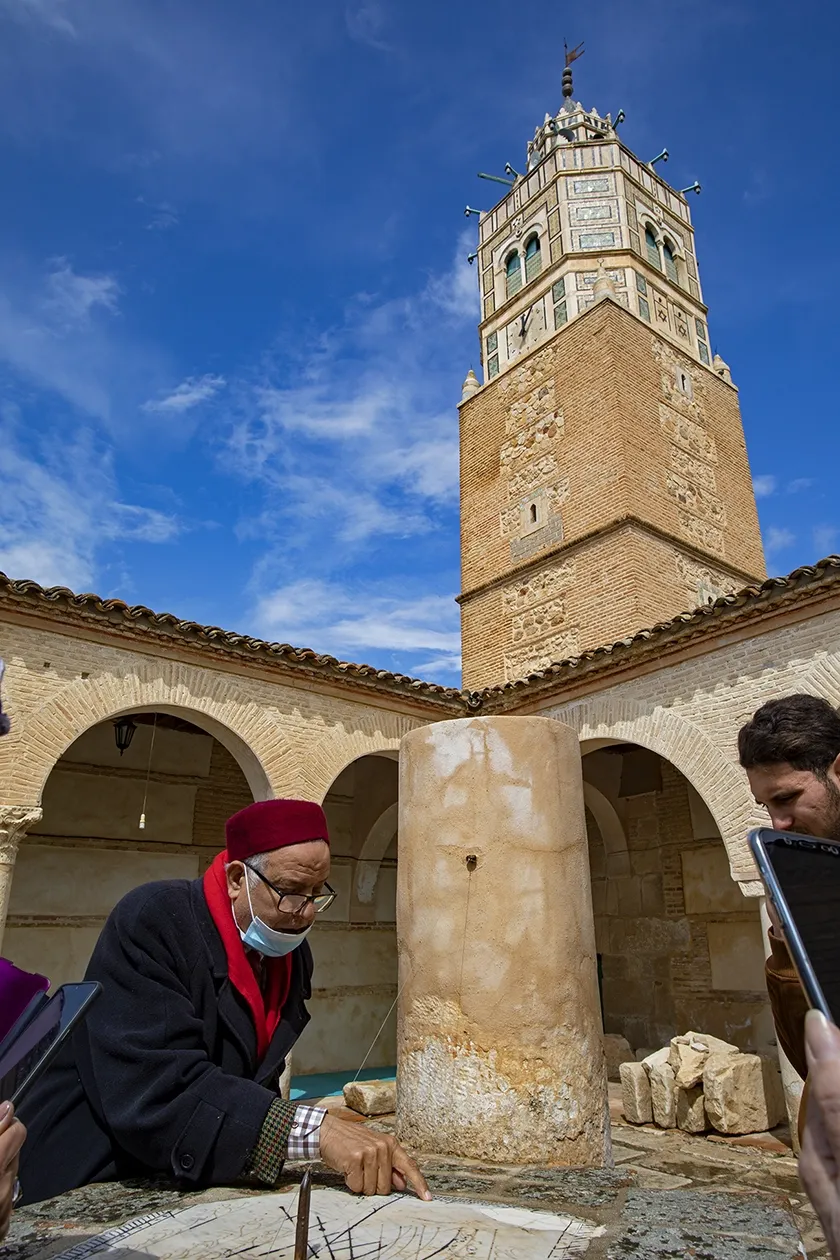
Along the old imperial road from Carthage stands a town with Spanish reminiscences: Testour. The Moors expelled from Castile and Aragon arrived here in 1609, founding the most important Andalusian city in Tunisia. The most significant features of that period are the Grand Mosque with its two octagonal towers in the Aragonese style and the Renaissance-inspired domes.
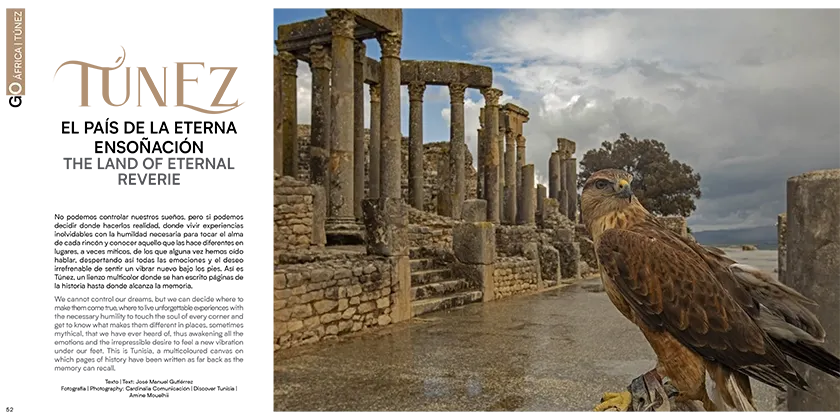
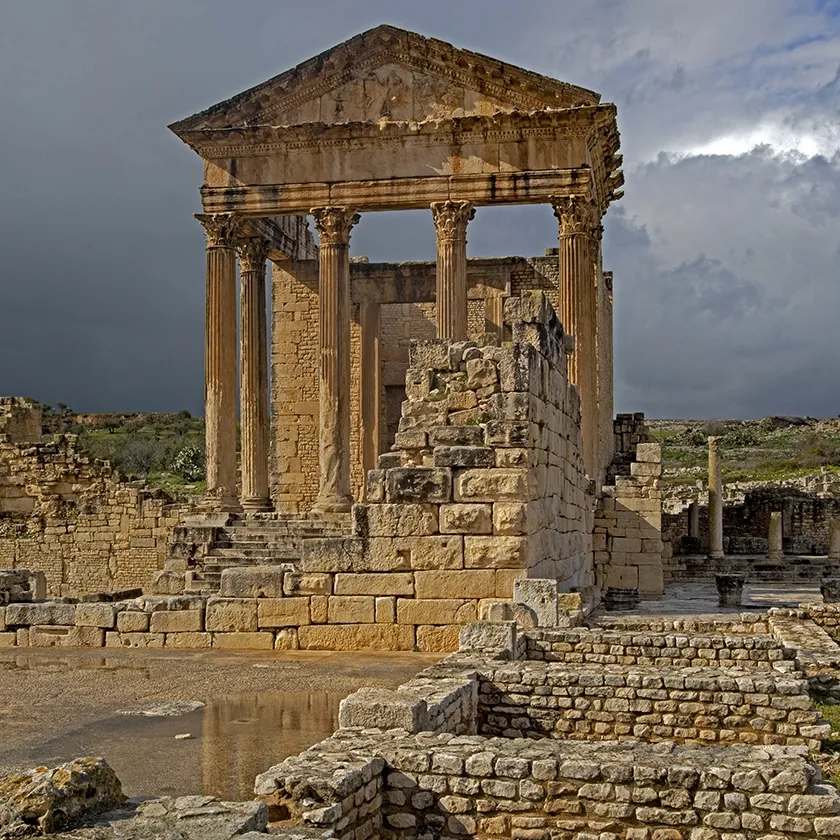
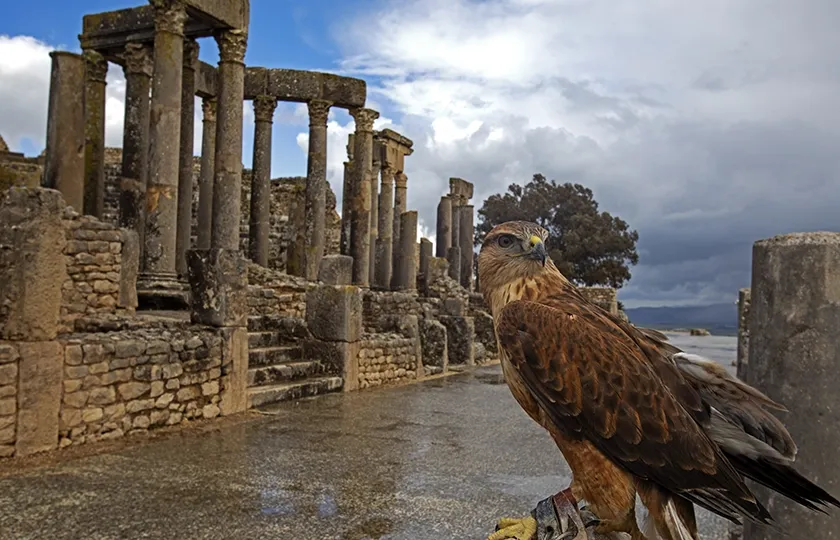
Declared a World Heritage Site, the Archaeological Site of Dougga was a Berber, Punic, Roman and Byzantine settlement and one of the best preserved cities in North Africa, dating back more than four thousand years, with spectacular monuments such as the Libyan-Punic mausoleum, the capitol dedicated to the triad of Jupiter, Juno and Minerva, among others.
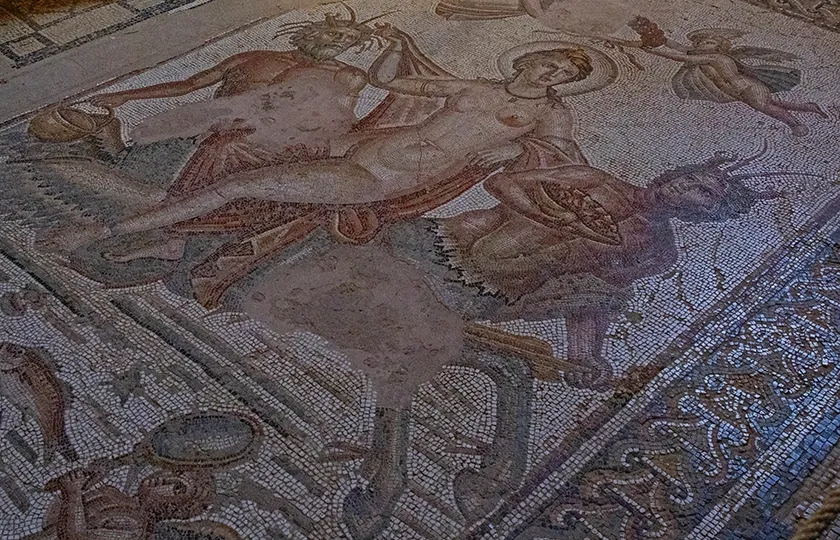
Further south awaits Bulla Regia, an ancient Roman city situated at the crossroads of the roads linking Carthage to Hippo Regius and leading to the sea from the Sahel. The monumentality of the Romanised African city comes from the use of marble and the existence of buildings such as the capitol, the temple of Apollo, the amphitheatre and the theatre, but what has given it universal fame are the underground houses equipped with all the conforts of the time and the virtuoso mosaics that adorn them, notably the “House of the Hunt”, the “House of the Amphitheatre” and the “House of the Treasury”.
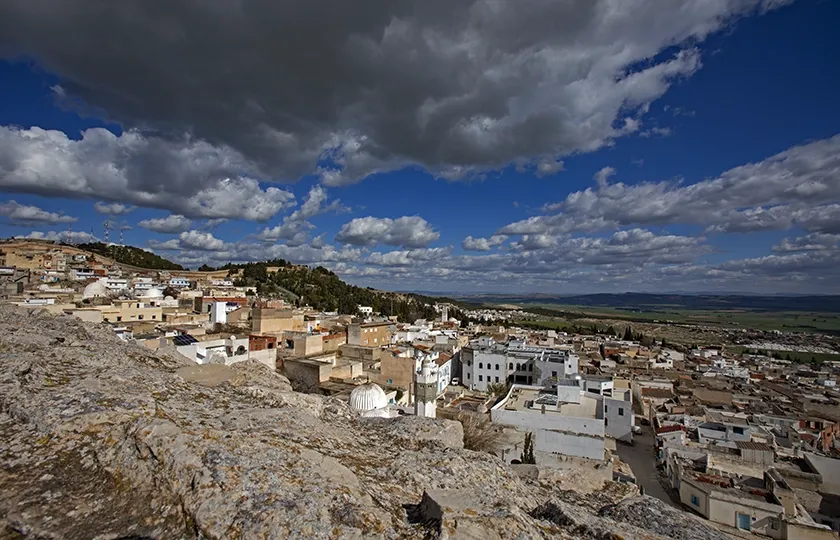
On the way to our next destination, it is worth stopping at El Kef, attracted by the sight of the 17th century Ottoman fortress. Strolling through the secluded streets of its medina is a lesson in tolerance, as you can see a church dedicated to St. Peter, Roman baths, Jewish synagogues and the mausoleum of Sidi Bou Makhlouf with its octagonal emerald-green minaret.
Further to the south-west, an immense stone mass almost 1,300 metres high breaks the horizon. The Tablet of Jugurtha is a cha- llenging tubular mountain with important archaeological remains, a natural fortress named after the Numidian king Jugurtha, who took refuge here to resist the Roman general Marius during a decisive battle in the history of North Africa.
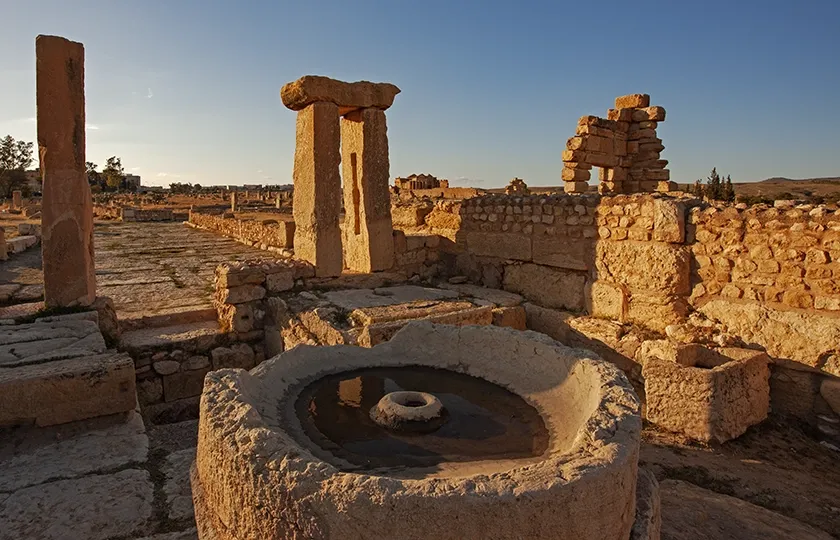
With the historical and cultural evocations mixed with the exoticism we seek, we arrive in Sbeitla. Founded by the Romans at the time of Vespasian, it reached its economic peak in the 2nd century thanks to the flourishing cultivation of olive groves and the production of olive oil. After the fall of the Empire, the Byzantines moved the capital here from Carthage, restoring the city to its former splendour.
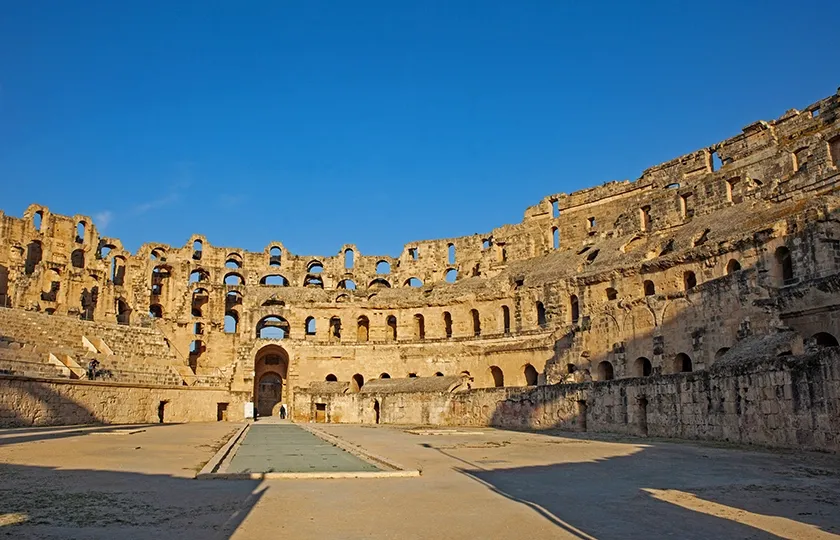
The Roman coliseum of El Djem, another Tunisian World Heritage Site, is an imposing sight. Built in the 3rd century AD, it is the third largest in the world with a capacity of 35,000 spectators and a magnificent state of conservation. Some specialists describe its
architectural features as unique in the world.
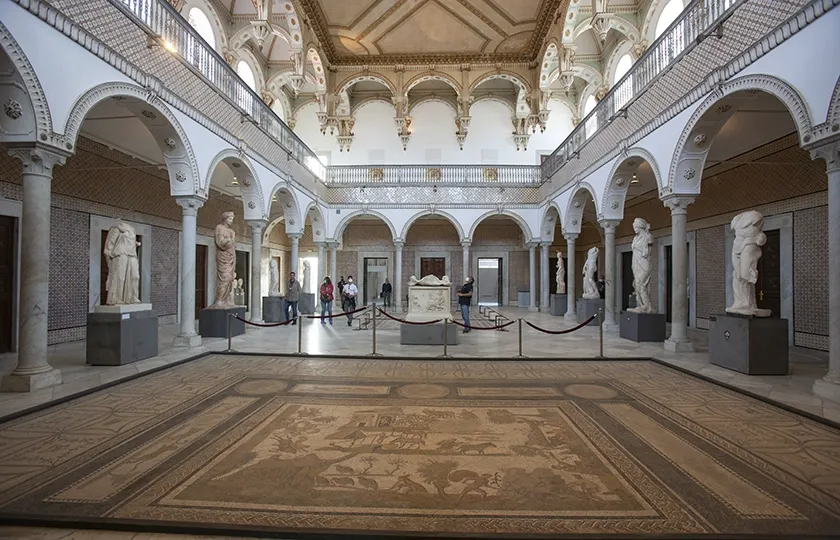
To arrive in Tunis is inevitably to arrive in Carthage. Walking through its streets is like wandering through the centuries that have left their mark in many ways. We return to the traces of Rome at the Bardo National Museum, a former palace of the Ottoman monarchs that houses the largest collection of Roman mosaics in the world, as well as an important multicultural legacy.
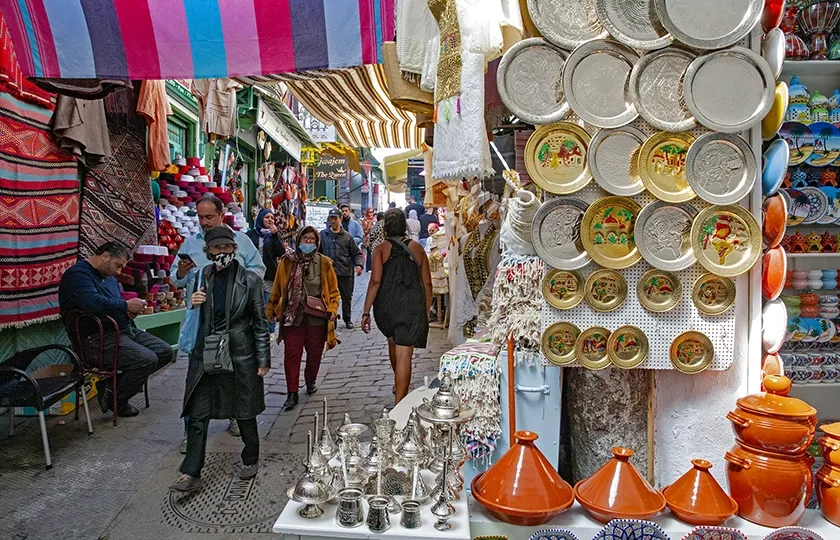
Strolling through Tunisia’s World Heritage Medina, with its monuments and traditional souks full of traditional goods, the Kasbah square, the mosques of Ezzitouna and Hammouda Pacha and the many stalls for tasting authentic Tunisian food, is a vibrant and unforgettable experience.
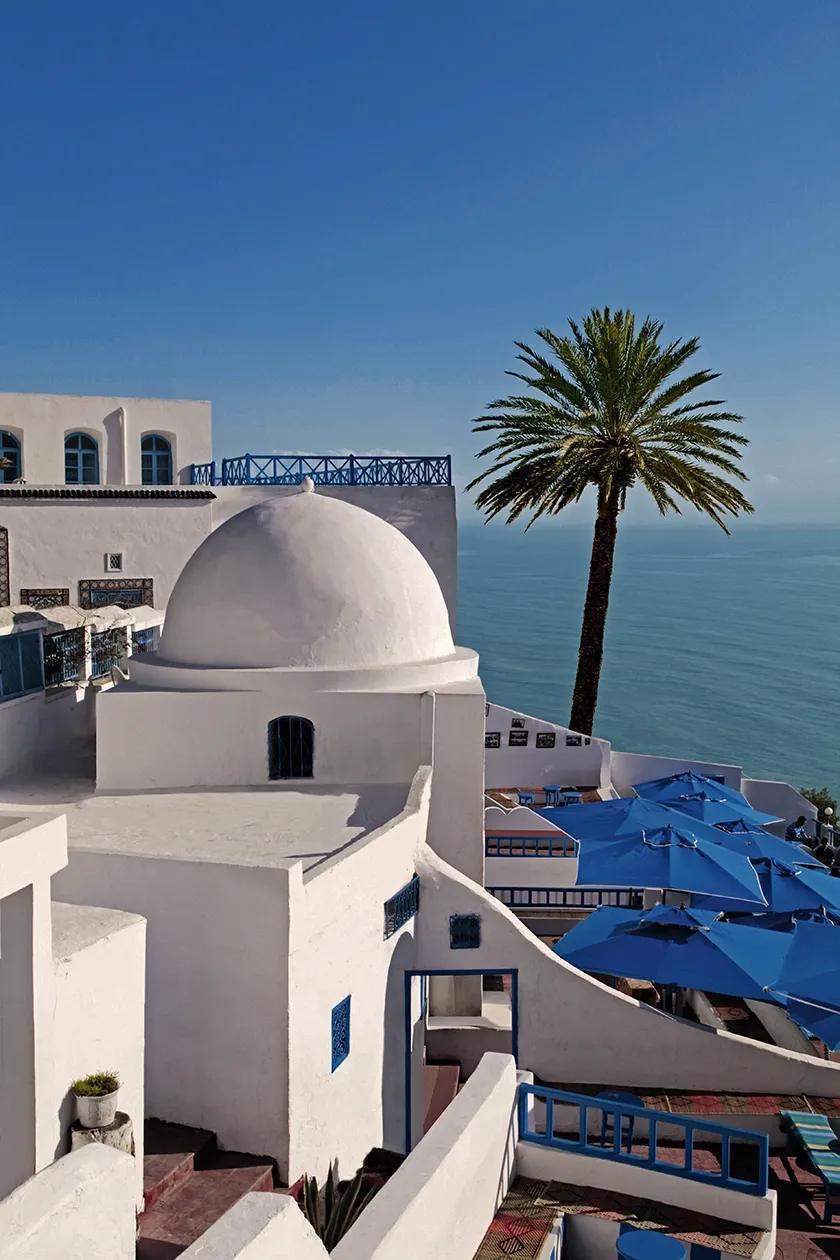
Nearby is Sidi Bou Said, the most picturesque village in the inlet, famous for its beautiful blue and white painted houses with their beautiful balconies decorated with arabesques and for the wonderful sunsets over the bay of Carthage.
Film sets
Where magic exists, a land like a film stret- ches out and the air of freedom blows from the Great Erg, pushing us to the gates of the Sahara, after surrendering to the magic of the mountain oases that open up to the immen- se sky and before reaching the land where the Berber language is spoken, where the mirages evoke caravans of merchants.
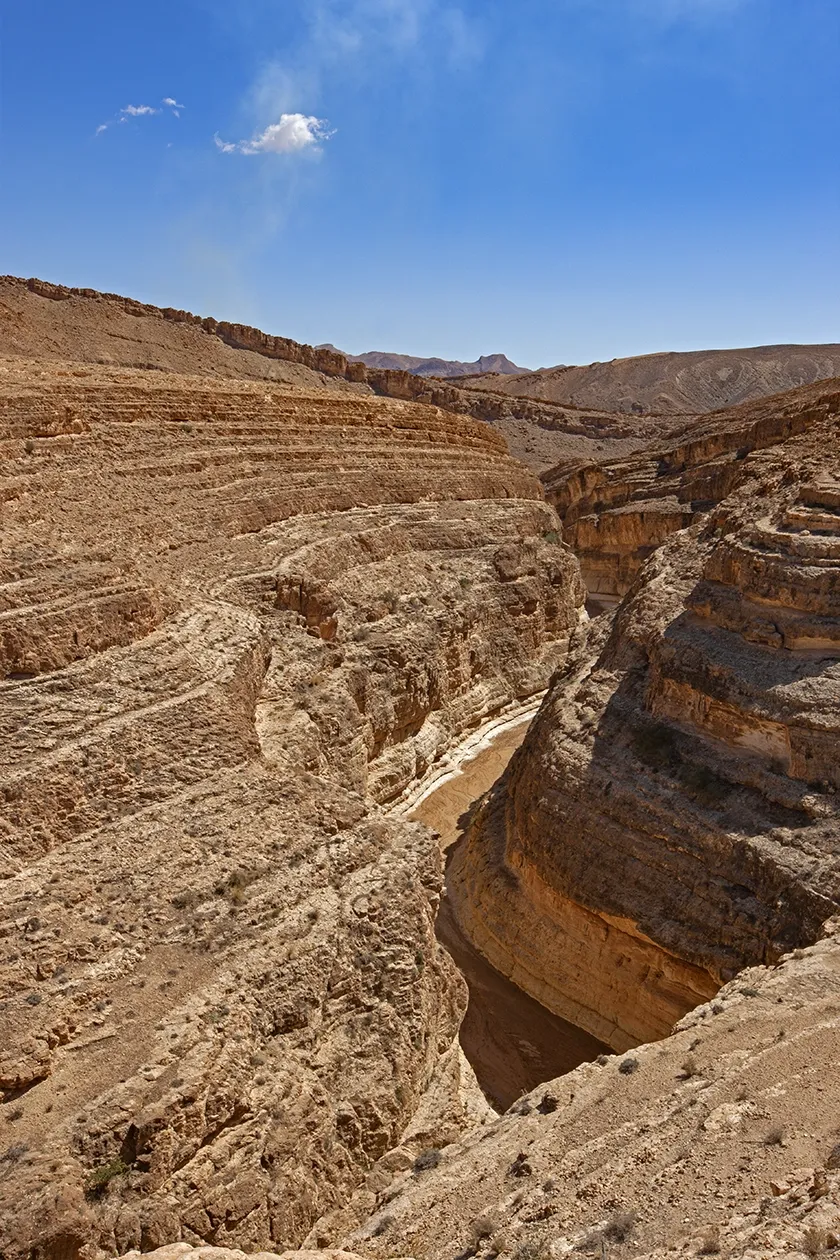
Suddenly the land splits in two to accommo- date the mountain oases of Chebika, Tamerza and Mides, exciting ecosystems where wáter flows generously in the form of streams and waterfalls. Perhaps the most captivating is Mides, which is suspended on the edge of a dizzying and breathtaking canyon, where unforgettable scenes from The English Patient and Star Wars were filmed.
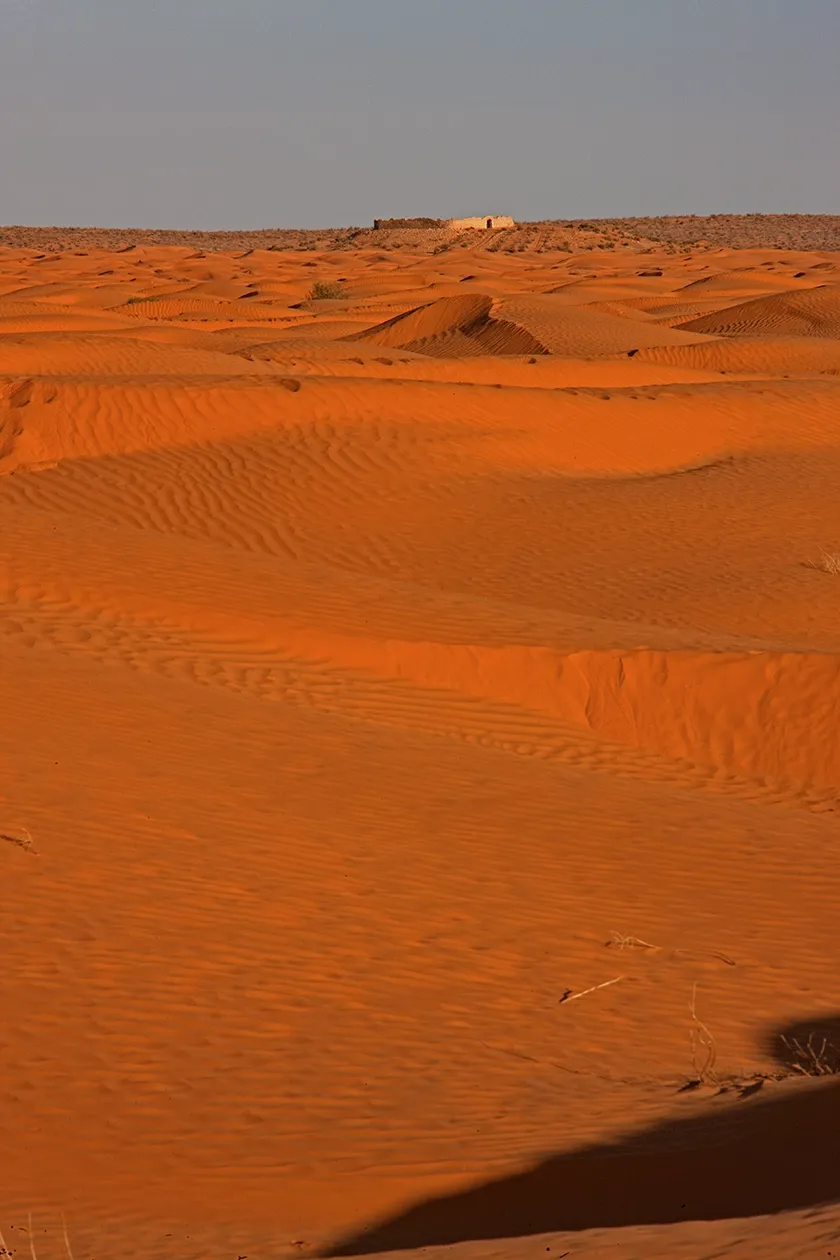
As if rising from the golden sands, Tozeur, once the southern limit of the Roman Empire, stands in a vast oasis of hundreds of thousands of palm trees producing the dates known as “fingers of light”. Overlooking the sky are the beautiful brick-fronted buildings of the legendary city that was once an important trading centre thanks to the caravans of merchants. That cosmopolitan exoticism is still preserved and time moves at a different speed, as Franco Battiato said in his song “The trains of Tozeur”.
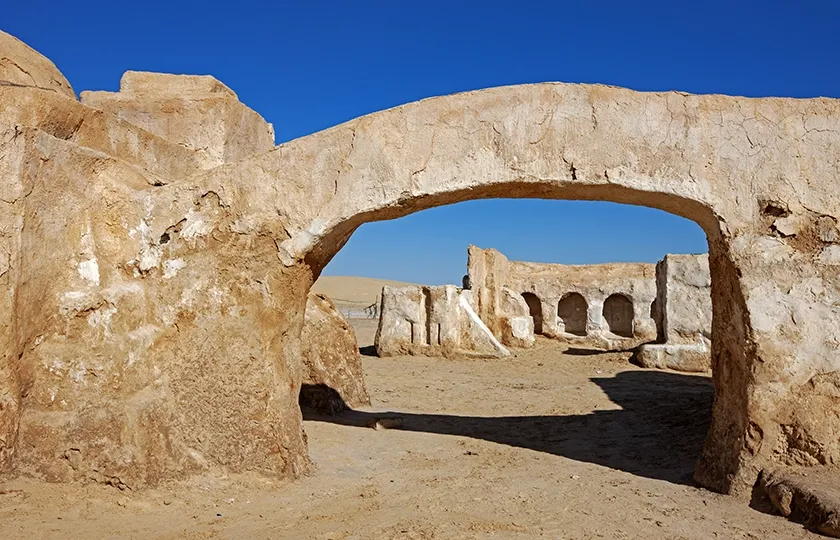
Close by and under a blue sky of almost painful intensity, in the middle of an esplanade glistening with the remains of salt that rise from the subsoil, sheltered by imposing dunes, Mos Espa is reminiscent of the artificial city that was on the imaginary planet of Tatooine in the Star Wars universe.
On the way to the “Berber kingdom” the mirror of the salt lake Chott El Jerid, which according to Herodotus was reached by the Argonauts, is the largest salt lake in the Sahara. Depending on the time of year, its shades vary from white to purple to light green, but it is always an impossible-to-forget frame that has sometimes been used as a film set for the filming of Star Wars.
We run almost parallel to the defensive line of the Empire’s southern frontier, where some Roman forts survive, very close to Ksar Ghilane, a wonderful oasis of termal springs that awakens every day to the magical light of dawn and the romantic reverie of merchant caravans.
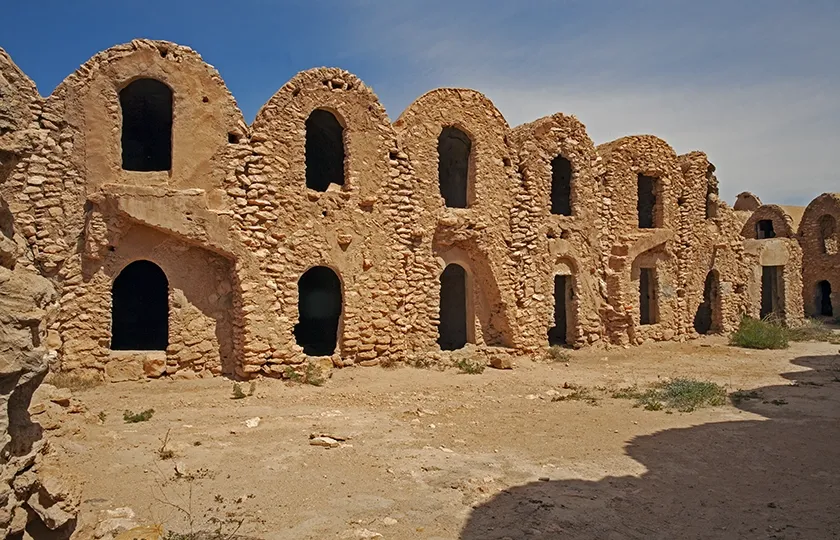
The landscape changes back to a lunar landscape in Ain Charchara, to mountains, plains and craggy peaks that guard the genuine architecture of the Ksour. These fortified granaries were once meeting points for nomads who stored their goods there to protect them from looters. Ksar Hadada is a magnificent example of Berber dwellings and granaries that was used as a film set for the Star Wars movie “The Phantom Menace”. Chenini is the only ridge village still inhabited by a Berber community with rock-hewn houses and its own language.
We return to the coliseum of El Djen, but this time with a cinematic perspective. The genuine architecture that hosted so many spectacles almost two thousand years ago, today embraces the memory of the last scenes of the film Gladiator, as well as a multitude of televisión spots.
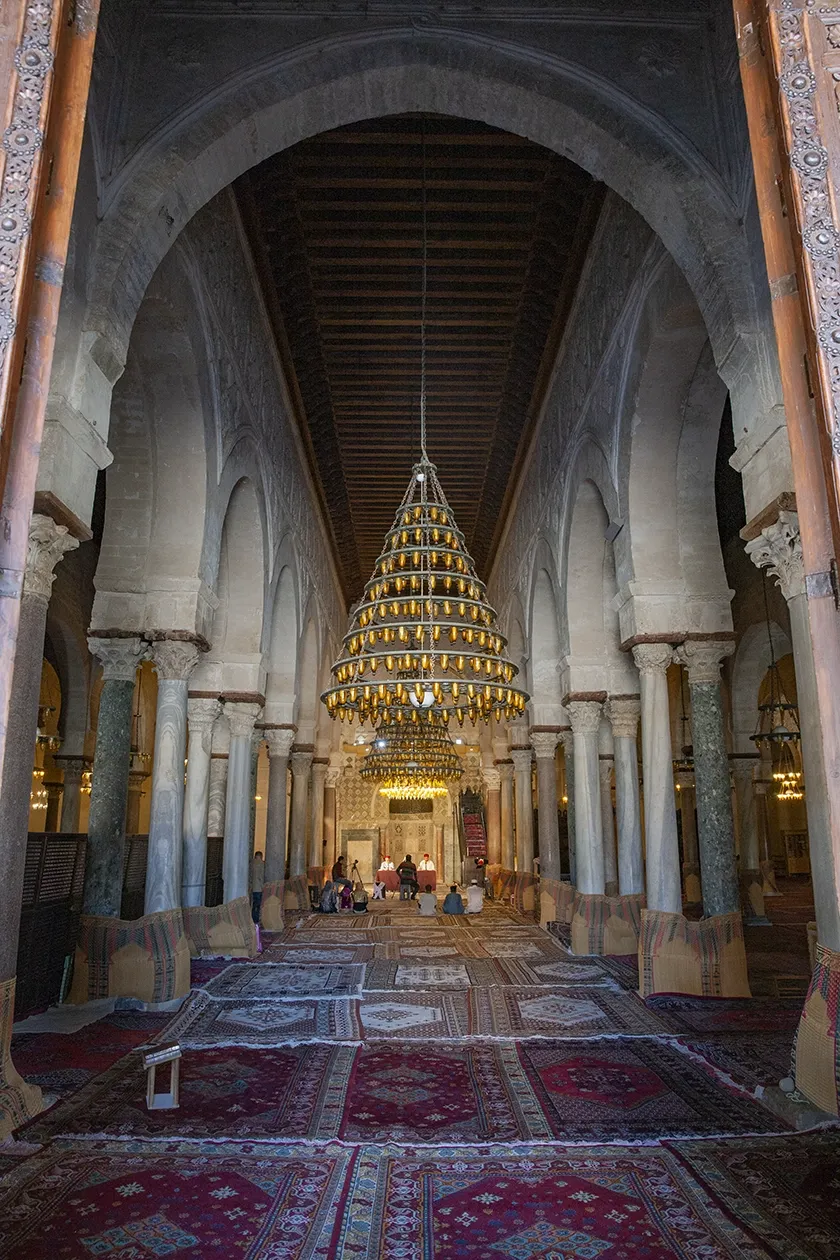
Kairouan, Tunisia’s oldest city, a World Heritage Site and the fourth most important Islamic city, shines with its many monuments and Islamic architecture, most notably the Grand Mosque with its 400 columns and decorative elements. The city has around 50 religious temples, as well as the medieval souks where scenes from Indiana Jones Raiders of the Lost Ark were filmed.
Dream beaches
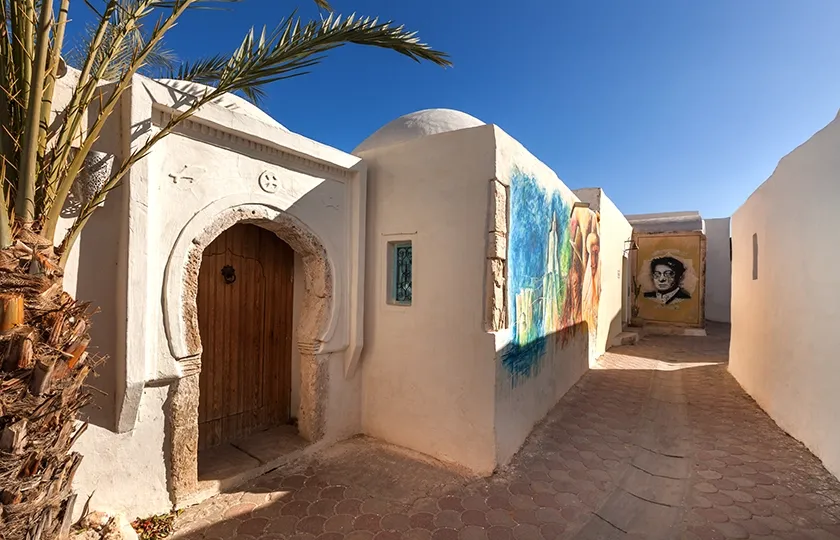
Djerba, the mysterious and historic island famous for be- ing the Lotus-eating island in Homer’s Odyssey, is today one of Tunisia’s most sought-after holiday destinations. Beyond the paradisiacal beaches, the place holds many surprises such as fishing ports of ancestral arts, a civil and religious architecture unique in the whole country, an emerging urban art, artisan workshops, a succulent seafood gastronomy, a Spanish fortress from the 14th century and even the ancient underground mosque of “Jamaa Loutaa”.
From these latitudes and following the twelve hundred kilometres of coastline to the Algerian border, Tunisia boasts some of the most beautiful beaches in the Mediterranean. From Sfax to Tabarka, via Monastir, Sousse, Hammamet and Bizerte, among other marvellous en- claves, it is a succession of white sandy beaches, uns poilt coves between impressive cliffs, unique villages and places as singular as Ras Angela, the most northerly geodesic point on the African continent.