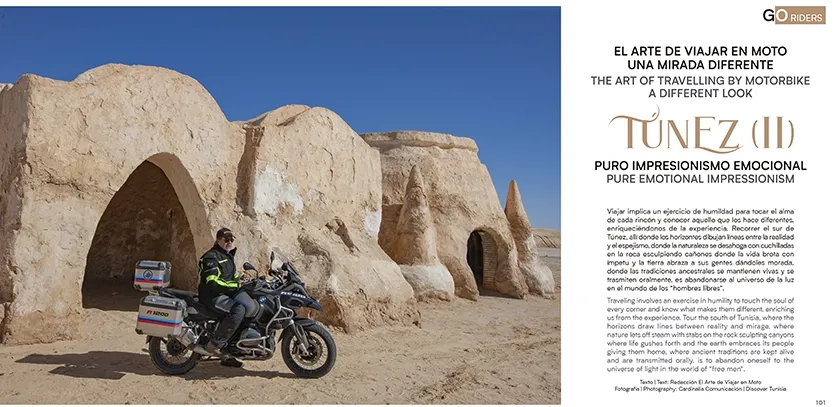
Traveling involves an exercise in humility to touch the soul of every corner and know what makes them different, enriching us from the experience. Tour the south of Tunisia, where the horizons draw lines between reality and mirage, where nature lets off steam with stabs on the rock sculpting canyons where life gushes forth and the earth embraces its people giving them home, where ancient traditions are kept alive and are transmitted orally, is to abandon oneself to the universe of light in the world of “free men”.
With the image of the Jugurtha Table in our rear-view mirrors we set course for the Great Erg, butroad we will succumb to that millenary territory that opens the doors of the mythical Sahara, where the oases mountain open to the immense sky from suggestive corners, where the language is still spoken Berber, where mirages evoke caravans of merchants and where the architecture of the Ksour and the troglodyte dwellings.
Wherever magic exists, a land of film pregnant with places where silence and imagination shells dreams and illusions, reveries of legend and the brave wishes of live unique experiences.
The berber kingdom
Crossing the high plateaus that separate the chains mountainous north and arid steppes in the center Tunisia, the air, increasingly drier, seeps through the helmet with a desert scent. Little by little the excitement is increasing when sensing that the next days will not be exempt from a romantic feel adventurous, while on the side of the road immense fields of olive trees open whose origin we will understand later.
All this forms a cocktail of historical evocations and cultural that are mixed with the exoticism that we long to find beyond the horizon line.
Suddenly, when in the personal imagination it is already I had installed the image of the untamed world Berber, Sbeitla displays all his splendor under the warm evening light. Founded by the Romans during Vespasian’s expansion, it reached its economic peak in the 2nd century thanks to him flourishing cultivation of olive groves and the elaboration of olive oil, as witnessed by the numerous presses of the time that are preserved. Of the period imperial are magnificent examples such as the thermal baths, the theater, the forum, the triumphal arch of Diocletian, the Antonine Gate and the Capitol with the three temples dedicated to the gods Jupiter, Juno and Minerva.

After the collapse of the Roman Empire Sbeitla ran the same fate, but the establishment of Byzantines, who moved the capital here from Carthage and became independent from Byzantium, meant a splendorous rebirth of the city. Were built numerous Christian places of worship that were contributing to a very urban regeneration particular, until it was conquered by the Arabs and used as a shuttle for future campaigns that led to its expansion throughout the north of Africa.
After a nice evening and a rest repairman at the Byzacene Hotel-Resort, deposits full of gasoline and an insatiable curiosity for discover new places and learn more about culture Tunisian, we left in a southwesterly direction until almost brush the Algerian border.
After three hours of walking through a landscape each more arid that reminds me of the importance of water, that “liquid gold” as it is called in the Arab culture, on the horizon the silhouette of gentle mountains that hide various treasures natural.
The same thing always happens to me when I travel with time enough to unleash my cognitive craving and I end up falling in love with every place. Travel by motorcycle is one of life’s greatest pleasures and doing it in many parts of Tunisia becomes poetry.
This is a scenario in which the concept of “Emotional impressionism” that has been applied so much to the work of the brilliant filmmaker Luis Buñuel would find a magnificent example, because the country must be viewed with perspective to better understand the soul of the great canvas that form the small details. With an exciting, albeit erroneous, sense of being in the middle of nowhere a sign announces the arrival at the mining town of Al-Rudayyif, point of entrance and exit of the circular route between the oases of mountain and the gorges of Selja.
This area is sadly known for the El Alamein war during WWII and this is where We found the “Clue of Rommel”, the Nazi general also known as “the desert fox”. Erwin Rommel had it built to prevent the Panzers tanks sank into the sand during the withdrawal of troops from the Africa Korps. Today is a amazing low concrete slab path difficulty for the trail, at the highest points you can see the blinding glow of the salt lake Chott El Jerid as opposed to the mysterious beauty of the canyoned valley.
The section is a combination of landscapes of shifting hues and emotions fighting for make a hole in our memory, both for the singularity of the place as by the memory of the many lives that ended there.
We continued west and unexpectedly I realize that the earth is abruptly splitting to host the mountain oases of Chebika, Tamerza aand Mides, exciting ecosystems in which water flows generously in the form of channels that well they might look like Eden. In Chebika the river descends forming waterfalls and streams, while the ancient city of Tamerza, abandoned as if outside a ghost town, you are in the greatest Tunisian oasis of these characteristics, fed by a river that rises in a waterfall of more than four meters high, something unusual in a desert. By his part Mides hangs on the brink of a dizzying cannon offering an impressive show, in whose entrails were shot some scenes of The English Patient and Star Wars.
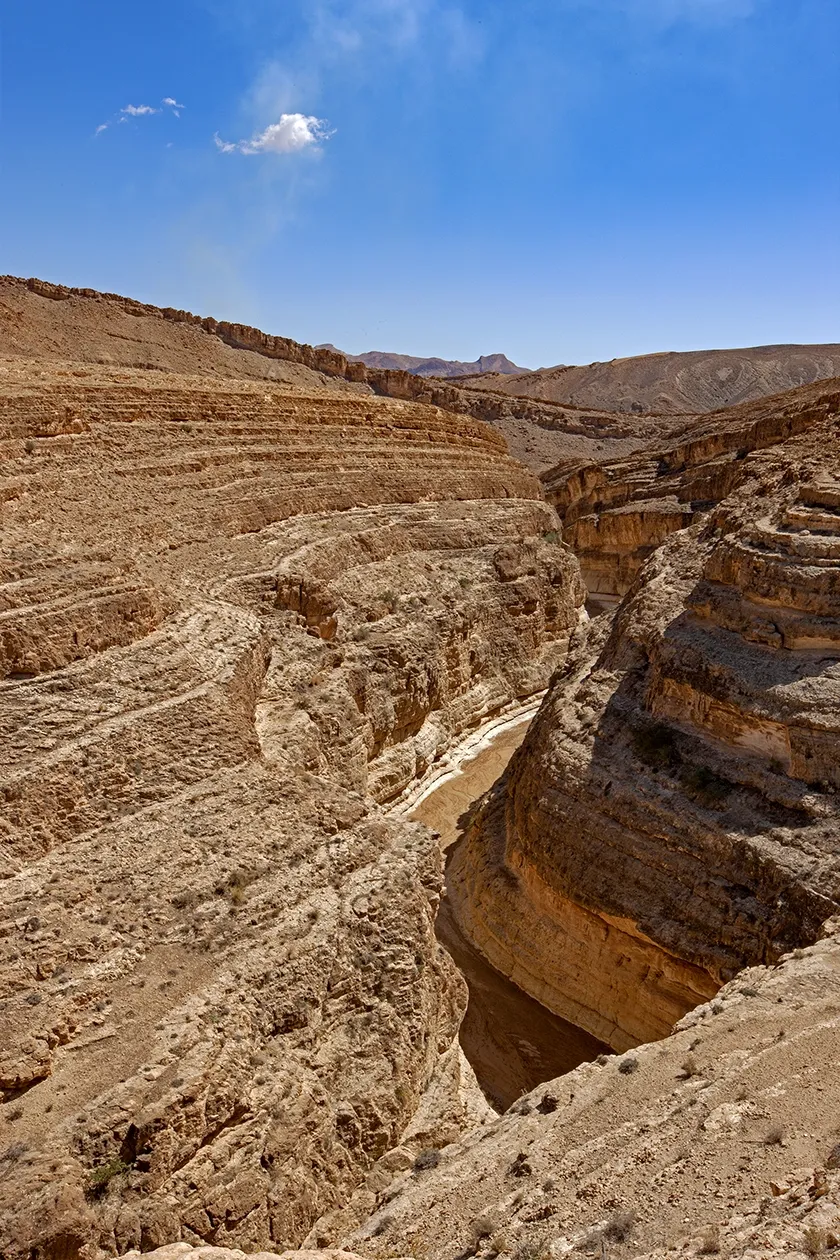
The air increasingly smells of desert and blinding light of the Great Erg invades a landscape that unleashes the imaginary of challenges and experiences in the fullness of the immensity.
With adrenaline rushing wildly we reached the western gate of the Tunisian desert. What emerged from the golden sands, Tozeur, the one who was the southern boundary of the Roman Empire, stands on a immense oasis of hundreds of thousands of palm trees, catching the gleaming glow of the desert in their alleys to make the walk an exercise in permanent reverie. Above the posts street vendors, artisans and the vibrant comings and goings of people rise beautiful buildings built with the typical brick facades with geometric shapes to give Tozeur its own identity, among which highlights the minaret of the mosque that at the same time acts as a beacon to orient yourself within the city or from the distance of the desert.
Already in the s. XIV the city was an important center commercial to which the caravans of merchants arrived from central Africa, which gave it a touch of cosmopolitan exoticism that still conserves and that also appreciates in the time that it transits to different speed, something that even inspired Franco Battiato to compose the song “The trains of Tozeur”.
Especially pedagogical is the visit to the Museum of Popular Arts and Traditions, Dar Museum Chraiet. Installed in the dome of Sidi Bou Aisa, which it was a Koranic school of the mid-fourteenth century, today is a magnificent sample of the ways of life local. Another point of interest is the impressive palm grove with more than three hundred thousand specimens that make Tozeur the largest Tunisian producer of the dates known as “fingers of light”.
The day ends with another surprise when we arrive at our accommodation. The Anantara Sahara – Tozeur is itself an experience, both for the suggestive resort surrounded by dunes, as from the feeling of contemplate the sunset over the desert from my villa, making rest a moment exciting.
The magic of the place and the processing of so many sensations of days gone by invite a drop in revolutions and take the day with another rhythm, but since curiosity knows no limits, that point o relaxation is short-lived.
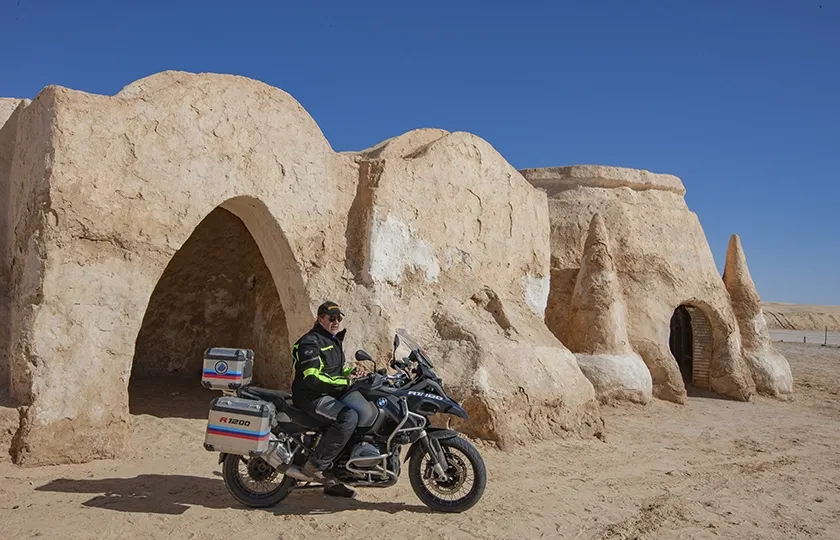
Under a blue sky of almost painful intensity we look for a more cinematic point of enjoyment, so in just forty minutes on a highway that dodges dunes and herds of camels we arrived at Mos Spa. In the middle of a bright esplanade by the traces of salt that emerge from the subsoil, sheltered of imposing dunes, that artificial city rises belonging to the imaginary planet of Tatooine in the Star Wars universe. Ride our bikes for the same scene of the shots-sequences of the saga that we all have in memory was really funny.
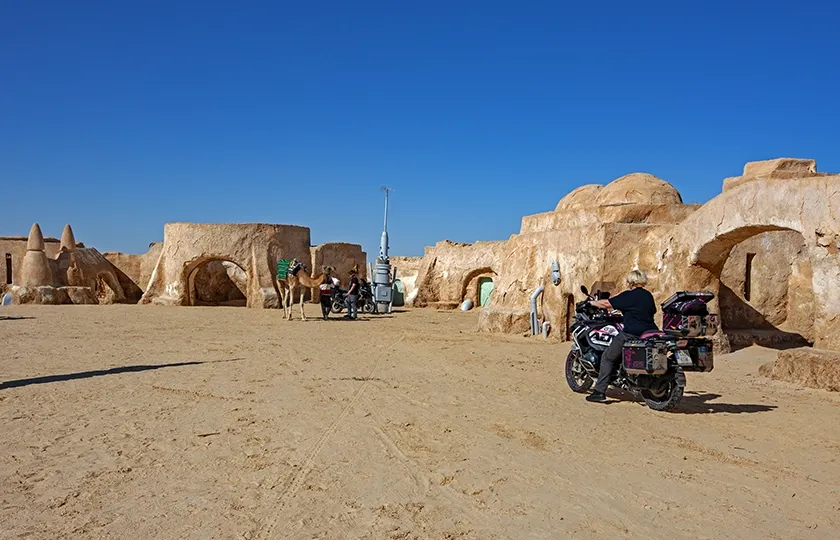
We go back on our ruts to Tozeur to recalibrate the imaginary compass that will take us into the most genuine of the “Berber kingdom”. By roads lonely and sometimes undefined asphalt, but suggestive by the wild point they contribute, we cross increasingly desert lands with the sand brought by the wind invading the road. Suddenly the vision of a mirror of infinite proportions on the land overrides any other point of attention, leaving me at the mercy of the incredible show with my vanishing points where the mirages.Here the road turns perfectly straight for more than thirty kilometers crossing the salt lake Chott El Jerid, the same which according to Herodotus was reached by the Argonauts with the Argo ship. Geologically it is the largest saline surface of the Sahara with seven thousand kilometers squares and an altitude that ranges between ten and twenty-five meters above sea level. According to time of year, its shades vary from white to light green, passing through purple, but it is always a frame impossible to forget that sometimes It has become a film set as in the filming of Star Wars.
We leave this silver stage behind to continue heading to the desert through Douz, also known as “the door of the desert”, through lands traveled in the past by the Mrazig Berbers. Our destiny is a captivating territory in which they sounded cannons of war and where some Roman forts, built as a defensive line for the southern border of the Empire, survive defying the infinite horizon. That place is called Ksar Ghilane, a wonderful oasis of hot springs that every day wakes up with the magical dawn light and romantic reverie of the merchant caravans. We got there with our bikes and the twin-cylinder purr gave way to the overwhelming silence of the desert without realizing it, as if an inner force were pushing us abandon ourselves to the spell of the moment.
I will never forget a comment from my Tunisian friend Leila Tekaia alluding to getting to that part of the Sahara could be something transcendental, because the desert there he is able to bring out the best and the worst in us themselves. Feeling a thousand sensations caused by that almost mystical moment of sunrise I understood his words. I remembered the past days in which I suffered some disappointment on the part of those who said to themselves friends, but I learned to be more generous with those at all times they had remained faithful and with their I remember I stay.
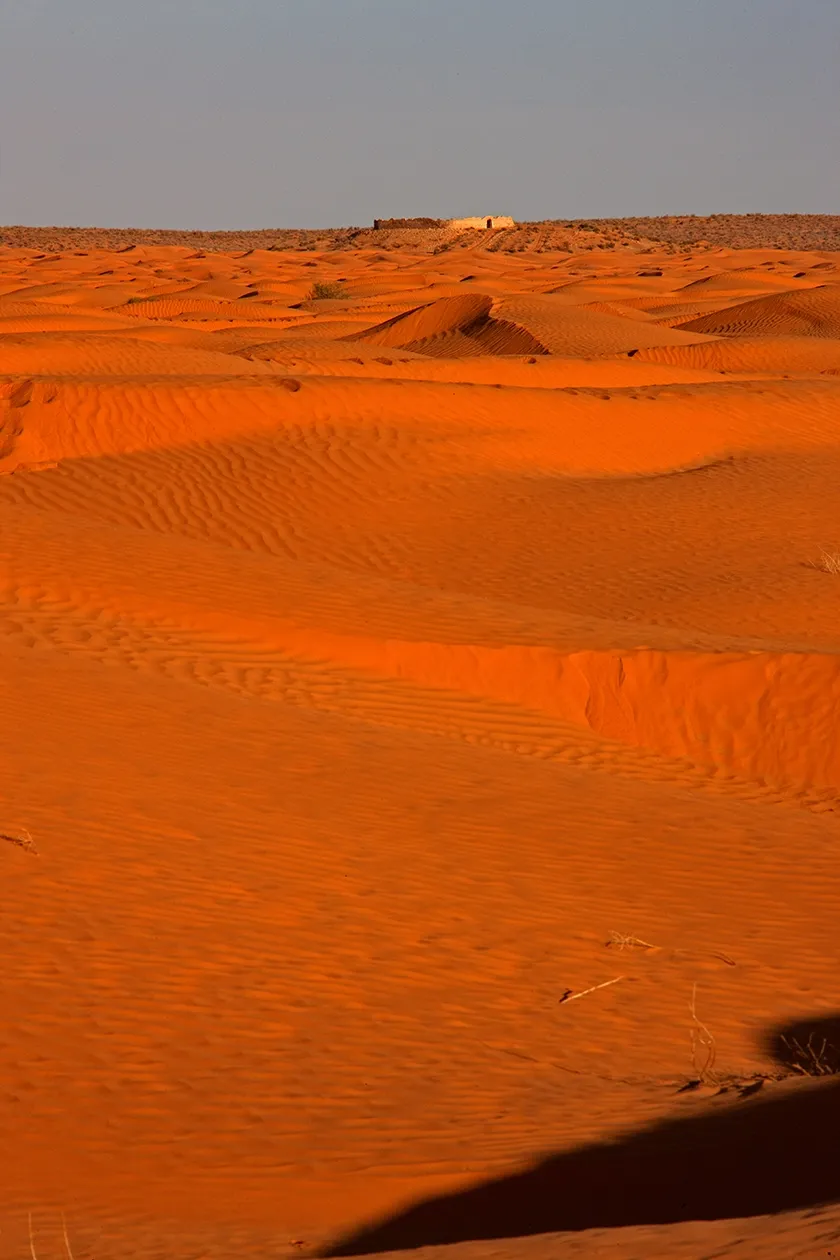
After the reflective moment of sunrise we set out towards the epicenter of the earth Berber in search of the most genuine of their culture and lifestyles. The arid landscape of mountains, plains and steep peaks guard the genuine architecture of the Ksour, hive-like constructions embedded in the rock. These fortified granaries like the Ksar Ouled Dabbab, today converted into a luxurious hotel, were formerly meeting points of the nomads who stored their goods there for protect them from looters.
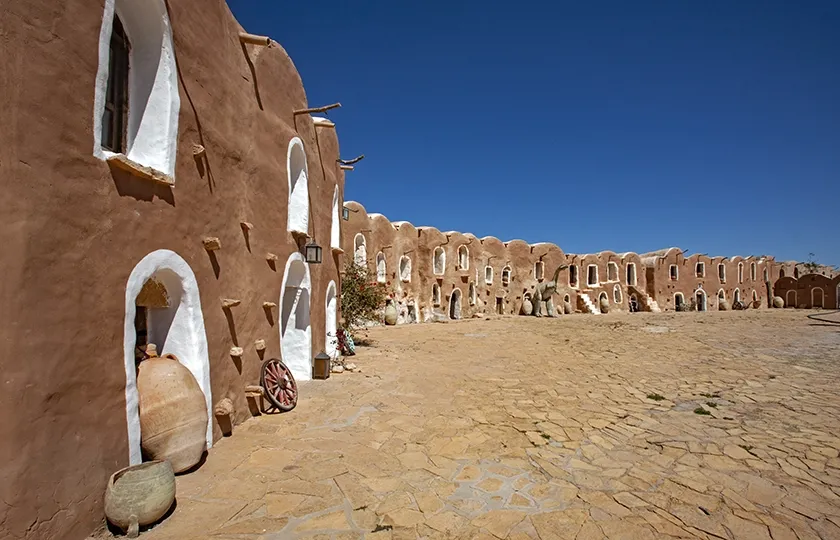
Ksar Hadada is a magnificent example of Berber dwellings and barns, whose magnificent state of conservation was determining factor to be turned into a film set in the filming of the episode “The Phantom Menace” of the movie Star Wars.
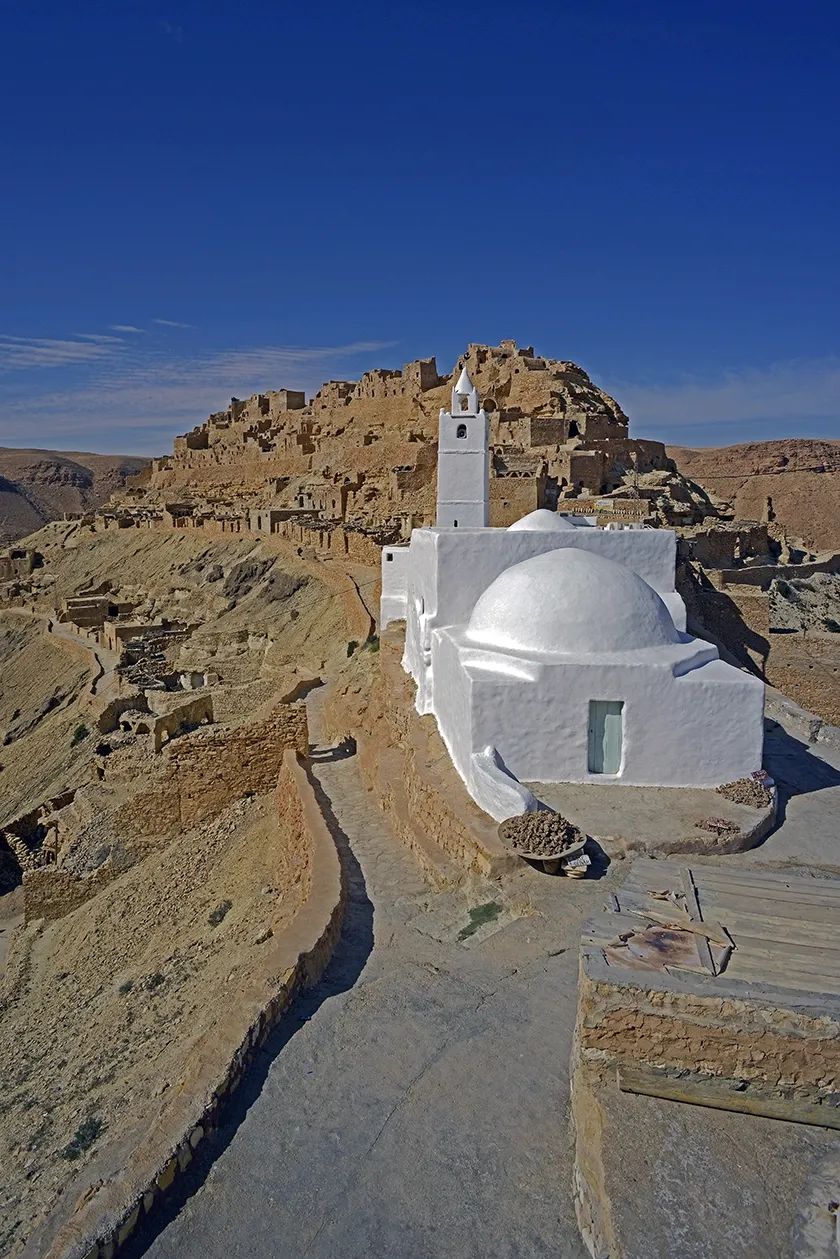
Chenini is the only town in ridge still inhabited by a Berber community with rock-cut houses and their mountain Ksar dominating the Dhahar plateau. It also remains standing the legendary white mosque of “Los Siete Sleepers “and the daily use of the Berber language.
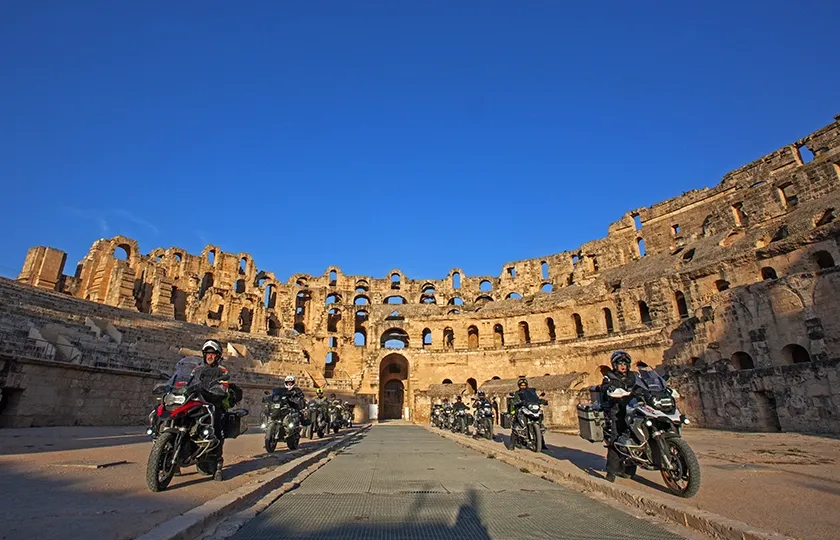
The afternoon progresses, and we head towards the island of Djerba on roads that are gradually improving in condition. The mysterious and historic island, famous for being the Lotus-eating island in Homer’s Odyssey, has now become one of Tunisia’s most sought-after holiday destinations. Beyond the paradisiacal beaches, the place holds many more surprises such as fishing harbours of ancient arts, unique civil and religious architecture, emerging urban art, artisan workshops, succulent seafood cuisine and even a 14th century Spanish fortress.Our next stopping point is another of those mythical settings. With a stamp the imposing Roman Coliseum of El Djem welcomes us. Built in the s. II AD, is the third largest in the world with a capacity of thirty-five thousand spectators and a magnificent state of conservation, so it has been used as a stage for spots television and for film shoots such as Gladiator.
Excited to make a dream come true, thanks to the intermediation of my friend Leila Tekaia and with exquisite care not to cause any harm to this World Heritage monument, we were able to enter with our motorcycles to the arena of the gladiators and take a unique and unrepeatable photo. The moment was of a very special symbolism, because somehow we had reached the heart of one of the most representative monuments of the Empire Romano who still stands.
After spending the night in the magnificent hotel Mövenpick Resort & Marine Spa Sousse, enjoying from the breathtaking views of the fabulous beach, we head to Kairouan, the oldest city in Tunisia and a World Heritage Site. Of his rich past tell us the many monuments and their Islamic architecture, standing out above all the Great Mosque, one of the oldest in the world. Its more than four hundred columns support a history rich in decorative elements from the year 671 and the enormous dimensions of the inner courtyard they give it an extraordinary grandeur.
The city has another fifty temples religious, so Kairouan, in addition to being a vibrant and welcoming city of friendly people, is considered the fourth most important city of Islam after Mecca, Fez and Jerusalem.
Especially interesting are the medieval souks, where all kinds of crafts are sold such as ceramics, tapestries, hand-woven wool rugs, leather and jewelry, among many other wonders.
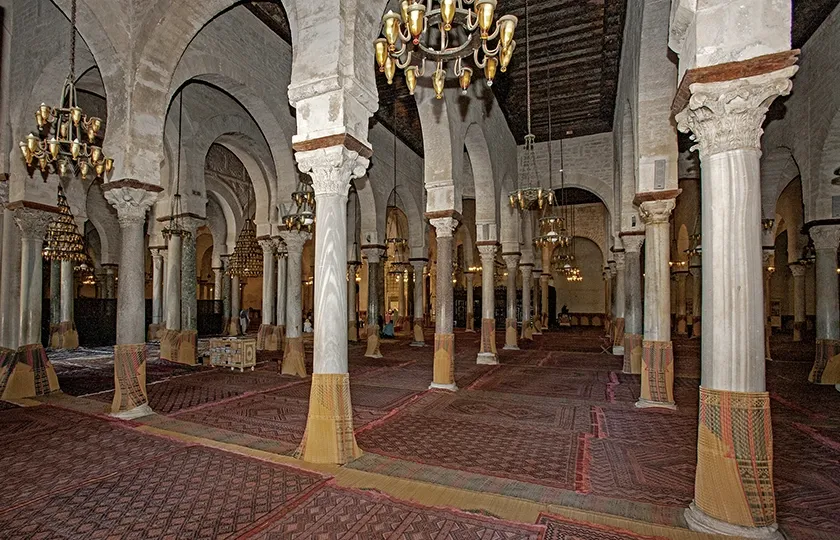
Our journey is coming to an end and what better place to make it the capital of the country. Legend has it that the Phoenician queen Dido, exiled by her brother Pygmalion, came to the shores of Africa to find asylum seeking refuge from King Jarbas. This one promised that she would give him as much land as she could encompass with an ox hide. Dido cut her skin into thin strips and she joined to form a rope, closing the space in the one who built a fortress called Breeze that most later it would become the city of Carthage, germ from the city of Tunis.
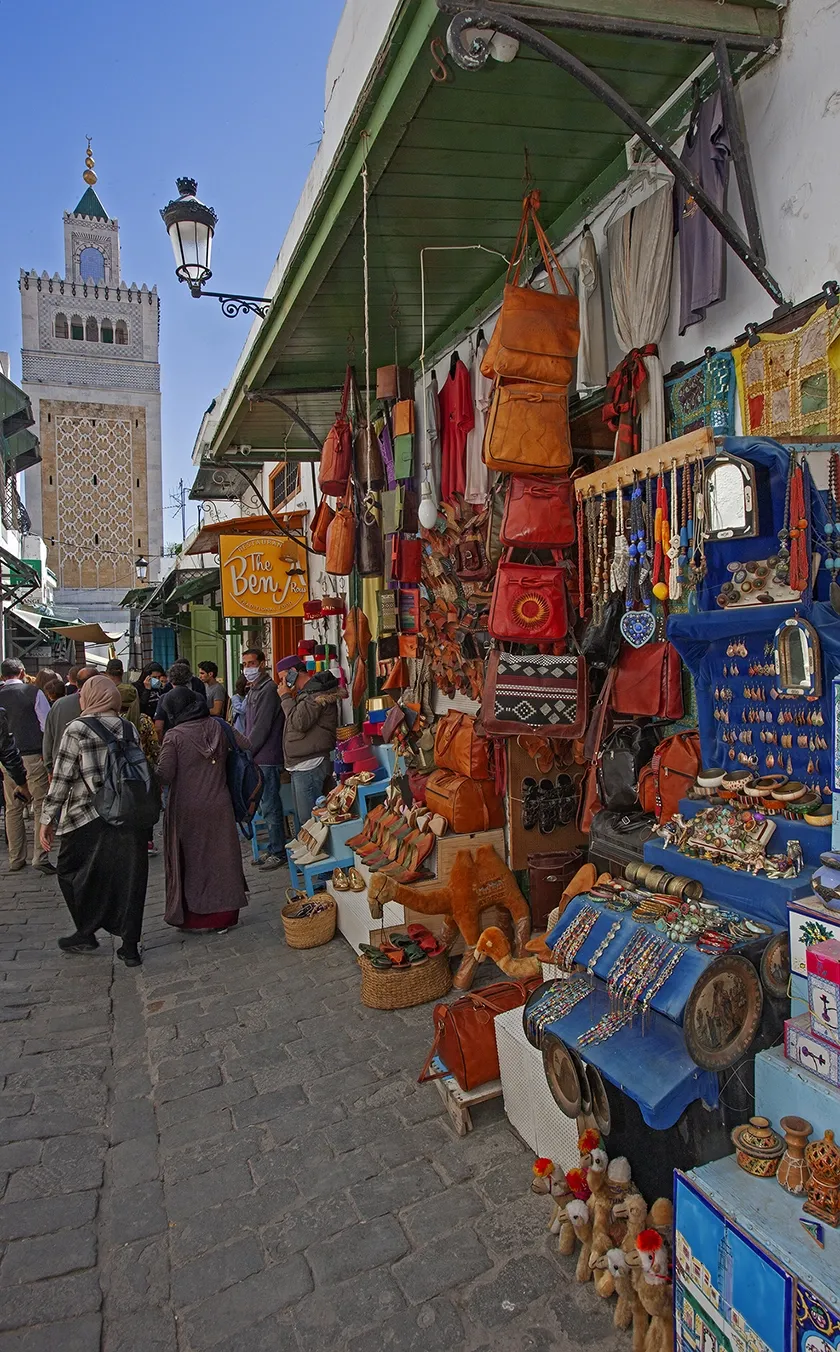
Walking its streets is like wander through the centuries that have left their footprints in multiple ways. A good starting point is the National Museum of the Bardo, former palace of the Ottoman monarchs which houses the largest collection of Roman mosaics in the world. Stroll the Medina of Tunisia, declared a World Heritage Site, where are its monuments and souks traditional full of typical merchandise, the Kasbah square, the mosques of Ezzitouna and that of Hammouda Pacha and the many stalls to taste authentic Tunisian food is a vibrant experience and unforgettable.
Carthage, ancient capital of the Punic Empire, next to the Byrsa hill, to Tofeto, to the old ports Punics and the baths of Emperor Antoninus constitute the best lesson of a key period in the Universal history.
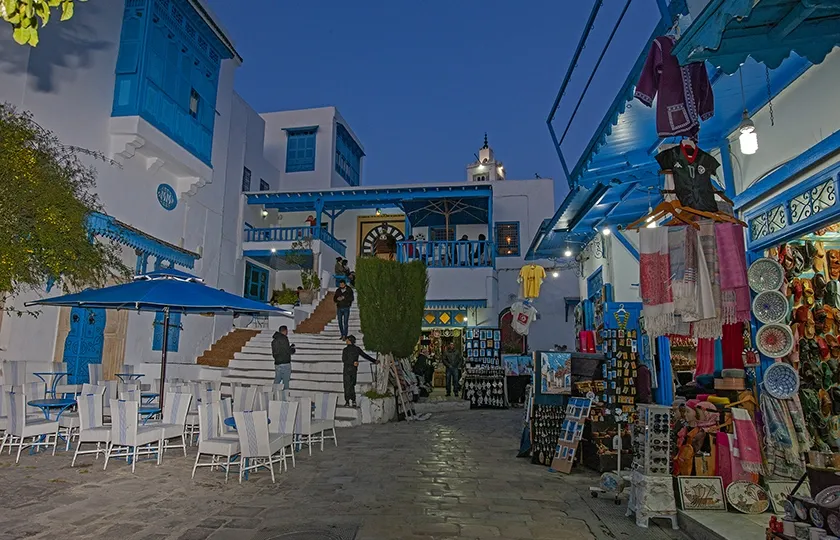
Nearby is Sidi Bou Said, the most picturesque on the bay, famous for its beautiful houses painted blue and white with their beautiful balconies decorated with arabesques and for the fantastic views from the Gulf of Tunis Can’t leave this idyllic place without trying the delicious “bambalouni”, the typical artisan buns made with a flour paste fried in oil and sprinkled with sugar.
Tunisia is a genuine paradise, a universe of coexisting contrasts that I have been fortunate to meet from different angles and who I promise return with the humility necessary to continue learning.