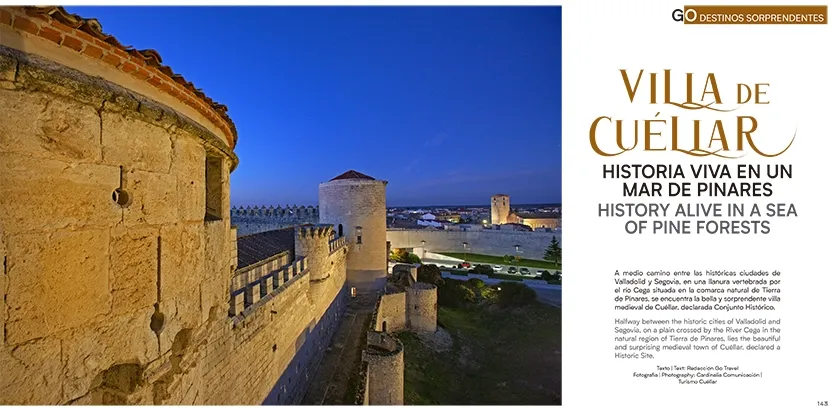
Halfway between the historic cities of Valladolid and Segovia, on a plain crossed by the River Cega in the natural region of Tierra de Pinares, lies the beautiful and surprising medieval town of Cuéllar, declared a Historic Site.
Home to Cortés Castellanas, the setting for illustrious novels and for centuries a supplier of excellent wool used to make the most famous Flemish cloth, Cuéllar is now a town that proudly recalls its past, aware that its rich history, varied cultural and natural heritage and renowned festivals make it a desirable destination for anyone seeking to discover authentic and surprising places.
A glorious past that has been engraved in the stones of its majestic castle belonging to the Dukes of Alburquerque, in its walled enclosure and in the bricks of its numerous religious temples, among which the interesting Mudejar churches stand out, making the town one of the main references in Castile and León for this architectural style, in addition to its palaces and noble houses.
Walking through the historic centre of Cuéllar invites us to let our imagination run wild, taking us back to those days when three cultures—Christian, Jewish and Muslim—lived together in peace and harmony.
Cuéllar Castle, a fortress with history and medieval charm
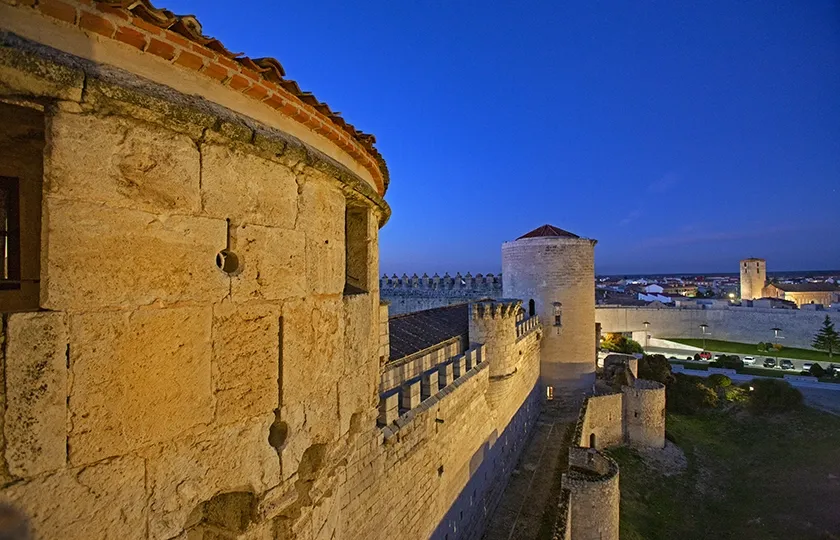
Located at the highest point of the town, on the site of the former medieval citadel, the castle of the Dukes of Alburquerque dates back to the 11th century and was built in the Mudejar style, traces of which can still be seen in the beautiful Memoria tower. Most of the current structure dates from the 15th and 16th centuries.
After King Henry IV ceded the town and castle to Don Beltrán de la Cueva, the first Duke of Alburquerque, in 1464, it was he who transformed the fortress into a palatial residence, which is why it is now recognised as a castle-palace.
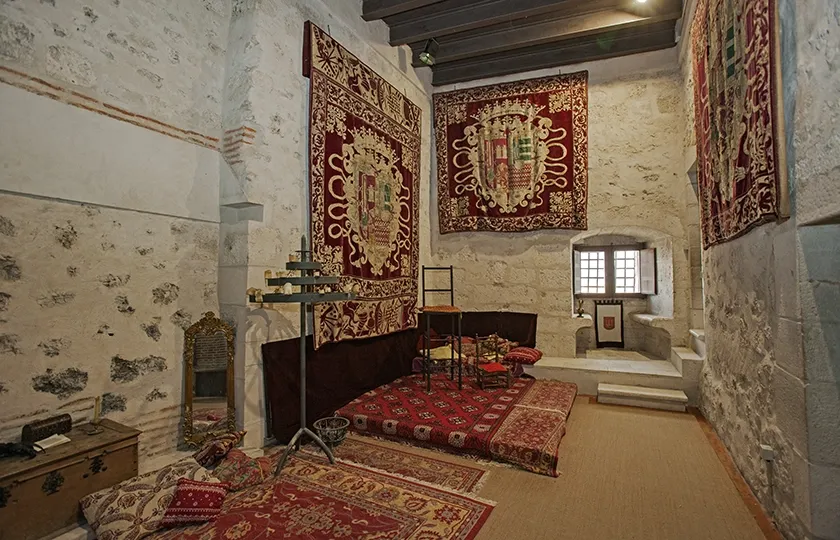
Its unique beauty comes from the blend of different architectural styles: Mudejar, Gothic and Renaissance. Rectangular in shape, flanked by three cylindrical towers and one square tower, its interior courtyard or parade ground stands out, embellished by a double gallery of 16th-century segmental arches, the antechamber to beautiful halls decorated with stucco coffered ceilings and carved beams.
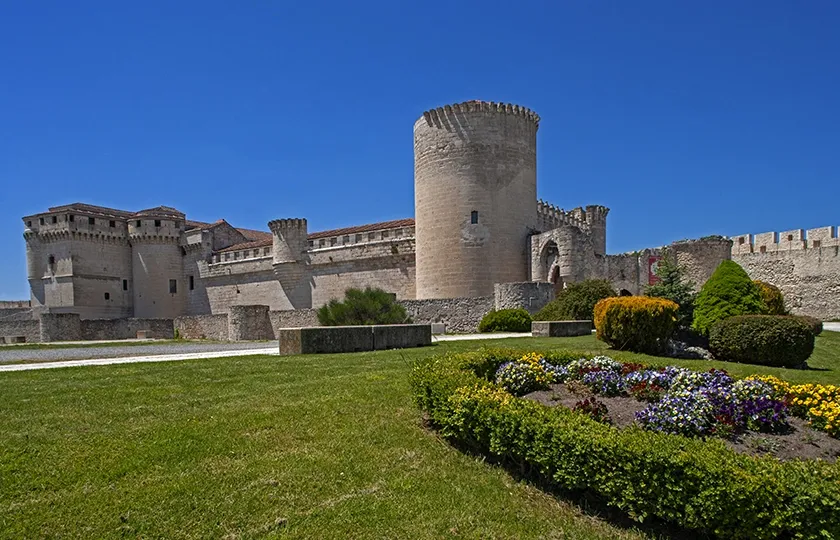
Witness to important events throughout history, it served as the residence of kings, hosting John II and Peter I, and sheltered historical figures such as General Wellington during the War of Independence. Its palatial rooms were converted into cells and prison spaces at the end of the 19th century, causing serious deterioration to the original architecture.
It currently houses the Duques de Alburquerque Secondary School, the Casa Ducal de Alburquerque Archive, which contains wills, donations, royal grants, lawsuits, accounts, probate records and various correspondence, with documents dating from the 12th century to 1994, making it one of the most important archives in Spain, as well as the Municipal Tourist Office.
Mudejar art, a living trace of cultural fusion
This architectural style, which blends Christian and Muslim elements, flourished between the 12th and 16th centuries, leaving a rich legacy of religious and civil architecture in the town of Cuéllar and making it one of the most important Mudejar centres in the region of Castile and León and in Spain.
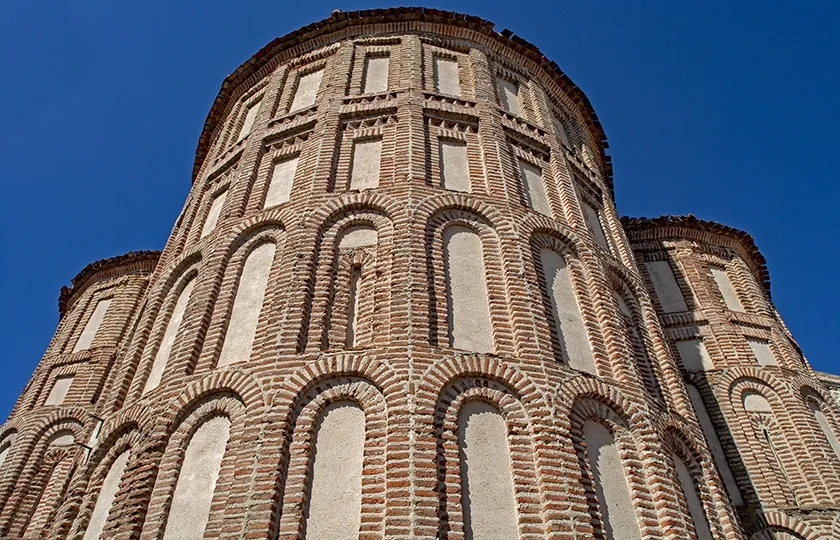
Characterised by the use of brick as the predominant material, in addition to plaster and glazed ceramics, Cuéllar offers the chance to enjoy zigzag decoration, blind arches and friezes with geometric motifs. One of the most notable examples is the Church of San Martín, now the Mudéjar Art Centre and one of the best-preserved examples. Its semicircular apse and interlaced arches stand out, resulting in a masterpiece representative of this style. Visiting it becomes a sublime experience that allows you to admire the details of the brick decoration and marble columns.
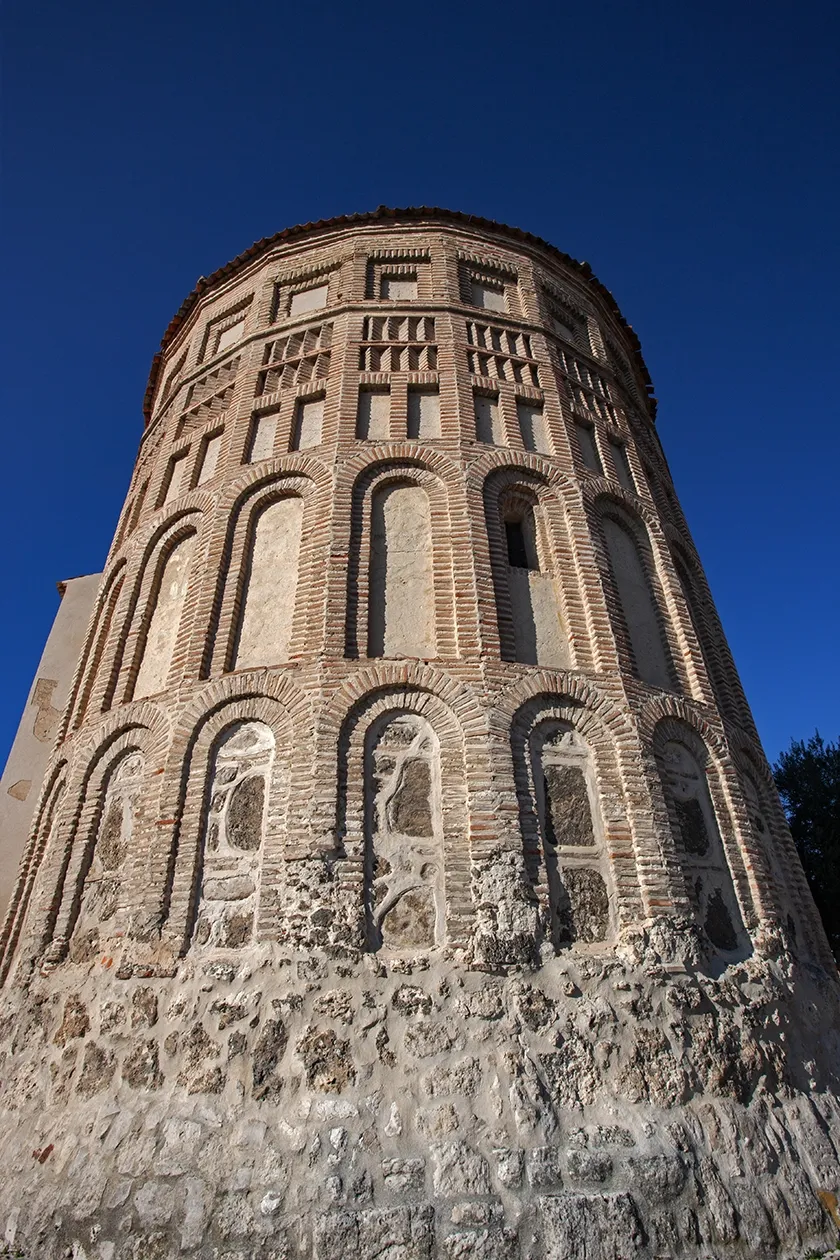
We cannot forget other churches such as San Andrés, possibly the best example of Cuéllar Mudejar architecture, which preserves Romanesque and Gothic remains inside; San Esteban, which, in addition to its impressive apse, houses fantastic treasures such as Gothic-Mudejar tombs; and the always surprising El Salvador. But if there is one thing they all have in common, it is the presence of slender semicircular apses and brick decorations that reflect Islamic aesthetics adapted to Christian worship.
An exquisite catalogue of Mudejar architecture in the town of Segovia, which is completed by the churches of San Miguel, La Trinidad, Santa María de la Cuesta and Santiago; the tower of Santa Marina, the gates of San Andrés and San Basilio, and the aforementioned Torreón de la Memoria.
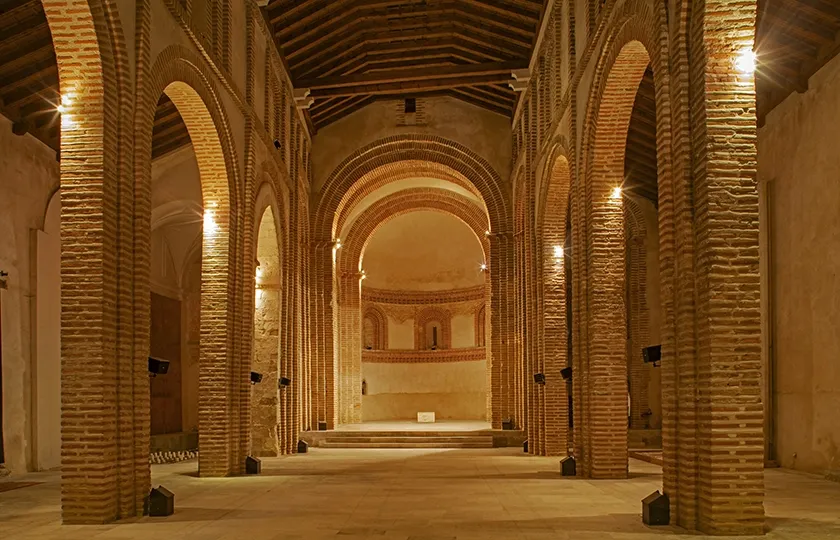
This architectural legacy speaks not only of artistic fusion, but also of the dialogue between cultures that coexisted for centuries. To stroll through Cuéllar is to discover a history carved in brick, a journey to the heart of a unique and profoundly Castilian art form. Visiting this Segovian village is to discover how art can be a bridge between cultures and how a small municipality can safeguard such a great heritage.
It is thanks to the restoration and conservation efforts of the Town Council and cultural associations that Cuéllar has managed to preserve this art form and showcase it, making Mudejar architecture one of its hallmarks and sharing it with visitors through guided tours, exhibitions and educational activities.
Dramatised tours, a journey through time
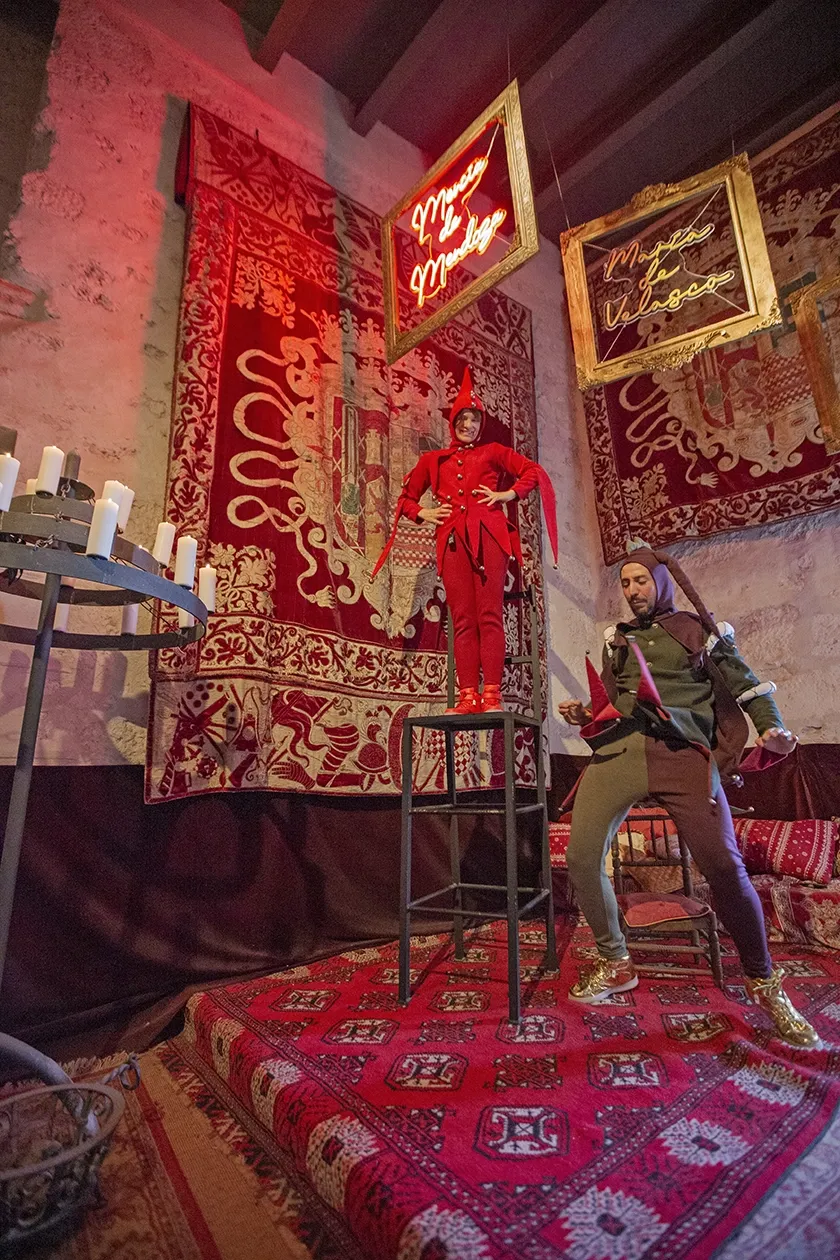
In the heart of Castile, where walls still guard the horizon and walls whisper secrets of the past, there is a medieval village that has managed to reinvent itself to attract curious travellers. In Cuéllar, history is not read, it is lived. One of the most original and exciting ways to do this is through their dramatised tours. Far from being a boring lesson, Cuéllar’s dramatised tours combine historical accuracy with a playful and accessible tone.
Fun, educational and, above all, presented in a unique way, these dramatised tours bear the unmistakable stamp of the Municipal Company of Professional Actors. The town can also boast about this, as it is the only municipality in Spain that has its own theatre company, which produces plays throughout the year and also performs them on the best stages, the monumental heritage of Cuéllar.With their professionalism and originality, we can learn about the history and secrets of the town through live performances, in which actors and guides bring the town’s most prominent historical figures to life, taking visitors on a journey through time that thrills young and old alike.
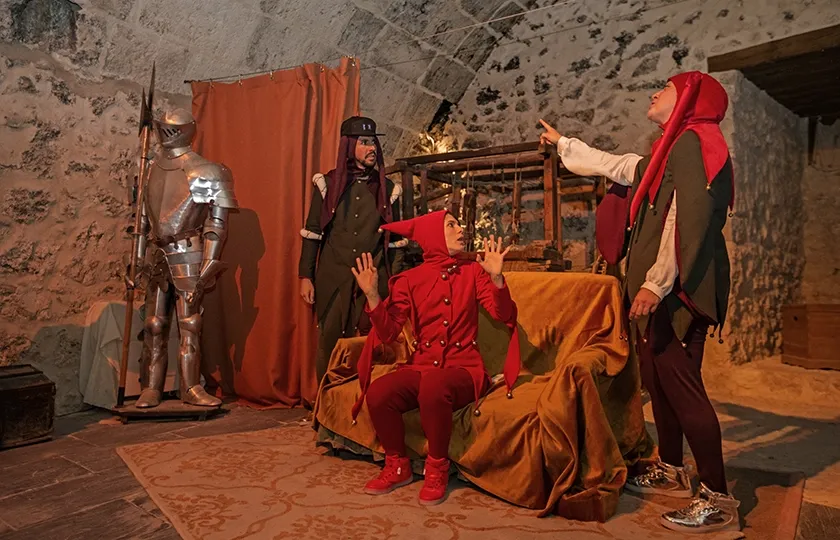
The actors, accompanied by spectators, visit the main monuments of Cuéllar, such as the castle of the Dukes of Alburquerque and the church of San Esteban, where scenes from the Middle Ages, the era of the Catholic Monarchs and different key moments in the history of the municipality are re-enacted. Its appeal lies in the fact that visitors not only learn about architecture and historical facts, but also actively immerse themselves in history, interacting with characters and experiencing the emotions of the past.
With unique staging, period costumes, music and a touch of humour, the tours educate and entertain, bringing history to life in a surprising way.
Although they take place throughout the year, it is especially during periods of increased tourist traffic, such as local festivals or the cultural summer, when dramatised tours reach their peak. This is undoubtedly one of the most popular activities in the town, ideal for anyone who wants to experience Cuéllar from a different perspective.
A paradise for nature lovers
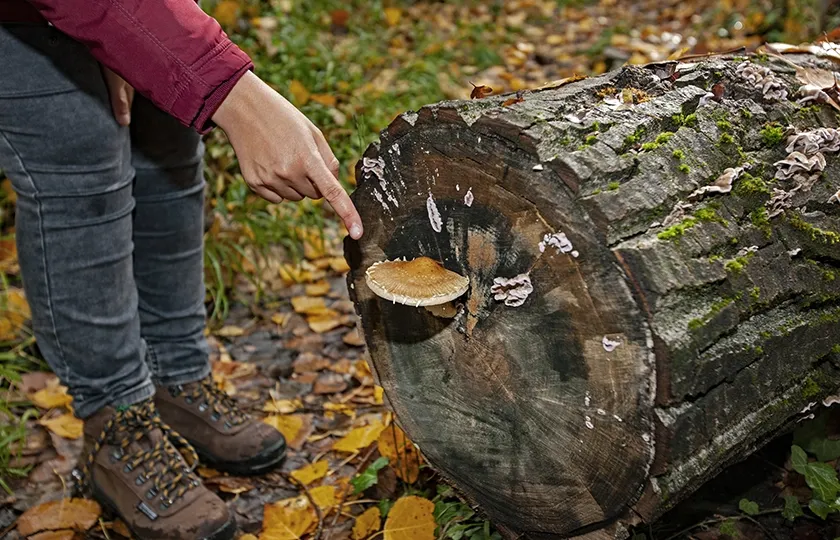
Nature lovers will also find Cuéllar a place where they can enjoy their passion. Surrounded by rivers, stunning countryside landscapes and extensive pine forests, hence the expression ‘sea of pine trees’, the town offers numerous hiking trails that bring visitors closer to its abundant natural heritage in a peaceful and accessible way.
One of the most notable trails is the Castle Trail, which is moderately difficult and runs through rural landscapes and ancient paths, connecting the town with other nearby villages such as Turégano and Pedraza, which, like Cuéllar, offer impressive views of castles and fortresses.
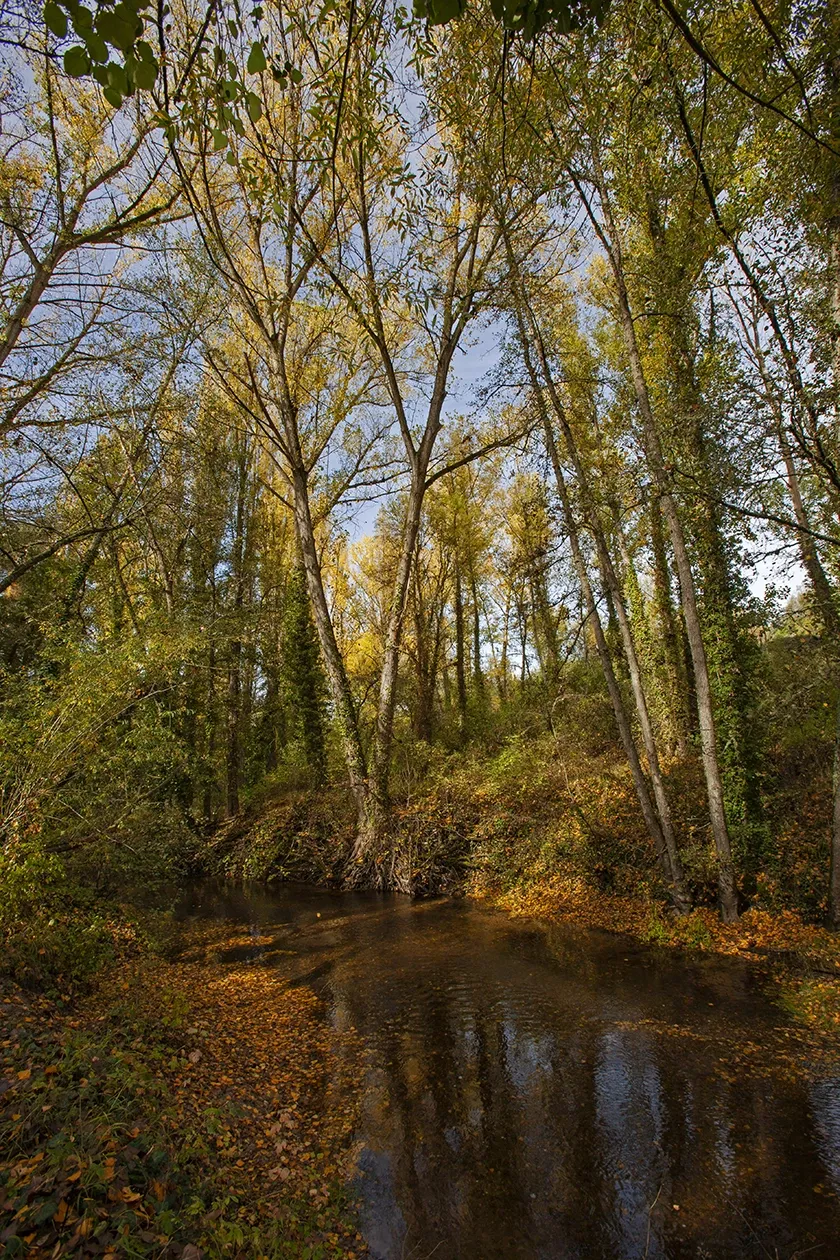
Without straying far from the village, the seven-kilometre-long Fishermen’s Trail runs parallel to the River Cega, allowing you to explore the landscapes of ‘arid Castile’ and enter the sea of pine forests, one of the largest areas of resin pine trees in the country, with surprising travelling companions, herons. Peace and serenity are what hikers will find on this trail, without losing sight of the beauty of the orchards and cultivated fields. Also close to the town centre is the El Espadañal Wetland, which, if visited in winter and summer, allows visitors to enjoy the peaceful presence of the water birds that make this place their home for part of the year.
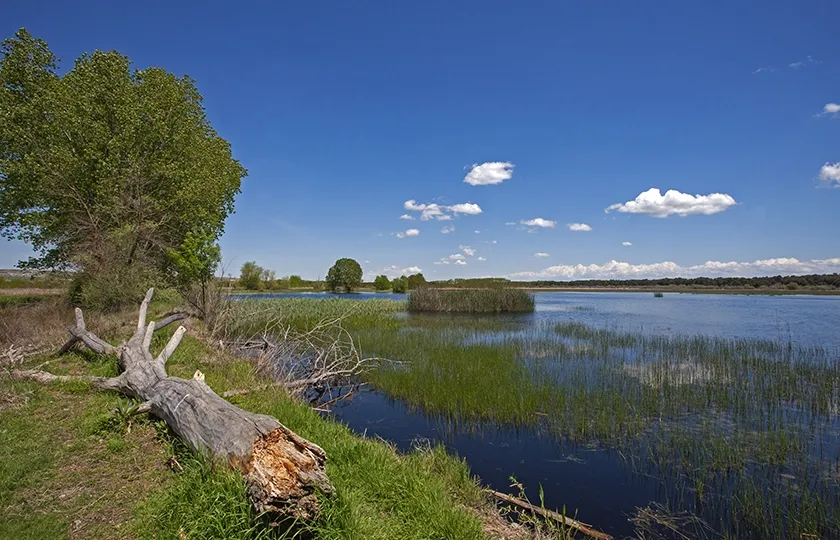
Other routes through the pine and juniper forests in the area offer the chance to admire wildlife in its natural habitat, as well as native flora, and of course, enjoy the tranquillity and freshness provided by these natural spaces.
Perfect for hiking enthusiasts, birdwatchers, or photography aficionados, the Nature Trails in Cuéllar are an excellent way to combine cultural tourism with outdoor experiences, allowing visitors to connect with the essence of the Castilian landscape.
Cuéllar bull runs, a historic tradition
The Segovian town of Cuéllar boasts the oldest bull runs in Spain. Documentary evidence held in the Historical Archive of Cuéllar makes this fact abundantly clear. A valuable document recounts the story of Queen Leonor, wife of Juan I of Castile, Infanta of Aragon by birth and Lady of Cuéllar, who in the 14th century received complaints from the town’s noblemen, to which she responded by highlighting the age-old custom of locking up bulls in Cuéllar, a ruling that would be ratified by the first Duke of Alburquerque, Beltrán de la Cueva.
The documents that support this fact are the so-called Regiment Agreements, which since 1484 have ordered the payment of bulls to different people. These agreements, which involved bull runs, were mainly held during the festivals of San Juan and Corpus Christi, and were particularly significant when heirs to the House of Alburquerque were born or visited the town, as well as to celebrate the end of an epidemic.
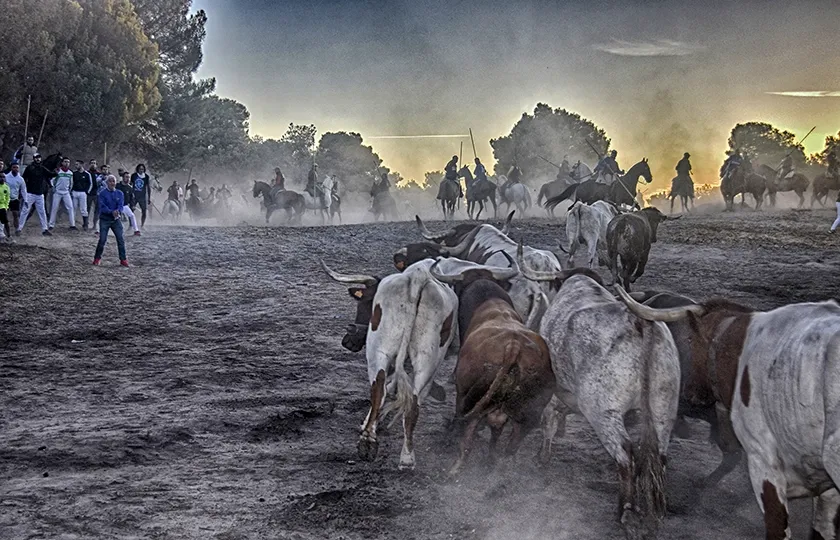
Deeply rooted in the cultural identity of the town, the bull runs are held during the patron saint festivities in honour of the Virgin of the Rosary, with the first one taking place on the last Sunday in August.
What sets them apart from other bull runs held in Spain is the unique combination of rural and urban routes. They begin with the first rays of the sun when the bulls are led on horseback from the Corrales del Cega through the pine forest. Both spectators and the brave souls who will run ahead of the bulls await them in the town centre, dancing to the sound of dulzainas (traditional Spanish woodwind instruments). When they arrive, the bull run continues to the bullring. This uniqueness has made them a benchmark, leading them to achieve the title of Festival of International Tourist Interest in 2018.
Respect for tradition, the prominence of horses, and the participation of runners make the bull runs in Cuéllar a vibrant, respectful, and thrilling experience. More than just a show, they represent a living legacy that grows stronger every year, reinforcing the link between history, identity and community.
Mudéjar Fair, a journey into the medieval past
Every year, Cuéllar recalls the era when the three cultures coexisted in harmony, marking the splendour of the Mudejar style. The Mudéjar Fair is much more than just a festival; it is a way of reviving the essence of Cuéllar, highlighting its historical, cultural and artistic wealth.
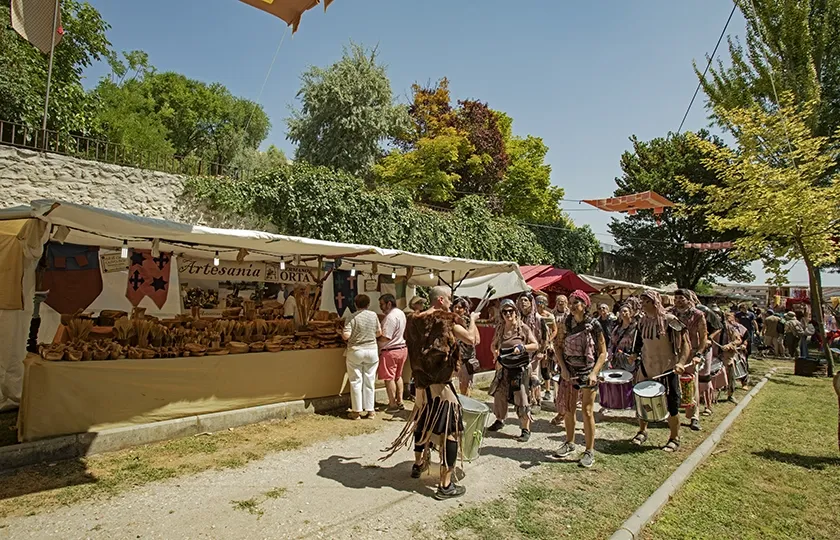
At the end of August, just the weekend before the Running of the Bulls festival, the Huerta del Duque Park dresses up in its finest to welcome hundreds of visitors looking for fun with numerous activities and a medieval market. Blacksmiths, goldsmiths and sorcerers share space with musicians, jugglers and dancers, all of whom are responsible for creating a unique atmosphere that revives the traditions and customs of the Middle Ages. Craft stalls, with products ranging from ceramics to textiles and leather goods, also allow visitors to immerse themselves and discover ancient crafts, some of which have now disappeared.
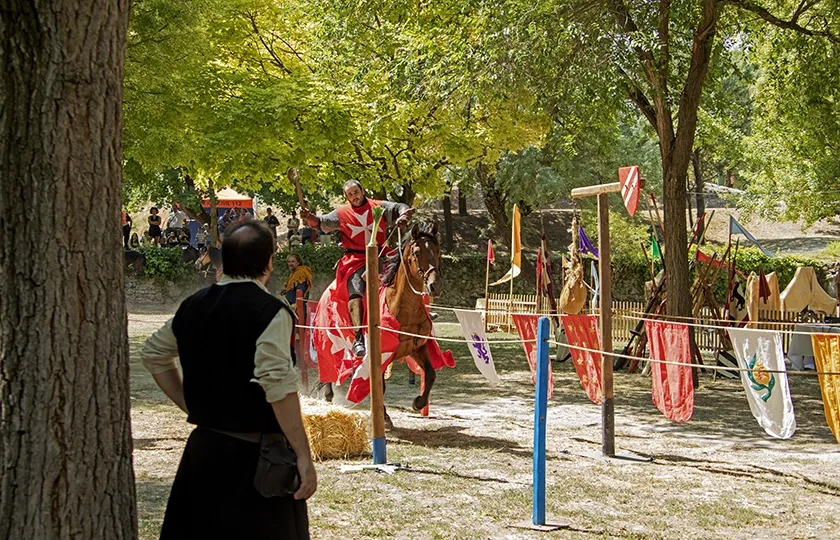
Falconry displays, traditional jousting tournaments, parades in period costume, medieval music and re-enactments of scenes from the town’s medieval history complete the catalogue of activities that delight locals and visitors alike each year.
Cuéllar offers you this and much more. Unknown to some but surprising and appealing to all, it is a box of pleasant surprises. Here, the history, culture, monumental and natural heritage, fairs and festivals, and gastronomy will make you want to come back. But before you can do that, you will tell your family and friends that there is a charming village in the province of Segovia.