

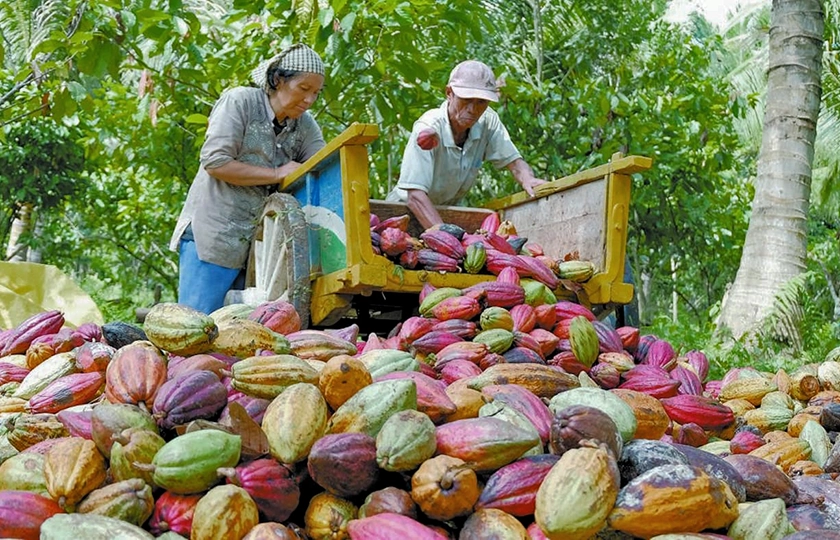
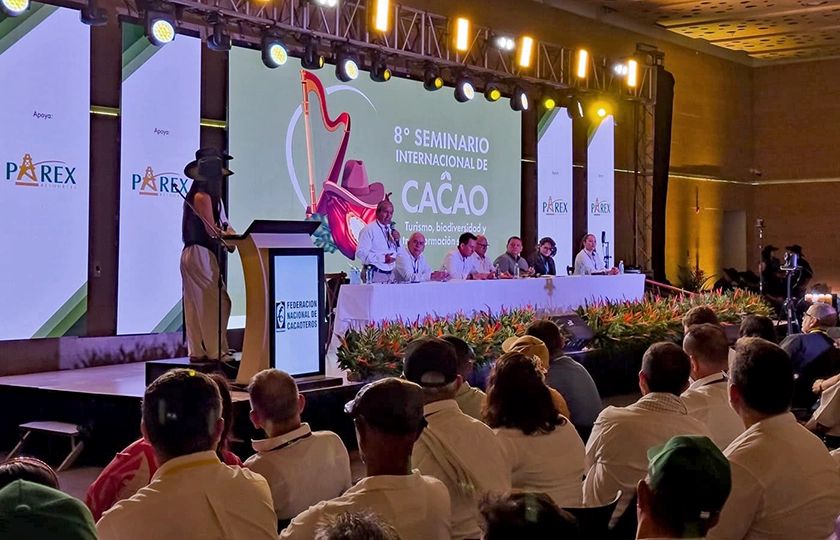
- In Yopal, the capital of Colombia’s Casanare department, I spent a few days amongst people who talk about cocoa as if it were their own child.
- It was at the 8th Colombian Cocoa Growers’ Seminar, and I must confess that I arrived believing I would be learning about the bean — fermentation, drying, cup profiles — and left having learnt, above all, about organisation. About what a country does when it seriously decides that a fruit is a national project and not just a crop.
The first thing that struck me was the trade association. There, producers don’t turn up as individuals, each defending their own plot; they arrive united, aware that their strength lies in their numbers. The second was their relationship with the authorities: the private sector doesn’t sit around waiting for the government with its hat in its hand. It devises a strategy, puts it into action and then invites the state to come on board. And the third thing, which left me pondering on the return flight, was research: a country that already produces more cocoa than Mexico continues to research its cocoa as if there were still everything left to discover. Colombia cultivates around 269,000 hectares of cocoa; Mexico harvests barely 52,000. The one that leads the way is the one that studies the most. Therein lies the most powerful lesson of all.
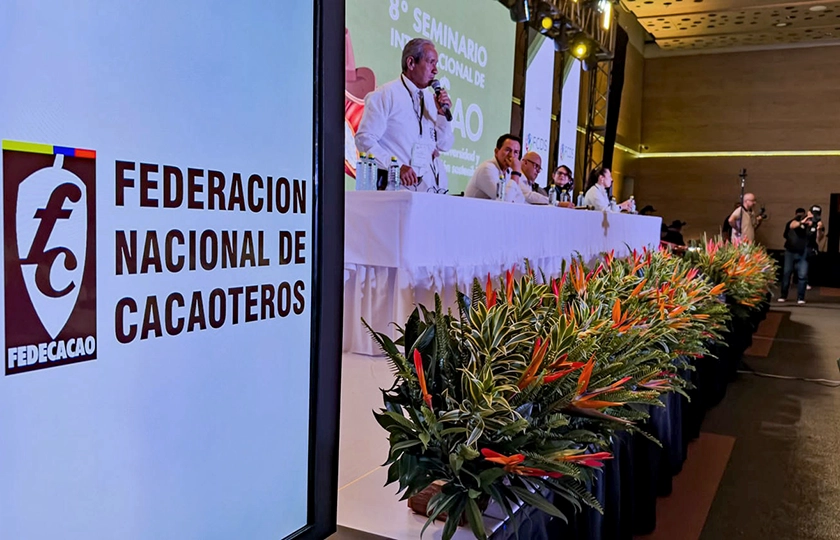
And there, too, lies the first source of unease, expressed with affection from home
Colombia is building a cocoa industry, but it still needs to build its brand. Cocoa and traceability, fine flavour, cocoa clusters and their designations have not been enough to establish the ‘Colombia’ brand in cocoa in the same way that the ‘Colombia’ brand is already established in coffee. Mexico, which is the genetic and cultural cradle of cocoa – it was domesticated by the Mokayas, the Olmecs and the Mayans three thousand five hundred years ago, and it was from here that chocolate spread throughout the world – has the cocoa and the fame, but it has lacked the cocoa industry unity and organisation that I saw in Colombia.
Here, as we say, everyone is pulling in their own direction. Proof of this was provided by some invited chocolate makers from Oaxaca who treated the conference as an opportunity to go on a trip with a retinue of four, rather than to learn what is so sorely lacking. Arrogance? Ignorance? I don’t know. But Chima Cacao in Oaxaca squandered a golden opportunity to build relationships with industry experts who think not only about chocolate, but also about strategy and creating opportunities. But that would be a long story, because as a friend used to say: “Nobody is completely useless because, at the very least, they serve as a bad example”.
The figures don’t lie. Mexico produces around 28,000 tonnes of cocoa a year, almost all of it in Tabasco and Chiapas, grown by some 37,000 producers who are, for the most part – as is the case with everything to do with our agriculture – small-scale. We don’t even have enough for our own consumption: we import tens of thousands of tonnes. The trees have aged, monilia blight ravaged plantations some 25 years ago, drought took its toll, and the price of the bean plummeted from 400 to 200 pesos per kilo in the space of just one year. We have the finest-aroma Criollo on the planet, and we’re letting it die of old age and neglect. But there’s a comparison that goes beyond the bean itself, and it’s the one that really ought to give us pause for thought.
In Colombia, cocoa has become a tool for peace
The President of Fedecacao, Eduard Baquero, reports that more than 25,000 hectares are involved in the substitution of illicit crops, and cocoa is the preferred replacement: in Nariño, eight out of ten families who gave up coca chose to grow cocoa. Land that once belonged to drug traffickers now yields legal produce, supported by technical guidance, cooperatives and international verification. It is no paradise – Colombia continues to grapple with its own problems, many of which have now taken the form of illegal cocoa smuggling into Ecuador; a practice that can only be explained by a strange need to do things the crooked way, given that there are no tariffs between the two countries. But the direction of Colombia’s cocoa movement is very clear on two points: reclaiming land for life; and setting an example for young people of pride in the land.
In Mexico, we are moving in the opposite direction in this regard. The National Agricultural Council estimates that around 20 per cent of the country’s agricultural plots are no longer being cultivated, largely due to violence and extortion; producers’ organisations speak of millions of hectares abandoned in just a few years. In entire regions, planting crops means negotiating with criminal gangs: a fee per hectare, a fee per tonne, imposed suppliers, controlled routes; and for those who refuse, the threat of their plot being set alight or death – it’s as simple as that. Whilst one country is converting land used for coca into cocoa, the other is allowing land used for cocoa and coffee to fall into the hands of those who demand protection money.
That is the difference between viewing the countryside as a project and abandoning it to its fate. But you can see that in every election, the discourse repeats the historical debt we owe to our farmers.
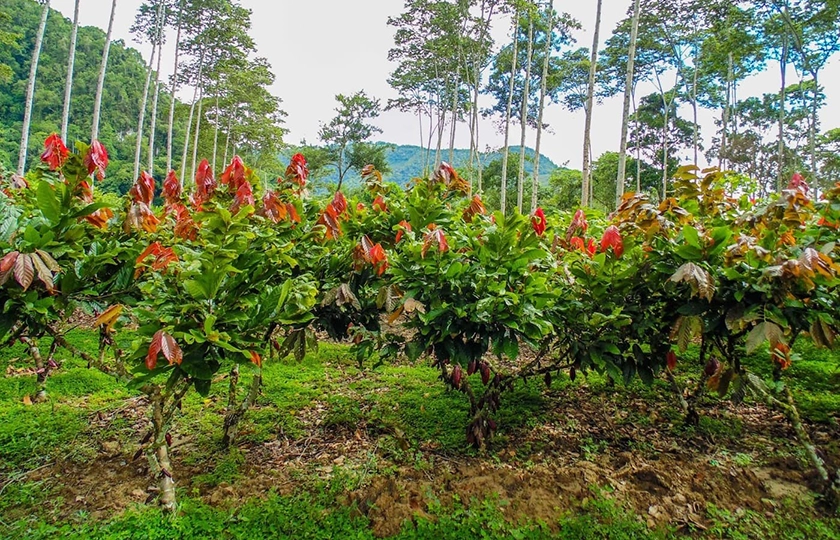
With coffee, history repeats itself
Mexico is the world’s tenth or eleventh largest coffee producer, with over 500,000 producers — many of them indigenous, almost all small-scale — spread across Chiapas, Veracruz, Puebla and Oaxaca. Here too, pests and drought have struck; here too, the rewards tend to elude those who rise at dawn to pick the coffee cherries. And yet, coffee has already left us proof that this does work: the Coffee Routes. In Chiapas’s Soconusco region, century-old estates such as Argovia, Hamburgo and Irlanda welcome visitors who sleep amongst the coffee plantations; in Veracruz, Coatepec and Xico —‘Magical Towns’— the local communities live, to a large extent, by sharing the story of their coffee.
When visitors walk around the estate, grind the beans, taste the coffee and pay for the experience, the money stays in the mountains. That is the model. We still need to scale it up, organise it and apply it to the cocoa sector. But we also need to establish an organisation that ensures the money flows back in ways that go beyond mere coins and banknotes. The money can flow back in the form of conferences, research, relationships and inter-institutional links. Ultimately, it seems that in Mexico we forget that unity is strength.
It is worth quoting a phrase I heard Antonio Santos, president of the Tourism and Society Think Tank, say: “Tourism isn’t poetry. It’s business. And it has to generate money for the whole supply chain.” Just like that, straight to the point. Or, as we say, no holds barred.
The compass for business without overexploitation
Community-based tourism centred on local produce is neither a pretty postcard nor a weekend workshop for city-dwellers to play at being farmers. It must be, and should become, a circular business model that benefits the entire supply chain: from the farmer who sows the seeds to the person who serves the produce, without forgetting the brewer, the roasters, the researchers and, above all, the younger generations. Because a model that doesn’t generate income is nothing more than an urban invasion for social media or, as I heard someone say, a whitewash of immoralities with good lighting
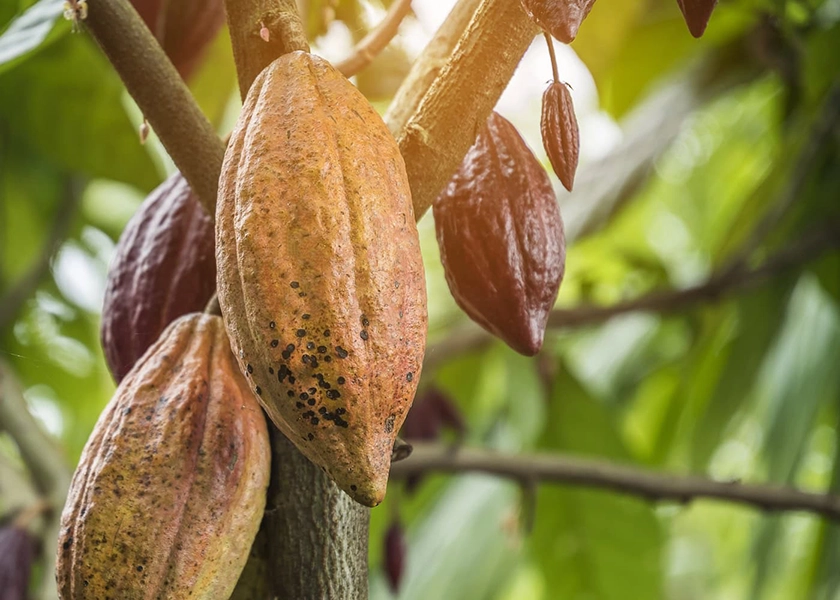
From Yopal, and from our own mountains, come ideas that this trade must bring to the table
- Cooperatives and unions that promote and defend the land. Strength lies in the trade association; the producer alone is easy prey for the middleman and the criminal. When organised, they negotiate prices, certify origin and sustain a tourist route.
- A designation of origin. Just as Colombia is building the ‘Cacao de Colombia’ brand, Mexico can consolidate regional designations and narratives — the cocoa of Comalcalco, that of Soconusco, the coffee of Veracruz with its designation of origin — and sell to the world not merely a commodity, but a story with traceability and specific origins. It is no longer enough for people to know where it comes from; it needs a first name and a surname.
- Cocoa routes on a par with those for coffee: open farms and estates, fermentation facilities open to visitors, chocolate made in full view, and long tables serving local cuisine. The bean is no longer exported raw but begins to be exported as an experience.
- The logic of Yopal applied to our country is that the private sector should not wait: it should draw up the strategy and open the door for the government to join in, with clear rules and shared benefits. It is not the same to say “I need you” as it is to say “I’ve got this ready; if you want, I’ll bring you on board”. I still do not know of any government leaders who would not want to take credit when it is offered to them.
- We must join what has already been built abroad. Mexico, the cradle of cocoa, cannot be absent from global discussions. We cannot continue to rely solely on ‘Expo Chocolate’ and the showcase for chocolate bonbons and annual chocolate pyramids. We need to do more and create genuine forums for discussion, not just the annual fair for producers who are going to squander the opportunity with their WTC flea market mentality. We must not let the chance to build a network of experts slip by, making the most of the fact that each has their own area of expertise. Let’s put the saying ‘stick to what you know’ into practice.
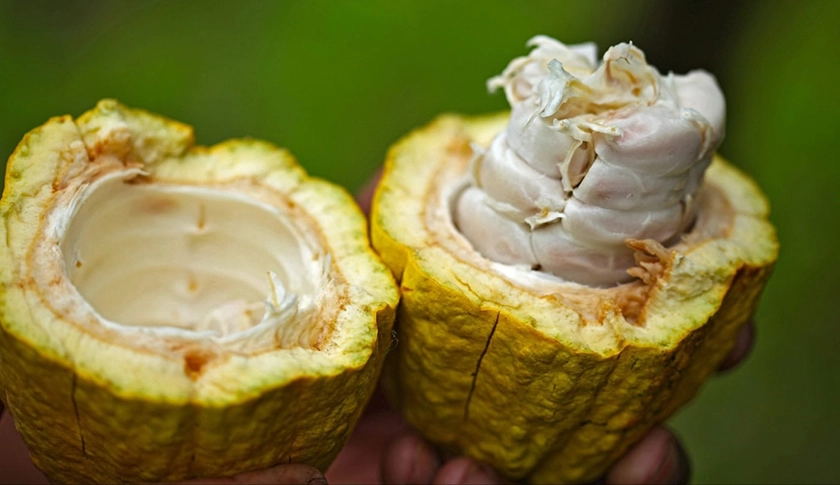
What Colombia has realised. Let’s hope we take note this time
It all boils down to an idea that Colombia has grasped and that we urgently need to adopt: giving the land a legal status that is worth defending. When a plot of land used for growing cocoa or coffee produces not only beans but also visitors, stories, jobs and pride, it ceases to be land that is abandoned out of fear and becomes an asset that the community protects. Strategic tourism — the kind that generates income for the entire supply chain — is not merely a nice-to-have for rural development: it is one of its cornerstones, and today, in Mexico, it is also a way of competing with organised crime for territory. And it’s not just the farm; it’s also the restaurant, the transport, the history and the people. Together, with projects of this scale, we can rebuild the social fabric one grain at a time, because major projects start from the ground up.
Mexico has the best cocoa in the world because it originated here and, as a good friend used to say: “Let the Belgians tell me about their chocolate, but every time I ask where their cocoa trees are, they still can’t answer”. Add to that a coffee industry that supports hundreds of thousands of families. What our country lacks is not raw materials or history: it lacks the resolve to recognise that the fruit is a national project. Colombia has made that choice. I saw it in Yopal. Let’s hope we understand this here before the land ceases to be ours. Because rebuilding the social fabric will always involve the plantations, no matter what crop they grow. Although if they are something so deeply rooted, it will always help to strengthen that fabric with the depth of our identity.
About the author, Carlos Dragonné
A tireless traveller, a journalist and filmmaker by profession, and a cook by conviction. I write about what I know and what I encounter. Twenty-six years in publishing drive me on. I have now been writing about gastronomy for twenty years – its key figures, the stories that unfold, and the inspiration behind the fine art of enjoyment.
Source: LOS SABORES DE MÉXICO