There are destinations which, incredible as it may seem, lie off the beaten track. These are cities that attract fewer tourists each year than they deserve, or are not the focus of influencers’ attention, yet they offer a diverse and interesting range of tourist and leisure activities. A clear example of this is Vigo.
Formerly known as the ‘Olive City’, it owes this nickname to a large olive tree planted by the Knights Templar in an ancient temple that stood on the very spot where the Co-Cathedral of Santa María now stands.
Galicia’s largest city, situated in the heart of the Rías Baixas, is well worth a visit for its light, its mild climate, its cuisine, its culture and the incredible scenery that surrounds it. And also for its architectural heritage, which, whilst perhaps not on a par with that of other Spanish cities, has something that inspires admiration in the traveller. Fabulous beaches, a coastline perfect for water sports, leisure activities, shopping and Galicia’s liveliest nightlife are just some of the other reasons why Vigo is well worth a visit.
The Vigo estuary and the Cíes Islands
The Vigo estuary is undoubtedly the city’s greatest treasure. As well as being beautiful and unique—with the traditional mussel rafts where the authentic Vigo estuary mussel is farmed floating in perfect alignment—it creates a picturesque scene against the backdrop of the world’s largest cruise ships sailing the waters of the Atlantic Ocean.
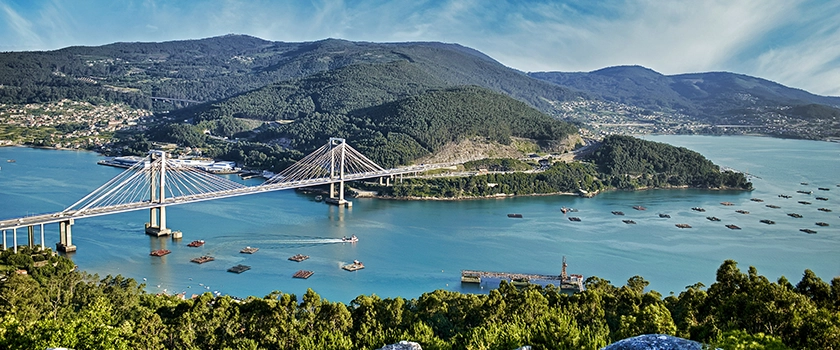
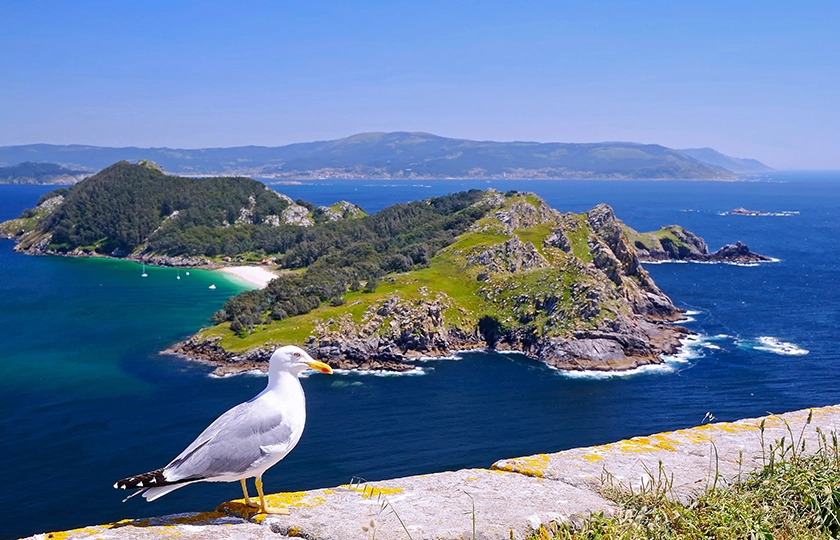
The estuary is sheltered by the Cíes Islands. These form part of the Illas Atlánticas National Park, an archipelago comprising three islands: Monte Agudo, O Faro and San Martiño; the first two are linked by Rodas Beach, a long stretch of sand described by The Guardian as the best beach in the world. A paradise of idyllic beaches and crystal-clear waters, as well as a prime spot for observing wildlife. One of the most beautiful places in the country, which explains why the Romans named it the “Islands of the Gods”, and where the possibilities are almost endless: go hiking with the family, take a break to discover unspoilt, peaceful beaches, or go diving or swimming alongside bottlenose dolphins, the native and smaller species.
You can reach the Cíes Islands on a day trip from Vigo or by hiring a boat or a yacht. Doing this in your own boat is an unforgettable experience, as you’ll be able to visit the unspoilt island of San Martiño – a privilege that other tourists can’t enjoy, as it isn’t included on the routes operated by the regular ferry services on the estuary. It is important to note that, in order to anchor in the shelter of the islands, you must apply for a permit and respect the swimming area, just as you would when swimming or diving; spearfishing is prohibited throughout the park.
Vigo’s historic neighbourhoods: exploring O Berbés and A Ferrería
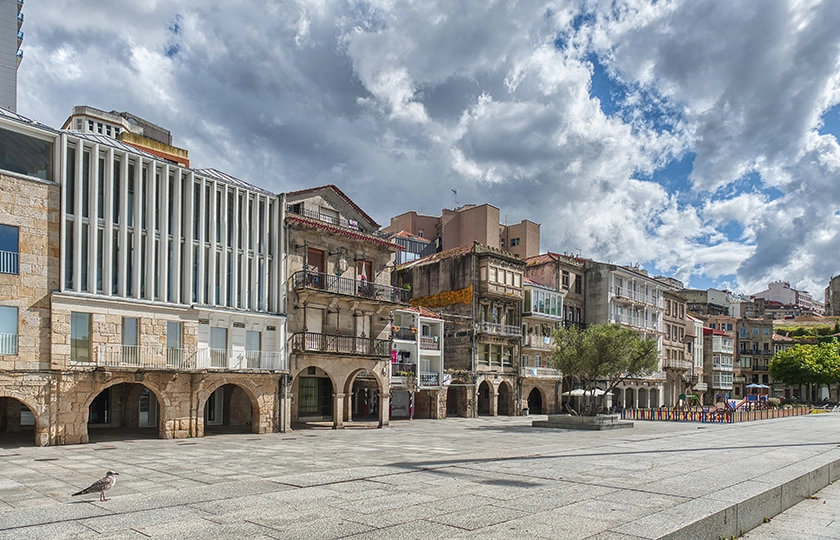
In this bustling industrial city, you can also find a small village where simply strolling around is a real pleasure. O Berbés is Vigo’s historic seaside neighbourhood, with its narrow, steep streets that wind their way down the hillside towards the ocean. Narrow streets that lead us down to the lower part of town, to a square with arcades that was once the beach where fishermen moored their boats, and where you can see old seafaring buildings.
But before visiting the “Casco Vello”, it’s well worth popping into the A Laxe Shopping Centre, which can be reached via a footbridge leading from A Pedra Square, to admire the stunning panoramic view of the harbour from its terraces, as well as the sunset – arguably one of the most mesmerising in Galicia.
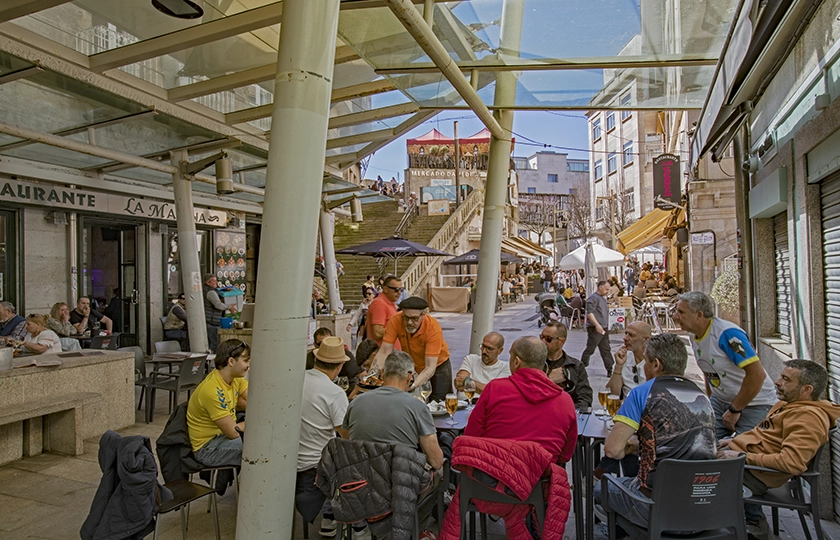
The Berbés riverbank is one of the city’s most important culinary districts. Whether you’re out for a night of wine and tapas or sitting down at one of the finest restaurants to sample what may well be Spain’s most delicious fish and seafood, it’s a culinary experience you’ll remember and recommend. And if you’re a fan of oysters, be sure to visit rua da Pescadería, where you can watch the oysters being shucked right on the street—a true delicacy for many. A visit to Vigo’s “casco Vello” should be taken at a leisurely pace, taking the time to admire and enjoy the myriad hidden corners it has in store for the visitor. Squares such as da Pedra, where guilds and councillors used to meet in the 16th and 17th centuries to make decisions and settle disputes, are home to the Mosquito restaurant, which opened in 1930 as a seafood tavern and, having been completely refurbished, remains a top spot for dining. Their tables were graced by established writers, famous actors and renowned filmmakers.
Praza de Almedia, where a farmers’ market was held every week, which is why it was formerly known as ‘Praza das Cebollas’. Two buildings stand out here, considered to be the oldest examples of civil architecture in the city and designated as historic-artistic monuments: the Casa Torre de Pazos Figueroa and the Casa de Ceta or Arines. Or the praza da Constitución, with its 19th-century buildings where artisans used to sell their wares. This is one of the liveliest spots in the city thanks to its terraces, and it is home to La Central, a gastrobar housed in the Pereira de Castro mansion, an 18th-century Baroque mansion.
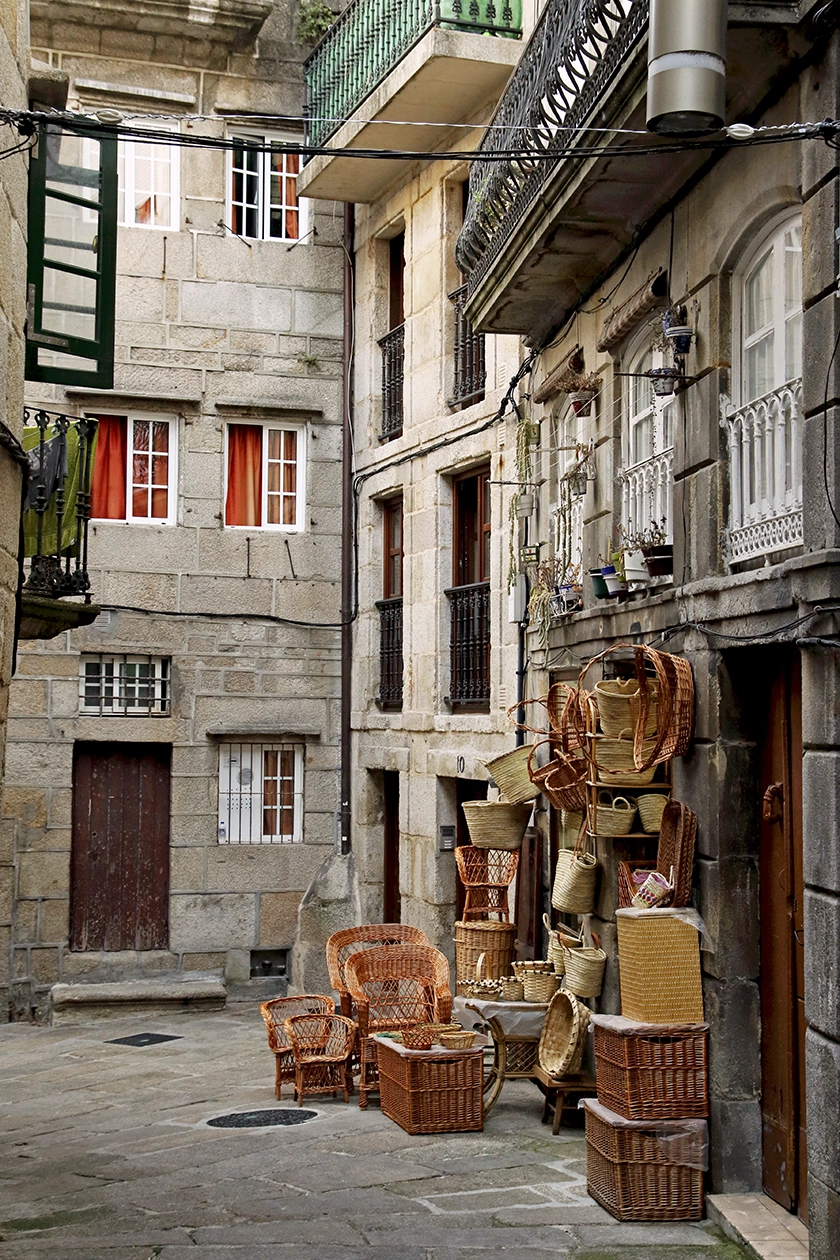
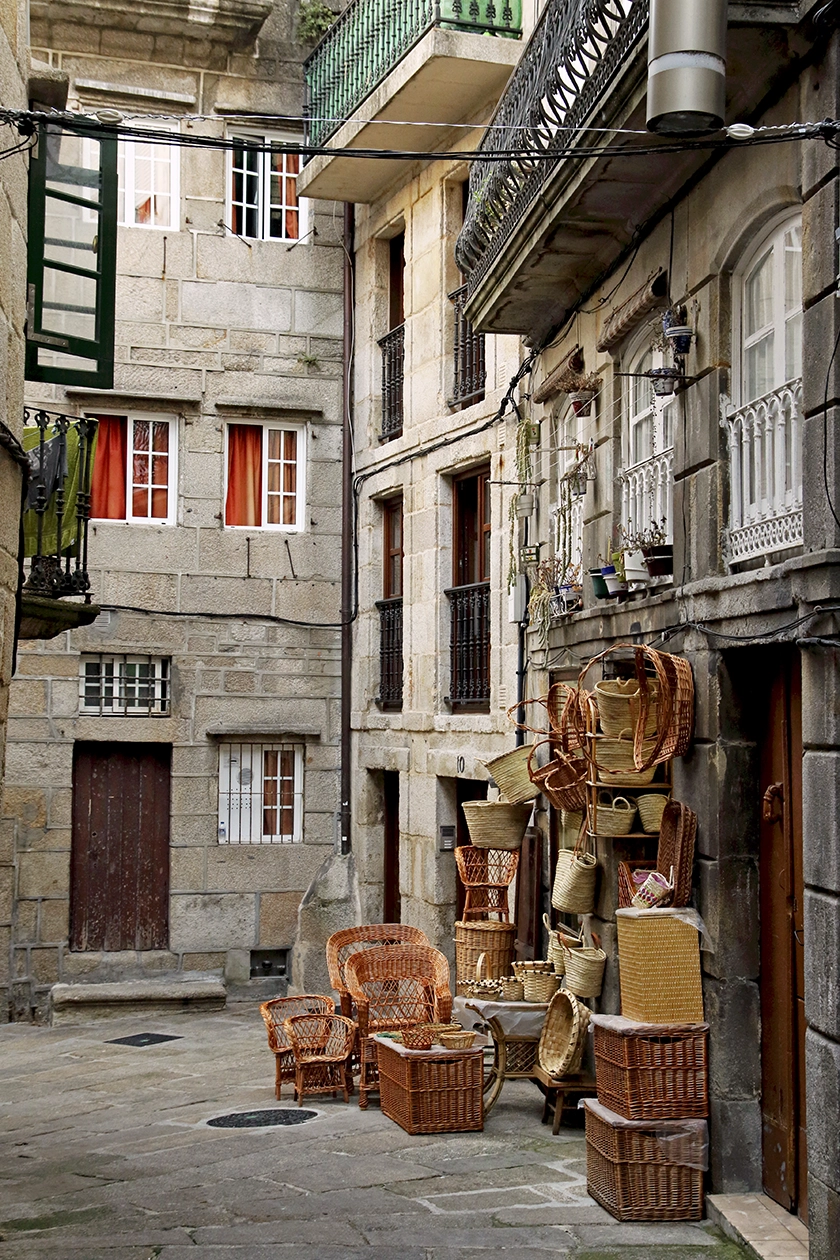
Inevitably, to reach these squares, you have to wander through their pretty streets, many of which are steeped in tradition and home to places that are well worth a visit. rua dos Cesteiros takes its name from the craftsmen who arrived from the Serra da Estrela in Portugal at the beginning of the 20th century. Renowned basket weavers who made Vigo one of the most important centres of basketry production in Galicia. Nowadays, there are very few artisans who are keeping this tradition alive. And still retaining all the old-world maritime charm of yesteryear, the A Pedra tavern and the El Chavolas bar, two of the most traditional taverns in O Berbés. On the cerro de San Vicente, the A Mina tavern has been delighting its customers since 1953 with vermouths and spritzes, served alongside its traditional tapas of tripe or mussels from the estuary with a special house sauce. Just a stone’s throw from the co-cathedral, in the historic Cambón building on rúa Palma, is the Interpretation Centre for the Atlantic Islands of Galicia National Park.
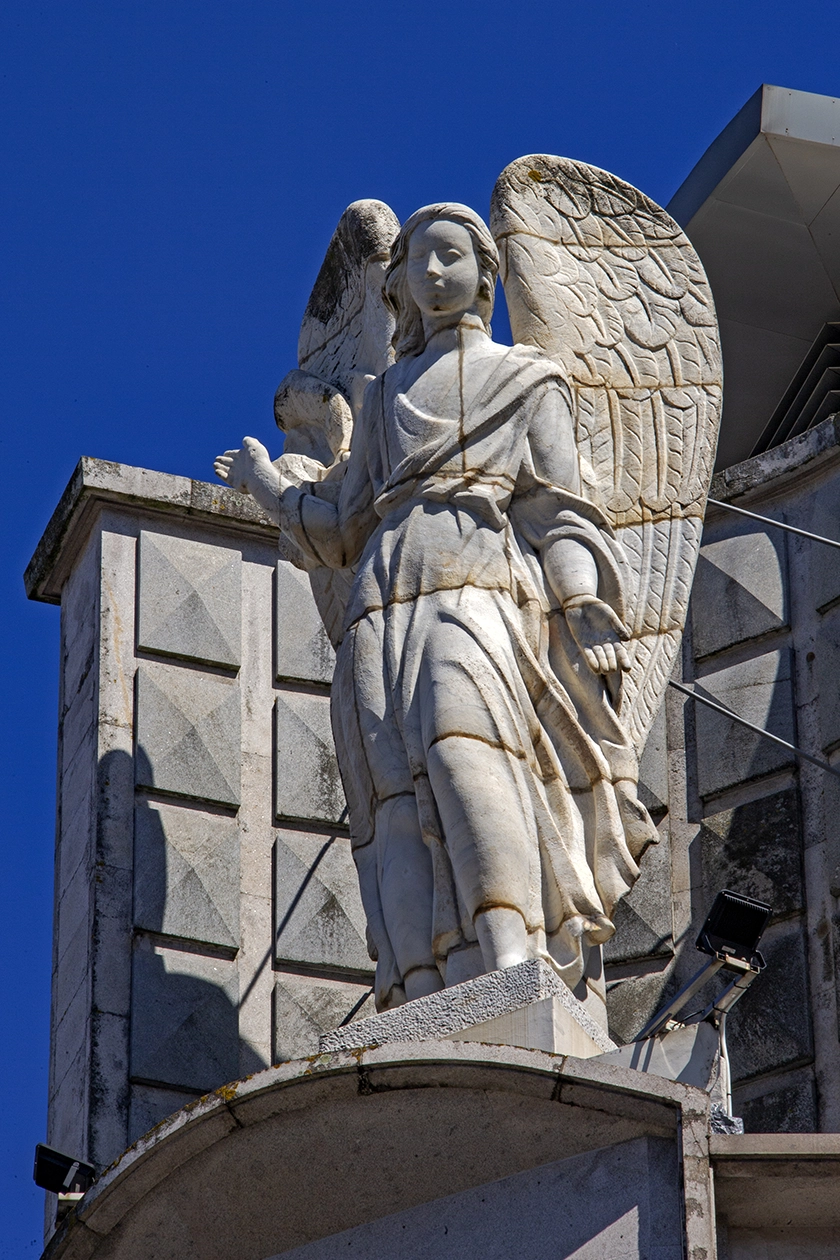
From here, you can visit the Cathedral of Santa María, a sober and well-proportioned building constructed in 1818 on the site of two earlier churches that no longer exist. Inside, it houses one of the most revered images in Galicia, the Santo Cristo de la Victoria, the city’s patron saint.
Walking through the Old Town, we come to Porta do Sol, which marks the boundary between the two historic districts: O Berbés and A Ferrería. From this square, you can reach the Mirador del Olivo, which takes its name from the olive tree planted there. A beautiful specimen dating back almost two centuries, which is the very same one that was moved from the site of the co-cathedral. This is where locals and visitors gather every evening to watch the sunset – and it’s even better from the sought-after terraces of the cafés that bring the square to life.
From here, you can reach the neighbourhood of A Ferrería, one of the liveliest areas of the city following its regeneration. In this part of Vigo, it’s well worth visiting the Vigo Traditional Crafts Centre on the Subida ao Castelo; stroll along rúa de San Sebastián, one of the oldest streets in the city, where you’ll find the Banco Dos Contos, a place where farmers and merchants used to settle their accounts, and visit the fortress of San Sebastián, where part of the bastions and the walled enclosure remain. The imposing Vigo Town Hall building, situated next to the fortress and built in the 1970s, looks completely out of place.
A stroll through Historic Vigo
Let us now travel back to the late 19th century, when Vigo’s bourgeoisie commissioned the construction of large buildings for residential use or to serve as headquarters for companies and institutions.
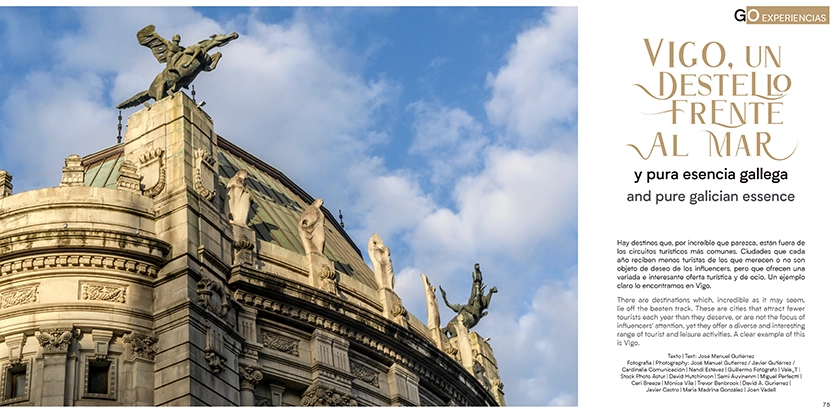
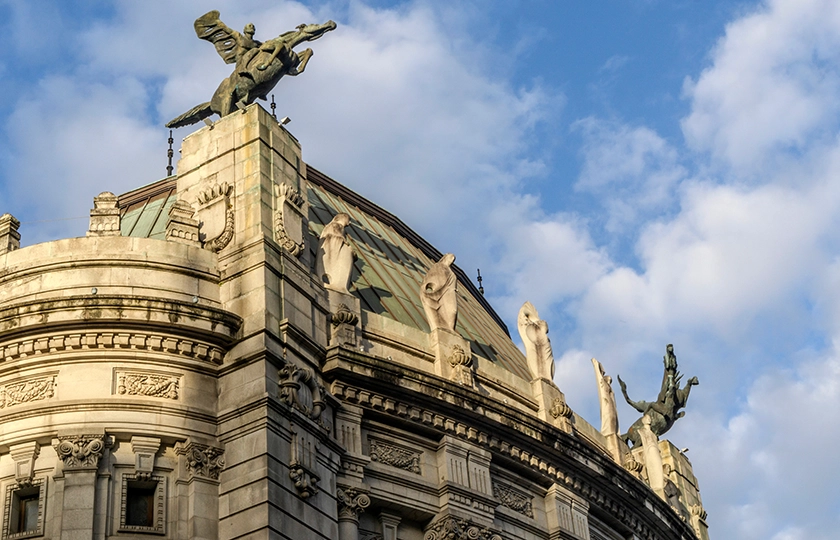
This route begins at the Porta do Sol, dominated by ‘El Sireno’, a sculpture of a half-man, half-fish created by the renowned artist Francisco Leiro. Here, two unique buildings are well worth a look: the Simeón building, with its beautifully decorated balconies featuring granite and wrought iron, and El Moderno, with its curved façade. Continue along Policarpo Sanz and García Barbón streets, where the architecture from the late 19th and early 20th centuries blends a variety of styles: eclecticism, Modernism, historicism, rationalism… On rúa Policarpo Sanza stands the 3, designed by the architect Antonio Palacios.
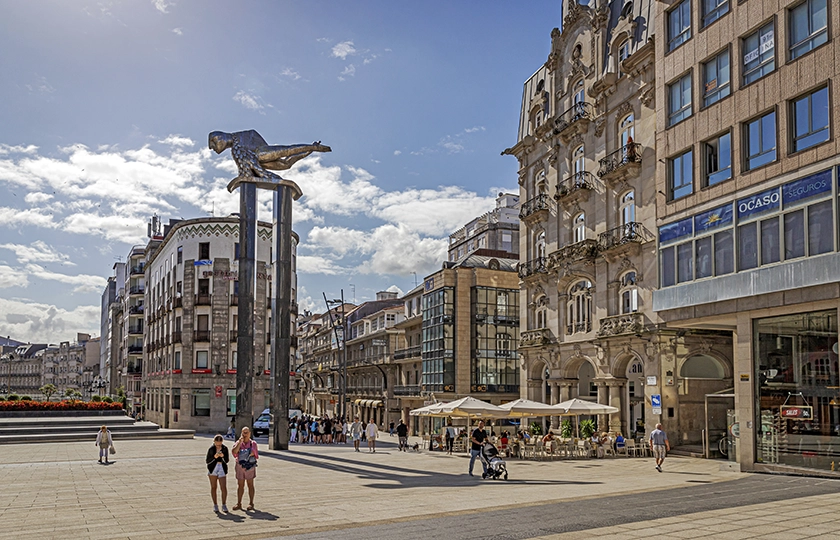
In the surrounding streets there are other interesting buildings, such as the Pardo Labarta with its open gallery, the Salgueiro, decorated with a ceramic frieze that gives it a sense of movement, and the Ferro, which was originally a private residence, later a textile warehouse, and subsequently the headquarters of the Casino Obrero, whose elegant ballroom is now a reading room.
We are on Vigo’s Golden Mile, where the trendiest fashion brands are concentrated, making it one of the busiest areas in the city centre. Establishments that share the area with restaurants and lively terraces where you can enjoy traditional, innovative or fusion tapas, as well as long-established shops such as Arjeriz Vinos y Licores, one of the city’s oldest grocers, which opened its doors a hundred years ago.
Exploring the Vigo waterfront
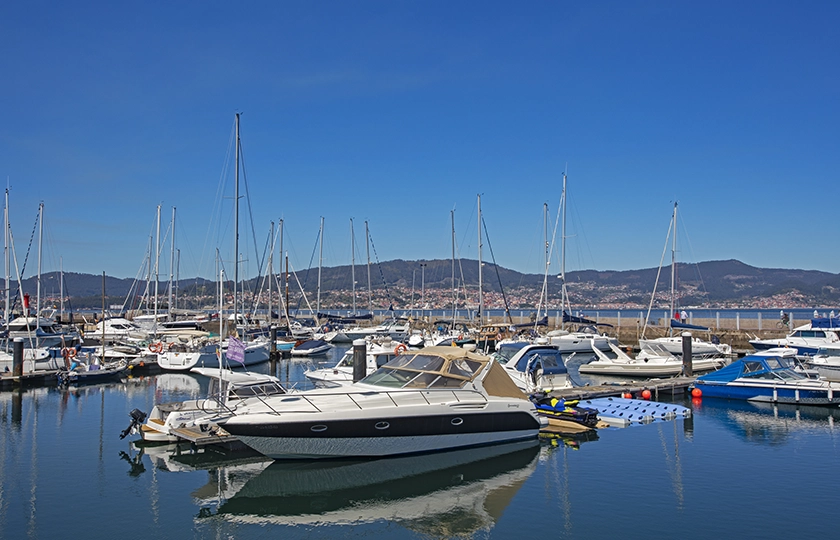
Vigo Marítimo is the perfect way to discover the history and architecture most closely linked to the sea – the part of the city that expanded into the area surrounding the old town walls when the space within them began to feel too cramped. The tour begins at the Real Club Náutico de Vigo, a building that resembles a ship sailing out to sea, and the Estación Marítima, an iconic site from which Galician emigrants once set sail for overseas destinations and which today welcomes the most modern ocean liners. We are welcomed onto this route by the sculpture group The Swimmer by the aforementioned Francisco Leiro and the Hotel Universal, a building that stands as a testament to the city’s maritime power. Built in 1888 in an eclectic style, its terrace was once a city landmark; today it houses a four-star hotel.
Just nearby, we come across a delightful surprise: the Jules Verne monument. The French writer visited the city on two occasions, the first in 1878 and the second in 1884, having taken an interest in the Battle of Rande and the treasures that disappeared following the clash between the Spanish fleet, the French warships escorting it, and the Anglo-Dutch coalition. The brilliant writer devoted a chapter to Vigo Bay in his book “Twenty Thousand Leagues Under the Sea¡”, in which he included the legend of the Rande treasure. We can round off the tour with a stroll through Parque de la Alameda or Praza de Compostela, which is adorned with buildings designed by some of the country’s finest architects, such as Jenaro de la Fuente.
Reconquista Festival
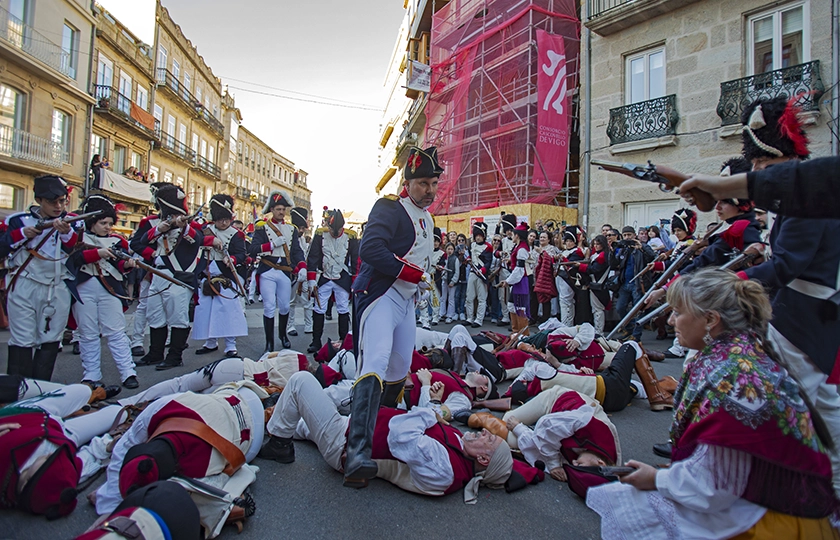
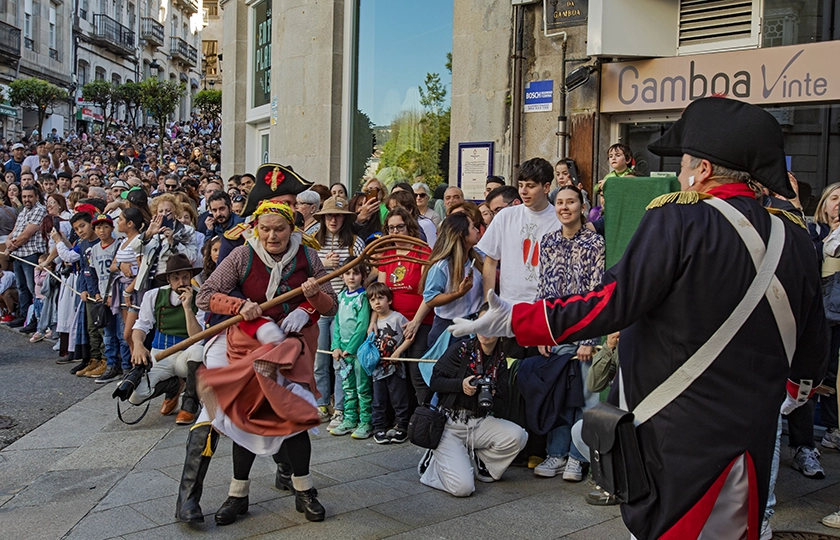
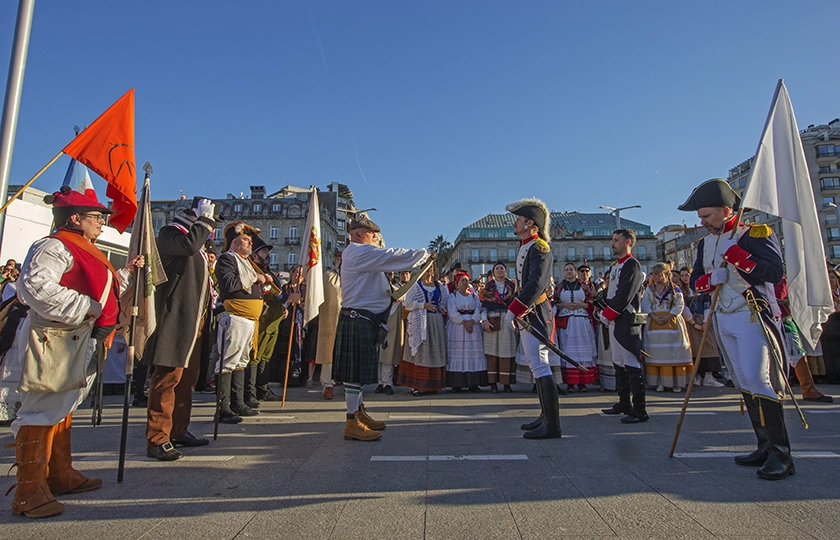
Every March, the people of Vigo celebrate the city’s most iconic festival, commemorating the historic event that led to the expulsion of the French troops. The re-enactment of the popular uprising of 28 March 1809, led by Bernardo González del Valle ‘Cachamuíña’, Juan Almeida and Pablo Morillo, reaches its climax at the site of the gate in the city walls known as the ‘Porta de Gamboa’. The determination of the inhabitants led to the demolition of the access point to the city walls and, after fierce fighting, they managed to defeat the French. The festivities continue with a parade of French troops, accompanied by jeers from the people of Vigo, all the way to the port, where, after handing over their weapons, they are forced to board a sailing ship that will take them back to their country.
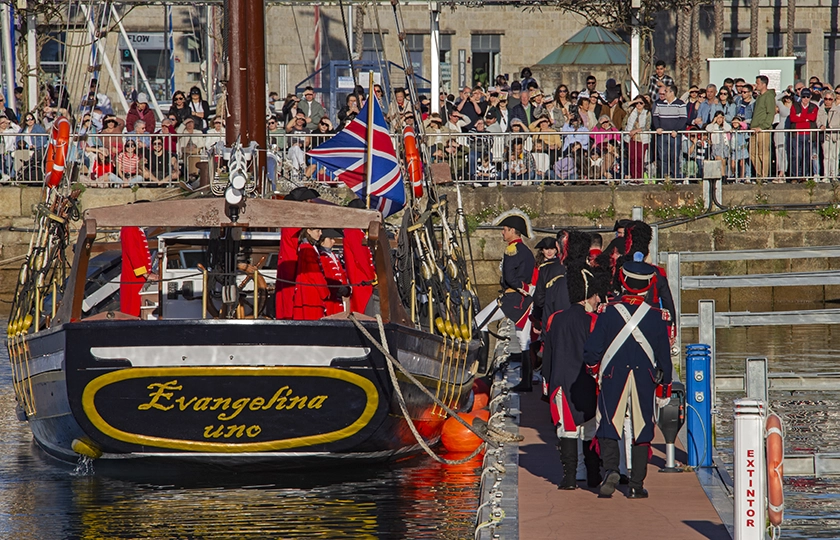
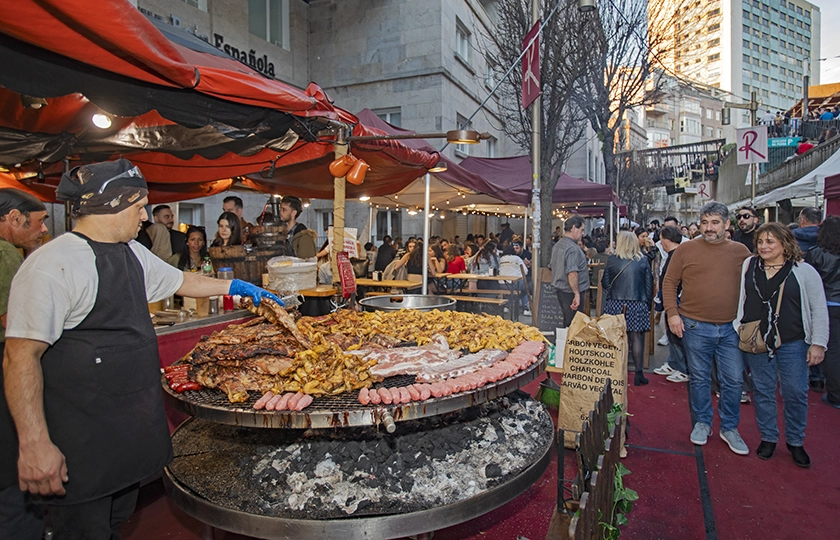
But this festival is so much more than that. For several days, the historic quarter is transformed into a vast stage where you might come across soldiers, peasants or fishermen, and around every corner, skirmishes between the people of Vigo and the French troops. But as well as being great fun, this festival is also a culinary event, with stallholders offering all sorts of delicacies such as velvet crabs, mussels, empanadas and churrasco, and, of course, the unmissable treat: delicious ‘pulpo á feira’. From Plaza de la Constitución to Plaza de A Pedra, passing through rúas da Pescadería and Teófilo Llorente, the stalls offer food and drink, all washed down with the finest wine or beer in an unrivalled festive atmosphere.
A source of pride for the people of Vigo, as their city was the first in Europe to drive the French out of a conquered stronghold; a feat that earned it the title of “faithful, loyal and valiant” city, bestowed by Ferdinand VII.
You might be interested in: Two historic neighbourhoods you’ll want to explore