

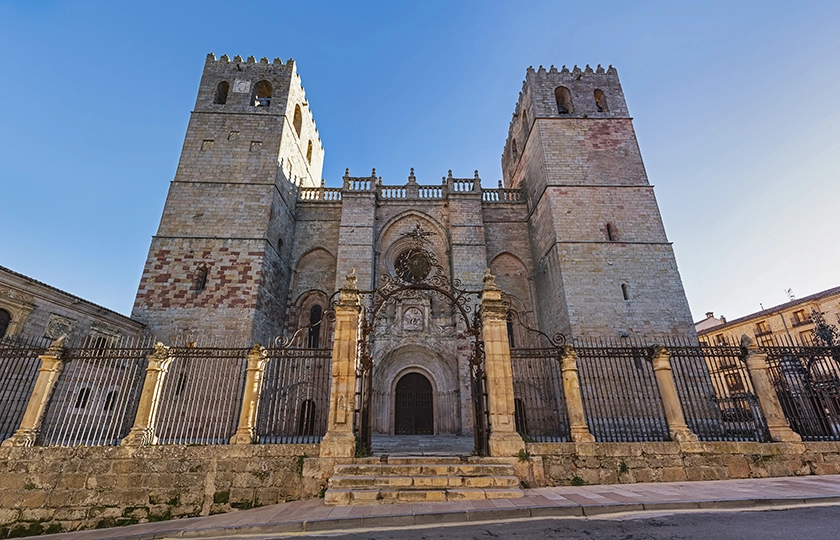
The cathedral of ancient Segontia, dedicated to Saint Mary, marked the 850th anniversary of its consecration in 2019. From the very beginning, it was designed both as a place of worship and as a defensive structure within the city’s fortifications.
The most important place of worship in the ‘City of the Doncel’ has its roots in the early 12th century, when the city was reconquered by Bernardo de Agén, a bishop of Aquitanian origin who had been in charge of the diocese since 1109. It was from this historic moment onwards that its construction began.
Originally built in the Romanesque-Cistercian style — as can be seen in the façade and the geometric motifs on the archivolts of its triple portal — it eventually took on a Gothic style when construction was completed in the 16th century.
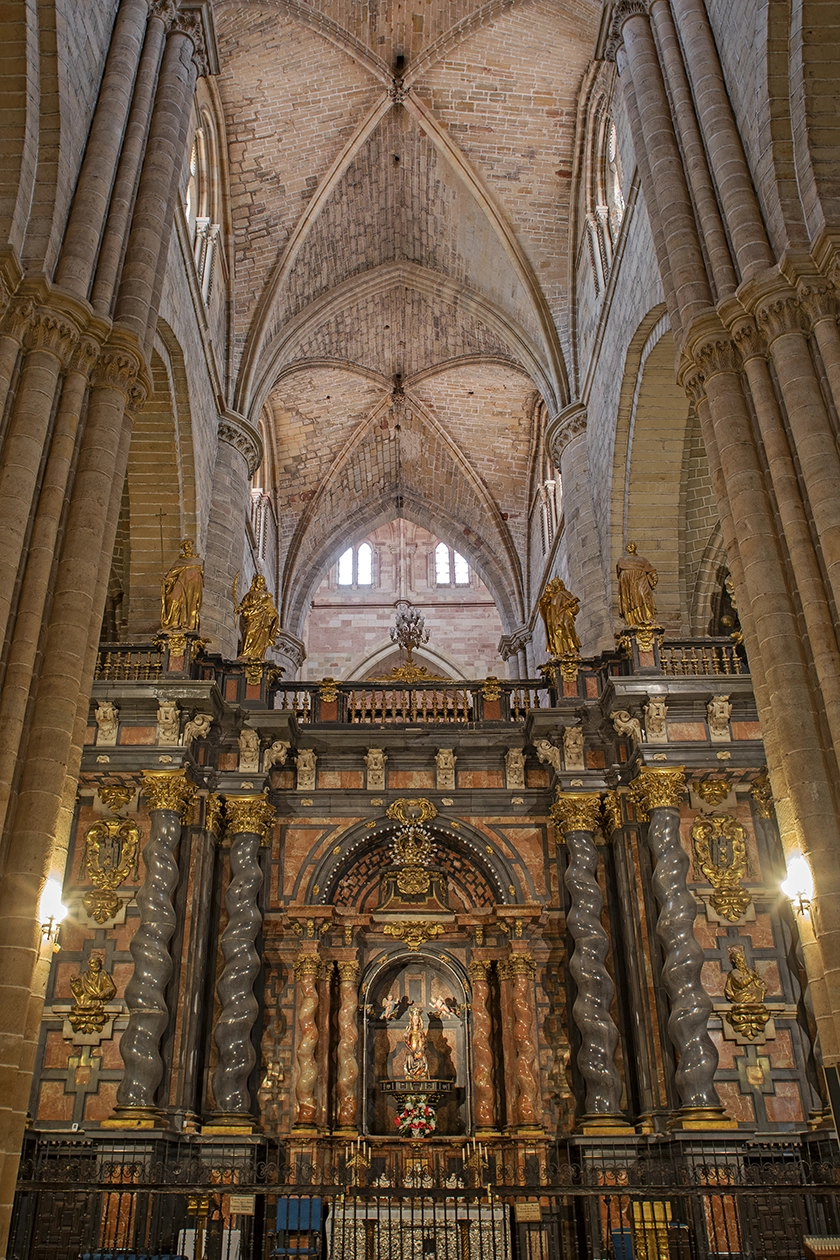
Its three naves, separated by composite pillars, its spacious transept, its five tapering apses, its ribbed vaults and its three rose windows all date from the Middle Ages.
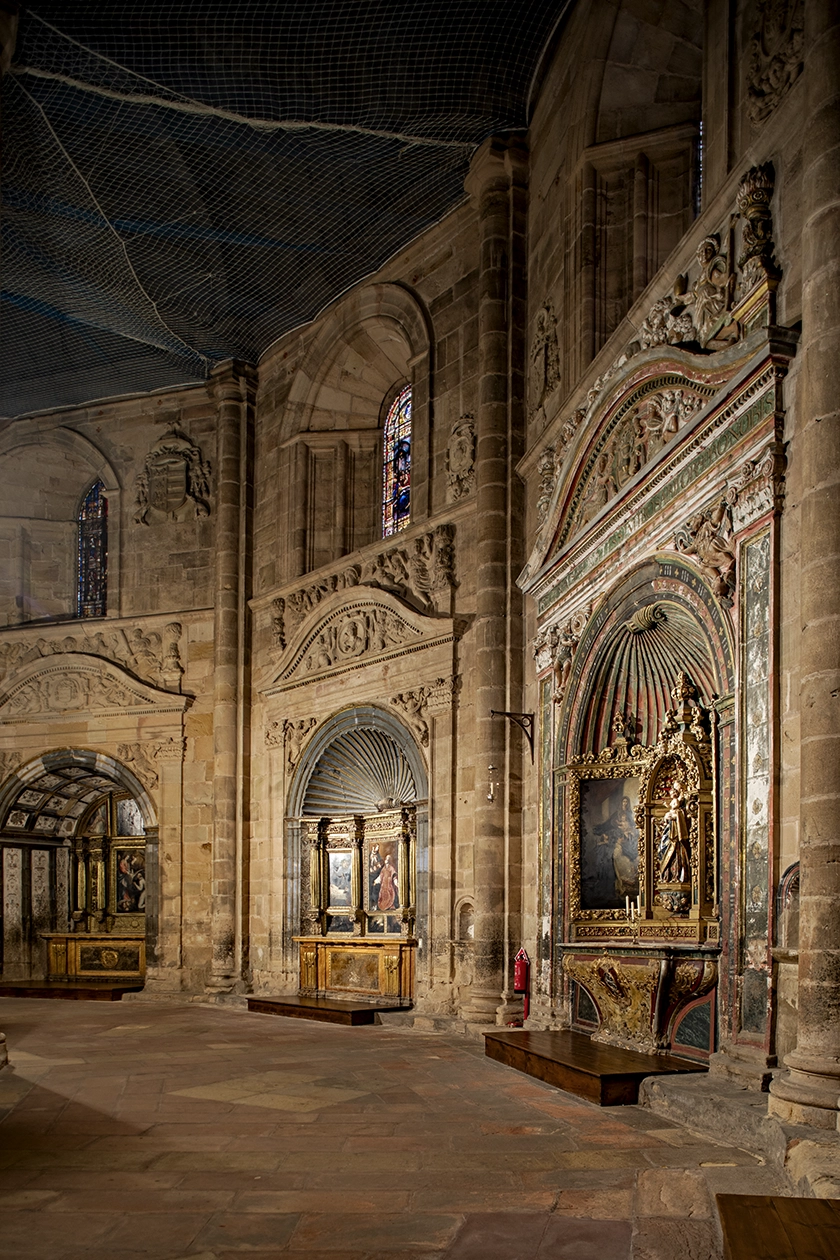
Flanked by two large towers that give it the appearance of a fortress, the Cathedral of Santa María in Sigüenza (Guadalajara) was expanded from the late 15th century through to the 19th century with new features such as the cloister, the main sacristy and the ambulatory, as well as works of great value in a variety of styles. During our visit, we can admire, amongst other things, the choir, the funerary statue of the Doncel and its magnificent collection of altarpieces. Furthermore, for some time now, the cloister’s rooms have housed the Cathedral Museum, whose walls shelter true artistic treasures such as a painting of the Annunciation by El Greco, located in the Chapel of the Immaculate Conception, and a magnificent collection of 17th-century Flemish tapestries.
This cathedral, unique in Spain, designed not only for prayer but also to defend the city, invites us to explore it at our leisure, leaving the hustle and bustle of the street behind so that we can admire it as it deserves.
Once inside the cathedral, we are greeted by the trascoro, with its sumptuous marble altarpiece housing the altar of Our Lady of Santa María la Mayor, the city’s patron saint. This beautiful Baroque composition, crafted from black jasper from Calotorao, white jasper from Fuentes de Jiloca and red jasper from Cehejín, is flanked by 17th-century Solomonic columns designed by Juan de Lobera.
Proceeding through the side aisles, we reach the heart of the church, flanked on one side by the chancel with the high altar and on the other by the walnut choir. Before passing through the magnificent grille – a masterpiece crafted by the master craftsmen Francisco Martínez and Domingo de Zialceta – which leads into the chancel, one must not fail to admire the two famous alabaster pulpits: the 15th-century Flamboyant Gothic one and the 16th-century Plateresque one. On both sides there are various funerary monuments where bishops and prominent figures associated with the cathedral are laid to rest, such as Don Alonso Carrillo de Albornoz, Cardinal of San Eustaquio; Doña María of Castile and her husband, Don Gómez Carrillo de Albornoz, represented by two recumbent statues; and Don Pedro I of Leucate, Bishop of Sigüenza from 1154, who is depicted wearing a mitre and carrying a crosier. At this point, our gaze is drawn to the magnificent high altarpiece, a Renaissance work attributed to Giraldo de Merlo, featuring four reliefs depicting scenes from the Passion of Christ: The Arrest, The Flagellation, Ecce Homo and The Entombment.
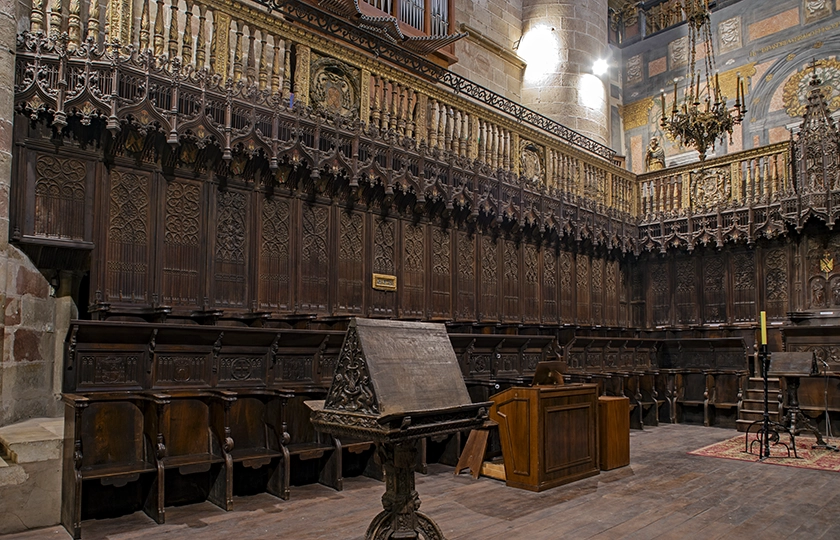
Passing through a monumental 17th-century gate, we enter the walnut choir, a gift from Cardinal Pedro González de Mendoza when he was Bishop of Sigüenza. Featuring beautiful geometric and heraldic decoration on the seats, it was inaugurated in 1491. Furthermore, when Fadrique of Portugal held the office of bishop, it was embellished with a rich Renaissance balustrade and the aforementioned grille. From the choir, you can admire the cathedral’s two magnificent organs.
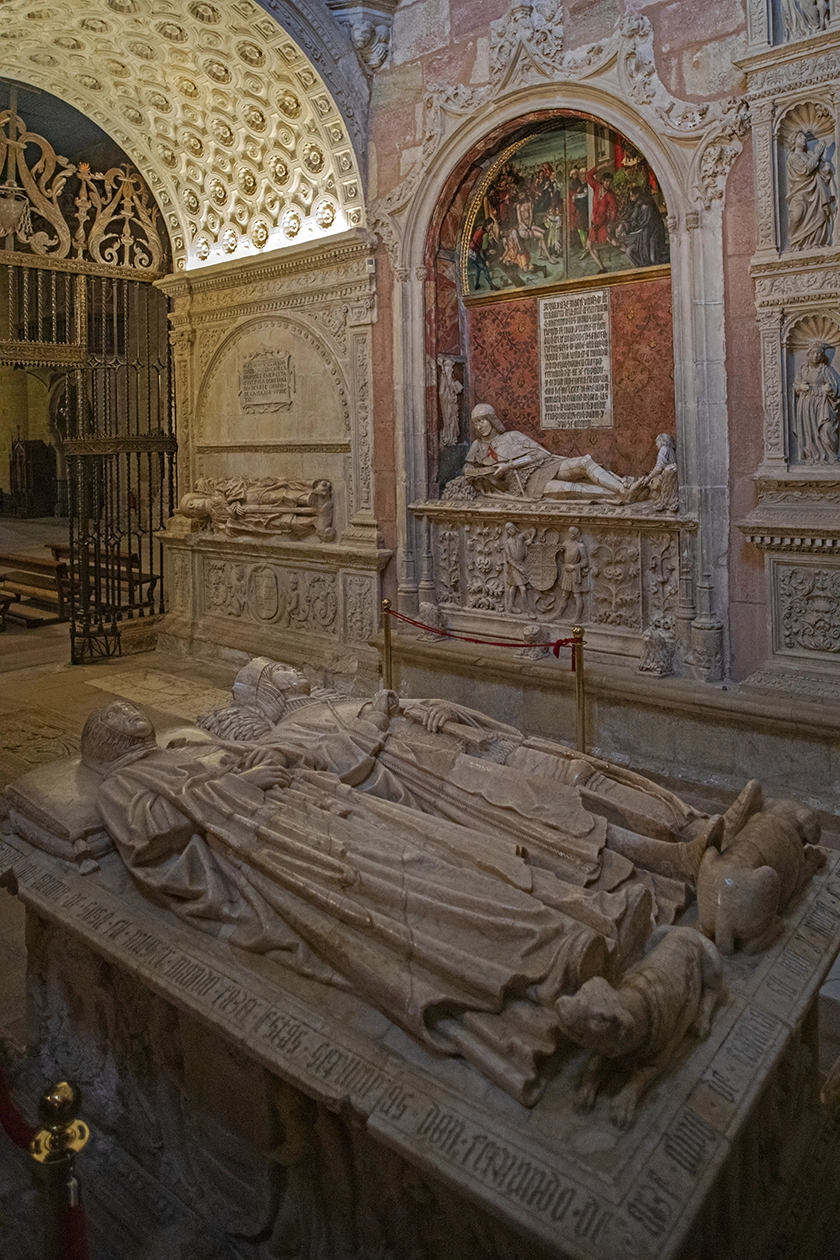
In 1496, during the conquest of Granada, Don Martín Vázquez de Arce died at the age of 25. The man who came to be known as the ‘doncel of Sigüenza’ now rests in the chapel dedicated to Saint John and Saint Catherine, known as the Chapel of the Arce family. This is one of the finest examples of Spanish funerary art. Featuring a Renaissance design with Plateresque ornamentation and situated in the south transept, it houses the tombs of several members of the noble Vázquez de Arce family. At the centre of this marvellous space, in a beautiful tomb, lie the remains of the Doncel’s parents, Fernando de Arce and Catalina de Sosa. Beneath the entrance arch, those of his grandparents, Martín Vázquez de Sosa and Doña Sancha Vázquez, as well as the tombstone of his niece, Doña Catalina de Arce y Bravo. And on the left-hand wall, the remains of Don Fernando de Arce, brother of El Doncel and Bishop of the Canary Islands. Next to this stands the alabaster tomb of the ‘Doncel de Sigüenza’ which, unlike the funerary statues of the period that depicted the deceased as sleeping with their eyes closed, shows the young man dressed as a warrior, in a pose suggesting reading and meditation.
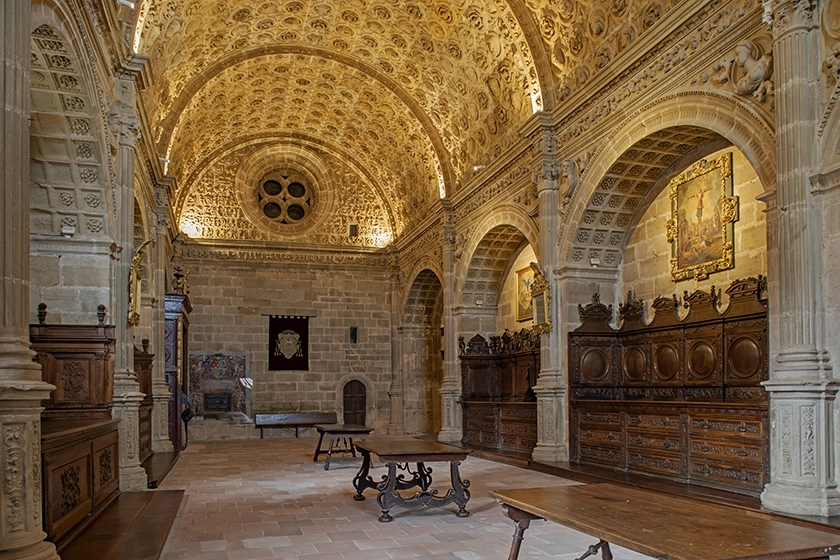
A monumental walnut door, decorated with images of female martyrs, leads into the Main Sacristy or ‘Sacristy of the Heads’. Designed by Alonso de Covarrubias and built in the mid-16th century, the vault is decorated with coffered panels featuring three hundred and four large heads and over three thousand smaller ones. The walnut chests of drawers with Plateresque carvings, the work of the master craftsman Martín de Vandoma, are truly admirable. From this area, we enter the Chapel of the Relics and the Holy Spirit through a highly ornate doorway, featuring a semi-circular arch and wrought-iron grilles. In this work, typical of Mannerism, the Plateresque decoration on the walls, the male human statues serving as architectural supports, the high reliefs, the caryatids and the reliquary carvings of saints, apostles, evangelists, prophets and sages all enhance the monumental character of this chapel.
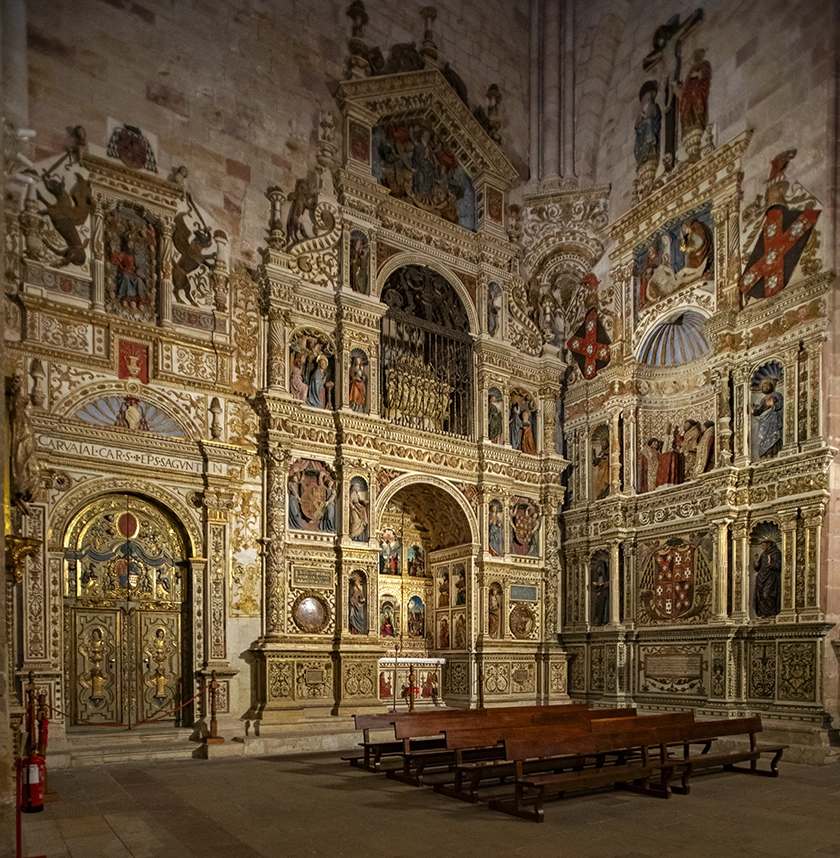
Legend has it that Saint Librada, who was born in the French region of Aquitaine, was brought up in the Christian faith and forced to renounce her beliefs. Because of her refusal, she was martyred and had her throat cut in Sainte-Livrade-sur-Lot. Bernardo de Agén, a fellow villager of the saint, brought her body to Sigüenza, and her remains were placed in an urn on the magnificent Plateresque altar of Santa Librada. This historic event served as the spiritual and liturgical foundation of Sigüenza Cathedral. It is complemented by a beautiful Mannerist-Raphaelesque altarpiece featuring 16th-century paintings depicting scenes from the saint’s life. At an angle to the altar stands the Spanish Plateresque-style mausoleum of Don Diego de Fadrique, Bishop of Sigüenza, who commissioned the construction of the altar as a gift to Sigüenza Cathedral.
We conclude our tour at the Chapel of the Annunciation, where Gothic, Early Renaissance and Mudejar styles come together to create a space of great artistic value, in a style that has been termed the ‘Cisneros Style’, and at the Chapel of San Marcos and Santa Catalina, which houses the Gothic tomb of the founder, Don Juan Ruiz de Pelegrina, and a magnificent triptych from the Castilian school.
We now step out into the cloister, built in the early 16th century, which skilfully combines Gothic vaults and windows with Renaissance doorways leading into its various rooms. An elegant and beautiful Renaissance parapet from the magnificent ashlar cistern, which in the past supplied drinking water to the canons, beneficiaries and many of the town’s residents, takes pride of place at the centre of the garden.
From the cloister, we can access the various rooms of the Cathedral Museum. One such space is the Hall of Historic Flags, located in the former Chapel of Saint Sebastian; amongst these, the flags that formed part of Sir Francis Drake’s expeditions against the Spanish Empire in the 16th century stand out for their age and provenance.
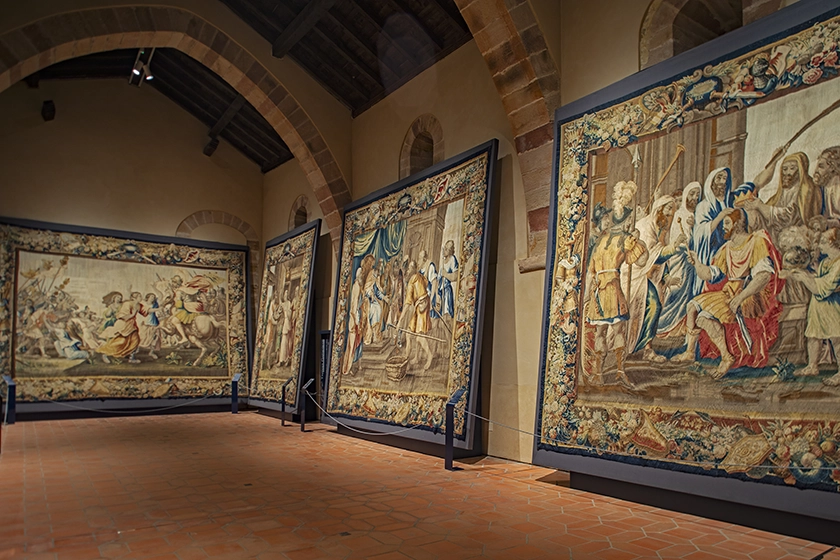
Also the Museum of Flemish Tapestries, a collection of sixteen tapestries designed by the French classical painter Charles Poerson and produced in the Brussels workshops of Jean Le Clerc and Daniel II Eggermans.
We cannot leave the cloister without visiting the Chapel of Our Lady of the Conception to admire one of the church’s most beautiful treasures: El Greco’s painting of the Annunciation, a 17th-century canvas.
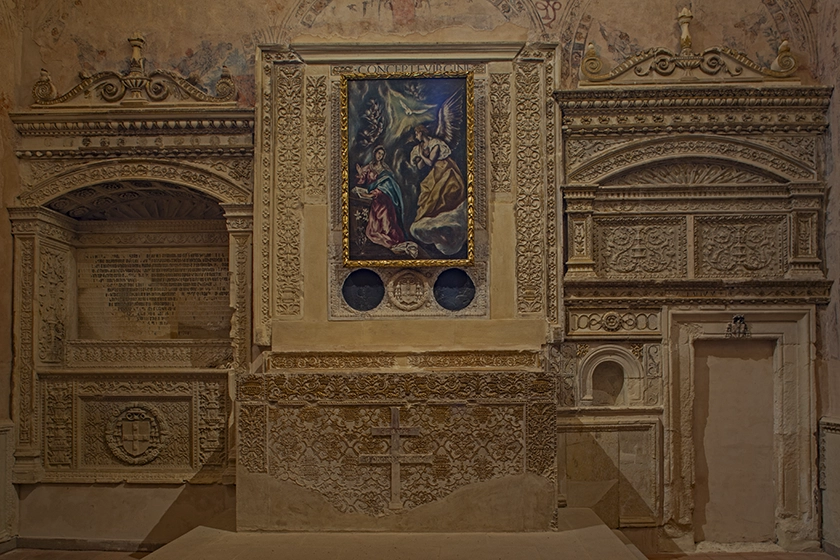
Finally, the medieval necropolis where those responsible for the early stages of the church’s construction in the 12th and 13th centuries were buried. Visits are only permitted when accompanied by guides from the Diocesan Museum of Ancient Art.
New technologies have found their way into the cathedral with the virtual reality experience, included in the tour, which allows us to discover what Sigüenza and its cathedral were like in the Middle Ages through an entertaining, evocative and also educational immersive experience.
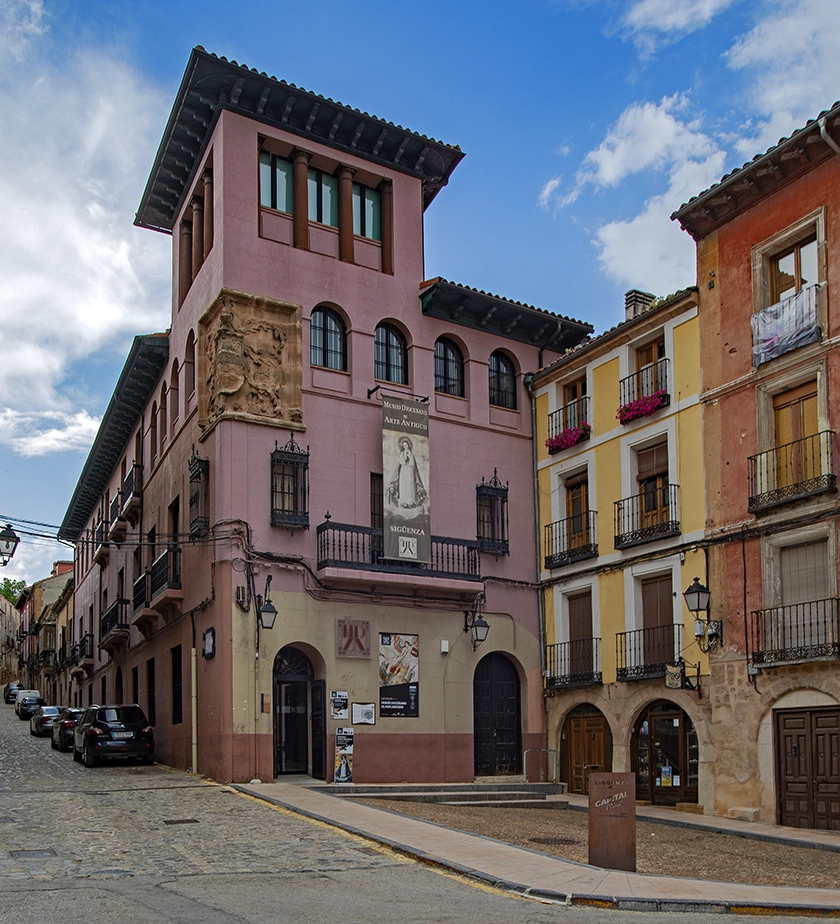
Just a few metres from the cathedral, a 16th-century Renaissance palace houses the Museum of Ancient Art of the Diocese of Sigüenza-Guadalajara. A journey through the artistic and spiritual history of the Diocese, illustrated by more than two hundred works of art, including paintings, sculptures, gold and silverwork, textiles and documents, as well as prehistoric and pre-Columbian collections. Among these, Zurbarán’s ‘Immaculate Conception’ stands out, along with other works by Salzillo, Luis de Morales and Salvador Carmona.
You might be interested in: https://revistagotravel.com/en/siguenza-city-doncel/