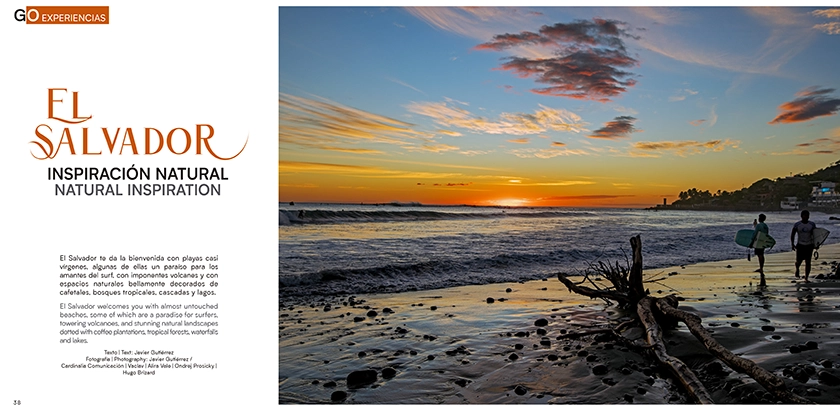
El Salvador welcomes you with almost untouched beaches, some of which are a paradise for surfers, towering volcanoes, and stunning natural landscapes dotted with coffee plantations, tropical forests, waterfalls and lakes.
With the Sierra Madre mountain range running from west to east, one could well say that El Salvador is the garden of Central America. Across the country, there are around 800 species of trees and more than 400 varieties of orchids spread across over 150 protected natural areas, which are home to more than 1,000 species of butterflies, 100 species of mammals, over 500 species of birds and 800 marine species.
Natural paradises and stunning beaches where locals and visitors alike enjoy endless days surfing or simply relaxing, cooling off on the pristine shores or taking part in all kinds of water sports.
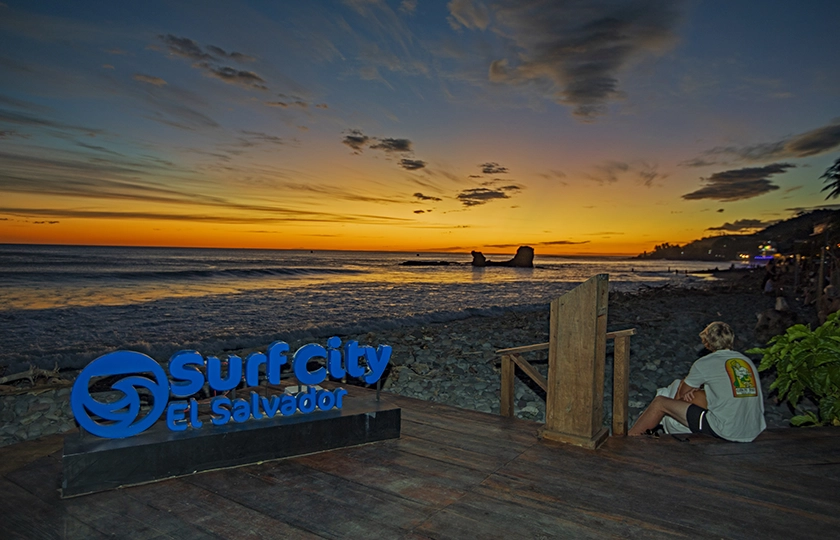
Surf City, the ultimate surfing destination
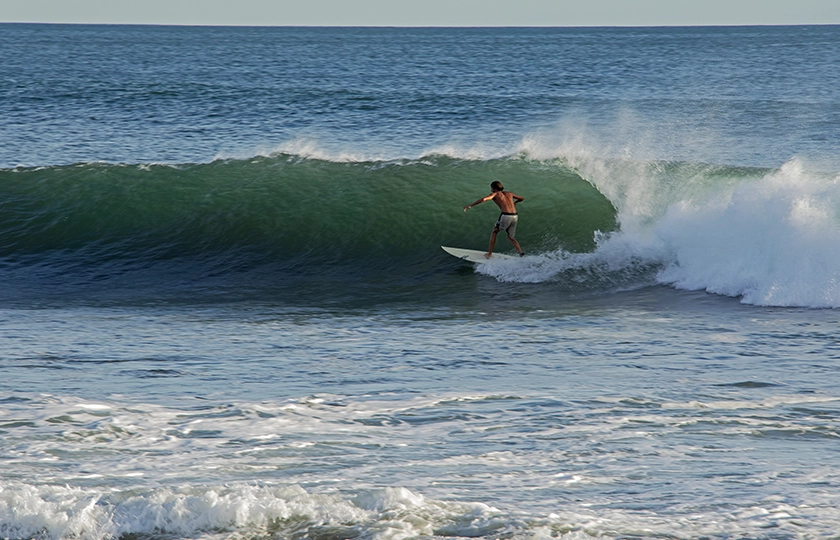
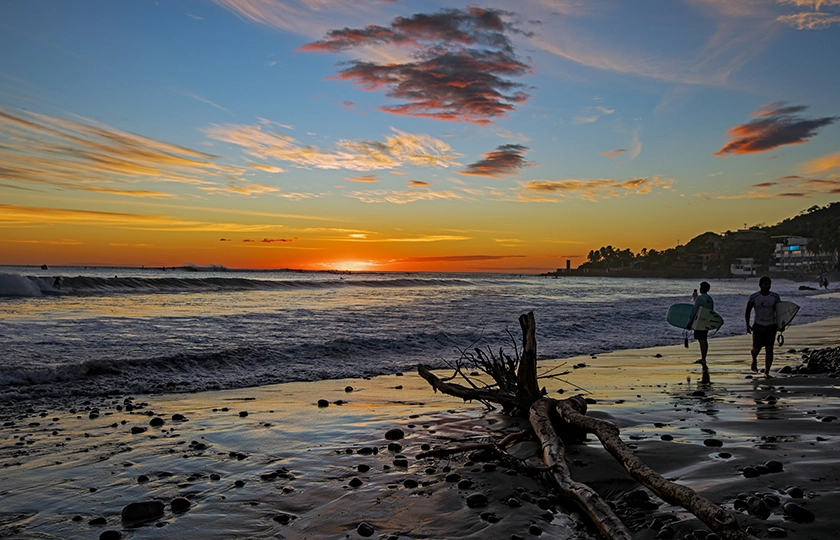
Along its 320 kilometres of coastline, there is a succession of black volcanic sand beaches and other idyllic beaches so typical of the Pacific Ocean. A must-visit destination for surfers from all over the world, the Salvadoran coastline offers a variety of spots to suit every surfer’s ability.
Just seven kilometres from the port of La Libertad lies El Tunco beach, a very Salvadoran word used to refer to pigs. It takes its name from the large, half-submerged rock on the beach which, according to legend, once resembled this animal. What was once a small hamlet beside a creek in the 1970s and 1980s is now a microcosm centred on surfing, evident in the murals, the clothing of its visitors and its architecture. A charming little town centre packed with shops that hire out surfboards, as well as others where you can buy wetsuits and accessories for the sport. It offers simple accommodation for backpackers and more upmarket options for those seeking something a bit more exclusive, as well as places where you can sample flavours from around the world and street stalls selling everything from traditional pupusas to Salvadoran pastries. Here, too, you can enjoy El Salvador’s finest coffee, as well as local and international beers and all kinds of cocktails in the bars and nightclubs.
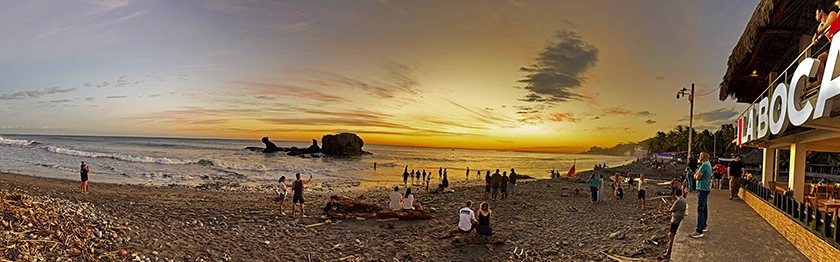
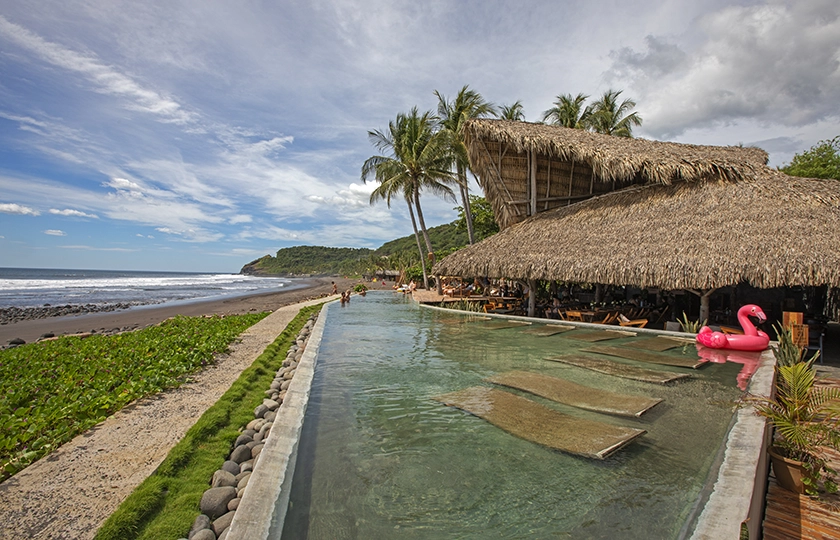
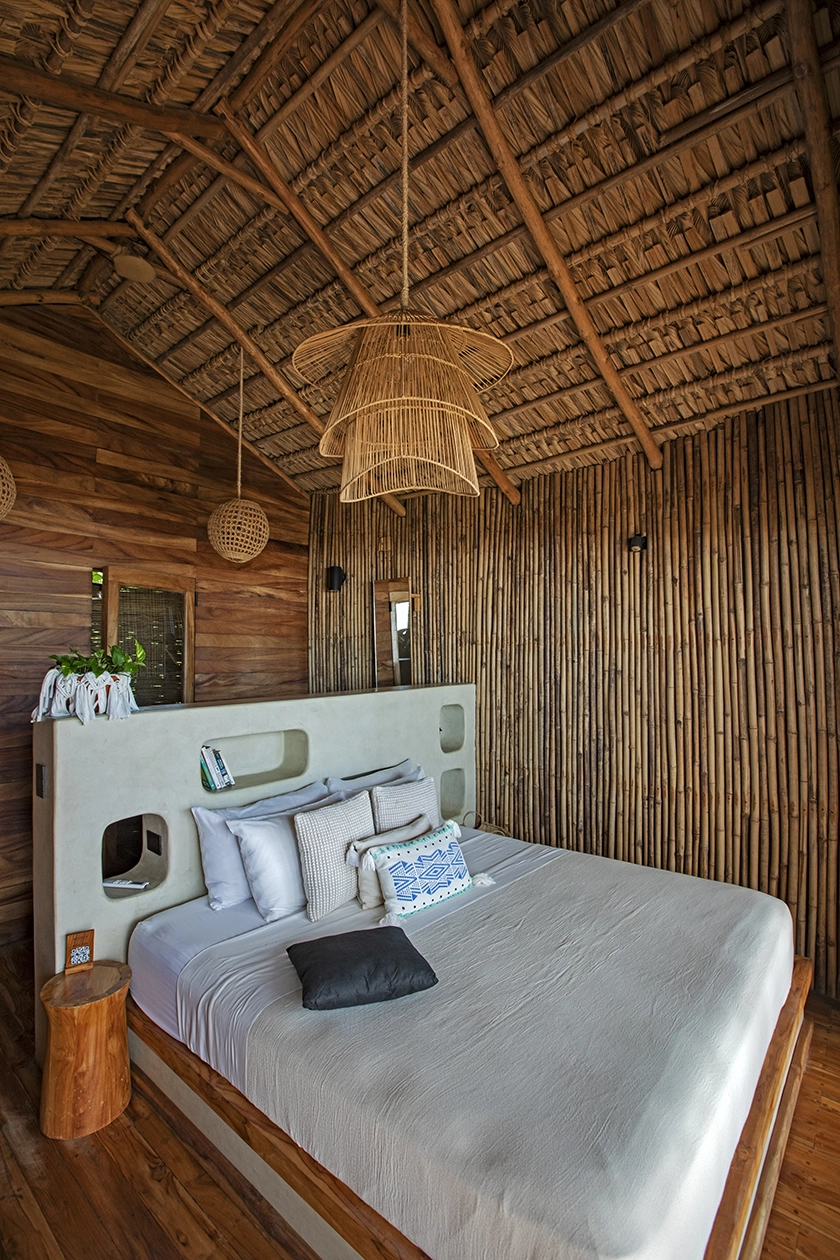
Another iconic surfing spot in the country is El Zonte beach, which, despite being one of the most popular destinations for tourists, has managed to retain its bohemian atmosphere. With its striking landscape, featuring cliffs and rocky outcrops jutting out into the sea, El Zonte offers several spots for surfing, two beaches of black volcanic sand separated by the river and its small estuary, as well as some fascinating caves that provide the perfect backdrop for capturing a photograph to take home as a souvenir of your visit. There is a wide range of accommodation and dining options here, ranging from hostels, holiday rentals and hotels to all kinds of restaurants, including modern, high-end establishments. One of the most unique places to stay is Eco Suites El Salvador, a hotel with an innovative vision and a commitment to sustainability that redefines the guest experience by combining comfort, sustainable design and natural beauty.
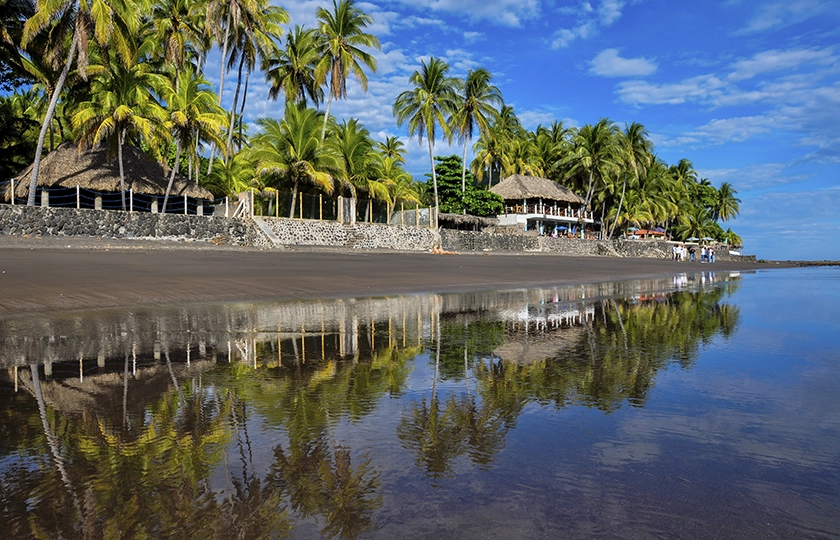
If there is one ideal spot that combines both types of beach found in El Salvador, it is Mizata, an extraordinary place considered the most beautiful in the area, renowned for its lush tropical vegetation, which creates a truly stunning natural landscape. In fact, they are two beaches separated by a breakwater. On one side, a sandy beach stretching for about a kilometre, and on the other, a spot dedicated exclusively to surfing. It’s perfect for those looking to enjoy the waves or for those who want to spend a relaxing day and unwind. This unforgettable experience is rounded off by Mizata by Antiresort, where you can unwind, recharge your batteries and feel reborn. From a treehouse overlooking the sea to jungle treehouses, beachfront bungalows or those nestled in the jungle, all the accommodations offer a sense of tranquillity and serenity. From taking a refreshing dip in the pool against the unrivalled backdrop of the Pacific, to savouring the cuisine at Nawi Beach House with its bold flavours and handcrafted cocktails, or at Ishwi Omakase —“to be satisfied through food” in Nahuatl— which pays tribute to this community and its deep connection with the ocean, Mizata by Antiresort proves that enjoying paradise on earth is possible.
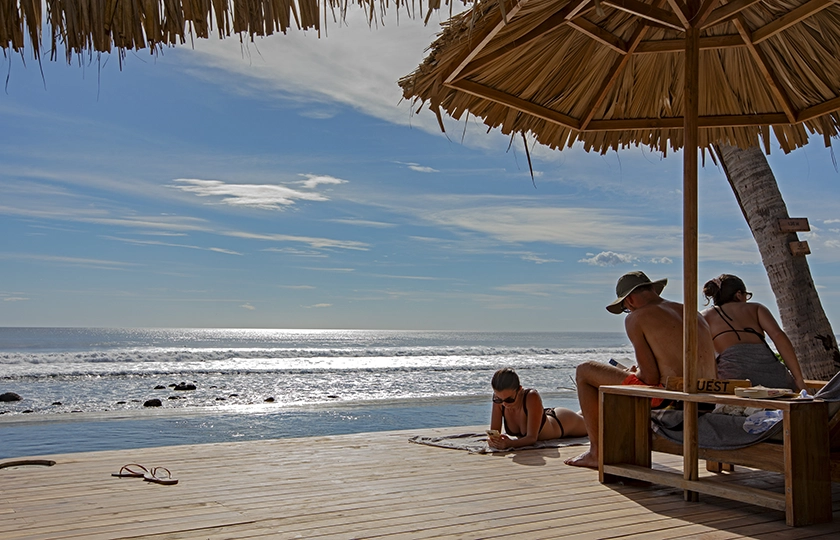
Puerto La Libertad
Before leaving the coast and heading inland, we visited the tourist pier at Puerto La Libertad. Located in the coastal area known as Surf City, this recently renovated tourist destination features the old pier and a new one over 200 metres long. This historic jetty, which is over a hundred years old, still retains its traditional atmosphere, thanks to the traditional fishing boats that arrive laden with delicious fish and shellfish caught in the Pacific. Ideal for enjoying the most beautiful sunsets over the ocean, it also features a restaurant with sea views and relaxation areas, making it a prime spot for enjoying the coast.
This modernisation of the quay has also been reflected in the opening of the Mercado del Mar and the inauguration of Sunset Park.
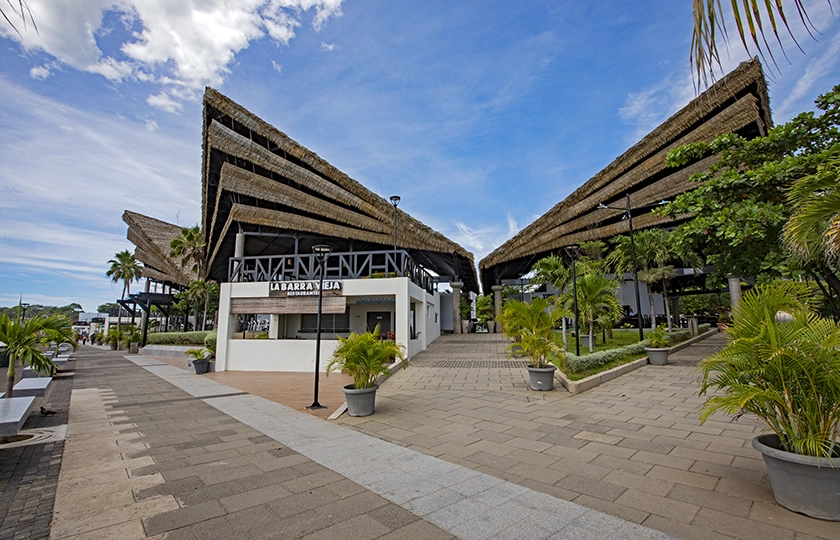
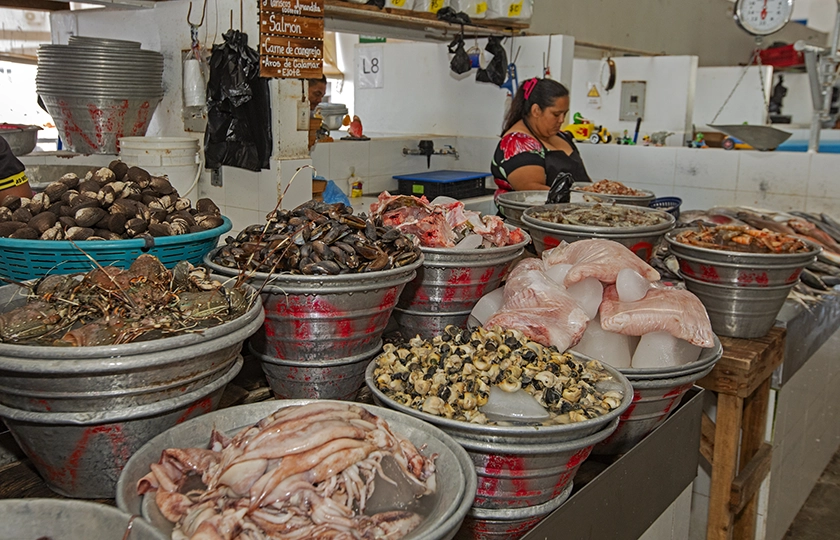
At the Mercado del Mar, you can not only admire the treasures of fish and seafood that the Pacific has to offer, but also buy them to enjoy in the comfort of your own home. But if we fancy enjoying them whilst feeling the sea breeze caressing our faces, we can choose from one of the twenty restaurants serving up delicious dishes. And after tucking into these delicacies, it’s a brilliant idea to take a pleasant stroll along the quay whilst enjoying refreshing ‘minutas’ – shaved ice topped with fruit syrups or tamarind and fruit jam – coconuts or ‘antojitos’ – traditional pastries filled with meat – whilst admiring the wide variety of souvenirs on offer at the craft stalls.
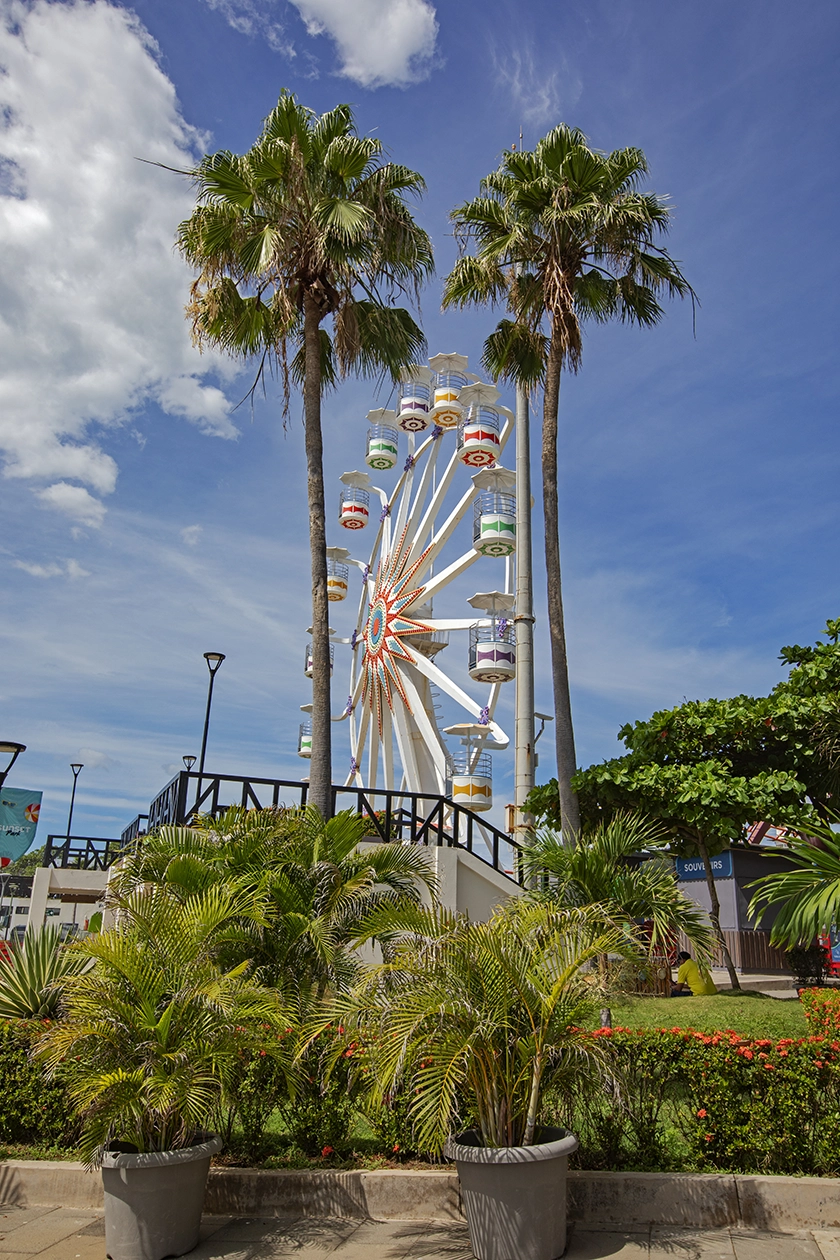
If we’ve already explored the harbour, we can head over to Sunset Park, the first permanent seaside amusement park in Central America, which features a Ferris wheel, a roller coaster, a carousel, a bungee jump and a boat ride. But it is when night falls that the magic takes hold of this place, with the multicoloured lights reflecting off the ocean’s surface. The range of leisure activities in Puerto La Libertad is rounded off by the Surf City Walter Thilo Deininger Adventure Park.
Known as the gateway to Surf City, it is one of El Salvador’s most popular destinations for those seeking new experiences.
El Salvador, or ‘the valley of the hammocks’
With 242 volcanoes scattered across the country, 36 of which are active, El Salvador is known as ‘the valley of the hammocks’ due to the large number of several tremors that occur throughout the year, many of which are barely noticeable.
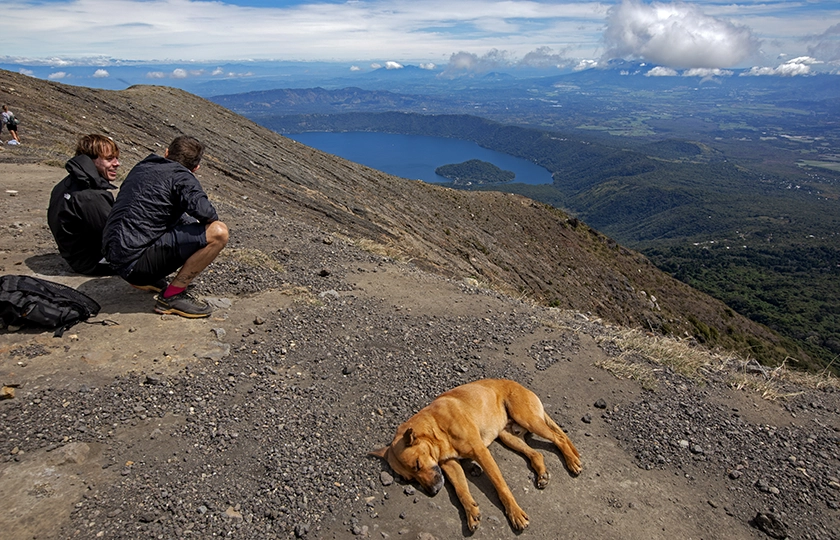
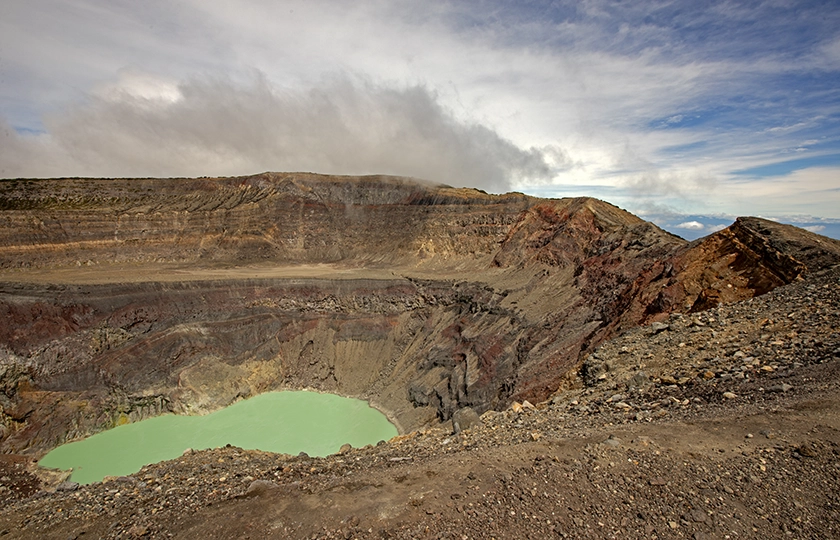
One of these volcanoes is Santa Ana, which in Nahuatl means ‘the old woman’s hill’ and forms part of the Los Volcanes Complex in the Apaneca mountain range. Located in a coffee-growing region some sixty-five kilometres from the capital, it is a stratovolcano whose colourful layers bear witness to the various eruptions that have taken place over the centuries. With a maximum height of 2,381 metres above sea level, I had the privilege of climbing to 2,294 metres, the highest point accessible, from where I was able to admire the majestic views on offer, such as the interior of the crater with its deep green lagoon and the magnificent Lake Coatepeque.
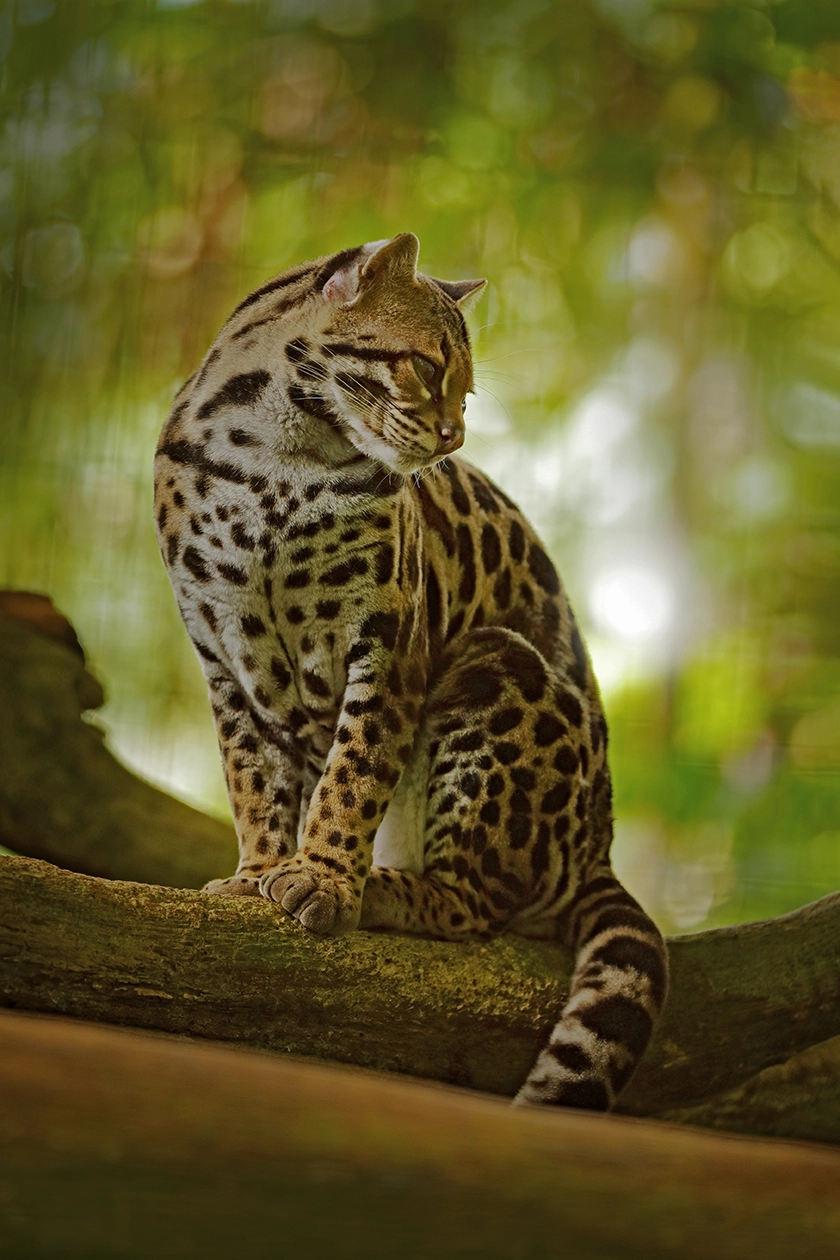
Before we began the climb, our guide provided us with valuable and useful information; from the wildlife that inhabits this area, such as the various endangered snake species—the rattlesnake and the tamagás— the beautiful emerald green toucan, the margay, a spotted feline roughly the same size as a domestic cat and one of the country’s most iconic and endangered species, as well as deer, various birds and coyotes, right through to the flora. There are four trees that are most commonly found here: the guachipilín, with beautiful yellow flowers and highly prized for its hard wood; the lion’s paw, a tree species used for ornamental purposes and of great ecological value in pine-oak forests; the tatascamite, adorned with bright yellow flowers, with hard, heavy and very durable wood; and the zorrillo, used in traditional medicine to treat back pain and respiratory conditions.
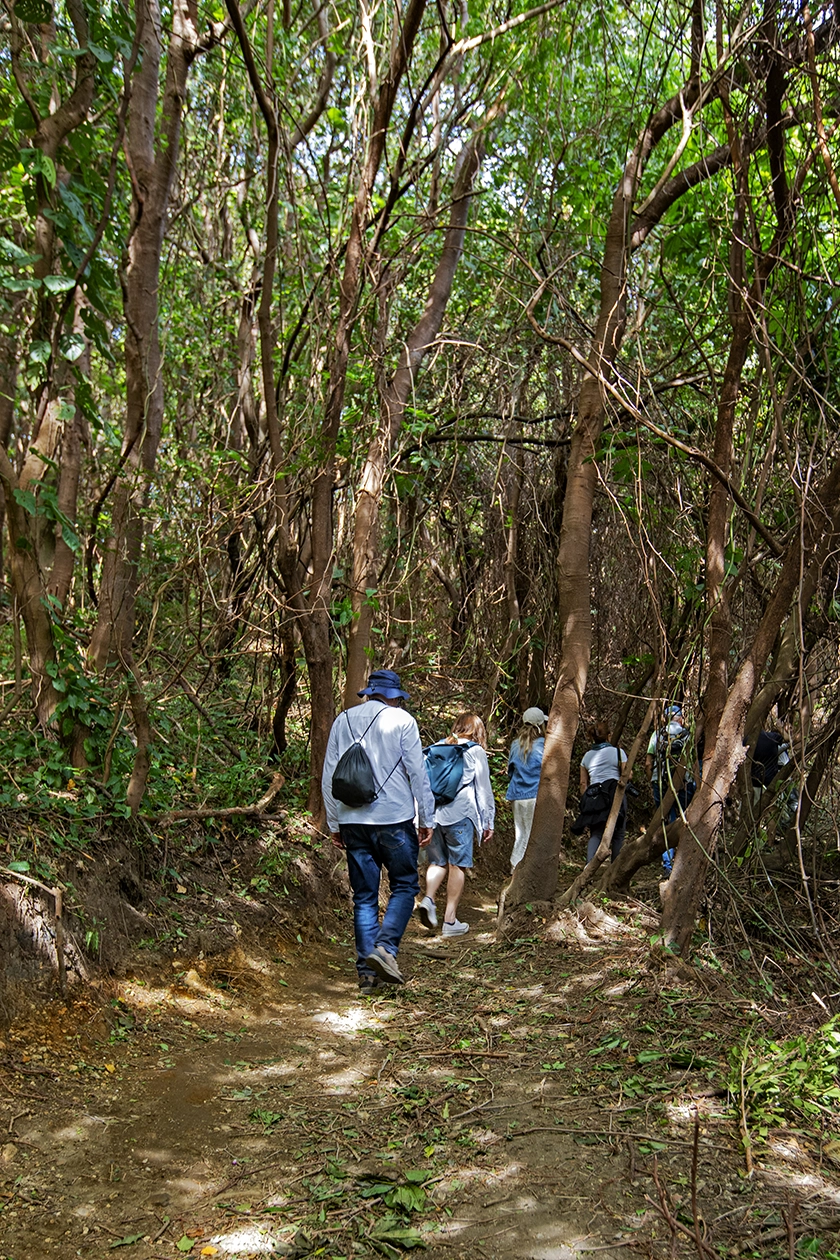
We begin the ascent by passing through a cloud forest, a lush landscape that will change as we go. Along the route to the crater there are various viewing points, but the majestic views offered by the climb can be enjoyed from anywhere. One of these offers views of two volcanoes: Itzalco and Cerro Verde. The first is one of the ten most active in the country and is known as the beacon of Central America. For over two hundred years, its eruptions helped ships sailing across the Pacific to navigate and know when they were approaching the coast of El Salvador. Next to it lies Cerro Verde, an inactive volcano. The last eruption took place around 25,000 years ago, so it has no crater and is completely covered in vegetation. You can climb Mount Itzalco, but first you have to climb Cerro Verde and then descend a slope with 1,500 steps, making it an extremely challenging route.
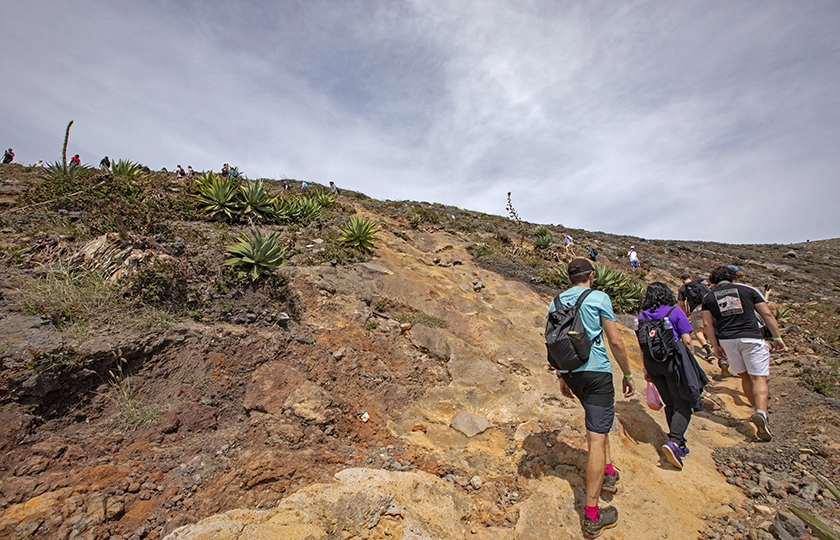
I continue climbing Santa Ana; it takes about thirty minutes to get from the first viewpoint to the third. From here on, the landscape changes completely, as the tropical mountain cloud forest that has accompanied us up to this point disappears, and with it the pleasant shade that had been shielding us from the sun. The climb is starting to get tougher; the path is steeper, the trees have given way to rocks, and the ground isn’t as firm because of all the loose stones. Extra care was needed because a fall or a misstep could put an end to this wonderful experience. It really is the toughest part. You start to make out the end in the distance, but you get the feeling that the further you go, the further away the summit seems to get. At this point, the number of walkers has increased considerably, to the extent that it is necessary to stop to allow those coming from the opposite direction to pass. Just as doubts began to assail my mind, an oasis appeared before my eyes. Every day, locals make their way up here with coolers full of all sorts of refreshing drinks and sweet treats to give you the energy you need to carry on. A short break, and with my batteries recharged – mainly thanks to my motivation – I continue the climb. I finally reached the summit of the volcano, and what I found there was a large number of adventurers enjoying the natural beauty unfolding before our eyes: a magnificent crater some three hundred metres high, with a lake coloured green by sulphur. Whichever way you look, the scenery becomes ever more spectacular, such as that offered by the turquoise waters of Lake Coatepeque. Up there, you feel small and insignificant, but you’re left with the satisfaction of having made the climb. Unfortunately, it isn’t possible to stay there as long as one would like, as the duration depends on the strength of the wind, and on that day Aeolus was in a generous mood.
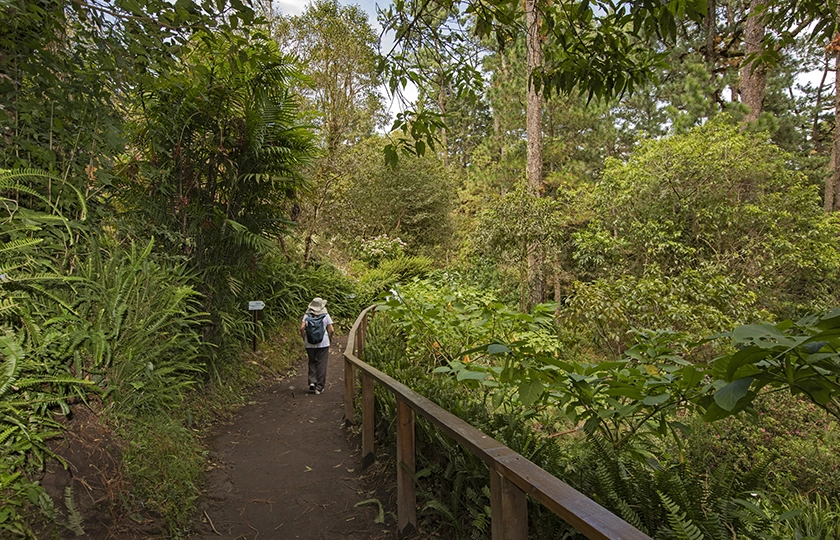
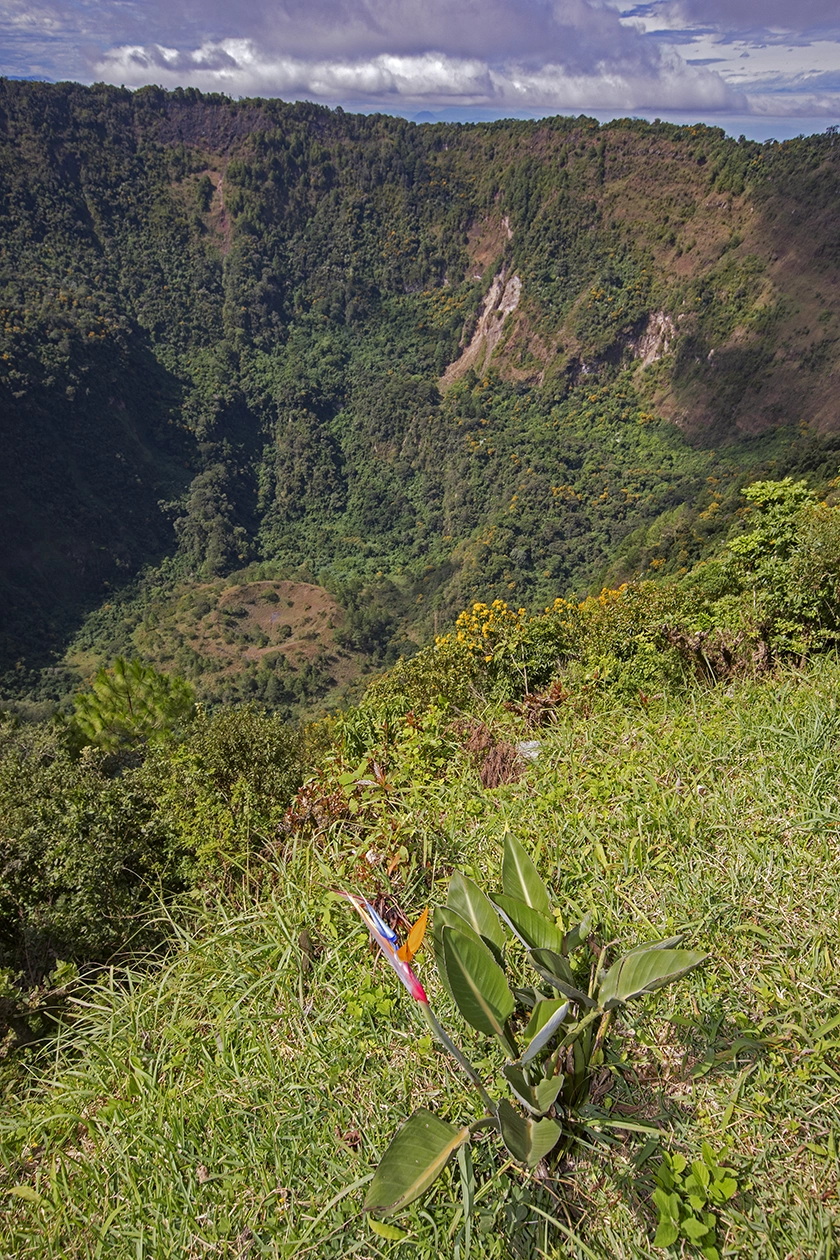
The other volcano I was able to visit is El Boquerón in El Boquerón National Park. Compared to Santa Ana, this one posed no difficulty at all, as the entire route follows well-maintained footbridges and the climb takes less than thirty minutes. This fact does not detract in any way from its spectacular nature. This is a protected area boasting a wide variety of flora and three viewing points situated at different angles, from which visitors can admire El Boqueroncito, a crater approximately 37 metres high, on whose slopes flowers and fruits typical of temperate climates are grown. This is the perfect setting for spending an unforgettable day with family or friends, enjoying the natural surroundings, the local cuisine and the peaceful atmosphere here. What’s more, during the journey by road, I noticed that there are numerous viewpoints, as well as restaurants and cafés offering spectacular views of San Salvador, Lake Ilopango and the Chinchontepe volcano, where you can enjoy a delicious cup of coffee, natural soft drinks and even the finest wines, not to mention some truly delicious local cuisine.
This is just a small glimpse of what El Salvador’s rich natural heritage has to offer visitors. Feeling somewhat disappointed at not having been able to discover all the wonders this Central American country has to offer, I set off on my journey home, but I do so with the firm intention of returning to discover the natural treasures hidden within this bountiful land, which are just waiting for us to discover and enjoy them.
You might be interested in:
Surfers from all over the world travel to this country to enjoy its great waves