

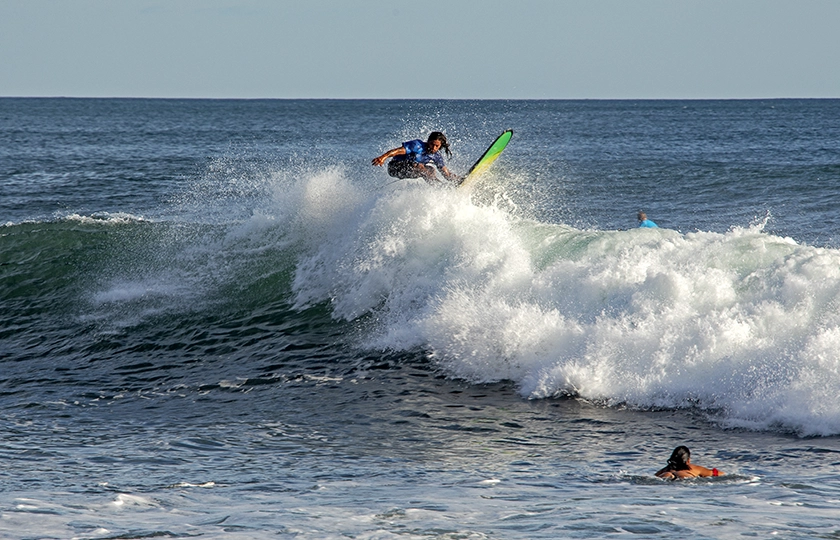
- This surf destination, bathed by the waters of the Pacific and set against a backdrop of majestic volcanoes, offers perfect waves that are considered among the best in the world, making it the ideal setting for world championships.
The volcanic sand stretches out like carpets across a string of beaches along 321 kilometres of coastline. Discovered by surfers in the late 1960s, their regular visits were interrupted only by the Civil War at first, and later by the violence that ravaged the streets. Once that nightmare was over, the beaches were once again filled with surfboards, young and not-so-young people in their wetsuits and with their tanned bodies.
The country’s magnificent coastal landscape is what makes it such a superb setting for this sport. Formed as a result of the Ring of Fire and the Cocos tectonic fault, which lies beneath the Caribbean fault, it features cliffs, rocky outcrops and sheltered coves that cause the swells coming from the south to form high, perfectly shaped waves of ideal quality for surfing. The International Surfing Association is well aware of this, having chosen the venue on several occasions to host world championships, as it considers it to be one of the best in the world.
With the launch of Surf City in 2019, the Government of El Salvador sought to position the country’s coastline as a leading destination for surfing and coastal tourism, promoting economic development through sustainable tourism. The beaches included in Surf City are located in the departments of Ahuachapán, Sonsonate, La Libertad, La Paz, San Miguel, Usulután and La Unión.
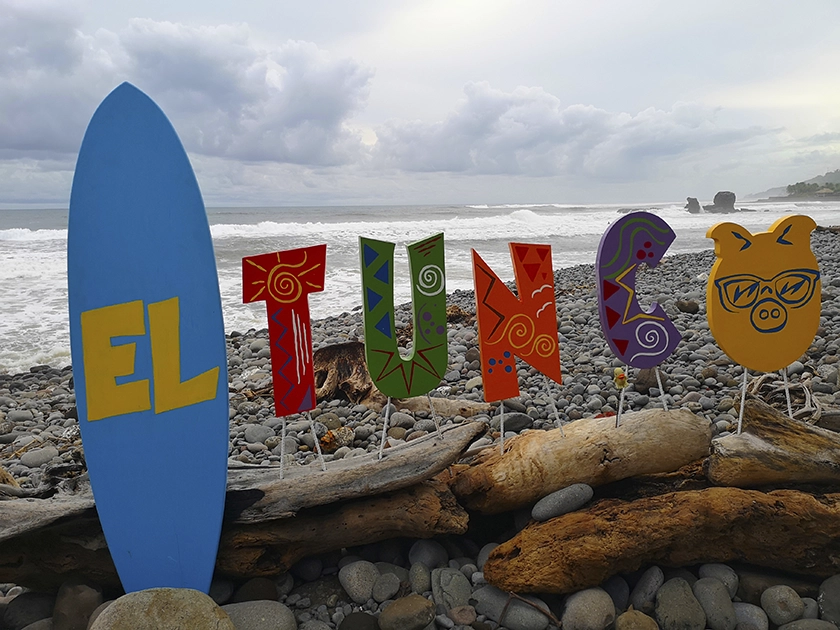
Beaches renowned worldwide for their exceptional conditions include El Tunco in La Libertad, El Salvador’s most sought-after coastal destination. The black of the volcanic sand blends with the blue of the sea and the white of the foam, giving way to the intense oranges and reds of the sunset; here, you can enjoy one of the most beautiful sunsets in the entire Pacific. During the day, two bustling streets fill with visitors who take in every detail of what’s going on, browse the goods on sale in the craft shops or at the surfboard stalls, quench their thirst with a refreshing coconut juice, enjoy the local cuisine in the busy restaurants, or admire the colourful façades. As night falls, the clubs fill up with people still looking for what El Tunco promises: plenty of fun.
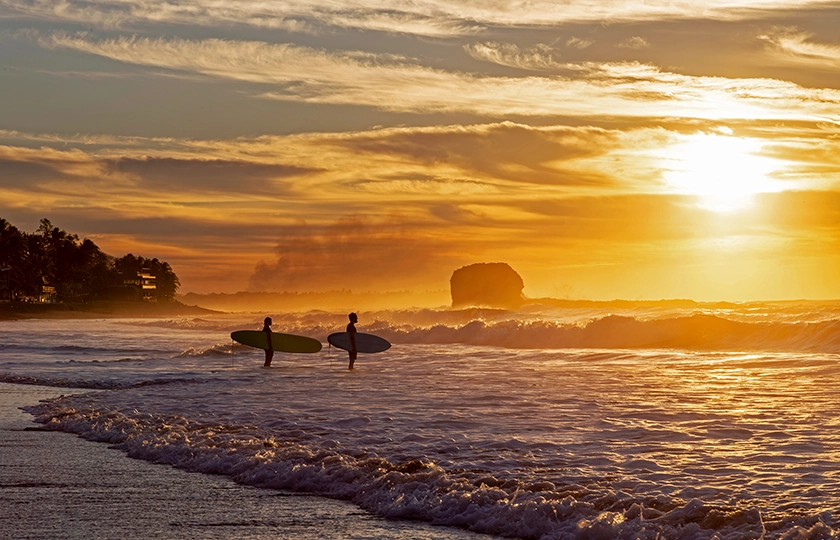
Also in the department of La Libertad is El Zonte beach, which has managed to retain its bohemian atmosphere despite being one of the busiest destinations on the Salvadoran coast. The beauty of this spot is enhanced by its striking landscape, with sheer cliffs and miles of rock that slope gently down to the sea, as well as by its two volcanic sand beaches, separated by the river and its small estuary. Just nearby, some caves provide the perfect backdrop for a souvenir photo. Hostels, holiday homes and simple hotels, alongside modern, higher-quality establishments and all kinds of restaurants, make up an interesting, varied and attractive range of accommodation and dining options. El Zonte has several areas suitable for surfing and a training centre that is unique in the world.
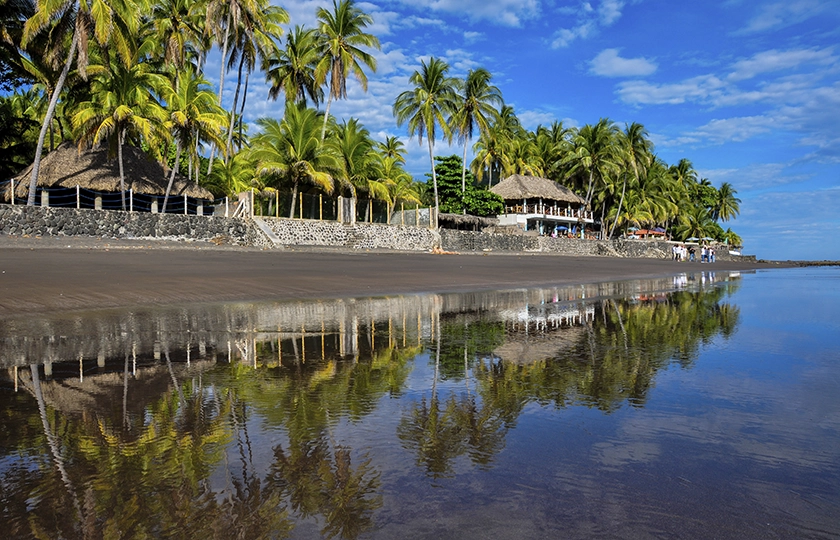
We continue our tour of the department of La Libertad, and our next stop is the beach at Punta Roca, or La Punta, as it is known to local surfers. It is regarded as one of the ten best surfing spots in the world; professional surfers even compare it to the famous wave at Jeffreys Bay in South Africa. Suitable for advanced and expert surfers due to its power and speed, the sight of the wave breaking three hundred metres offshore, as seen from the shore, inspires equal parts admiration and respect. Although you can surf almost all year round, the most spectacular time is between March and August, when the swells generated by storms in the South Pacific reach El Salvador. The quality and consistency of the waves here have earned it a reputation as a venue for international events such as the World Masters Championships, competitions on the Latin American circuit, and qualifying events for the World Tour.
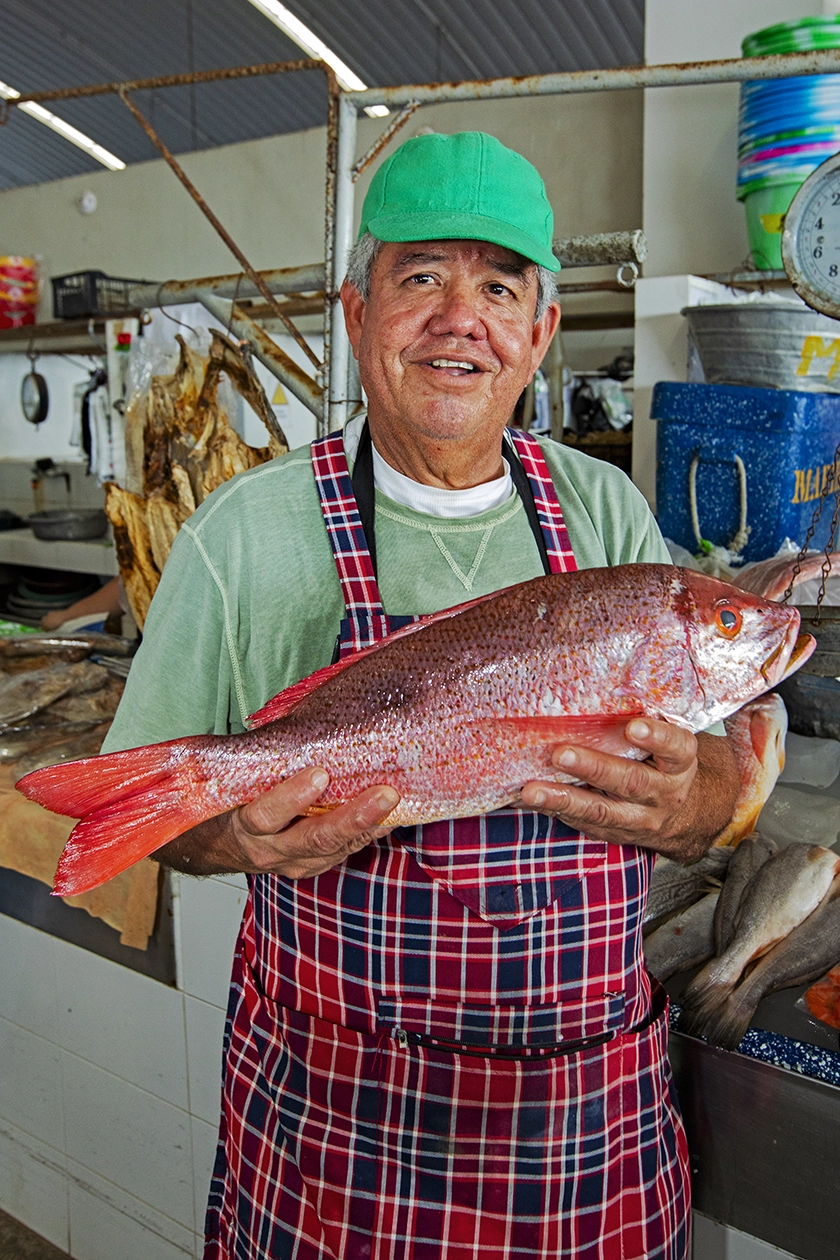
Very close to Punta Roca lies Puerto La Libertad, which features the old pier and a new one over two hundred metres long. This is where you’ll find the Mercado del Mar, where you can admire the fish and shellfish that the fishermen bring in with their nets every morning. And right next door, Sunset Park, the first permanent seaside amusement park in Central America.
We bid farewell to La Libertad with a visit to El Sunzal beach. It is said that this beach was the first in the country where surfing was practised. Ever since it was discovered by American surfers in 1960, it has been a key location for the development of the sport in El Salvador. The reasons for El Sunzal’s success lie in the fact that it has a vast area capable of accommodating dozens of surfers at the same time and, above all, that it never fails to break a single day throughout the year. This beach withstands the biggest waves on the entire Salvadoran coast and, on occasions when there have been exceptionally high swells, perfectly aligned waves of up to eight and a half metres have been seen breaking here. But it also has a user-friendly side, which makes it a favourite among beginners. All this in the pleasant company of various birds, sea turtles, manta rays and a variety of fish that share the waters with the surfers.
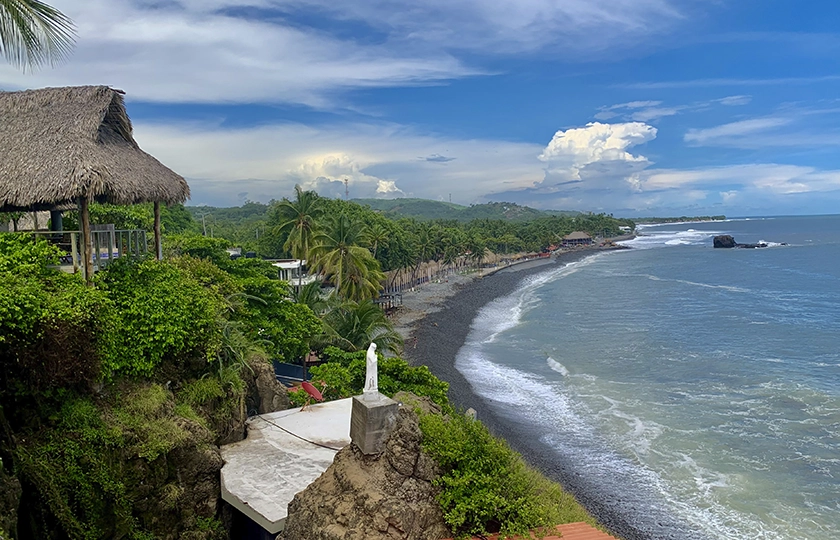
In the department of San Miguel lies Las Flores beach, which welcomes visitors with a small, beautiful cove. Known as ‘the wild east’, during December and January it offers gentle waves, ideal for beginners and intermediate surfers, but from March to October it takes on a different character, with waves reaching up to four metres. Don’t miss a visit to El Cuco beach, situated very close to Las Flores. It’s a beach with black volcanic sand and gentle, steady waves that invite you to take a dip in its refreshing waters. The area is renowned for its delicious local cuisine, ranging from a traditional Salvadoran breakfast to elaborate dishes featuring the region’s rich seafood.
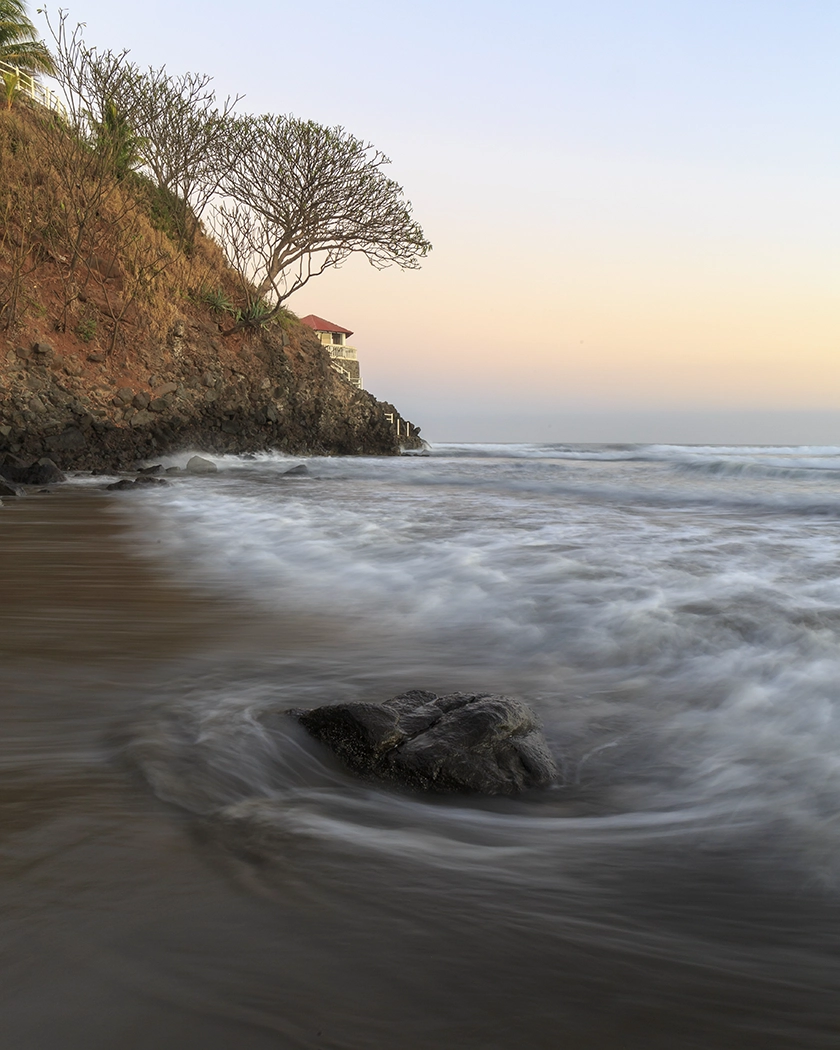
We round off this brief tour of some of Surf City’s beaches with a visit to Punta Mango beach, in the department of Usulután. Little known until recently and difficult to reach – as it could only be accessed by boat from the beaches of Las Flores or El Cuco – its popularity has now grown, partly because it can now be reached by road. The wave at Punta Mango is one of the most challenging along the entire Salvadoran coast, so it is reserved solely for the most experienced surfers, as it is powerful, fast, tubular and long-running. A day out at Punta Mango becomes truly special with a stroll along the beach, watching the sunset or going fishing to catch some of the fish that come close to the shore in search of prey on the rocky seabed.
Whether you’re a keen surfer or simply looking to enjoy the sea and all it has to offer, the Salvadoran coast is the perfect destination for your next holiday. An unforgettable experience in a country that captivates with its natural beauty, its history and heritage, its cuisine and, of course, its people.
You might be interested in: El Salvador, natural inspiration