Published in April 2024
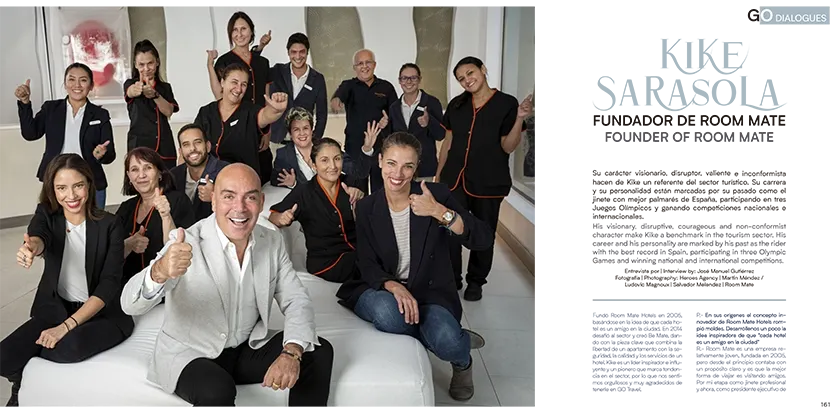
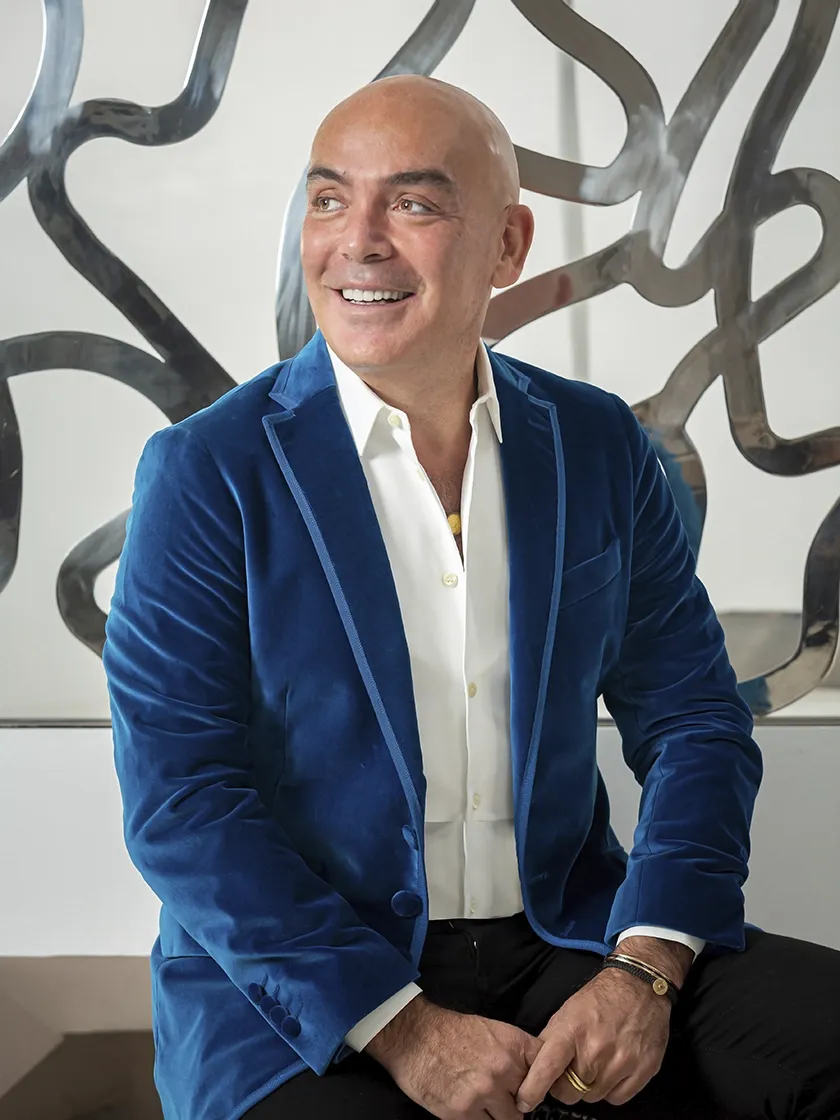
His visionary, disruptive, courageous and non-conformist character make Kike a benchmark in the tourism sector. His career and his personality are marked by his past as the rider with the best record in Spain, participating in three Olympic Games and winning national and international competitions.
He founded Room Mate Hotels in 2005, based on the idea that every hotel is a friend in the city. In 2014 he challenged the sector and created Be Mate, finding the key piece that combines the freedom of a flat with the security, quality and services of a hotel. Kike is an inspirational and influential leader and a trendsetting pioneer in the industry, and we are proud and grateful to have him at GO Travel.
Q.- In its origins, Room Mate Hotels' innovative concept broke the mould. Tell us a little about the inspiring idea that "every hotel is a friend in the city".
A.- Room Mate is a relatively young company, founded in 2005, but from the beginning it had a clear purpose and that is that the best way to travel is to visit friends. As a professional horseman and now as CEO of Room Mate, I have always had to travel a lot, and I understand how lonely it can feel to be in a country or a city that is not your own. The same happens when you travel with friends or as a couple: who recommends the best places to eat? What activities can you do on the days you stay? Who accompanies you when you need it?
Our intention from the beginning was for our hotels to be a friend in the city, a host who welcomes you and makes you feel at home. Hence the idea of each hotel having its own name, personality and face.
We are the friends who recommend places because they have been there, who help you when you need it, who make you discover new places.
Q.- To what extent can staying in one of the chain's hotels be a transformative experience for enjoying the city?
A.- Staying at Room Mate Hotels will always be a transformative experience for guests. The excellent location of our hotels is an advantage and a unique experience for guests, who can walk to all the key places in the city, without wasting time on transport.
Design also plays a key part in the experience. Feeling as if you were in a museum with the best national and international designers, such as Tomás Alía, Teresa Sapey, Pascua Ortega, Lorenzo Castillo, Patricia Urquiola, Lázaro Rosa Violán, the Melian Randolph sisters, Jaime Beriestain or Cuarto Interior, without even leaving the room, is something that will mark the experience from the very beginning.
Nor can I forget technology. For us, it has always been essential to keep abreast of trends and we are often pioneers in implementing measures to improve the experience. That’s why we were the first to offer free Wi-Fi throughout the city so you can stay connected to your loved ones even when you’re far away. Now, in addition to this service, we are working on a personalised travel platform – tourists want to take the experience of the city and the hotel a step further, it is no longer just accommodation – and all our hotels have a 24-hour WhatsApp service so that customers can resolve their queries in real time. This builds trust and closeness, which is always key.
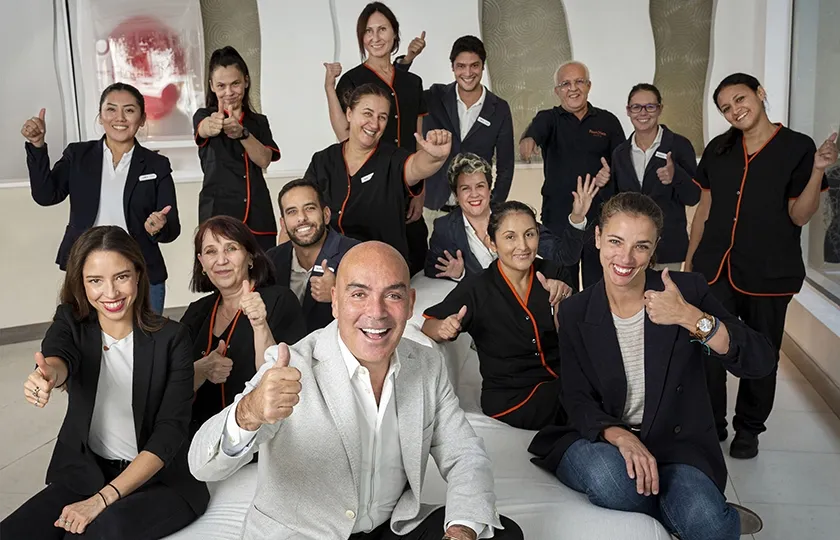
And above all, the daily work of my roomies, who are a crucial part of this transformative experience. They are the real revolution of the chain and are always in charge of welcoming guests with a smile. In addition, they are able to provide and offer unique and personalised experiences to customers, so that they can experience the city like a true local.
Q.- The consequences of the pandemic are now behind us and Room Mate has been able to emerge stronger. What have these years been like?
A.- It has been a very difficult year, the coronavirus pandemic in March 2020 was a major setback for everyone, but especially for the tourism sector. During the year, we provided authorities with twelve hotels and four apartment buildings in Spain, France, Italy and the United States to house health workers, firefighters and elderly people from nursing homes to protect them from further infection. It was a time of responsibility, generosity and solidarity and one of the most beautiful times I have ever lived and will never forget.
Yet, from one day to the next, my hotels closed and my income was zero. I had a staff of 1,200 roomies rowing to get by, but who were waiting every month to be paid a salary that, for us, at that time, was unaffordable. I went from having the best year ever in terms of results to having nothing and being in debt to the max. Fighting to move forward, for me, but of course also for my own.
We suffered from COVID – 19, like so many others, but it was not only that that created the perfect storm. Our partner at that time had personal problems with her organisation and conflicts with the banks of which Room Mate was directly collateral damage. We lost their support.
As a result, in July 2022 we had to file for voluntary insolvency proceedings with the sale of the production unit. A law that uses the US Chapter 11 model. Through it, companies are allowed to dispose of profitable production units. Before this law, 9 out of 10 companies that went into insolvency proceedings in Spain were closed down.
But we were the first to take advantage of this law to save the continuity of the chain that I founded with so much affection.
After months of negotiations and seeing different interested candidates, today I can proudly and excitedly say that Angelo Gordon and Westmont Hospitality Group are the new owners of Room Mate and that thanks to the bankruptcy process we have been able to maintain the continuity of the project, as well as keeping most of the jobs and the team.
Right now, I can say that Room Mate is back and stronger than ever, and we are going to bring back the values and the DNA of the chain. This means that we must continue to be responsible, generous and supportive, as well as customer-focused, brand-focused and disruptive. We will continue to put people at the centre of all decisions and although a new phase has begun, we will not lose our enthusiasm or our smile.
Q.- Room Mate exudes enthusiasm, what role does your team play in the day-to-day running of the hotel to maintain the positivity that pervades each hotel?
A.- Room Mate breathes illusion on all four sides. We always put people at the centre of all our decisions. As a company, we work hard and are committed to the happiness of our roomies, offering measures that, for example, help with work-life balance.
Happiness is profitable and the happiness of roomies is fundamental. If they are happy, smiling and having fun working, this is transmitted to the customer and makes the customer want to come back and repeat the experience with us. You don’t know how many people initially think that the smile is a cliché but, after visiting our hotels, they tell me: “you were right, it really is a sincere smile that transmits and spreads happiness“.
The roomies are the differentiating point of the chain and are the most important thing. They work every day to offer unique experiences and make customers feel at home.
Q.- What are Room Mate's expansion plans and do you have a preference for any market?
A.- We are looking at all the opportunities in the market, both corporate and hotel-by-hotel growth. We are open to consider the purchase, lease or management of hotels, hotel chains, apartment buildings and hostels in Europe and the United States, while maintaining our focus on urban hotels. I am looking forward to reaching my goal of 100 hotels soon.
We are interested in establishing ourselves in the main European capitals, such as Berlin, London, Paris or Lisbon and, of course, to continue to grow in Italy. I would also love to open our second hotel in Milan or Amsterdam. These are cities where, without a doubt, every international chain has to be.
At the national level, Spain is a fashionable country. Cities like Madrid and Malaga are doing very well. Also Seville and Valencia, which has recently been named the best city to live in according to Forbes. We would love to grow in Spain as well.
Q.- When choosing the location of a new accommodation to join the chain, what are the selection criteria?
A.- Behind the choice of a destination, there is a lot of analytical work. We carry out market analyses, take into account the economic and political stability of the countries or look at the existing tourism infrastructure. In addition, we take into account the growth potential of the destinations. Has the number of tourists increased in recent years? Has the city or the country done anything to attract tourists?
These are just some of the general factors, but I can say that identifying the most promising markets that are aligned with Room Mate’s vision is a job that requires a lot of effort and work.
Q.- Every day the concept of sustainability is present in all areas. How does Room Mate face this challenge that is here to stay?
A.- Sustainability is key and here to stay. At Room Mate, we are fully aware of the importance of the concept of sustainability in the hotel industry and how it has evolved to become a permanent challenge. Above all, for two main reasons: the first is that social awareness has increased and the second is that more and more tourists are taking these parameters into account when they travel.
Room Mate has always been characterised by its focus on people and for this it is essential to take care of the planet we live in. We take this issue very seriously and have implemented a number of strategies to address this challenge and ensure that we are contributing to a sustainable future.
Our uniforms, in collaboration with Ecoalf, are made from recycled materials as they are made from plastic bottles collected from the Mediterranean Sea. They are 100% eco-sustainable from the shoelaces to the shirt. But our sustainability programme also includes other initiatives. With the Clean the World project, we recycle used bars of soap in hotels, melting them down to create new bars that are sent to NGOs.
We also offer our customers AUARA water bottles, which are distributed in recycled plastic bottles and the proceeds are used for projects we have in Africa to build water wells for the population. Other measures to reinforce sustainability in the rooms include energy-saving showers, which have already been implemented in all establishments, and the use of eco-friendly furniture.
In addition, we encourage roomies to adopt responsible practices in their daily lives, for example by reducing paper consumption – and if strictly necessary, the paper is 100% recycled – or by encouraging the use of individual bottles to reduce the generation of plastics.
We are committed to further improving our sustainable practices and to making a positive contribution to the future of the hospitality industry and the well-being of the planet. We have to keep working together, because there is no such thing as a planet B.
Q.- What is your vision for the tourism sector in the aftermath of the pandemic? And, above all, what are the trends in the short and medium term?
A.- The coronavirus was a severe blow to the entire sector. All the actors involved -restaurants, travel agencies, hoteliers, etc.- have suffered the consequences of border and perimeter closures, travel restrictions and reduced demand. All in all, I believe that the sector has come out of the pandemic stronger, although there is still much to be done and much to learn. We are gradually moving towards 2019 figures and expect to continue to improve these numbers.
One of the changes we have also experienced in the aftermath of the pandemic is the increase in domestic tourism. I think we had forgotten how beautiful our country is and how much it has to offer. We are much more than sun and beach tourism, and people are gradually rediscovering cities. Many people are choosing to travel domestically and fall more in love with their countries.
In addition, the pandemic has led to changes in travel patterns and preferences among travellers. We see, for example, that bookings with flexible cancellation policies have increased, and the trend of booking trips at the last minute has continued.
Q.- From your experience, what aspects of our country need to be improved in order not to lose market share to the new destinations that are emerging strongly?
A.- Spain is a country that is in fashion and is doing very well, although it is true that there are other destinations that are coming on strong. In this respect, I think it is important that we remain at the forefront of innovation in the sector. We must keep abreast of the latest trends and adapt quickly to the needs of travellers.
We have to attract long-haul, American, Asian and Middle Eastern customers. For the American, with the dollar so strong, it is very cheap to travel. Americans book the most, consume the most, have the best conversion rate and search for us most by brand. He is also the tourist who books the most through our website.
Asia is also a very good customer, and now that the borders have been opened, the 110 million Chinese passport holders will finally be able to travel after several years of being unable to leave their borders as a result of the coronavirus. This will generate a large influx of tourists, as is already being seen in Italy. In fact, this Italian market, together with the Spanish market, will be our great strength as a chain.
In addition to targeting these profiles – Americans, Asians and Middle Easterners – who spend a lot of money and have not been able to travel during this time, we must, as I said before, diversify the offer to attract different market segments. There is room for all profiles in Spanish tourism: the “backpackers”, those who prefer to sleep in flats, or who opt to sleep in a hostel… But I think we have to focus on the luxury market, because it drags a lot of things behind it. We have the example of Madrid which has started to open five-star hotels and this has had a very positive impact on the quality of tourism and the income generated.
However, and knowing that there are many tourists who opt for a different type of trip and who have different tastes and priorities, Room Mate is committed to diversification. First, I was the first hotelier to bet on Be Mate tourist flats. Over the last few years, we have opened several apartment buildings. Also in 2022 we created a new line of hostels – Wabi Sabi – which is doing very well in Istanbul.
Wabi Sabi has 154 beds and has the capacity to accommodate 170 people in the city centre. With its modern décor, pop-up corner, coworking and Roof Top, it has become one of the places to be in the city.
On the other hand, and no less important, we must manage to maintain the quality of our services and this involves all the agents and administrations, public and private, hotels, catering, transport and the activities we offer. Tourists value the overall quality of the experience and service, so we must ensure that services exceed travellers’ expectations.
Q.- Let us know your forecasts for this summer.
A.- I do not dare to make predictions. Since January, every month we have been setting records for occupancy and revenue. It looks like the summer months are going to be spectacular, as well as the following months until the end of the year. After a few years suffering the consequences of the coronavirus, it looks like we are going to surpass the 2019 data for this same period. If there is one thing we have noticed, it is that people want to travel again, and they want to enjoy themselves, taking advantage of every moment and free time to discover new places and spend quality time with their loved ones. Tourism is slowly recovering.
And that does not mean that I am not fully aware of the current economic situation and that it is going to be a little more difficult for Spaniards to go on holiday. Nevertheless, there are many who, although shortening their stay, will enjoy a great summer with family or friends. And we are sure it will be for everyone.